

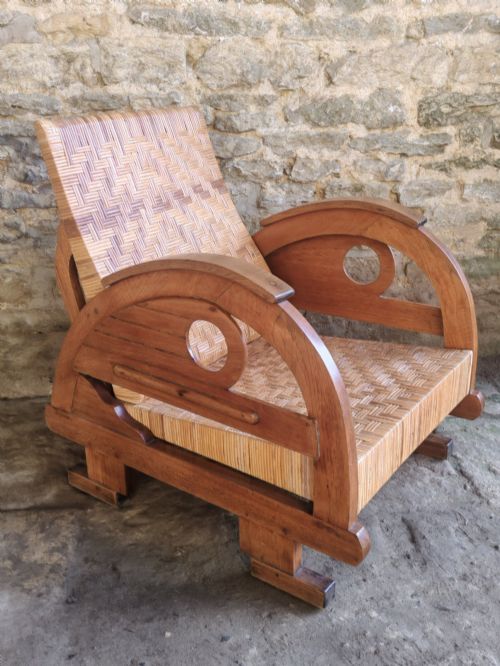


1930s Arm Chair
These 1930s arm chair selections offer period character and distinct seating forms that anchor a room.
1930s Arm Chair
A 1930s arm chair encompasses seating designed during the interwar years, spanning low lounge formats to desk and club chairs. The examples seen here heavily reflect Art Deco aesthetics alongside occasional revival designs.
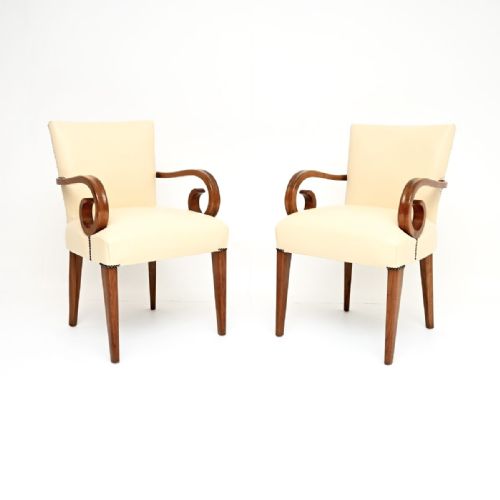
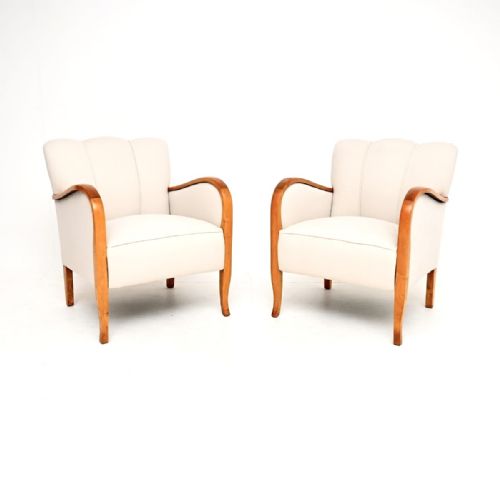
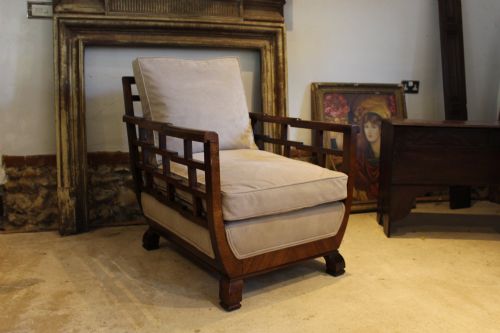
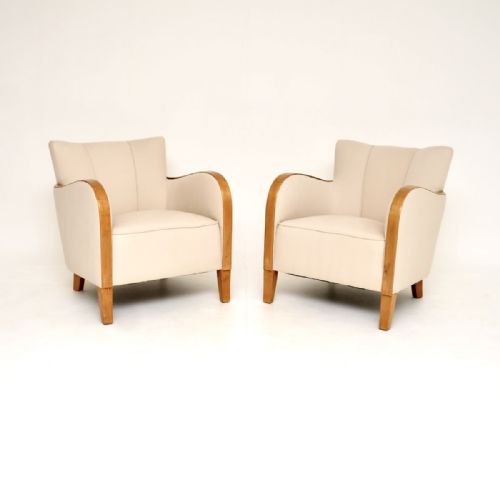
Buyers will encounter pairs of Swedish armchairs in satin birch, walnut frames paired with calf suede, rattan seating, and cigar brown leather club chairs. Variants from the 1920s also appear, alongside specialist forms like barbers' chairs.
The dominant style is Art Deco, frequently expressed through clean geometric lines or sweeping curved wooden frames. Traditional revival touches like Louis XV style painted woodwork also emerge among the selections.
Materials and construction
Makers utilised solid timbers and veneers including satin birch, walnut, burr birch, and oak for structural frames. Painted finishes also appear on certain revival armchairs from the period.
Upholstery relies heavily on fabric, leather, calf suede, and woven rattan panels. Metal components appear on specialist items such as barbers' chairs.
1930s Arm Chair Retail Price Guide 2026
Typical asking prices for 1930s arm chair among the pieces listed under this phrase on Sellingantiques today, from the lower quarter to the upper quarter. They describe what is for sale here now, not the wider market.
Among the stately leather and birch seating, a single hardworking barber's chair from the thirties waits to pump you up.
Evaluating the standard
Quality in a 1930s arm chair rests upon the selection of timber figures, such as burr birch or figured walnut, and the integrity of the original or restored upholstery materials like full leather or suede. Frames constructed from solid hardwoods demonstrate superior longevity compared to simpler secondary woods.
The sophistication of the Art Deco carving, the harmony of matched pairs, and the preservation of distinct design details like rattan inserts set finer examples apart from standard utilitarian seating.
The 1930s Arm Chair Glossary
- Art Deco
- A design style of the 1920s and 1930s characterised by sleek geometric shapes, streamlined forms, and stylised ornamentation. It heavily influences the wooden frames and club chairs of this era.
- Club chair
- A deep, comfortable upholstered armchair traditionally covered in leather. The period examples utilise cigar brown leather.
- Satin birch
- A light-coloured hardwood with a lustrous sheen, frequently utilised for Swedish armchairs from the era. Its grain provides a striking visual texture.
- Calf suede
- A soft, napped leather derived from younger cattle, providing a tactile upholstery surface for walnut chairs. It offers a distinct texture compared to standard grain leather.
1930s Arm Chair: Frequently Asked Questions
What defines a 1930s arm chair?
These chairs are defined by the prevailing interwar design movements, predominantly Art Deco, which favoured geometric or streamlined wooden frames.
Materials range from exposed satin birch and walnut to upholstered leather, suede, fabric, and rattan panels.
Are these chairs comfortable for daily use?
Many of these pieces, particularly club chairs and low lounge seats, are built for deep relaxation and ergonomic support.
Specialist variations like desk chairs and barbers' chairs serve more upright or functional seating requirements.
How do I identify Art Deco style?
Art Deco pieces display clean lines, symmetry, and polished wood veneers like burr birch or walnut.
They often eschew heavy Victorian ornamentation in favour of sleek, modern silhouettes.
What is a bridge chair?
A bridge chair is a compact, light armchair traditionally used for card games or general parlour seating during the early twentieth century.
These pieces feature smaller footprints than heavy club chairs while maintaining supportive armrests.