


1920s Tiered Table
A 1920s tiered table brings surface space and architectural silhouette to a room, offering multiple levels for display and daily use.
1920s Tiered Table
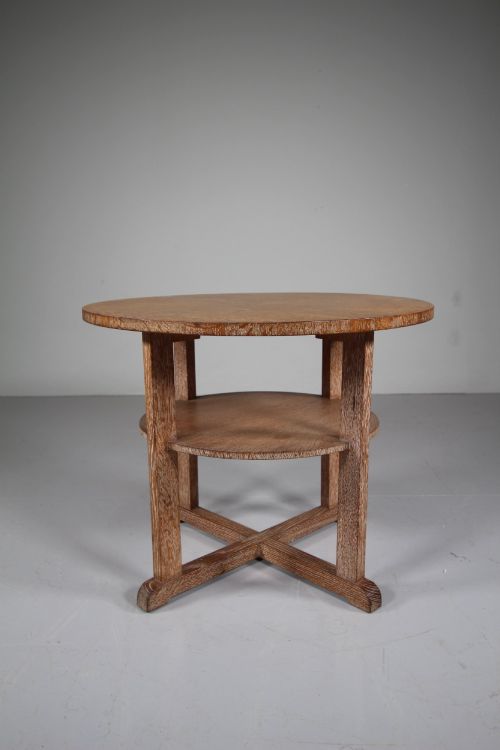
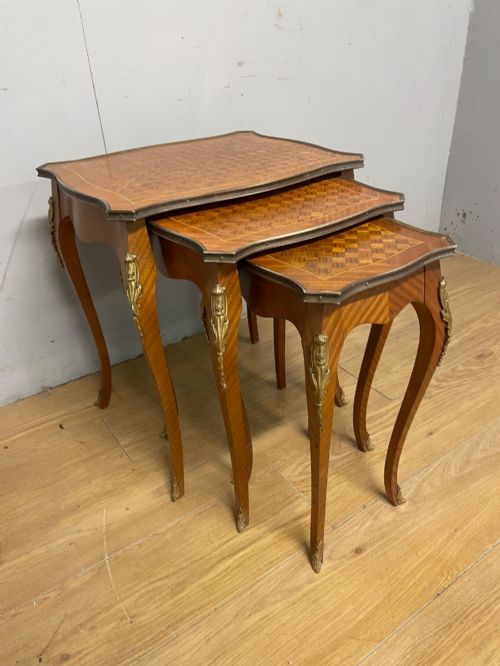
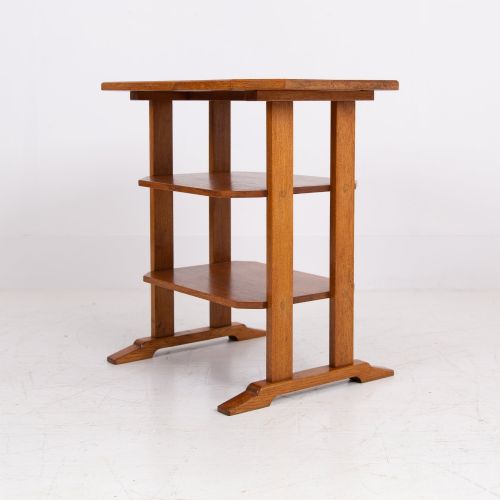
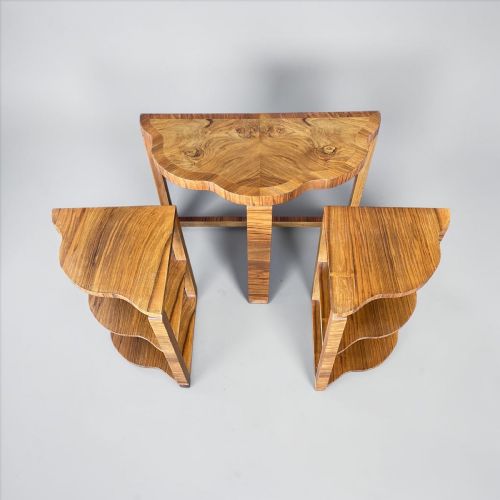
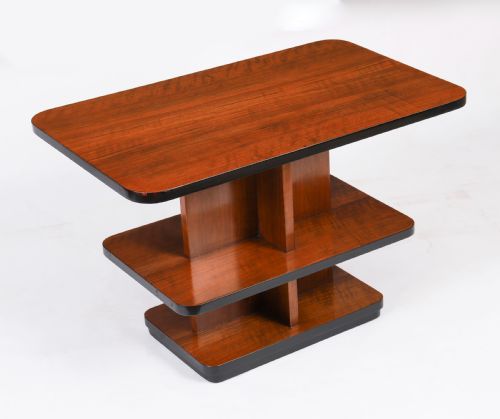
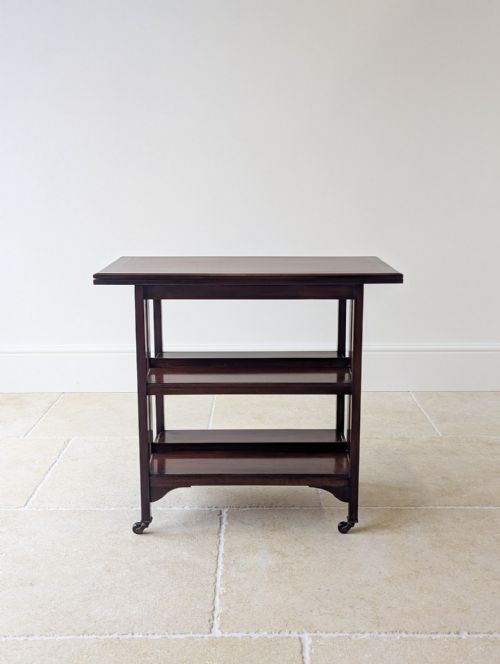
A 1920s tiered table provides layered surfaces arranged in ascending or descending steps, taking various structural forms from side tables to nests and coffee tables. These pieces serve practical functions in domestic spaces while introducing distinct horizontal planes into a room.
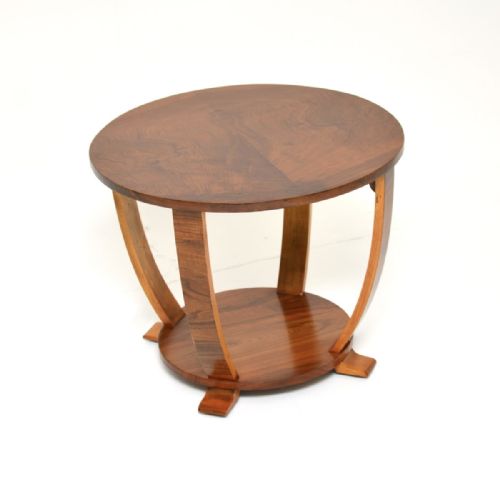
You are most likely to meet pieces finished in walnut, walnut veneer, or oak, reflecting the dominant timber choices of the period. Forms range from utilitarian trolley designs with wheels to refined occasional pieces styled in the manner of Art Deco or traditional revivals.
How they were made
Cabinet makers utilised solid timbers such as oak and beech alongside exotic veneers like birds eye maple, rosewood, and figured walnut applied to core woods. Surfaces often highlight the natural grain patterns of the timber, particularly in Art Deco examples.
Construction techniques combine traditional joinery with applied decorative elements, occasionally incorporating brass details or ebonised wood to accentuate the tiered profiles.
Listings feature walnut, mahogany, rosewood, and oak across periods spanning 1920 to 1940.
What varies in quality
The choice of surface veneer and timber selection distinguishes standard production from finer examples, with figured walnut and rosewood demonstrating greater decorative ambition. The crispness of carved details in revival styles or the purity of geometric lines in Art Deco pieces also separates workshop output.
Structural integrity relies on the stability of the multi-level supports and the precision of the joints connecting the tiers. Finer pieces maintain balanced proportions across multiple levels without visual heaviness.
Majorelle
The 1920s Tiered Table Glossary
- Art Deco
- A design style characterised by sleek geometric shapes, streamlined forms, and stylised ornamentation popular during the 1920s and 1930s.
- Veneer
- A thin layer of finer wood glued to a base timber to provide a decorative surface figure.
- Occasional table
- A small, movable table designed for specific, intermittent use within a room.
- Nest of tables
- A set of graduated tables designed to fit neatly beneath one another when not in use.
1920s Tiered Table: Frequently Asked Questions
Where should I place a tiered table?
These tables fit well beside seating areas or in corners where extra surface levels prove useful.
Their multi-level structure allows you to display decorative objects on one tier while keeping books or drinks on another.
How do I identify a 1920s table?
Look for construction materials like walnut veneer, oak, and rosewood combined with characteristic period styles such as Art Deco or Arts and Crafts.
The presence of multiple tiers, specific joinery methods, and proportions typical of the early twentieth century help confirm the period.
Are tiered tables stable?
Stability depends on the construction of the upright supports and the weight distribution across the various levels.
Solid timber frames and well-anchored tiers ensure the table remains balanced during everyday use.
What woods were used?
Cabinet makers utilised a range of domestic and imported timbers, including walnut, oak, mahogany, rosewood, and beech.
Figured veneers were frequently applied to tabletops to create striking visual patterns.