


1920s Mantle Clock
These 1920s mantle clock pieces combine striking period design with daily utility, offering an authentic focal point for a mantelpiece.
1920s Mantle Clock
A 1920s mantle clock brings functional timekeeping together with the distinctive decorative styles of the early twentieth century. When exploring this selection, buyers encounter everything from compact miniature timepieces to substantial architectural pieces designed for the hearth.
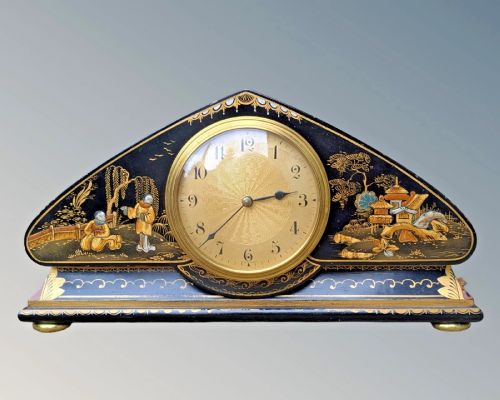
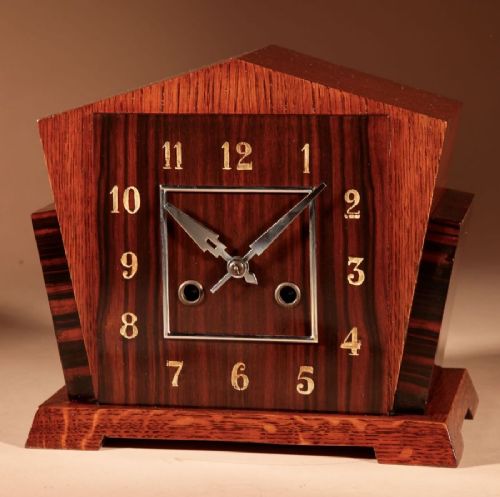
The objects span diverse aesthetic movements, including bold Art Deco, intricate Chinoiserie, and distinct Amsterdam School forms in oak and macassar ebony. Pieces originating around this decade sit alongside earlier transitional items from the Belle Epoque and French Rococo Revival traditions.
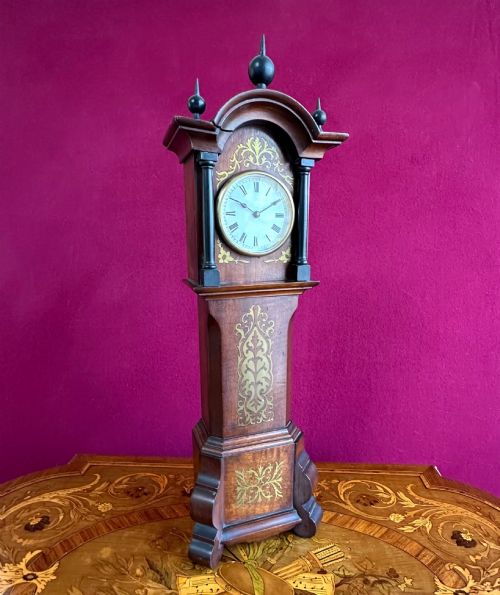
Mantel clocks from this period also include miniature grandfather clock forms and French carriage clocks with engine turned mask dials. Buyers are most likely to meet striking examples executed in marble, onyx, or rich woods paired with enamel dials.
How they were made
Craftsmen utilised a diverse palette of hard stones, metals, and exotic timbers to construct these clock cases. Workshops combined heavy blocks of marble and onyx with polished brass, glass panels, and delicate blue guilloche enamel.
Woodworking techniques involved contrasting veneers such as macassar ebony and coromandel applied over sturdy oak carcasses. Dial faces frequently featured fine engine turning and detailed enamel work to create legible, decorative centrepieces.
One determined feline clock pauses forever in cold marble, frozen mid-pounce as a permanent guardian of time.
What varies in quality
Distinction across the range rests on the sophistication of the materials and the precision of the decorative detailing. Heavy stone cases shaped from solid onyx or patterned marble represent a higher tier of production than simpler wooden housings.
Signed works by notable retailers like Garrards or regional makers such as Swinden Birmingham introduce maker provenance that elevates a piece. Furthermore, intricate finishes like engine turned masks and blue guilloche enamel demonstrate superior craftsmanship compared to plain metal dials.
Garrards·Swinden Birmingham
The 1920s Mantle Clock Glossary
- Guilloche enamel
- Decorative technique involving precise, intricate geometric patterns engraved beneath translucent enamel. This method creates a luminous, shimmering surface frequently found on miniature timepieces.
- Amsterdam School
- Architectural and design style originating in the Netherlands during the early twentieth century. It is characterised by expressive brickwork, traditional craftsmanship, and rich use of timbers like oak and macassar ebony.
- Engine turned
- Mechanical decoration applied to metal surfaces using a lathe to cut precise, repetitive linear patterns. This treatment catches the light and adds texture to clock dials and masks.
- Chinoiserie
- European decorative style reflecting Chinese artistic motifs and landscapes. Pieces featuring this aesthetic often display painted lacquer or delicate oriental scenes.
- Onyx
- Dense, banded chalcedony stone utilised for substantial clock cases. Its natural striations provide a smooth, polished appearance favoured by Art Deco designers.
1920s Mantle Clock: Frequently Asked Questions
What styles define a 1920s mantle clock?
The selection is dominated by geometric Art Deco designs and regional variations such as the Amsterdam School. Pieces also draw upon earlier French traditions including Rococo Revival and Belle Epoque aesthetics.
Alongside these, Chinoiserie lacquered surfaces and miniature formats appear frequently across the available inventory.
Which materials were commonly used?
Manufacturers employed a wide variety of materials including solid marble, onyx, and polished brass. Woodworked examples often feature oak carcasses adorned with macassar ebony or coromandel veneers.
Glass panels and enamel dial faces complete the construction, frequently accented with engine turned masks.
How do I identify a maker?
Maker identification relies upon signatures inscribed on the enamel dial or stamps marked onto the movement and case housing. Retailers and workshops such as Garrards and Swinden Birmingham sometimes left their marks on these components.
Examine the backplate and dial face closely for engraved signatures and regional registry marks.
Where should I place my clock?
These clocks are traditionally proportioned for placement on a mantelpiece, shelf, or sideboard where their decorative cases can be fully appreciated. Their substantial weight, particularly in marble and onyx variants, requires a stable, flat surface.
Keep them away from direct heat sources and excessive moisture to protect the enamel and wood veneers.