


1920s Gold Pin
A 1920s gold pin offers the geometric elegance of the Art Deco era, designed to catch the light on a lapel or scarf.
1920s Gold Pin
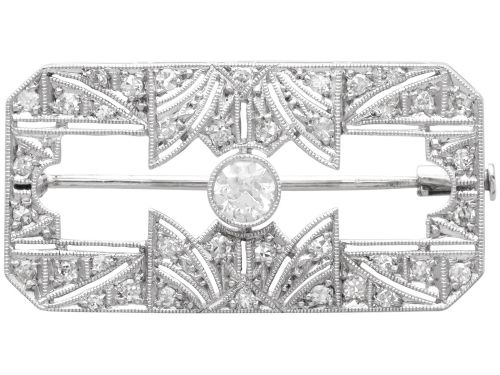
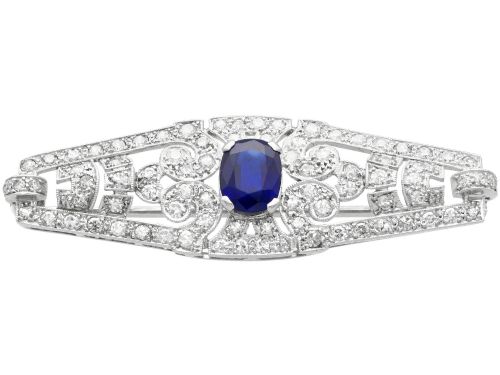
A 1920s gold pin is primarily represented on this page by bar brooches and gem-set dress pieces originating from the 1920 period. These items typically reflect the prevailing Art Deco aesthetic of the decade, leaning into structured geometry.
The selection includes pieces fashioned in various gold carats, alongside platinum combinations, often housing diamonds, rubies, sapphires, and pearls. Buyers searching for a 1920s gold pin encounter both delicate yellow gold settings and crisp white gold or platinum-topped mounts.
How they were made
The construction of these pieces relies on combinations of 14ct yellow gold, 18ct yellow gold, 18kt white gold, and platinum. Platinum was frequently utilised to mount diamonds securely in fine, crisp channels and millegrain edges.
Gems such as diamonds, rubies, sapphires, pink pearls, onyx, and rock crystal quartz were hand-set into structured frameworks. Many of these brooches utilise precise bar forms and crescent shapes characteristic of French and British workshops of the period.
Timekeeping items from the archive remind us that the 1920s kept everyone ticking while the jewellers worked on the diamonds.
What varies in quality
Quality in a 1920s gold pin is determined by the weight and brilliance of the set diamonds and coloured gemstones, alongside the complexity of the metalwork. Pieces featuring substantial diamond carat weights and supportive platinum settings sit at the upper end.
The finesse of the stone cutting, the security of the settings, and the inclusion of contrasting materials like black onyx or chrysoprase separate standard production from exceptional examples.
The 1920s Gold Pin Glossary
- Art Deco
- A design style dominant in the 1920s characterised by geometric shapes, stylised motifs, and clean lines. It replaced the flowing curves of earlier periods.
- Millegrain
- A jewellery technique involving a row of tiny metal beads along the edge of a setting. This method softens the transition between metal and stone.
- Platinum
- A dense, white precious metal utilised during the 1920s for its strength. It allowed jewellers to create delicate wirework and secure diamond settings.
1920s Gold Pin: Frequently Asked Questions
How do I wear a 1920s gold pin today?
These brooches suit heavy fabrics such as wool coats, thick scarves, or structured jacket lapels. The secure pin mechanism holds the weight of gemstone settings firmly in place.
For daily wear, position the pin horizontally on a lapel to let the geometric Art Deco lines catch the light.
Are all 1920s gold pins made of solid gold?
The pieces listed span various gold carats including 14ct and 18ct yellow gold, as well as 18kt white gold and platinum combinations. Some historical archive items also feature gold plating.
Checking the specific metal descriptions in each listing confirms the exact composition of the mount.
What gemstones are typical for this period?
Diamonds, rubies, sapphires, and pearls appear frequently in the jewellery of this decade. Contrasting materials such as black onyx, rock crystal quartz, and chrysoprase are also utilised.
These stones are often arranged in symmetrical patterns typical of the Art Deco style.
How can I tell a 1920s pin from an Edwardian piece?
While Edwardian jewellery often employs softer garlands and platinum lace, 1920s pieces shift towards bold geometry and streamlined silhouettes. Overlaps occur as the styles transitioned around 1920.
Examining the stone cuts and the rigidity of the metal framework helps distinguish between the two eras.