


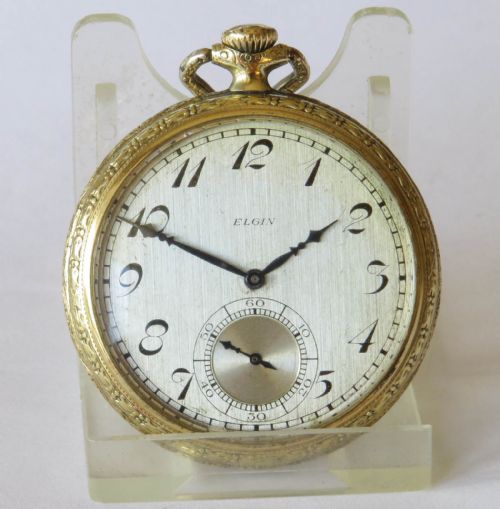


1920s Gold Fob Watch
A 1920s gold fob watch brings practical timekeeping and distinct Art Deco character straight to the waistcoat pocket.
1920s Gold Fob Watch
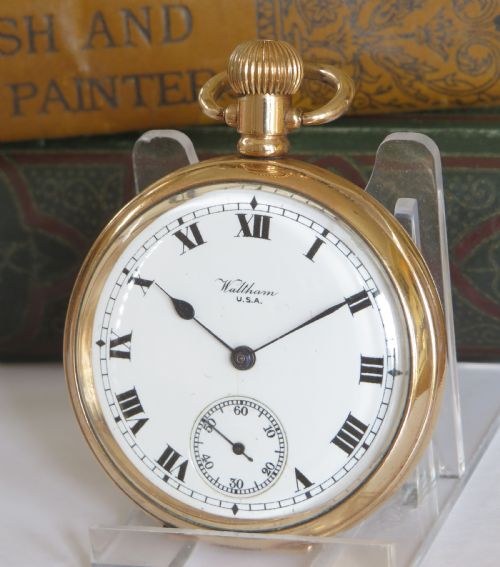
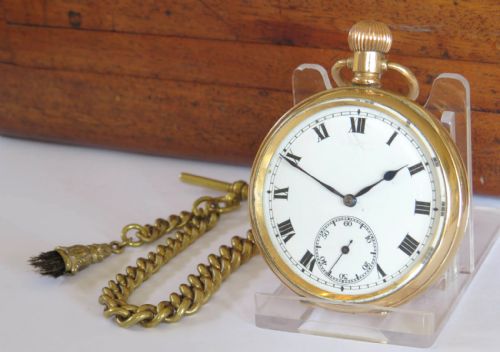
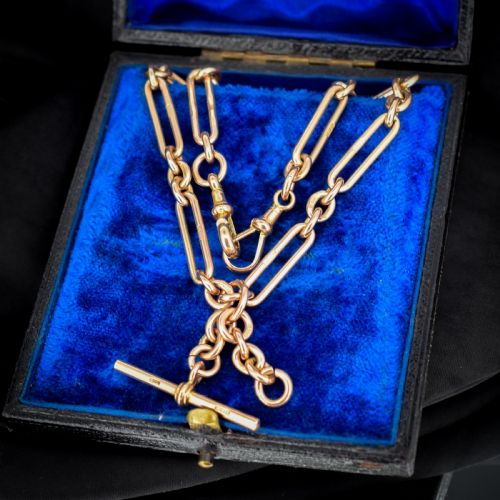
A 1920s gold fob watch encompasses open faced pocket watches, full hunter designs, and matching albert chains from the 1920 period. These timepieces display the clean lines and geometric motifs characteristic of Art Deco design.
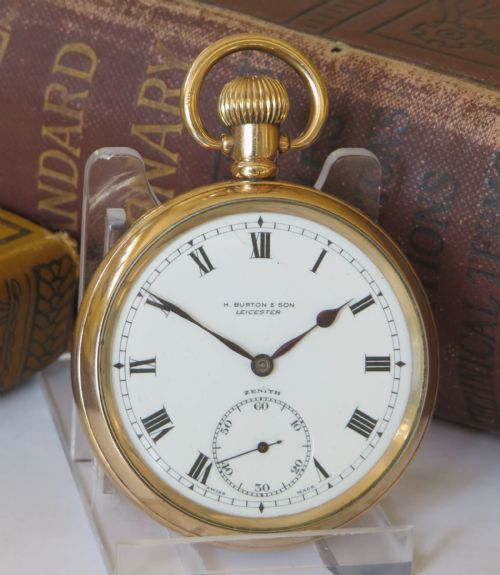
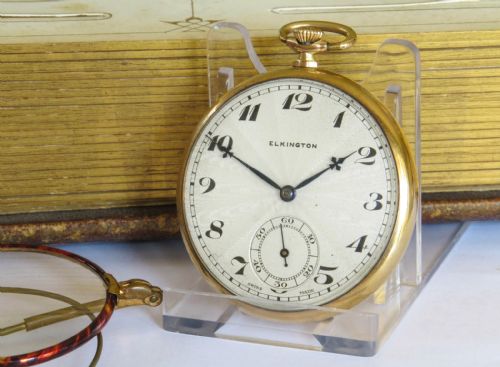
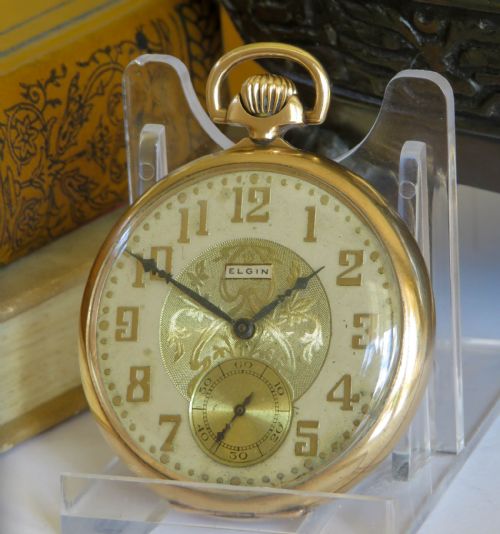
The pieces appearing on this page include solid gold, rolled gold, and rolled rose gold examples alongside steel components. Makers such as Waltham, Zenith, Elgin, Elkington, and Lonville feature across the selection.
Materials and construction
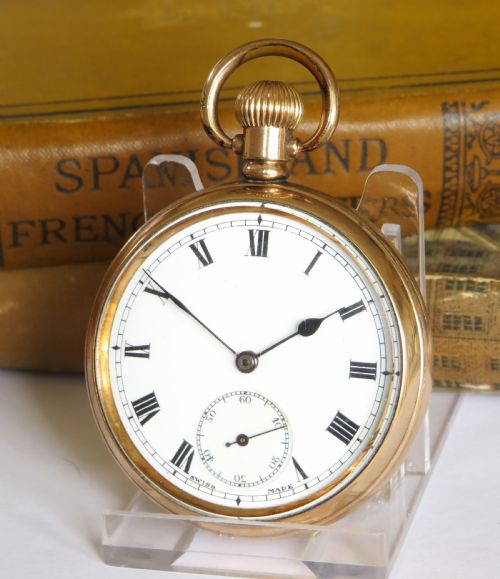
Cases are shaped from solid gold, rolled gold, and rolled rose gold, often finished with engine turned surface patterns. Internal movements house jewelled components, such as fifteen jewel Swiss made mechanisms.
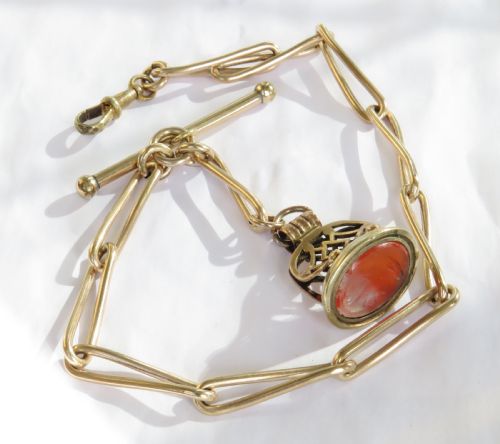
Dials are protected by glass covers and frequently decorated with enamel detailing. Chains utilise trombone links and companion metal components designed to secure the watch firmly to a garment.
The selection combines solid gold, rolled gold, and metal pieces originating strictly from the 1920 period.
Distinguishing quality
Quality rests in the precision of the case metal, whether solid gold or rolled gold, and the crispness of engine turned engraving. Solid gold iterations and named maker movements sit at the higher end of the range.
The integrity of the dial enamel and the complexity of the internal jewel count dictate the standard of execution. Complete pairings of watches with matching albert chains demonstrate superior preservation.
Waltham·Zenith·Elgin·Elkington·Lonville
The 1920s Gold Fob Watch Glossary
- Fob watch
- A small pocket watch designed to be carried in a waistcoat pocket and attached to a short chain or fob. These items gained immense popularity during the early twentieth century.
- Albert chain
- A decorative chain attached to a pocket watch, named after Prince Albert. They feature secure fastenings and distinctive links such as the trombone style.
- Full hunter
- A pocket watch featuring a spring-loaded metal cover that protects the glass dial. Pressing the crown opens the case.
- Engine turned
- A precise mechanical method of engraving intricate geometric patterns onto metal surfaces. This decoration appears frequently on period watch cases.
- Rolled gold
- A durable manufacturing technique where a layer of solid gold is mechanically bonded to a base metal core. It offers the appearance of solid gold with increased resistance to wear.
1920s Gold Fob Watch: Frequently Asked Questions
How do I wear a fob watch?
A fob watch rests securely in a waistcoat pocket while the attached chain threads through a buttonhole. The remaining length hangs across the front of the garment.
Alternatively, the watch can be secured inside a jacket pocket with the chain fastened to a lapel buttonhole. This keeps the timepiece safe and accessible throughout the day.
What is an open faced watch?
An open faced watch has no metal cover protecting the glass dial, allowing the time to be read instantly at a glance. This style was widely used when quick time checks were essential.
These pieces rely on robust glass crystals to shield the hands and dial from daily knocks. They represent a significant portion of the timepieces produced during the period.
How do I wind these watches?
Most watches from this period feature a manual wind movement operated by turning the crown at the top. Regular, gentle winding keeps the internal mechanism running accurately.
Care should be taken not to overwind the mainspring, as this can cause internal damage. A consistent daily routine preserves the life of the vintage components.
What is the difference between solid and rolled gold?
Solid gold cases consist entirely of precious metal stamped with specific purity hallmarks, such as nine carat gold. These pieces hold intrinsic material value alongside their historical worth.
Rolled gold utilises a thin layer of gold fused over a base metal foundation, providing durability at a different price point. Both materials exhibit the same bright warm lustre characteristic of the era.