



1920s Glass Scent Bottle
These 1920s glass scent bottle examples bring the bold geometry and tactile surfaces of the interwar dressing table straight to your collection.
1920s Glass Scent Bottle
A 1920s glass scent bottle represents the height of dressing table elegance, merging utilitarian vanity items with the distinct artistic movements of the era. When you search for this phrase, you encounter vessels designed to hold precious perfumes, often finished with decorative stoppers or atomiser hardware.
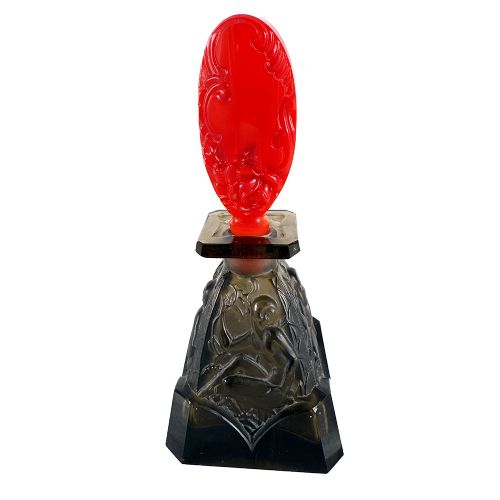
The pieces available here lean heavily into the Art Deco aesthetic, featuring geometric forms, stylised flora, and sculptural glass. You are most likely to meet moulded glass and cut glass bodies, frequently accompanied by silver mounts, enamel work, or tortoiseshell details.
Origins span British workshops in London and Birmingham alongside Continental makers, particularly French and Czech glasshouses. These items functioned as both daily cosmetic accessories and decorative dressing table centrepieces.
Materials and construction
Makers utilised heavy moulded glass and intricate cut glass to achieve the characteristic crisp lines and light-refracting facets of the period. Frosted glass surfaces provided a tactile contrast to smooth, polished sections, often highlighting sculptural motifs.
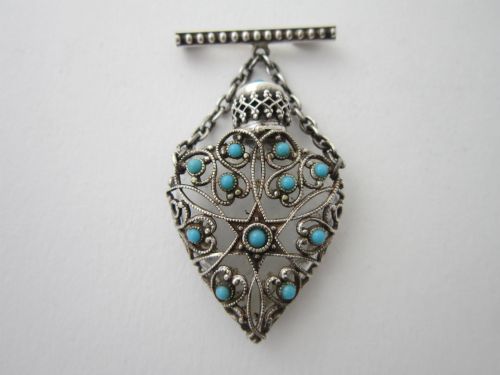
Metal mounts in sterling silver and continental silver were cast and hallmarked in cities like London and Birmingham to cap the glass vessels. Enamel, turquoise accents, and tortoiseshell were then applied by hand to elevate the decorative finish of the silver collars and lids.
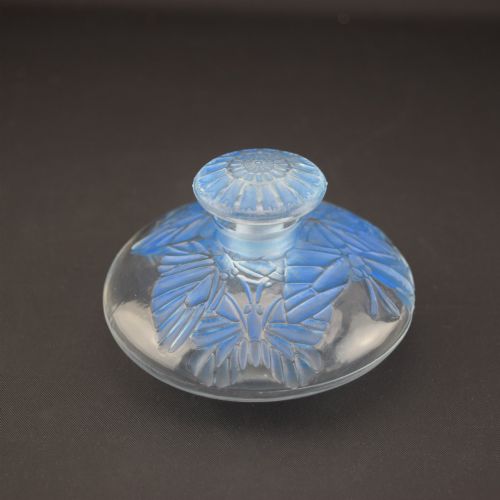
Butterflies and roses flutter across interwar dressing tables in frosted relief.
Factors of quality
Quality in a 1920s glass scent bottle rests upon the crispness of the mould and the depth of the glass relief work. Superior pieces display sharp detailing in sculptural elements and substantial weight in the glass body.
The integration of precious metal mounts also dictates standard, where fully hallmarked silver and intricate enamel work separate standard production pieces from finer examples. The presence of matching stoppers and original atomiser hardware preserves the integrity of the piece.
Rene Lalique·Henry Perkins·Barnsley and Co·Adie Brothers Ltd
The 1920s Glass Scent Bottle Glossary
- Art Deco
- A design style prevalent in the 1920s and 1930s characterised by sleek geometric shapes, stylised motifs, and modern industrial materials. It defines the architectural and decorative language of these scent bottles.
- Moulded glass
- Glass shaped by being pressed into a form or mould while hot. This technique allowed makers to produce consistent sculptural designs and relief patterns.
- Atomiser
- A spray mechanism fitted to a perfume bottle that disperses liquid in a fine mist. These often feature rubber bulbs and metal mesh hardware.
- Sterling silver
- An alloy consisting of silver and other metals, typically copper, standard for British silver mounts and hallmarked for purity. It provides a durable and polished collar for the glass bottle.
- Frosted glass
- Glass treated to have a textured, opaque appearance rather than a transparent finish. It is frequently employed to create contrast against clear or coloured glass surfaces.
1920s Glass Scent Bottle: Frequently Asked Questions
How do I identify a 1920s glass scent bottle?
Look for characteristic Art Deco geometry, moulded floral or figurative motifs, and heavy glass bodies typical of the period. Hallmarks on silver collars provide exact dates and assay office origins.
Matching stoppers and distinctive production techniques from French and British makers further confirm the era of manufacture.
Were these bottles meant for display?
These vessels were designed primarily for practical use on dressing tables to hold personal fragrances and cosmetics. Their decorative qualities made them centrepieces of interwar vanity sets.
Many examples include fitted atomisers or dabbers integrated into the silver or glass stoppers for daily application.
What materials are common on these bottles?
Clear, coloured, and frosted glass form the primary body of these vanity items, often shaped through moulding or cutting techniques. Sterling silver mounts, enamel, and tortoiseshell frequently accent the necks and lids.
Continental silver and turquoise details also appear on pieces originating outside of Britain.
How should I care for a vintage scent bottle?
Clean the glass gently with lukewarm water and avoid submerging silver mounts in harsh chemical solutions to preserve hallmarks and enamel. Handle stoppers with care, as ground glass necks and stoppers are prone to chipping.
Keep pieces out of direct sunlight to prevent any discolouration in coloured glass or delicate decorative elements.