







1920s French Mantel Clock
A 1920s french mantel clock brings geometric clarity and rich materials to a room, offering a functional centrepiece defined by the interwar avant-garde.
1920s French Mantel Clock
A 1920s french mantel clock primarily takes the form of an Art Deco timepiece, often encountered alongside matching garnitures or paired side ornaments on this page. These clocks span periods from the late nineteenth century through the interwar years, reflecting changing tastes in domestic timekeeping.
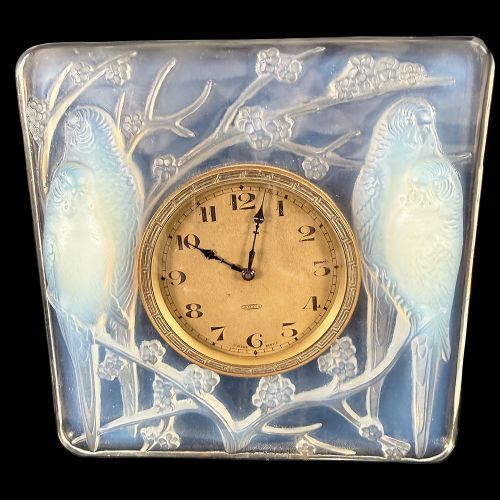
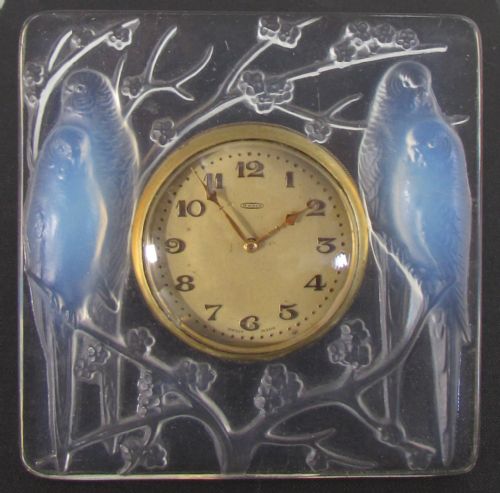
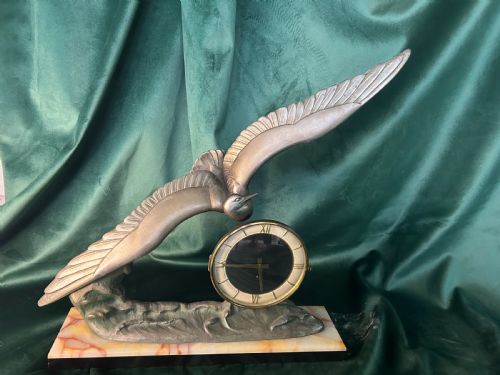
Makers and designers utilise contrasting materials like marble, brass, and opalescent glass to construct both architectural mantel clocks and smaller novelty alarm table clocks. The selection ranges from severe geometric marble compositions to figurative glass works featuring love birds or cockerels.
Many examples adhere strictly to the symmetrical layouts of the Art Deco movement, while older variants retain Belle Epoque or French Rococo Revival influences. Buyers find both standalone mantel clocks and complete three-piece clock sets incorporating grey breccia marble and bronze elements.
What Varies in Quality
The sophistication of the casting and the choice of materials dictate the standing of a piece, distinguishing mass production from artist-designed objects. Sculptural glass elements signed by prominent makers command greater attention than standard pressed glass panels.
The integration of the garniture set with the central clock body affects the visual harmony of the ensemble. Consistency in the veining of the marble and the crispness of the bronze or ormolu mounts signal superior workshop execution.
1920s French Mantel Clock Retail Price Guide 2026
Typical asking prices for 1920s french mantel clock among the pieces listed under this phrase on Sellingantiques today, from the lower quarter to the upper quarter. They describe what is for sale here now, not the wider market.
Glass clocks featuring love birds and cockerels prove that interwar designers believed timepieces deserved a feathered audience.
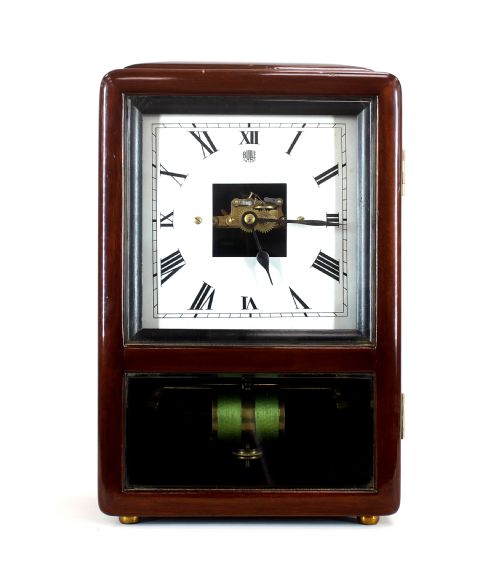
R Lalique·BULLE·Sue et Mare
The 1920s French Mantel Clock Glossary
- Garniture
- A set of matching decorative ornaments, typically comprising a central clock and two flanking side pieces designed to sit together on a mantelpiece.
- Opalescent glass
- Glass that diffuses light with a milky, milky-blue, or fiery appearance, frequently utilised by interwar French glassmakers for sculptural clock cases.
- Breccia marble
- A composite marble made of angular rock fragments embedded in a fine-grained matrix, prized for its mottled and colourful patterns on clock bases.
- Engine-turned
- A decorative mechanical technique applied to metal dials, producing precise geometric patterns of fine engraved lines.
- Ormolu
- Finely ground high-carat gold-mercury amalgam applied to a bronze base metal, creating a rich golden surface finish.
1920s French Mantel Clock: Frequently Asked Questions
What is a clock garniture?
A clock garniture is a matched set consisting of a central mantel clock accompanied by two side pieces, such as vases or matching ornaments.
These sets were designed to create a balanced, symmetrical arrangement across a fireplace mantel or sideboard.
How do electric clocks from this period work?
Early electric clocks, such as those by Bulle from the 1920s, utilise an electromagnetic pendulum system rather than a traditional mainspring.
This technology represents an early transition point in domestic timekeeping towards battery or electrical power.
What materials are common in these clocks?
Makers relied heavily on contrasting materials, pairing natural stones like marble and onyx with cast bronze, brass, or spelter.
Many interwar pieces also incorporate moulded opalescent glass and silver-plated elements to capture contemporary decorative styles.
How do I distinguish Art Deco from earlier styles?
Art Deco clocks feature streamlined geometric forms, clean lines, and stylised motifs, stepping away from the ornate curves of the Belle Epoque.
Earlier transitional pieces often blend traditional Revival shapes with emerging modernist symmetry.