



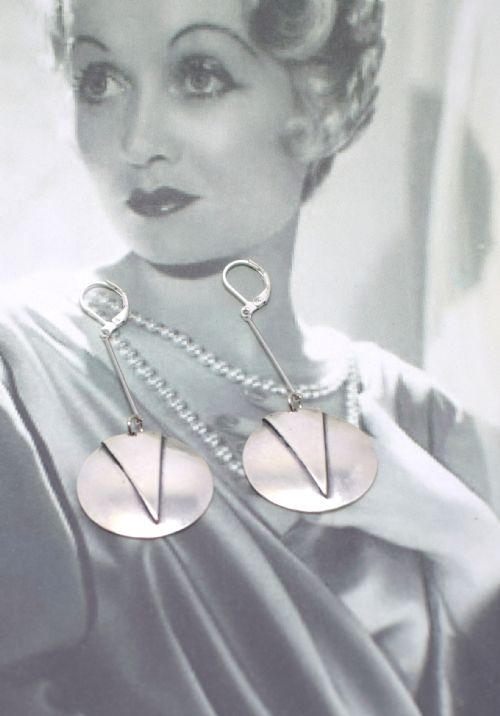
1920s Costume Jewellery
These pieces of 1920s costume jewellery deliver geometric brilliance and bold colour, offering wearable history that transforms an outfit instantly.
1920s Costume Jewellery
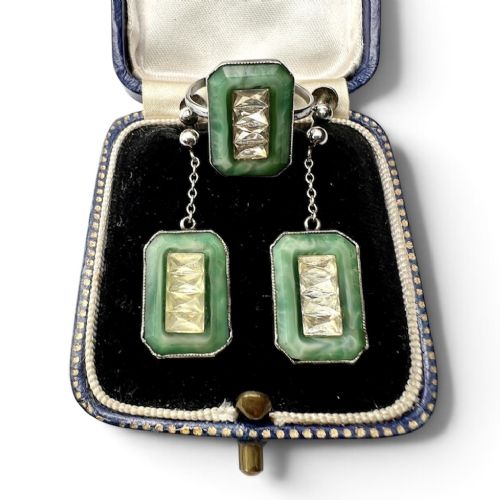
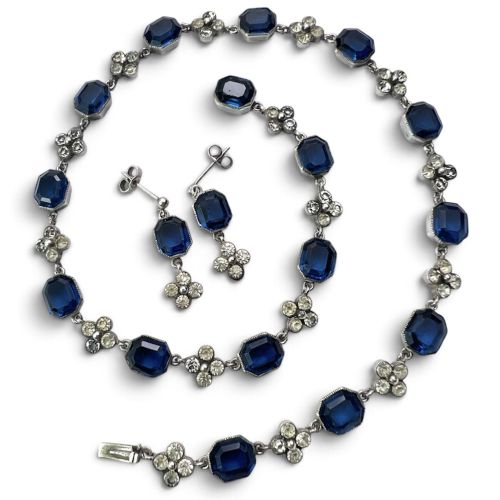
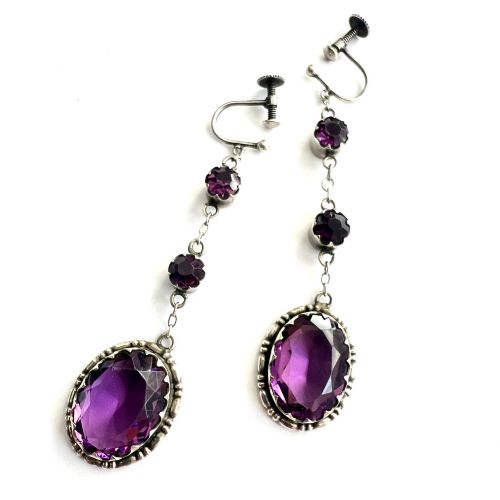
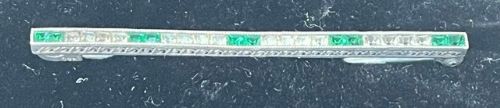
When you search for 1920s costume jewellery, you encounter distinctive accessories defined by the Art Deco style that dominated the period. The selection on this page centres primarily on earrings, brooches, necklaces, and matching jewellery sets originating from the early decades of the twentieth century. These items capture the shift towards modernism, moving away from Victorian restraint into striking geometric forms and vibrant ornamentation.
Earrings and brooches represent the most frequent forms you meet here, alongside statement necklaces and bracelets. Materials span from silver and chrome settings to colourful glass and early plastics. Most pieces align with the Art Deco aesthetic, though occasional examples bridge into adjacent periods or incorporate earlier nineteenth-century influences.
How they were made
Maker construction relies heavily on silver and chrome frameworks to house sparkling paste glass, faux gems, and marcasite stones. Metal settings are punched, cast, or plated to create clean architectural lines that mimic fine jewellery without utilising precious gems. Screwback mechanisms and secure pin stems are integrated directly into the metalwork of earrings and brooches.
Moulded synthetic materials such as Bakelite, phenolic, Galalith, and other early plastics introduce solid blocks of colour and smooth modernist contours. Glass stones are cut and faceted to catch the light, then set securely into bezels or prongs alongside polished chrome and silver components.
1920s Costume Jewellery Retail Price Guide 2026
Typical asking prices for 1920s costume jewellery among the pieces listed under this phrase on Sellingantiques today, from the lower quarter to the upper quarter. They describe what is for sale here now, not the wider market.
Listings feature silver, chrome, Bakelite, Galalith, and paste glass formed into earrings, necklaces, brooches, and bracelets.
What varies in quality
Quality reveals itself in the precision of the metalwork and the security of the stone settings. Superior items exhibit crisp geometric lines in silver or chrome, with tightly secured paste glass, marcasite, or synthetic stones that sit flush within their bezels.
The choice of materials also dictates the calibre of a piece, distinguishing standard chrome settings from heavier silver constructions. Finer examples maintain original plating integrity, clean stone faceting, and robust fastenings that function smoothly after a century of use.
The 1920s Costume Jewellery Glossary
- Marcasite
- Small, polished pyrite stones faceted and set closely together to create a dark, metallic sparkle. This material frequently outlines geometric silver frames.
- Bakelite
- An early form of synthetic phenol formaldehyde resin valued for its rich colours and durability. It defines the bold modernist bracelets and earrings of the era.
- Galalith
- A semi-synthetic plastic derived from milk casein that accepts vibrant dyes and polished finishes. It appears in smooth geometric necklace links.
- Screwback
- A mechanical fastening for non-pierced ears utilising a threaded post and paddle to secure the earring. This mechanism is standard on surviving period earrings.
1920s Costume Jewellery: Frequently Asked Questions
How do I wear vintage costume pieces?
Pair brooches with heavy wool coats, structured lapels, or simple knitwear to let the geometric metalwork stand out clearly.
Layer necklaces against plain fabrics or use earrings to frame the face without needing additional competing accessories.
Are these items made of real silver?
Many pieces utilise solid silver or silver plating alongside base metals and chrome frameworks. The specific metal varies by item and manufacturer.
Examining the setting reveals whether the base is polished chrome, plated metal, or genuine silver.
What is paste glass?
Paste glass is heavy, high-lead glass cut by hand to imitate diamonds, emeralds, and sapphires. It provides exceptional sparkle in early twentieth-century designs.
Craftsmen set these stones into metal mounts just as they would precious gems.
How do I identify Art Deco style?
Art Deco design relies on symmetrical geometric shapes, clean lines, and sharp angles inspired by machine-age modernity. It contrasts sharply with the flowing organic curves of earlier eras.
Look for chevrons, stepped motifs, and structured rectangular settings across earrings and necklaces.