
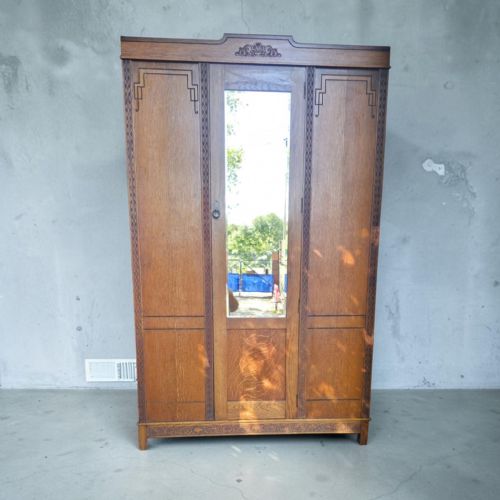
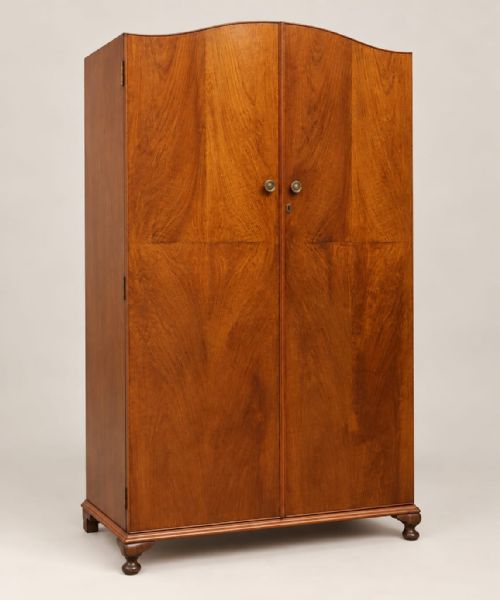
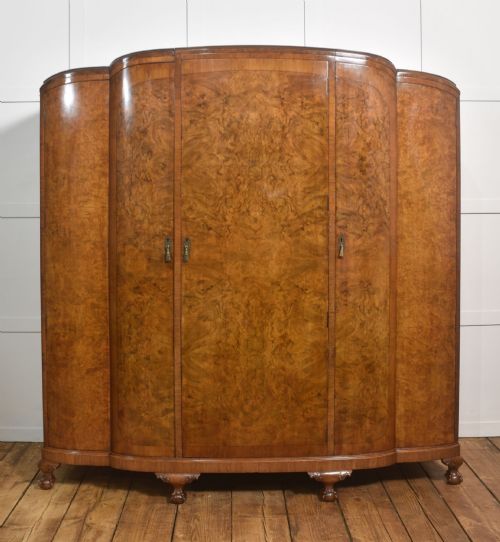
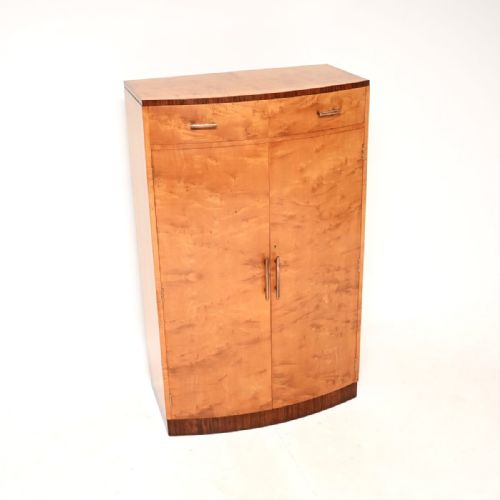


1920s Art Deco Armoire
A 1920s art deco armoire brings striking geometry and rich timber to the bedroom, offering substantial storage with genuine period character.
1920s Art Deco Armoire
A 1920s art deco armoire is a large bedroom storage piece defined by the bold geometric lines and sophisticated styling of the interwar period. These wardrobes range from simple single-compartment cupboards to expansive fitted units designed for modern twentieth-century living.
The versions most commonly met on this page span the 1920 and 1930 periods, showcasing the evolution of Art Deco design alongside occasional Queen Anne Revival influences. Buyers encounter various formats here, including compactum wardrobes, breakfront designs, and triple wardrobes.
Originating from cabinet makers of the early twentieth century, these armoires serve as both practical storage and focal points for period bedrooms. Their substantial presence reflects the craftsmanship and interior ambitions of the era.
How they were made
Cabinet makers utilised choice timbers such as walnut, burr walnut, and solid oak as the structural and aesthetic foundation for these wardrobes. Burr walnut veneer was frequently applied to create striking symmetrical grain patterns across large cabinet doors.
Construction techniques combined traditional cabinet-making with innovative surface treatments, including limed oak finishes and satin birch accents. Metal, brass, glass, and bakelite details completed the hardware and handles, defining the industrial and decorative spirit of the decade.
The selection here spans the 1920 and 1930 periods, incorporating walnut, burr walnut veneer, solid oak, and satin birch.
What varies in quality
The excellence of a 1920s art deco armoire rests on the selection and matching of its wood veneers. Cabinets boasting continuous burr walnut grain across multiple doors demonstrate superior planning and execution by the maker.
Hardware integration and interior configuration also separate standard production from exceptional pieces. Fitted compartments, labelled maker origins, and signed metal or bakelite details elevate the standing of a wardrobe within the period range.
Heals of London·Jean Faure
The 1920s Art Deco Armoire Glossary
- Armoire
- A large upright cupboard or wardrobe used for storing clothing. These pieces often feature fitted internal shelving and hanging space.
- Compactum
- A multi-functional wardrobe combining hanging space, drawers, and shelving within a single footprint. This format maximises storage efficiency in period bedrooms.
- Burr Walnut
- Timber taken from a tree growth, producing intricate, swirling grain patterns. It was sliced into veneers for decorative cabinet fronts.
- Breakfront
- A cabinet design where the central section projects forward from the flanking wings. This architectural layout adds depth and visual interest to large wardrobes.
- Satin Birch
- A pale, fine-grained hardwood used for interior fittings and contrasting accents. It provides a bright visual counterpart to darker walnut surfaces.
1920s Art Deco Armoire: Frequently Asked Questions
What is a compactum wardrobe?
A compactum wardrobe is an all-in-one storage unit designed to hold suits, folded clothes, and shoes in a single footprint. It typically divides the interior between hanging space, drawers, and shelving.
These pieces were popularised in the early twentieth century to provide maximum utility in smaller bedroom spaces without sacrificing decorative appeal.
How do I identify a 1920s piece?
You can identify pieces from this decade through characteristic geometric silhouettes, symmetrical burr walnut veneers, and specific hardware materials like bakelite and brass. Maker labels and signatures also help confirm the era.
Design traits often blend traditional cabinet forms with the emerging modernist aesthetics of the interwar period.
Where were these wardrobes used?
These large storage pieces were designed primarily for principal bedrooms in substantial homes of the 1920s and 1930s. They provided essential private storage before fitted bedroom furniture became standard.
Today, they function effectively in spacious modern bedrooms as statement wardrobes with considerable internal capacity.
What is burr walnut veneer?
Burr walnut veneer consists of thin slices of highly figured timber taken from the gnarled outgrowth of a walnut tree. Cabinet makers applied these decorative sheets to wardrobe doors to create dramatic, swirling grain patterns.
This technique allowed workshops to showcase natural timber artistry across large flat surfaces.