



18th Century Tureen
An 18th century tureen is a grand table vessel designed for serving soup or sauce, prized for its ornate painted decoration and sculptural porcelain or metal form.
18th Century Tureen
An 18th century tureen is a substantial serving vessel that held pride of place on formal dining tables during the Georgian era. These pieces range from grand soup vessels to delicate sauce boats and lidded tureens used for gravies.
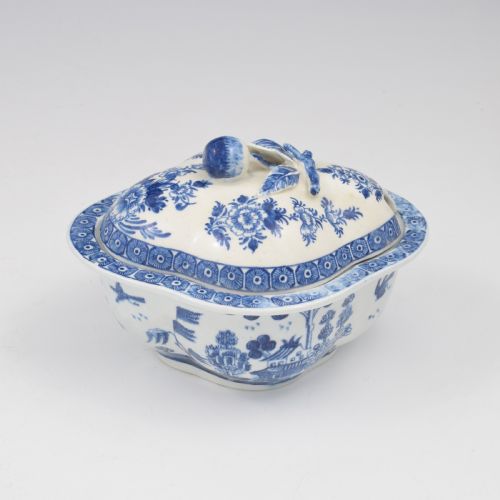
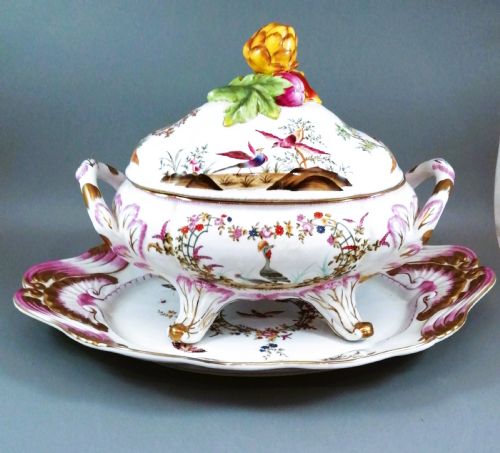
Most examples found in this category belong to the 18th century or Georgian period, though occasional later continental pieces also appear. Forms vary from traditional oval basins to elaborate quatrefoil shapes and figural bird designs.
Origins span English factories like Derby and Worcester alongside continental faience workshops, Chinese export porcelain, and heavy English pewter. Each piece reflects the formal dining habits of the period, combining functional serving capacity with decorative flair.
How they were made
Potters relied on soft-paste and hard-paste porcelain, shaping the body either by hand or in moulds to achieve crisp architectural lines and organic curves. Artisans then applied cobalt glaze or polychrome pigments by hand before firing.
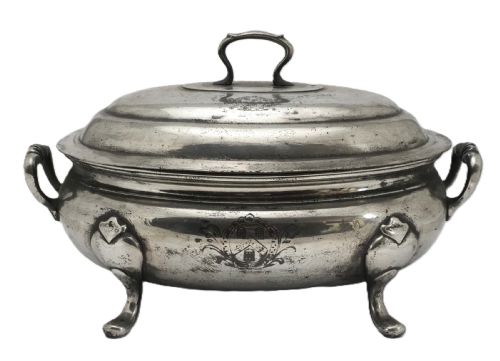
Metal vessels such as silver and pewter were cast and engraved, as seen in pieces bearing detailed armorial decoration. Gilding with gold leaf added a final layer of refinement to select porcelain and ceramic bodies.
18th Century Tureen Retail Price Guide 2026
Typical asking prices for 18th century tureen among the pieces listed under this phrase on Sellingantiques today, from the lower quarter to the upper quarter. They describe what is for sale here now, not the wider market.
The selection includes works from English, continental, and Chinese export origins, spanning the Georgian era and the wider eighteenth century.
What varies in quality
The sophistication of the painted or engraved decoration sets the finest pieces apart from standard kitchenware. Crisp detail in cobalt blue or polychrome faience indicates a skilled hand at the kiln.
Survival of matching covers and stands elevates the stature of a tureen significantly. Weight, balance, and the precision of moulded details like handles and finials also define the upper tier of craftsmanship.
Derby Porcelain·Worcester Dr Wall·William Grundy·Meissen
The 18th Century Tureen Glossary
- Soft-Paste Porcelain
- A ceramic material composed of white clay and glass frit, fired at lower temperatures than hard-paste porcelain. It produces a warm, slightly translucent body common in eighteenth-century English factories.
- Cobalt Glaze
- A rich blue metallic oxide pigment applied under the glaze before firing. It creates deep blue decoration that withstands high kiln temperatures without fading.
- Qianlong Period
- The era of Chinese history from 1736 to 1795 marked by extensive porcelain production for export to Europe. Pieces from this time often feature intricate blue and white hand-painted scenes.
- Faience
- Tin-glazed earthenware produced across continental Europe. It offers an opaque white surface suitable for colourful polychrome painting.
- Quatrefoil
- A symmetrical shape composed of four overlapping lobes. This decorative outline frequently frames the bases and rims of eighteenth-century sauce tureens.
- Armorial
- A design featuring heraldic coats of arms. Engraved or painted coats of arms indicate that a tureen was commissioned for a specific noble family or institution.
18th Century Tureen: Frequently Asked Questions
How were antique tureens used?
Hosts used tureens to serve hot dishes directly at the dining table, keeping the contents warm beneath a fitted lid. Sauce tureens and gravy boats held specialised accompaniments for meat and fish courses.
Beyond their functional role, these decorative ceramics and metal vessels demonstrated the host's wealth and taste during formal meals.
How do I date a porcelain tureen?
Dating relies on stylistic clues, paste composition, and factory marks beneath the glaze. Eighteenth-century pieces often feature characteristic cobalt painting styles, soft-paste bodies, or specific moulding techniques tied to known periods like the Qianlong reign.
Comparing the form and decorative motifs to documented pieces from factories like Derby or Worcester helps narrow the production window.
Can I use an antique tureen for serving?
While these vessels were originally made for dining, most collectors treat antique tureens and sauce boats as decorative display pieces. Age, delicate glazes, and historic materials mean modern heavy use is generally discouraged.
Gentle handling preserves the painted decoration, gold leaf, and fragile porcelain bodies for future generations.