


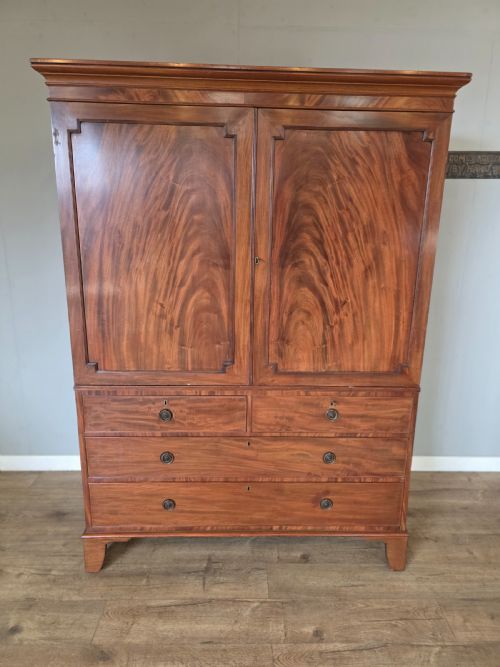


18th Century Mahogany Armoire
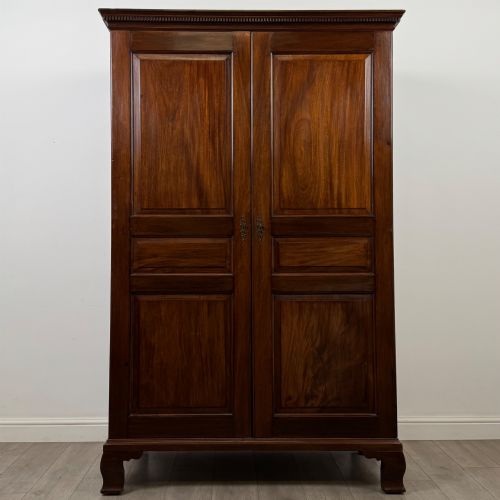
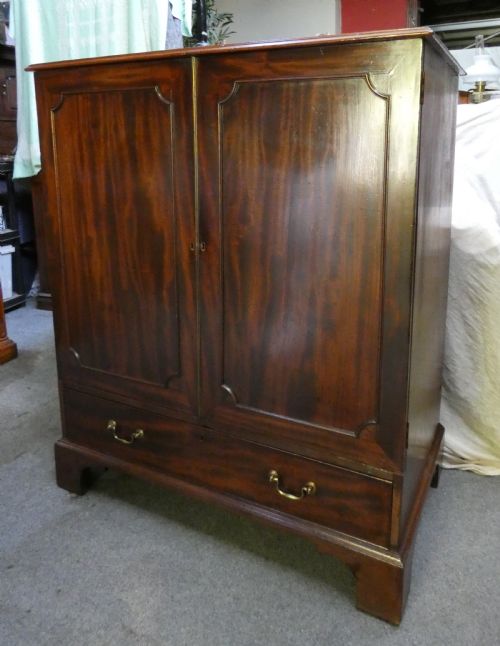
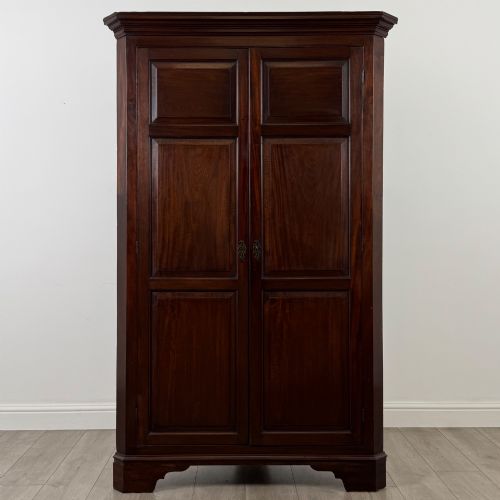
An 18th century mahogany armoire brings substantial timber presence and historic storage capacity to a bedroom.
18th Century Mahogany Armoire
An 18th century mahogany armoire encompasses large storage forms built primarily during the Georgian and George III periods. Buyers searching this phrase meet substantial case furniture designed to house garments and household linens.
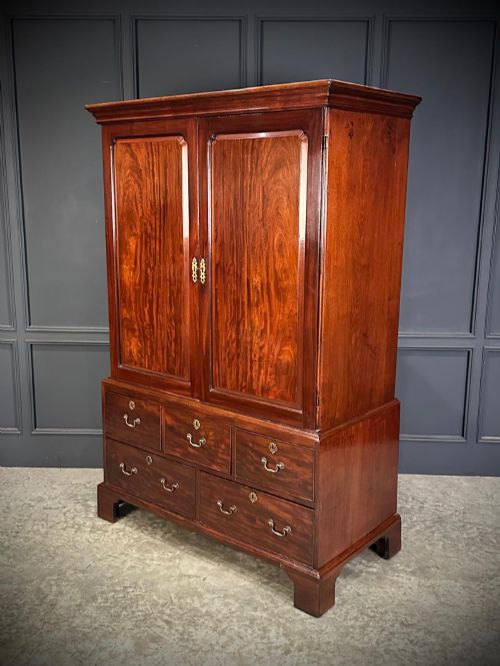
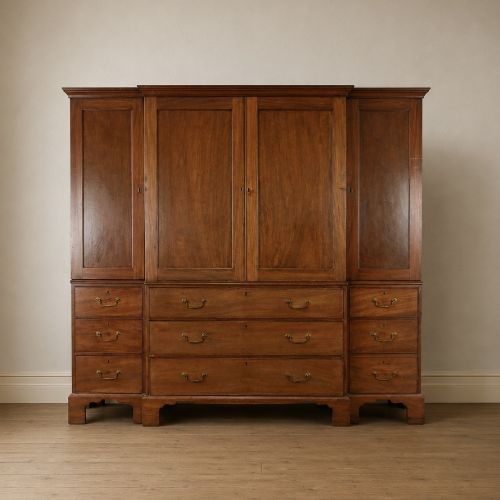
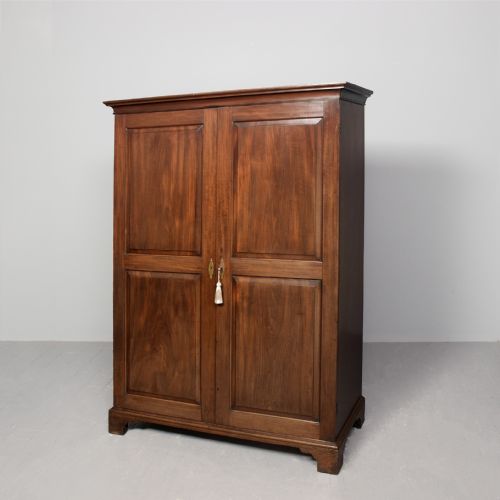
The material record shows these pieces frequently appear as linen presses, gentlemen's wardrobes, and press cupboards alongside corner cabinets. The form often combines hanging space with sliding trays enclosed behind large panelled doors.
Originating largely from English workshops, these items span mid 18th century examples through to pieces dated around 1800. The dominant stylistic vocabulary aligns with Georgian cabinetmaking traditions.
Construction and Materials
The foundational timber is solid mahogany, frequently elevated through the application of flame mahogany veneer to primary surfaces. Cabinetmakers utilised secondary woods such as oak for internal construction and drawer linings.
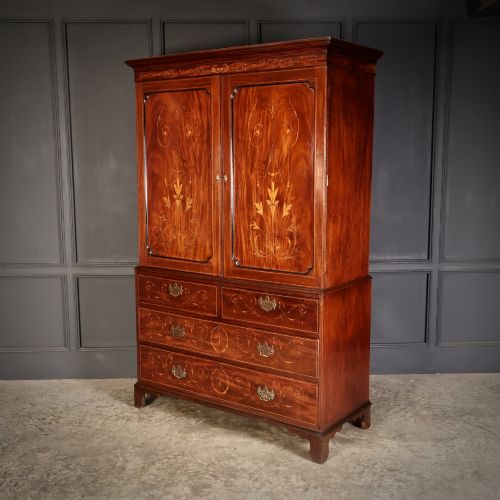
Decorative enhancement relies on specialised techniques including marquetry inlay utilising boxwood and satinwood. Brass hardware secures the doors and operates the drawers, completing the functional structure.
Gentlemen's wardrobes provided discreet compartments for the eighteenth century gentleman to store his private ledgers and powdered wigs.
Distinctions in Quality
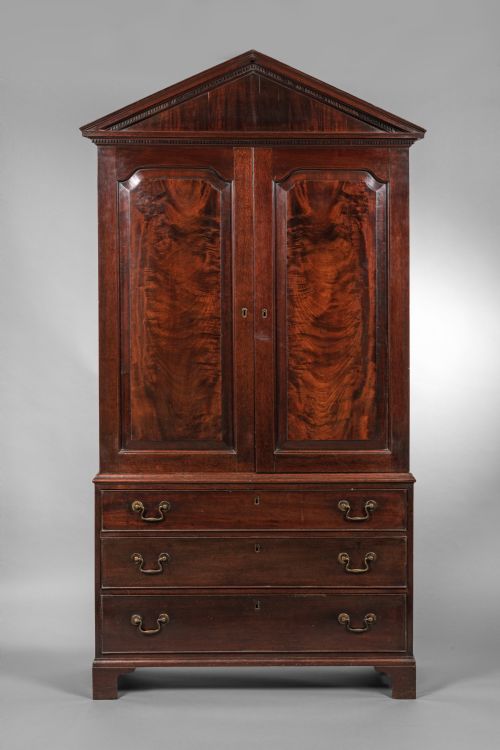
Quality diverges significantly based on timber selection, where highly figured flame mahogany and crisp marquetry inlay distinguish superior examples from plain surfaces. The skill of the cabinetmaker shows in the proportion of the breakfront or bowfront facade and the integration of architectural pediments.
Internal execution also dictates standing, particularly the presence of fitted estate interiors with original sliding trays rather than altered hanging spaces. The finesse of fine detailing on cornices and panel mouldings separates standard utility pieces from high architectural commissions.
Francis Brodie·Thomas Chippendale
The 18th Century Mahogany Armoire Glossary
- Armoire
- A tall wardrobe or cupboard, traditionally used for storing clothes. In British antique furniture, this term often describes large Continental or domestic storage pieces.
- Linen Press
- A large cabinet designed specifically for storing folded linen and garments. These typically feature upper sliding trays enclosed by doors above a lower chest of drawers.
- Flame Mahogany
- A veneer cut from the branchwood fork of the mahogany tree, producing a distinctive flickering flame pattern. Cabinetmakers utilised this timber on prominent exterior drawer fronts and door panels.
- Breakfront
- A piece of furniture with a central section that projects forward from the flanking sides. This architectural arrangement creates depth and visual interest on large case pieces.
- Swan-Neck Pediment
- A decorative broken pediment featuring two scrolling curves resembling the neck of a swan. This architectural crown often terminates in a central plinth or urn.
18th Century Mahogany Armoire: Frequently Asked Questions
What is a linen press?
A linen press is a tall case piece combining upper doors that enclose sliding wooden trays with a lower chest of drawers. They were built to store folded textiles and garments before modern hanging wardrobes became standard.
These pieces served a central role in large households for managing family linens and clothing. The interior sliding trays kept folded fabrics organised and accessible.
How do I date a Georgian wardrobe?
Dating relies on examining the timber species, construction methods, and stylistic cues such as pediment design and bracket feet. Mid 18th century pieces often display simpler architectural lines while later 1800 examples incorporate satinwood inlay and bowfronts.
Secondary woods inside drawers also provide clues to the period of manufacture. Oak linings typically indicate earlier English workshop production.
Will an antique armoire fit in a modern bedroom?
These pieces were built on a grand scale and require careful measurement of ceiling height and doorway clearance before placement. Many examples are heavy case furniture that demands adequate floor space to balance the room.
Interior configurations often require adaptation if used for modern hanging garments rather than historical folded storage. Consulting the specific dimensions of each piece ensures proper integration into your home.
What is flame mahogany?
Flame mahogany is a highly figured wood veneer harvested from the junction where branches meet the main tree trunk. This figure produces dramatic wavy patterns resembling flickering fire.
Cabinetmakers reserved this prized timber for the most visible exterior surfaces of high status furniture. It creates a striking visual contrast against plainer solid mahogany frames.