






18th Century Long Gun
These 18th century long gun examples span British, American, and Eastern traditions, offering collectors remarkable historic arms.
18th Century Long Gun
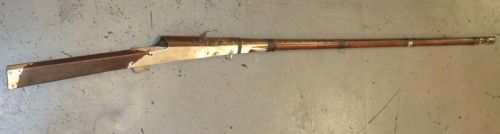
An 18th century long gun covers shoulder arms and long-barreled firearms from the 1700s, encompassing military muskets, sporting rifles, and regional matchlocks. Buyers seeking an 18th century long gun encounter pieces ranging from British military arms to ornate Eastern matchlocks.
Materials and construction
Stocks are fashioned from walnut and assorted hardwoods, providing the robust foundation necessary for long barrels and firing mechanisms. Metal components utilise forged steel and iron for barrels and locks, paired with brass for mountings and decorative bands.
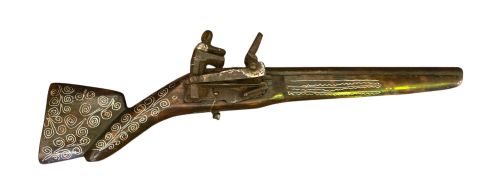
Decoration involves meticulous inlay work utilising bone, mother-of-pearl, and silver wire or sheet, particularly evident on Eastern and North African examples. Lock mechanisms vary from matchlock and snaphaunce to flintlock systems, demonstrating the evolving technology of the era.
18th Century Long Gun Retail Price Guide 2026
Typical asking prices for 18th century long gun among the pieces listed under this phrase on Sellingantiques today, from the lower quarter to the upper quarter. They describe what is for sale here now, not the wider market.
Certain North African toe-lock muskets permitted the shooter to operate the trigger mechanism using their foot.
Assessing quality and execution
Quality rests upon the crispness of the lock mechanism, the integrity of the wooden stock, and the preservation of original decorative inlays. Superior examples retain matching components and sharp metal engraving without excessive replacement parts.
The refinement of regional ornamentation, such as intricate bone work on Indian toradar matchlocks or fine brass mounts on British flintlocks, distinguishes standard military issue from high-status arms.
The 18th Century Long Gun Glossary
- Flintlock
- A firearm ignition mechanism that uses a flint striking against a steel frizzen to create sparks that ignite the gunpowder. This system dominated military and civilian firearms throughout the 18th century.
- Matchlock
- An early type of gun lock where a burning slow match is lowered into a pan of priming powder to fire the weapon. It remains common on many 18th century Indian and Asian arms.
- Snaphaunce
- An early flintlock predecessor utilising a spring-loaded flint holder and a separate sliding pan cover. It provides reliable ignition before the standardised flintlock took precedence.
- Toradar
- A traditional South Asian matchlock gun characterised by a long barrel and a full stock often decorated with bone or brass. These pieces represent significant regional craftsmanship.
- Frizzen
- The vertical steel plate on a flintlock firearm that the flint strikes to create sparks and expose the priming powder. Its grooved surface is essential for consistent ignition.
18th Century Long Gun: Frequently Asked Questions
How do I clean an 18th century long gun?
Maintenance requires gentle dusting of wooden stocks and applying light oil to metal surfaces to prevent active corrosion.
Harsh chemical cleaners and abrasive materials must be avoided to preserve historic patina and original surface finishes.
Can these antique firearms still be fired?
Most collectors treat these historic arms as display pieces rather than operational firearms due to material degradation over centuries.
Firing antique gunpowder weapons requires specialist examination by a qualified gunsmith to ensure structural safety.
What is the difference between a musket and a rifle?
Muskets feature smoothbore barrels designed primarily for rapid loading and massed military volleys at shorter distances.
Rifles incorporate spiral grooves inside the barrel to spin the projectile, offering significantly greater accuracy over longer ranges.
How do I identify the origin of an 18th century long gun?
Origin is determined by examining lock types, stock architecture, proof marks, and distinctive regional decorative inlays such as bone or silver.
Comparison with documented examples from British, American, Ottoman, or Indian traditions clarifies the geographic source.