





18th Century French Textile
An 18th century french textile brings centuries of woven artistry, rich silk velvet, and pastoral tapestry into an interior.
18th Century French Textile
When you search for an 18th century french textile, you encounter wall hangings, tapestries, cushion covers, and framed panels spanning needlework, lampas, and velvet.
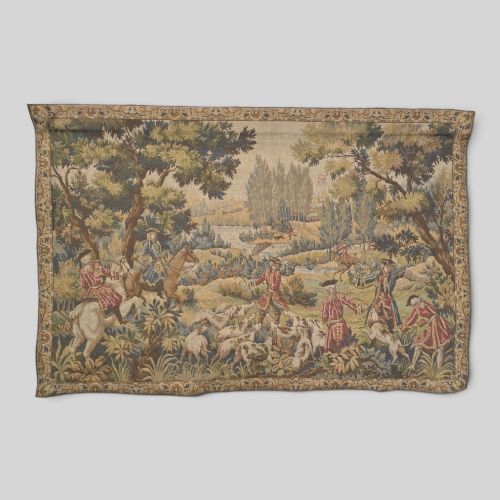
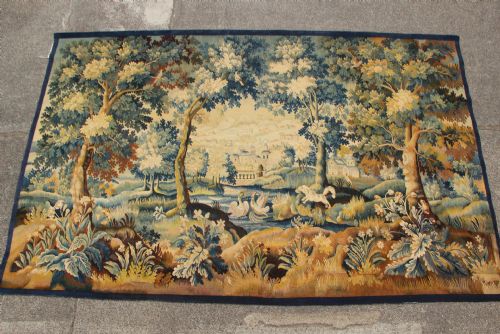
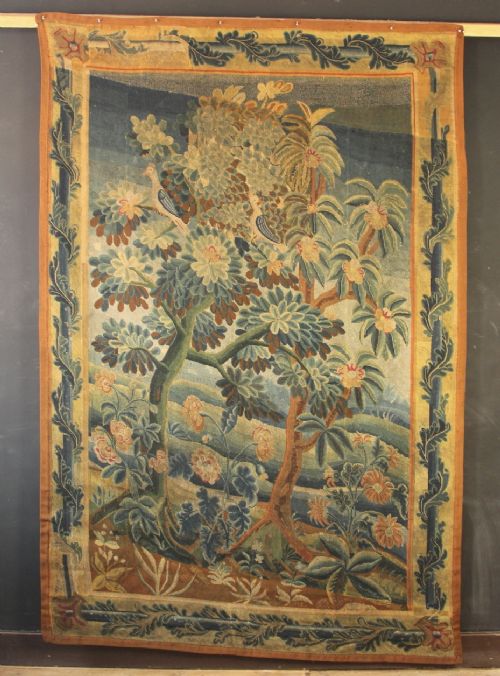
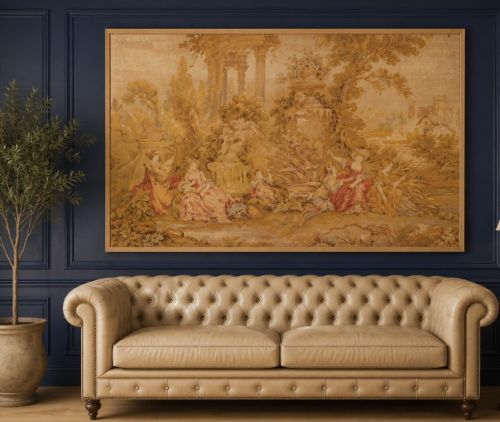
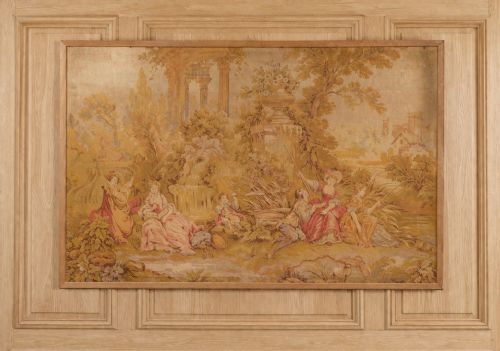
The pieces on this page range from grand Aubusson verdure tapestries and pastoral scenes to fragments of Bizarre silk and toile de Jouy mounted for display.
While many examples date strictly to the 1700s and the French Rococo or Baroque styles, the selection also includes later interpretations from the Edwardian era and the early twentieth century utilising older elements.
Materials and Construction
Weavers and needleworkers utilised fine natural fibres including silk, wool, and linen, often combining them within heavy wooden frames for large wall hangings or mounting delicate fragments.
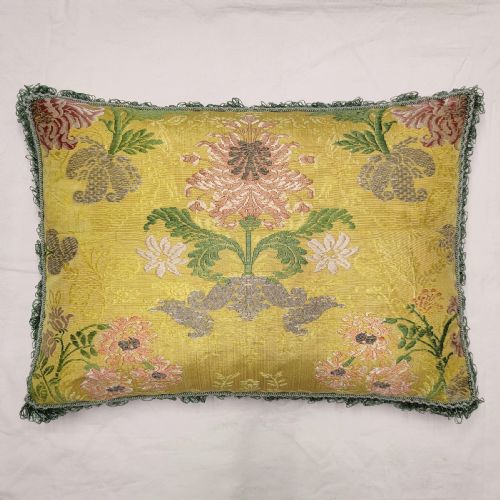
Specialised weaving techniques produced complex textures, seen in the raised pile of ciselé silk velvet, the patterned lampas grounds, and the intricate stitching of needlework panels.
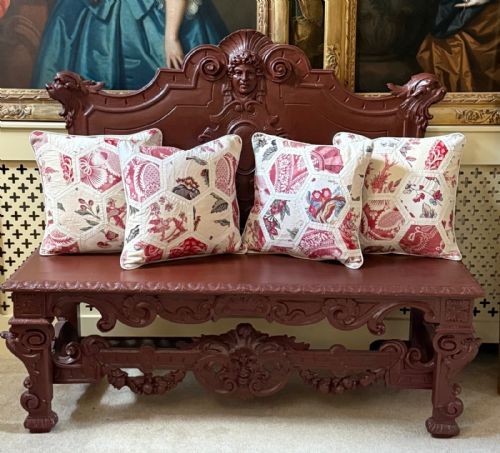
Some cushions arrive with brand new feather inners tucked safely behind centuries of Belgian linen.
Evaluating Quality and Condition
The finest examples display dense, careful handwork and remarkably well-preserved dye colours, whereas lesser pieces show significant fibre thinning, losses, or heavy later repairs.
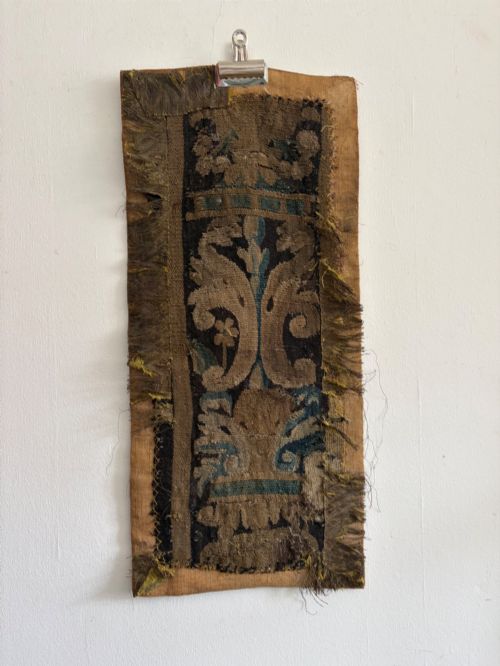
Original structural integrity and the survival of expansive pictorial scenes or complete woven borders distinguish exceptional decorative panels from fragmented remnants.
The 18th Century French Textile Glossary
- Verdure tapestry
- A woven wall hanging featuring a predominant landscape or foliage design, often depicting trees, leaves, and distant pastoral elements. These were particularly popular for bringing natural scenery into domestic interiors.
- Lampas
- A complex woven fabric featuring a background weave with supplementary pattern wefts that create rich surface designs. Bizarre lampas types showcase particularly eccentric and asymmetrical motifs.
- Ciséle velvet
- A velvet fabric created by cutting some of the pile loops while leaving others uncut to form a pattern against a ground of different weave. This technique produces subtle textural contrast and tactile depth.
- Needlework panel
- A textile piece worked by hand with a needle and thread upon a canvas or linen ground rather than created on a loom. These often depict figures, florals, or pastoral vignettes.
- Toile de Jouy
- A cotton or linen fabric printed from engraved copper plates with repetitive monochromatic pastoral scenes. Fragments are frequently framed as distinct works of art.
18th Century French Textile: Frequently Asked Questions
How should I hang a large antique tapestry?
Large tapestries require even weight distribution across the top edge, typically achieved by stitching a sturdy linen sleeve to the reverse and sliding a flat wooden batten through it.
Avoid hanging heavy textiles directly from small localized loops or nails, which can distort the historic weave over time.
How do I protect textiles from sunlight?
Ultraviolet light causes natural dyes in antique silks and wools to fade rapidly and weakens the structural integrity of ancient fibres.
Position framed panels and wall hangings away from direct south-facing windows or install specialised UV-filtering museum glass and window films.
What is the difference between a tapestry and needlework?
Tapestries are woven on a loom by interlacing warp and weft threads together to build the complete image from scratch.
Needlework is stitched by hand directly onto an already woven foundation fabric, filling in the design with decorative thread.