



18th Century Copper Cookware
18th century copper cookware brings heavy warmth and honest hearth utility into a modern kitchen, built to last for generations.
18th Century Copper Cookware
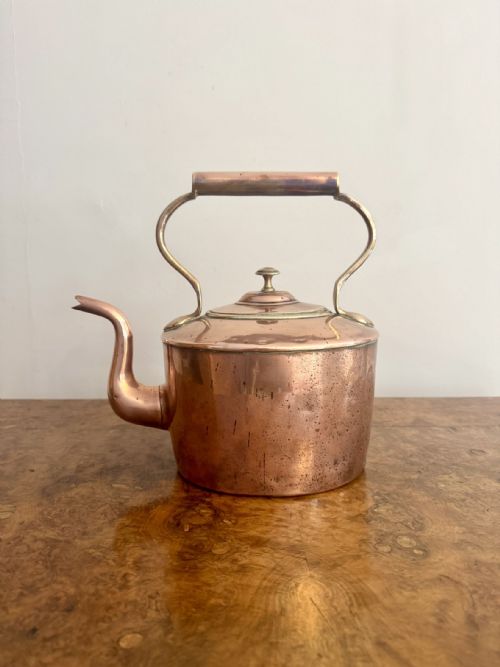
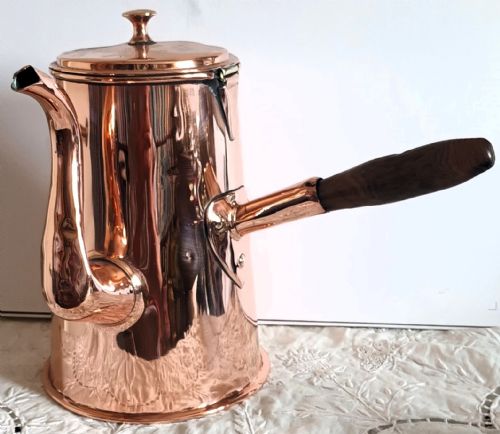
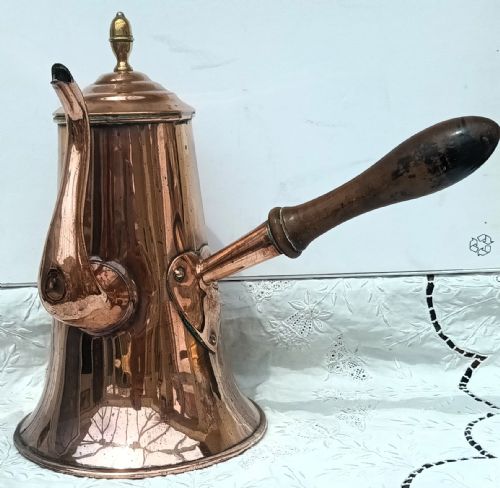
Collectors seeking 18th century copper cookware will encounter robust kitchen vessels created for heavy domestic labour over open hearths and coal ranges. The selection on this page consists principally of sturdy kettles, tall coffee pots, cooking pots, and large pans originating from the Georgian era and the turn of the nineteenth century. These forms show the practical domestic requirements of British households during a period of refined metalworking.
The primary forms found here are tea kettles and coffee pots bearing the characteristic hammered surfaces of the period. Kettle designs range from small intimate vessels to large boiling pieces intended for substantial households. Alongside these stand utilitarian cooking pots and large pans designed for heat retention and steady culinary service.
How these pieces were made
Makers shaped heavy sheet metal by hand, beating the raw material over stakes to achieve the desired hollowware vessel form. Rivets and dovetail joints secured the seams before brazing sealed the structure for holding liquids safely over fire. The resulting body possessed exceptional thermal conductivity, a vital trait for hearth cooking.
Constructed primarily from solid copper, these vessels often incorporate contrasting elements of brass, wood, and wrought iron. Handles frequently utilise turned timber insulation or forged iron brackets riveted firmly to the copper body. Brass components appear in spouts, mounts, and seating fittings.
18th Century Copper Cookware Retail Price Guide 2026
Typical asking prices for 18th century copper cookware among the pieces listed under this phrase on Sellingantiques today, from the lower quarter to the upper quarter. They describe what is for sale here now, not the wider market.
Listings feature Georgian period copper alongside brass, wood, and wrought iron elements in kettle and coffee pot forms.
What varies in quality
The distinction between ordinary utility items and superior examples lies in the weight of the metal and the precision of the hand-hammering. Heavier gauge copper resisted the warp of intense hearth flames and survived centuries of vigorous scrubbing. Better vessels display disciplined seam work and harmonious proportions in handles and spouts.
Integrity of construction separates everyday survivors from exceptional display pieces. Original handles of turned wood and secure brass fixtures preserve the visual balance intended by the maker. Evidence of honest period use adds character, provided the structural shell remains sound and uncompromised.
William Soutter & Sons
The 18th Century Copper Cookware Glossary
- Georgian
- The period spanning the reigns of the four British kings named George, covering the eighteenth century and early decades of the nineteenth. This era defines the classical proportions and robust utilitarian craftsmanship seen in these metal kitchen wares.
- Brazing
- A joining process where filler metal melts above a specific temperature to bond copper sheets together at the seams. This technique provided the waterproof seals necessary for daily boiling tasks.
- Hollowware
- Vessels such as pots, kettles, and jugs formed from sheet metal rather than cast in moulds. The method allowed for lighter, thermally efficient culinary equipment.
- Wrought iron
- Iron beaten and shaped while hot by a blacksmith, yielding a fibrous material tough enough for heavy handle brackets and fire irons. It resists snapping under sudden heat stress.
18th Century Copper Cookware: Frequently Asked Questions
Are these copper pots safe for modern cooking?
Most antique vessels require fresh tin lining before coming into contact with food, as exposed copper can react with acidic ingredients during cooking.
Many collectors prefer to preserve these pieces for display or gentle decorative use in period kitchens rather than daily culinary service.
How do I clean antique copper safely?
Warm soapy water and a soft cloth remove everyday dust without disturbing the mellow surface oxidation built up over centuries. Harsh abrasive compounds strip away the historic patina that collectors value on early kitchen metalwork.
What is the difference between a kettle and a pot?
Kettles are enclosed vessels specifically designed for boiling water, featuring a bail handle over the top and a pouring spout. Cooking pots are open vessels with side handles meant for simmering stews and heating liquids.
How can I tell a Georgian piece from later items?
Georgian hollowware displays distinct hand-beaten hammer marks, heavy sheet gauges, and construction details like dovetailing and hand-forged iron rivets. Later nineteenth-century items often show more uniform machine-rolled sheet surfaces and standardised fittings.