



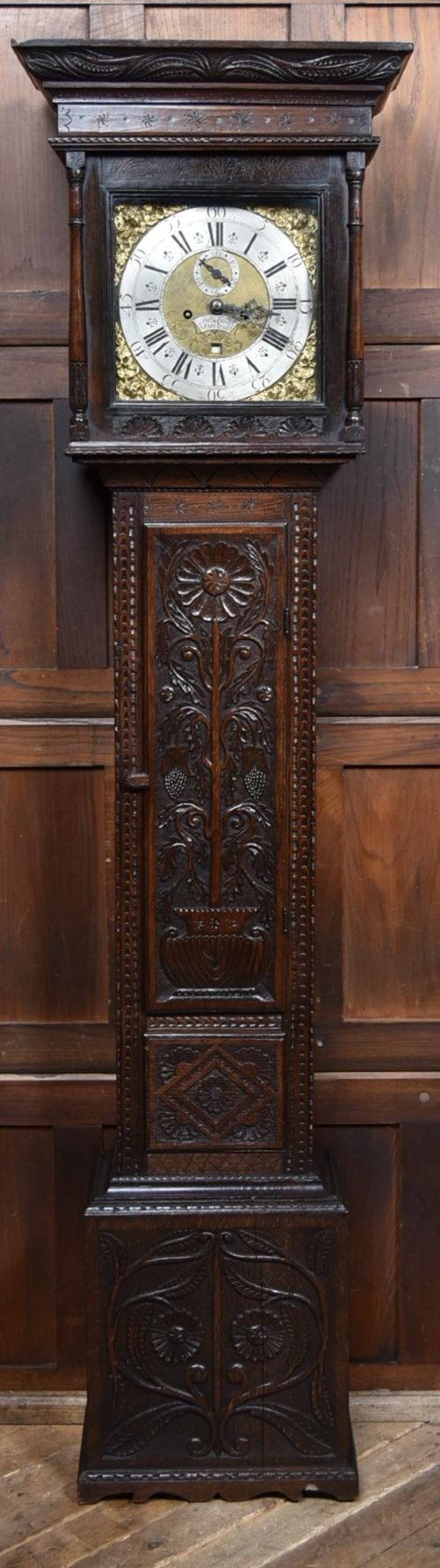
18th Century Carved Trunk
An 18th century carved trunk is a sturdy timber storage piece offering period character and practical utility for modern interiors.
18th Century Carved Trunk
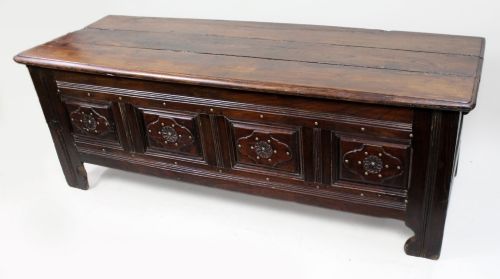
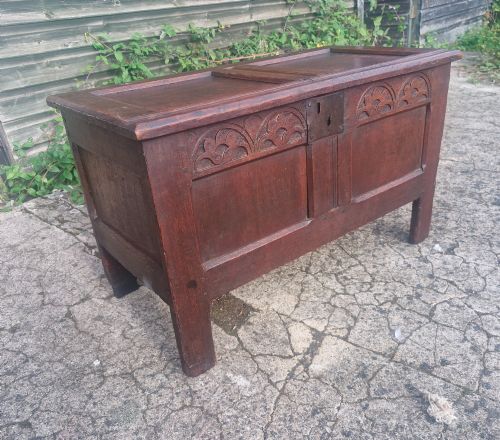
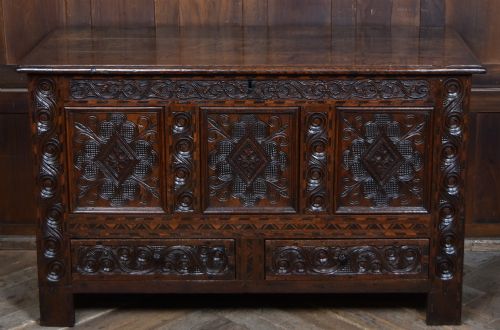
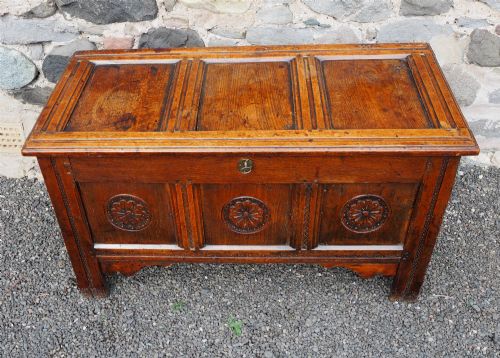
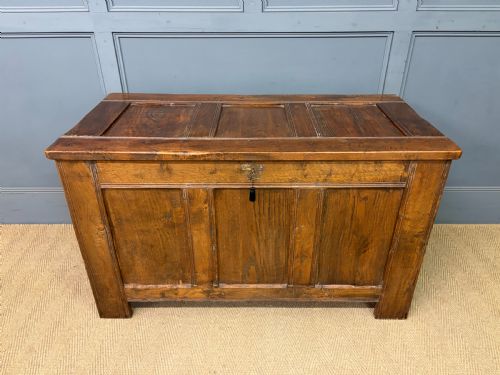
When searching for an 18th century carved trunk, buyers encounter robust domestic storage pieces predominantly fashioned from oak, along with walnut, pine, and mahogany. These items appear under various regional forms such as coffers, mule chests, and blanket chests, originating from English, Welsh, French, and other European workshops.
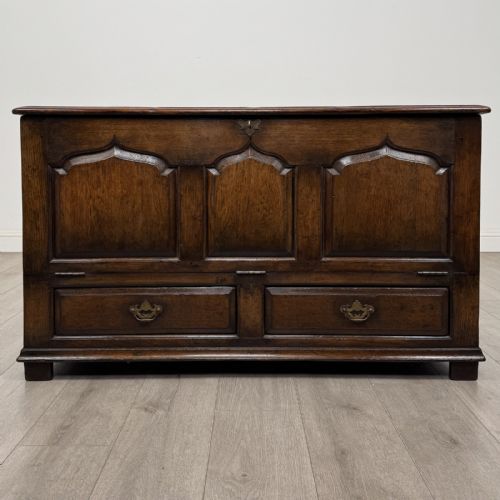
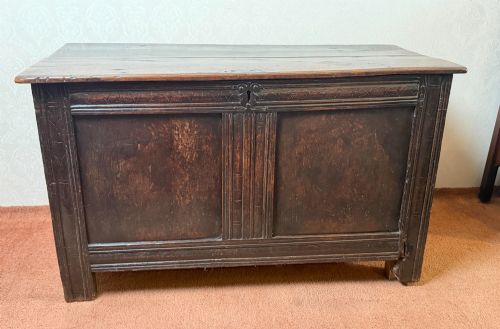
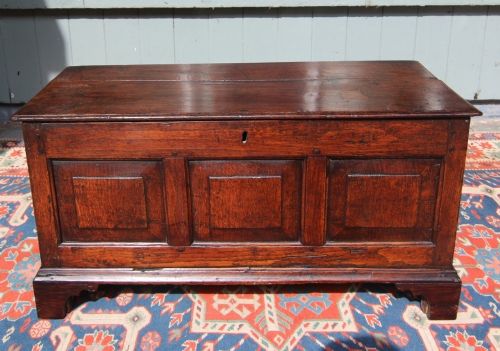
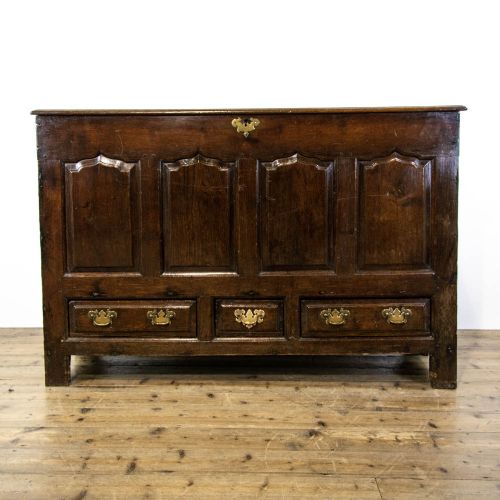
The version most commonly met on this page is the oak coffer or panelled chest, often dating from the Georgian era or the mid-eighteenth century. Many examples feature characteristic surface carving, fielded panels, and internal candle boxes designed for domestic storage.
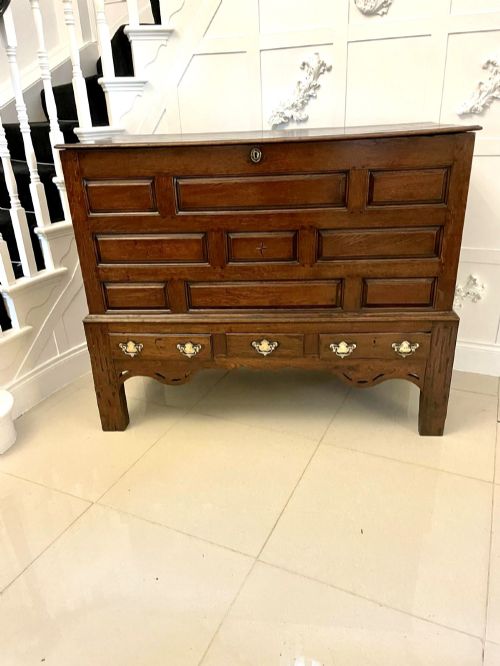
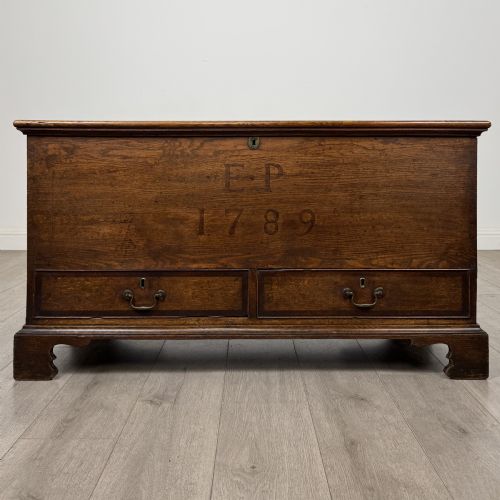
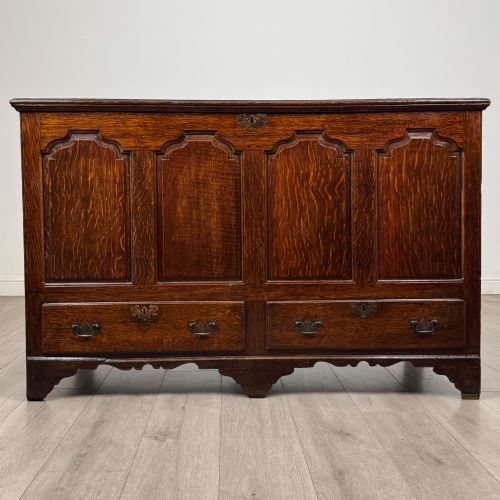
Regional variations include Welsh mule chests fitted with lower drawers, alongside smaller provincial boxes and European examples incorporating ironwork or painted finishes. These utilitarian boxes served central roles in historical households for storing linens, documents, and valuables.
Materials and construction methods
The primary material across these listings is solid oak, selected for durability and strength, complemented by secondary timbers such as pine and walnut. Makers utilised traditional frame-and-panel construction to accommodate the natural expansion and contraction of timber over time.
Surface decoration relies heavily on hand carving, utilising gouges and chisels to apply geometric or floral motifs directly to the solid wood. Metal elements including brass escutcheons, iron hinges, and wrought iron straps reinforce the structural joints and lids.
18th Century Carved Trunk Retail Price Guide 2026
Typical asking prices for 18th century carved trunk among the pieces listed under this phrase on Sellingantiques today, from the lower quarter to the upper quarter. They describe what is for sale here now, not the wider market.
Some chests retain hidden internal compartments originally intended for secret caches of coins, deeds, or smuggled contraband.
Distinctions in quality and execution
Quality in an 18th century carved trunk rests on the crispness of the hand carving and the selection of figured timber, such as burr elm panels. Superior examples exhibit balanced proportions, cleanly moulded panels, and original ironwork or brass hardware rather than later replacements.
The integrity of the internal structure, including the survival of original candle boxes and baseboards, separates standard utilitarian boxes from finer pieces. Westphalian, Italian, and regional British pieces demonstrate distinct regional joinery standards that influence desirability.
Jn° Smith·Richard Corless
The 18th Century Carved Trunk Glossary
- Coffer
- A heavy wooden chest traditionally used for storing valuables, linen, or documents. These pieces form the majority of the oak storage items found in this category.
- Mule Chest
- A regional storage chest featuring one or more drawers beneath the main lift-top compartment. They bridge the design gap between simple coffers and full chests of drawers.
- Panelled Construction
- A method where timber panels float within grooved stiles and rails to prevent splitting as the wood responds to humidity. This technique defines the walls of standard Georgian chests.
- Candle Box
- A small internal compartment fixed inside a chest to hold small items away from the main storage area. Their presence adds utility and interest for collectors.
- Escutcheon
- A protective plate surrounding a keyhole, usually fashioned from brass or iron. They range from simple geometric shapes to decorative engraved mounts.
18th Century Carved Trunk: Frequently Asked Questions
What is an 18th century carved trunk used for?
These trunks serve as functional storage furniture in modern homes, suitable for holding blankets, bed linen, or bulky household items. Their flat lids also allow them to function as display surfaces or casual seating benches.
Placed in hallways, living rooms, or bedrooms, they introduce historical texture and natural timber tones to an interior space while concealing everyday clutter.
How do I tell a mule chest from a coffer?
A standard coffer consists of a single deep compartment accessed solely by lifting the top lid. The internal space is usually uninterrupted except for an optional small candle box.
A mule chest incorporates one or more functional drawers built into the base beneath the main compartment. This hybrid design allows access to smaller items without opening the heavy top lid.
Are these trunks made entirely of solid oak?
Most examples utilise solid native timber, primarily oak for the primary frame, panels, and lids. Secondary woods such as pine or deal often appear on internal components like baseboards and drawer linings.
Certain continental or provincial pieces incorporate walnut, fruitwoods, or burr elm veneers on prominent decorative panels while maintaining a sturdy softwood or oak carcass.
How do I care for an antique wooden trunk?
Maintain stable indoor humidity levels and keep the trunk away from direct heat sources such as radiators to prevent the dry timber from splitting. Dust regularly with a dry cloth and apply occasional coats of appropriate wax to nourish the grain.
Avoid using modern silicone-based polishes or harsh chemical sprays, which can permanently damage aged beeswax finishes and historic patina.