

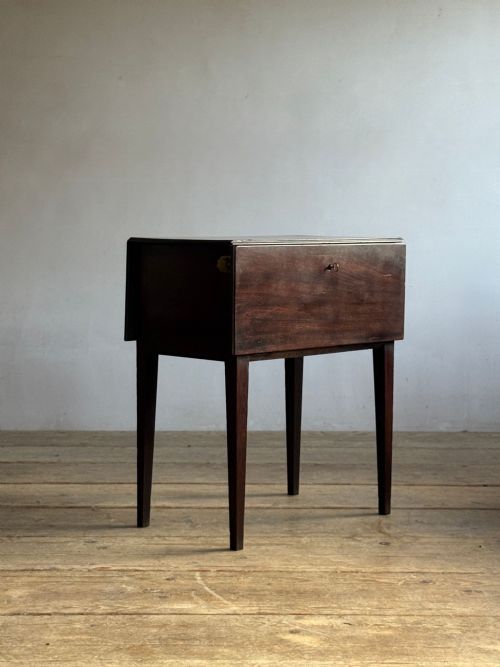


18th Century Bedside Chest
An 18th century bedside chest provides compact storage by the bed with the refined craftsmanship of the Georgian period.
18th Century Bedside Chest
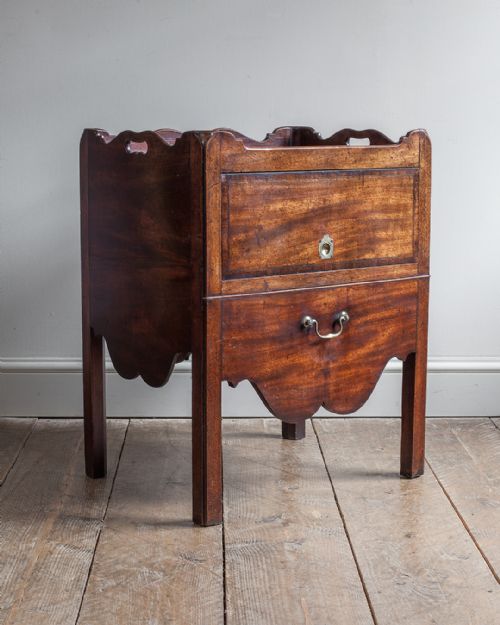
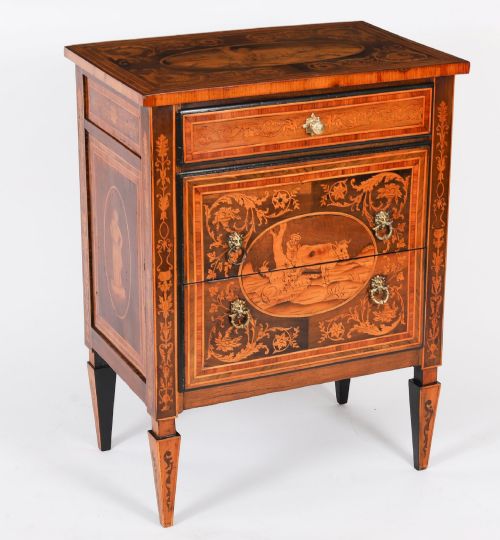
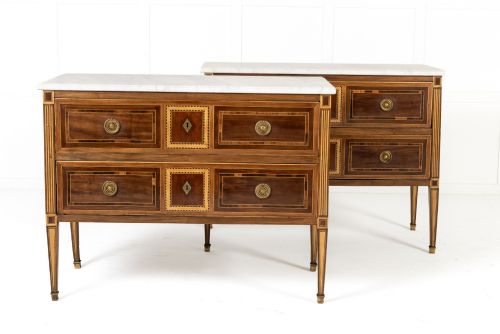
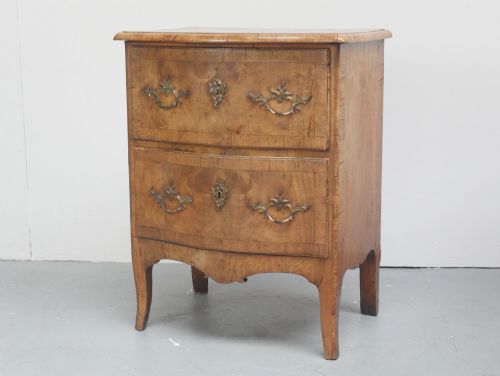
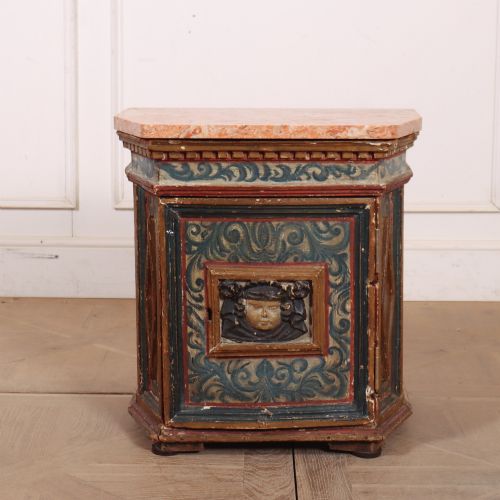
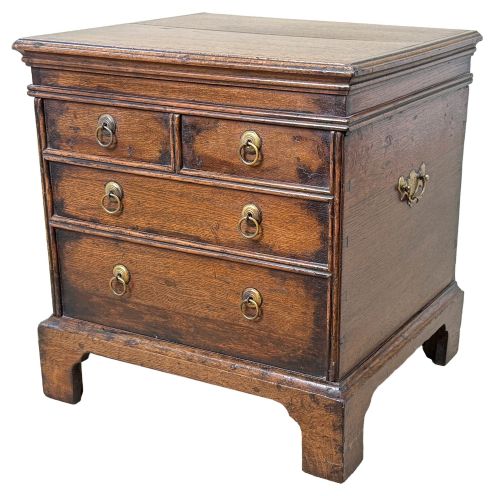
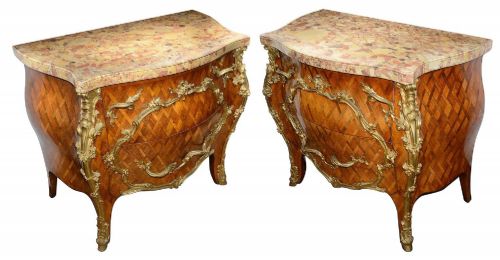
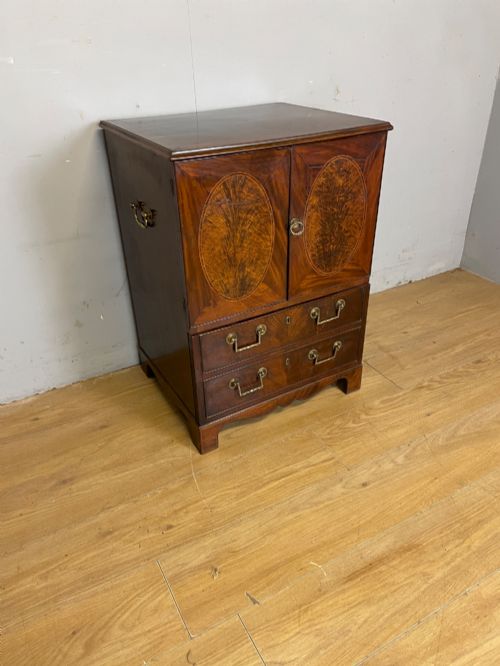
An 18th century bedside chest appears in forms such as bedside tables, cabinets, commodes, and close stools designed for intimate domestic utility. These pieces include small chests of drawers, tray top commodes, and side cabinets originating from English, French, Italian, Dutch, and Swedish workshops.
The selection on this page centres heavily on Georgian mahogany designs alongside oak, walnut, and painted wood examples. Buyers encounter everything from serpentine fronted cabinets to functional close stools disguised as small chests.
Makers of the period adapted larger furniture forms into miniature proportions suitable for the bedchamber. This scale makes them practical for modern interiors while retaining their original 18th century character.
How they were made
Joiners and cabinetmakers built these pieces using solid timber foundations of oak and elm, often faced with decorative veneers like flame mahogany, burr walnut, and kingwood. Surfaces frequently incorporate brass handles, hinges, and occasional marble tops such as breche d'alep.
Construction techniques include precise dovetailing for drawers and mortise and tenon joints for structural stability. Painted wood and intricate inlay work demonstrate the diverse decorative treatments applied across Continental and English workshops.
18th Century Bedside Chest Retail Price Guide 2026
Typical asking prices for 18th century bedside chest among the pieces listed under this phrase on Sellingantiques today, from the lower quarter to the upper quarter. They describe what is for sale here now, not the wider market.
Several items double as disguised indoor plumbing solutions, hiding chamber pots behind innocent-looking cabinet doors.
What varies in quality
The grade of timber selection and the sophistication of the figuring in veneers dictate the visual impact of an 18th century bedside chest. Pieces featuring matched flame mahogany or burr walnut command attention for their surface depth.
Proportion and execution of carved details, such as serpentine contours or tray tops, separate standard utilitarian pieces from high workshop productions. The integrity of the original hardware and surface finish further defines the standing of each cabinet.
The 18th Century Bedside Chest Glossary
- Commode
- A decorative chest of drawers or cabinet originating from French influence, frequently used in bedrooms during the Georgian period.
- Close stool
- A box or cabinet enclosing a chamber pot, often constructed to resemble a small bedside chest or cupboard.
- Tray top
- A raised rim around the upper surface of a bedside table or commode designed to prevent items from rolling off.
- Serpentine
- A curved furniture front characterised by a convex centre flanked by concave sides, creating an undulating line.
- Flame mahogany
- A veneer cut from the fork of a mahogany tree that produces a distinctive flickering flame pattern.
18th Century Bedside Chest: Frequently Asked Questions
What is a close stool?
A close stool is an item of furniture built to enclose a chamber pot for personal sanitation use in the bedroom.
Many examples take the visual form of a small bedside chest or cupboard to conceal their practical function.
How do I identify a commode?
A commode typically presents as a low chest of drawers or cabinet designed for the bedchamber.
On this page, they often feature shaped fronts or marble tops rather than standard flat wooden surfaces.
Where were these chests made?
These pieces originate from various domestic and European workshops including English, French, Italian, Dutch, and Swedish centres.
English examples lean towards mahogany and oak, while Continental pieces often display painted finishes, walnut, or marble.
How do I live with one?
An 18th century bedside chest functions well as a compact surface and storage unit beside a modern bed or in a hallway.
Their small proportions allow them to fit into constrained spaces while providing practical drawer or cupboard room.