
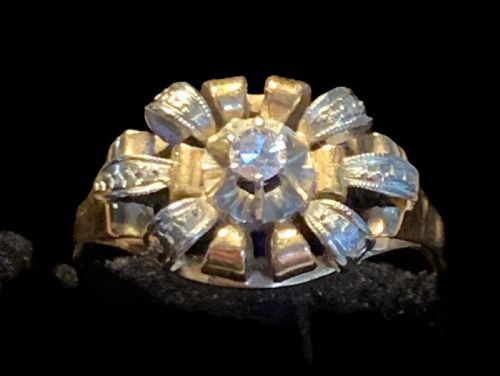
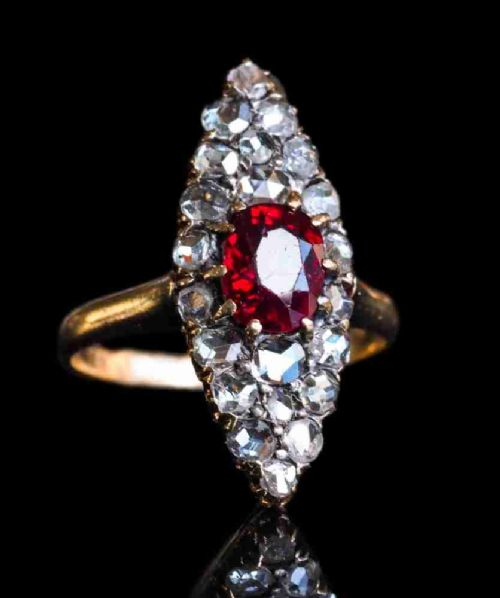


18k Diamond Cluster Ring
An 18k diamond cluster ring brings together the brilliance of centred stones and supporting gems in a heavy gold mounting.
18k Diamond Cluster Ring
An 18k diamond cluster ring brings together a central diamond or coloured gem surrounded by a frame of smaller diamonds, creating a floral or target profile on the finger. The selection available spans the Victorian, Edwardian, and Art Deco periods, shifting from organic navette and multi-cluster formats in yellow gold to geometric designs in white gold and platinum.
Victorian examples frequently pair old European cut diamonds with rubies, sapphires, opals, turquoise or pearls in yellow gold settings, often taking elongated boat shapes known as navette rings. Edwardian pieces introduce platinum work alongside yellow gold, lightening the metal framework around pearls and rose-cut diamonds.
Art Deco versions dominate the selection with symmetrical white gold and platinum structures, often housing emeralds, sapphires or aquamarines encircled by brilliant-cut diamonds. These geometric silhouettes include target rings and elongated clusters designed to sit flat along the hand.
How They Were Made
Goldsmiths constructed these mountings predominantly from 18ct yellow gold, 18ct white gold, or combinations incorporating platinum during the Edwardian and Art Deco decades. Silver was occasionally utilised alongside gold in early Victorian settings to back rose-cut diamonds and enhance their reflection under candlelight.
Jewellers secured the stones using grain settings, claw mounts, and bezels, arranging melee diamonds tightly around a central sapphire, ruby, emerald, opal or primary diamond. The transition into the 1920s brought advanced metalworking techniques that allowed intricate piercing and millegrain edges on white gold and platinum surfaces.
What Varies In Quality
The standard of an 18k diamond cluster ring depends heavily on the match, cut, and weight of the central gemstone relative to the surrounding diamond melee. Old cut diamonds and natural unheated coloured stones command greater regard than later commercial replacements.
Execution of the metalwork also defines the tier, visible in the precision of the claw positioning, the delicacy of any openwork gallery, and the intactness of millegrain detailing along the bezels.
The 18k Diamond Cluster Ring Glossary
- Cluster ring
- A ring design featuring a central stone encircled by a border of smaller gemstones, often resembling a flower.
- Navette
- An elongated, boat-shaped cluster setting that tapers to points at either end of the finger.
- Old European cut
- An early brilliant diamond cut characterised by a small table, high crown, and large open culet, typical of Victorian and Edwardian pieces.
- Target ring
- A concentric cluster ring style featuring distinct circular bands of contrasting coloured stones and diamonds around a central gem.
- Millegrain
- A decorative technique creating a fine border of tiny raised metal beads along the edges of a setting.
18k Diamond Cluster Ring: Frequently Asked Questions
How do I care for an opal and diamond cluster ring?
Opals contain natural water content and require gentle cleaning with a soft cloth rather than chemical immersion or ultrasonic baths. Store them away from hard gemstones to prevent scratching the softer central stone.
Regular checks on the claw settings will ensure the opal and surrounding diamonds remain secure within the 18k gold mounting.
Are these rings suitable for daily wear?
An 18k gold mounting provides a durable foundation for daily use, though softer centre stones such as opals, pearls, and turquoise demand extra care against knocks and daily abrasion. Rings set entirely with diamonds, rubies, or sapphires withstand everyday wear far better.
Checking the prongs periodically with a jeweller ensures the cluster stays intact through regular use.
How can I tell if the diamonds are original?
Original stones display the hand-cut facets characteristic of old European or rose cuts, matching the wear patterns and age of the surrounding 18k gold or platinum setting. Replacement modern brilliant-cut stones often look out of place among older melee.
Examining the underside of the cluster reveals how the stones were originally set into the gallery.