






18ct Sapphire Trilogy Ring
An 18ct sapphire trilogy ring brings together three stones symbolising past, present and future in durable gold.
18ct Sapphire Trilogy Ring
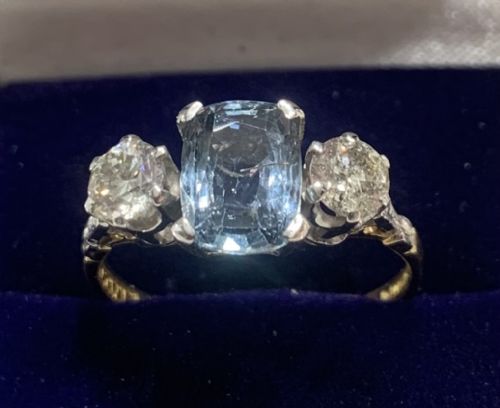
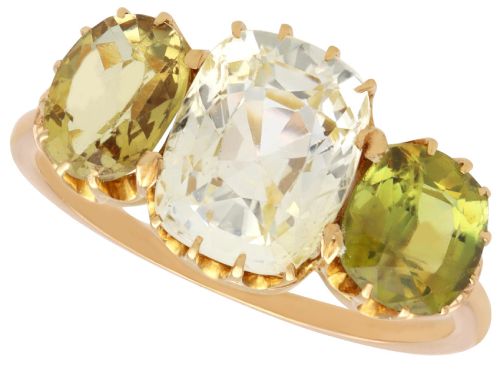
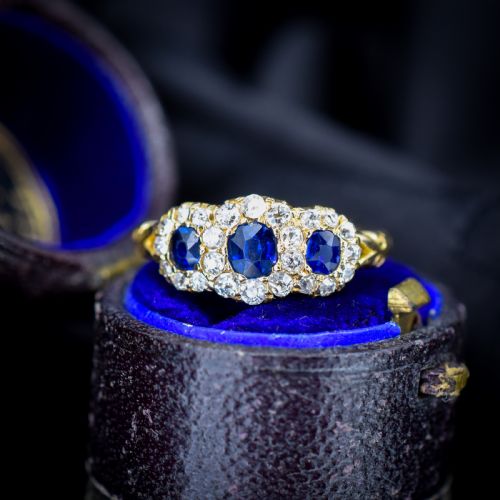
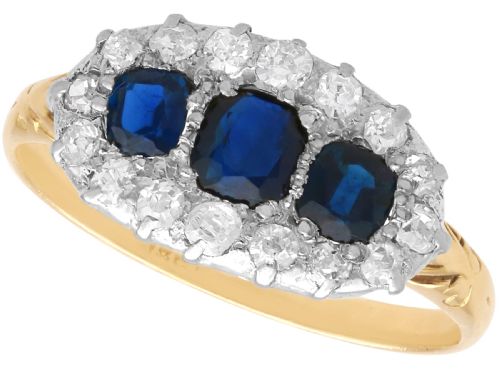
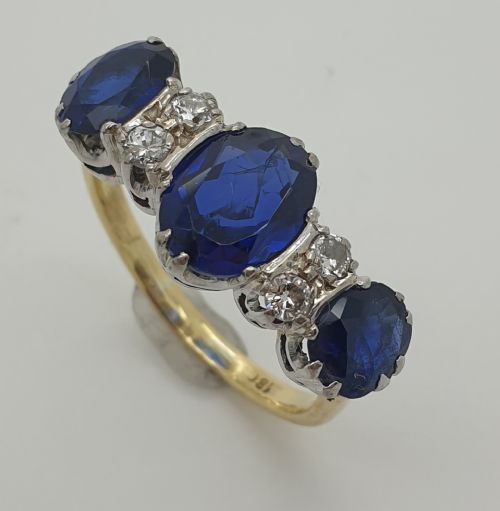
An 18ct sapphire trilogy ring centres on a central sapphire flanked by two supporting stones, most often diamonds, set across the hand in a traditional three-stone arrangement. These pieces span from the late Victorian period and Edwardian era through Art Deco designs and mid-century styles, originating primarily as engagement rings or dress rings.
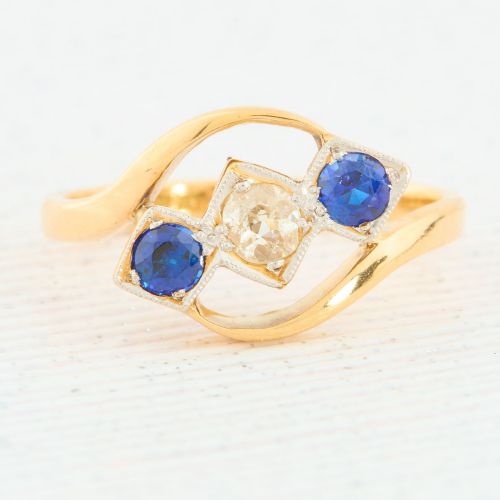
Victorian examples frequently pair sapphires with old cut diamonds in yellow gold settings, sometimes bearing Birmingham hallmarks from the late nineteenth century. Later Art Deco and 1930s variations often incorporate platinum alongside 18ct gold, utilising geometric layouts, twist bands or cross-over motifs.
How they were made
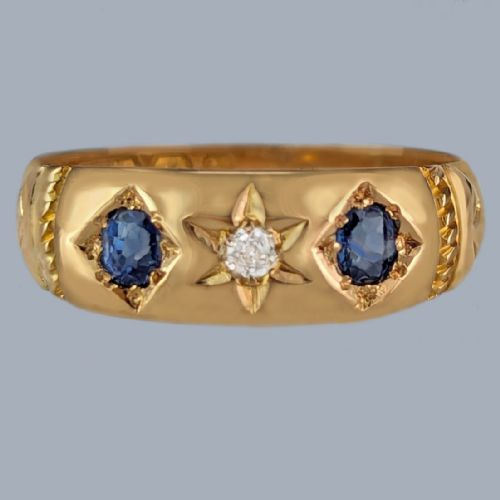
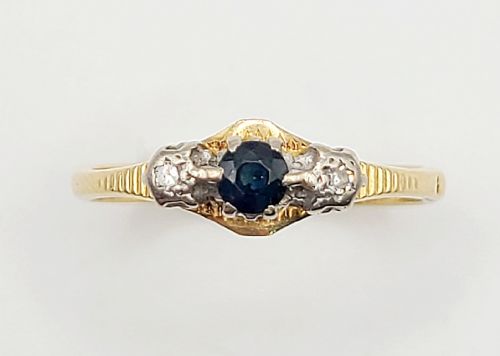
Goldsmiths constructed these rings using 18ct yellow gold, often combining it with platinum for stone settings during the Edwardian and Art Deco periods to provide a bright, durable contrast. Stones were secured using claw settings, rubover techniques or gypsy mounts, depending on the prevailing style of the decade.
The materials paired with sapphire include diamond, natural pearl, and platinum alongside standard 18ct gold alloys. Cut styles range from old mine cuts and old cut diamonds to round cuts framing Ceylon or basaltic sapphires.
18ct Sapphire Trilogy Ring Retail Price Guide 2026
Typical asking prices for 18ct sapphire trilogy ring among the pieces listed under this phrase on Sellingantiques today, from the lower quarter to the upper quarter. They describe what is for sale here now, not the wider market.
Listings span from Victorian and Edwardian eras through Art Deco and Mid-Century periods, utilising 18ct gold, platinum, sapphires and diamonds.
What varies in quality
The distinction between tiers rests upon the origin and character of the central sapphire, alongside the weight and cut quality of the accompanying diamonds. Ceylon stones and larger carat weights distinguish finer examples from standard commercial production.
Craftsmanship in metalwork, such as the precision of platinum claw work on Art Deco pieces or the structural integrity of Victorian gypsy settings, separates exceptional survival from ordinary wear.
The 18ct Sapphire Trilogy Ring Glossary
- Trilogy ring
- A ring featuring three principal gemstones set in a row, traditionally representing the past, present and future. This layout is common across Victorian and Art Deco jewellery.
- Ceylon sapphire
- A sapphire originating from Sri Lanka, known in these listings for specific coloration and clarity. These stones appear alongside basaltic sapphires in nineteenth and twentieth-century settings.
- Old cut diamond
- A diamond cut style prevalent in antique and vintage jewellery before modern brilliant cuts were standardised. These stones feature smaller tables and larger culets.
- Rubover setting
- A method where a thin collar of metal is pushed over the edge of the gemstone to hold it securely in place. This technique creates a smooth, low-profile finish on the ring band.
18ct Sapphire Trilogy Ring: Frequently Asked Questions
What is an 18ct sapphire trilogy ring?
An 18ct sapphire trilogy ring is a finger ornament featuring three stones, typically a sapphire flanked by diamonds, mounted on an 18-carat gold band. These pieces date across Victorian, Edwardian, Art Deco and mid-century periods.
Designs range from traditional yellow gold Victorian settings with old cut diamonds to geometric Art Deco platinum and gold combinations.
How do I wear a trilogy ring daily?
Living with an antique trilogy ring involves regular care to protect the 18ct gold and the mounted sapphire and diamond stones. Platinum and gold settings require periodic inspection by a jeweller to ensure claws remain secure.
Due to the historical nature of Victorian and Art Deco pieces, removing the ring during heavy manual tasks preserves the structural integrity of the prongs and band.
How can I tell the period of my ring?
Dating relies on stylistic clues such as the geometric lines of Art Deco pieces or the heavier yellow gold claw arrangements of Victorian examples. Hallmarks, where present, provide specific assay office marks and date letters.
Cut styles of the diamonds and sapphires, including old mine cuts or early round cuts, further assist in identifying whether a piece originates from the nineteenth or twentieth century.
What metals are used in these rings?
The primary metal recorded is 18ct gold, appearing in yellow variations across Victorian and Edwardian items. Platinum is frequently introduced in Edwardian and Art Deco pieces to mount diamonds securely.
Some examples combine 18ct gold and platinum within the same mounting to create a contrasting white metal surface for the stones while retaining a gold band.