
18ct Platinum Diamond Ring
An 18ct platinum diamond ring brings together the durable bright white of platinum settings and the warmth of gold, spanning Edwardian, Art Deco, and mid-century periods.
18ct Platinum Diamond Ring
An 18ct platinum diamond ring bridges the late Victorian, Edwardian, Art Deco, and mid-century eras, reflecting changing tastes in gem-setting and band design.
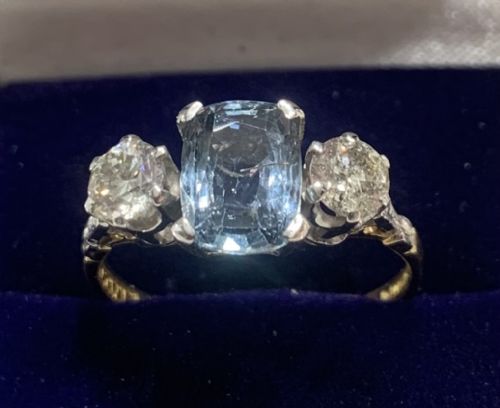
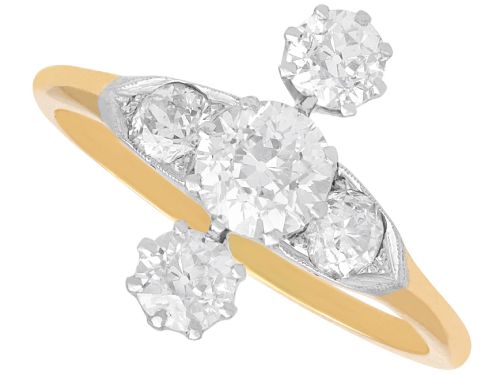
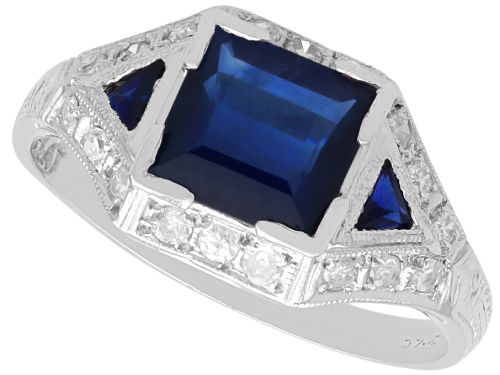
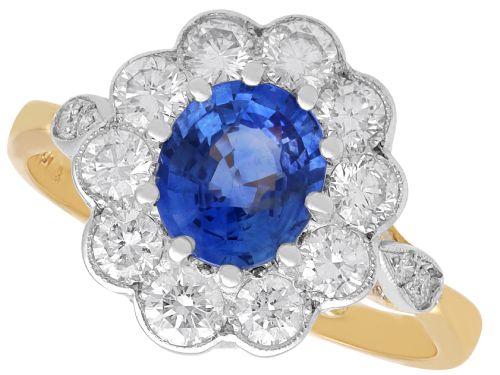
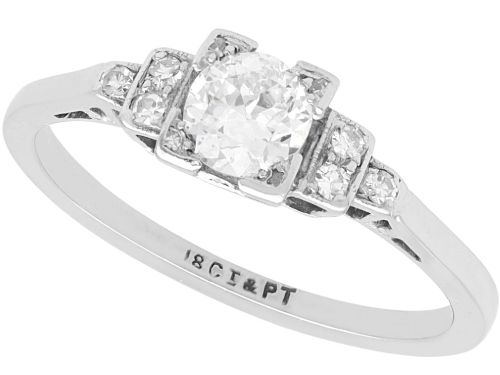
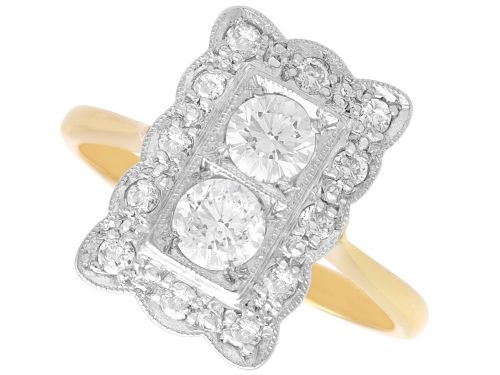
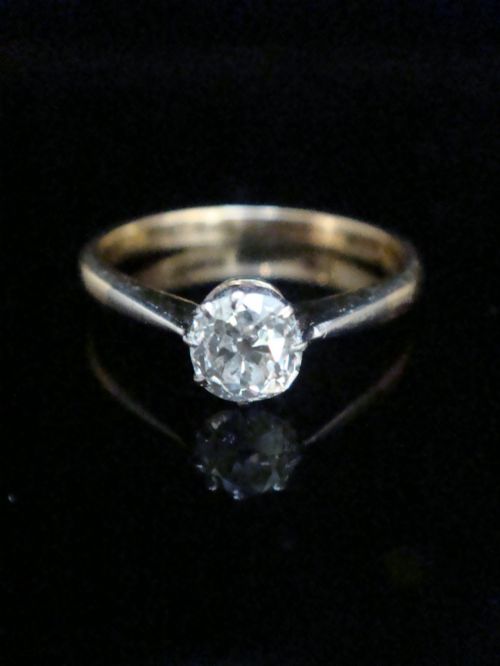
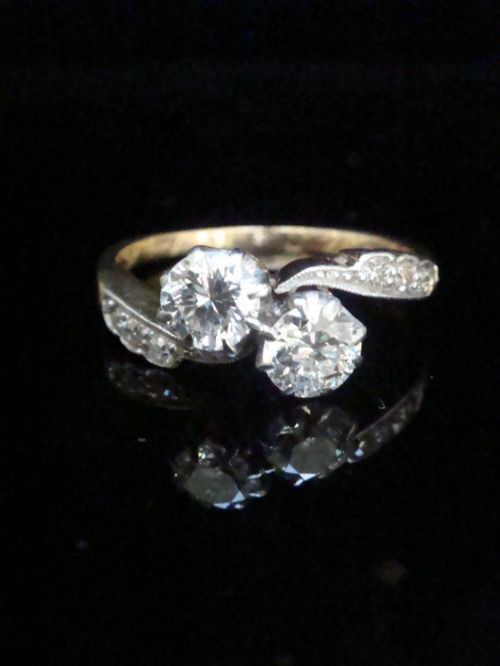
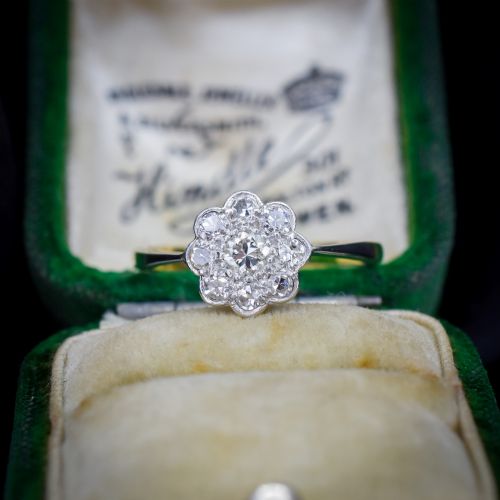
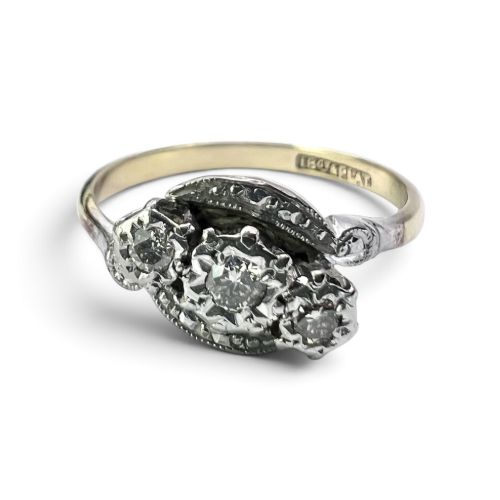
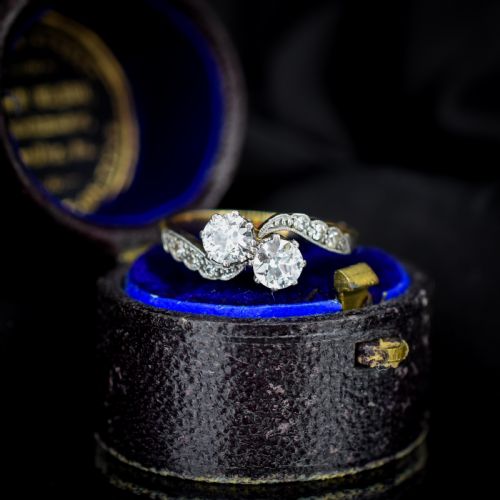
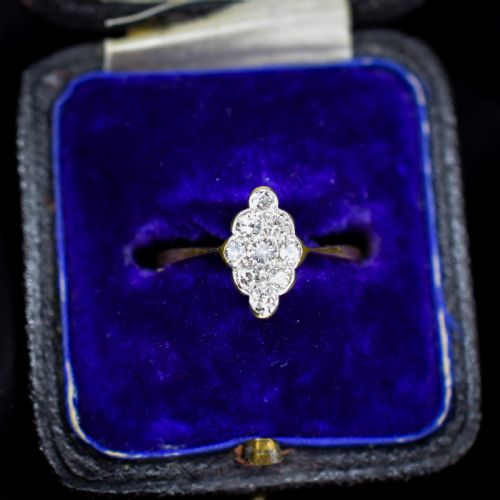
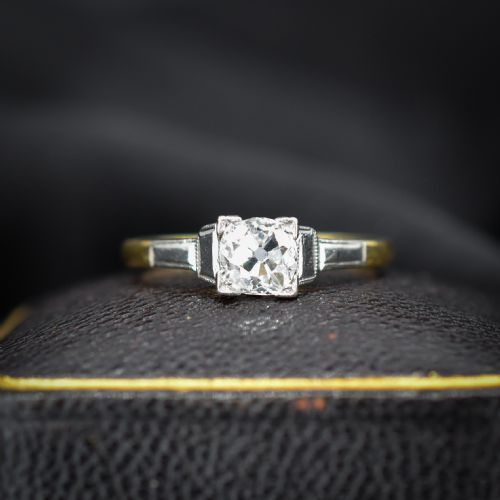
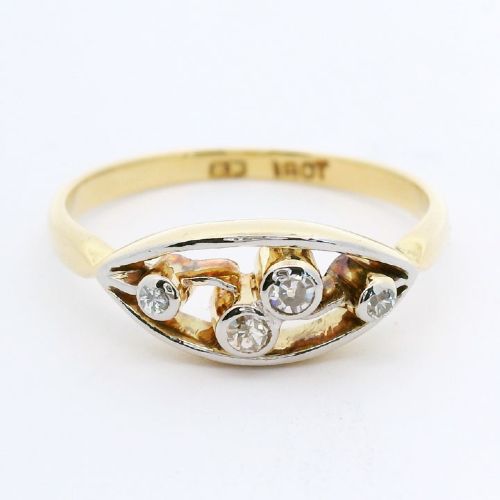
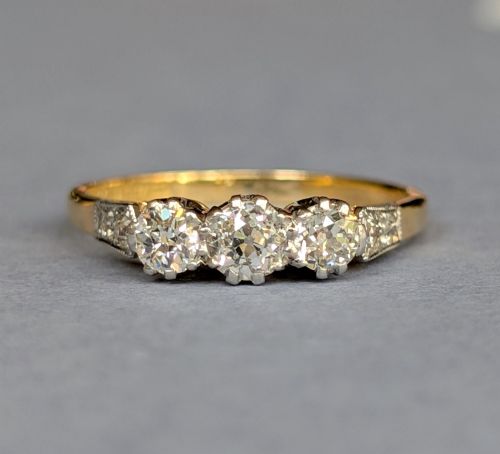
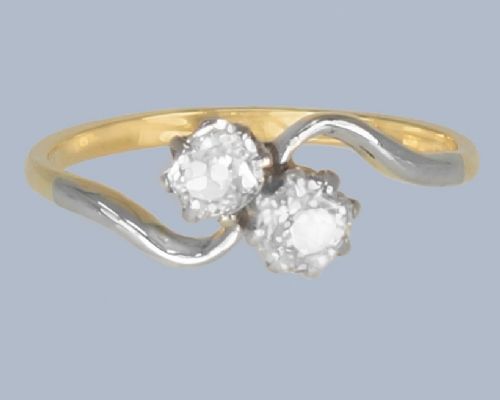
Solitaires, clusters, navettes, and multi-stone trilogy or toi et moi arrangements dominate the selections, utilising brilliant old European cuts alongside sharp geometric facets.
Platinum securely holds stones while the 18ct gold shank provides foundational strength, creating a dual-metal construction typical of early twentieth-century jewellery workshops.
Materials and construction methods
Metals combine explicitly through the fusion of a durable 18ct yellow, white, or rose gold band with a bright platinum head that reflects maximum light onto the stones.
Gems such as diamonds, sapphires, rubies, and emeralds are secured by hand-worked platinum claws, bezels, or illusion settings designed to maximise visual spread.
Early twentieth-century techniques rely on hand fabrication and milling, resulting in delicate milgrain edges and openwork galleries beneath the main stone clusters.
Some Edwardian makers hid tiny heart-shaped pierced galleries underneath diamond clusters so only the wearer knew the secret.
Determinants of quality
Superior examples display precise symmetry in the arrangement of old-cut stones, with matching spread and minimal inclusions that obstruct light return through the table.
The integrity of the dual-metal join between the gold shank and the platinum top indicates the original skill of the bench worker, avoiding clumsy solder lines.
The crispness of hand-applied milgrainbeading and pierced underbezels distinguishes finely finished pieces from mass-produced or heavily worn alternatives.
The 18ct Platinum Diamond Ring Glossary
- Old European Cut
- A round diamond cut popular from the late nineteenth to the mid-twentieth century, characterised by a small table, high crown, and deep culet. These stones display broad, hand-cut facets that catch candle or gas light differently than modern brilliants.
- Milgrain
- A decorative border of tiny raised metal beads along the edges of a platinum setting. This technique frames the diamonds and softens geometric metal lines with subtle texture.
- Toi Et Moi
- A two-stone ring style translating to you and me, symbolising two lives joined together. The stones often sit in a twist or side-by-side configuration.
- Navette
- A boat-shaped ring setting elongated along the finger, typically filled with a cluster of smaller diamonds and gemstones. This silhouette creates a substantial visual footprint on the hand.
- Trilogy
- A three-stone ring representing the past, present, and future of a relationship. The central diamond usually stands larger than its flanking stones.
18ct Platinum Diamond Ring: Frequently Asked Questions
How do I clean my antique ring?
Warm soapy water and a soft toothbrush remove daily oils and dust from beneath the diamond settings without harming the platinum or gold.
Harsh chemical dips and ultrasonic cleaners risk loosening old stones in their hand-wrought mounts, so manual brushing remains safest.
Can an antique ring be resized?
Most rings with a gold shank allow a skilled jeweller to add or remove metal to alter the band diameter.
Platinum tops complicate major size adjustments, meaning alterations should remain minimal to preserve the structural integrity of the shoulders.
What is the difference between Edwardian and Art Deco styles?
Edwardian pieces lean towards lace-like platinum work, floral motifs, and delicate openwork frames that prioritise romantic elegance.
Art Deco designs introduce strict geometric lines, bold symmetry, and sharp square or navette silhouettes that reflect industrial modernity.
Why use both gold and platinum in one ring?
Yellow or white 18ct gold forms a strong, traditional band that sits comfortably against the hand.
Platinum provides a bright white surface that does not tarnish and holds small diamond claws securely without dulling the stones.