


18ct Gold Ruby Band
An 18ct gold ruby band brings together rich red gems and solid gold, offering enduring elegance for daily wear.
18ct Gold Ruby Band
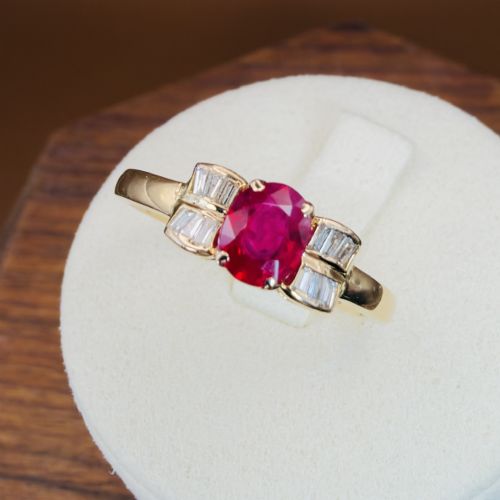
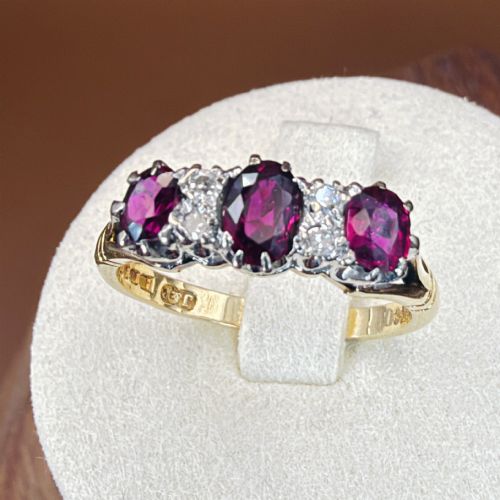
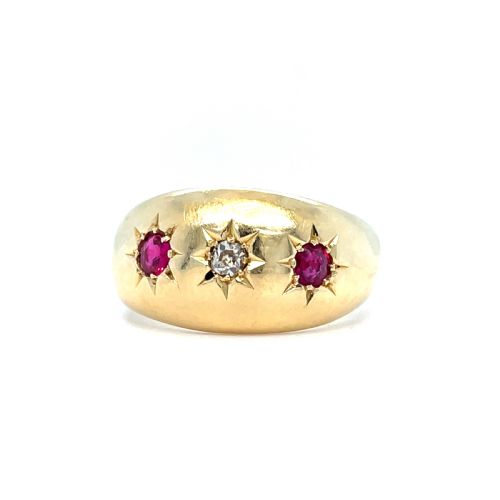
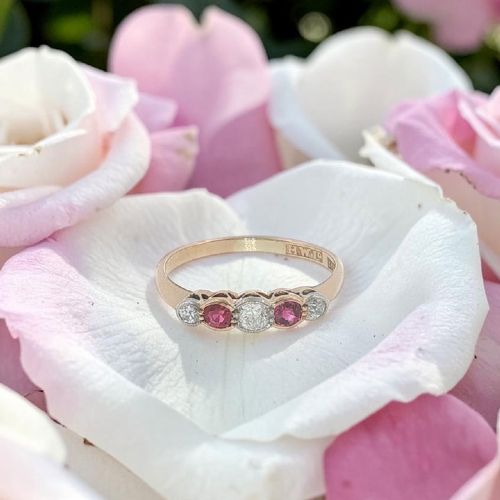
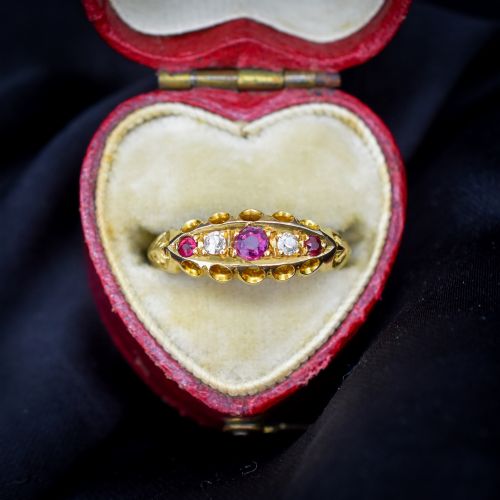
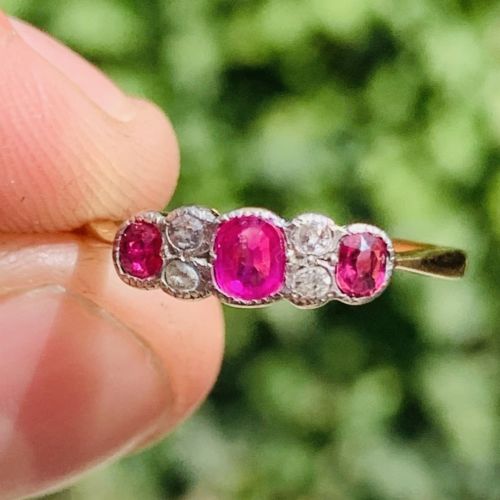
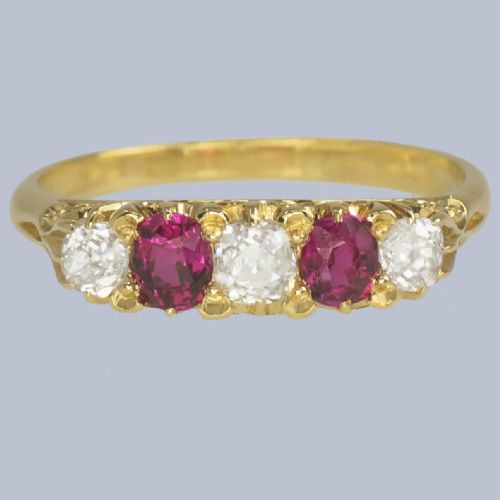
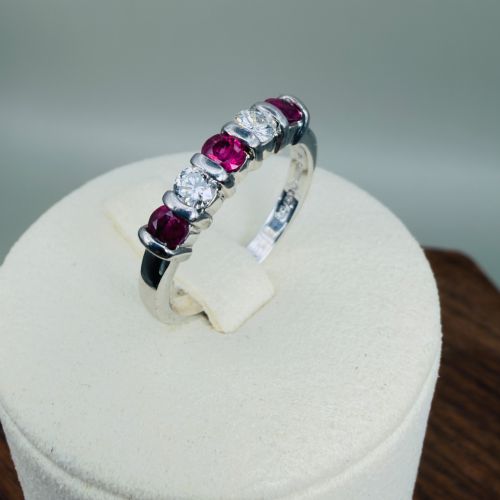
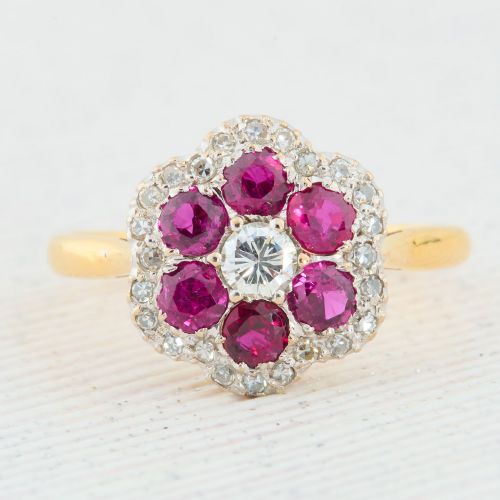
The most common formats you will meet on this page include traditional five-stone rings, gypsy settings, and cluster designs. Many incorporate yellow gold, white gold, or platinum settings to enhance the colour of the stones, with origins dating back as early as the nineteenth century up to the 1960s.
Materials and construction
The foundation of these pieces relies upon 18ct gold, utilised in yellow, white, and rose hues, often paired with platinum for secure claw or bezel settings. Goldsmiths integrated diamonds alongside rubies, employing traditional cutting styles such as old mine cuts, old European cuts, and baguette cuts depending on the era.
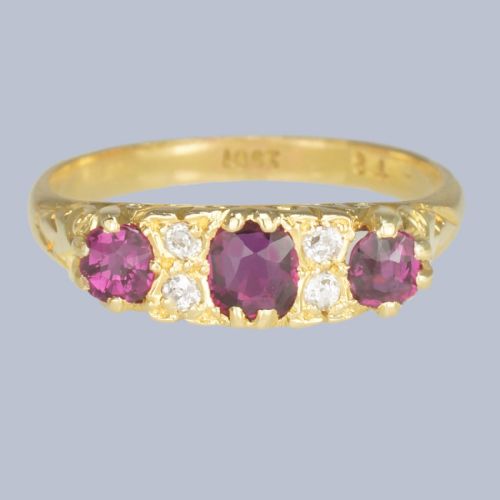
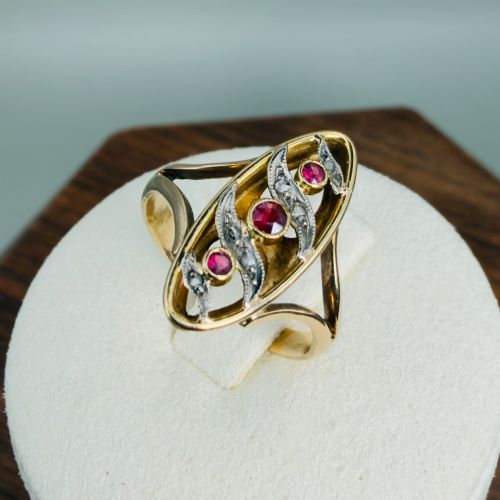
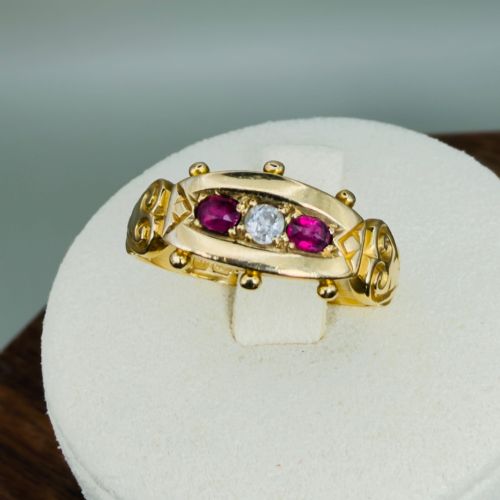
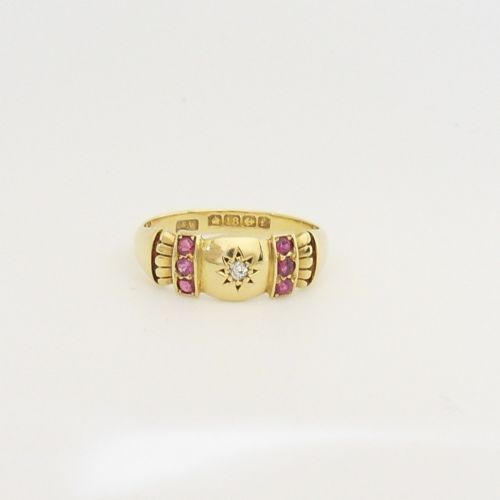
Techniques varied from flush gypsy settings popular in the Victorian period to intricate pierced navette styles and multi-stone clusters. Hallmarks stamped into the gold bands frequently reference assay offices such as Chester and Birmingham, confirming the British origins of many listed rings.
A few unexpected pieces pair the traditional ruby and diamond combination with whimsical motifs like a crouching gold panther.
Judging the work
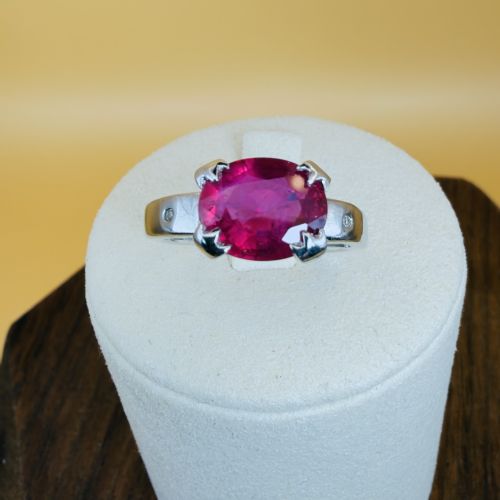
Quality in these rings is determined by the depth and saturation of the ruby colour alongside the precision of the stone setting. Pieces that display well-matched gems and crisp, hand-finished details in the goldwork stand apart from simpler commercial productions.
The integrity of the original claw work and the preservation of hallmarking provide further distinction. Rings that retain their structural weight and show minimal wear to the facets of the stones represent the higher tier of surviving examples.
The 18ct Gold Ruby Band Glossary
- Gypsy ring
- A style where stones are flush-set directly into the thick band of the ring, popular during the Victorian period for daily durability.
- Navette
- A boat-shaped ring design featuring an elongated silhouette that sits lengthwise along the finger, common in Edwardian and late nineteenth-century jewellery.
- Trilogy ring
- A three-stone ring arrangement traditionally symbolising the past, present, and future, frequently combining rubies and diamonds.
- Starburst
- A design motif featuring engraved rays emanating outward from a central stone setting, characteristic of late Victorian and Edwardian pieces.
- Old cut
- A hand-faceted diamond cutting style predating modern brilliant cuts, distinguished by a smaller table and higher crown.
18ct Gold Ruby Band: Frequently Asked Questions
Can I wear an 18ct gold ruby band every day?
Gold and rubies possess sufficient hardness for regular daily wear, provided you take sensible precautions against hard knocks.
Removing the ring during heavy manual tasks will help protect the setting and keep the gold secure over the years.
How do I know if the ruby is natural?
Many period pieces feature natural untreated rubies, sometimes accompanied by independent gemmological reports confirming their origin.
Examining the stones under magnification reveals natural inclusions rather than the bubbles typical of synthetic alternatives.
What is the difference between Victorian and Edwardian bands?
Victorian rings often feature heavier gold bands, gypsy settings, and darker red stones reflecting mid-to-late nineteenth-century sentiments.
Edwardian designs tended towards lighter platinum-topped yellow gold mounts, intricate openwork, and brighter diamond accents.
How do I find my ring size?
You can measure the inner diameter of an existing ring that fits the intended finger or consult a jeweller for a precise measurement.
Many antique bands can be adjusted by a skilled goldsmith, though the presence of detailed shoulder engravings requires careful consideration.