

18ct Gold Five Stone Ring
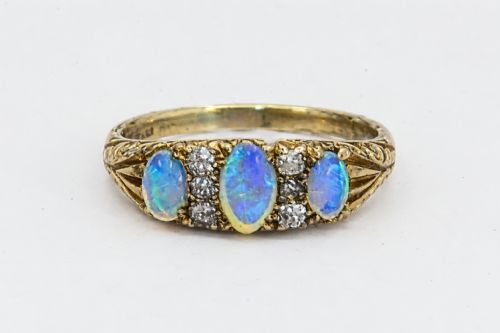
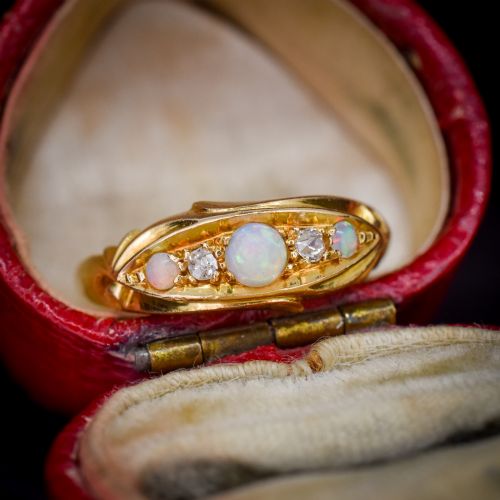
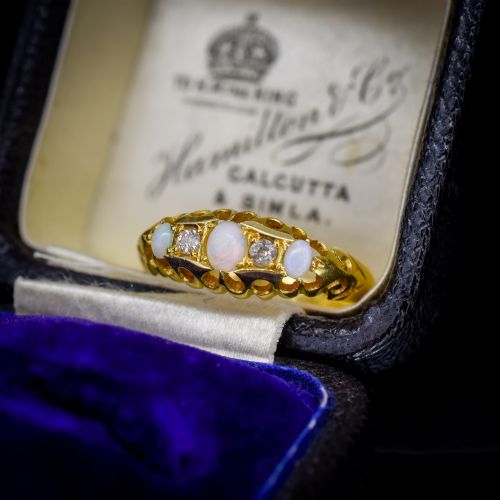
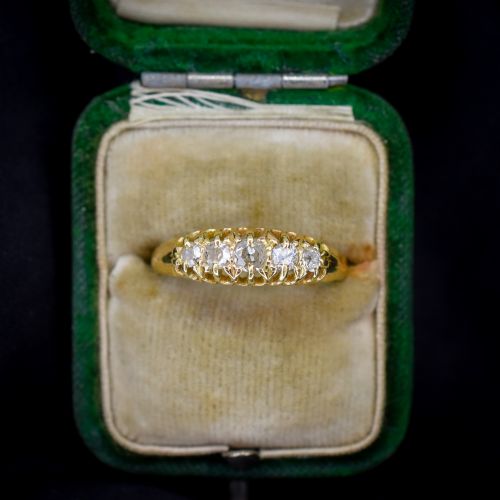
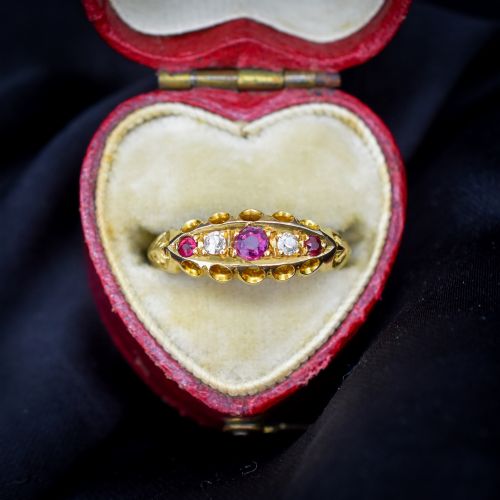
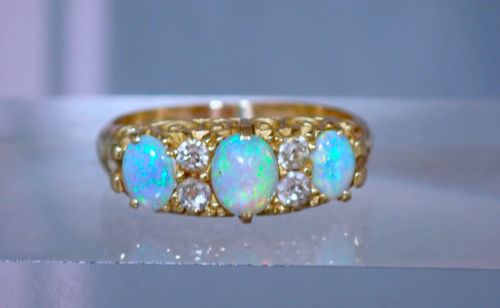
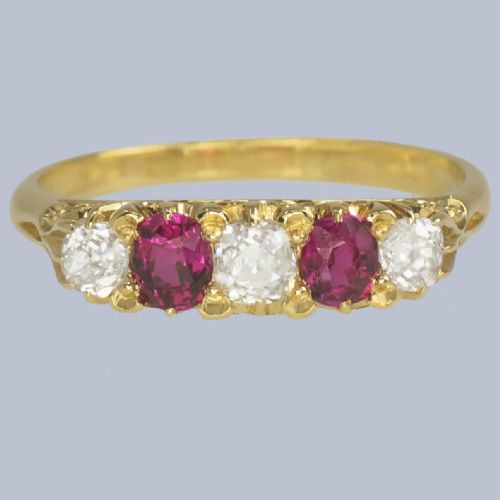
An 18ct gold five stone ring holds a linear sequence of gems across the finger, bringing together period goldwork and hand-cut stones.
18ct Gold Five Stone Ring
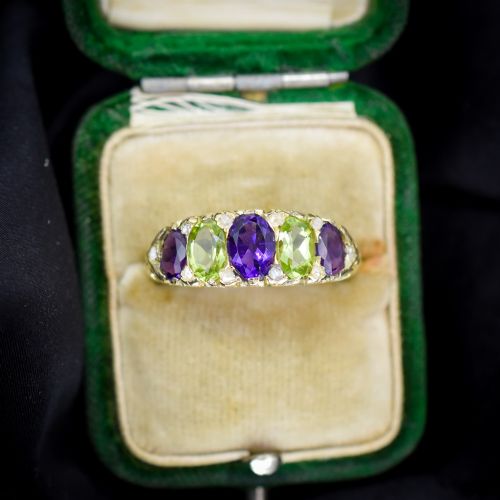
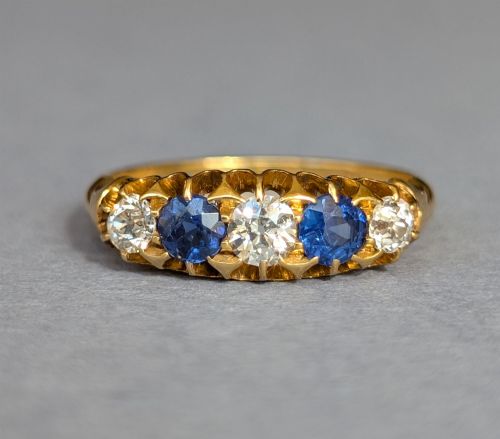
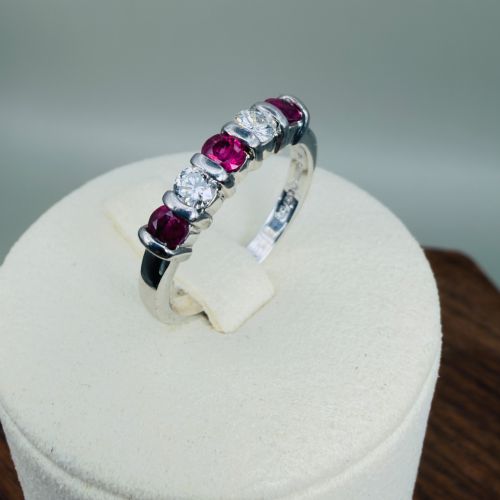
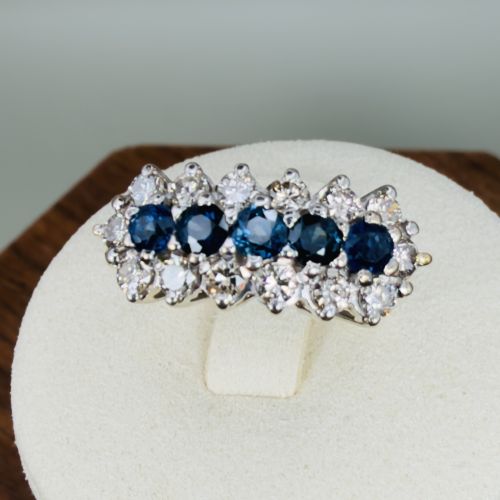
An 18ct gold five stone ring typically showcases a row of graduated gems, most frequently diamonds paired alongside rubies, sapphires, opals, or emeralds. These designs span from late Victorian and Edwardian workshops through to Art Deco and mid-century modern iterations.
The profile often takes the form of a boat-shaped setting or a traditional half-hoop layout, designed to sit flush against the finger. Buyers searching this phrase encounter examples bearing provincial assay office hallmarks from Birmingham and Chester alongside London pieces.
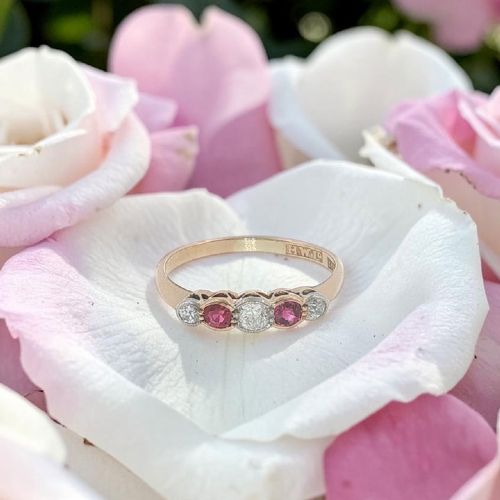
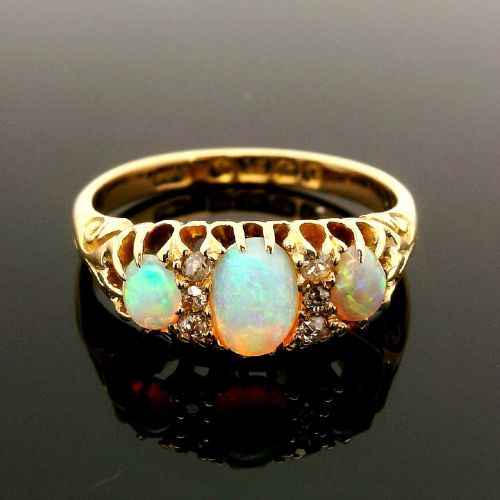
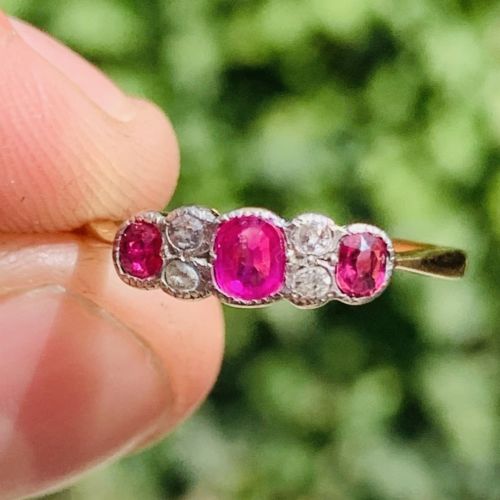
Victorian and Edwardian specimens dominate the selection, frequently combining old-cut diamonds with natural opals or Burmese rubies. Later twentieth-century versions introduce 18ct white gold alongside traditional yellow gold bands.
Materials and construction
Goldsmiths utilised 18ct yellow and white gold alloys to construct sturdy bands capable of supporting multiple stone settings. Platinum also appears in later Edwardian and Art Deco mounts, offering secure white metal prongs for diamonds.
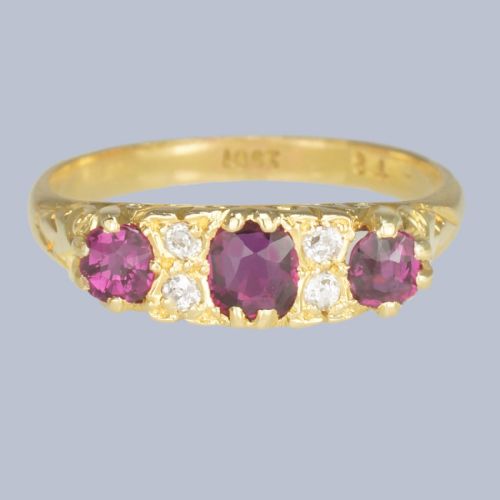
Gemstones such as old-cut, old mine-cut, and rose-cut diamonds were hand-set alongside coloured stones using claw, bezel, or scroll galleries. Hallmarks stamped into the interior of the shank record the metal purity and the assay office city.
Listings demonstrate that 18ct gold five stone rings frequently pair old-cut diamonds with natural opals, sapphires, and rubies across Victorian and Edwardian periods.
Distinctions in quality
The calibre of an 18ct gold five stone ring rests upon the symmetry of the gem grading and the integrity of the original claw or boat settings. Master goldsmiths of the nineteenth and early twentieth centuries filed delicate scrollwork and pierced galleries by hand, separating standard commercial output from finer artisan production.
Stone selection dictates the upper tier of the range, where matched natural rubies, sapphires, or clean old-cut diamonds display consistent colour saturation and minimal inclusions. Wear to the setting claws and thinning along the lower shank reflect the physical history of the piece.
The 18ct Gold Five Stone Ring Glossary
- Old-cut diamond
- A hand-faceted diamond shape popular before modern brilliant cutting standards were established around the early twentieth century. These stones typically feature smaller tables, higher crowns, and open culets.
- Boat ring
- A ring setting featuring a curved, navette-like outline that tapers toward the shoulders. The formation resembles the hull of a boat and often houses a graduated row of gems.
- Hallmark
- An official stamp applied by an assay office to indicate metal purity and origin. British pieces commonly show town marks such as Chester or Birmingham alongside the crown stamp for gold.
- Half-hoop ring
- A band design where gemstones occupy only the upper visible arc of the circle. This layout prevents stones from rubbing against adjacent fingers during daily wear.
- Navette
- A pointed, ovoid shape used in jewellery design to frame gemstones. The profile creates an elongated appearance along the axis of the finger.
18ct Gold Five Stone Ring: Frequently Asked Questions
How do I care for an antique 18ct gold five stone ring?
These pieces require gentle cleaning with warm soapy water and a soft brush to remove accumulated residue from the settings. Avoid harsh ultrasonic cleaners, particularly if the ring contains softer gems such as opals or pearls.
Store the ring separately from other jewellery to prevent precious stones from scratching the gold shanks or softer gem surfaces.
Can an 18ct gold five stone ring be resized easily?
Most skilled jewellers can adjust the size of an 18ct gold band by adding or removing a small section of metal from the bottom of the shank. The feasibility depends on the proximity of the stones and the condition of the original hallmarks.
Intricate gallery work or stones set continuously around the upper half require careful evaluation to preserve the structural integrity of the setting.
Were these rings worn as engagement rings historically?
Victorian and Edwardian buyers frequently selected multi-stone configurations to mark betrothals and anniversaries. The graduated arrangement of diamonds or coloured gems suited the sentimental jewellery traditions of the period.
Today, modern collectors continue this tradition by choosing these pieces for engagements or milestone celebrations.
How can I distinguish an Edwardian piece from a Victorian one?
Edwardian examples often utilise lighter platinum-topped gold settings alongside finely milled grain edges, reflecting a shift toward delicate, lace-like aesthetics. Victorian specimens tend to feature heavier yellow gold bands, ornate scroll galleries, and robust collet settings.
Assay office date letters stamped inside the band provide the definitive year of manufacture when readable.