




18ct Gold Choker
An 18ct gold choker brings together precious metal and fine stones to sit close against the neck, drawing the eye directly to the collarbone.
18ct Gold Choker
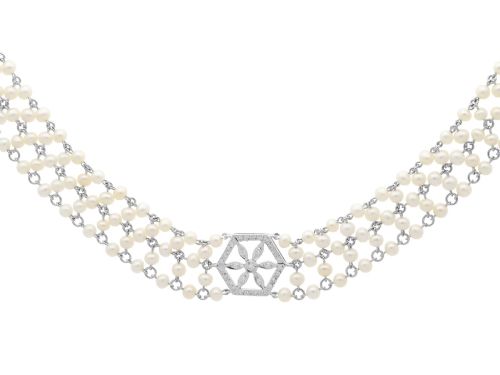
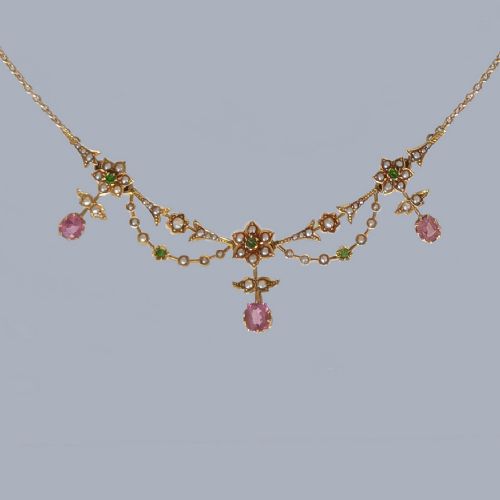
When you search for an 18ct gold choker, you encounter a range of neckwear that spans from the early twentieth century through to the mid-century period. These pieces appear principally as pearl strands secured by elaborate clasps, alongside fringe necklaces and articulated gold link work.
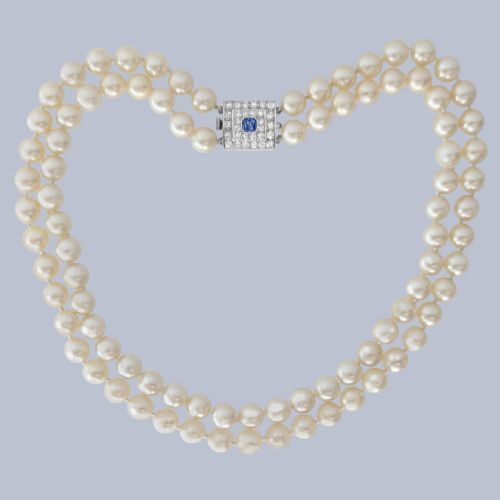
The Edwardian and Art Deco examples often pair diamonds and seed pearls with white gold or platinum settings, whilst the 1950s and 1960s bring multi-strand pearls fastened with gold, sapphire, ruby, and onyx clasps. Italian modernist design also surfaces, showing distinct forms in yellow gold.
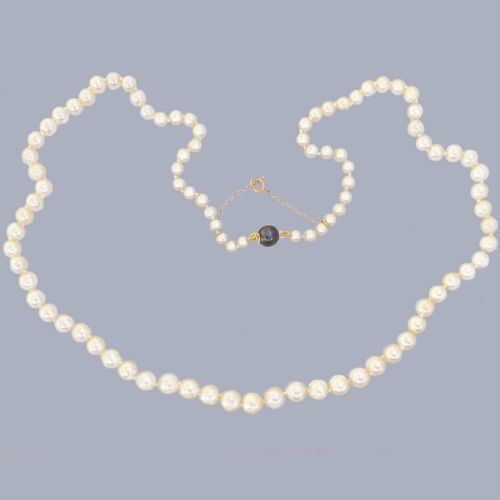
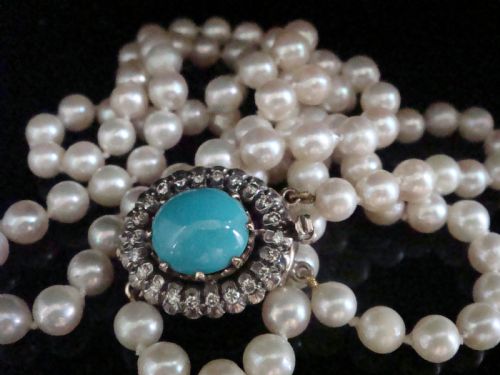
Most items on this page combine pearl strands with precious metal clasps, placing the decorative focus either on the front closure or along a graduated length of pearls.
Materials and construction
The construction relies heavily on 18ct yellow and white gold, used both for foundational chains and for intricate clasps set with gemstones. Platinum appears alongside gold in certain Art Deco and period mounts.
Pearls form the primary body of many necklaces, ranging from seed pearls and graduated cultured pearls to saltwater, Tahitian black, and certified pearls. These are frequently threaded alongside diamonds, sapphires, emeralds, garnets, turquoise, and onyx.
Many strand necklaces show evidence of restringing, a necessary maintenance step that secures the pearls onto fresh silk or cord behind the precious metal clasps.
18ct Gold Choker Retail Price Guide 2026
Typical asking prices for 18ct gold choker among the pieces listed under this phrase on Sellingantiques today, from the lower quarter to the upper quarter. They describe what is for sale here now, not the wider market.
Gemstones paired with gold on this page include diamonds, sapphires, emeralds, rubies, garnets, turquoise, onyx, and various pearls.
Distinctions in quality
Quality rests in the harmony between the metalwork and the selected gems, where heavier 18ct gold and platinum mountings securely frame diamonds, emeralds, and sapphires. Finer pieces demonstrate precise setting techniques that hold small stones firmly without obscuring the metal.
The uniformity and lustre of the pearls also dictate the standing of a piece, with well-matched cultured or natural pearls and clean gemstone clasps elevating the overall standard of the necklace.
The 18ct Gold Choker Glossary
- Choker
- A necklace designed to fit closely around the neck. These pieces typically measure shorter than standard opera or princess lengths.
- Graduated
- A arrangement where pearls or stones increase in size steadily from the clasp towards the centre front. This technique balances weight and visual presence.
- Seed pearl
- A very small natural or cultured pearl, often pierced and threaded in quantity during the Edwardian period. They create delicate, textural clusters.
- Clasp
- The fastening mechanism at the back or front of a necklace. In fine jewellery, these often double as decorative centerpieces set with diamonds and coloured stones.
- Cultured pearl
- A pearl formed with human assistance by inserting a nucleus into an oyster or mollusc. They appear widely across mid-century pieces.
18ct Gold Choker: Frequently Asked Questions
How do I wear an 18ct gold choker?
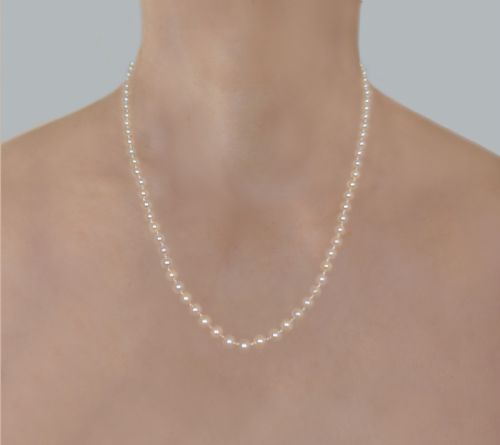
These necklaces sit high on the neck, making them well-suited for open necklines and evening wear where the collarbone remains exposed.
Pair them with simpler garments to let the gold work and gemstone clasps take visual precedence.
Are these necklaces adjustable in length?
Most period strand necklaces and rigid chokers arrive at a fixed length determined by the original maker or subsequent restringing.
Altering the length requires a specialist jeweller who can handle antique clasps and silk cord.
How do I care for pearl chokers?
Pearls require gentle treatment because organic material reacts to perfumes, cosmetics, and skin oils.
Wipe them softly after wearing and store them flat away from harder metal jewellery to prevent scratching.
What indicates an Art Deco period piece?
Art Deco designs utilise geometric symmetry, often pairing white gold or platinum with calibrated diamonds and pearls.
The lines appear clean and structured, differing from the flowing, organic motifs of the earlier Edwardian era.