


18ct Diamond Half Hoop
An 18ct diamond half hoop brings together the warm tone of high-karat gold and the steady sparkle of old cut stones in a finger-hugging profile.
18ct Diamond Half Hoop
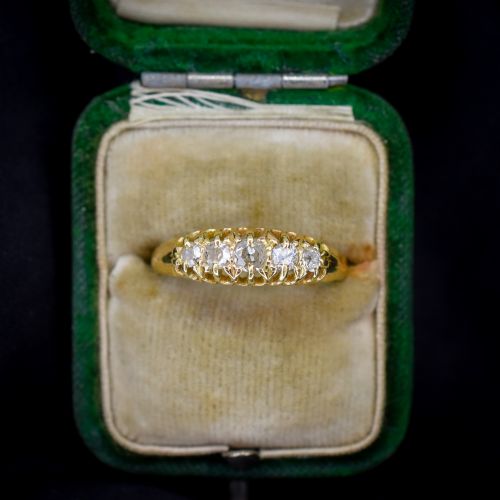
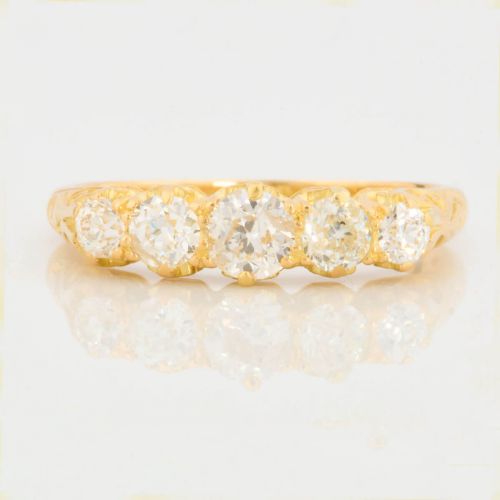
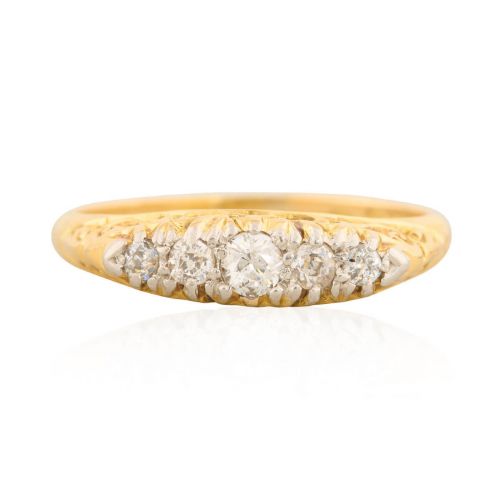
An 18ct diamond half hoop is typically encountered as a ring featuring a single row of stones set across the upper curve of the band. These pieces emerge from periods spanning the late nineteenth century into the early decades of the twentieth, including Victorian, Edwardian, and George V eras.
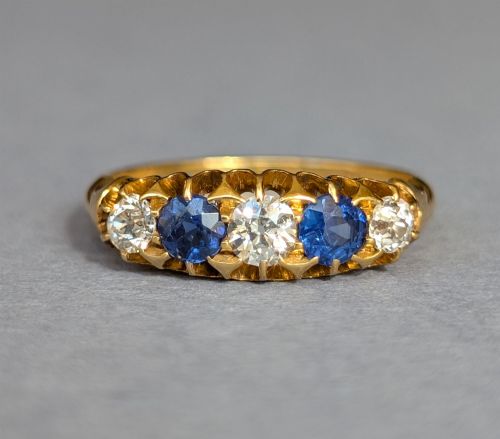
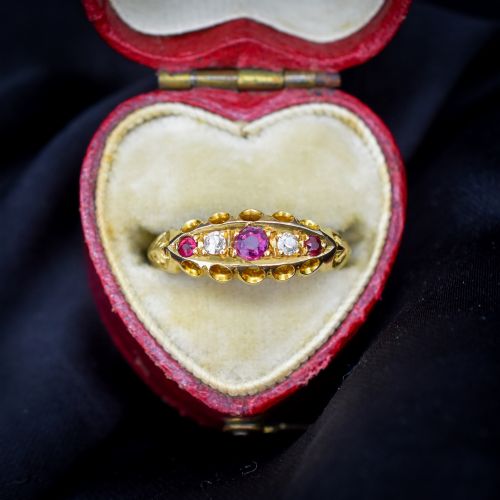
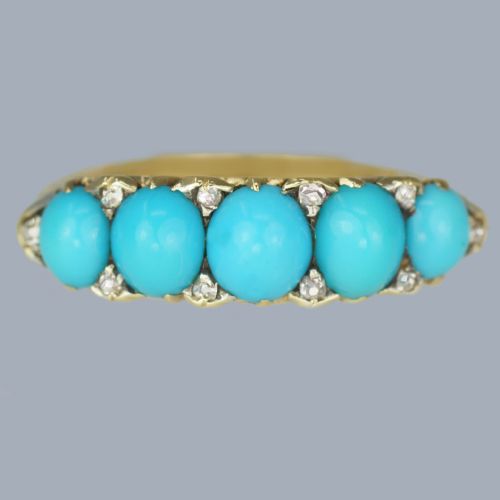
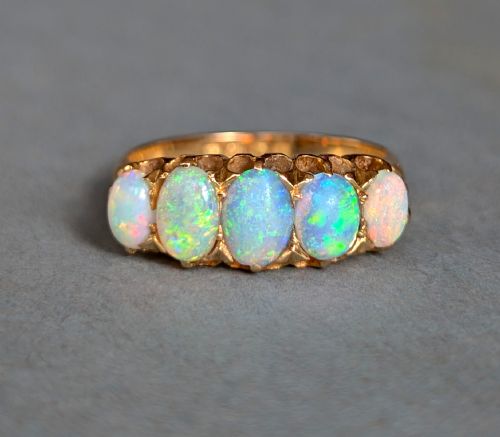
The form frequently appears as a five stone arrangement, alongside three stone configurations and boat shaped settings. Alongside pure diamond rows, many examples incorporate alternating gems such as sapphire, ruby, opal, turquoise, and garnet.
Makers of these rings utilised 18ct gold, often in a rich yellow tone, paired with hand-cut diamonds shaped to catch candlelight. The surviving inventory demonstrates a strong preference for continuous rows designed to sit low and comfortably against the hand.
How they were made
Goldsmiths constructed these bands in 18ct gold, housing stones within claw or boat settings that secured each gem while permitting light to enter from the sides. The metalsmiths shaped the yellow gold mounts by hand, resulting in subtle variations in shank thickness and gallery work.
Diamonds were predominantly old cut, displaying smaller tables and open culets compared to modern brilliant cuts. These stones were set alongside coloured gems like sapphires, rubies, and opals using hand-forged prongs that required precise bench work.
Listings feature 18ct yellow gold rings spanning the Victorian, Edwardian, and George V periods, incorporating sapphires, opals, and rubies.
What varies in quality
Quality in an 18ct diamond half hoop rests on the harmony of the stones and the integrity of the setting work. Better examples display closely matched diamond sizes and colours, where older hand-cut gems work together without one overpowering its neighbours.
The weight and gauge of the 18ct gold shank contribute significantly to the standard of a piece, as sturdier bands resist thinning over generations of wear. Finer items retain crisp hallmarks from assay offices such as Chester and London, marking the metal's purity and origin.
The 18ct Diamond Half Hoop Glossary
- Old cut
- A diamond facet style cut by hand before the advent of modern machinery, featuring a smaller table and a noticeable culet. These stones display a softer, deeper glow under ambient light.
- Half hoop
- A ring setting where gemstones occupy the upper half of the band rather than encircling the entire finger. This design allows for comfortable daily wear and potential resizing.
- Boat ring
- A ring featuring a curved, navette-like setting that resembles the hull of a ship, popular during the Victorian and Edwardian periods. The elongated shape accommodates clustered stones.
- Carat
- A unit of weight used for measuring gemstones. In these pieces, total carat weight combines the central diamond and any flanking stones.
- Hallmark
- An official stamp struck into precious metal indicating its purity, assay office, and often the year of manufacture. British 18ct gold hallmarks provide a reliable anchor for dating.
18ct Diamond Half Hoop: Frequently Asked Questions
What is an 18ct diamond half hoop?
It is a ring featuring a row of diamonds set across the top half of an 18ct gold band. These pieces date primarily from the Victorian and Edwardian eras.
They often incorporate other gemstones like sapphires or rubies alongside the diamonds, creating varied colour combinations.
How do I know the date of my ring?
Dating relies on hallmarks stamped inside the 18ct gold band, which indicate the assay office and active year. Stylistic clues such as boat settings and old cut stones also point to specific periods like late Victorian or Edwardian.
Looking closely at the mounting style helps distinguish pieces made around 1890 from those produced in the 1910s.
Can I wear an antique half hoop every day?
Many people wear these rings daily, provided the 18ct gold band and stone settings are inspected regularly by a jeweller. The half hoop design keeps the gems on top, reducing knocks against hard surfaces.
Gentle cleaning with warm soapy water helps maintain the brightness of both the gold and the stones over time.
What stones are found with diamonds in these rings?
Sapphire, ruby, opal, turquoise, and garnet frequently appear alongside diamonds in nineteenth and early twentieth century pieces. Sapphires and rubies are the most common companions in five stone configurations.
These coloured gems are typically arranged in alternating patterns or clustered with trefoil diamond accents.