
18ct Diamond Cluster Ring
An 18ct diamond cluster ring brings together central gemstones and surrounding stones in lasting gold settings.
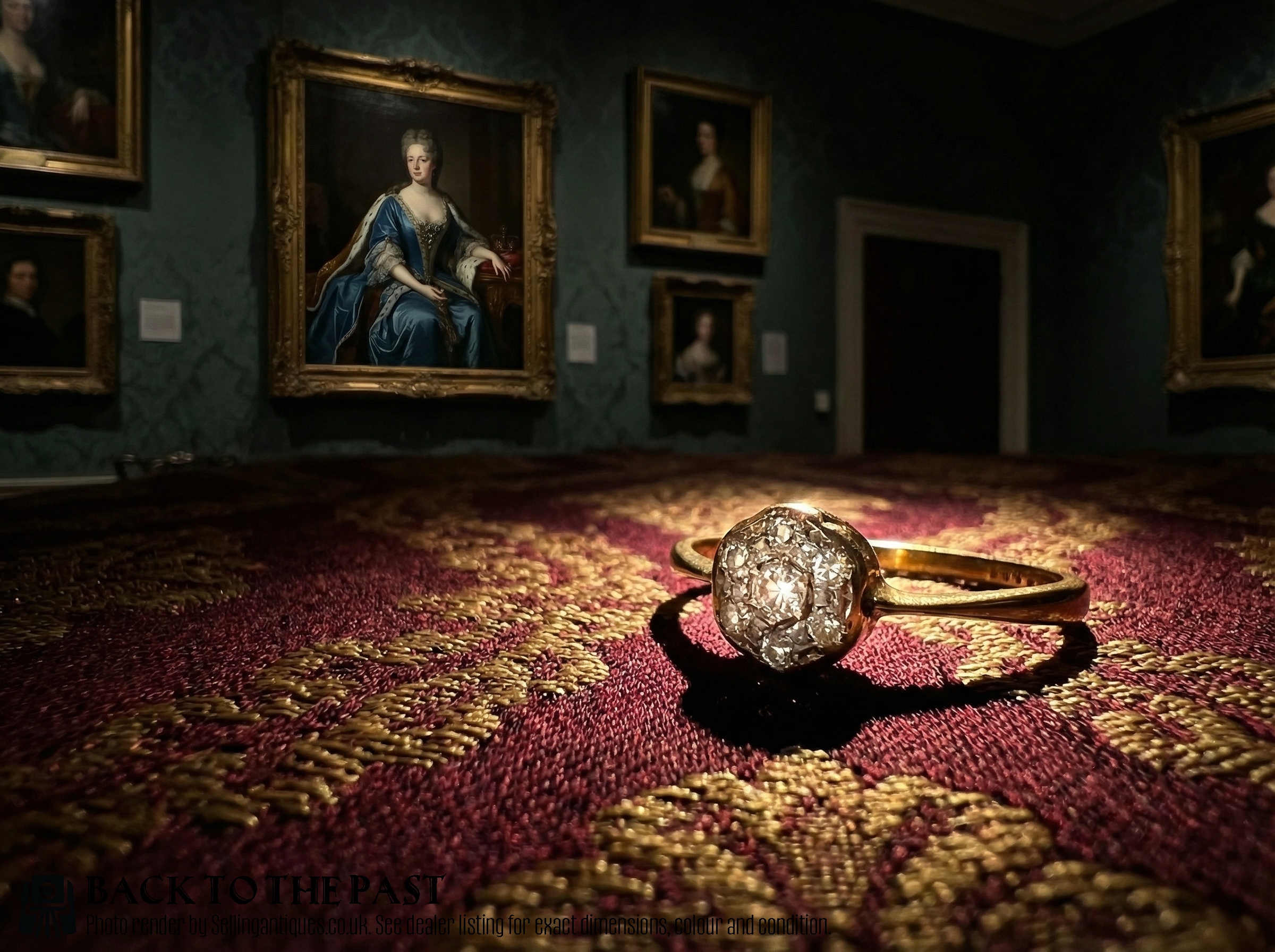
18ct Diamond Cluster Ring
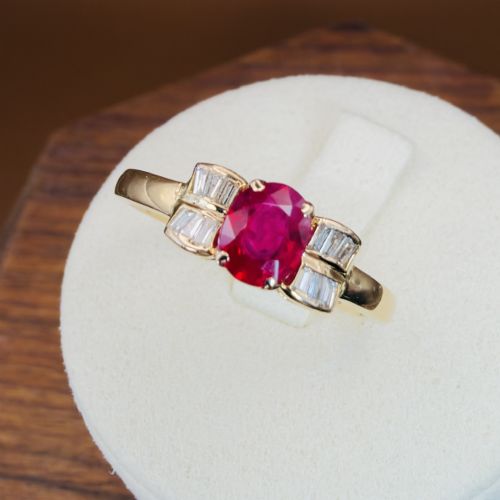
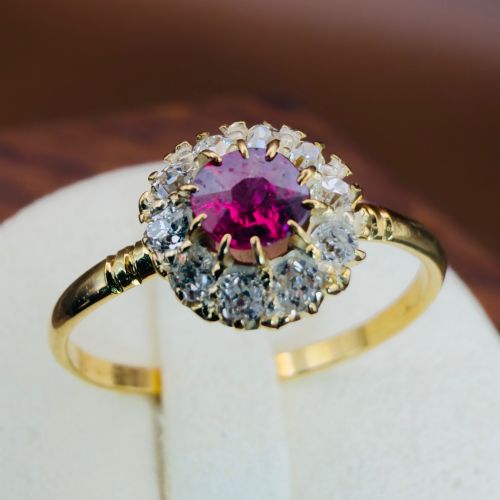
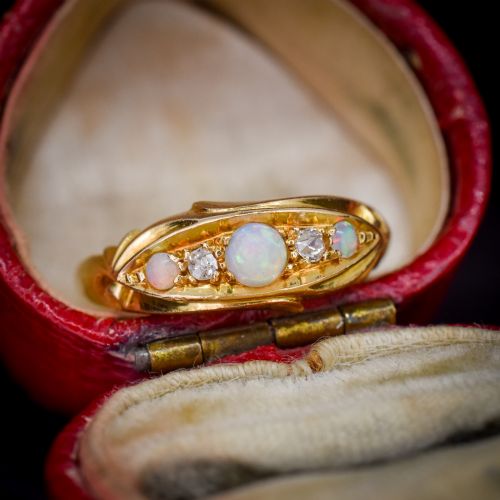
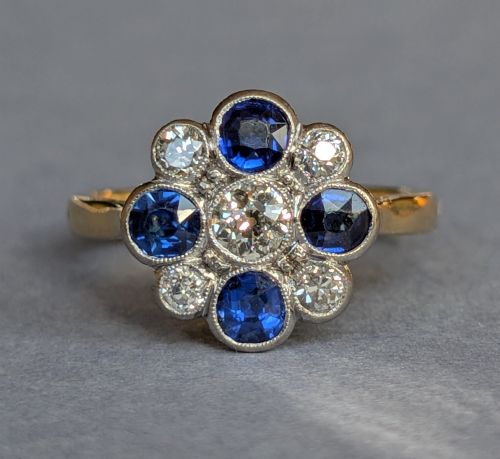
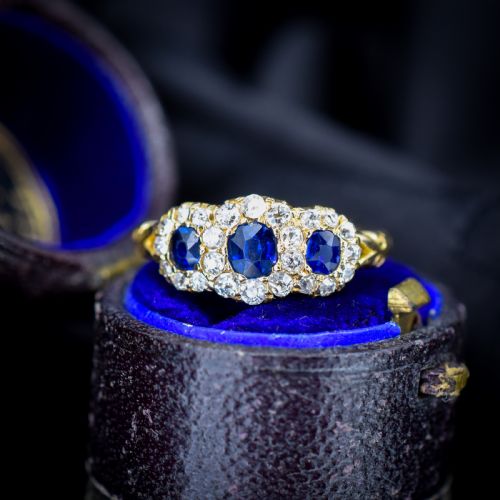
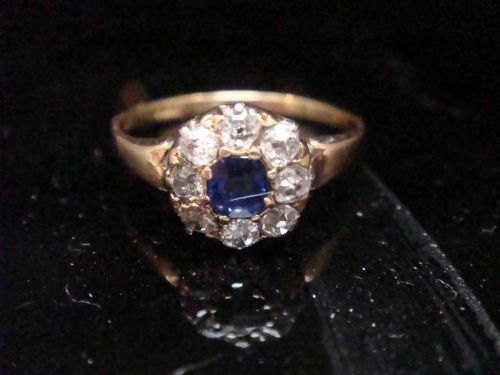
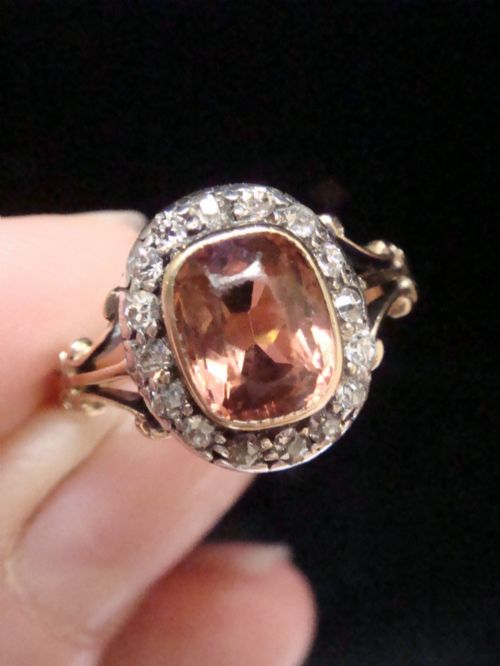
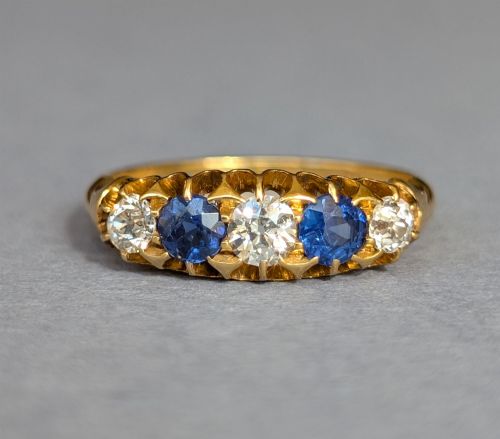
The layout typically positions diamonds alongside coloured stones such as sapphire, ruby, emerald, opal, or tourmaline. Buyers frequently encounter Edwardian platinum-topped gold clusters and vintage 1960s cocktail styles within these listings.
How They Were Made
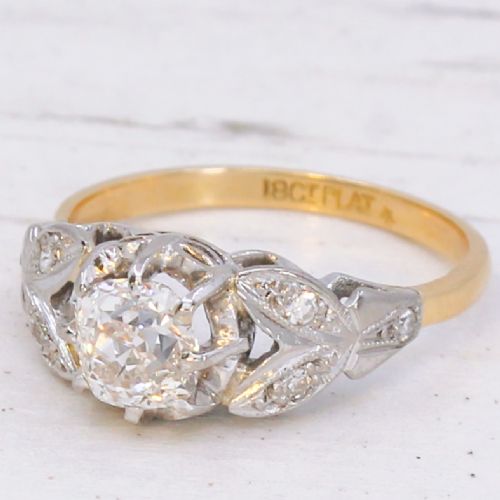
Craftsmen built these rings predominantly in 18ct yellow gold, 18ct white gold, and platinum. Platinum settings emerged strongly during the Edwardian period to hold diamonds securely with minimal metal visibility.
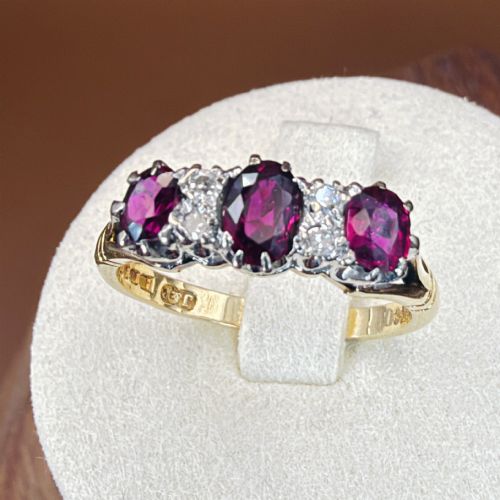
Stones feature old cut, old European cut, and brilliant cut facets set by hand into claw or bezel formations. Hallmarks stamped inside the bands often record assay office origins in cities such as London, Birmingham, and Chester.
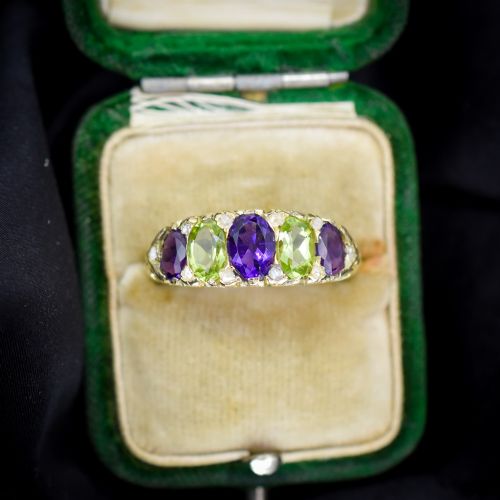
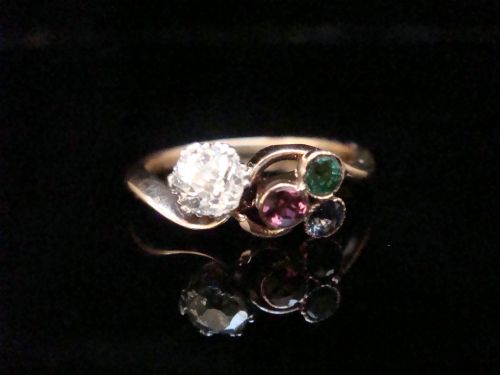
Suffragette rings quietly signal history through the intentional pairing of green peridot, white diamond, and violet amethyst.
What Varies in Quality
The standard of an 18ct diamond cluster ring rests on the symmetry of the stone arrangement and the crispness of the metalwork. Hand-cut stones from earlier eras display individual facet proportions that differ from machine-cut modern counterparts.
The integrity of the claws holding the central cluster and surrounding gems dictates the structural soundness of the piece. Matching colour and clarity across the outer ring of diamonds separates standard examples from finer workshops.
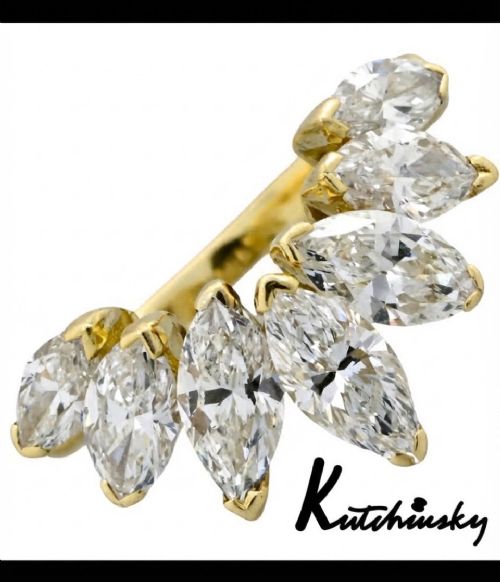
Kutchinsky
The 18ct Diamond Cluster Ring Glossary
- Cluster ring
- A ring featuring a central gemstone surrounded by a group of smaller stones. This configuration maximises visual spread and light reflection.
- Old cut
- A diamond facet style shaped by hand before modern brilliant cutting standards were established. These stones often exhibit smaller tables and higher crowns.
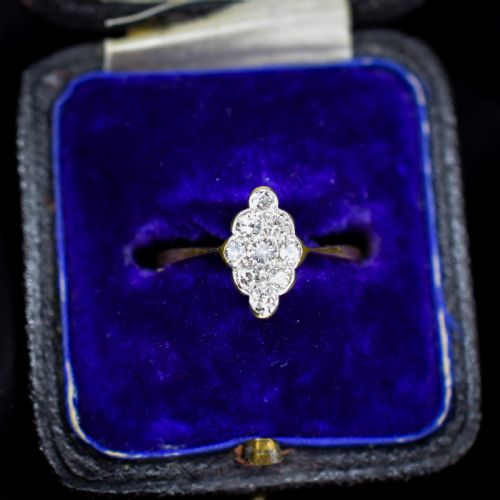
- Navette
- A boat-shaped or marquise setting that tapers to points at either end. The shape sits lengthwise along the finger.
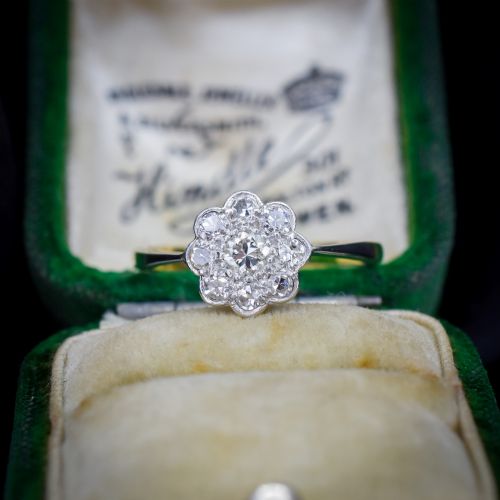
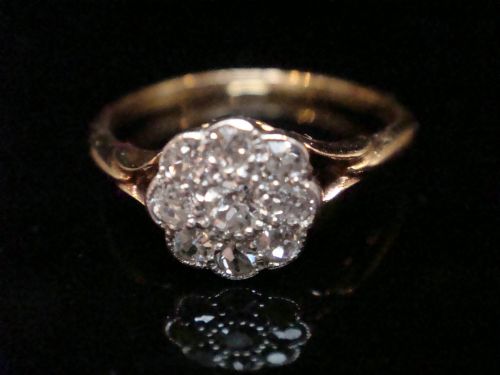
- Daisy cluster
- A circular arrangement of round stones encircling a central gem, resembling a flower head. This form is common in Victorian and Edwardian pieces.
- Hallmark
- Official marks stamped into the precious metal indicating purity, assay office, and date. These stamps provide definitive evidence of age and origin.
18ct Diamond Cluster Ring: Frequently Asked Questions
What periods do these rings come from?
The pieces span the Victorian era, Edwardian period, Art Deco years, and mid-century modern decades up to the 1970s. Each era introduces distinct design traits, from delicate millegrain edges to bold geometric mountings.
Identifying marks, metal tones, and stone-cutting styles help determine the manufacturing period of individual rings.
How do I wear a cluster ring daily?
Wearing an 18ct diamond cluster ring daily requires basic care regarding hard impacts and household chemicals. The raised setting places the central stones outward, making them vulnerable to sharp knocks.
Matching the ring with straight wedding bands needs careful attention to the cluster's outer profile so the bands sit flush.
What is the difference between old cut and brilliant cut stones?
Old cut diamonds feature hand-polished facets with smaller tables and deeper pavilions, designed to catch candlelight. Brilliant cut stones follow precise geometric formulas developed in the twentieth century for maximum daylight brilliance.
Both cuts appear across different eras depending on whether the mounting is antique or vintage.
Are coloured gemstones common in these rings?
Coloured gemstones appear frequently alongside diamonds in cluster designs, including blue and cornflower sapphires, rubies, emeralds, opals, tourmalines, and amethysts. These stones form the central focus or alternate within the outer cluster.
Historical preferences influenced which coloured stones paired with diamonds during specific decades.