



1880s Gold Brooch
An 1880s gold brooch brings genuine Victorian craftsmanship to your lapel, offering finely worked precious metals paired with period gemstones.
1880s Gold Brooch
When you search for an 1880s gold brooch, you enter the late Victorian period where jewellery served both decorative and sentimental roles. The pieces you meet on this page span several variations of this form, including dedicated brooches, versatile pendant-brooches, and convertible items that function equally as necklaces or bracelets.
The materials recorded in these listings reflect the high standards of late nineteenth-century goldsmithing. You will encounter pieces fashioned from nine-carat, fourteen-carat, fifteen-carat, eighteen-carat, and twenty-one-carat yellow gold, frequently accompanied by silver settings for specific gemstones. Precious and semi-precious stones such as diamonds, sapphires, rubies, garnets, pearls, hardstones, bloodstone, turquoise, and enamel define the visual character of these items.
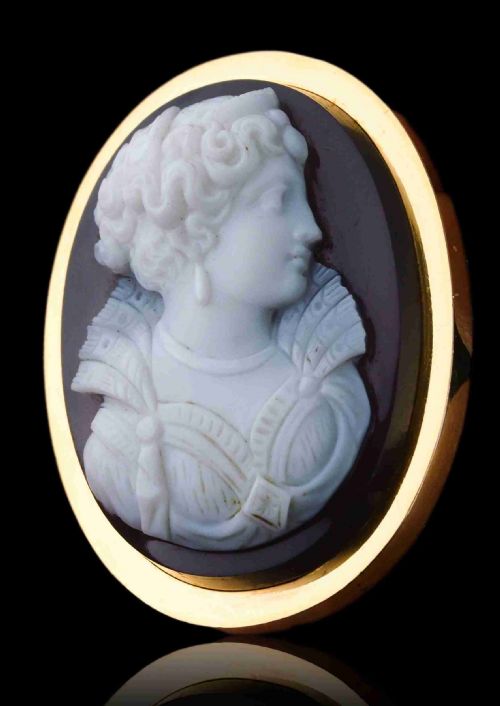
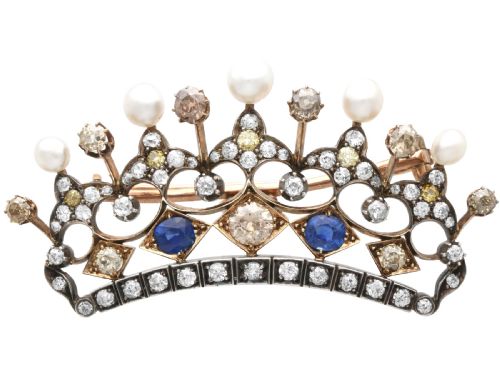
Stylistically, these items sit firmly within the Victorian aesthetic, often incorporating foliate motifs, crescent shapes, crowns, and carved hardstone cameos. French origin also appears among the selections, alongside items featuring interchangeable components like detachable pendants and chains.
How they were made
Goldsmiths of the 1880s utilised varying purities of yellow gold, ranging from nine-carat up to twenty-one-carat, shaping the metal to support complex stone arrangements. Silver was frequently employed alongside gold in settings, particularly to enhance the brilliance of diamonds by providing a contrasting white background.
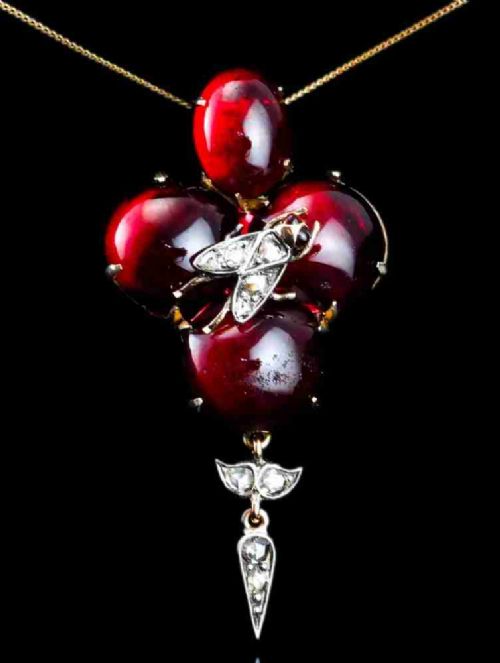
Lapidaries and jewellers combined diamonds, rubies, sapphires, garnets, and seed pearls into intricate designs using secure claw and flush settings. Hardstone cameos were painstakingly carved from agate and bloodstone, while enamel work added lasting colour to yellow gold frameworks.
The available selection includes multi-functional pieces that transition between brooches, pendants, necklaces, and bracelets, alongside matching earring sets.
What varies in quality
The choice of gold purity creates a primary distinction across these pieces, moving from standard nine-carat alloys up to rich twenty-one-carat yellow gold. Similarly, the selection of gem materials, such as natural pearls and substantial diamond carat weights alongside rubies and sapphires, dictates the standing of an individual piece.
The intricacy of the underlying design work separates standard examples from exceptional ones. Items featuring multifaceted functionality - such as brooches that convert into pendants, necklaces, or bracelets - demonstrate advanced Victorian mechanical and artistic execution.
The 1880s Gold Brooch Glossary
- Cabochon
- A gemstone shaped and polished with a smooth, rounded convex surface rather than faceted. This style was frequently utilised for garnets and other coloured stones during the Victorian period.
- Hardstone
- A term for semi-precious stones such as agate and bloodstone used in glyptic art. Artisans carved these durable materials to create detailed cameo brooches.
- Foliate motif
- A decorative design incorporating leaf and plant-like forms. Victorian jewellers frequently used this naturalistic ornamentation on gold brooch frames.
- Natural pearl
- Pearls formed organically within molluscs without human intervention. These organic gems appear frequently in nineteenth-century cluster and pendant brooches.
1880s Gold Brooch: Frequently Asked Questions
How do I wear a convertible brooch?
Many Victorian pieces feature integrated loops or detachable fittings that allow a brooch to function as a pendant on a chain.
Some designs also incorporate mechanisms to transition between a bracelet, necklace, and lapel ornament depending on your preference.
What stones appear in these brooches?
Common gemstones include diamonds, rubies, sapphires, garnets, seed pearls, and natural pearls. Jewellers also utilised hardstones like agate and bloodstone, alongside turquoise and enamel.
These materials were chosen to create contrasting colour palettes and varied surface textures within a single piece.
How are periods identified?
Dating relies on stylistic markers characteristic of the Victorian era, including specific foliate motifs, crescent shapes, and crown designs. Material combinations, such as gold paired with silver settings, also point directly to this period of manufacture.
Documentation associated with individual pieces further confirms their circa 1880 origin.