




17th Century Walnut Frame
A 17th century walnut frame brings tactile warmth and deep grain patterns to any room, offering historic character through rich timbers.
17th Century Walnut Frame
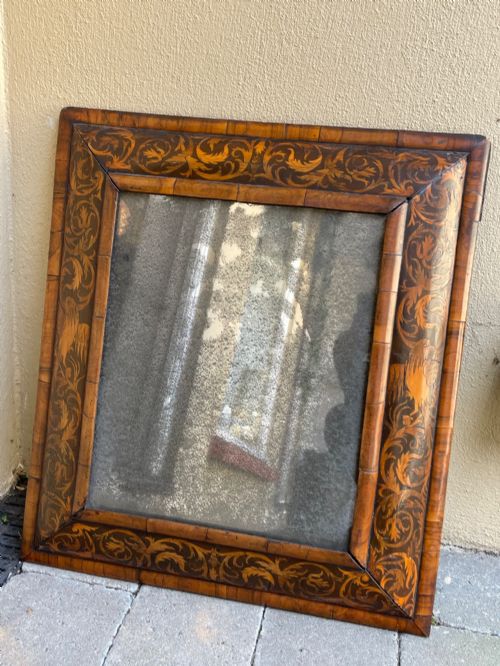
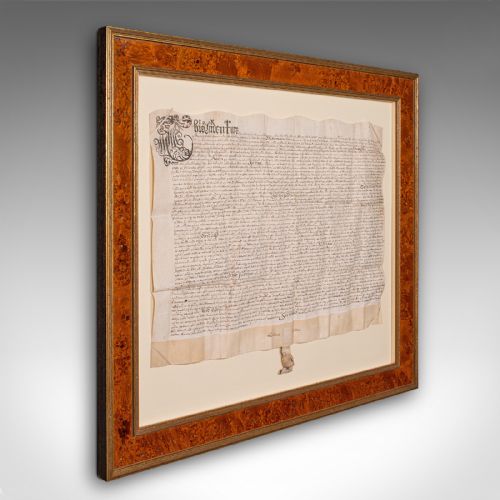
The most common forms you meet on this page include cushion mirrors, oyster veneer mirror surrounds, and protective housings for historic vellum documents or textiles. Stylistic influences range from Anglo-Dutch aesthetics to the ornate details of the Dutch Golden Age.
Makers utilised dense timbers and intricate marquetry inlays to create visual depth around central artworks and looking glasses. Selecting the right version means balancing genuine period construction against decorative revival pieces.
Materials and Construction
Constructed primarily from solid walnut and accented with decorative veneers, these items rely on foundational woods such as oak for internal stability. Craftsmen sliced cross-grain sections of branches to form circular oyster patterns across the face of the moulding.
Surface detailing frequently incorporates parcel-gilt wood, boxwood stringing, and ebonised highlights to create contrast against the warm brown walnut. Joinery techniques from the period depend on pegged frames and heavy backing boards to secure fragile glass plates and canvases.
17th Century Walnut Frame Retail Price Guide 2026
Typical asking prices for 17th century walnut frame among the pieces listed under this phrase on Sellingantiques today, from the lower quarter to the upper quarter. They describe what is for sale here now, not the wider market.
Listings feature walnut, boxwood, oak, and brass alongside fabric and oil paint.
Assessing Quality and Craftsmanship
The standard of a 17th century walnut frame rests upon the intricacy of its veneer work and the preservation of its original surface patination. Superior examples display tightly fitted oyster patterns and crisp marquetry floral inlays that maintain their structural integrity over centuries.
Lower tiers of quality often reveal later surface stripping, replaced mirror glass, or poorly executed revival mouldings that lack the depth and weight of authentic period joinery. Original backing materials and untouched finish layers elevate the desirability of any piece.
Daniel Marot
The 17th Century Walnut Frame Glossary
- Cushion frame
- A convex, rounded moulding profile popular during the late seventeenth century that projects outward from the wall. This swollen shape catches light differently across the grain of the wood.
- Oyster veneer
- Thin slices of wood cut transversely across small branches to reveal circular growth rings resembling oyster shells. Artisans arranged these pieces in geometric patterns across flat surfaces.
- Marquetry
- Decorative inlay work using various tinted woods to create pictorial designs such as foliage and birds. The technique requires precise cutting and fitting into a veneer ground.
- Parcel-gilt
- Woodwork partially covered with thin layers of gold leaf to highlight specific carved details. This treatment provides contrast against dark walnut timbers.
- Ebonised
- Timber treated with chemical stains or dark finishes to imitate expensive ebony wood. It appears frequently on mouldings and stringing lines.
17th Century Walnut Frame: Frequently Asked Questions
What is oyster veneer?
Oyster veneer consists of small, round slices of wood cut across the branch rather than along the grain. This method produces distinctive swirling patterns resembling oyster shells.
Cabinetmakers arranged these roundels in elaborate repeating rows across the flat faces of mirrors and cabinets.
Are these frames all from the seventeen hundreds?
The selection includes genuine seventeenth-century pieces alongside later nineteenth-century revival items made in the same taste. Examining the construction methods, backing boards, and wood oxidation helps determine the precise age.
Revival pieces often replicate the styles of William and Mary or the Carolean era using older stylistic vocabulary.
How should I hang a heavy wooden frame?
Due to the dense nature of solid walnut and oak backings, these items require secure wall anchors rated for substantial weight. Professional fixings that attach directly to wall studs provide the safest support.
Avoid relying on lightweight picture wire when mounting older, heavy mirror frames.