



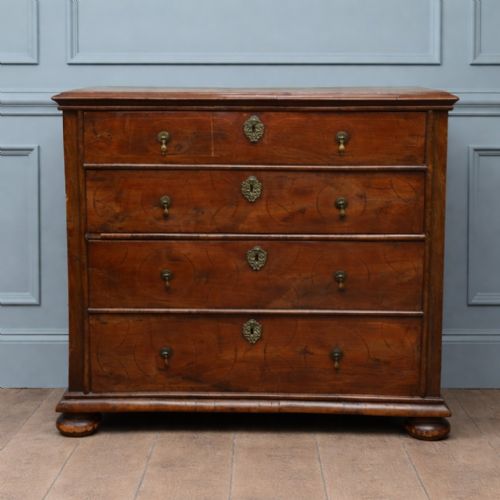


17th Century Walnut Dresser
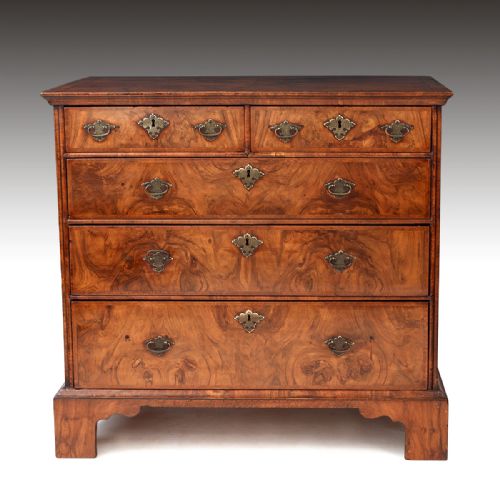
A 17th century walnut dresser search brings up substantial timber storage pieces defined by intricate marquetry and figured grain surfaces.
17th Century Walnut Dresser
A 17th century walnut dresser search reveals pieces predominantly taking the form of chests of drawers and chests on stand. These items originate from the 17th century and the 18th century, spanning the Charles II and William and Mary periods.
The versions most commonly met on this page combine walnut with oak, fruitwood, and burr walnut. Such pieces demonstrate the heavy domestic storage requirements and refined craftsmanship of their era.
Makers utilised structural timbers like oak for carcases whilst facing visible exterior surfaces in rich cabinet woods. Surviving examples reflect the aesthetic preferences of late seventeenth-century English and continental workshops.
Materials and construction methods
Cabinetmakers constructed the primary carcases using solid oak and fruitwood to ensure structural stability. Drawers and tabletops received decorative treatments of walnut, burr walnut, and laburnum.
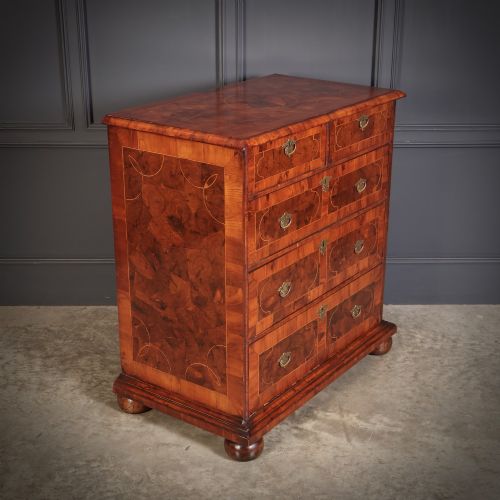
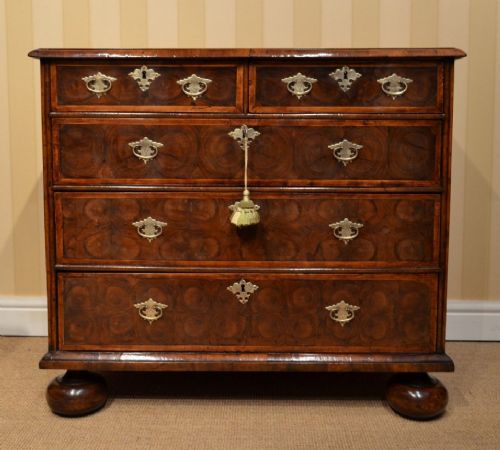
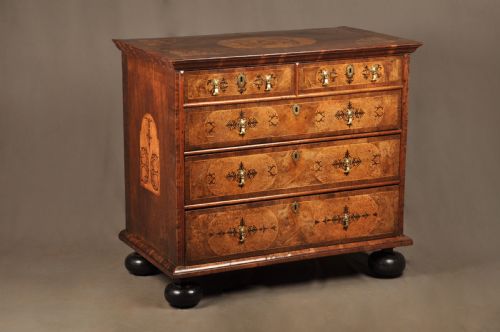
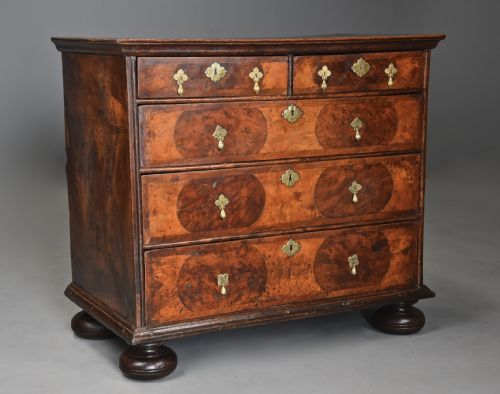
Surface ornamentation relied heavily on oyster veneering, where small circular branches were sliced transversely to form repetitive patterns. Marquetry inlay incorporated boxwood and assorted timbers to create complex floral and arabesque designs.
Hardware typically involved brass drop handles and escutcheons secured to the drawer fronts. Joinery techniques from the period prioritised thick plank construction and early dovetail methods.
Branch wood was sliced like carrots to make oyster veneer, proving seventeenth-century cabinetmakers found beauty in the smallest offcuts.
Factors separating the finest examples
Quality variation rests largely upon the complexity and preservation of the surface veneer work. Pieces featuring dense floral marquetry or meticulously matched oyster veneer demand closer attention than plain walnut surfaces.
The integrity of secondary timbers such as oak linings and original backboards dictates the historical value of the piece. Greater skill is evident where geometric inlay aligns precisely across drawer divisions and carcase framing.
The 17th Century Walnut Dresser Glossary
- Oyster veneer
- A method of cutting branch wood across the grain to produce circular or oval motifs resembling oyster shells. This technique creates a distinctive repeating pattern across the drawer fronts.
- Marquetry
- The art of applying decorative veneer pieces of different woods to a structure to form intricate designs. Floral and arabesque patterns are common motifs found on these surfaces.
- Chest on stand
- A two-part storage furniture form comprising an upper chest section elevated on a separate support stand. These elevated designs often feature slender legs connected by stretchers.
- Charles II
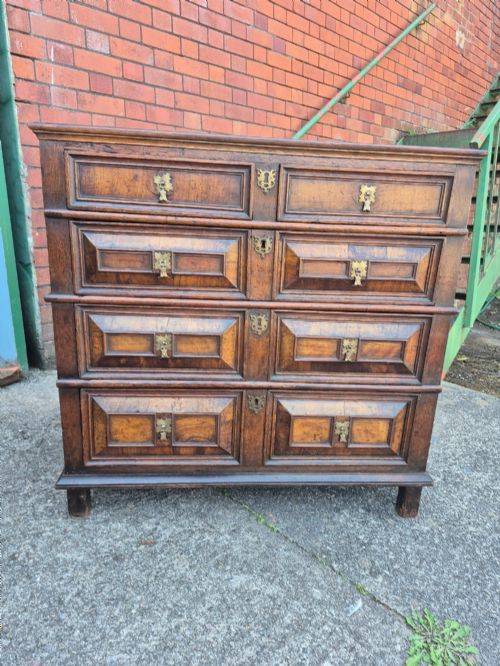
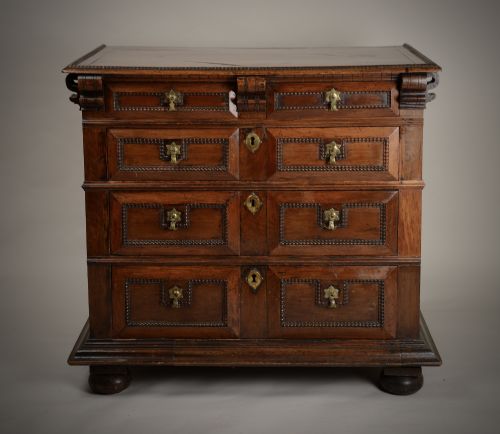
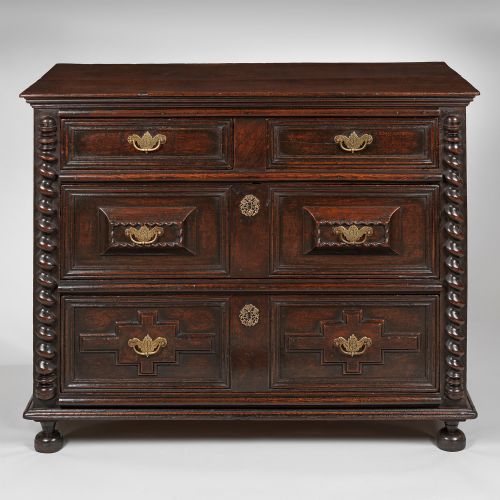
- An English historical period spanning the mid to late seventeenth century associated with sturdy oak and walnut furniture. Pieces from this era often incorporate geometric moulding details.
- William and Mary
- A stylistic period bridging the late seventeenth and early eighteenth centuries known for elaborate veneering and marquetry. Furniture from this time exhibits Dutch and French design influences.
17th Century Walnut Dresser: Frequently Asked Questions
What is a 17th century walnut dresser?
These pieces primarily comprise chests of drawers and chests on stand originating from the late seventeenth century. They serve as substantial storage furniture constructed from native and continental timbers.
Craftsmen built these items using heavy oak carcases faced with decorative walnut veneers and elaborate inlay work. They reflect the domestic interior fashions of the Charles II and William and Mary periods.
How were these chests used?
Historically, households utilised these heavy timber chests for storing linens, clothing, and domestic valuables. The compartmentalised drawer layouts provided secure containment for personal possessions in important chambers.
Over time, their primary function shifted from utilitarian storage to display pieces showcasing fine cabinetmaking skills. Modern interiors often position them in hallways, living rooms, or bedrooms as statement storage units.
How do I live with antique walnut furniture?
Living with these pieces requires maintaining stable indoor humidity levels to protect sensitive wood veneers and solid timbers. Sudden temperature shifts can cause shrinkage or cracking in seventeenth-century surfaces.
Positioning them away from direct heat sources and strong sunlight preserves the rich colour and grain of the walnut. Gentle dusting and occasional wax application maintain the natural sheen of the wood.
How do I distinguish William and Mary periods?
William and Mary period pieces frequently display sophisticated marquetry inlay, oyster veneer, and refined brass hardware. The furniture forms tend to feature elevated stands and geometric drawer configurations.
Earlier Charles II examples often rely more heavily on solid oak structures combined with geometric raised mouldings. Examining the secondary woods and construction joins helps confirm the approximate date of manufacture.