



17th Century Country Chair
A 17th century country chair brings domestic history directly into a room through honest timber work and traditional construction.
17th Century Country Chair
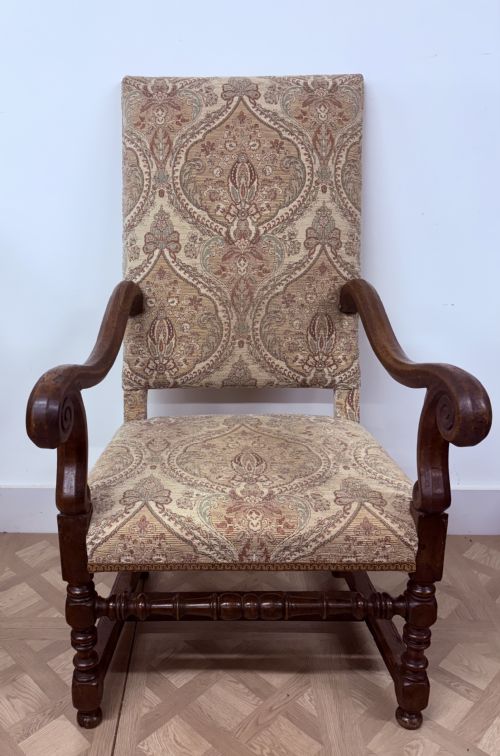
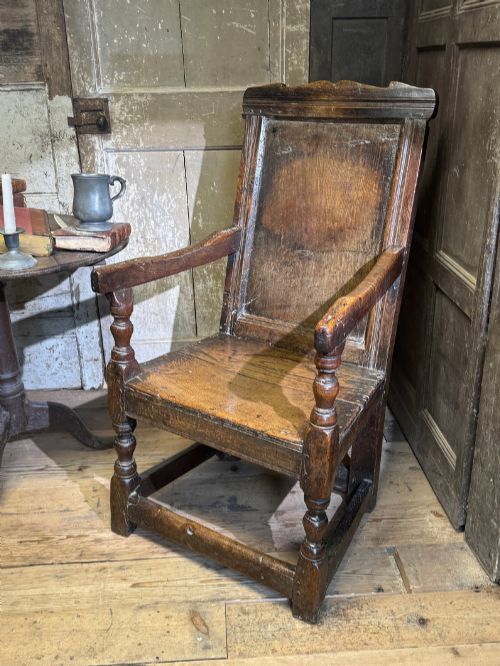
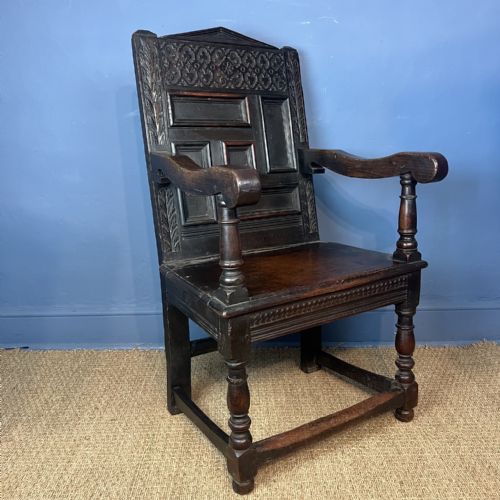
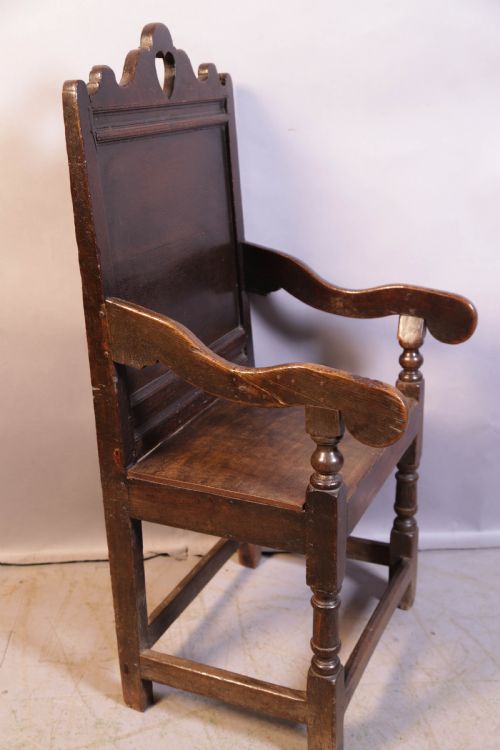
A 17th century country chair is a functional domestic seat rooted in vernacular woodworking traditions across regions like Wales, the West Country and Northern England. These heavy seating forms range from robust wainscot and panel-backed armchairs to spindle-turned master chairs and convertible chair-tables.
The versions most commonly met on this page date from the 17th century and later, constructed primarily from native hardwoods with distinct regional characteristics. Buyers encounter armchairs, fireside seats and matched or harlequin dining sets reflecting centuries of domestic utility.
How they were made
Makers utilised solid native timbers including oak, ash, walnut and fruitwood, shaping components with drawknives, lathes and hand saws. Joinery relied heavily on traditional pegged mortise and tenon joints to secure the heavy frames without metal fasteners.
Surface treatments developed naturally through decades of use, though some examples retain traces of early paint or dark wax finishes. Upholstery, where present, integrates historical fabrics like wool tapestry secured with traditional methods.
17th Century Country Chair Retail Price Guide 2026
Typical asking prices for 17th century country chair among the pieces listed under this phrase on Sellingantiques today, from the lower quarter to the upper quarter. They describe what is for sale here now, not the wider market.
Current listings feature native British hardwoods such as oak, ash, fruitwood and walnut across the 17th and 18th centuries.
What varies in quality
Quality separates along the lines of original timber selection, timber preservation and the integrity of the structural joinery. Pieces retaining substantial original framing without excessive timber replacement hold greater integrity.
Depth of carving, crispness of turned spindles and the natural ageing of the wood surface distinguish standard vernacular seating from exceptional master examples.
The 17th Century Country Chair Glossary
- Wainscot chair
- A heavy wooden armchair constructed with panelled backs and solid wooden seats, typical of early domestic interiors. These pieces often display carved detailing along the top rail.
- Turned chair
- A seating form constructed entirely from spindle-turned wooden members fitted together. The style relies on geometric precision in the lathe work rather than carved panels.
- Chair-table
- A dual-purpose domestic item featuring a hinged back that tilts forward to form a table top over the seat base. This space-saving design served multiple functions in early kitchens.
- Harlequin set
- A collection of chairs closely related in style and period but assembled from different sources rather than produced as a single original workshop batch. Such sets share common visual traits like timber and regional turning.
- Vernacular
- Describing objects built by local craftspeople using regional traditions and native materials rather than adhering to high-style court fashions. These items prioritise utility and local availability of wood.
17th Century Country Chair: Frequently Asked Questions
What is a wainscot chair?
A wainscot chair is an early wooden armchair built with solid panel construction, typically featuring a high carved back and heavy arm supports. They represent some of the most substantial seating forms surviving from the period.
These chairs were costly items originally reserved for heads of households or important guests in domestic settings.
How do I use a chair-table?
A chair-table functions as a seated armchair until the heavy wooden back is pivoted forward on wooden pegs to rest flat across the arms, creating a flat surface. This dual purpose suited smaller historical rooms.
Today, they serve as striking sculptural centrepieces in living spaces where the pivoting mechanism can remain closed or open.
Are these chairs comfortable for daily use?
Early wooden chairs feature upright backs and solid timber seats designed for posture and durability rather than modern deep cushioning. Adding a simple loose cushion can adapt them for contemporary seating.
Their sturdy frame construction supports daily sitting, provided the historical joints remain stable and secure.
How can I tell regional styles apart?
Regional differences appear in the choice of wood, such as Welsh oak versus Northern ash, and in the specific turning patterns used on legs and spindles. Local workshops developed distinct local preferences for carving motifs.
Comparing the structural layout to known regional examples helps identify whether a piece originated in the West Country or Wales.