
15ct Gold Pendant Necklace
Discover exquisite 15ct gold pendant necklace designs featuring historical gemstones and intricate metalwork.
15ct Gold Pendant Necklace
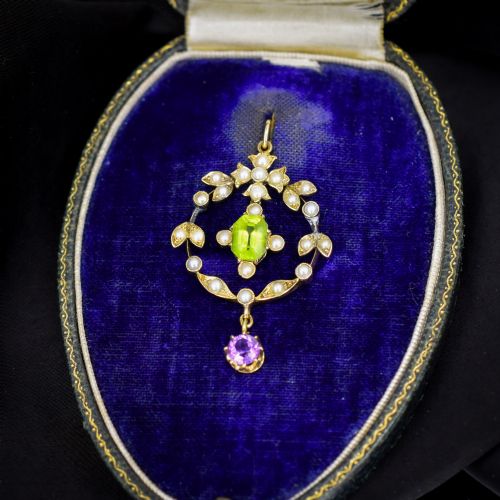
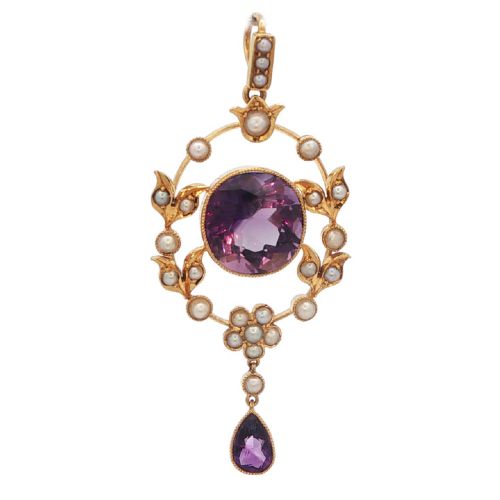
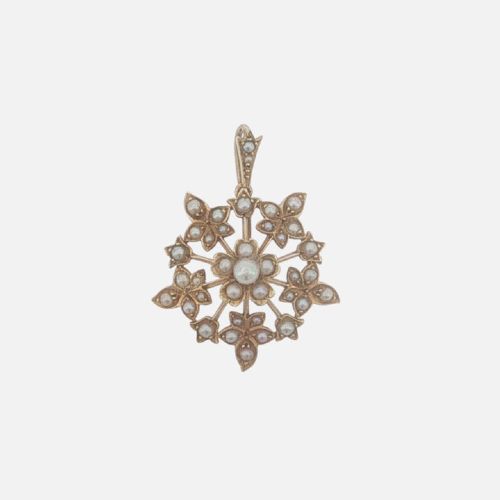
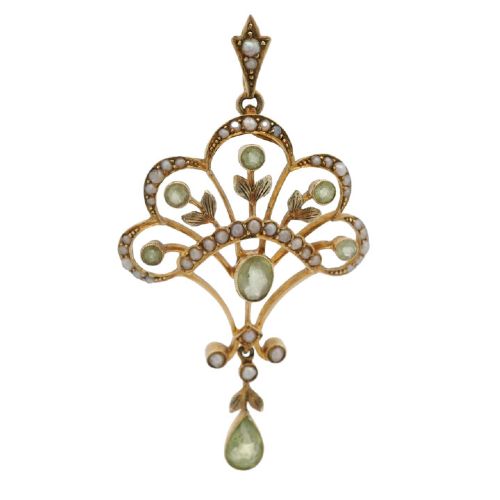
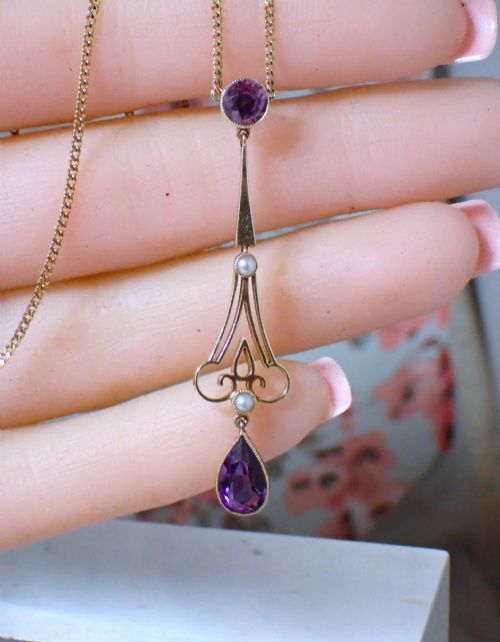
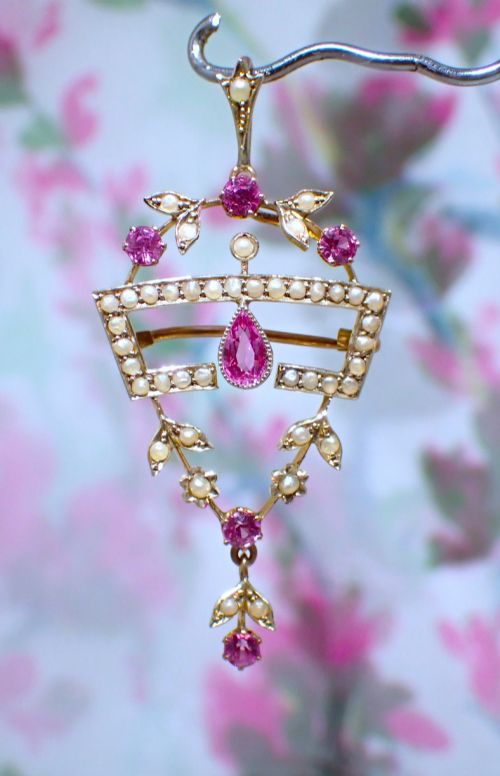
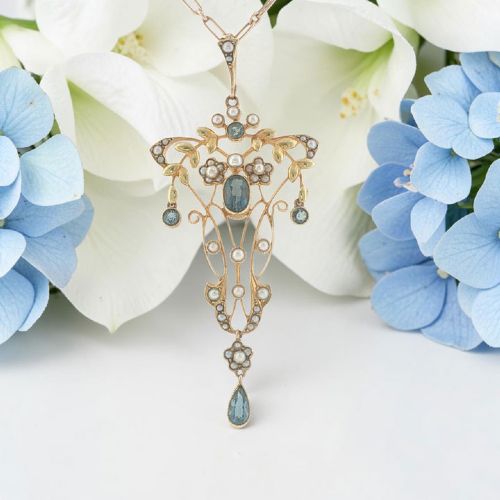
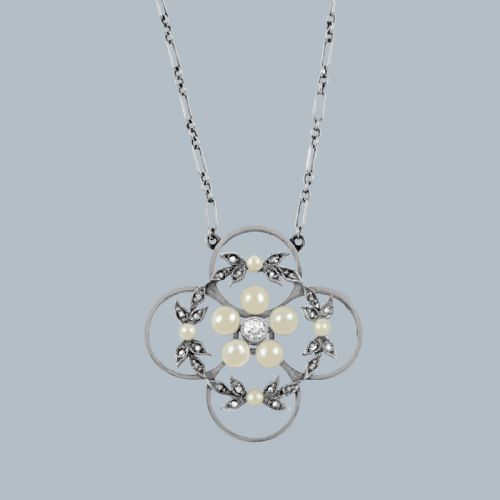
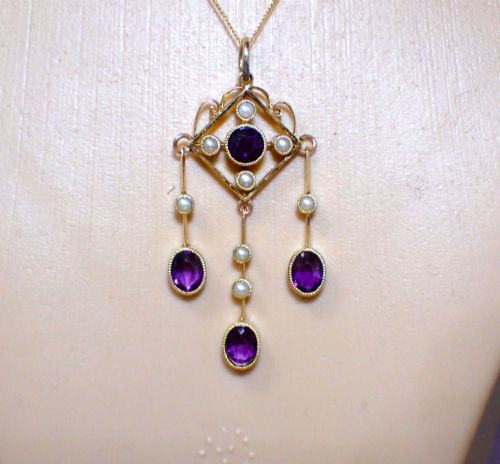
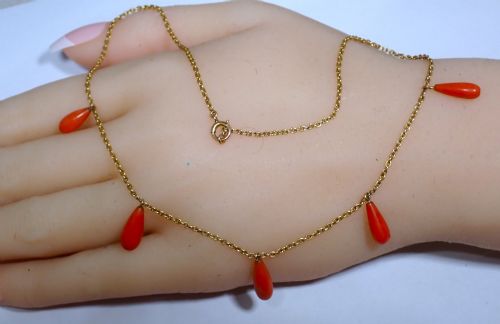
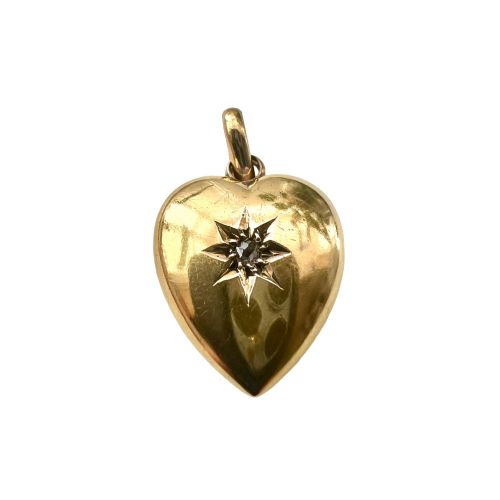
A 15ct gold pendant necklace brings together historical craftsmanship and precious gemstones, often showcasing delicate drops and lavalier designs. Buyers searching this phrase typically encounter pieces from the Victorian, Edwardian, and Art Nouveau periods, spanning late nineteenth and early twentieth centuries. These jewels frequently combine bright yellow gold with natural pearls, amethysts, peridots, and aquamarines in organic floral or geometric motifs.
How They Were Made
Goldsmiths worked primarily in fifteen-carat yellow and rose gold, an alloy offering a rich, warm tone distinct from modern higher or lower carat standards. Components were frequently hand-fabricated using wirework, granulation, and repoussé techniques to build up dimensional frames and settings. Enamelling and specialised stone-setting methods, including delicate claw settings and closed-back foils, secured the central gems.
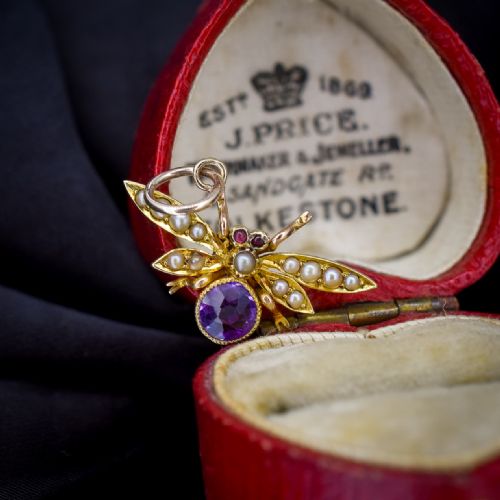
Pendants often incorporated fine seed pearls strung on silk or secured with tiny peg settings alongside larger faceted stones like amethysts, peridots, and opals. Art Nouveau and Arts and Crafts pieces occasionally utilised enamel work such as plique-à-jour, suspending translucent coloured glass-like fields within wire frameworks. Master craftspeople soldered articulated joints to let drops swing freely with the wearer's movement.
Listings feature Edwardian and Victorian periods, with materials spanning 15ct yellow gold, seed pearl, amethyst, peridot, aquamarine, and diamond.
What Varies In Quality
Quality rests heavily on the fineness and originality of the goldsmith's handwork, from precise filigree to the structural integrity of integrated settings. Pieces bearing clear hallmarks or maker marks command greater certainty regarding their origins and period authenticity. The calibre, matching, and secure retention of natural gemstones - whether seed pearls, aquamarines, or diamonds - further distinguish superior examples from standard production.
The complexity of the design, such as elaborate multi-drop lavaliers or scarce plique-à-jour enamel, separates standard factory output from exceptional studio pieces. Preservation of the original components, including matching chains, clasps, and convertible brooch mechanisms, preserves the overall integrity of the antique. Superior items maintain crisp engraving and uncompromised metal thickness across every structural element.
Murrle Bennett·Hamilton and Co·Marius Hammer
The 15ct Gold Pendant Necklace Glossary
- Lavalier
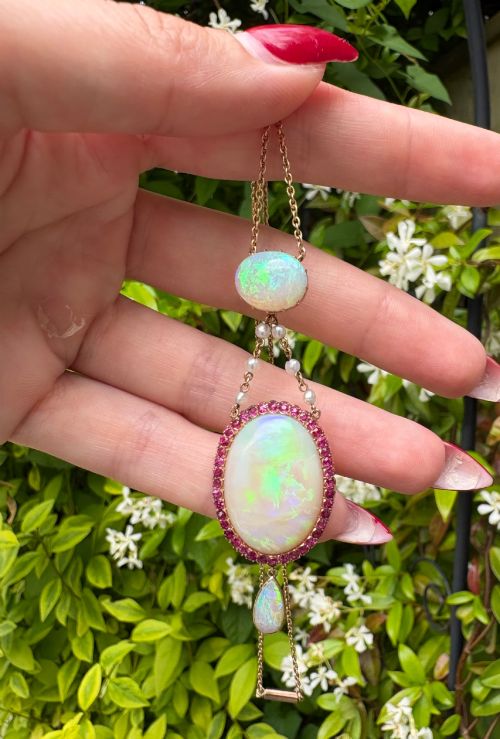
- A pendant necklace featuring a central gemstone drop suspended below a smaller stone or decorative motif, popular during the Edwardian era. These pieces swing freely and often incorporate delicate garland swags.
- Seed Pearl
- A tiny, naturally occurring saltwater pearl, typically under two millimetres in diameter, used extensively in clusters and floral outlines. They require careful setting by hand into small collets.
- Plique-à-jour
- An enamelling technique resembling miniature stained glass, where enamel is applied within a cellular metal framework without a backing. This lets light pass directly through the translucent coloured material.
- Etruscan Revival
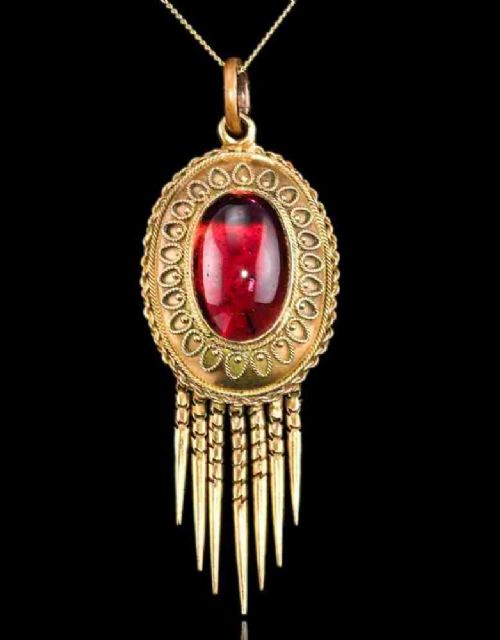
- A Victorian design style inspired by ancient archaeological discoveries, characterised by applied wirework and tiny gold granules. Goldsmiths utilised these classical motifs to create rich textural surfaces on gold frames.
- Suffragette
- Jewellery incorporating the colours green, white, and violet, often represented by peridot, seed pearl, and amethyst. These stones symbolised the political movement led by women during the early twentieth century.
15ct Gold Pendant Necklace: Frequently Asked Questions
How do I style an antique necklace?
Wearing an antique pendant necklace involves pairing its historical character with either simple necklines or complementary period attire. Many Edwardian and Victorian pieces feature delicate lengths that sit gracefully near the collarbone.
Because numerous pendants double as brooches, they offer versatile styling options for lapels or evening wear. Ensuring the supporting chain matches the historic weight and colour of the pendant maintains aesthetic harmony.
How do I date a 15ct gold necklace?
Dating these necklaces relies on examining the stylistic markers, gemstone cuts, and any accompanying hallmarks stamped onto the metal. Victorian pieces often display robust Etruscan or romantic motifs, while Edwardian examples favour lighter garland and lavalier formats.
The transition from Victorian heavy goldwork to airy Edwardian platinum-topped and yellow gold settings helps narrow the decade of production. Maker marks and assay office stamps provide definitive verification when present.
Were 15ct gold necklaces worn daily?
Historical wearers often reserved precious fifteen-carat gold jewellery for social calls, evening events, or formal daytime occasions. The inclusion of delicate seed pearls and intricate wirework meant these items required careful handling.
Many pieces were treasured heirlooms passed down through families, preserved in their original fitted boxes. Today, careful custodianship ensures these delicate nineteenth and twentieth-century jewels remain suitable for special wear.