


14ct Gold Cocktail Ring
A 14ct gold cocktail ring brings together substantial precious stones and mid-century design, offering bold presence on the hand.
14ct Gold Cocktail Ring
A 14ct gold cocktail ring is a statement piece designed to draw the eye, frequently set with large centre stones surrounded by smaller diamonds. These rings span periods from the Edwardian era through to the late twentieth century, with mid-century and nineteen-fifties examples appearing frequently.
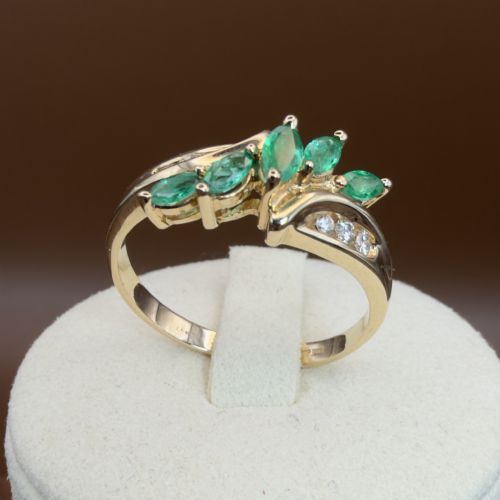
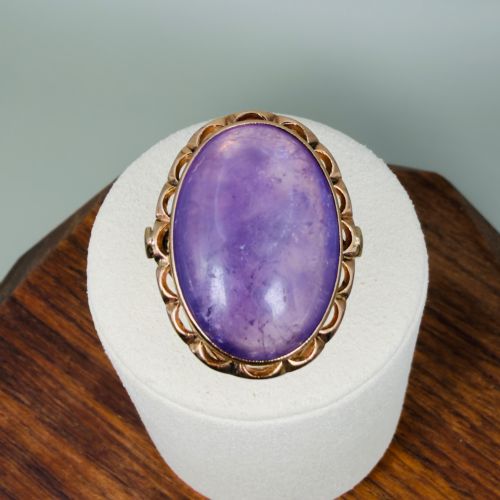
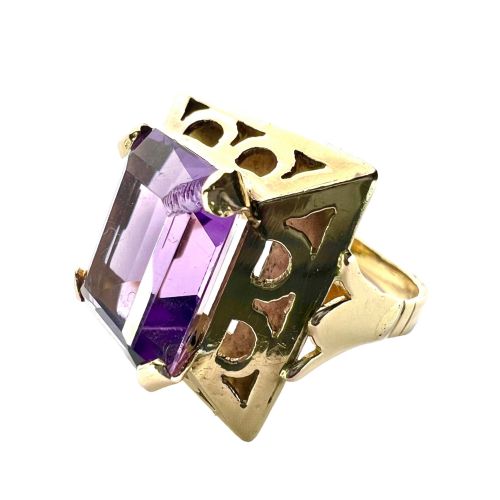
The forms vary from floral clusters and geometric scroll panels to dramatic cabochon settings holding substantial aquamarines, amethysts, or jade. Yellow and white gold provide the structural foundation for these varied designs.
Makers utilised a diverse palette of gemstones alongside diamonds, incorporating emeralds, sapphires, garnets, rubies, opals, and coral. Buyers encounter both antique Edwardian creations and retro twentieth-century pieces built for evening wear.
How they were made
Goldsmiths worked with fourteen-carat yellow, white, and rose gold to construct secure settings capable of supporting heavy gemstones. Stones were mounted in claw settings, bezels, and halo arrangements designed to maximise light transmission.
Intricate metalwork characterises the period pieces, featuring scroll panels, engraved details, and enamel work alongside platinum accents on earlier twentieth-century examples.
One exceptional nineteen-fifties ring squeezes nearly twenty-nine carats of amethyst into a single bold cocktail design.
What varies in quality
The calibre of a 14ct gold cocktail ring rests upon the scale and clarity of the primary gemstone, particularly in pieces featuring massive aquamarines, amethysts, or jade. Superior examples maintain balanced proportions between the central stone and the surrounding diamond or gem cluster.
The weight of the gold and the precision of the setting work distinguish finer workshops from mass production, ensuring the stone remains secure within its mount.
The 14ct Gold Cocktail Ring Glossary
- Cabochon
- A gemstone shaped and polished with a smooth, convex surface rather than faceted. This style highlights the natural pattern of stones like jade and opal.
- Cluster ring
- A design featuring a prominent central stone encircled by a group of smaller gemstones, typically diamonds. This arrangement maximises visual impact on the hand.
- Retro modern
- A bold stylistic period spanning the nineteen-forties and nineteen-fifties, known for sculptural goldwork and large-scale cocktail jewellery. Pieces from this era often utilise scroll panels and colourful gems.
- Marquis cut
- A boat-shaped gemstone cut with pointed ends and numerous facets. It creates the illusion of greater size and elongates the finger.
- Enamel
- A decorative fused glass coating applied to metal surfaces. Mid-century makers used this technique to add blocks of blue or green colour to gold bands.
14ct Gold Cocktail Ring: Frequently Asked Questions
What is a 14ct gold cocktail ring?
A 14ct gold cocktail ring is a large statement ring featuring prominent gemstones designed for evening wear during the twentieth century and earlier periods.
These pieces combine fourteen-carat gold with stones such as aquamarine, amethyst, sapphire, and diamond to create high visual impact.
How do I style a cocktail ring?
Wear a cocktail ring on its own to let the substantial centre stone and surrounding cluster draw full attention without competition from other hand jewellery.
Because these rings possess considerable height and width, they suit middle or ring fingers for comfortable daily or evening use.
When were cocktail rings popular?
Cocktail rings gained prominence during the early twentieth century and reached a peak of expressive design during the nineteen-forties and nineteen-fifties.
Makers responded to changing social habits by producing bold, colourful rings intended for social gatherings and evening events.
What stones are used in these rings?
These rings frequently incorporate large aquamarines, amethysts, sapphires, emeralds, and opals, often accented with brilliant-cut diamonds.
Makers also selected alternative materials like bloodstone, coral, jade, and garnet to achieve distinct colours and textures.
How do I identify the period?
Period identification relies on stylistic clues, such as platinum settings and geometric motifs for nineteen-twenties pieces, or heavy yellow gold scrollwork for nineteen-fifties examples.
Design characteristics like floral clusters, enamel accents, and specific stone cuts align each ring with its manufacturing era.