

The 2027 Sellingantiques Guide to Antique Silver
Nine years, 46,067 pieces and more than 500 dealers: what antique silver costs, what silver adds to plate, what the year of a hallmark, its assay office and a maker's name are worth, which pieces are rising, and how to read the marks.
From the Sellingantiques sold archive, 2017 to 2025
Silver is the one antique that tells you its own age. Punched into almost every British piece is a row of small marks, and they name the workshop that sent it to be tested, the town where it was tested and the year. Between 2017 and 2025, more than 500 dealers on Sellingantiques sold 46,067 pieces of antique silver and silver plate, from caddy spoons that sit in the palm to candelabra for the length of a dining table. Added together, those sales show what a piece costs, what silver adds to plate, what the year in the hallmark, the assay office and the maker's name are worth, and which pieces are coming into fashion.
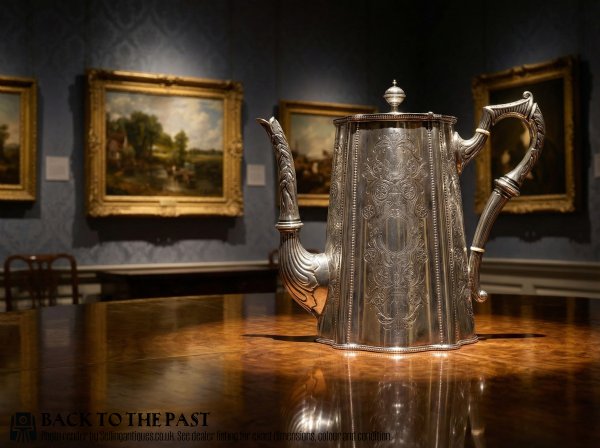
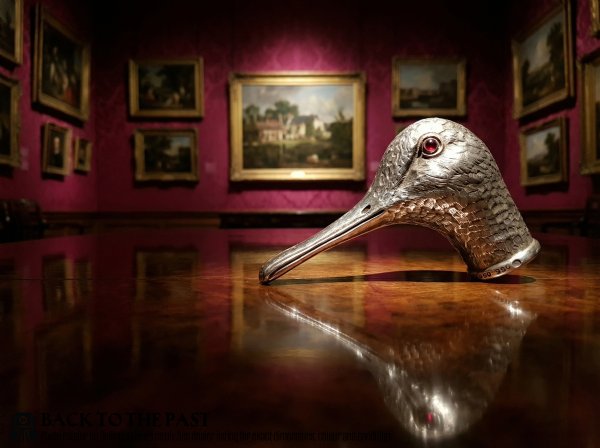
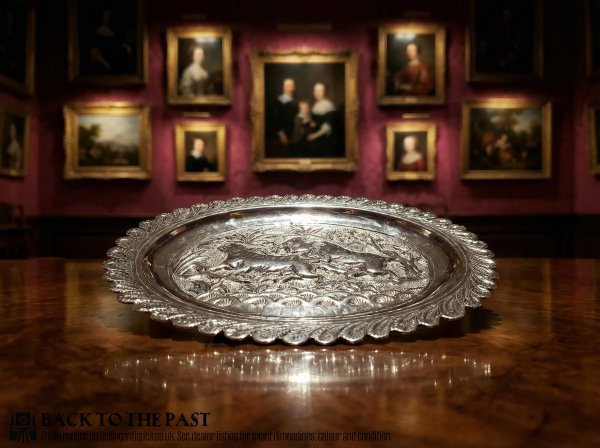
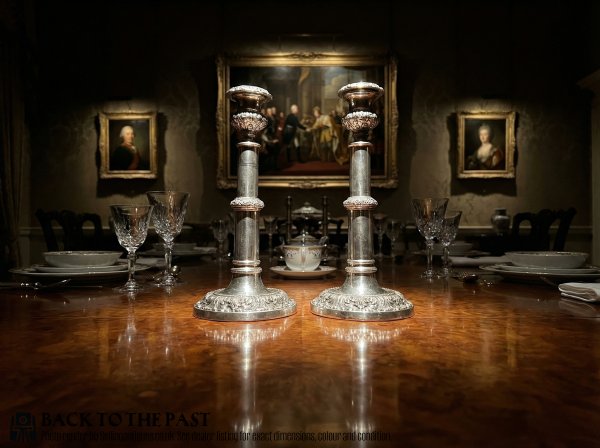
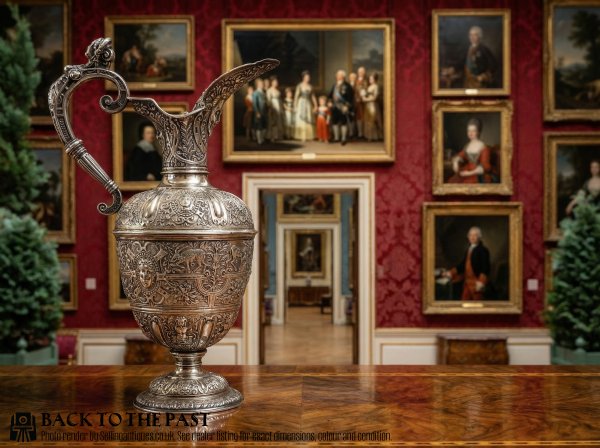
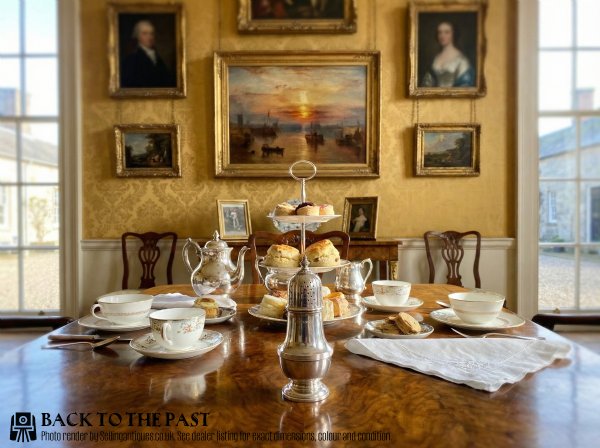
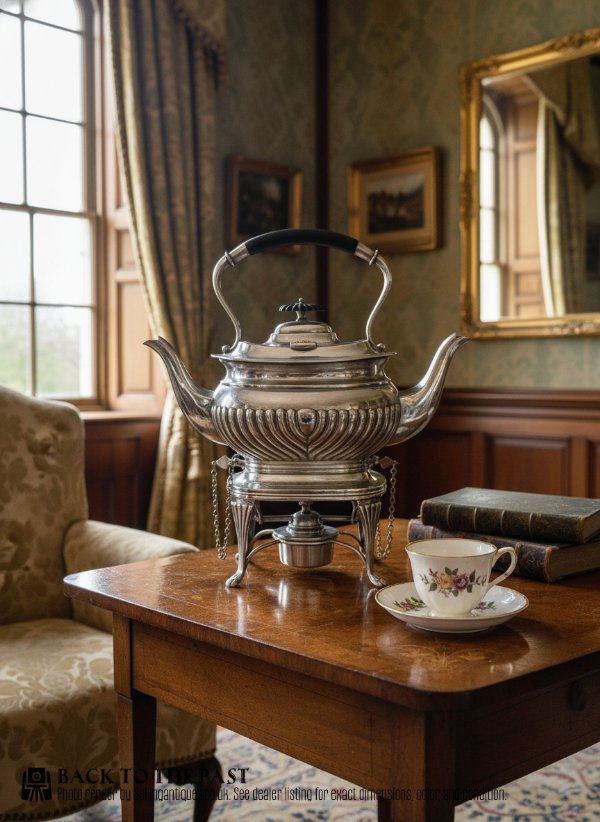
This guide sets it out, chapter by chapter. The figures come from our own sold archive; where a fact comes from elsewhere, its source is named. The rooms pictured are Back to the Past settings of silver you could buy today, each from the dealer named beneath it, and they change every time you open the page.
What antique silver costs
The typical piece of antique silver is listed at £265. It is a steady figure: in every one of the nine years from 2017 to 2025 it has stood between £245 and £275.
The interest lies in the spread. 80% of the silver sold was listed at under £500 and 48% at under £250, while a tea set is typically £995 and candelabra £1,975. What the piece is, whether it is silver or plate, the year of its hallmark, the office that struck it, the maker and the size each move the price, and the chapters that follow take them one at a time.
What is a piece of antique silver worth?
Pick a piece, a decade, an assay office or a maker. The answer comes from 46,067 pieces sold.
Silver over a wooden back, with a strut to stand it up.
The first question to ask
Dealers file two different things under silver. One is silver through and through, the metal a hallmark vouches for. The other is plate, a skin of silver over a cheaper metal, sold as Old Sheffield plate, electroplate or simply silver plate. Of the 46,067 pieces sold, 40,874 were silver and 5,193, or 11%, were plate.
Taken as a whole the two stand closer than you might expect: silver is typically listed at £265 and plate at £225. Compare like with like and the gap opens. A teapot is typically £750 in silver and £150 in plate; candlesticks, £580 and £245; a tea set, £995 and £285.
- Candelabra109 sold in plate£585
- Canteens of cutlery37 sold in plate£495
- Centrepieces and epergnes98 sold in plate£465
- Tea kettles and urns60 sold in plate£340
- Biscuit boxes178 sold in plate£330
- Wine coolers and ice buckets276 sold in plate£330
- Tea and coffee sets81 sold in plate£285
- Cruets74 sold in plate£278
- Salvers and trays519 sold in plate£275
- Entrée dishes117 sold in plate£260
- Claret jugs186 sold in plate£245
- Candlesticks229 sold in plate£245
- Bon bon dishes46 sold in plate£245
- Inkwells and inkstands64 sold in plate£225
- Vases34 sold in plate£225
- Baskets119 sold in plate£195
- Wine coasters290 sold in plate£175
- Toast racks105 sold in plate£160
- Teapots41 sold in plate£150
- Napkin rings57 sold in plate£148
Typical asking price of pieces described as plated.
The pieces people choose
Most antique silver is small. Photograph frames are the most sold single piece, 2,141 of them at a typical £262, and boxes of every kind, taken together, come to 3,967. Spoons of every kind add 3,410 more, at a typical £185.
The money is on the table. A tea set is typically listed at £995, a coffee pot at £975, a teapot at £750 and a salver at £610; candlesticks, which are mostly sold in pairs, at £580. The three panels in this chapter give every piece the guide can price, with a line on what it is.
Scent bottles and cocktail shakers have pages of their own on Sellingantiques. They are described in this guide and not priced; the reason is given under “How these figures were made”.
- Tea kettles and urns £1,618
- A kettle on a stand with a burner beneath, a tea urn or a samovar.
- Tea and coffee sets £995
- Teapot, sugar bowl and cream jug made to match, with a coffee pot or hot water jug in the larger sets.
- Coffee pots £975
- Taller than a teapot. Chocolate pots are counted with them.
- Teapots £750
- On its own, without the rest of the set.
- Biscuit boxes £560
- A box or barrel for the tea table.
- Tea caddies £340
- A lidded box or canister for dry tea.
- Sugar bowls and baskets £285
- The open bowl or swing-handled basket of the tea table.
- Sugar casters £240
- A tall pot with a pierced top for sprinkling sugar.
- Cream jugs £220
- The small jug of the tea table.
- Caddy spoons £175
- A short-handled spoon for measuring tea from the caddy.
- Teaspoons and coffee spoons £165
- Most often sold as a set of six.
- Sugar tongs £135
- Tongs and nips for lump sugar.
- Candelabra £1,975
- A branched candlestick for two lights or more, most often sold as a pair.
- Tureens £1,495
- A covered vessel for soup or sauce.
- Centrepieces and epergnes £1,375
- The ornament for the middle of the table, often with dishes or vases on branches.
- Canteens of cutlery £1,150
- Knives, forks and spoons made to match and sold as one lot.
- Salvers £610
- A flat tray without handles, usually on small feet. A small one is a waiter.
- Entrée dishes £585
- A covered serving dish.
- Candlesticks £580
- Sold singly, in pairs and in sets of four. The figure is for the lot as sold.
- Baskets £395
- For bread, cake, fruit or sugar, often pierced and with a swing handle.
- Chambersticks £345
- A low candlestick in a saucer with a carrying handle.
- Sauce boats £275
- A boat-shaped jug for sauce or gravy, often sold as a pair.
- Salts £260
- Open salt cellars, often with glass liners and sold in pairs or sets of four.
- Cruets £260
- A set of condiment pots or bottles on a stand.
- Mustard pots £245
- A lidded pot, usually with a glass liner.
- Pepper pots £210
- Pepperettes, pepper pots and grinders.
- Napkin rings £195
- Sold singly, in pairs and in cased sets.
- Ladles £195
- For soup, sauce, cream or punch.
- Bon bon dishes £195
- A small dish for sweets or nuts.
- Toast racks £175
- Wire or bar divisions on a base, with a handle to carry it.
- Punch bowls £1,772
- A large bowl for serving punch. The monteith, with a notched rim, is counted with it.
- Claret jugs £595
- A wine jug, most often of glass with a silver mount, lid and handle.
- Trophy and loving cups £550
- Cups made for presentation, most with two handles.
- Goblets £495
- A wine cup on a stem. Chalices are counted with them.
- Wine coasters £375
- A round stand for a bottle or a decanter, usually with a wooden base.
- Hip flasks £335
- A pocket flask for spirits, in silver or in glass with silver mounts.
- Mugs and tankards £325
- Drinking vessels with one handle. The tankard is the larger and may have a lid.
- Wine labels £175
- A small plate on a chain, naming what is in the decanter.
- Snuff boxes £345
- A small box with a tight hinged lid, for powdered tobacco.
- Card cases £295
- A slim case for visiting cards.
- Vinaigrettes £295
- A tiny box with a pierced inner grille over a scented sponge.
- Pin cushions £295
- Often in the shape of an animal, with the cushion on its back.
- Inkwells and inkstands £275
- From a single inkwell to a stand with two bottles and a pen tray.
- Trinket and jewellery boxes £265
- A lidded box for the dressing table.
- Photograph frames £262
- Silver over a wooden back, with a strut to stand it up.
- Vases £255
- Posy, bud and trumpet vases, often in pairs.
- Cigarette cases £250
- A flat pocket case with a sprung hinge.
- Vesta cases £195
- A pocket case for matches.
- Letter openers £185
- Paper knives and page turners, often with a silver handle.
- Pill boxes £165
- The smallest of the boxes.
- Bookmarks £135
- A silver blade with a clip, often shaped as a trowel.
The year in the mark
A hallmark is a row of small punches, and each was added for a reason. Together they say who sent the piece to be tested, that it passed, where and in what year. Ten of them are drawn here, in the order they began.
- 1Leopard’s head from 1300
- The first English mark, struck on silver that passed the test. It became the town mark of London, and lost its crown in 1822.
- 2Maker’s mark from 1363
- The mark of whoever sent the piece to be tested, in initials from 1739. Today it is called the sponsor’s mark.
- 3Date letter from 1478
- A letter of the alphabet that changed each year, so a table of letters gives the year of the mark.
- 4Lion passant from 1544
- A walking lion: the pictorial mark for sterling silver.
- 5Crowned harp from 1637
- The mark of the Dublin Assay Office, on Irish sterling silver.
- 6Britannia 1697 to 1720
- A seated Britannia marked the higher standard that was compulsory for these years, and optional afterwards.
- 7Castle of Exeter 1700 to 1883
- The town mark of the Exeter assay office, which opened in 1700 and closed in 1883.
- 8Hibernia from 1730
- Added in Dublin to show that duty had been paid, and now the mark of the Dublin Assay Office.
- 9Anchor from 1773
- The town mark of Birmingham, whose assay office was established in 1773, with Sheffield’s.
- 10Sovereign’s head 1784 to 1890
- The duty mark: the head of the king or queen, struck while a duty was charged on silver.
- Maker’s mark
- Initials in a shaped punch. Look them up, with the town and the year, to find the workshop.
- Standard mark
- The lion passant: the piece was tested and is of sterling silver.
- Town mark
- The assay office. The leopard’s head is London; it wore a crown until 1822.
- Date letter
- One letter for each year. The shape of the letter and of its shield tell one run of years from the next.
- Duty mark
- The sovereign’s head, struck from 1784 to 1890. Its presence alone narrows the date to those years.
Dealers know what the year is worth, and say it. 20,325 of the silver sold had the year of its hallmark stated in the title, and that lets this guide do something new: price silver by the decade it was marked.
The line does not fall evenly. Silver hallmarked before 1700 is typically listed at £1,988 and silver of the 1720s at £950. By the 1790s the figure is £295. It climbs again for the reigns of George IV, William IV and the young Victoria, to £412 for the 1830s, and steps down from the 1880s to £225 for the 1920s.
- Before 170040 sold£1,988
- 1700 to 1749199 sold£865
- 1750 to 17991,084 sold£422
- 1800 to 18492,255 sold£375
- 1850 to 18994,894 sold£295
- 1900 to 194911,277 sold£245
Typical asking price of silver whose title states a year.
Where it was marked
The town mark says where a piece was tested, and it is priced. Silver with London in its title is typically listed at £295, Sheffield at £260 and Chester at £199. Dublin stands at £375, Edinburgh at £345 and Newcastle at £345.
Chester and Edinburgh are the ones for a quick sale: 61% of the silver from Chester and 61% from Edinburgh went within three months of listing. Silver assayed in Birmingham is sold on Sellingantiques in great quantity; it is described in this guide and not priced, for the reason given under “How these figures were made”.
- Dublin181 sold, 42% within three months£375
- Edinburgh209 sold, 61% within three months£345
- Newcastle132 sold, 43% within three months£345
- York33 sold, 48% within three months£325
- London3,638 sold, 56% within three months£295
- Sheffield1,265 sold, 58% within three months£260
- Glasgow110 sold, 52% within three months£225
- Exeter96 sold, 42% within three months£225
- Chester1,241 sold, 61% within three months£199
Typical asking price of silver with the office named in its title.
Makers, countries and styles
After the year and the town comes the name. Silver with Nathaniel Mills in its title is typically listed at £590; Garrard, at £525; Liberty, at £442; the Bateman family, at £365. Two of the names met most often stand nearer the middle: Mappin & Webb at £275 and Walker & Hall at £279.
- Nathaniel Mills114 sold with the name in the title£590
- Barnard142 sold with the name in the title£538
- Garrard82 sold with the name in the title£525
- Hennell63 sold with the name in the title£480
- Charles Stuart Harris41 sold with the name in the title£455
- Liberty96 sold with the name in the title£442
- Elkington165 sold with the name in the title£390
- Emes47 sold with the name in the title£385
- A E Jones59 sold with the name in the title£370
- The Bateman family259 sold with the name in the title£365
- Martin, Hall & Co75 sold with the name in the title£328
- Tiffany98 sold with the name in the title£325
- Asprey223 sold with the name in the title£297
- Goldsmiths & Silversmiths Company164 sold with the name in the title£295
- Chawner88 sold with the name in the title£295
- Nathan & Hayes63 sold with the name in the title£295
- Sampson Mordan445 sold with the name in the title£279
- Walker & Hall316 sold with the name in the title£279
- Mappin & Webb487 sold with the name in the title£275
- William Neale71 sold with the name in the title£269
- William Comyns407 sold with the name in the title£260
- Hutton200 sold with the name in the title£250
- Hukin & Heath98 sold with the name in the title£239
- Georg Jensen128 sold with the name in the title£225
- George Unite112 sold with the name in the title£195
- Joseph Gloster66 sold with the name in the title£185
Typical asking price of silver whose title names the firm or the family.
Silver of the Britannia standard, the higher grade, is typically listed at £695. A castle-top, the trade's name for a box, a card case or a vinaigrette with a view of a building on its lid, is typically £980.
Country counts as well. Silver described as Japanese is typically listed at £650, Irish at £345, Chinese at £285, French at £280 and Scottish at £255.
- JapaneseJapanese in the title.£650
- AustrianAustrian or Viennese in the title.£422
- IrishIrish in the title, the Dublin assay office apart.£345
- ChineseChinese in the title, much of it made for export.£285
- ContinentalDescribed as Continental, with no country named.£285
- FrenchFrench or Parisian in the title.£280
- ScottishScottish in the title.£255
- DutchDutch in the title.£225
Typical asking price, as described by the dealer.
- NeoclassicalNeoclassical in the title, or in the Adam style.£542
- Arts and CraftsArts and Crafts in the title.£285
- Art NouveauArt Nouveau in the title.£250
- Art DecoArt Deco in the title.£235
Typical asking price, as described by the dealer.
- CowsCow creamers among them.£685
- OwlsOwls, as pepper pots, menu holders and inkwells.£395
- Stags and deerStags and deer.£395
- LionsLions, as handles, feet and finials.£395
- BirdsPheasants, swans, ducks, cockerels and chicks.£325
- PigsPigs, most of them pin cushions.£295
- HorsesHorses, horseshoes and the racecourse.£295
- ElephantsElephants.£295
- DogsDogs of every breed.£260
- BearsBears, the teddy bear among them.£245
Typical asking price where the title names the animal.
What size is worth
Silver is sold by the piece, and the bigger piece costs more. Take the width, as the dealer measured it, and the asking price climbs at every one of nine steps: £195 for silver under 5 centimetres wide, £335 at 15 to 19, £750 at 30 to 39 and £1,422 at 50 and over.
Height does the same for candlesticks: £330 for candlesticks standing 10 to 14 centimetres, silver and plated together, and £865 at 30 to 39.
- 5–9 cm119 sold£165
- 10–14 cm330 sold£189
- 15–19 cm729 sold£225
- 20–24 cm512 sold£295
- 25–29 cm179 sold£370
- 30–39 cm111 sold£445
Typical asking price, silver and plate together, by the height the dealer gave.
A pair is the usual way to buy candlesticks, sauce boats and salts. Across all silver, a pair is typically listed at £295, which is £148 a piece.
- Candelabra 40 × 33
- Claret jugs 27 × 14
- Coffee pots 24 × 20
- Candlesticks 21 × 11
- Photograph frames 18 × 14
- Teapots 15 × 25
- Salvers 3 × 26
- Tea caddies 10 × 9
- Mugs and tankards 10 × 9
- Cream jugs 10 × 10
- Sauce boats 9 × 15
- Sugar casters 17 × 6
- Vases 17 × 8
- Inkwells and inkstands 7 × 11
- Snuff boxes 2 × 6
- Card cases 9 × 7
- Vesta cases 5 × 4
- Caddy spoons 8 × 4
- 10–14 cm383 sold£232
- 15–19 cm276 sold£338
- 20–24 cm240 sold£485
- 25–29 cm131 sold£695
- 30–39 cm81 sold£858
Typical asking price, silver and plate together, by the width the dealer gave.
The ones that do not wait
Silver sells quickly. Of the pieces sold, 52% went within three months of being listed and 32% within a month. Spirit measures and noggins, match strikers and pill boxes are the quickest of all. If you see a good one, it may not be there next week.
Set each piece's price against how quickly it sells and a pattern shows: the less a piece costs, the sooner it goes. The small things for the pocket and the desk lead, and the tea set and the salver take their time.
What is rising
The steady figure for silver as a whole hides a clear movement inside it: the silver of the tea table and the dinner table has risen. Coffee pots lead, with a typical asking price up 79% between 2017–19 and 2023–25. Tea and coffee sets are up 52% and salvers and trays 32%.
The mark matters too. Silver assayed in London was typically listed at £275 in 2017–19 and at £350 in 2023–25, and silver assayed in Sheffield rose from £240 to £345. At the top of the market the change is plainest: the dearest tenth of silver began at £750 in 2017–19 and at £965 in 2023–25.
- Sheffield silver£240 in 2017–19, £345 in 2023–25+44%
- George II silver£548 in 2017–19, £740 in 2023–25+35%
- London silver£275 in 2017–19, £350 in 2023–25+27%
- Walker & Hall£235 in 2017–19, £295 in 2023–25+26%
- William IV silver£395 in 2017–19, £480 in 2023–25+22%
- Pairs£250 in 2017–19, £295 in 2023–25+18%
- Art Nouveau silver£225 in 2017–19, £265 in 2023–25+18%
- Chester silver£195 in 2017–19, £220 in 2023–25+13%
Typical asking price in silver, 2017–19 against 2023–25.
When silver sells, and when it was made
The calendar of silver has one clear season, the weeks before Christmas. November is the busiest month and December runs it close; with October, the three take 30% of a year's sales. The grid below shows every month of every year.
31% of the silver sold dates from the 19th century and 33% from the first two decades of the 20th. The oldest is the dearest: silver that is Georgian or earlier is typically listed at £345, against £280 for the 19th century.
- Georgian and earlier4,888 sold£345
- 19th century12,650 sold£280
- 1900 to 191913,303 sold£245
- 1940 onwards2,360 sold£240
- 1920s and 1930s7,639 sold£230
Typical asking price, by the date the dealer gave.
Every sound bite on one page (25)
The figures in full: every piece, year, office and maker
| Piece, year, office or maker | Sold, 2017 to 2025 | Typical asking price | Middle half | Sold within three months |
|---|---|---|---|---|
| Photograph frames | 2,141 | £262 | £189 to £425 | 57% |
| Trinket and jewellery boxes | 1,224 | £265 | £185 to £356 | 53% |
| Mugs and tankards | 1,176 | £325 | £220 to £545 | 54% |
| Napkin rings | 823 | £195 | £135 to £285 | 54% |
| Vesta cases | 818 | £195 | £140 to £295 | 57% |
| Candlesticks | 799 | £580 | £345 to £1,150 | 54% |
| Pin cushions | 697 | £295 | £225 to £395 | 50% |
| Hip flasks | 680 | £335 | £265 to £450 | 58% |
| Salvers | 665 | £610 | £395 to £1,150 | 44% |
| Snuff boxes | 633 | £345 | £225 to £650 | 55% |
| Cream jugs | 632 | £220 | £150 to £295 | 48% |
| Salts | 579 | £260 | £145 to £395 | 49% |
| Caddy spoons | 575 | £175 | £135 to £225 | 58% |
| Toast racks | 572 | £175 | £135 to £245 | 59% |
| Inkwells and inkstands | 545 | £275 | £179 to £395 | 48% |
| Vases | 538 | £255 | £160 to £395 | 54% |
| Sugar casters | 508 | £240 | £175 to £365 | 45% |
| Baskets | 489 | £395 | £249 to £625 | 41% |
| Pill boxes | 483 | £165 | £135 to £245 | 62% |
| Teaspoons and coffee spoons | 478 | £165 | £125 to £245 | 49% |
| Vinaigrettes | 477 | £295 | £225 to £425 | 57% |
| Ladles | 463 | £195 | £140 to £295 | 48% |
| Pepper pots | 459 | £210 | £145 to £335 | 52% |
| Wine labels | 452 | £175 | £125 to £225 | 46% |
| Tea caddies | 451 | £340 | £265 to £475 | 55% |
| Card cases | 441 | £295 | £210 to £395 | 50% |
| Mustard pots | 421 | £245 | £175 to £325 | 52% |
| Goblets | 403 | £495 | £282 to £765 | 54% |
| Claret jugs | 378 | £595 | £391 to £1,200 | 43% |
| Letter openers | 370 | £185 | £135 to £245 | 61% |
| Bookmarks | 364 | £135 | £125 to £166 | 59% |
| Tea and coffee sets | 354 | £995 | £682 to £2,250 | 42% |
| Bon bon dishes | 327 | £195 | £140 to £275 | 42% |
| Teapots | 326 | £750 | £495 to £1,250 | 45% |
| Sauce boats | 324 | £275 | £175 to £525 | 43% |
| Cigarette cases | 296 | £250 | £160 to £395 | 56% |
| Sugar bowls and baskets | 291 | £285 | £180 to £450 | 47% |
| Wine coasters | 290 | £375 | £200 to £724 | 58% |
| Cruets | 254 | £260 | £180 to £395 | 52% |
| Trophy and loving cups | 217 | £550 | £290 to £995 | 44% |
| Sugar tongs | 214 | £135 | £110 to £185 | 42% |
| Canteens of cutlery | 213 | £1,150 | £395 to £5,445 | 48% |
| Coffee pots | 206 | £975 | £540 to £1,496 | 35% |
| Chambersticks | 182 | £345 | £215 to £595 | 57% |
| Centrepieces and epergnes | 122 | £1,375 | £675 to £4,350 | 36% |
| Candelabra | 99 | £1,975 | £745 to £3,122 | 44% |
| Biscuit boxes | 91 | £560 | £328 to £995 | 56% |
| Tea kettles and urns | 61 | £1,618 | £536 to £3,809 | 39% |
| Entrée dishes | 56 | £585 | £375 to £1,970 | 36% |
| Punch bowls | 50 | £1,772 | £831 to £2,888 | 44% |
| Tureens | 41 | £1,495 | £750 to £2,895 | 29% |
| Boxes of every kind | 3,967 | £275 | £180 to £395 | 55% |
| Spoons of every kind | 3,410 | £185 | £135 to £265 | 52% |
| Salts, peppers, mustards and cruets | 1,788 | £235 | £155 to £365 | 50% |
| Bowls | 1,481 | £345 | £205 to £595 | 48% |
| Jugs of every kind | 1,362 | £325 | £195 to £595 | 46% |
| Salvers and trays | 1,307 | £495 | £295 to £995 | 48% |
| Candlesticks, candelabra and chambersticks | 1,102 | £560 | £325 to £1,195 | 53% |
| Silver plate of every kind | 5,193 | £225 | £150 to £375 | 46% |
| In plate: candelabra | 109 | £585 | £350 to £850 | 40% |
| In plate: canteens of cutlery | 37 | £495 | £255 to £795 | 65% |
| In plate: centrepieces and epergnes | 98 | £465 | £262 to £950 | 42% |
| In plate: tea kettles and urns | 60 | £340 | £245 to £495 | 33% |
| In plate: biscuit boxes | 178 | £330 | £225 to £495 | 44% |
| In plate: wine coolers and ice buckets | 276 | £330 | £185 to £631 | 50% |
| In plate: tea and coffee sets | 81 | £285 | £165 to £395 | 38% |
| In plate: cruets | 74 | £278 | £172 to £402 | 45% |
| In plate: salvers and trays | 519 | £275 | £165 to £395 | 38% |
| In plate: entrée dishes | 117 | £260 | £165 to £385 | 36% |
| In plate: claret jugs | 186 | £245 | £195 to £325 | 47% |
| In plate: candlesticks | 229 | £245 | £175 to £395 | 45% |
| In plate: bon bon dishes | 46 | £245 | £162 to £296 | 56% |
| In plate: inkwells and inkstands | 64 | £225 | £165 to £319 | 27% |
| In plate: vases | 34 | £225 | £155 to £350 | 41% |
| In plate: baskets | 119 | £195 | £155 to £265 | 31% |
| In plate: wine coasters | 290 | £175 | £140 to £251 | 48% |
| In plate: toast racks | 105 | £160 | £135 to £225 | 51% |
| In plate: teapots | 41 | £150 | £128 to £224 | 63% |
| In plate: napkin rings | 57 | £148 | £135 to £165 | 58% |
| Hallmarked before 1700 | 40 | £1,988 | £910 to £4,200 | 50% |
| Hallmarked in the 1720s | 38 | £950 | £659 to £1,818 | 47% |
| Hallmarked in the 1730s | 49 | £550 | £295 to £985 | 43% |
| Hallmarked in the 1740s | 64 | £548 | £285 to £1,322 | 39% |
| Hallmarked in the 1750s | 107 | £585 | £295 to £2,046 | 45% |
| Hallmarked in the 1760s | 183 | £582 | £295 to £1,115 | 48% |
| Hallmarked in the 1770s | 163 | £425 | £265 to £895 | 50% |
| Hallmarked in the 1780s | 227 | £450 | £250 to £895 | 48% |
| Hallmarked in the 1790s | 408 | £295 | £195 to £568 | 53% |
| Hallmarked in the 1800s | 467 | £295 | £191 to £529 | 48% |
| Hallmarked in the 1810s | 474 | £325 | £185 to £695 | 50% |
| Hallmarked in the 1820s | 441 | £395 | £215 to £895 | 44% |
| Hallmarked in the 1830s | 460 | £412 | £234 to £995 | 50% |
| Hallmarked in the 1840s | 417 | £395 | £225 to £850 | 48% |
| Hallmarked in the 1850s | 372 | £375 | £245 to £725 | 50% |
| Hallmarked in the 1860s | 407 | £360 | £245 to £675 | 50% |
| Hallmarked in the 1870s | 522 | £370 | £225 to £630 | 50% |
| Hallmarked in the 1880s | 842 | £295 | £195 to £465 | 53% |
| Hallmarked in the 1890s | 2,757 | £275 | £165 to £425 | 54% |
| Hallmarked in the 1900s | 4,880 | £260 | £165 to £395 | 55% |
| Hallmarked in the 1910s | 2,639 | £245 | £165 to £395 | 54% |
| Hallmarked in the 1920s | 1,930 | £225 | £160 to £385 | 58% |
| Hallmarked in the 1930s | 1,531 | £245 | £165 to £395 | 58% |
| Hallmarked under George I | 42 | £1,350 | £895 to £2,688 | 50% |
| Hallmarked under George II | 231 | £575 | £295 to £1,561 | 42% |
| Hallmarked under George III | 1,914 | £360 | £200 to £695 | 50% |
| Hallmarked under George IV | 441 | £395 | £215 to £895 | 44% |
| Hallmarked under William IV | 309 | £445 | £250 to £1,250 | 51% |
| Hallmarked under Victoria | 5,969 | £295 | £185 to £495 | 53% |
| Hallmarked under Edward VII | 4,372 | £265 | £165 to £395 | 55% |
| Hallmarked under George V | 5,516 | £245 | £165 to £395 | 56% |
| Hallmarked under George VI | 934 | £235 | £155 to £395 | 60% |
| Assayed in Dublin | 181 | £375 | £245 to £740 | 42% |
| Assayed in Edinburgh | 209 | £345 | £195 to £655 | 61% |
| Assayed in Newcastle | 132 | £345 | £175 to £695 | 43% |
| Assayed in York | 33 | £325 | £185 to £820 | 48% |
| Assayed in London | 3,638 | £295 | £195 to £575 | 56% |
| Assayed in Sheffield | 1,265 | £260 | £165 to £440 | 58% |
| Assayed in Glasgow | 110 | £225 | £142 to £392 | 52% |
| Assayed in Exeter | 96 | £225 | £142 to £478 | 42% |
| Assayed in Chester | 1,241 | £199 | £145 to £295 | 61% |
| By Nathaniel Mills | 114 | £590 | £330 to £984 | 49% |
| By Barnard | 142 | £538 | £295 to £1,450 | 56% |
| By Garrard | 82 | £525 | £235 to £1,392 | 48% |
| By Hennell | 63 | £480 | £288 to £962 | 57% |
| By Liberty | 96 | £442 | £261 to £795 | 52% |
| By Elkington | 165 | £390 | £240 to £750 | 48% |
| By the Bateman family | 259 | £365 | £194 to £585 | 46% |
| By Martin, Hall & Co | 75 | £328 | £218 to £584 | 52% |
| By Tiffany | 98 | £325 | £195 to £685 | 52% |
| By Asprey | 223 | £297 | £195 to £495 | 57% |
| By Goldsmiths & Silversmiths Company | 164 | £295 | £216 to £464 | 54% |
| By Chawner | 88 | £295 | £185 to £480 | 60% |
| By Nathan & Hayes | 63 | £295 | £195 to £460 | 51% |
| By Sampson Mordan | 445 | £279 | £195 to £375 | 60% |
| By Walker & Hall | 316 | £279 | £180 to £470 | 54% |
| By Mappin & Webb | 487 | £275 | £185 to £475 | 55% |
| By William Neale | 71 | £269 | £182 to £378 | 65% |
| By William Comyns | 407 | £260 | £195 to £395 | 52% |
| By Hutton | 200 | £250 | £175 to £430 | 57% |
| By Hukin & Heath | 98 | £239 | £182 to £346 | 60% |
| By Georg Jensen | 128 | £225 | £150 to £326 | 55% |
| By George Unite | 112 | £195 | £155 to £334 | 54% |
| By Joseph Gloster | 66 | £185 | £145 to £295 | 47% |
| Japanese silver | 86 | £650 | £210 to £3,625 | 54% |
| Austrian silver | 95 | £422 | £225 to £784 | 50% |
| Irish silver | 388 | £345 | £198 to £675 | 43% |
| Chinese silver | 228 | £285 | £165 to £598 | 54% |
| Continental silver | 156 | £285 | £182 to £515 | 46% |
| French silver | 533 | £280 | £185 to £480 | 50% |
| Scottish silver | 596 | £255 | £165 to £475 | 54% |
| Dutch silver | 188 | £225 | £150 to £359 | 52% |
| Neoclassical silver | 72 | £542 | £325 to £1,090 | 51% |
| Arts and Crafts silver | 512 | £285 | £175 to £495 | 57% |
| Art Nouveau silver | 874 | £250 | £165 to £445 | 56% |
| Art Deco silver | 1,945 | £235 | £165 to £375 | 58% |
| Georgian and earlier silver | 4,888 | £345 | £195 to £750 | 48% |
| 19th-century silver | 12,650 | £280 | £180 to £475 | 51% |
| 1900 to 1919 silver | 13,303 | £245 | £165 to £395 | 53% |
| 1920s and 1930s silver | 7,639 | £230 | £165 to £385 | 55% |
→Use these figures
Every figure, chart, drawing and sound bite on this page is free to quote and reproduce with a link back to it. Each chart, drawing and reference panel has “Use this on your website” beneath it.
Source: The 2027 Sellingantiques Guide to Antique Silver (https://www.sellingantiques.co.uk/antique_silver_guide)Sellingantiques (2026) The 2027 Sellingantiques Guide to Antique Silver. Available at: https://www.sellingantiques.co.uk/antique_silver_guide (Accessed: 28 November 2026).The figures behind this page as a spreadsheet file.
Download the figuresCounts and typical prices only. No dealer and no single sale appears in it.
The rooms pictured are Back to the Past settings made by Sellingantiques from dealers' own photographs. They belong with the dealers named and are not free to reproduce.
?Questions buyers ask
How much does antique silver cost?
A typical piece of antique silver is listed at £265. Half of the silver sold between 2017 and 2025 was listed between £170 and £450.
How much is an antique silver teapot worth?
An antique silver teapot is typically listed at £750, and a silver tea set at £995. Half of the teapots were listed between £495 and £1,250.
Is silver plate worth less than silver?
Piece for piece, yes. A teapot is typically listed at £750 in silver and £150 in plate, and candlesticks at £580 in silver and £245 in plate.
Does the date of a hallmark affect the price?
Yes. Silver hallmarked before 1700 is typically listed at £1,988, silver of the 1720s at £950, the 1830s at £412 and the 1920s at £225.
Does the assay office affect the price of silver?
It does. Silver assayed in Dublin is typically listed at £375, in Edinburgh at £345, in London at £295, in Sheffield at £260 and in Chester at £199.
Have antique silver prices changed?
For silver as a whole the typical asking price has been steady, between £245 and £275 in every year from 2017 to 2025. Table silver has risen: coffee pots are up 79% and tea and coffee sets 52%.
Which antique silver sells fastest?
Spirit measures and noggins: 68% sold within three months of listing. Of all antique silver, 52% sold within three months.
Does bigger silver cost more?
Yes. Silver under 5 cm wide is typically listed at £195, silver 30 to 39 cm wide at £750 and silver 50 cm wide or more at £1,422.
What are antique silver candlesticks worth?
Antique silver candlesticks, most of them sold in pairs, are typically listed at £580. Plated candlesticks are typically £245.
When does most antique silver sell?
November and December are the busiest months.
44Sources
Where the facts from outside our own archive come from.
- GOV.UK, UK Integrated Online Tariff, heading 9706. https://www.trade-tariff.service.gov.uk/headings/9706
- Getty Research Institute, Art & Architecture Thesaurus: sterling silver. https://vocab.getty.edu/page/aat/300010977
- Victoria and Albert Museum, Tankard by Philip Rollos, 1704-1705. https://collections.vam.ac.uk/item/O78453/
- legislation.gov.uk, Hallmarking Act 1973, section 1. https://www.legislation.gov.uk/ukpga/1973/43/section/1
- legislation.gov.uk, Hallmarking Act 1973, Schedule 1. https://www.legislation.gov.uk/ukpga/1973/43/schedule/1
- Victoria and Albert Museum, Verger's wand in Sheffield plate, about 1810. https://collections.vam.ac.uk/item/O33983/
- Encyclopaedia Britannica, 1911 edition, Sheffield Plate (text on Wikisource). https://en.wikisource.org/wiki/1911_Encyclop%C3%A6dia_Britannica/Sheffield_Plate
- Encyclopaedia Britannica, 1911 edition, Elkington, George Richards (text on Wikisource). https://en.wikisource.org/wiki/1911_Encyclop%C3%A6dia_Britannica/Elkington,_George_Richards
- Victoria and Albert Museum, Teapot by Elkington & Co., 1853. https://collections.vam.ac.uk/item/O78497/
- Getty Research Institute, Art & Architecture Thesaurus: nickel silver. https://vocab.getty.edu/page/aat/300242125
- Victoria and Albert Museum, Caddy spoon by William R Deykin & Son, 1887-1888. https://collections.vam.ac.uk/item/O78533/
- Encyclopaedia Britannica, 1911 edition, Salver (text on Wikisource). https://en.wikisource.org/wiki/1911_Encyclop%C3%A6dia_Britannica/Salver
- Victoria and Albert Museum, Epergne by Thomas Pitts, 1763-64. https://collections.vam.ac.uk/item/O157883/
- Victoria and Albert Museum, Sauce tureen by Robert Garrard, 1819-1820. https://collections.vam.ac.uk/item/O97143/
- Victoria and Albert Museum, Monteith by Joseph Ward, 1709-1710. https://collections.vam.ac.uk/item/O78443/
- Victoria and Albert Museum, Marrow scoop by John Wirgman, 1748-1749. https://collections.vam.ac.uk/item/O77409/
- Encyclopaedia Britannica, 1911 edition, Snuff (text on Wikisource). https://en.wikisource.org/wiki/1911_Encyclop%C3%A6dia_Britannica/Snuff
- Getty Research Institute, Art & Architecture Thesaurus: vinaigrettes. https://vocab.getty.edu/page/aat/300220758
- Victoria and Albert Museum, Claret jug designed by Christopher Dresser for Hukin & Heath, 1879. https://collections.vam.ac.uk/item/O16983/
- Victoria and Albert Museum, Bottle ticket by Hester Bateman, about 1780. https://collections.vam.ac.uk/item/O104360/
- Victoria and Albert Museum, Coaster, about 1775. https://collections.vam.ac.uk/item/O78437/
- Encyclopaedia Britannica, 1911 edition, Tankard (text on Wikisource). https://en.wikisource.org/wiki/1911_Encyclop%C3%A6dia_Britannica/Tankard
- The Goldsmiths' Company, History of the Company. https://www.thegoldsmiths.co.uk/history
- The Goldsmiths' Company Assay Office, History of hallmarking. https://www.assayofficelondon.co.uk/about-us/history-of-hallmarking
- legislation.gov.uk, Hallmarking Act 1973, Schedule 2. https://www.legislation.gov.uk/ukpga/1973/43/schedule/2
- Getty Research Institute, Art & Architecture Thesaurus: date letters. https://vocab.getty.edu/page/aat/300236477
- Encyclopaedia Britannica, 1911 edition, Plate (text on Wikisource). https://en.wikisource.org/wiki/1911_Encyclop%C3%A6dia_Britannica/Plate
- GOV.UK, Hallmarking is the law: guidance summary. https://www.gov.uk/government/publications/hallmarking-guidance-notes/hallmarking-is-the-law-guidance-summary
- The Goldsmiths' Company Assay Office, What is a hallmark?. https://www.assayofficelondon.co.uk/hallmarking/what-is-a-hallmark
- Edinburgh Assay Office, What is a hallmark?. https://www.edinburghassayoffice.co.uk/what-is-a-hallmark/
- GOV.UK, British Hallmarking Council: about us. https://www.gov.uk/government/organisations/british-hallmarking-council/about
- Victoria and Albert Museum, The Strickland death's head spoon by Thomas Mangy, York. https://collections.vam.ac.uk/item/O104207/
- The Goldsmiths' Company, Hallmarking. https://www.thegoldsmiths.co.uk/hallmarking
- Edinburgh Assay Office, History and heritage. https://www.edinburghassayoffice.co.uk/history-and-heritage/
- Dublin Assay Office, History of the Assay Office. https://www.assay.ie/about/history-of-the-assay-office/
- Victoria and Albert Museum, Spoon by Thomas Eustace, Exeter, 1780-1781. https://collections.vam.ac.uk/item/O296936/
- Victoria and Albert Museum, Ring by Thomas Sewell, Newcastle, about 1865. https://collections.vam.ac.uk/item/O374308/
- Victoria and Albert Museum, Spoon by Hester Bateman, 1776-1777. https://collections.vam.ac.uk/item/O271847/
- Victoria and Albert Museum, Cheese scoop by Mappin & Webb, 1894-1895. https://collections.vam.ac.uk/item/O25373/
- Victoria and Albert Museum, Egg coddler by Walker & Hall, about 1890. https://collections.vam.ac.uk/item/O59302/
- Victoria and Albert Museum, Hot water jug designed by Archibald Knox for Liberty, 1904. https://collections.vam.ac.uk/item/O33752/
- Victoria and Albert Museum, Salver by Paul de Lamerie, engraved by William Hogarth, 1728-1729. https://collections.vam.ac.uk/item/O7768/
- Victoria and Albert Museum, Tureen and cover by Matthew Boulton and John Fothergill, 1773-1774. https://collections.vam.ac.uk/item/O78313/
- Victoria and Albert Museum, Candelabrum by Paul Storr, 1810-1811. https://collections.vam.ac.uk/item/O115664/
iHow these figures were made
- The source. 46,067 pieces filed under silver and marked sold by UK dealers on Sellingantiques between 2017 and 2025: 40,874 of silver and 5,193 of plate.
- Silver and plate. A piece is counted as plate where its title says plated, silver plate, electroplate, EPNS, Old Sheffield or Sheffield plate. Every other piece is counted as silver. A figure for silver leaves plate out unless it says “silver and plate together”.
- Asking prices. Every price is the dealer's asking price when the piece was marked sold, not the price paid.
- Typical means the median: half of pieces were listed for more and half for less.
- Pieces, assay offices, makers, countries and styles are read from the dealer's own title, so a piece can count under more than one. A figure under a maker's name counts pieces whose title names the firm or the family, and says no more than that.
- The year of the hallmark is a year stated in the title as a fact. A year given as a guess (“circa 1900”) or as a period (“1930s”) is not counted. A reign takes the years from its accession to the year before the next.
- Sizes are those the dealer gave. A pair is one sale, at its price for the two. The archive does not record weight, so nothing here is priced by weight.
- Nobody is identified. A figure is shown only where it rests on at least 30 pieces from at least 5 dealers, with no dealer supplying more than a quarter. No single sale is quoted.
- Not priced here. Silver assayed in Birmingham, scent bottles, cocktail shakers, christening mugs, buckles and silver hallmarked after 1939 are sold on Sellingantiques too, but they did not meet that test in these years, so this guide gives no figure for them.
- Then and now. A price is set against its earlier self only where 40 or more pieces sold in each of the two periods, 2017–19 and 2023–25.
- Repeats are counted once: the same piece listed and marked sold twice within 180 days is one sale.