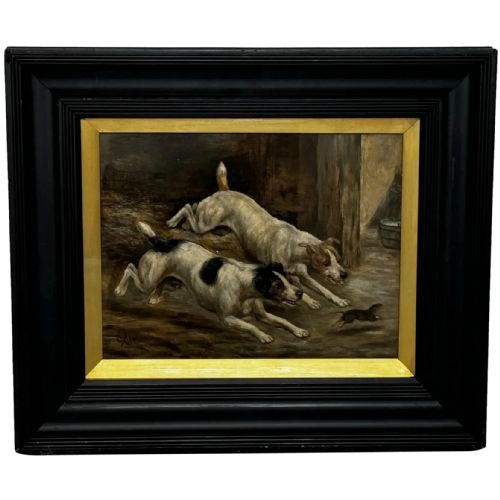
Artware Fineart has dated this Antique Portrait Oil Painting to the 1920s.
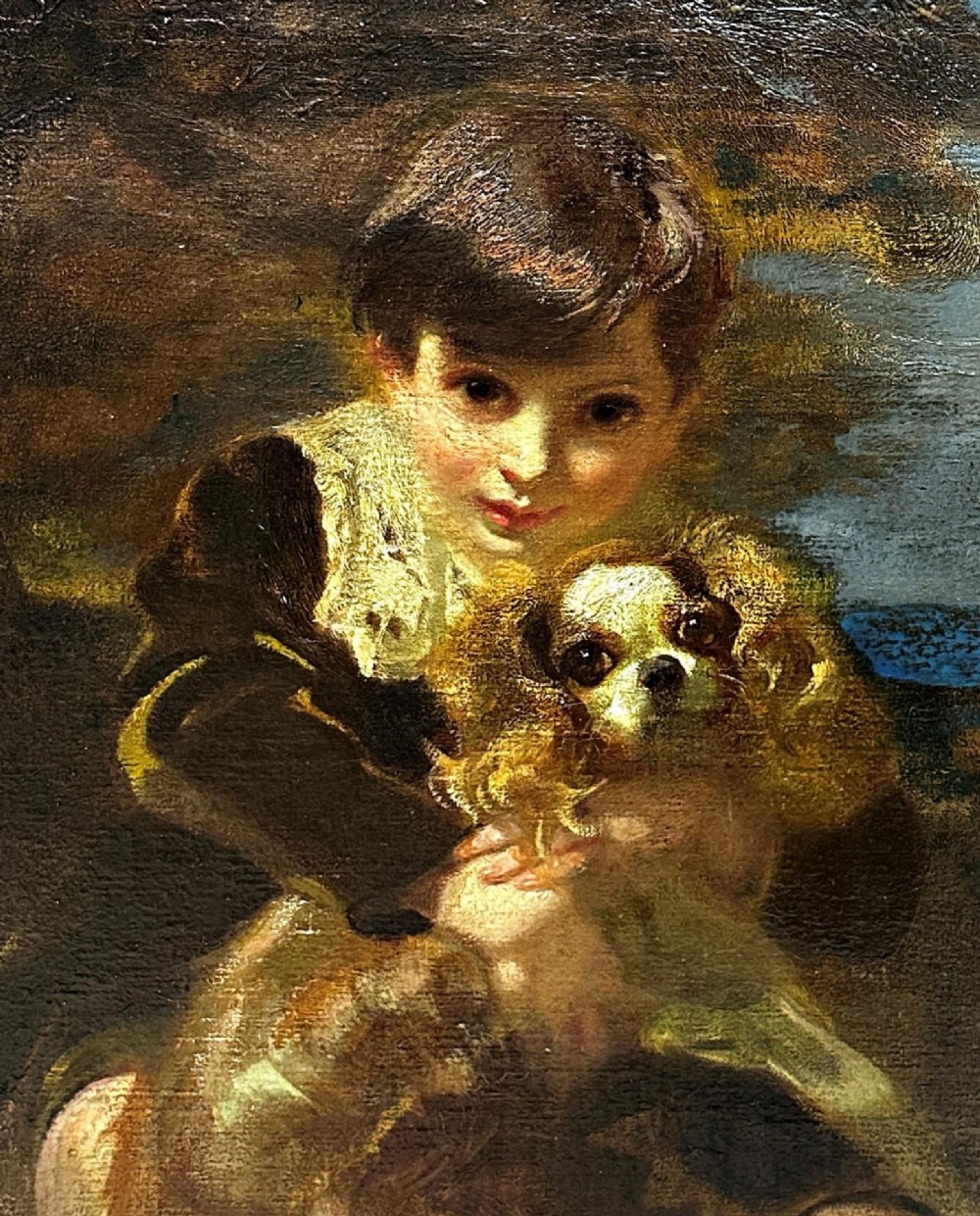
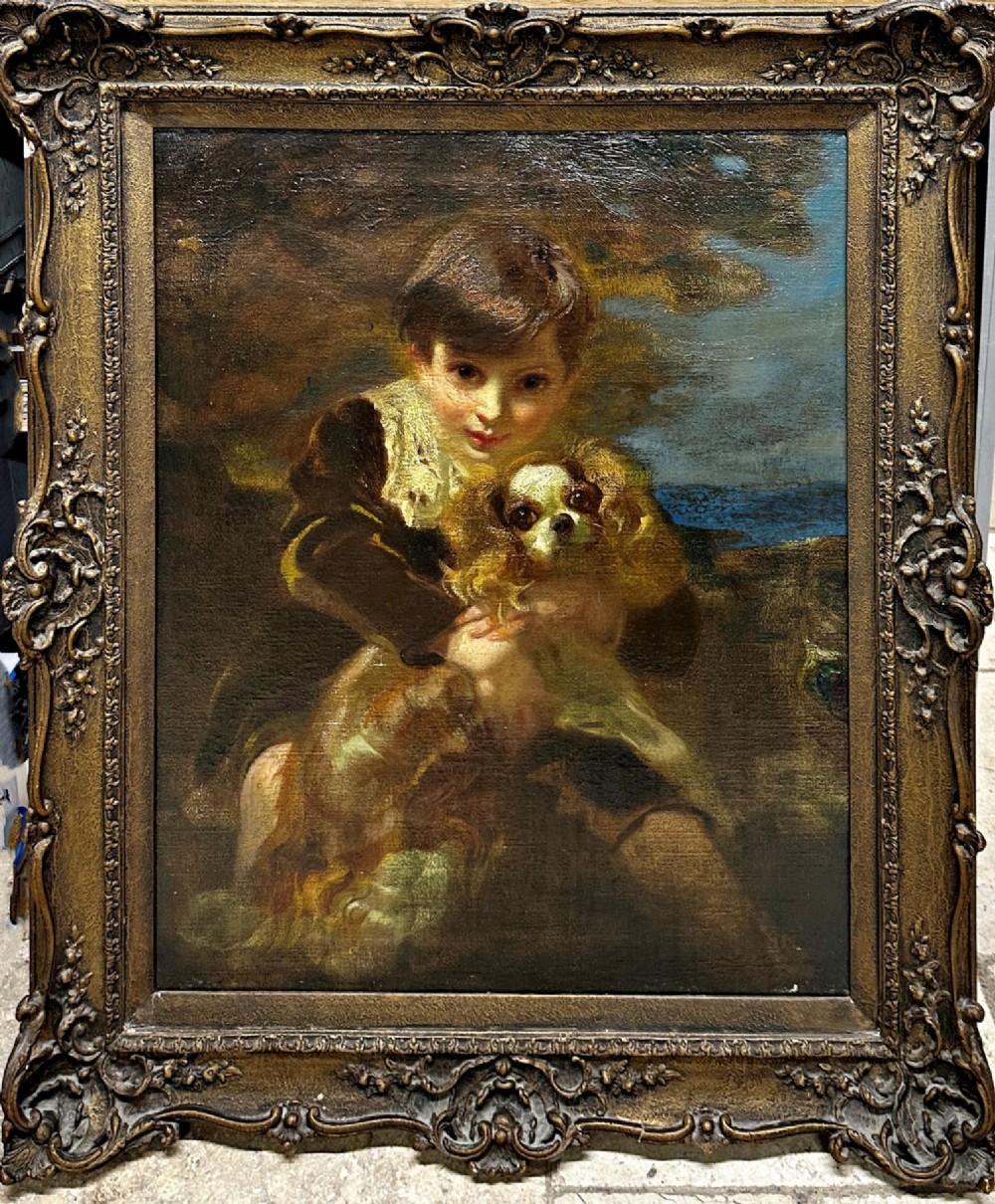
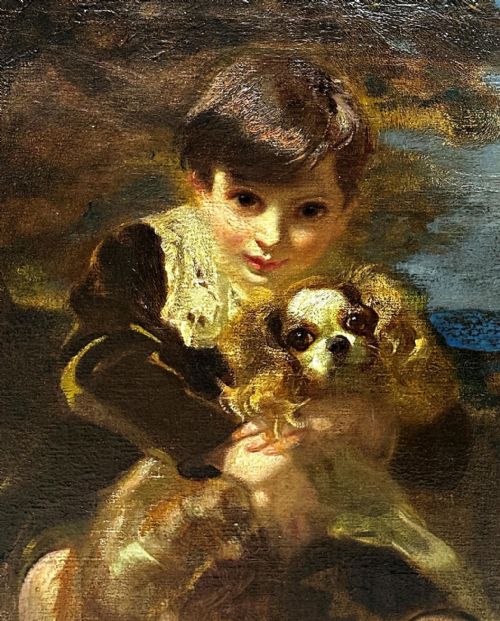
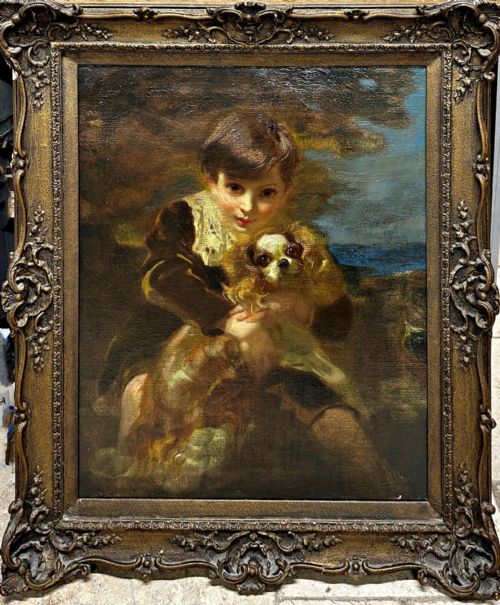
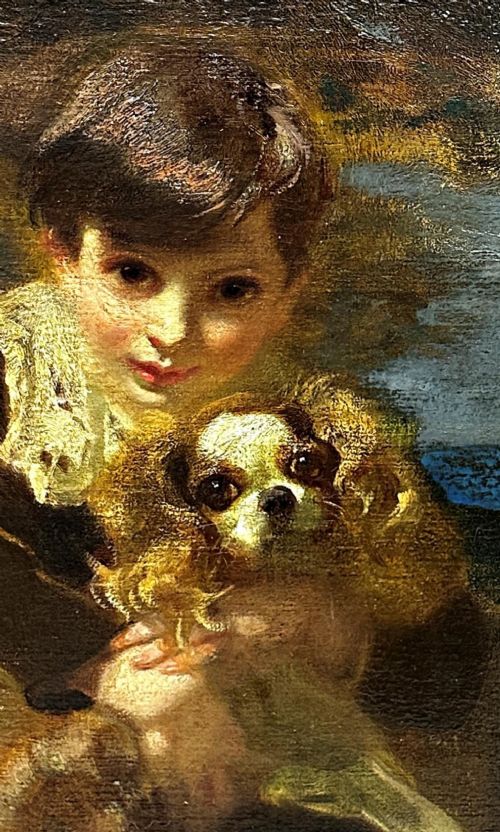
" Friends" a Young Boy in Van Dyck dress holding his Cavalier King Charles Spaniel
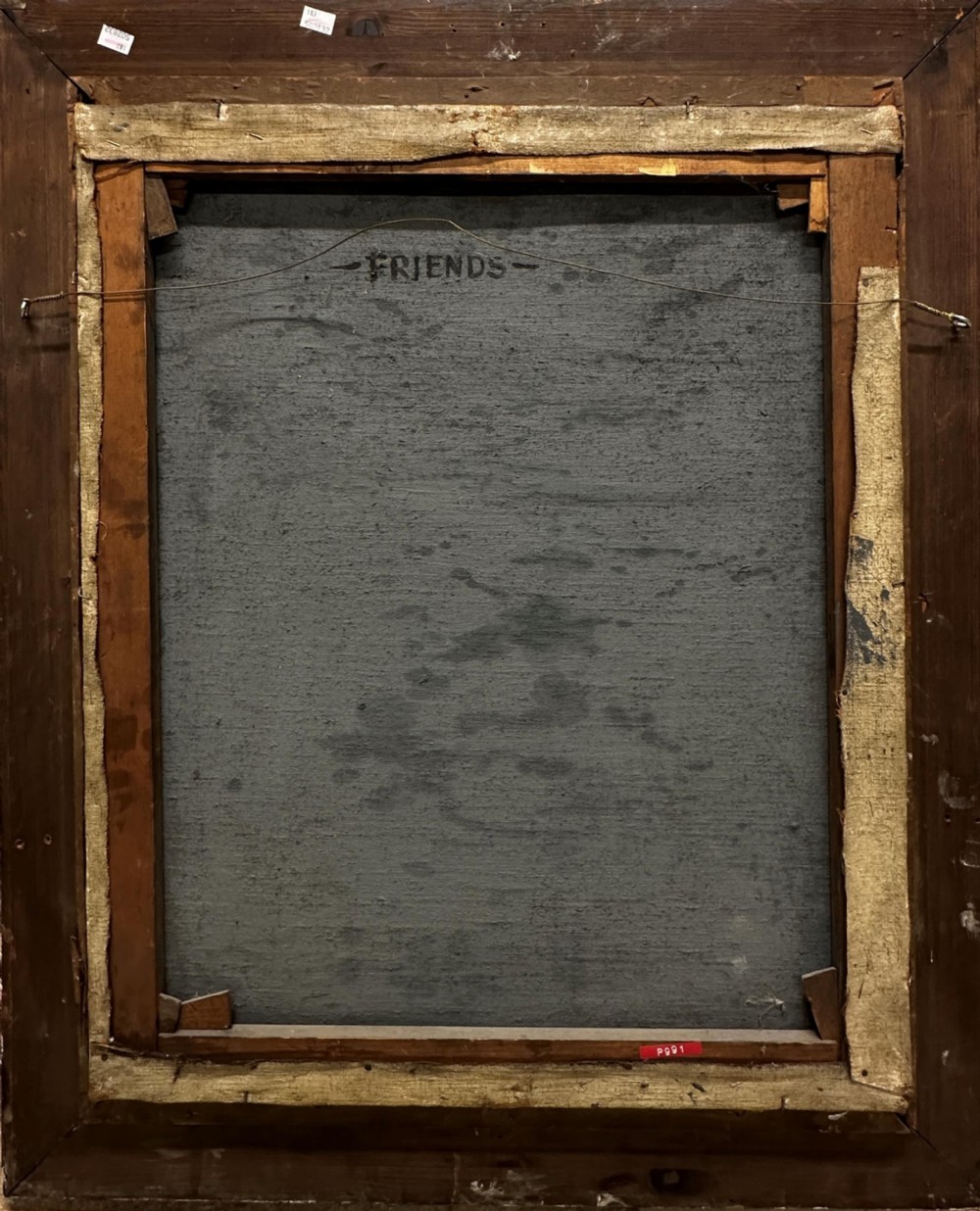
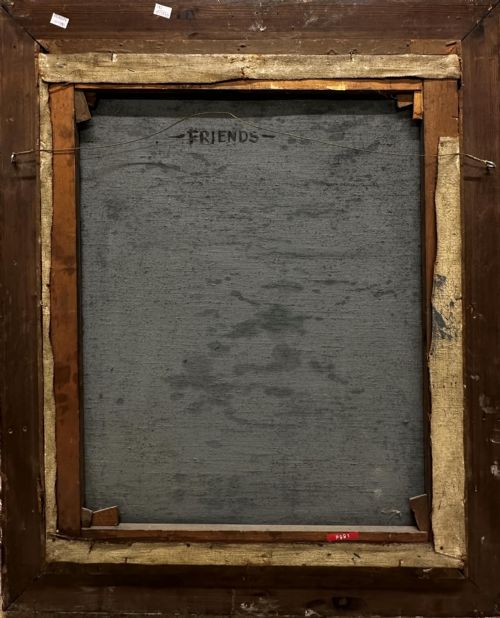
on the reverse "Friends"
oil on canvas
75 x 60 cm
Provenance
From the artists estate
Notes
His speed in producing portraits stemmed from his painting his own twin daughters every morning for an hour and his career began with child portraiture and his painting the Hertfordshire gentry and members of the Harpenden Methodist Church. He had a studio at his home, Sarum Chase.This portrait of a young boy in Vandyck Dress pays homage to Sir Joshua Reynolds who also painted children and in partucular children with their dogs.
Artist biography
Francis Owen Salisbury (18 December 1874 – 31 August 1962) was an English artist who specialised in portraits, large canvases of historical and ceremonial events, stained glass and book illustration. In his heyday he made a fortune on both sides of the Atlantic and was known as "Britain’s Painter Laureate". His art was steadfastly conservative and he was a vitriolic critic of Modern Art – particularly of his contemporaries Picasso, Chagall and Mondrian.
Salisbury was born on 18 December 1874 at Harpenden, Hertfordshire. His father was Henry Salisbury, a plumber and glazier, and his mother was Susan Hawes. One of 11 children, Salisbury was such a delicate child that he was educated at home, in the main by his student teacher sister, Emilie. He had only a few weeks formal schooling and began work by repairing bicycles at his father’s Cycle Depot in Harpenden.
Uncertain as to his ability to find and maintain a job, the family determined that he be apprenticed, at the age of 15, to Henry James Salisbury, his eldest brother, who managed a major stained glass company in Alma Road, St Albans. He rapidly acquired all the practical skills of a stained glass artist and exhibited exceptional skills in the painterly detail that was applied to glass before its final firing. This led to his brother sponsoring him to attend Heatherley’s School of Art three days a week to further a career in painting.
He then won a scholarship to the Royal Academy Schools which he attended for five years and where he won two silver medals and two scholarships, including the Landseer scholarship which funded his to travel to Italy in 1896.In due course he would have seventy exhibits accepted for the annual Royal Academy Summer Exhibitions, from 1899 until 1943, though he was never offered membership, which reportedly disappointed him very much.
Francis Owen Salisbury Headstone, St Nicholas Churchyard, Harpenden.
In 1901 he married Alice Maude (d. 1951), daughter of C. Colmer Greenwood, with whom he had several children, including twin daughters Monica and Sylvia. His first Royal Academy exhibit was a portrait of Alice and he often painted pictures of their children.
Salisbury died on 31 August 1962 at Sarum Chase, the neo-Tudor mansion he built, in 1932, in Hampstead, London. He is buried in a rather unassuming grave, with his baby daughter Elaine Maude and his wife, in St Nicholas Churchyard, Harpenden.
A providential meeting with Lord Wakefield, founder of Castrol Oils and a Methodist philanthropist, saw his introduction to society portraiture. Salisbury’s being selected to paint the Boy Cornwell in the Battle of Jutland then brought him to the notice of Royalty. Lord Wakefield then arranged for him to paint President Woodrow Wilson whilst he was in London, but Wilson departed for Paris and the opportunity was lost. It was to be John W. Davis, American Ambassador to London, who encouraged Salisbury to go to the USA; Davis had met Salisbury at art receptions and had admired his child portraits.
Twenty-five members of the Royal House of
Artware Fineart has dated this Antique Portrait Oil Painting to the 1920s.
You can view the stock and full dealer information on the Artware Fineart Profile Page
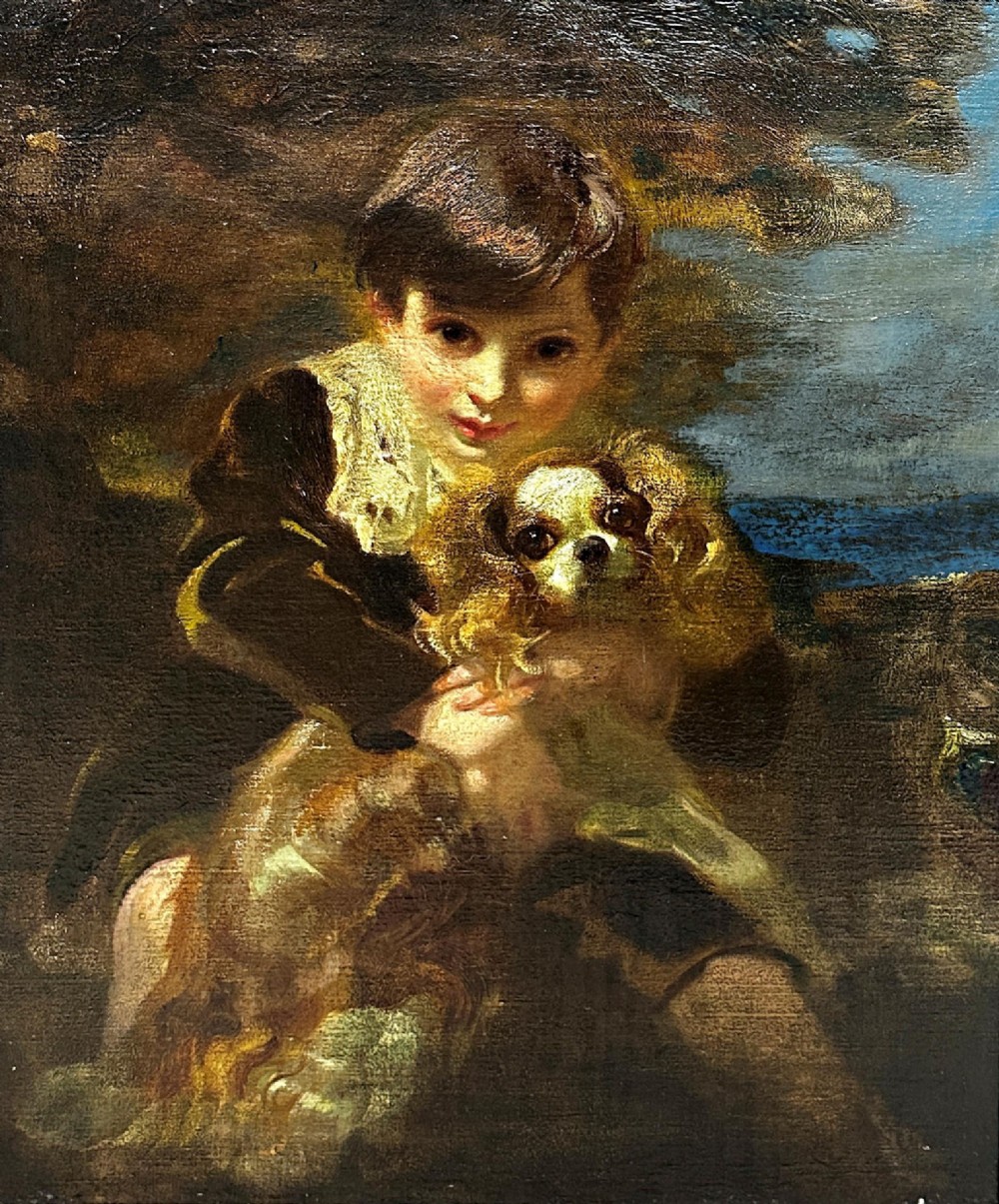
Frank Owen Salisbury 1874 -1962 " Friends" a Young Boy in Van Dyck Dress Holding His Cavalier King Charles Spaniel on the Reverse "Friends"