Artware Fineart has dated this Baroque Oil Portrait Painting to the 17th Century.
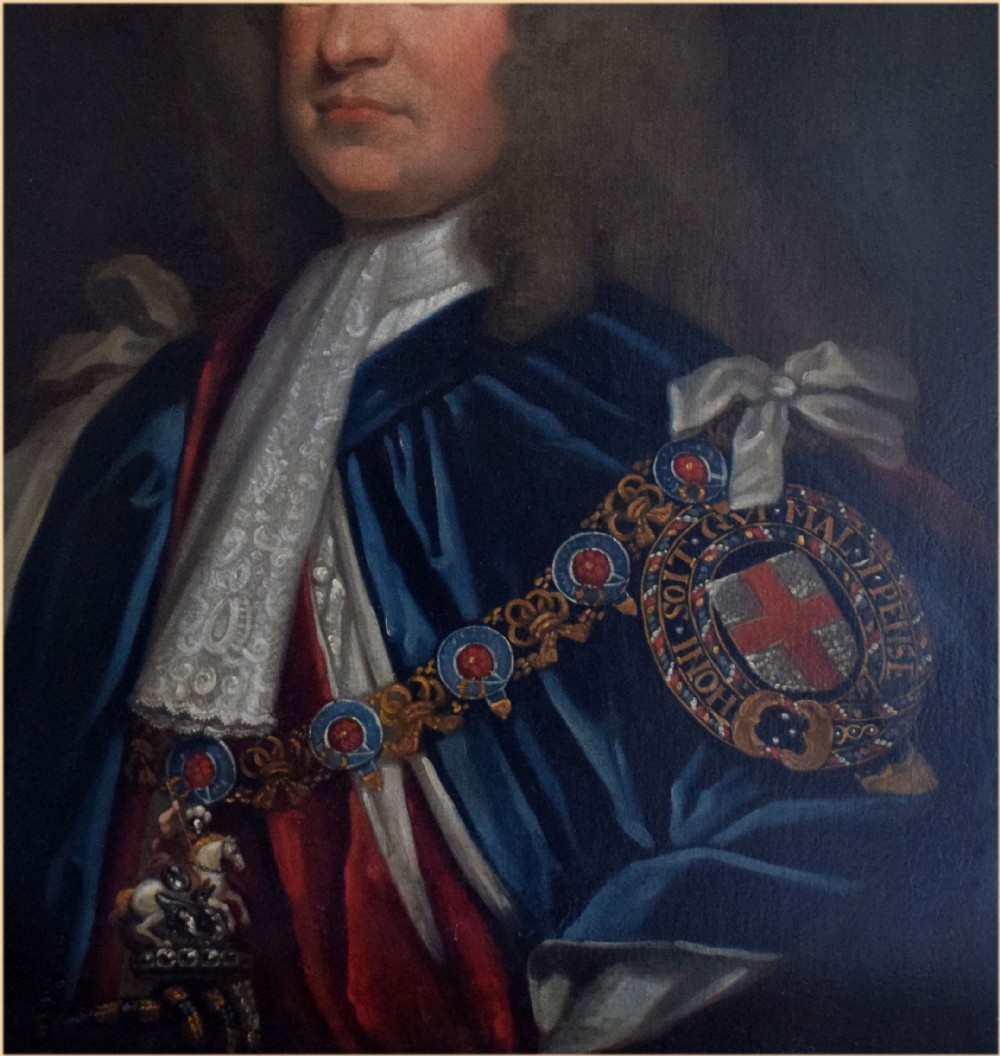
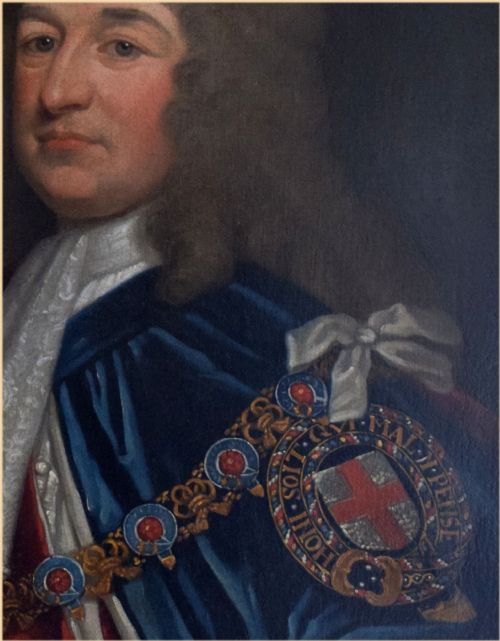
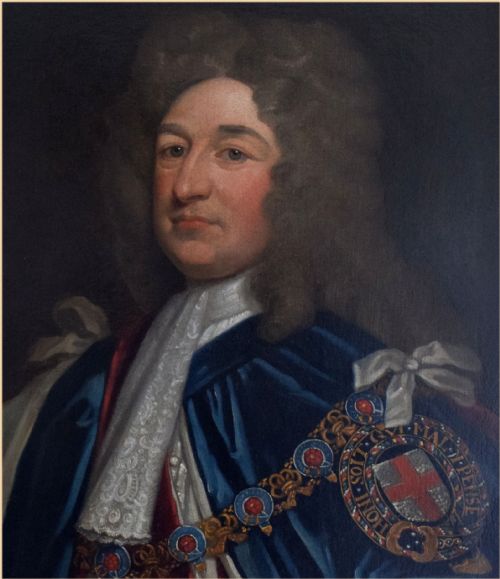
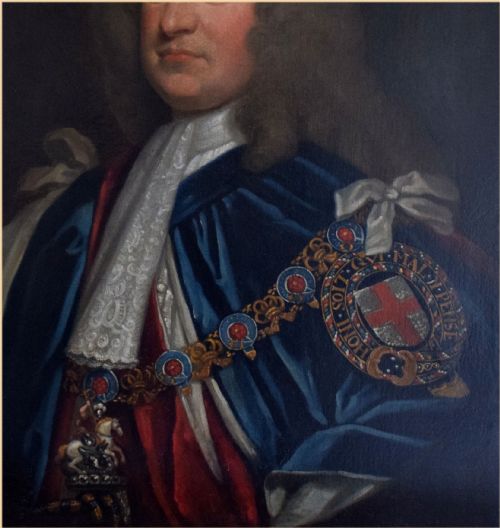
Portrait of Charles Seymour, 6th Duke of Somerset 1662–1748 wearing Garter Robes
oil on canvas
76.20 x 63.50 cm.
This half length portrait of the 6th Duke of Somerset in Garter Robes is a smaller version of the three quarter length portrait in Collection of the Duke of Northumberland, Alnwick Castle, Alnwick, Northumberland
Notes
He rebuilt Petworth House in Sussex, the ancient Percy seat inherited from his wife, in the palatial form which survives today. According to the Encyclopædia Britannica Eleventh Edition, he was a remarkably handsome man, and inordinately fond of taking a conspicuous part in court ceremonial; his vanity, which earned him the sobriquet of "the proud duke", was a byword among his contemporaries and was the subject of numerous anecdotes; Macaulay described him as "a man in whom the pride of birth and rank amounted almost to a disease".
Charles Seymour was the second son of Charles Seymour, 2nd Baron Seymour of Trowbridge (died 1665), of Marlborough Castle in Wiltshire, by his wife Elizabeth Alington (1635–1692). The 2nd baron was (in a junior line) a great-great-grandson of Edward Seymour, 1st Duke of Somerset (executed 1552), brother of Queen Jane Seymour, uncle of King Edward VI and Lord Protector of England.
Charles was educated at Harrow School and Trinity College, Cambridge, where his portrait by Nathaniel Dance-Holland survives in the college's collection.
In 1675, Charles's elder brother Francis Seymour, 5th Duke of Somerset, aged 16, inherited the Dukedom of Somerset from their father's childless first cousin, John Seymour, 4th Duke of Somerset (1629–1675). However, the 5th Duke did not inherit the unentailed Seymour estates, including the family seat of Wulfhall and other Wiltshire estates, and much of the lands of the feudal barony of Hatch Beauchamp in Somerset, which were bequeathed to the 4th duke's niece, Elizabeth Seymour, wife of Thomas Bruce, 2nd Earl of Ailesbury (1656–1741). In 1660, following the Restoration of the Monarchy, the 4th duke's own father, a Royalist commander in the Civil War, had been restored to the dukedom created for and forfeited by his own great-grandfather, Edward Seymour, 1st Duke of Somerset (executed 1552).
Three years later, in 1678, Charles's brother, the 5th duke, was murdered in Italy, aged 20, unmarried and without progeny, having been shot at the door of his inn at Lerici. The 16-year-old Charles Seymour became the 6th duke and the 4th Baron Seymour of Trowbridge.
In 1682, at the age of 20 he married a great heiress, the 15-year-old Lady Elizabeth Percy (1667–1722), daughter and sole heiress of Joceline Percy, 11th Earl of Northumberland (1644–1670), who brought him immense estates, including Alnwick Castle, Northumberland; Petworth House, Sussex; Leconfield Castle, Yorkshire; Cockermouth Castle, Cumberland; Egremont Castle, Cumberland; Syon House, Middlesex, and Northumberland House in London. It had been agreed in the marriage settlement, although both parties to the marriage were minors, and thus legally incapable of being bound by a contract, that:
"... for the preservation of the noble family and name of the Percys, he the said duke and all and every the issue of his body on her the said duchess begotten, should forever take upon him and them and be called and named only by the name and surname of Percy".
However, on attaining her majority of 21 the duchess under her hand and seal dated 30 January 1687 consented to waive and dispense with the agreement. The intention stated in the marriage contract was however fulfilled in 1749 by their granddaughter Lady Elizabeth Seymour and her husband the former Sir Hugh Smithson, 4th Baronet (who by special r
Artware Fineart has dated this Baroque Oil Portrait Painting to the 17th Century.
You can view the stock and full dealer information on the Artware Fineart Profile Page
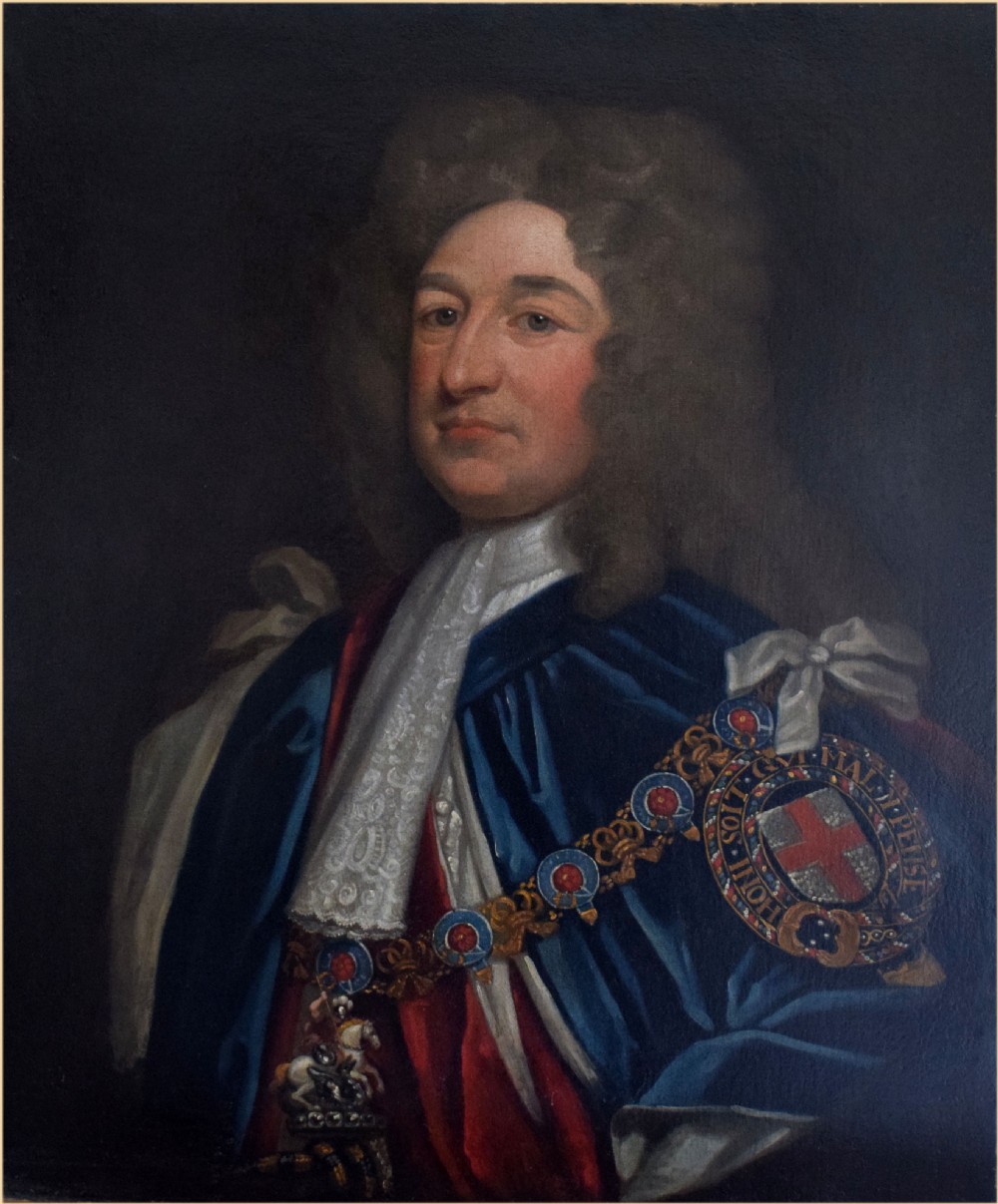
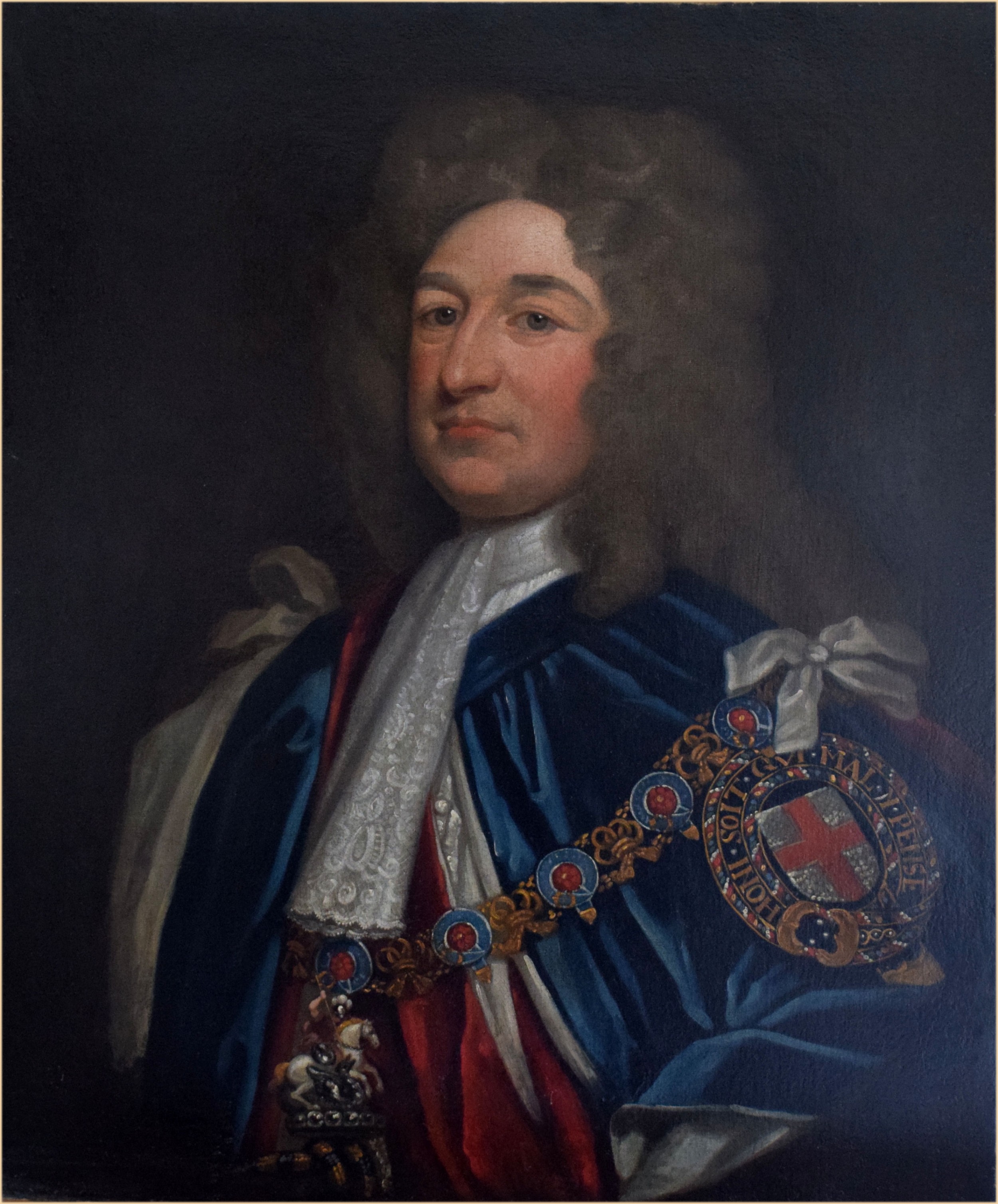
Sir Godfrey Kneller 1646 - 1723 Portrait of Charles Seymour, 6th Duke of Somerset 1662–1748 Wearing Garter Robes