41,894  PAGES BROWSED TODAY PAGES TODAY 98  ANTIQUES UPLOADED TODAY NEW ARRIVALS
ID #SA961245
FOR SALE
£3,500
Email
Save
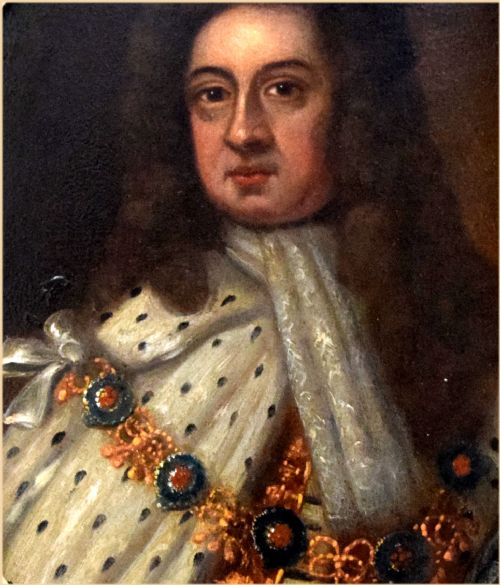
Studio of Sir Godfrey Kneller 1646 -1723 Portrait of King William III 1650-1702
Artware Fineart
for sale €4,095     $4,445
£3,500

Artware Fineart

Sellingantiques Verified Since Sep 2008
View Dealers Stock Page
Id #SA961245
PDF SHARE
SAVE

Studio of Sir Godfrey Kneller 1646 -1723 Portrait of King William III 1650-1702

17th century
For Sale by Artware Fineart
Description

Studio of Sir Godfrey Kneller 1646 -1723

Portrait of King William III 1650-1702

oil on canvas

29 x 24 cm.

King William III 1650 – 1702, also widely known as William of Orange, was the sovereign Prince of Orange from birth, Stadtholder of Holland, Zeeland, Utrecht, Guelders, and Overijssel in the Dutch Republic from the 1670s, and King of England, Ireland, and Scotland from 1689 until his death in 1702. As King of Scotland, he is known as William II. He is sometimes informally known as "King Billy" in Ireland and Scotland. His victory at the Battle of the Boyne in 1690 is commemorated by Unionists, who display orange colours in his honour. He ruled Britain alongside his wife and cousin Queen Mary II, and popular histories usually refer to their reign as that of "William and Mary".
William was the only child of William II, Prince of Orange, and Mary, Princess Royal and Princess of Orange, the daughter of Charles I of England, Scotland, and Ireland. His father died a week before his birth, making William III the Prince of Orange from birth. In 1677, he married Mary, the eldest daughter of his maternal uncle James, Duke of York, the younger brother of Charles II of England, Scotland, and Ireland. The Protestant William participated in several wars against the powerful Catholic French ruler Louis XIV in coalition with both Protestant and Catholic powers in Europe. Many Protestants heralded William as a champion of their faith. In 1685, his Catholic uncle and father-in-law, James, became king of England, Scotland, and Ireland. James's reign was unpopular with the Protestant majority in Britain, who feared a revival of Catholicism. Supported by a group of influential British political and religious leaders, William invaded England in what became known as the Glorious Revolution. In 1688, he landed at the south-western English port of Brixham. Shortly afterwards, James was deposed.
William's reputation as a staunch Protestant enabled him and his wife to take power. During the early years of his reign, William was occupied abroad with the Nine Years' War (1688–1697), leaving Mary to govern Britain alone. She died in 1694. In 1696 the Jacobites, a faction loyal to the deposed James, plotted unsuccessfully to assassinate William and restore James to the throne. William's lack of children and the death in 1700 of his nephew Prince William, Duke of Gloucester, the son of his sister-in-law Anne, threatened the Protestant succession. The danger was averted by placing distant relatives, the Protestant Hanoverians, in line to the throne with the Act of Settlement 1701. Upon his death in 1702, the king was succeeded in Britain by Anne and as titular Prince of Orange by his cousin John William Friso, beginning the Second Stadtholderless period.

William III was born in The Hague in the Dutch Republic on 4 November 1650. Baptised William Henry (Dutch: Willem Hendrik), he was the only child of Mary, Princess Royal, and stadtholder William II, Prince of Orange. His mother was the eldest daughter of King Charles I of England, Scotland and Ireland and sister of King Charles II and King James II and VII.

Eight days before William was born, his father died of smallpox; thus William was the sovereign Prince of Orange from the moment of his birth. Immediately, a conflict ensued between his mother and paternal grandmother, Amalia of Solms-Braunfels, over the name to be given to the infant. Mary wanted to name him Charles after her brother, but her mother-in-law insisted on giving him the name William (Willem) to bolster his prospects of becoming stadtholder. William II had appointed his wife as their son's guardian in his will; however, the document remained unsigned at William II's death and was void. On 13 August 1651, the Hoge Raad van Holland en Zeeland (Supreme Court) ruled that guardianship would be shared between his mother,

Physical Dimensions
Height
29cm (11.42")
Width
24cm (9.45")
Depth
2cm (0.79")
Declaration

Artware Fineart has dated this Baroque Royal Portrait Painting to the 17th Century.

Reference Numbers
Sellingantiques Reference
SA961245
Dealers Internal Reference
4452
Description
Studio of Sir Godfrey Kneller 1646 -1723

Portrait of King William III 1650-1702

oil on canvas

29 x 24 cm.

King William III 1650 – 1702, also widely known as William of Orange, was the sovereign Prince of Orange from birth, Stadtholder of Holland, Zeeland, Utrecht, Guelders, and Overijssel in the Dutch Republic from the 1670s, and King of England, Ireland, and Scotland from 1689 until his death in 1702. As King of Scotland, he is known as William II. He is sometimes informally known as "King Billy" in Ireland and Scotland.

His victory at the Battle of the Boyne in 1690 is commemorated by Unionists, who display orange colours in his honour.
Artware Fineart

He ruled Britain alongside his wife and cousin Queen Mary II, and popular histories usually refer to their reign as that of "William and Mary".

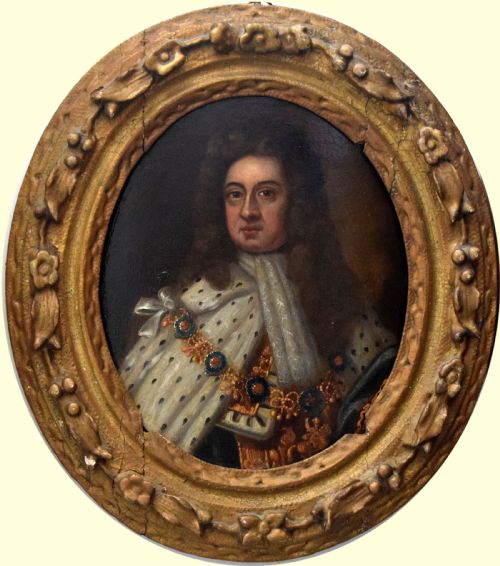
fig 1. An oval Baroque oil portrait depicting King William III wearing ermine robes, an ornate collar insignia, and a full dark wig against a dark background.
fig 1. Studio of Sir Godfrey Kneller 1646 -1723 Portrait of King William III 1650-1702

William was the only child of William II, Prince of Orange, and Mary, Princess Royal and Princess of Orange, the daughter of Charles I of England, Scotland, and Ireland. His father died a week before his birth, making William III the Prince of Orange from birth. In 1677, he married Mary, the eldest daughter of his maternal uncle James, Duke of York, the younger brother of Charles II of England, Scotland, and Ireland. The Protestant William participated in several wars against the powerful Catholic French ruler Louis XIV in coalition with both Protestant and Catholic powers in Europe. Many Protestants heralded William as a champion of their faith. In 1685, his Catholic uncle and father-in-law, James, became king of England, Scotland, and Ireland. James's reign was unpopular with the Protestant majority in Britain, who feared a revival of Catholicism. Supported by a group of influential British political and religious leaders, William invaded England in what became known as the Glorious Revolution. In 1688, he landed at the south-western English port of Brixham. Shortly afterwards, James was deposed.

fig 2. An oval Baroque oil portrait depicting King William III wearing ermine robes, an ornate collar insignia, and a full dark wig against a dark background.
fig 2. Studio of Sir Godfrey Kneller 1646 -1723 Portrait of King William III 1650-1702

William's reputation as a staunch Protestant enabled him and his wife to take power. During the early years of his reign, William was occupied abroad with the Nine Years' War (1688–1697), leaving Mary to govern Britain alone. She died in 1694. In 1696 the Jacobites, a faction loyal to the deposed James, plotted unsuccessfully to assassinate William and restore James to the throne. William's lack of children and the death in 1700 of his nephew Prince William, Duke of Gloucester, the son of his sister-in-law Anne, threatened the Protestant succession. The danger was averted by placing distant relatives, the Protestant Hanoverians, in line to the throne with the Act of Settlement 1701. Upon his death in 1702, the king was succeeded in Britain by Anne and as titular Prince of Orange by his cousin John William Friso, beginning the Second Stadtholderless period.

William III was born in The Hague in the Dutch Republic on 4 November 1650. Baptised William Henry (Dutch: Willem Hendrik), he was the only child of Mary, Princess Royal, and stadtholder William II, Prince of Orange. His mother was the eldest daughter of King Charles I of England, Scotland and Ireland and sister of King Charles II and King James II and VII.

Eight days before William was born, his father died of smallpox; thus William was the sovereign Prince of Orange from the moment of his birth. Immediately, a conflict ensued between his mother and paternal grandmother, Amalia of Solms-Braunfels, over the name to be given to the infant. Mary wanted to name him Charles after her brother, but her mother-in-law insisted on giving him the name William (Willem) to bolster his prospects of becoming stadtholder. William II had appointed his wife as their son's guardian in his will; however, the document remained unsigned at William II's death and was void. On 13 August 1651, the Hoge Raad van Holland en Zeeland (Supreme Court) ruled that guardianship would be shared between his mother,

Height
29cm (11.42")
Width
24cm (9.45")
Depth
2cm (0.79")
Date of Manufacture

Artware Fineart has dated this Baroque Royal Portrait Painting to the 17th Century.

Reference Numbers
Sellingantiques Ref
SA961245
Dealers Internal Ref
4452
Artware Fineart
Sellingantiques verified Since Sep 2008
Dealer Profile

You can view the stock and full dealer information on the Artware Fineart Profile Page
PDF SHARE
SAVE
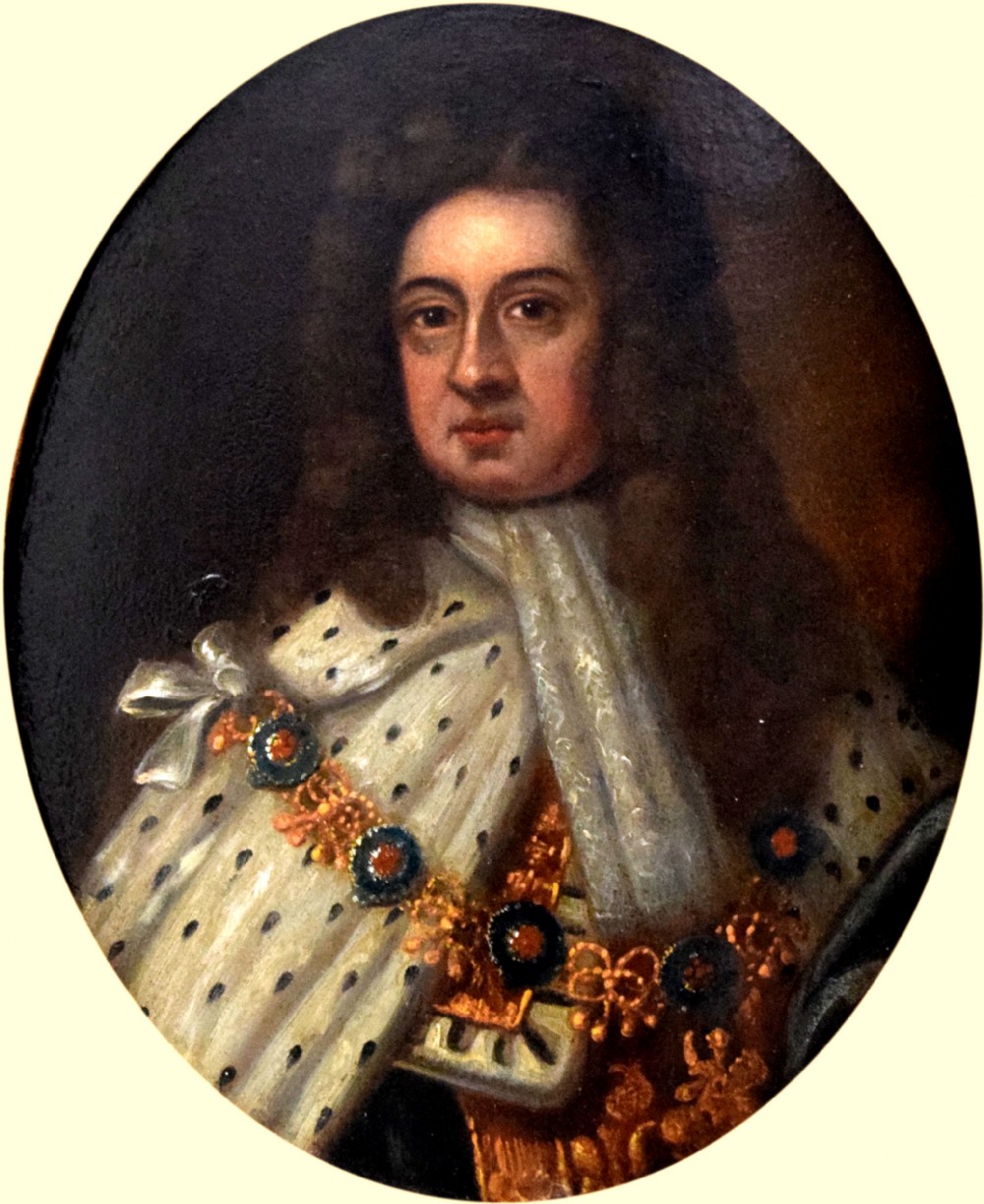
An oval Baroque oil portrait depicting King William III wearing ermine robes, an ornate collar insignia, and a full dark wig against a dark background.
1 / 3
Archive I An oval Baroque oil portrait depicting King William III wearing ermine robes, an ornate collar insignia, and a full dark wig against a dark background.

Studio of Sir Godfrey Kneller 1646 -1723 Portrait of King William III 1650-1702
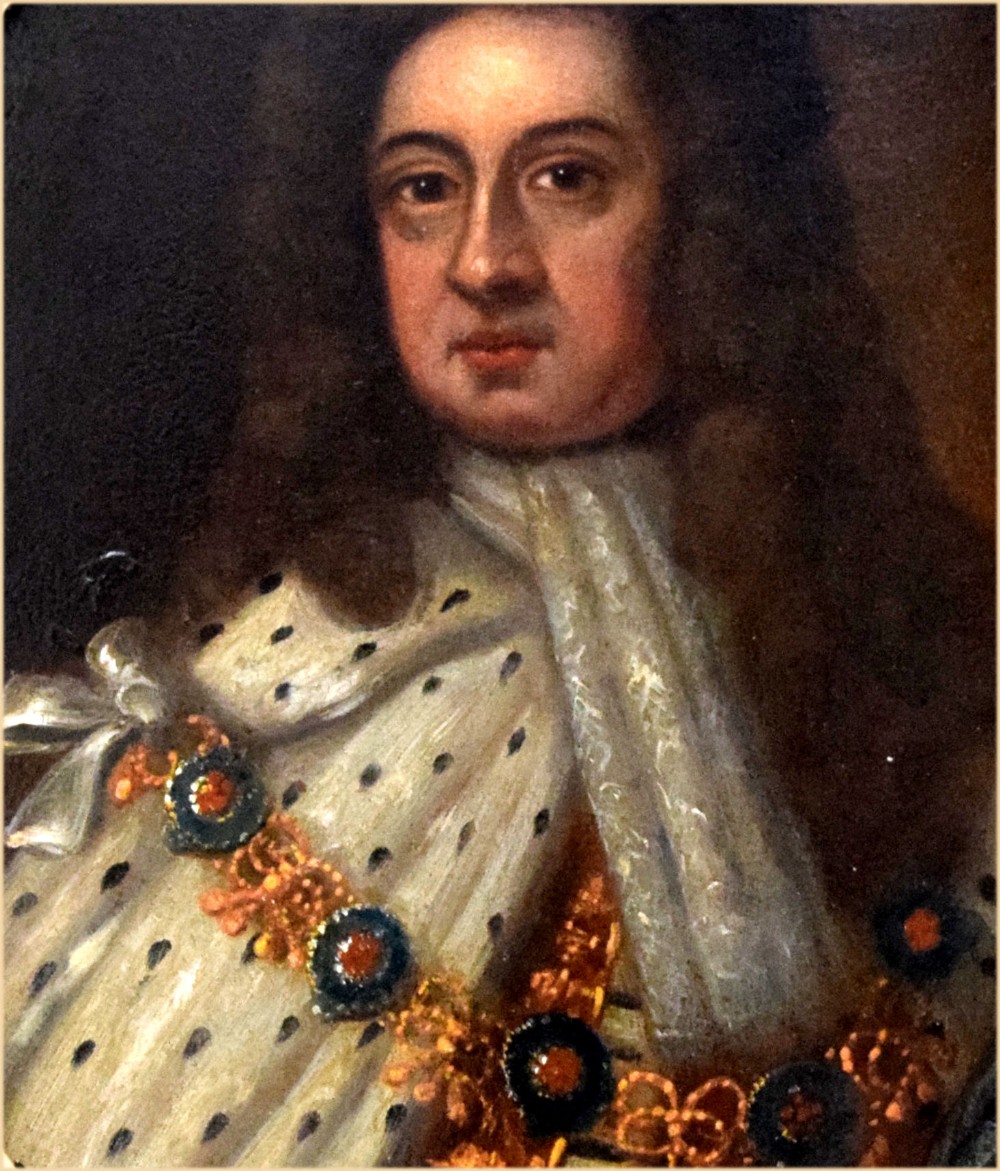
Archive II An oval Baroque oil portrait depicting King William III wearing ermine robes, an ornate collar insignia, and a full dark wig against a dark background. View II
Archive III An oval Baroque oil portrait depicting King William III wearing ermine robes, an ornate collar insignia, and a full dark wig against a dark background. View III
FURTHER BROWSING

Visitors also looked at these ⇣

Enlarged Archival View
Telephone 07958 699 645
Location
18 La Gare
51 Surrey Row
London
SE1 0BZ
United Kingdom
Verified Since Sep 2008
Items For Sale 243
Items Sold 223
Artware Fineart
Verified Since Sep 2008
View Dealer Info
Location: 18 La Gare , 51 Surrey Row , London , SE1 0BZ , United Kingdom
Verified
Sep 2008
For Sale
243
Sold
223
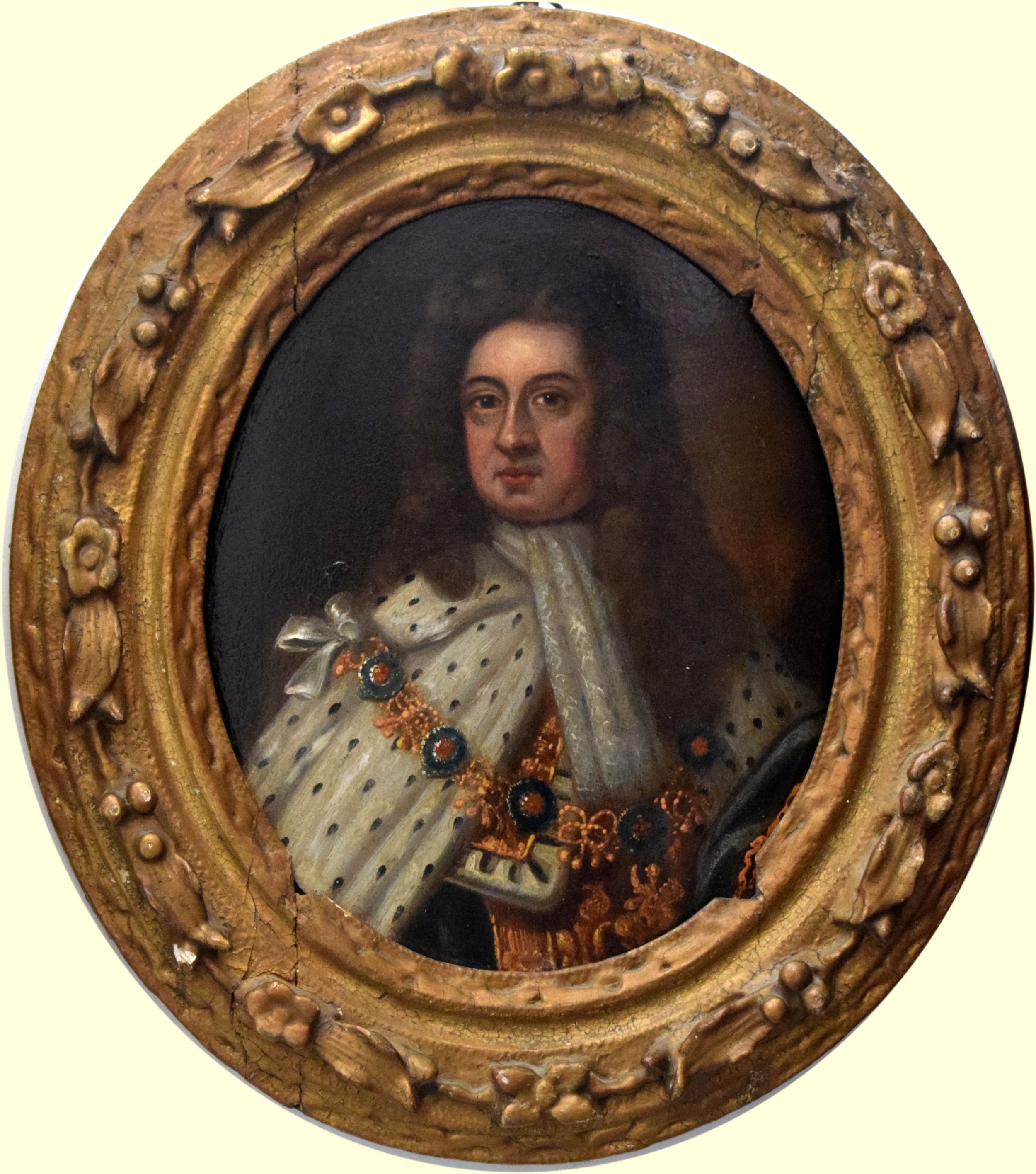
An oval Baroque oil portrait depicting King William III wearing ermine robes, an ornate collar insignia, and a full dark wig against a dark background.
Studio of Sir Godfrey Kneller 1646 -1723 Portrait of King William III 1650-1702
Ref: SA961245
An oval Baroque oil portrait depicting King William III wearing ermine robes, an ornate collar insignia, and a full dark wig against a dark background.
Detail View 4
Detail View 5
Archival Detail
Every single antique dealer on our platform is individually approved by our internal team. We verify their professional trade history, ethical standards, and photographic quality to ensure a secure, high-standard buying environment. Upon joining, every dealer agrees to a strict 9-point code of conduct. While issues can occasionally arise, our dealers typically resolve them swiftly and directly with the buyer. In fact, since our founding in 2002, Sellingantiques has only had to step in to help resolve an issue on roughly five occasions—a true testament to the quality of our dealers and their dedication to your happiness.
Our dealers are highly experienced in packing and shipping fragile, high-value antiques. Because you are in direct contact with the dealer, you will be able to easily go through all available shipping and insurance options together to ensure your item arrives safely.
Antiques are the ultimate green purchase. By choosing historical pieces over newly manufactured goods, you completely eliminate the carbon footprint of modern mass production while preserving exceptional, timeless craftsmanship.

Seventeenth-century Baroque royal portraiture emphasises grandeur, dramatic lighting contrast, and official symbolic regalia to convey majesty and authority. Sitters were traditionally depicted wearing formal robes, wigs, and honoured insignia against dark, restrained backgrounds.

Portraits from this period were typically executed using oil pigments applied to stretched linen canvas or wood panels. Artists applied multiple translucent glazes over a primed gesso base to achieve skin tones and metallic detailing.

Authenticity is determined through physical indicators such as uniform age-appropriate craquelure patterns, period canvas weave density, hand-forged nails, and timber oxidation. Pigment analysis and studio execution techniques further establish dating.

A historic portrait works well as a central focal point above a mantelpiece or console table, set against dark or muted wall shades. Combining period portraiture with clean contemporary furniture creates a balanced, layered aesthetic.

Oil paintings require hanging away from direct sunlight, heat sources, and areas of variable humidity to prevent paint layer cracking or canvas movement. Dusting should be performed carefully with a dry, soft brush, leaving cleaning to trained conservators.
items
Add keywords to the filter
Price
£100
£250000
Era
Movements
Material
Origin
Stock Location
Freshness
Online Payments
Categories