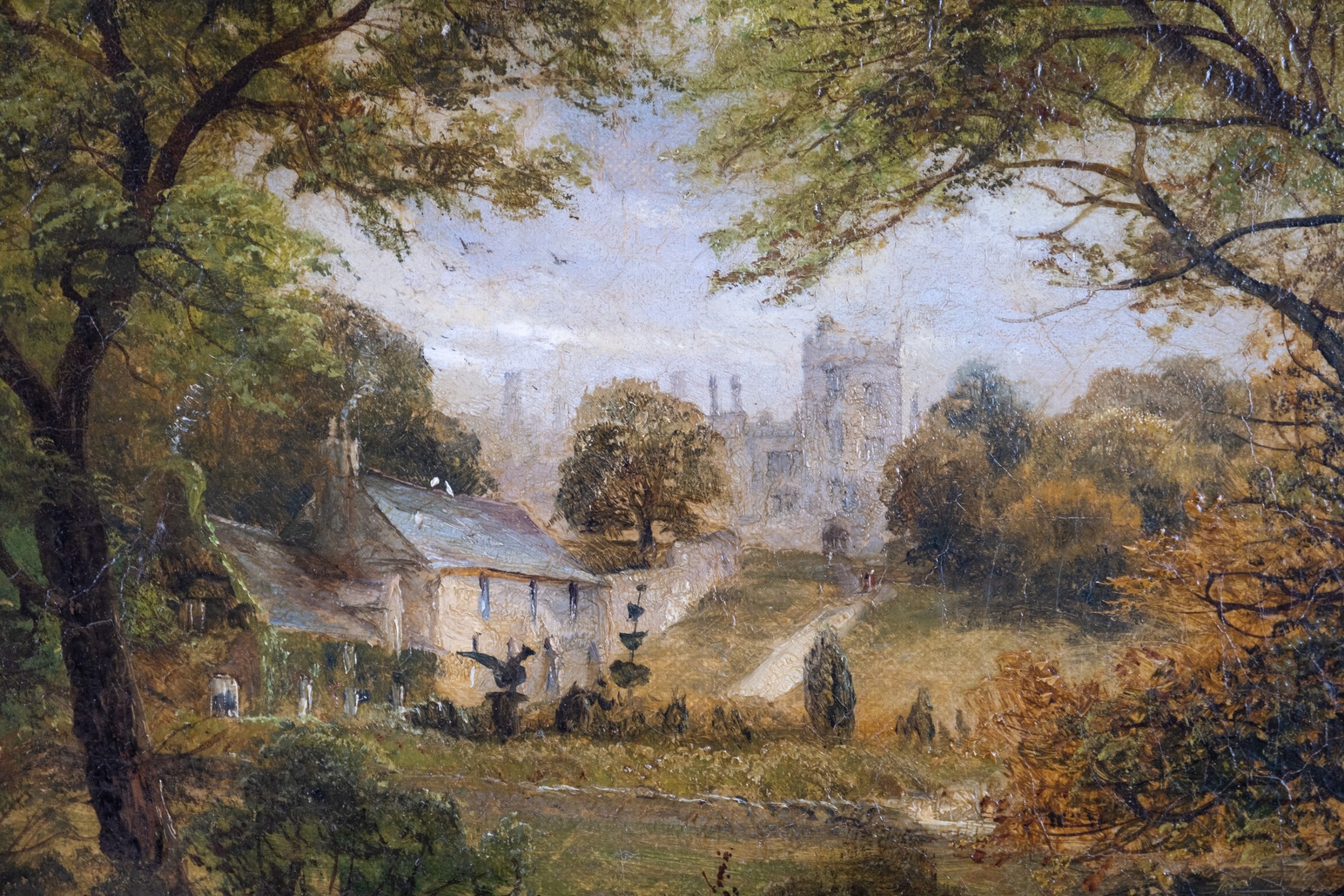
Harrington Antiques has dated this piece to the 19th Century.
Payne was born in Anna in the old county of Dumfriesshire, the son of a Mason. He was educated at Anna Academy (along with fellow artist William Ewart Lockhart). He initially made his living as a house painter before becoming an artist.
Payne was a student of George Turner ("Derbyshire's John Constable") who also lived in Barrow upon Trent. Payne's carving of two anglers won the 1882 Derby Art Gallery medal for industrial art and the sculpture and medal have now been repurchased by the gallery.
Payne became a rural landscape and trompe-loeil artist. He exhibited at the Royal Birmingham Society Of Artists (R BSA) , the Nottingham Museum and Art Gallery, and was a member of the Royal Scottish Academy (RSA). He is regarded as one of the best of the 19th-century Birmingham artists. In 1891, Queen Victoria visited Derby to lay the foundation stone of the Derbyshire Royal Infirmary and to knight Sir Alfred Haslam. The scene in the market place where hundreds of people, soldiers, horses and bunting turned out to meet Queen Victoria was captured by Payne. This painting is now in Derby Museum and Art Gallery but he also has work in his home town.
Payne married and had 14 children. He died in Sheffield in 1894. Today Payne has paintings in several British institutions including Derby Museum, the Defence Academy and Southampton City Art Gallery.
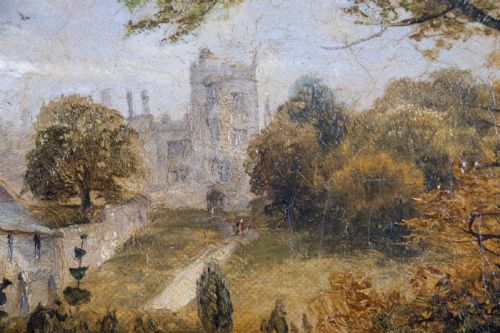
Payne is well known to have painted Haddon Hall, Derbyshire and its surrounding area on numerous occasions.
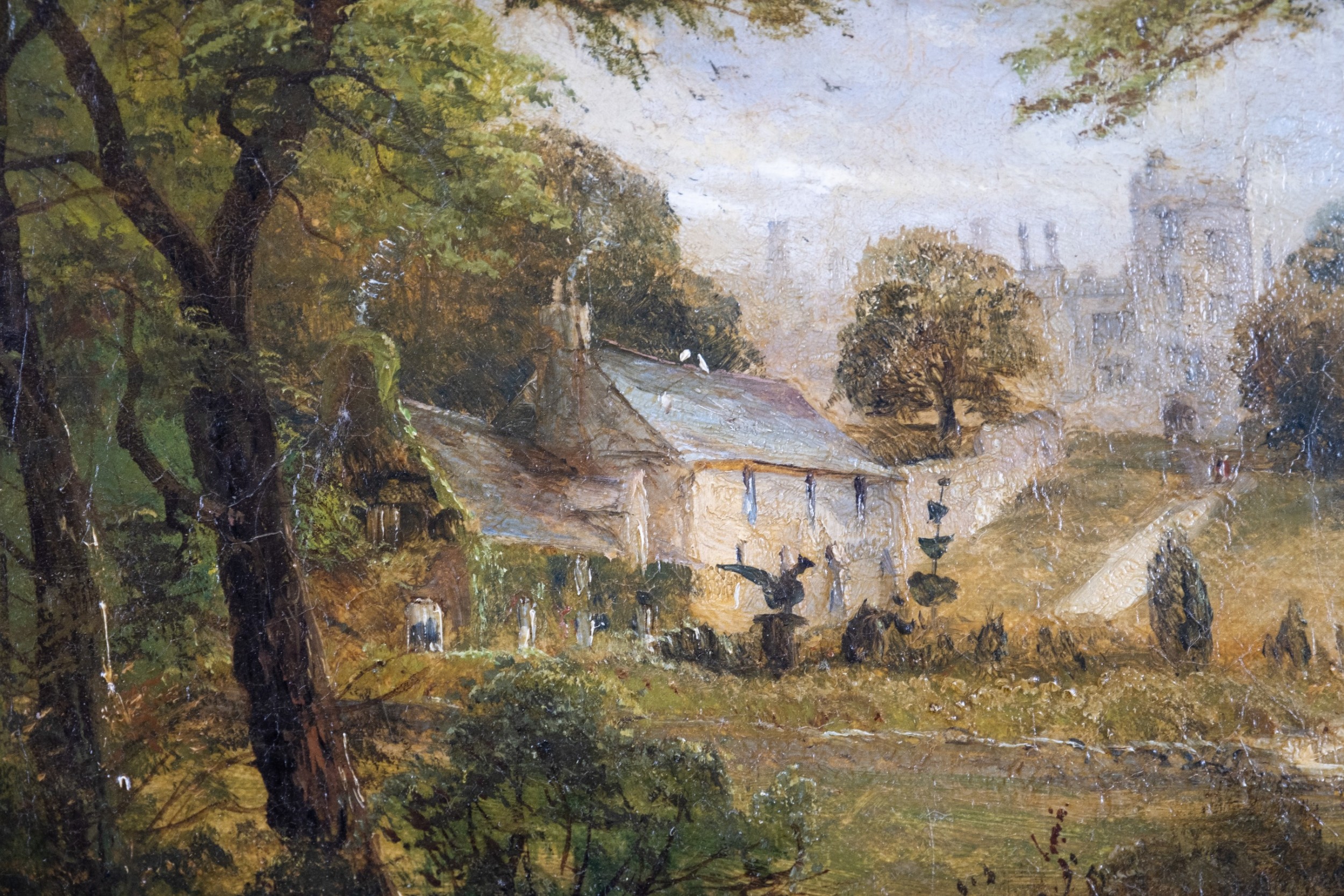
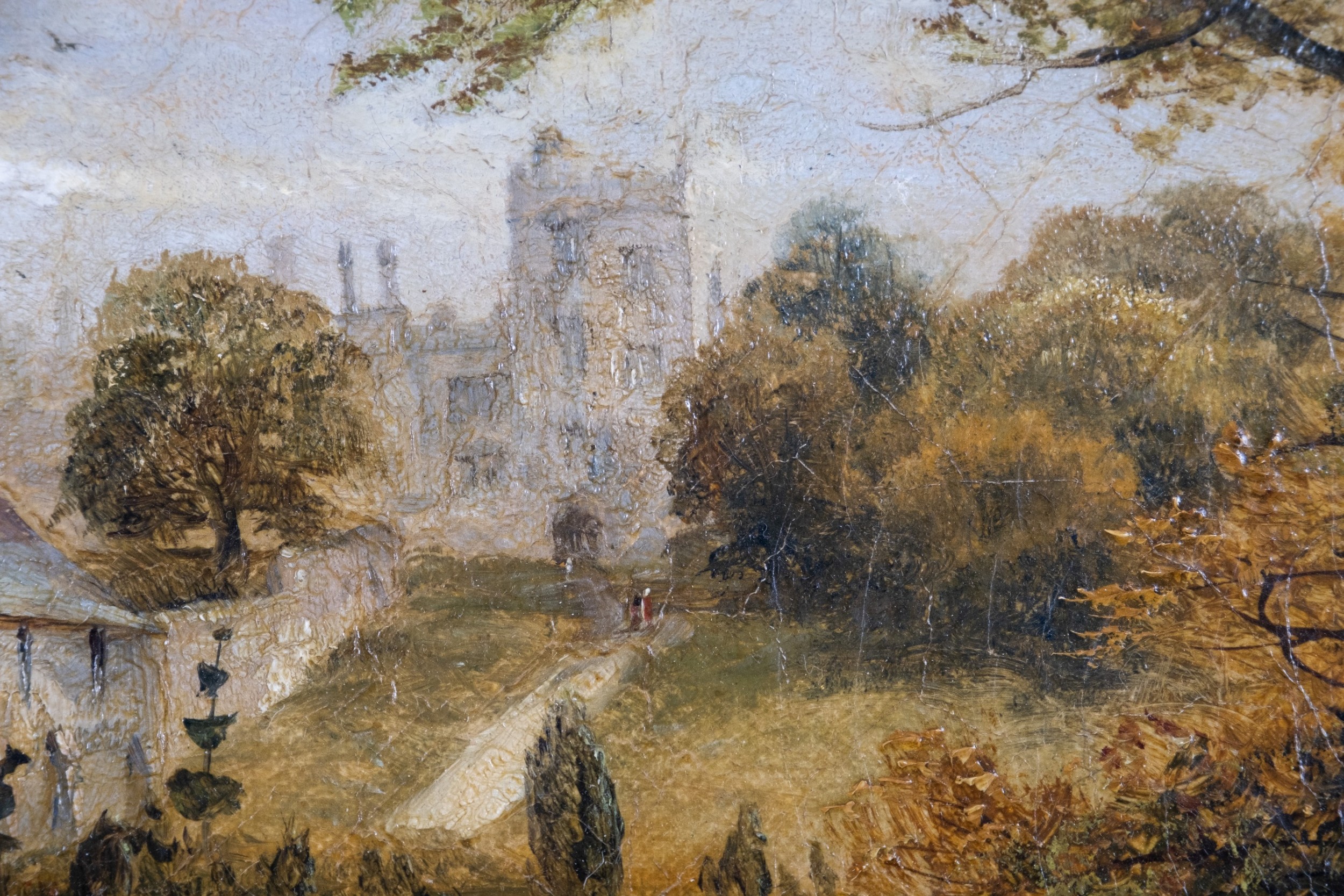
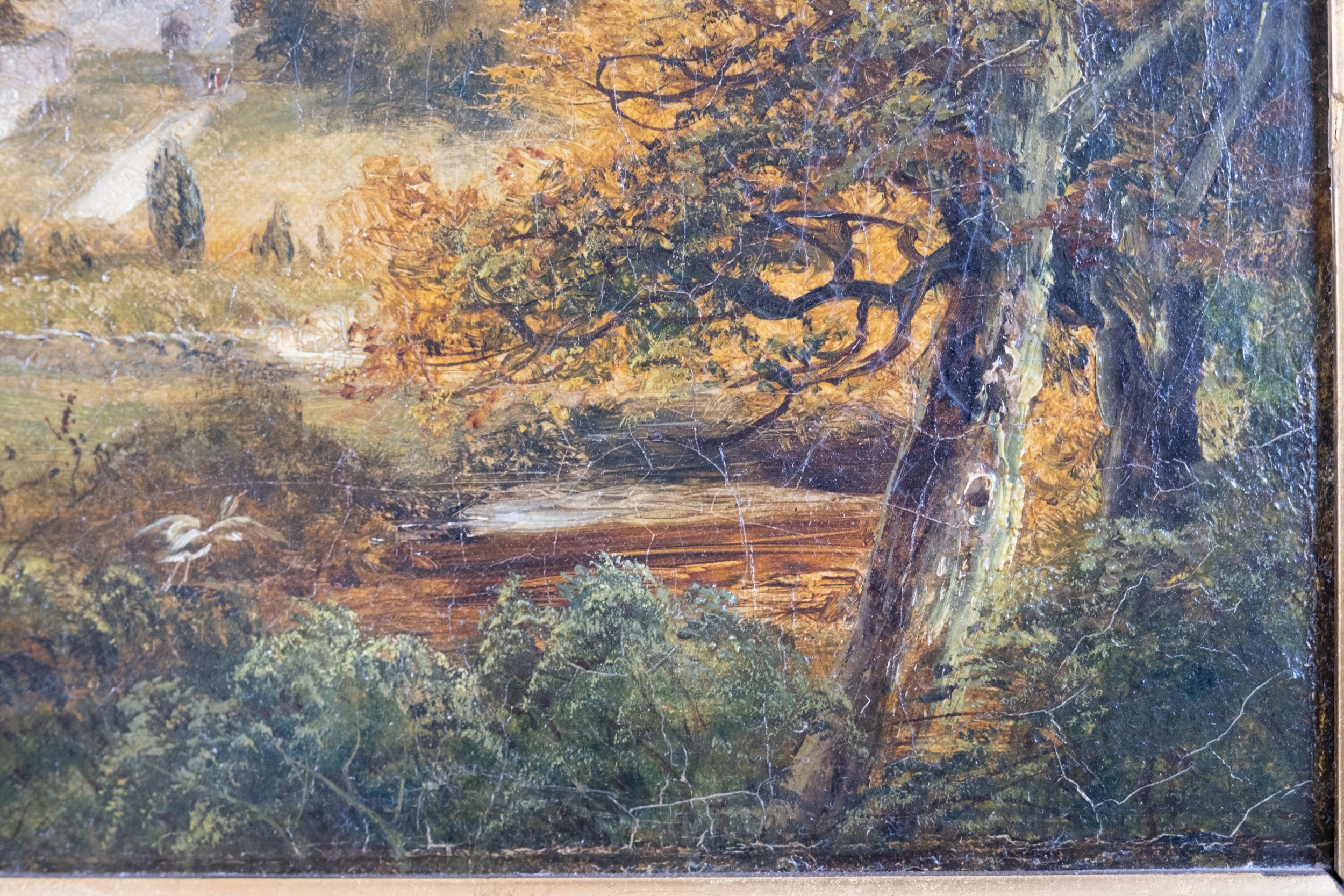
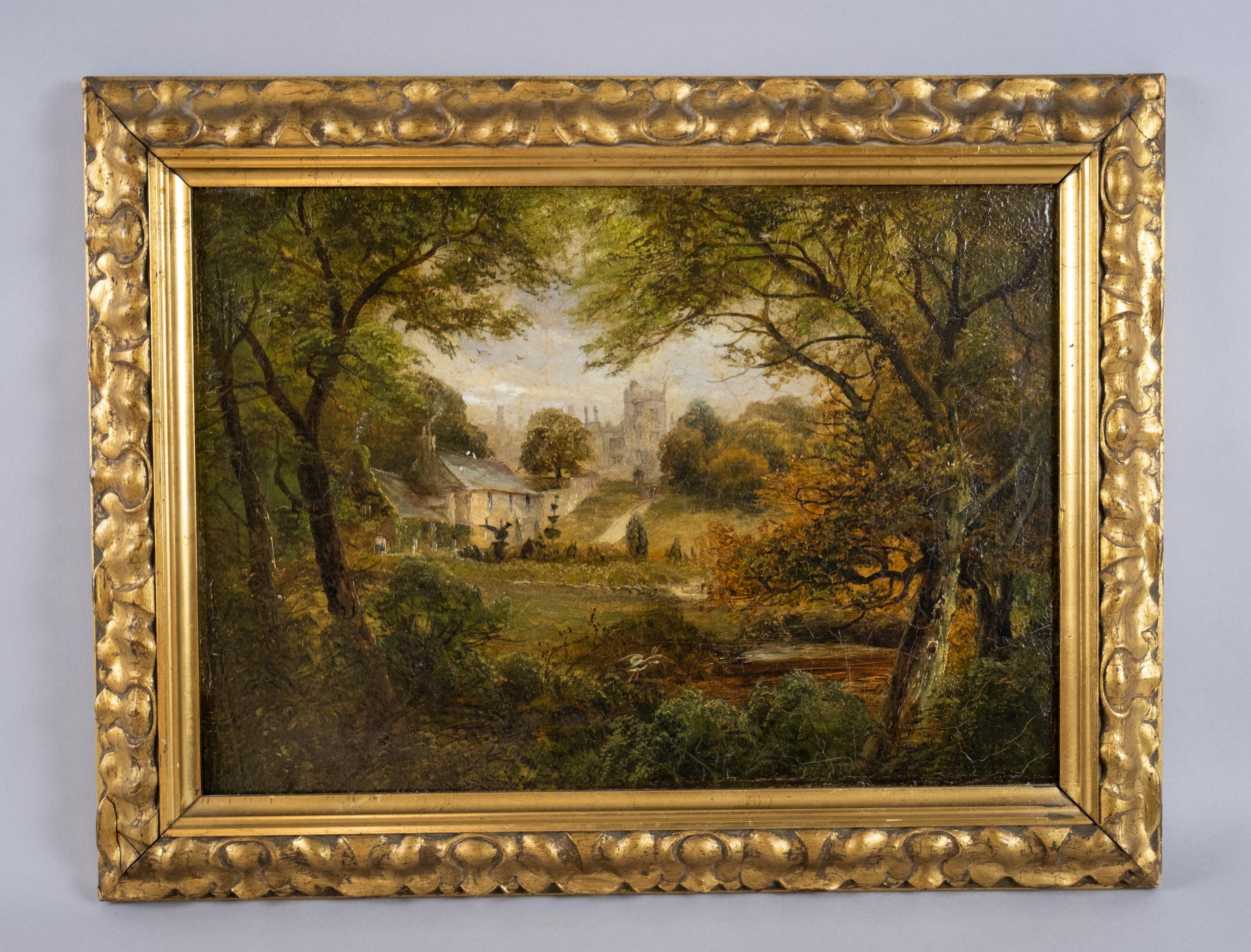
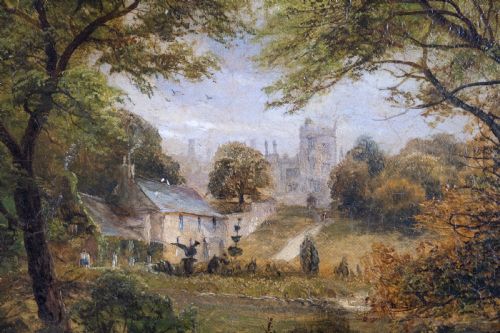
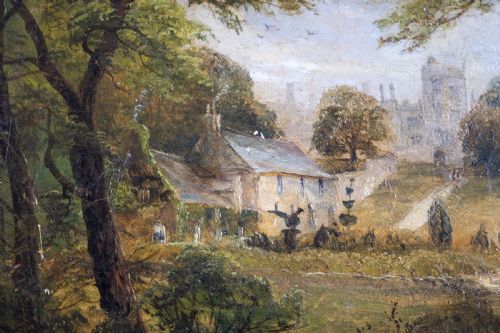
This work depicts a worker's cottage in Haddon Hall grounds through a gap in the trees, with Haddon Hall itself in the background and figures walking the path; it is a similar aspect to Payne's, 'Haddon Hall From The North'. The work has some craquelure to the lower right but generally remains in a very good condition throughout.
DIMENSIONS
Framed:-
Width: 50cm
Height: 38.5cm
Depth: 1cm
Canvas Only:-
Width: 39.5cm
Height: 28cm
DELIVERY
UK Mainland: £9.95
International Delivery: Please contact us for a no obligation delivery quote.
Harrington Antiques has dated this piece to the 19th Century.
Antiques & decorative interior pieces.
You can view the stock and full dealer information on the Harrington Antiques Profile Page
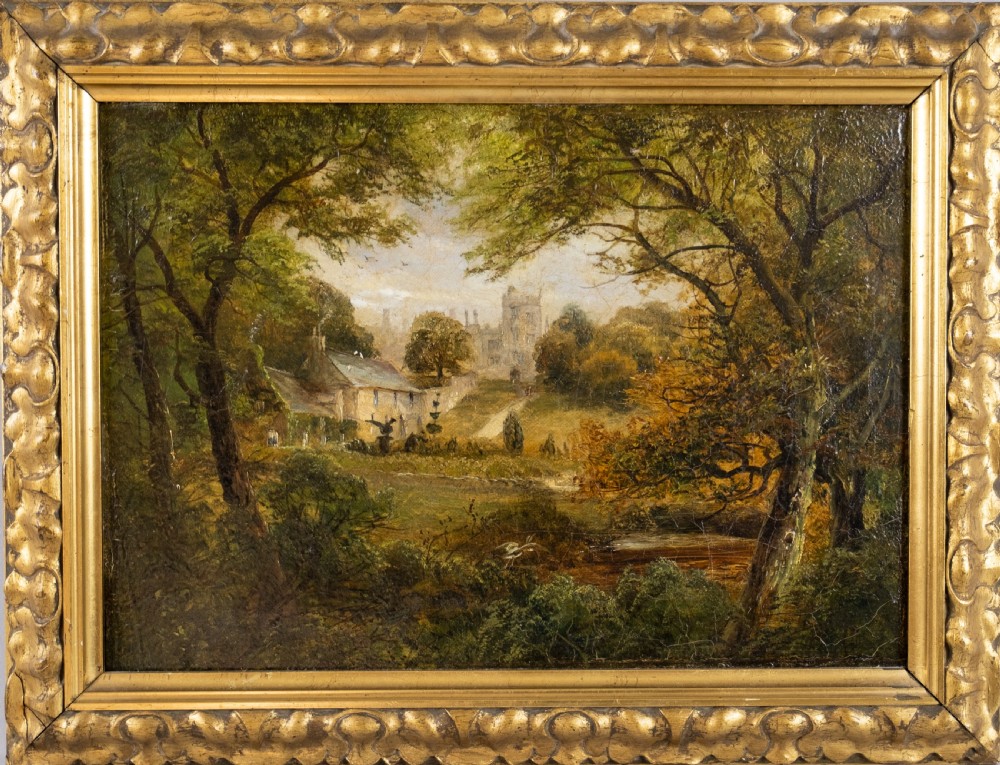
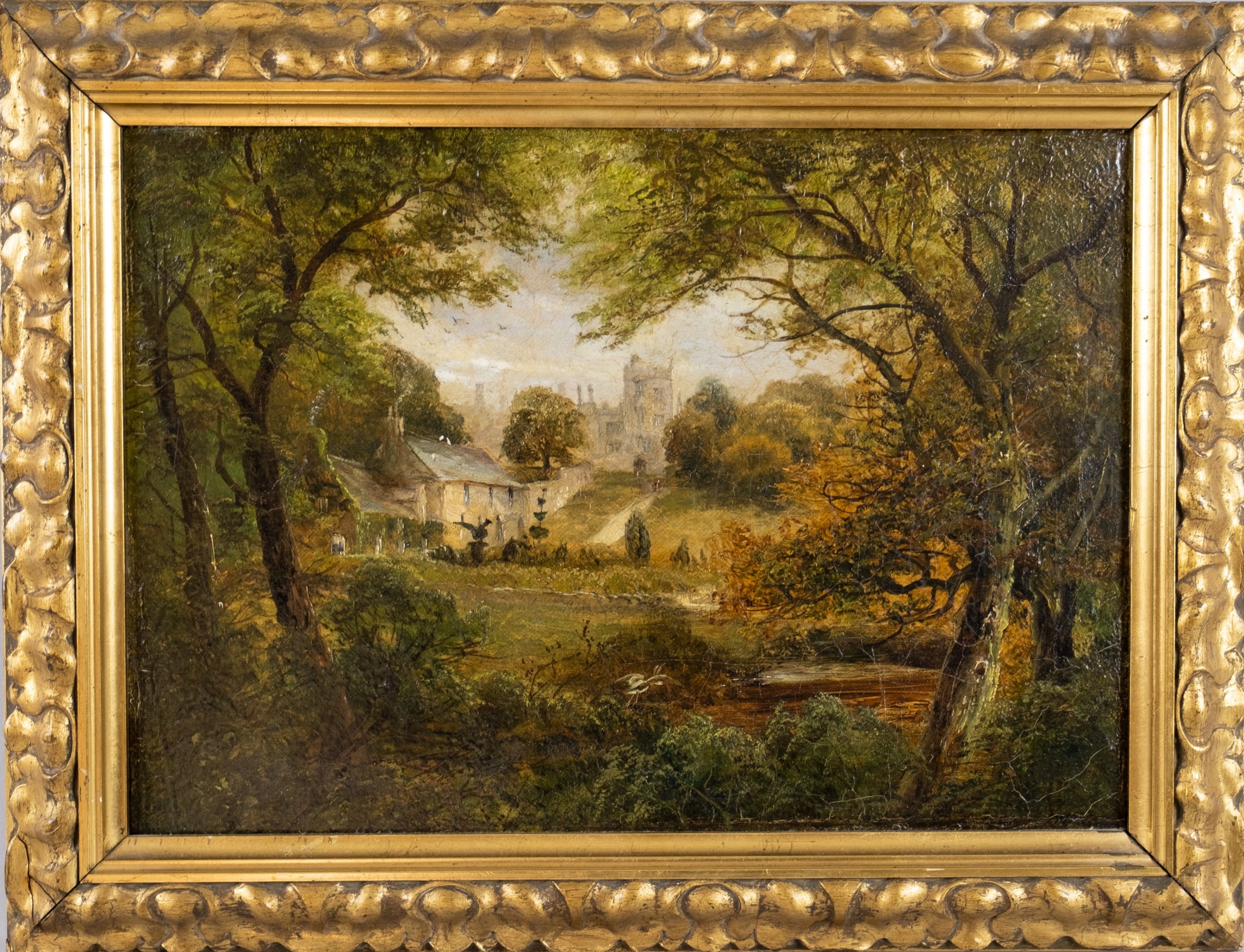
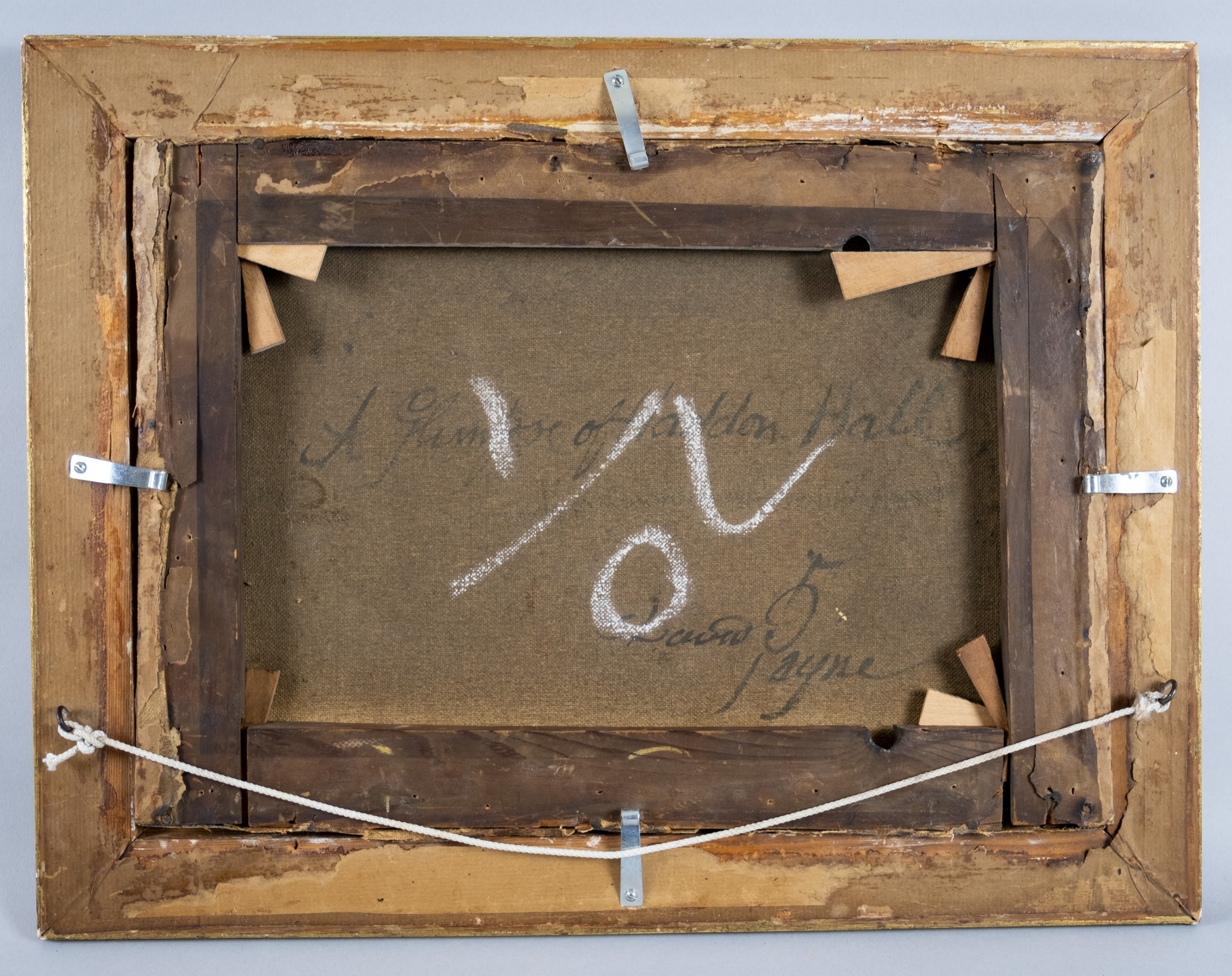
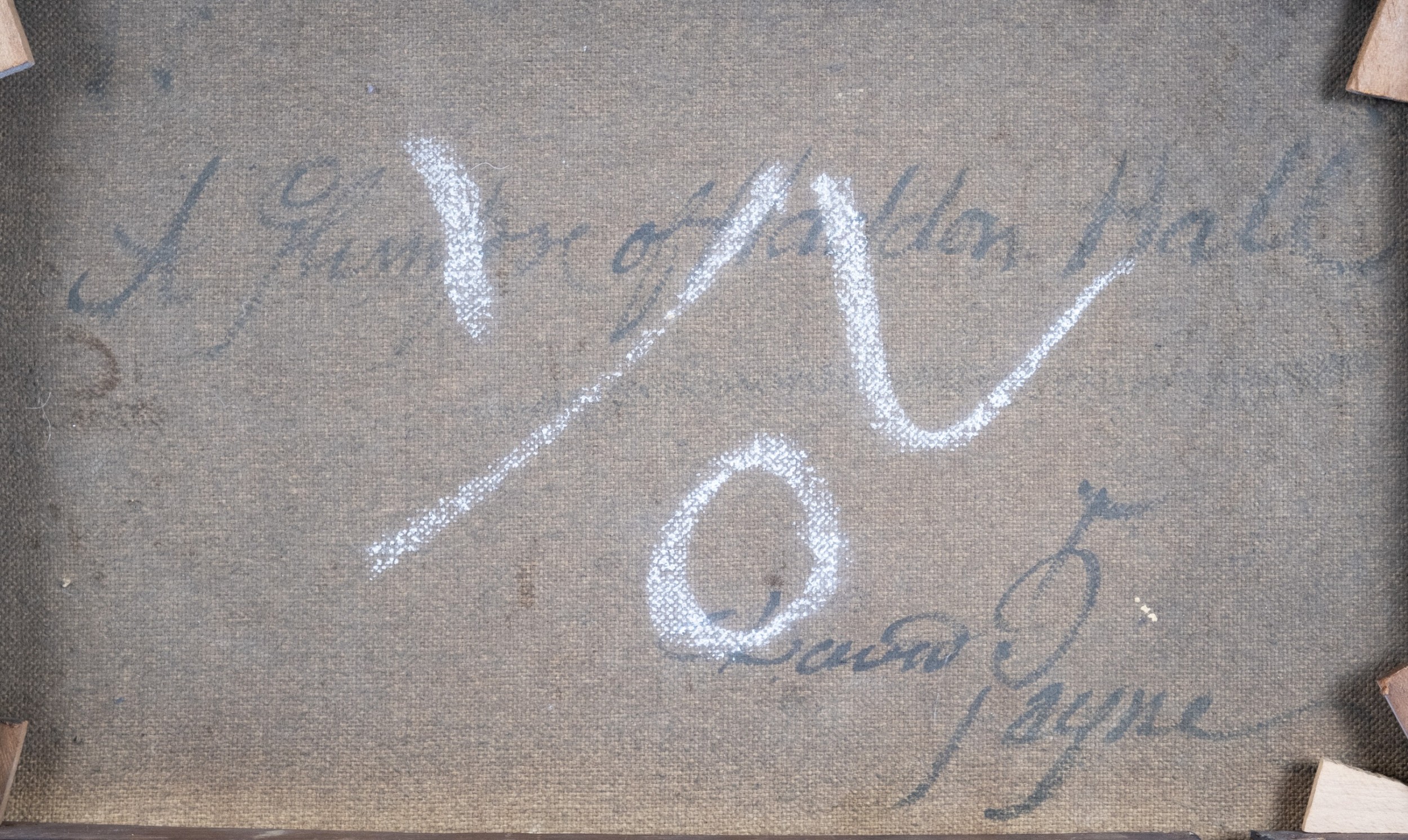
David Payne (1843-1894) 'A Glimpse of Haddon Hall'. Signed Verso. Oil on Canvas.