53,981  PAGES BROWSED TODAY PAGES TODAY 103  ANTIQUES UPLOADED TODAY NEW ARRIVALS
ID #SA486029
FOR SALE
£3,500
Email
Save
English School 19th, Century portrait of Catherine Hutton 1756 – 1846, Was an English Novelist and Letter-writer
Artware Fineart
for sale €4,095     $4,445
£3,500

Artware Fineart

Sellingantiques Verified Since Sep 2008
View Dealers Stock Page
Id #SA486029
PDF SHARE
SAVE

English School 19th, Century portrait of Catherine Hutton 1756 – 1846, Was an English Novelist and Letter-writer

19th century
For Sale by Artware Fineart
Description

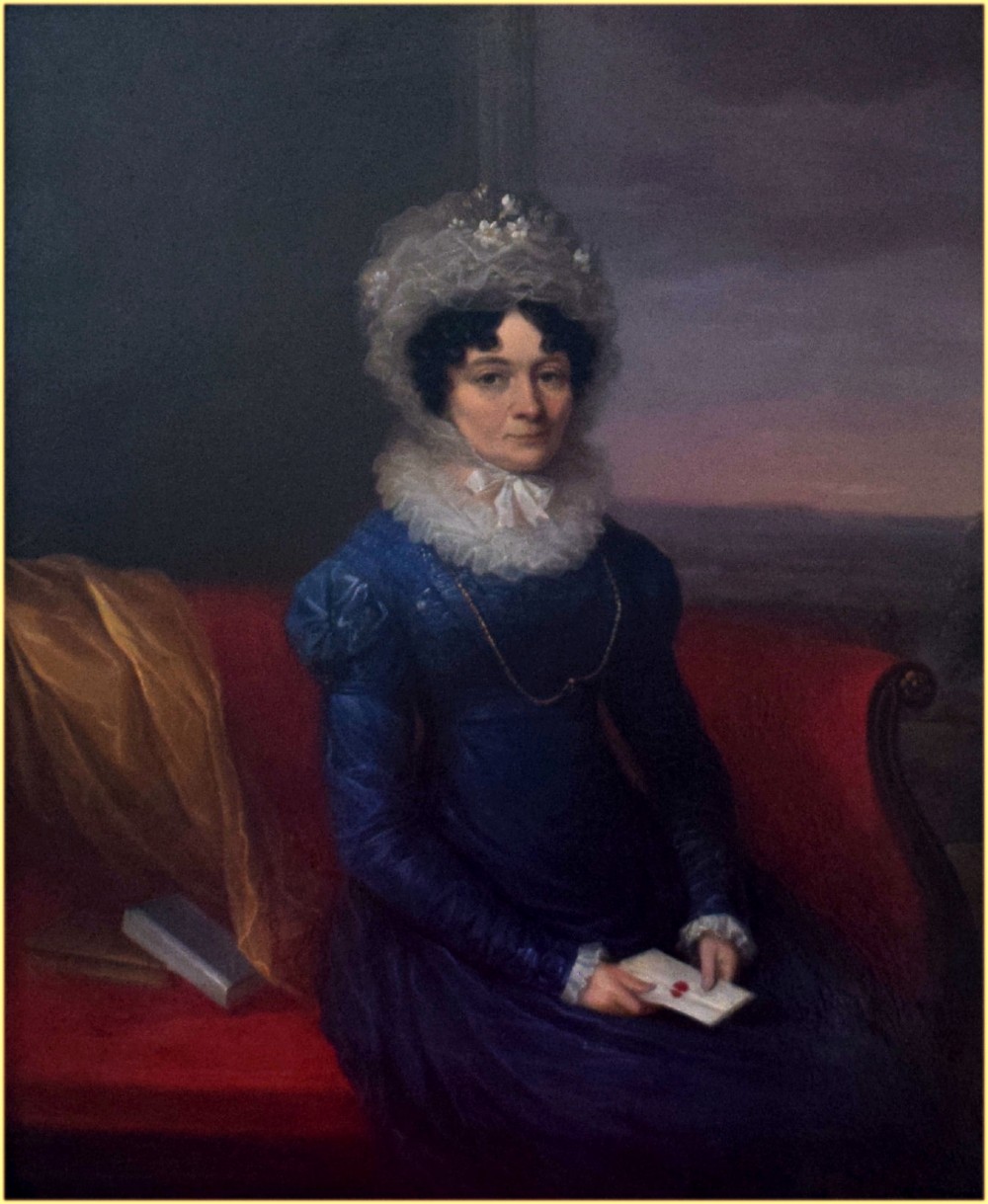
English School 19th, Century

Portrait of Catherine Hutton 1756 – 1846, was an English novelist and letter-writer

oil on copper

11 x 9.3/4in. (28 x 24.38 cm.)

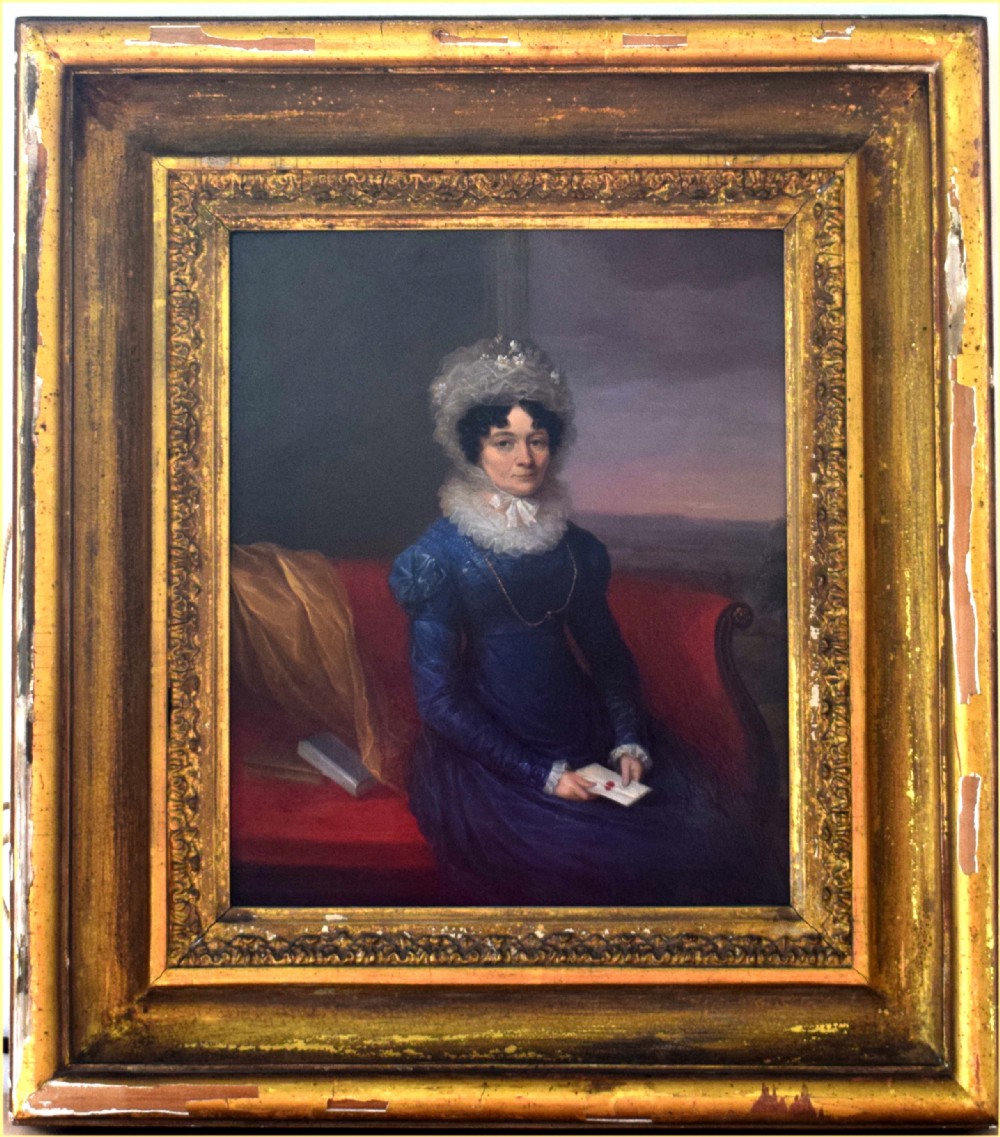
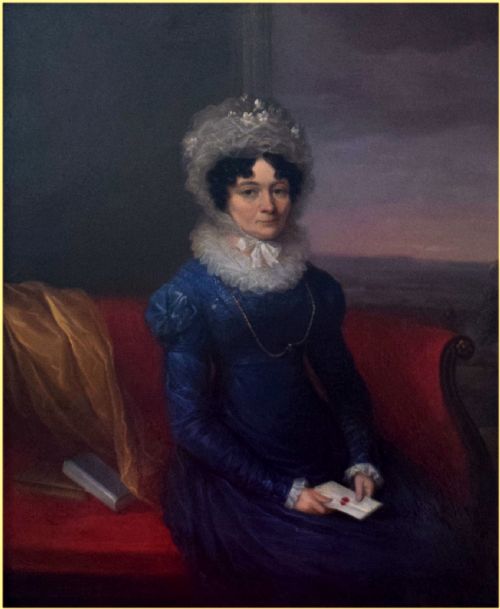
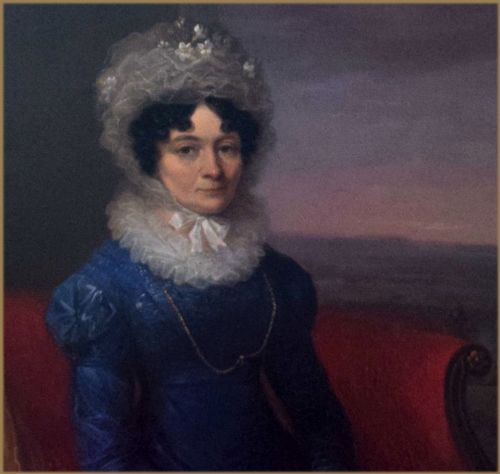
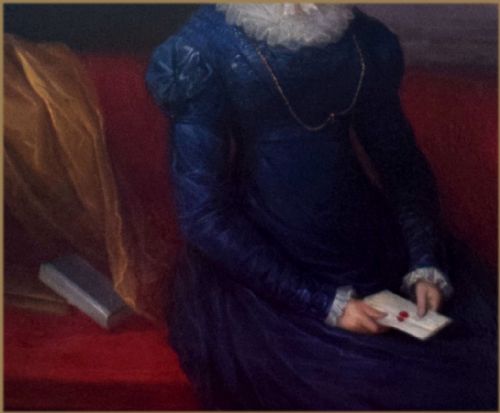
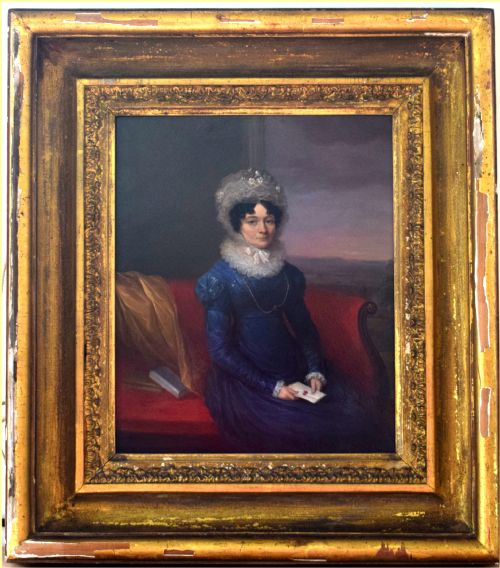
Catherine Hutton seated on a sofa holding a sealed letter with books beside her.
Provenance

The Hutton Family of Gate Burton

Notes

Catherine Hutton (11 February 1756 – 13 March 1846) was an English novelist and letter-writer.

Hutton, Catherine (1756–1846), novelist and letter-writer, was born on 11 February 1756, probably in Birmingham, the only surviving daughter of William Hutton (1723–1815), a Birmingham-based bookseller and topographer, and his wife, Sarah Cock (1731–1796). The family was a close and affectionate one, and, although she was tempted to marry, filial devotion prevented Catherine Hutton from ever leaving home. She nursed her mother through five years of illness before her death, and continued to care for her father in his old age. He repaid her with admiring sympathy: in his autobiographical Life, he praised both her character—she was ‘incapable of an ill-natured speech’—and her abilities—‘whatever lies within the bounds of female reach she ventures to undertake, and whatever she undertakes succeeds’ (Jewitt, 45).
From the ages of seven to fourteen Catherine Hutton attended an undistinguished day school in Birmingham; subsequently, she hoped to attend a boarding-school in Worcester, but was prevented by her father, and continued her own education at home. In Birmingham, she was in the midst of a stimulating scientific, intellectual, and religious community: her father, the author of a history of Birmingham, promoted the development of education and science in the city and, as a Unitarian, moved in progressive dissenting circles. Catherine herself joined Joseph Priestley's congregation in the 1780s, and became a friend of the radical novelist Robert Bage. The confidence of both Catherine Hutton and her contemporaries was, however, severely dented by the 1791 Birmingham Church and King riots: rioters attacked both William Hutton's town house and business, and his country house on the outskirts of Birmingham at Bennett's Hill, Washwood Heath.
From an early age, Catherine Hutton was a keen letter-writer. The Coltman family of Leicester and Mrs Andre of Enfield, Middlesex, were lifelong correspondents. She also wrote to her cousin the mathematician Charles Hutton (1737–1823), Sarah Harriet Burney (Fanny Burney's half-sister), the radical author Sir Richard Phillips, Eliza Cook, and, latterly, Edward Bulwer Lytton, and Charles Dickens. Her letters are full of anecdotes and shrewd observations on her acquaintance and are seasoned with a self-deprecating wit, their direct address and dry cheerfulness recalling the epistolary style of Jane Austen. Hutton delighted in Austen's novels, and believed that ‘her character is either something like mine, or what I would wish mine to be’ (Reminiscences, 183).
In 1778 Catherine Hutton visited London (the first of twenty-six visits) and became a keen tourist, travelling throughout England and Wales in the course of her life. Although she described herself as ‘a worshipper of mountains’ (Reminiscences, 118), her reflections were not limited to romantic commonplaces. She commented on the condition of inns and boarding-houses and the eccentricities of her fellow guests, and she visited industrial towns, factories, and (in 1801) a slave ship in Liverpool. Her observations were characteristically frank. She described Aberystwyth, which she visited in 1787, as ‘a poor, petty place’, uninfluenced by having received two proposals of marriage during her stay (ibid., 52). The spa town of Malvern, which she first visited in 1802, was more to her taste; she revisited it annually for the next thirty-two years.

In 1813 Catherine Hutton published The Miser Married: a Novel, which she dedicated to her fa

Physical Dimensions
Height
28cm (11.02")
Width
25cm (9.84")
Depth
3cm (1.18")
Declaration

Artware Fineart has dated this 19th Century Portrait Painting to the 19th Century.

Reference Numbers
Sellingantiques Reference
SA486029
Dealers Internal Reference
3907
Description
English School 19th, Century

Portrait of Catherine Hutton 1756 – 1846, was an English novelist and letter-writer

oil on copper

11 x 9.3/4in. (28 x 24.38 cm.)

Catherine Hutton seated on a sofa holding a sealed letter with books beside her.

fig 1. An antique nineteenth-century portrait painting depicting a seated woman in a deep blue dress and lace bonnet holding a letter.
fig 1. English School 19th, Century portrait of Catherine Hutton 1756 – 1846, Was an English Novelist and Letter-writer

Provenance

The Hutton Family of Gate Burton

Notes

Catherine Hutton (11 February 1756 – 13 March 1846) was an English novelist and letter-writer.

Hutton, Catherine (1756–1846), novelist and letter-writer, was born on 11 February 1756, probably in Birmingham, the only surviving daughter of William Hutton (1723–1815), a Birmingham-based bookseller and topographer, and his wife, Sarah Cock (1731–1796).

The family was a close and affectionate one, and, although she was tempted to marry, filial devotion prevented Catherine Hutton from ever leaving home.
Artware Fineart

She nursed her mother through five years of illness before her death, and continued to care for her father in his old age. He repaid her with admiring sympathy: in his autobiographical Life, he praised both her character—she was ‘incapable of an ill-natured speech’—and her abilities—‘whatever lies within the bounds of female reach she ventures to undertake, and whatever she undertakes succeeds’ (Jewitt, 45).

fig 2. An antique nineteenth-century portrait painting depicting a seated woman in a deep blue dress and lace bonnet holding a letter.
fig 2. English School 19th, Century portrait of Catherine Hutton 1756 – 1846, Was an English Novelist and Letter-writer

From the ages of seven to fourteen Catherine Hutton attended an undistinguished day school in Birmingham; subsequently, she hoped to attend a boarding-school in Worcester, but was prevented by her father, and continued her own education at home. In Birmingham, she was in the midst of a stimulating scientific, intellectual, and religious community: her father, the author of a history of Birmingham, promoted the development of education and science in the city and, as a Unitarian, moved in progressive dissenting circles. Catherine herself joined Joseph Priestley's congregation in the 1780s, and became a friend of the radical novelist Robert Bage. The confidence of both Catherine Hutton and her contemporaries was, however, severely dented by the 1791 Birmingham Church and King riots: rioters attacked both William Hutton's town house and business, and his country house on the outskirts of Birmingham at Bennett's Hill, Washwood Heath.

fig 3. An antique nineteenth-century portrait painting depicting a seated woman in a deep blue dress and lace bonnet holding a letter.
fig 3. English School 19th, Century portrait of Catherine Hutton 1756 – 1846, Was an English Novelist and Letter-writer

From an early age, Catherine Hutton was a keen letter-writer. The Coltman family of Leicester and Mrs Andre of Enfield, Middlesex, were lifelong correspondents. She also wrote to her cousin the mathematician Charles Hutton (1737–1823), Sarah Harriet Burney (Fanny Burney's half-sister), the radical author Sir Richard Phillips, Eliza Cook, and, latterly, Edward Bulwer Lytton, and Charles Dickens. Her letters are full of anecdotes and shrewd observations on her acquaintance and are seasoned with a self-deprecating wit, their direct address and dry cheerfulness recalling the epistolary style of Jane Austen. Hutton delighted in Austen's novels, and believed that ‘her character is either something like mine, or what I would wish mine to be’ (Reminiscences, 183).

fig 4. An antique nineteenth-century portrait painting depicting a seated woman in a deep blue dress and lace bonnet holding a letter.
fig 4. English School 19th, Century portrait of Catherine Hutton 1756 – 1846, Was an English Novelist and Letter-writer

In 1778 Catherine Hutton visited London (the first of twenty-six visits) and became a keen tourist, travelling throughout England and Wales in the course of her life. Although she described herself as ‘a worshipper of mountains’ (Reminiscences, 118), her reflections were not limited to romantic commonplaces. She commented on the condition of inns and boarding-houses and the eccentricities of her fellow guests, and she visited industrial towns, factories, and (in 1801) a slave ship in Liverpool. Her observations were characteristically frank. She described Aberystwyth, which she visited in 1787, as ‘a poor, petty place’, uninfluenced by having received two proposals of marriage during her stay (ibid., 52). The spa town of Malvern, which she first visited in 1802, was more to her taste; she revisited it annually for the next thirty-two years.

In 1813 Catherine Hutton published The Miser Married: a Novel, which she dedicated to her fa

Height
28cm (11.02")
Width
25cm (9.84")
Depth
3cm (1.18")
Date of Manufacture

Artware Fineart has dated this 19th Century Portrait Painting to the 19th Century.

Reference Numbers
Sellingantiques Ref
SA486029
Dealers Internal Ref
3907
Artware Fineart
Sellingantiques verified Since Sep 2008
Dealer Profile

You can view the stock and full dealer information on the Artware Fineart Profile Page

PDF SHARE
SAVE
An antique nineteenth-century portrait painting depicting a seated woman in a deep blue dress and lace bonnet holding a letter.
1 / 5
Archive I An antique nineteenth-century portrait painting depicting a seated woman in a deep blue dress and lace bonnet holding a letter.

English School 19th, Century portrait of Catherine Hutton 1756 – 1846, Was an English Novelist and Letter-writer
Archive II An antique nineteenth-century portrait painting depicting a seated woman in a deep blue dress and lace bonnet holding a letter. View II
Archive III An antique nineteenth-century portrait painting depicting a seated woman in a deep blue dress and lace bonnet holding a letter. View III
Archive IV An antique nineteenth-century portrait painting depicting a seated woman in a deep blue dress and lace bonnet holding a letter. View IV
Archive V An antique nineteenth-century portrait painting depicting a seated woman in a deep blue dress and lace bonnet holding a letter. View V
FURTHER BROWSING

Visitors also looked at these ⇣

Enlarged Archival View
Telephone 07958 699 645
Location
18 La Gare
51 Surrey Row
London
SE1 0BZ
United Kingdom
Verified Since Sep 2008
Items For Sale 243
Items Sold 223
Artware Fineart
Verified Since Sep 2008
View Dealer Info
Location: 18 La Gare , 51 Surrey Row , London , SE1 0BZ , United Kingdom
Verified
Sep 2008
For Sale
243
Sold
223
An antique nineteenth-century portrait painting depicting a seated woman in a deep blue dress and lace bonnet holding a letter.
English School 19th, Century Portrait of Catherine Hutton 1756 – 1846, was an English novelist and letter-writer
Ref: SA486029
An antique nineteenth-century portrait painting depicting a seated woman in a deep blue dress and lace bonnet holding a letter.
Detail View 1
Detail View 2
Detail View 3
Detail View 4
Archival Detail
Every single antique dealer on our platform is individually approved by our internal team. We verify their professional trade history, ethical standards, and photographic quality to ensure a secure, high-standard buying environment. Upon joining, every dealer agrees to a strict 9-point code of conduct. While issues can occasionally arise, our dealers typically resolve them swiftly and directly with the buyer. In fact, since our founding in 2002, Sellingantiques has only had to step in to help resolve an issue on roughly five occasions—a true testament to the quality of our dealers and their dedication to your happiness.
Our dealers are highly experienced in packing and shipping fragile, high-value antiques. Because you are in direct contact with the dealer, you will be able to easily go through all available shipping and insurance options together to ensure your item arrives safely.
Antiques are the ultimate green purchase. By choosing historical pieces over newly manufactured goods, you completely eliminate the carbon footprint of modern mass production while preserving exceptional, timeless craftsmanship.

British portraiture of the 19th century, particularly during the Regency and early Victorian eras, emphasised formal composure, detailed costume, and symbolic props such as books or letters to reflect the subjects intellect and status.

These portraits were typically created using oil pigments bound with drying oils on stretched linen canvases or wooden panels, occasionally protected with natural resin varnishes.

Authentic period oil paintings display natural aging indicators, including fine surface craquelure, stretcher bar impressions along the canvas edges, and historic pigment tones consistent with the period.

A period oil portrait serves as a strong visual anchor when hung above a sideboard, fireplace mantel, or positioned within a curated gallery wall to balance modern furnishings with historical texture.

Display oil paintings away from direct sunlight, radiators, and high humidity, dusting the surface gently with a soft camel-hair brush rather than liquid cleaners.
items
Add keywords to the filter
Price
£100
£250000
Era
Movements
Material
Origin
Stock Location
Freshness
Online Payments
Categories