20,698  PAGES BROWSED TODAY PAGES TODAY 71  ANTIQUES UPLOADED TODAY NEW ARRIVALS
ID #SA299628
FOR SALE
£9,500
Email
Save
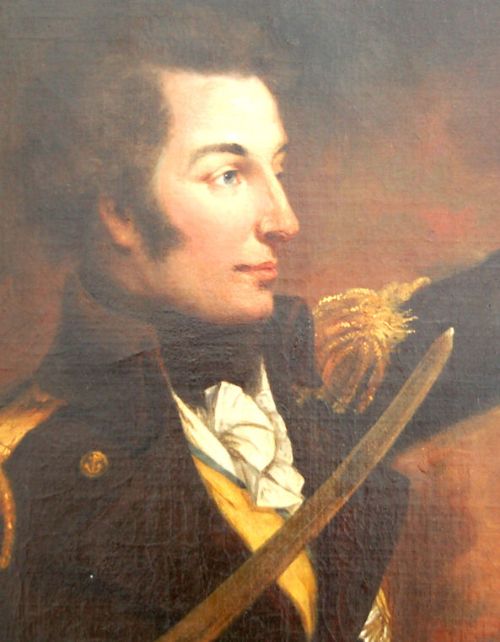
Robert Ker Porter 1777 -1842 Portrait of Admiral Sir William Sidney Smith 1764-1840, Holding a Sword and a Torch
Artware Fineart
for sale €11,115     $12,065
£9,500

Artware Fineart

Sellingantiques Verified Since Sep 2008
View Dealers Stock Page
Id #SA299628
PDF SHARE
SAVE

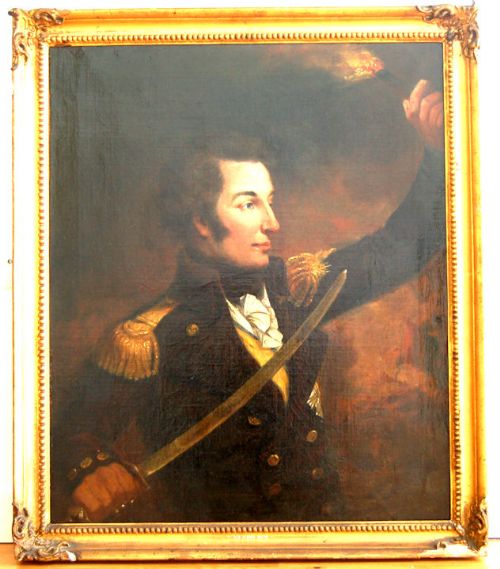
Robert Ker Porter 1777 -1842 Portrait of Admiral Sir William Sidney Smith 1764-1840, Holding a Sword and a Torch

19th century
For Sale by Artware Fineart
Description

Robert Ker Porter 1777 -1842

Portrait of Admiral Sir William Sidney Smith 1764-1840, Holding a Sword and a Torch

30 x 25 in. (76 x 64 cm.)

The Portrait refers to Admiral Sir William Smiths heroic command at the Siege of Acre in March 1799, when he and a crew of Levantines under his command resisted successfully against Napoleon having captured Napoleons guns being convoyed up the coast, and mounted them on the walls against Napoleon. He held Acre for 2 1/2 months eventually being relieved. It was this action that made his name. Smith, Sir (William) Sidney (1764–1840), naval officer, was born on 21 June 1764 in Park Lane, London, the second son of John Smith of Midgham, Berkshire, a captain in the guards and gentleman-usher to Queen Charlotte, wife of George III; he was also grandson of Edward Smith, an army officer who was governor of Fort Charles at Kingston, Jamaica, and fought under Wolfe at Quebec. Another relation named Edward had been a captain in the navy who, in command of the Eltham, was killed in the attack on La Guayra on 18 February 1743. Sidney Smith's mother was the daughter of Mary Thurlow, a Norfolk heiress, and Pinckney Wilkinson, a London merchant, who regarded John Smith as an adventurer but was unable to prevent his daughter eloping with him in 1760. They had two other sons: Charles Douglas and John Spencer. Wilkinson disinherited his daughter and severed all connection with her and her three sons. However, Wilkinson's younger daughter Ann had married Thomas Pitt, first Baron Camelford, and, persuaded by him, Wilkinson relented sufficiently to pay for his grandsons' education at Tonbridge School. John Smith and his wife then quarrelled and she fled to Bath, near where the boys completed their education at a boarding-school, but stayed with their father occasionally in Midgham Cottage in the grounds of Midgham Hall, near Newbury, Berkshire. There Sidney Smith was first observed to be vivacious, quick, daring, and mercurial. Smith entered the navy in June 1777 on board the storeship Tortoise, going out to North America, and in January 1778 moved to the brig Unicorn, which with the 44 gun Experiment in September 1778 captured the 32 gun American frigate Raleigh. On 25 November 1779 he joined the Sandwich, flagship of Sir George Bridges Rodney, and in her was at an engagement with a Spanish squadron off Cape St Vincent in January 1780, and at those between the British and French fleets on 17 April and 15 and 19 May 1780. Having passed his examination for lieutenant, in September 1780 Smith was appointed in this rank to the Alcide and in her was present off the Chesapeake in September 1781 at Admiral Graves's unsuccessful attempt to relieve the British army at Yorktown, and at the battle of the Saintes in April 1782. In May 1782 he was appointed to command the sloop Fury and in May 1783 was promoted to the 32 gun Alcmene. At the return of peace, when the Alcmene was paid off, Smith lived for two years in France, for the most part near Caen, and in 1787 travelled through Spain to Gibraltar and Morocco, where, in expectation of future hostilities, he took deliberate note of the sultan's naval forces and bases, then reported on them to the Admiralty. In 1789 Smith obtained a further six months' leave from the Admiralty to travel to Sweden and Russia, then at war. At the Swedish naval base of Karlskrona he was offered employment in the Swedish navy and, though he had as a condition of his leave agreed to forgo any such opportunity, he returned to London to request that his undertaking be waived, carrying the British ambassador's dispatches and a message from the Swedish king Gustavus III. He and his request were ignored; Smith returned to Sweden and travelled on to the Gulf of Finland, where the summer campaigning season of 1790 had begun, and where, despite his undertaking, he agreed to serve Gus

Physical Dimensions
Height
84cm (33.07")
Width
72cm (28.35")
Depth
4cm (1.57")
Declaration

Artware Fineart has dated this Antique Military Portrait Painting to the 19th Century.

Reference Numbers
Sellingantiques Reference
SA299628
Dealers Internal Reference
3651
Description
Robert Ker Porter 1777 -1842

Portrait of Admiral Sir William Sidney Smith 1764-1840, Holding a Sword and a Torch

30 x 25 in. (76 x 64 cm.)

The Portrait refers to Admiral Sir William Smiths heroic command at the Siege of Acre in March 1799, when he and a crew of Levantines under his command resisted successfully against Napoleon having captured Napoleons guns being convoyed up the coast, and mounted them on the walls against Napoleon. He held Acre for 2 1/2 months eventually being relieved. It was this action that made his name. Smith, Sir (William) Sidney (1764–1840), naval officer, was born on 21 June 1764 in Park Lane, London, the second son of John Smith of Midgham, Berkshire, a captain in the guards and gentleman-usher to Queen Charlotte, wife of George III; he was also grandson of Edward Smith, an army officer who was governor of Fort Charles at Kingston, Jamaica, and fought under Wolfe at Quebec.

Another relation named Edward had been a captain in the navy who, in command of the Eltham, was killed in the attack on La Guayra on 18 February 1743.
Artware Fineart

Sidney Smith's mother was the daughter of Mary Thurlow, a Norfolk heiress, and Pinckney Wilkinson, a London merchant, who regarded John Smith as an adventurer but was unable to prevent his daughter eloping with him in 1760. They had two other sons: Charles Douglas and John Spencer. Wilkinson disinherited his daughter and severed all connection with her and her three sons. However, Wilkinson's younger daughter Ann had married Thomas Pitt, first Baron Camelford, and, persuaded by him, Wilkinson relented sufficiently to pay for his grandsons' education at Tonbridge School. John Smith and his wife then quarrelled and she fled to Bath, near where the boys completed their education at a boarding-school, but stayed with their father occasionally in Midgham Cottage in the grounds of Midgham Hall, near Newbury, Berkshire. There Sidney Smith was first observed to be vivacious, quick, daring, and mercurial. Smith entered the navy in June 1777 on board the storeship Tortoise, going out to North America, and in January 1778 moved to the brig Unicorn, which with the 44 gun Experiment in September 1778 captured the 32 gun American frigate Raleigh. On 25 November 1779 he joined the Sandwich, flagship of Sir George Bridges Rodney, and in her was at an engagement with a Spanish squadron off Cape St Vincent in January 1780, and at those between the British and French fleets on 17 April and 15 and 19 May 1780. Having passed his examination for lieutenant, in September 1780 Smith was appointed in this rank to the Alcide and in her was present off the Chesapeake in September 1781 at Admiral Graves's unsuccessful attempt to relieve the British army at Yorktown, and at the battle of the Saintes in April 1782. In May 1782 he was appointed to command the sloop Fury and in May 1783 was promoted to the 32 gun Alcmene. At the return of peace, when the Alcmene was paid off, Smith lived for two years in France, for the most part near Caen, and in 1787 travelled through Spain to Gibraltar and Morocco, where, in expectation of future hostilities, he took deliberate note of the sultan's naval forces and bases, then reported on them to the Admiralty. In 1789 Smith obtained a further six months' leave from the Admiralty to travel to Sweden and Russia, then at war. At the Swedish naval base of Karlskrona he was offered employment in the Swedish navy and, though he had as a condition of his leave agreed to forgo any such opportunity, he returned to London to request that his undertaking be waived, carrying the British ambassador's dispatches and a message from the Swedish king Gustavus III. He and his request were ignored; Smith returned to Sweden and travelled on to the Gulf of Finland, where the summer campaigning season of 1790 had begun, and where, despite his undertaking, he agreed to serve Gus

Height
84cm (33.07")
Width
72cm (28.35")
Depth
4cm (1.57")
Date of Manufacture

Artware Fineart has dated this Antique Military Portrait Painting to the 19th Century.

Reference Numbers
Sellingantiques Ref
SA299628
Dealers Internal Ref
3651
Artware Fineart
Sellingantiques verified Since Sep 2008
Dealer Profile

You can view the stock and full dealer information on the Artware Fineart Profile Page

PDF SHARE
SAVE
An antique oil painting depicting a military naval officer in uniform holding a sword and a lit torch aloft against a dark background.
1 / 4
Archive I An antique oil painting depicting a military naval officer in uniform holding a sword and a lit torch aloft against a dark background.

Robert Ker Porter 1777 -1842 Portrait of Admiral Sir William Sidney Smith 1764-1840, Holding a Sword and a Torch
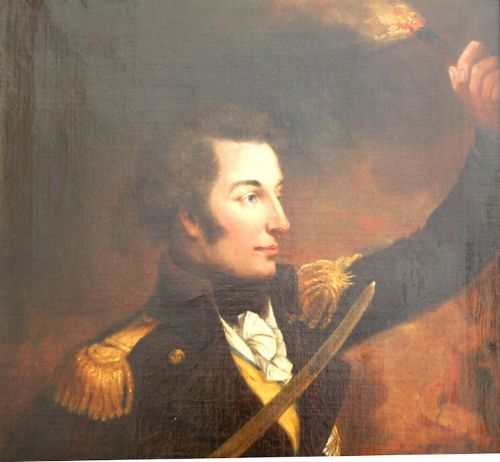
Archive II An antique oil painting depicting a military naval officer in uniform holding a sword and a lit torch aloft against a dark background. View II
Archive III An antique oil painting depicting a military naval officer in uniform holding a sword and a lit torch aloft against a dark background. View III
Archive IV An antique oil painting depicting a military naval officer in uniform holding a sword and a lit torch aloft against a dark background. View IV
FURTHER BROWSING

Visitors also looked at these ⇣

Enlarged Archival View
Telephone 07958 699 645
Location
18 La Gare
51 Surrey Row
London
SE1 0BZ
United Kingdom
Verified Since Sep 2008
Items For Sale 243
Items Sold 223
Artware Fineart
Verified Since Sep 2008
View Dealer Info
Location: 18 La Gare , 51 Surrey Row , London , SE1 0BZ , United Kingdom
Verified
Sep 2008
For Sale
243
Sold
223
An antique oil painting depicting a military naval officer in uniform holding a sword and a lit torch aloft against a dark background.
Robert Ker Porter 1777 -1842 Portrait of Admiral Sir William Sidney Smith 1764-1840, Holding a Sword and a Torch
Ref: SA299628
An antique oil painting depicting a military naval officer in uniform holding a sword and a lit torch aloft against a dark background.
Detail View 1
Detail View 2
Detail View 3
Archival Detail
Every single antique dealer on our platform is individually approved by our internal team. We verify their professional trade history, ethical standards, and photographic quality to ensure a secure, high-standard buying environment. Upon joining, every dealer agrees to a strict 9-point code of conduct. While issues can occasionally arise, our dealers typically resolve them swiftly and directly with the buyer. In fact, since our founding in 2002, Sellingantiques has only had to step in to help resolve an issue on roughly five occasions—a true testament to the quality of our dealers and their dedication to your happiness.
Our dealers are highly experienced in packing and shipping fragile, high-value antiques. Because you are in direct contact with the dealer, you will be able to easily go through all available shipping and insurance options together to ensure your item arrives safely.
Antiques are the ultimate green purchase. By choosing historical pieces over newly manufactured goods, you completely eliminate the carbon footprint of modern mass production while preserving exceptional, timeless craftsmanship.

Georgian military portraiture often depicts high-ranking officers in formal uniforms, incorporating dramatic lighting, heroic postures, and symbolic items such as swords or torches to signify leadership and naval strength during period conflicts.

Artists during this era typically painted using natural earth pigments suspended in linseed or walnut oil, applied directly onto hand-stretched linen or cotton canvas stretched over wooden frames.

Authentic period paintings display natural craquelure patterns across the paint surface, age-related darkening or yellowing of historic varnish layers, and evidence of hand-hewn wooden stretcher bars on the reverse.

A historical oil portrait can serve as a striking focal point above a fireplace mantelpiece, sideboard, or within a dark-panelled library, creating visual contrast when paired with contemporary neutral furnishings.

Keep the canvas away from direct sunlight, extreme temperature fluctuations, and high humidity. Cleaning should strictly be conducted by a qualified conservator to prevent stripping historic glazes or varnish.
items
Add keywords to the filter
Price
£100
£250000
Era
Movements
Material
Origin
Stock Location
Freshness
Online Payments
Categories