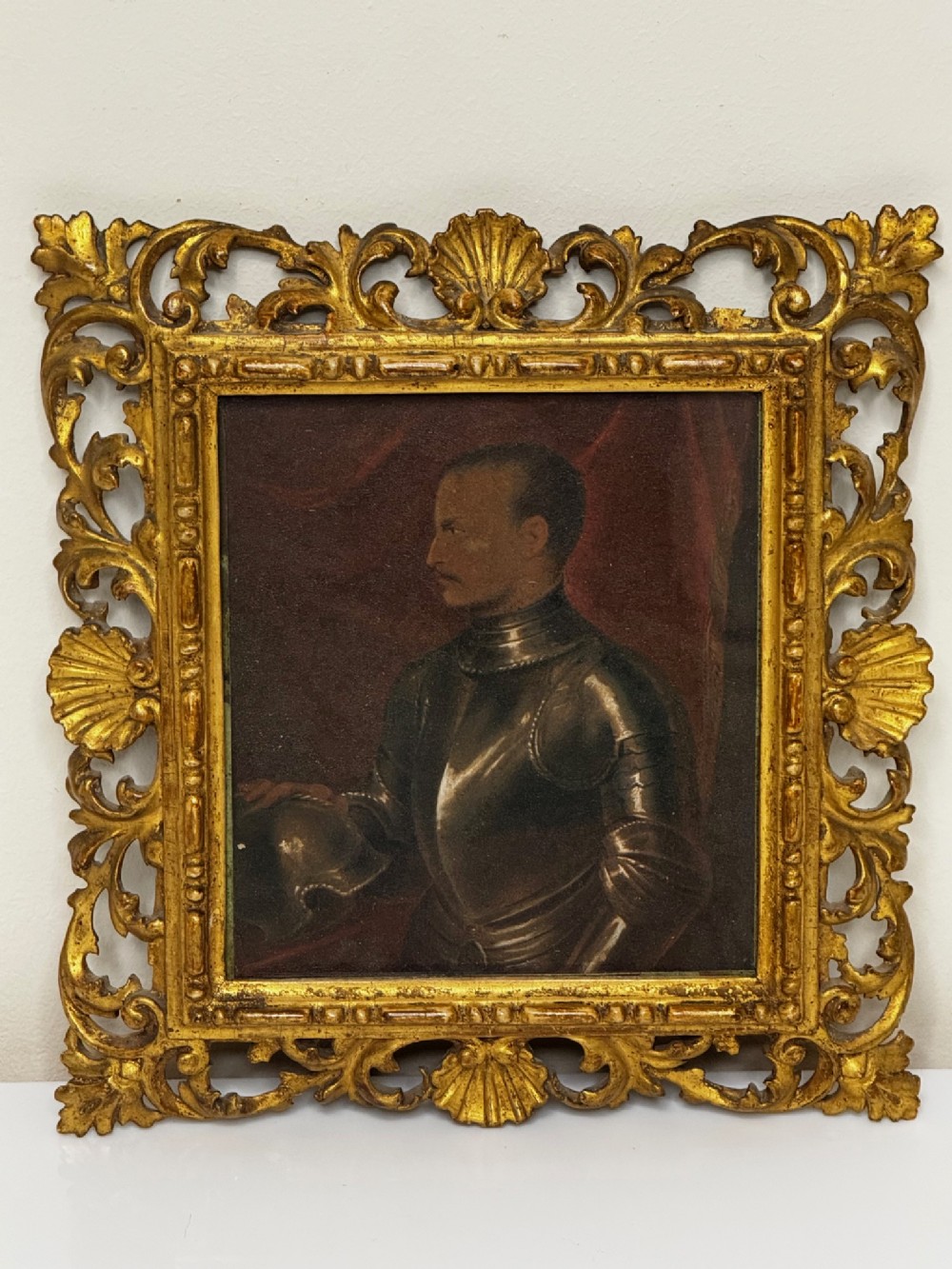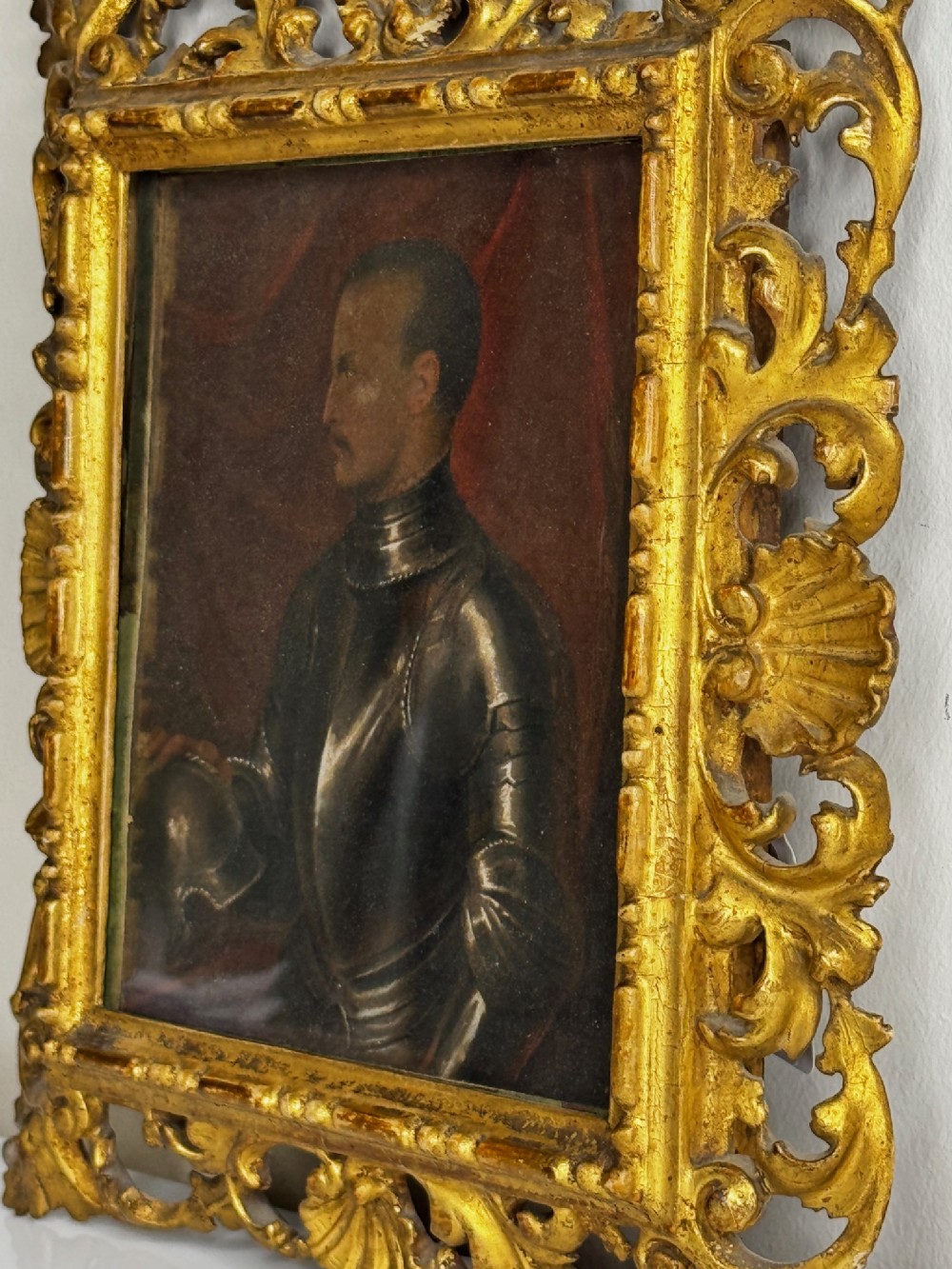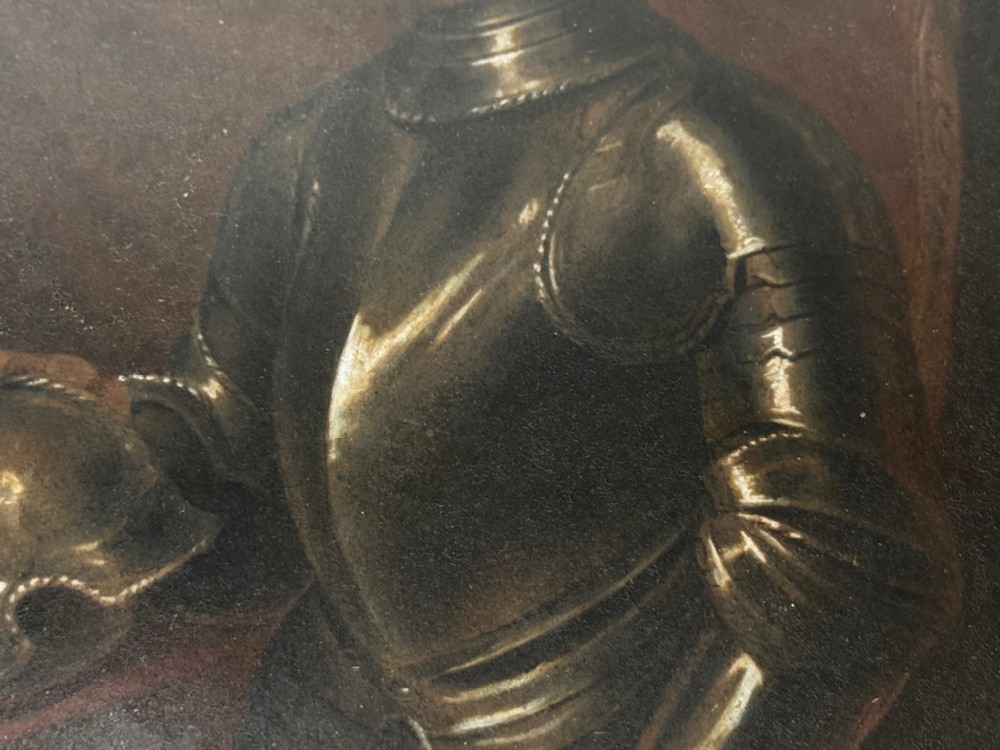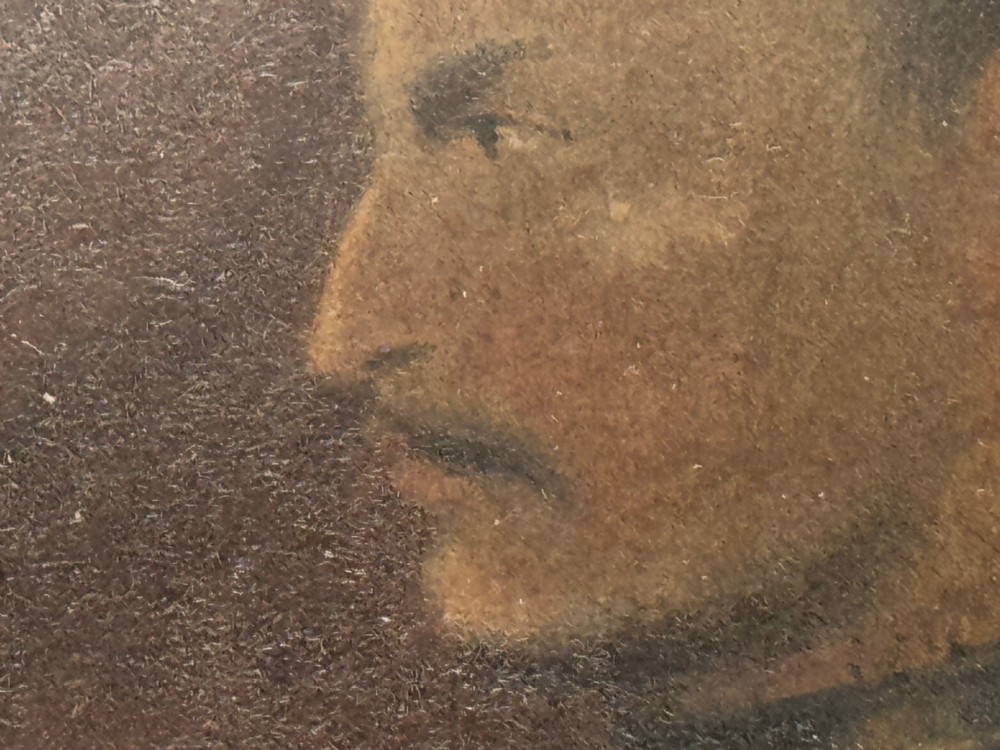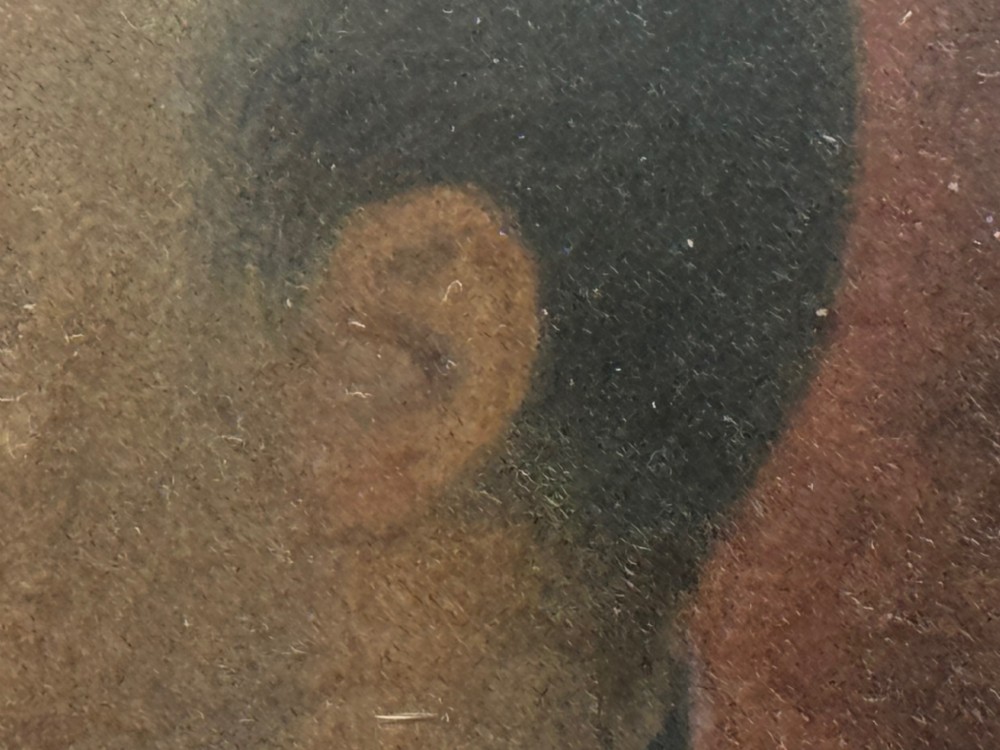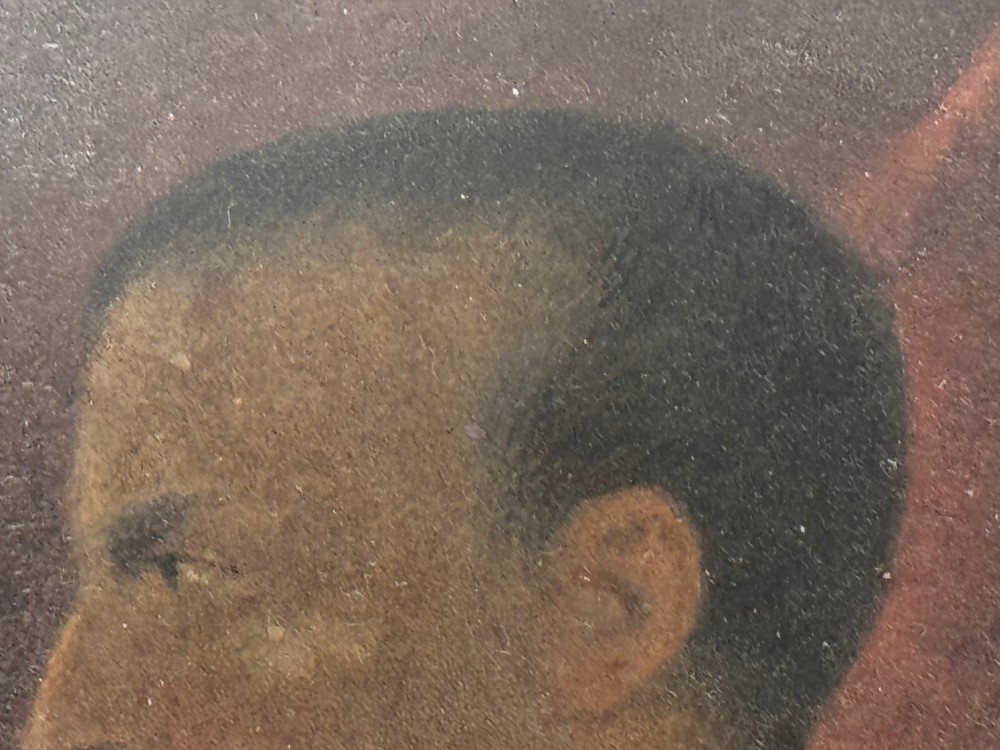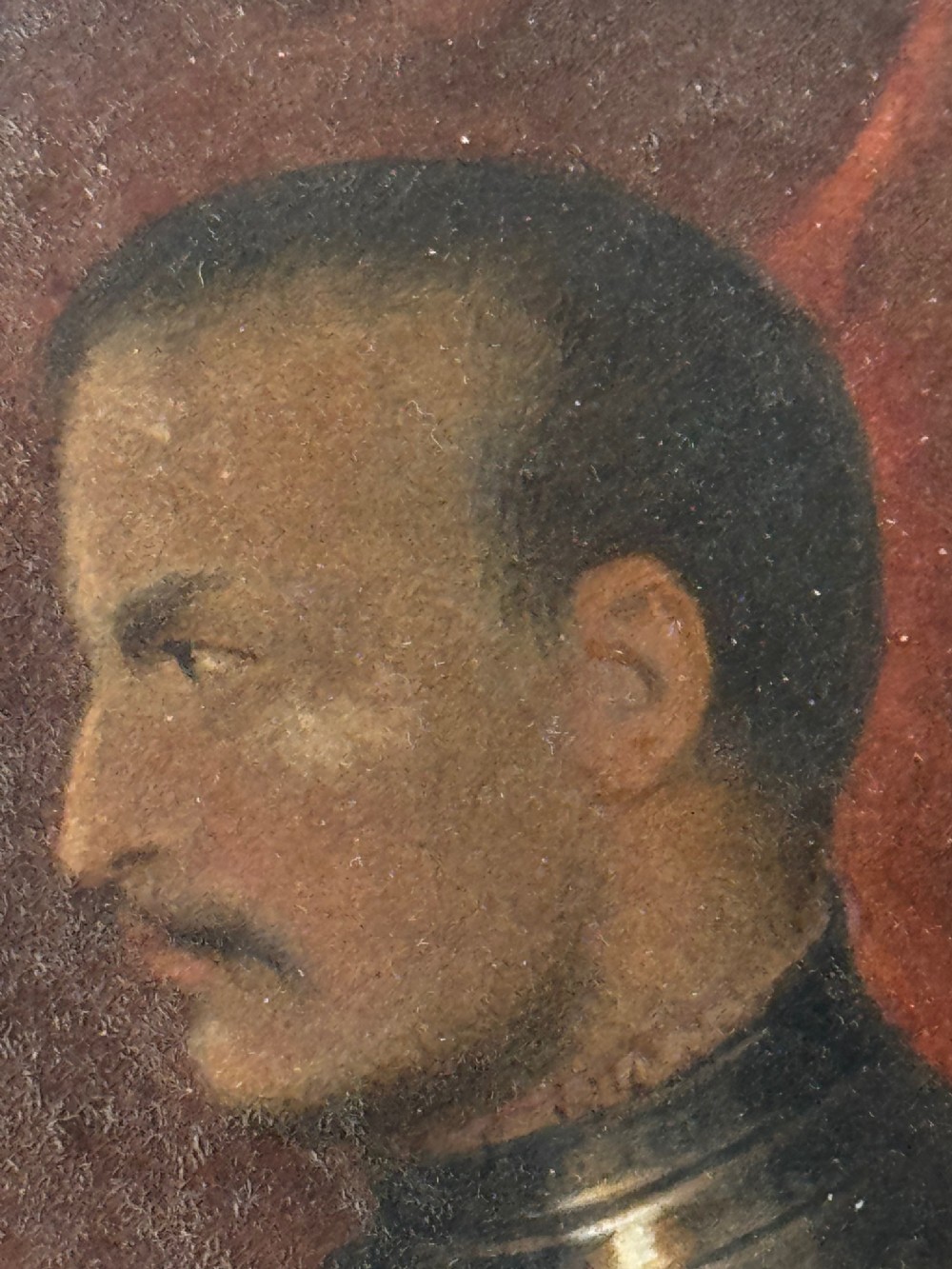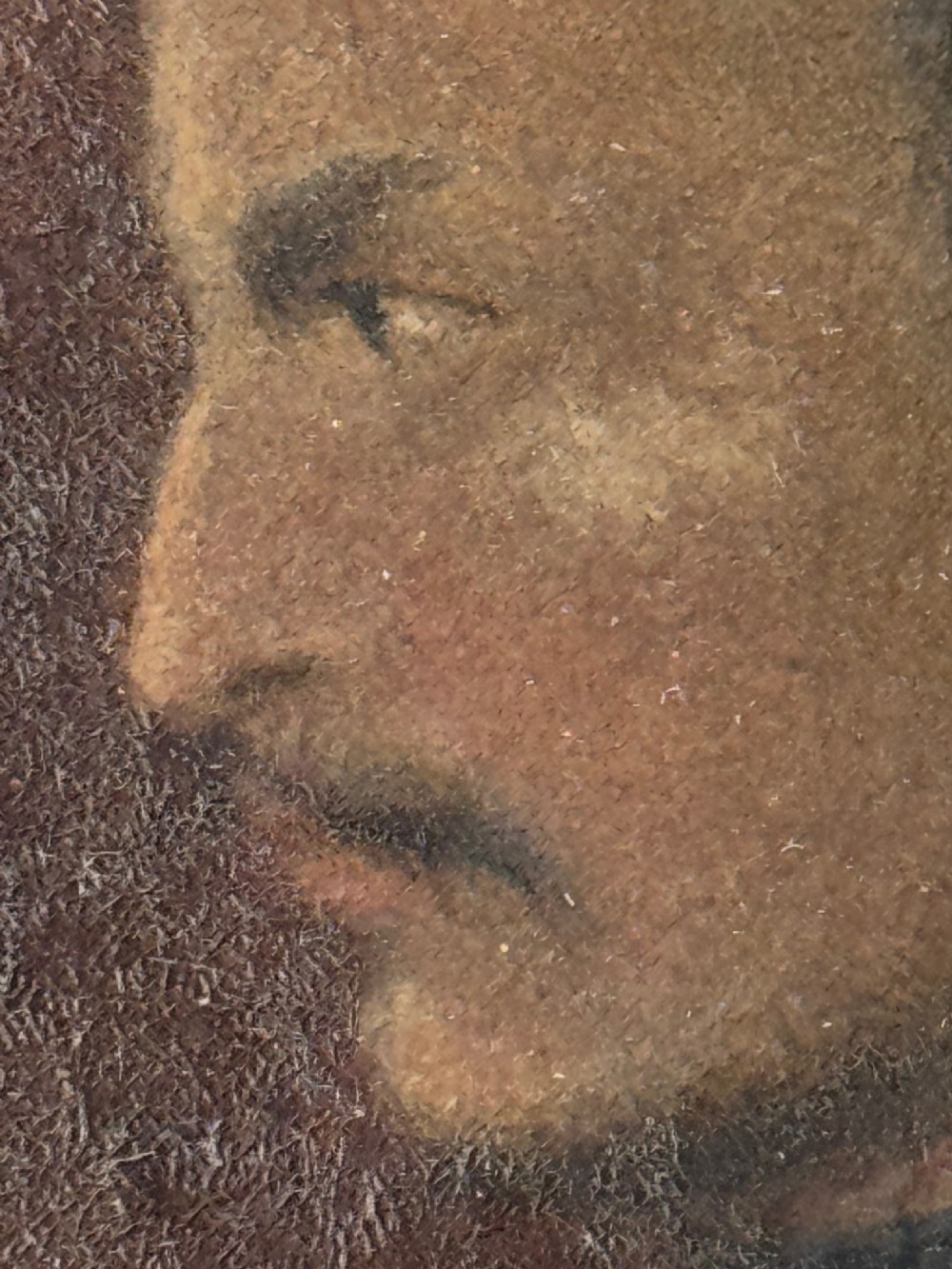
Cheshire Antiques Consultant Ltd has dated this Renaissance Portrait Oil Painting to the 19th Century.
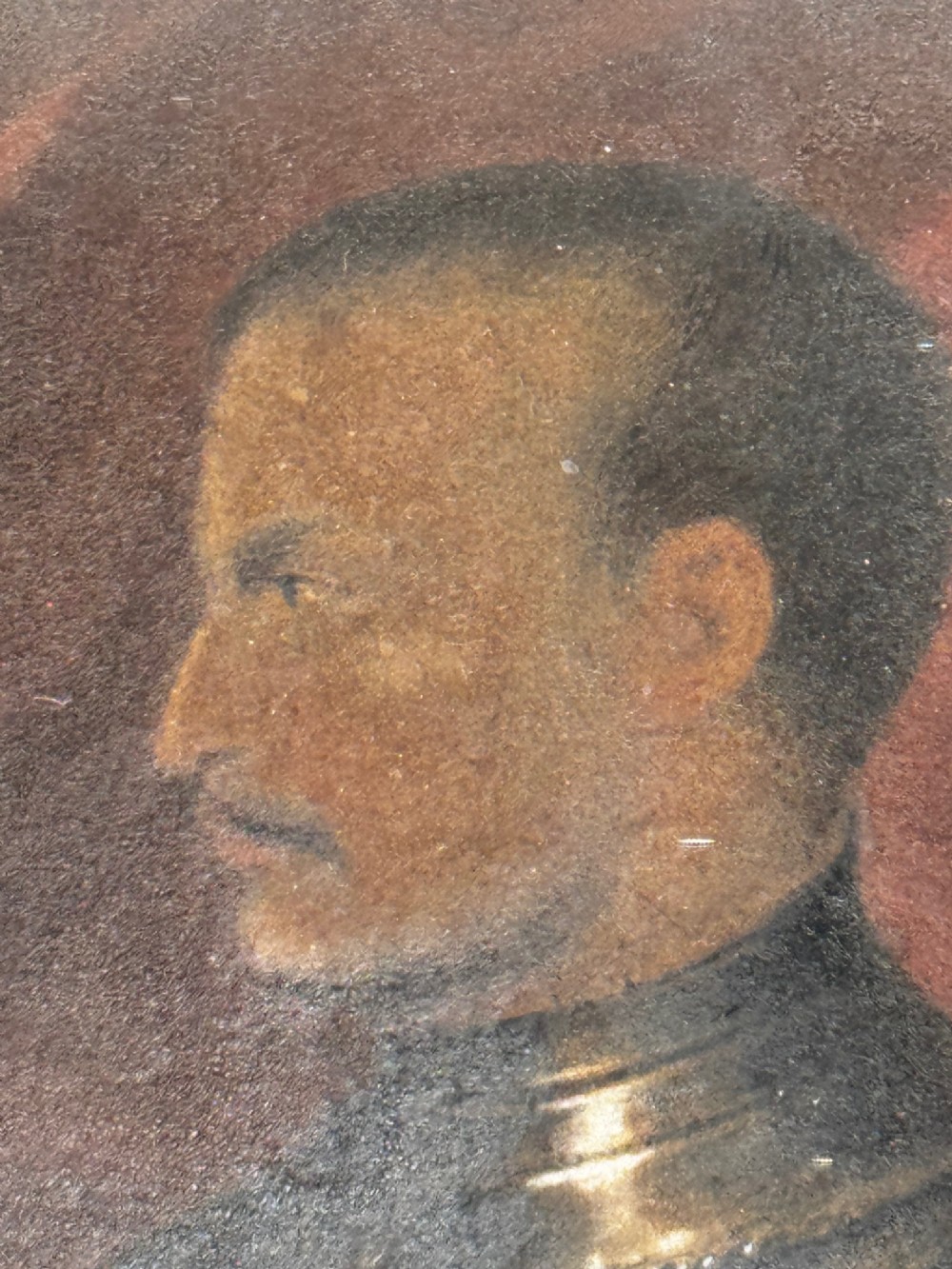
Title "Portrait of Ludovico de" Medici, known as Giovanni delle Bande Nere 1498-1526"
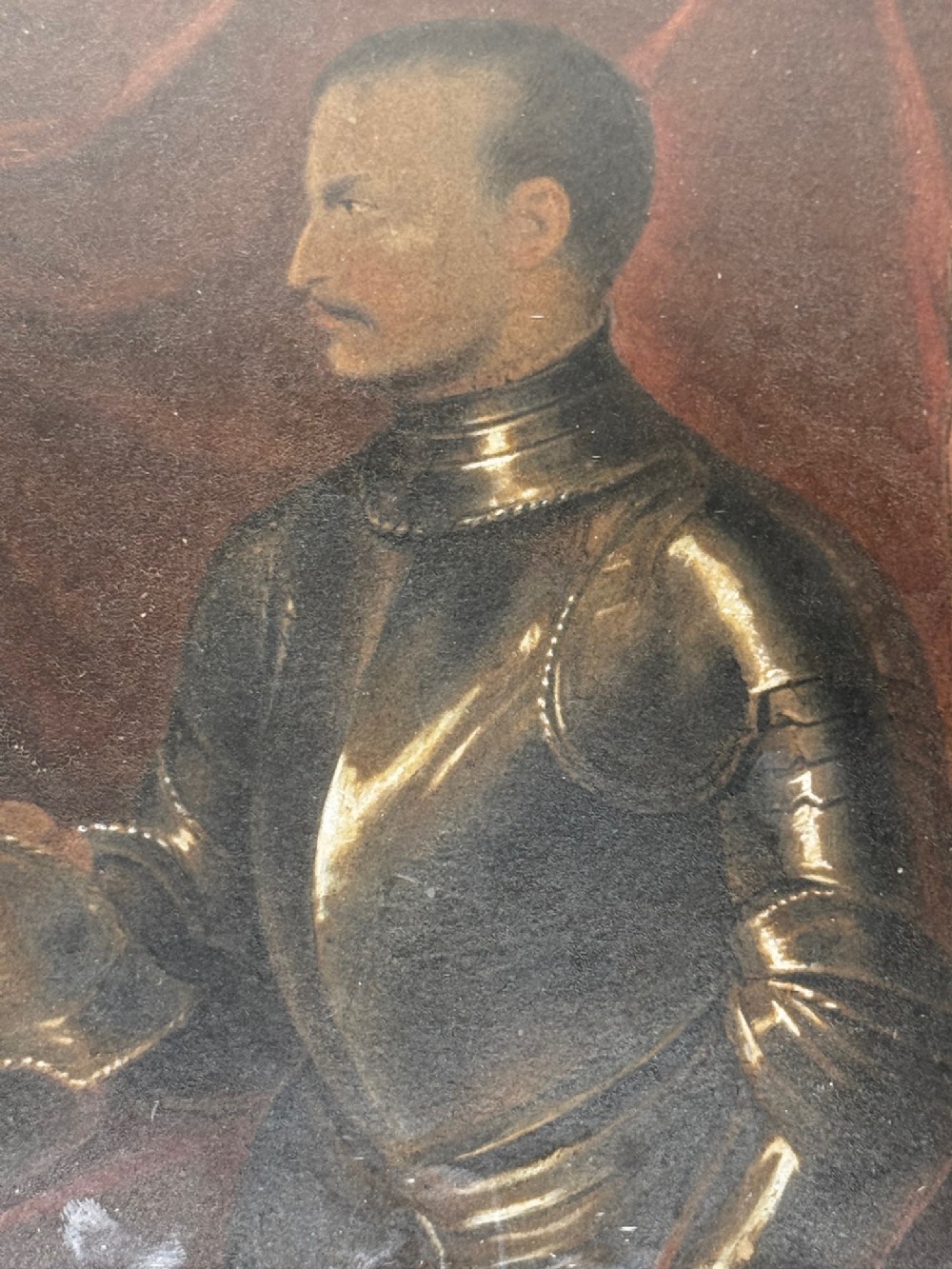
Executed in the refined, formal style reminiscent of Carlo Portelli this piece radiates elegance and Renaissance detail perfect for collectors of fine art, period décor, or Italian noble family heritage.
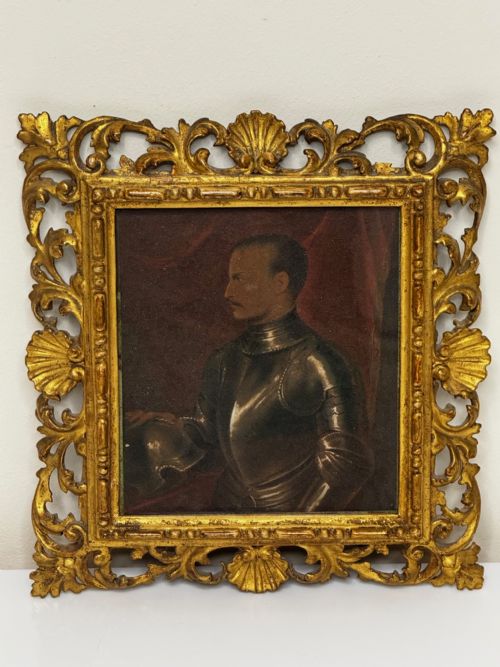
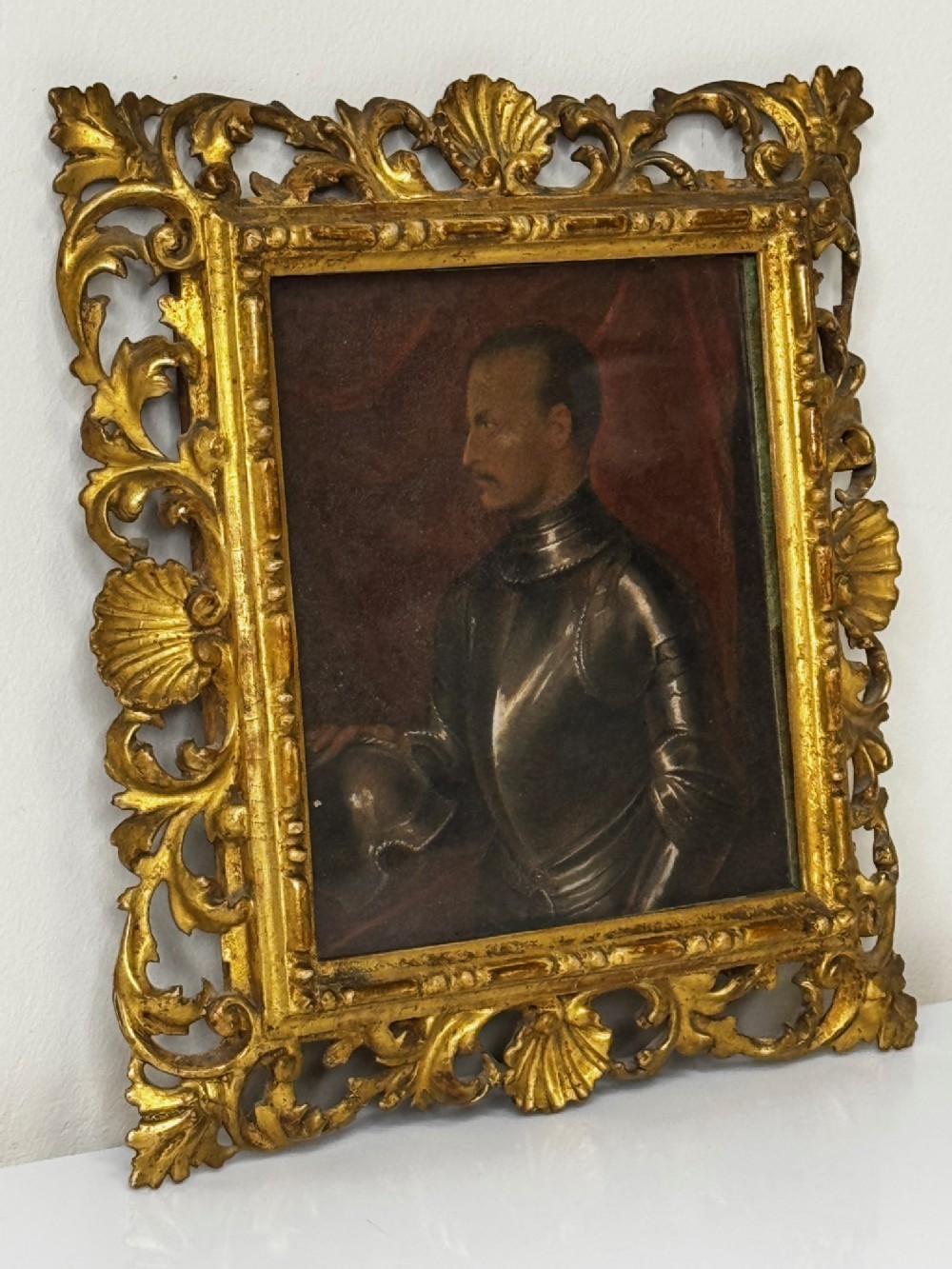
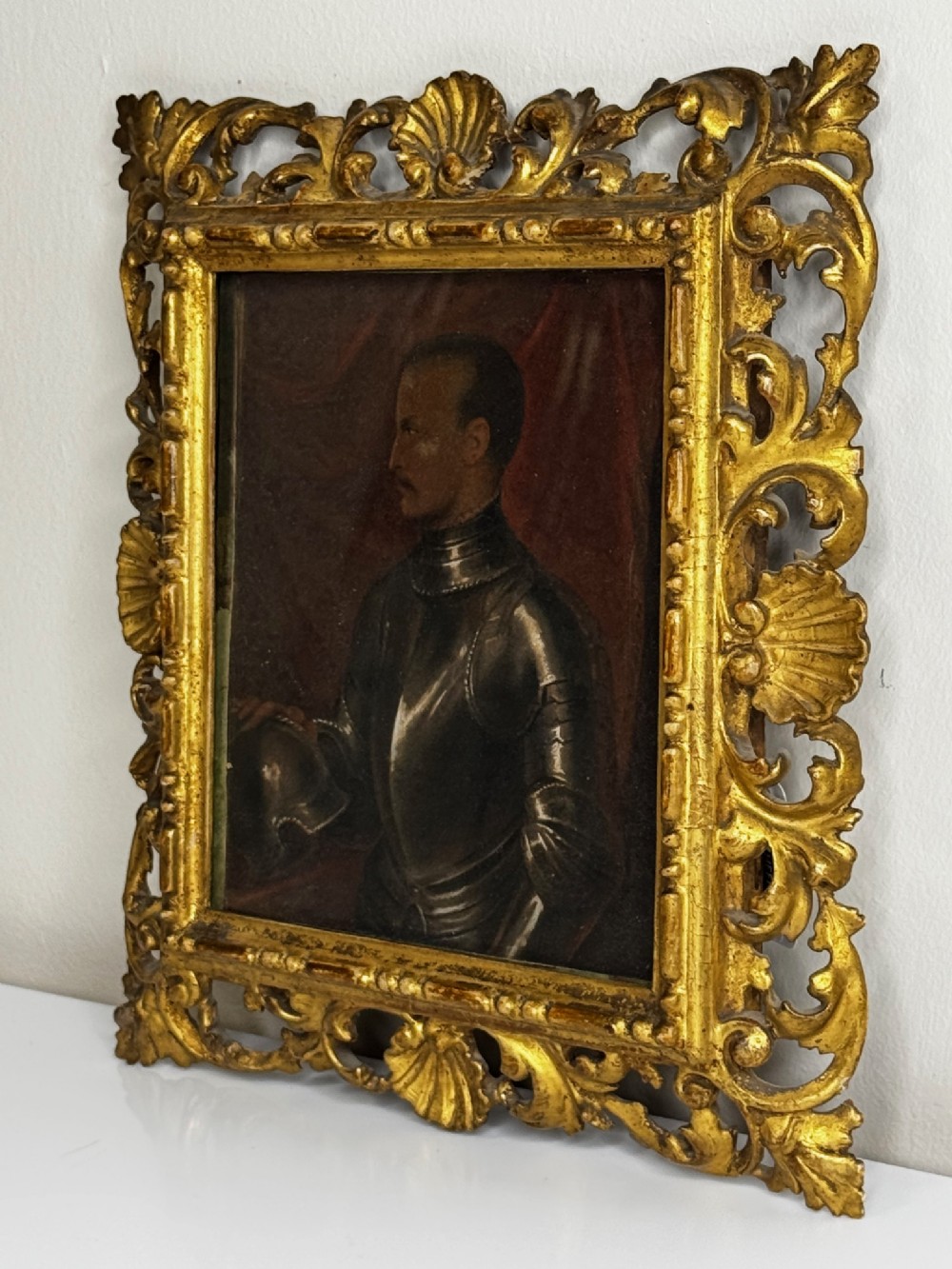
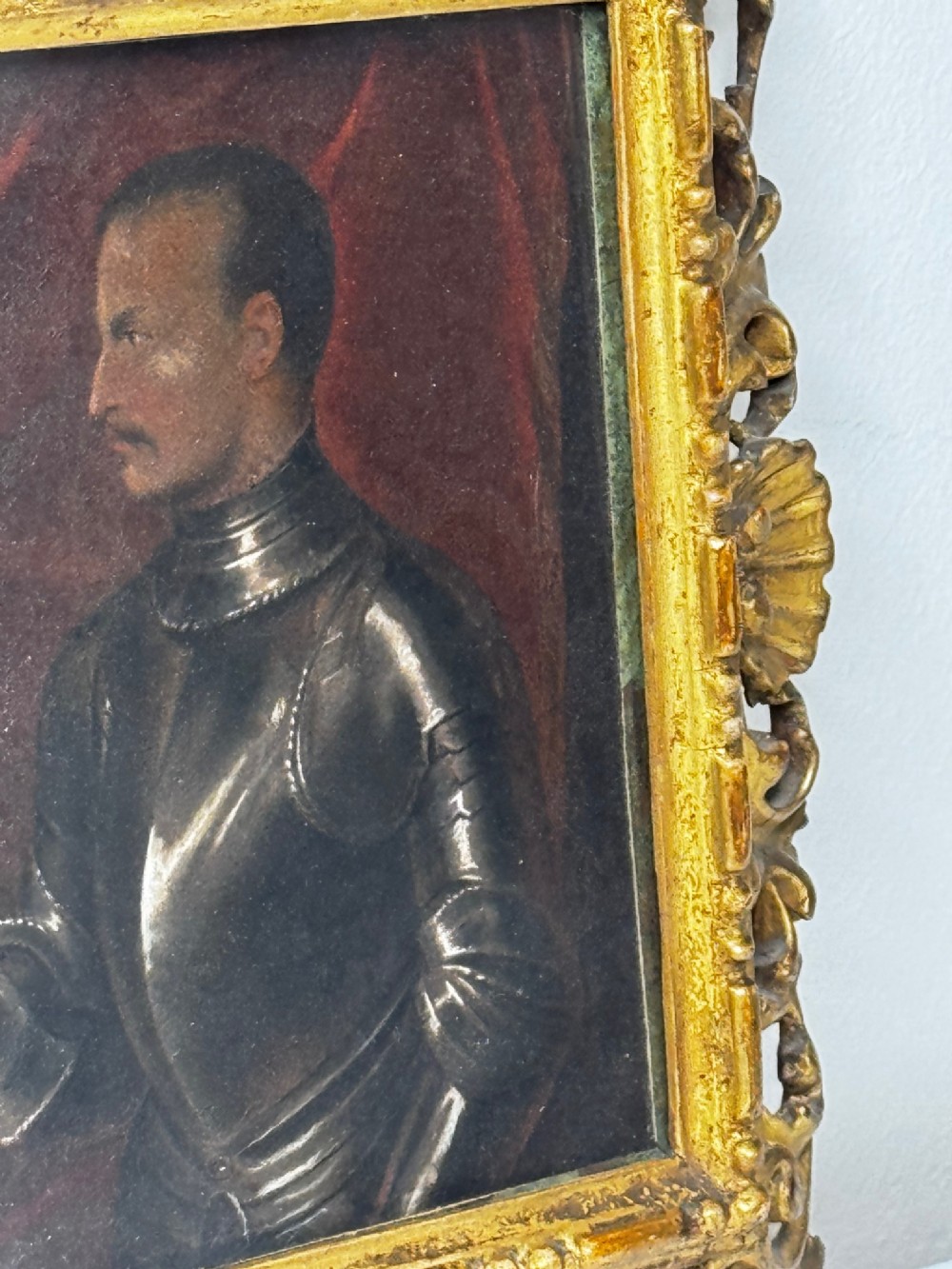
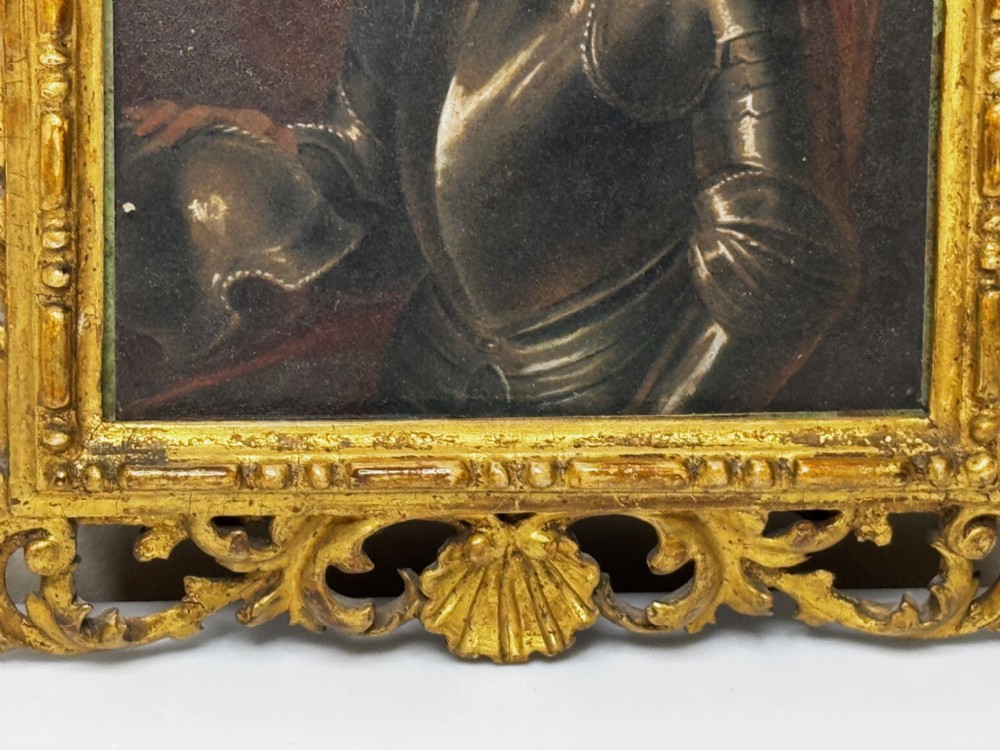
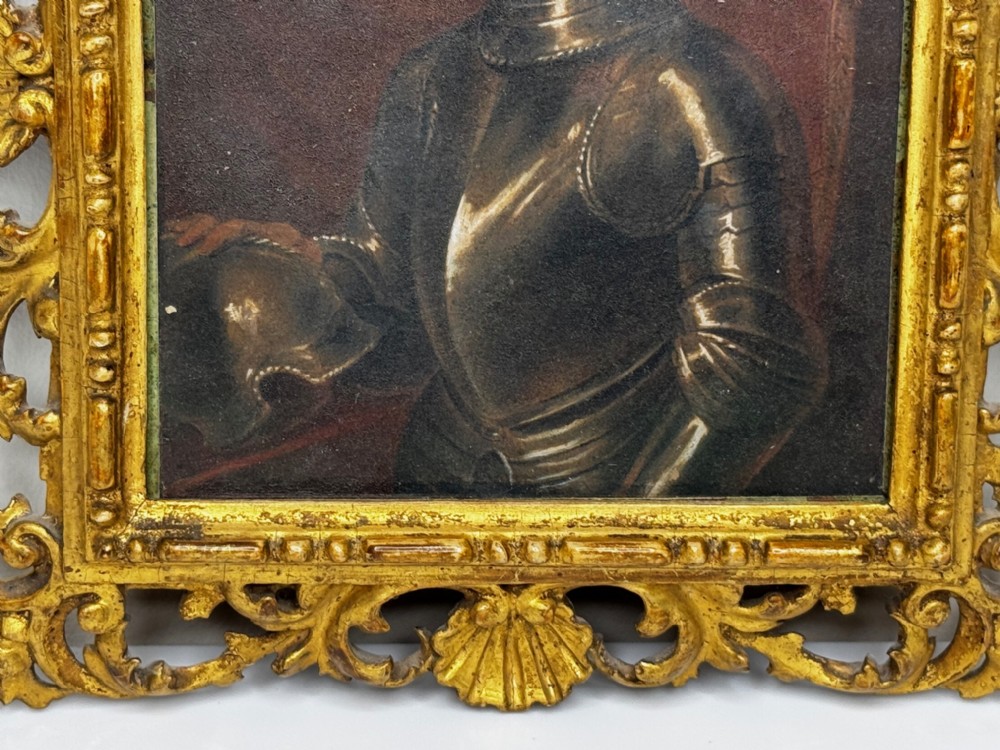
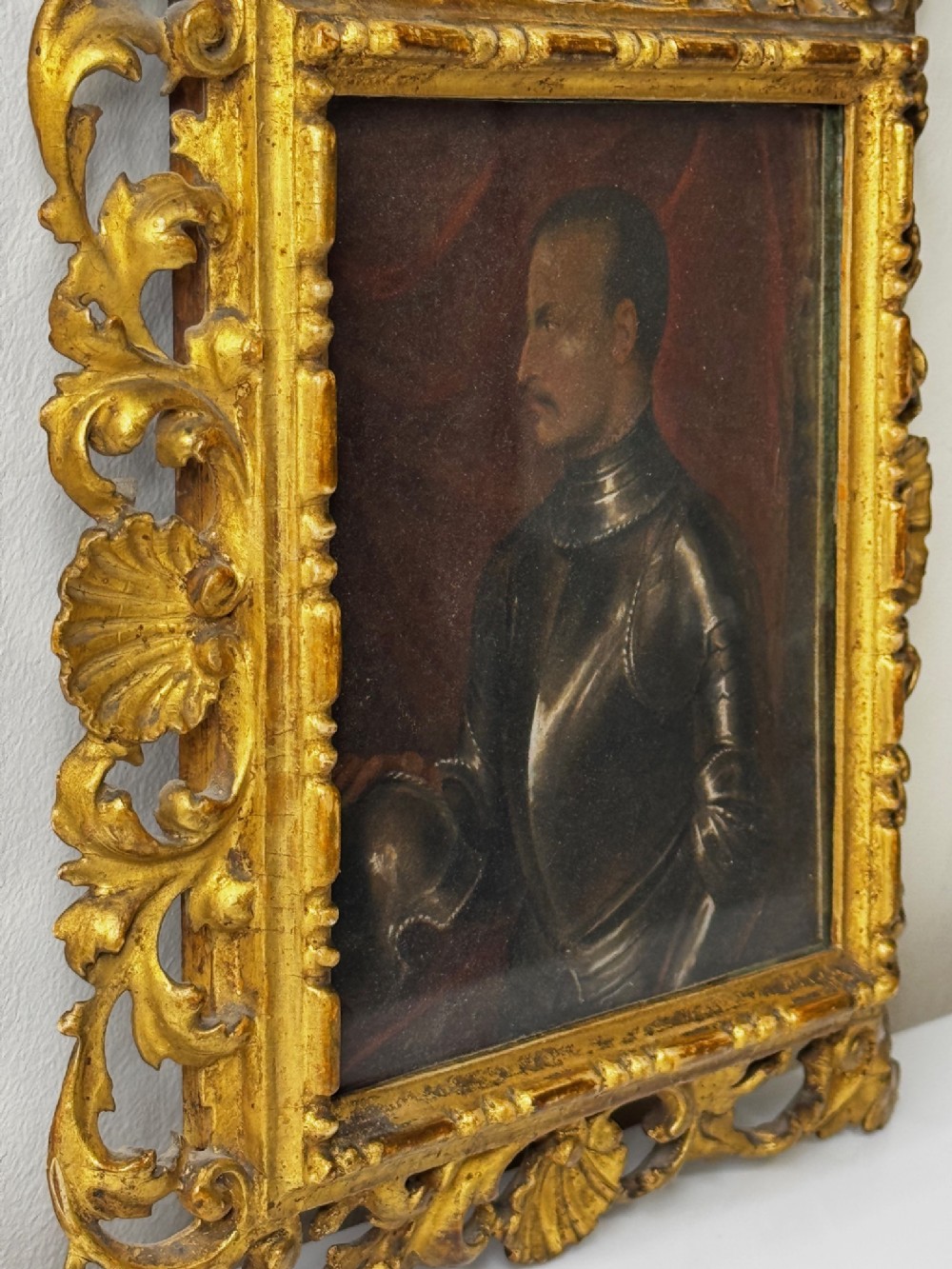
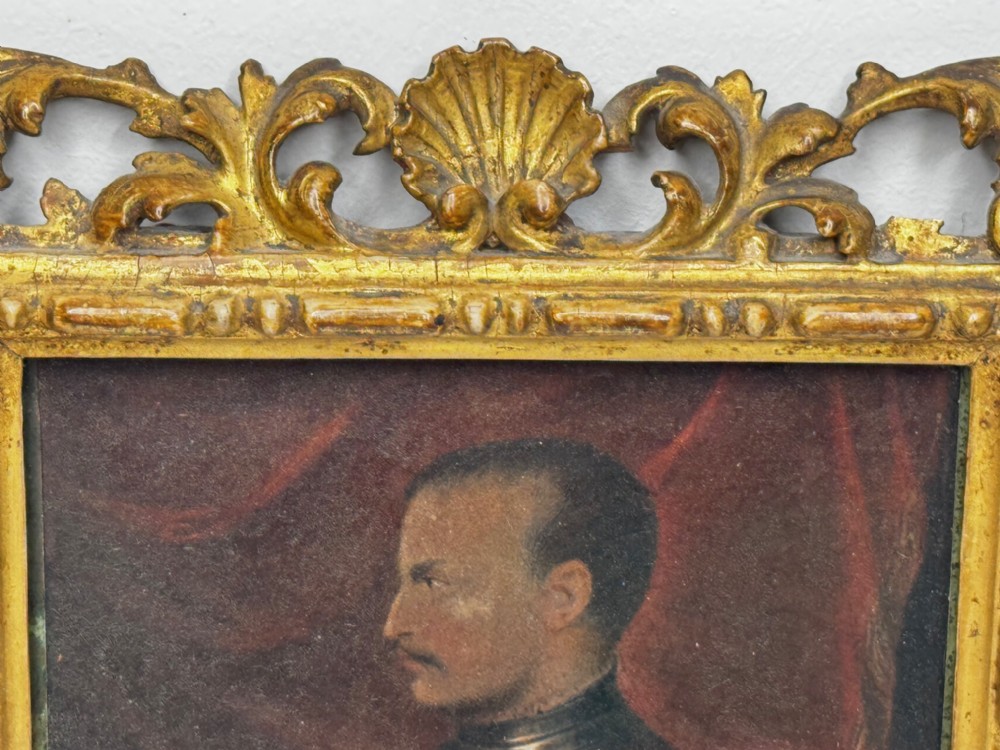
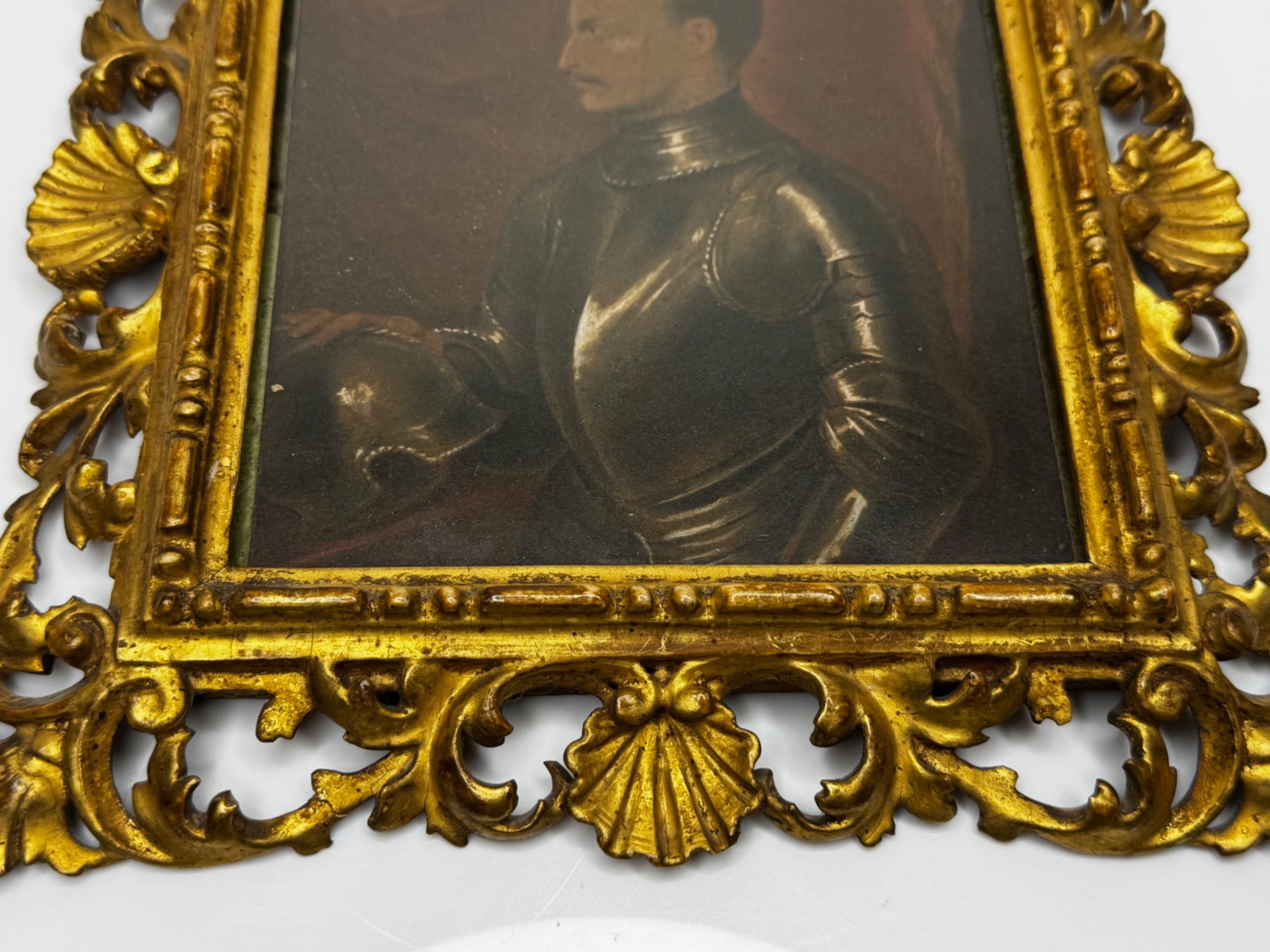
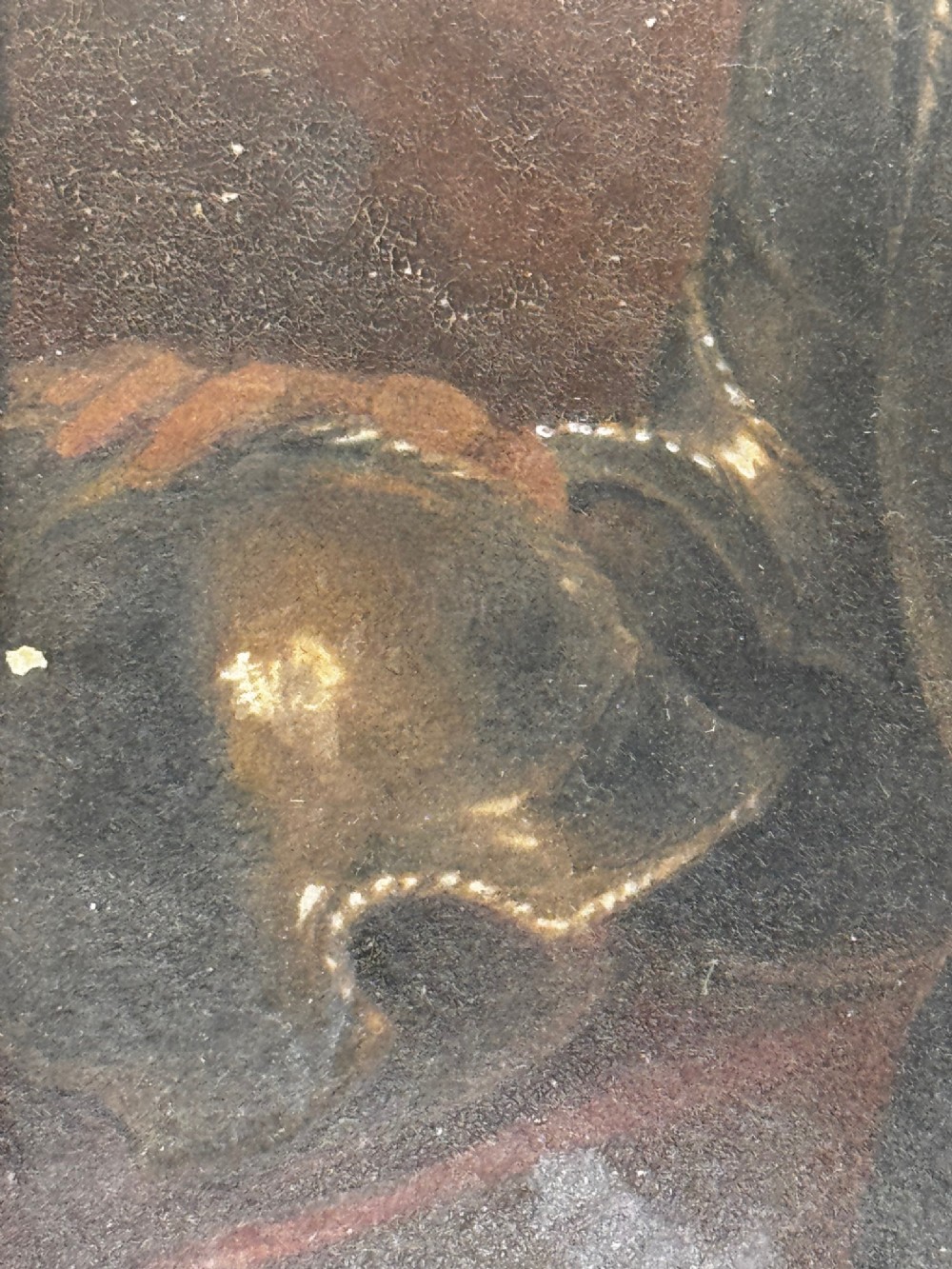
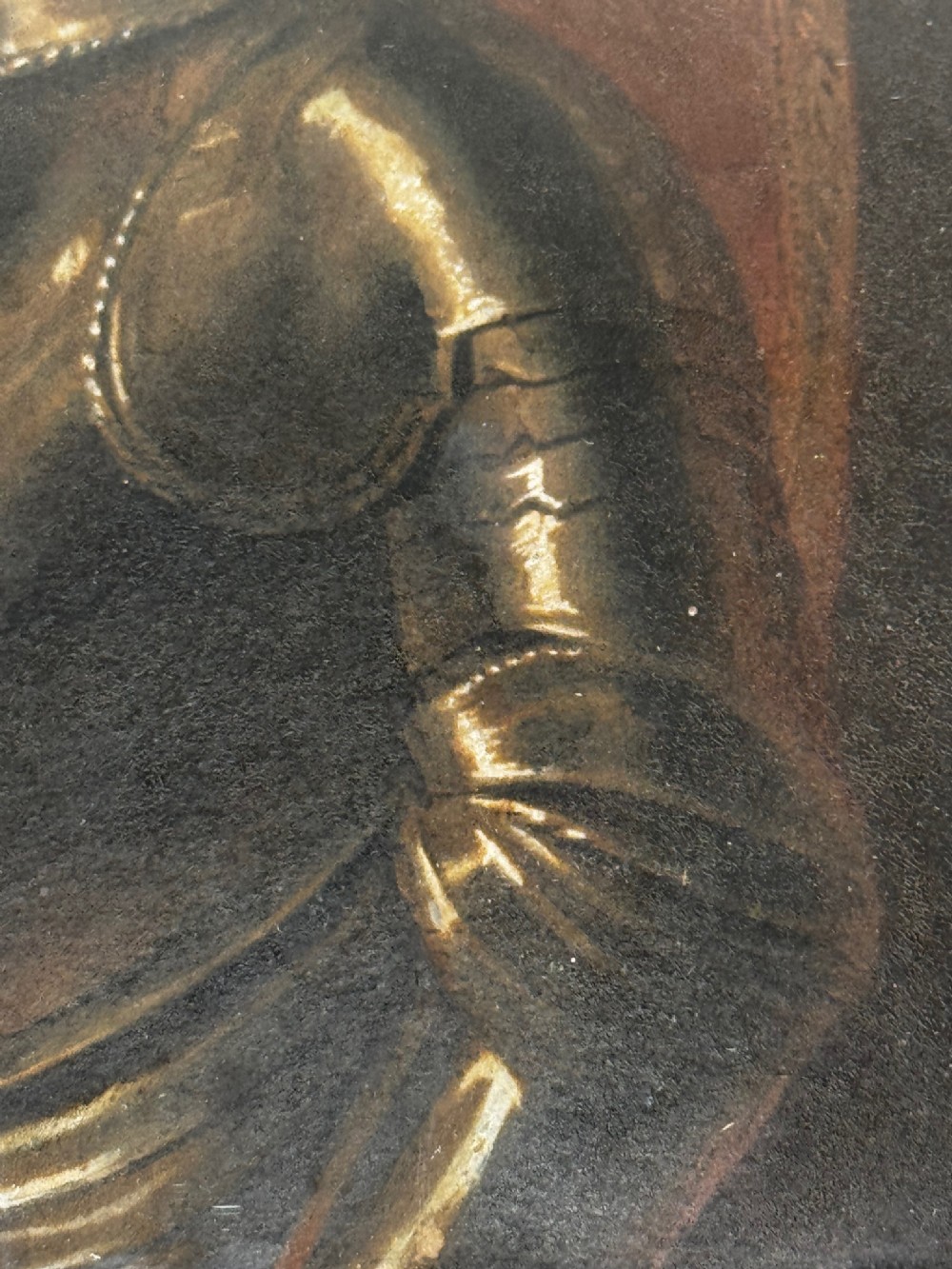
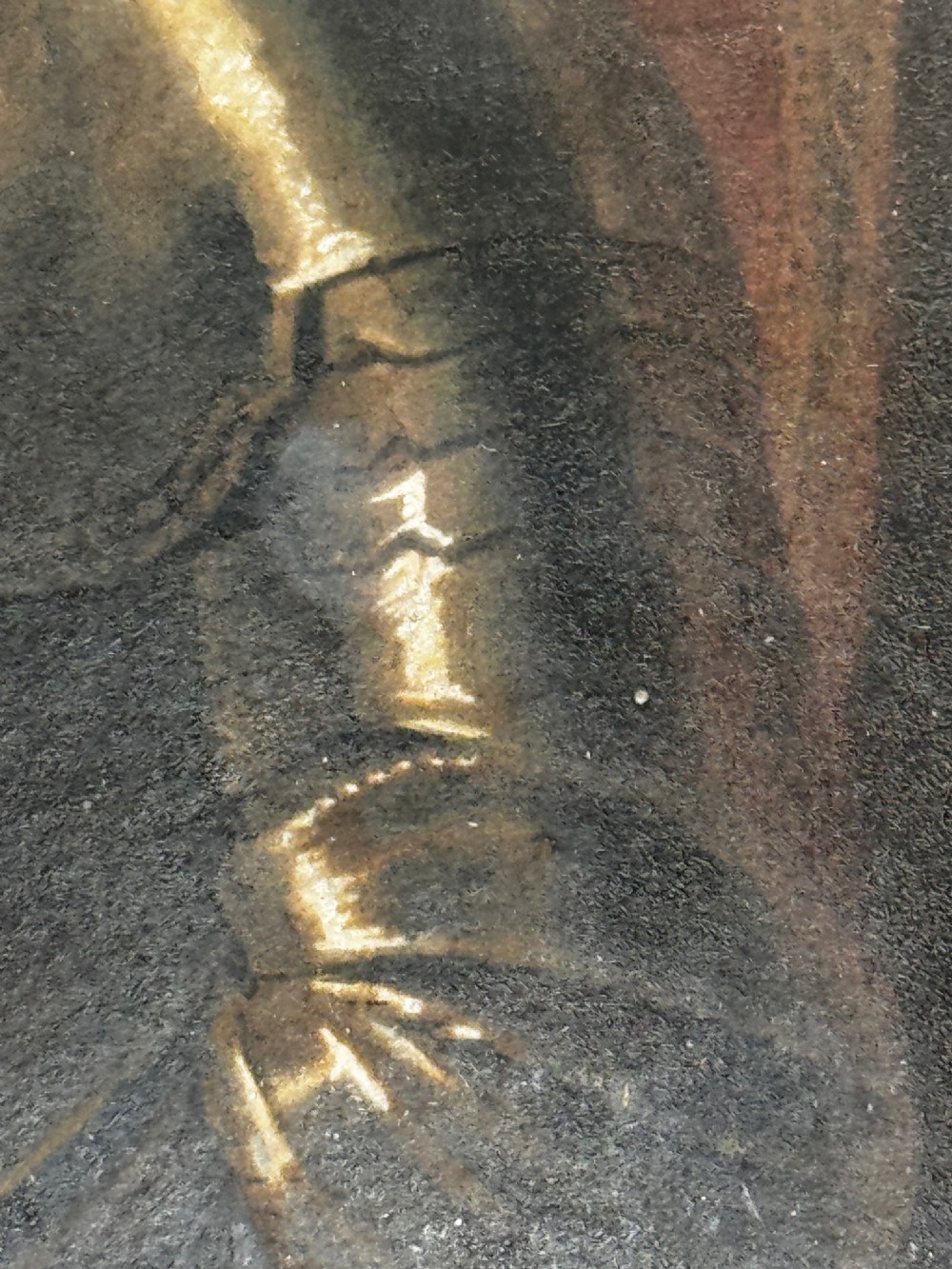
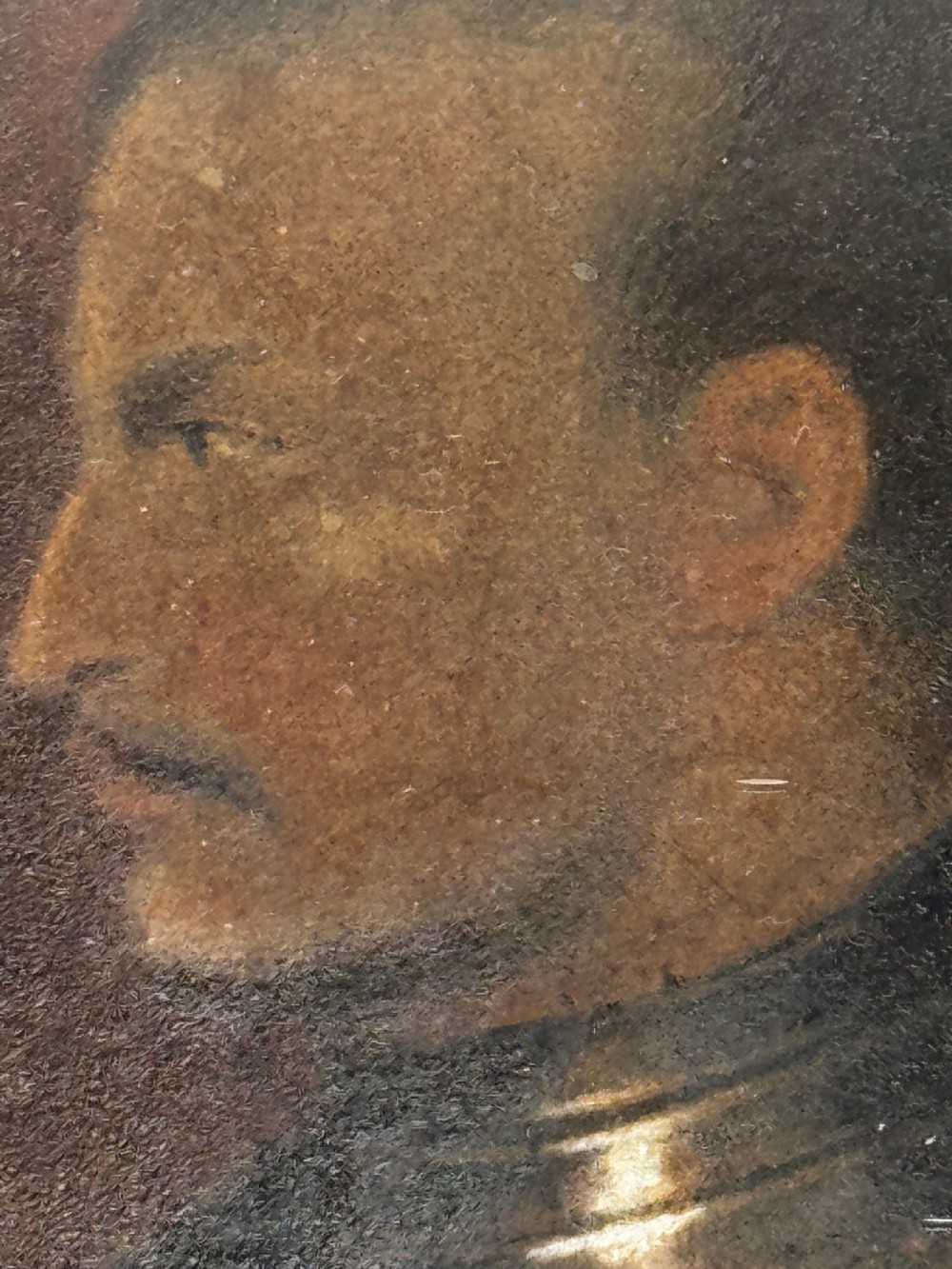
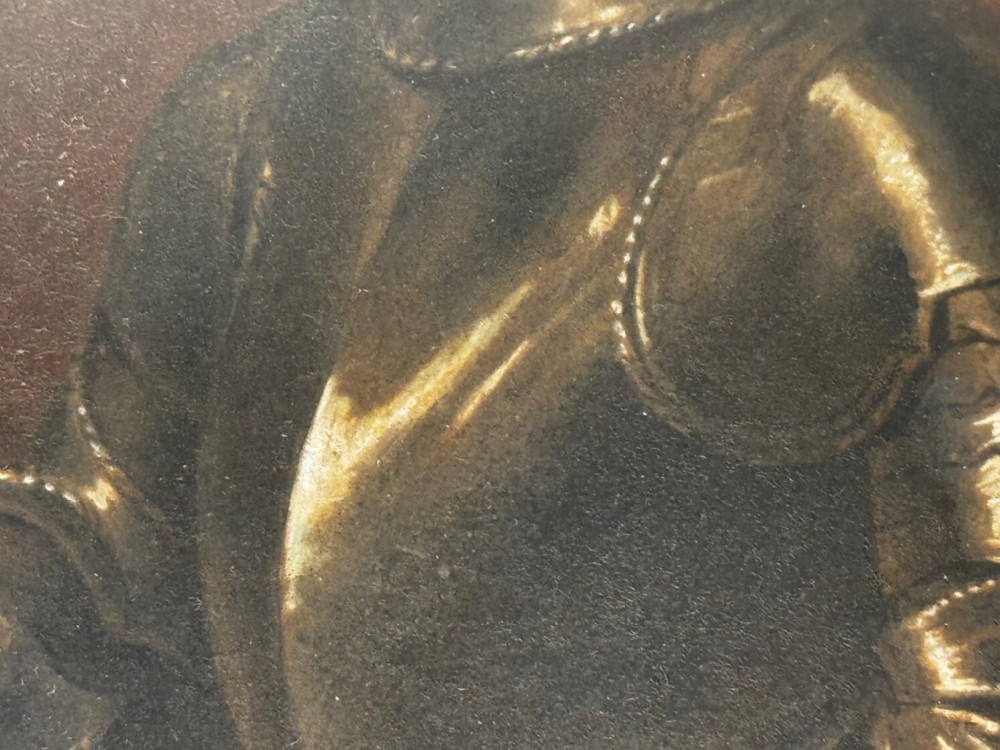
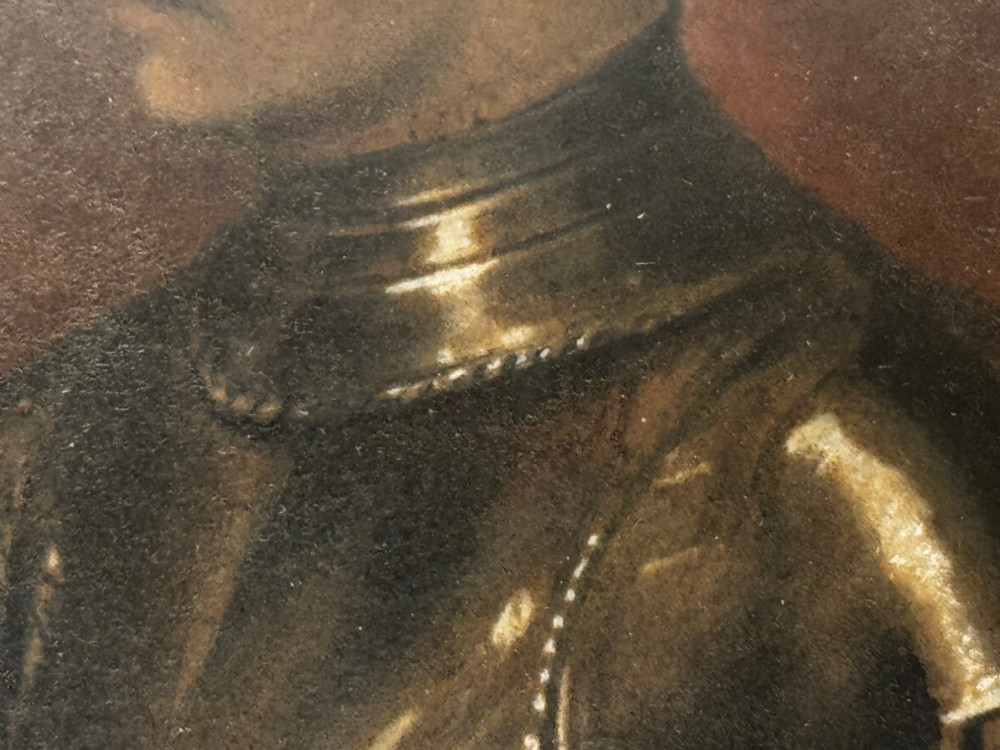
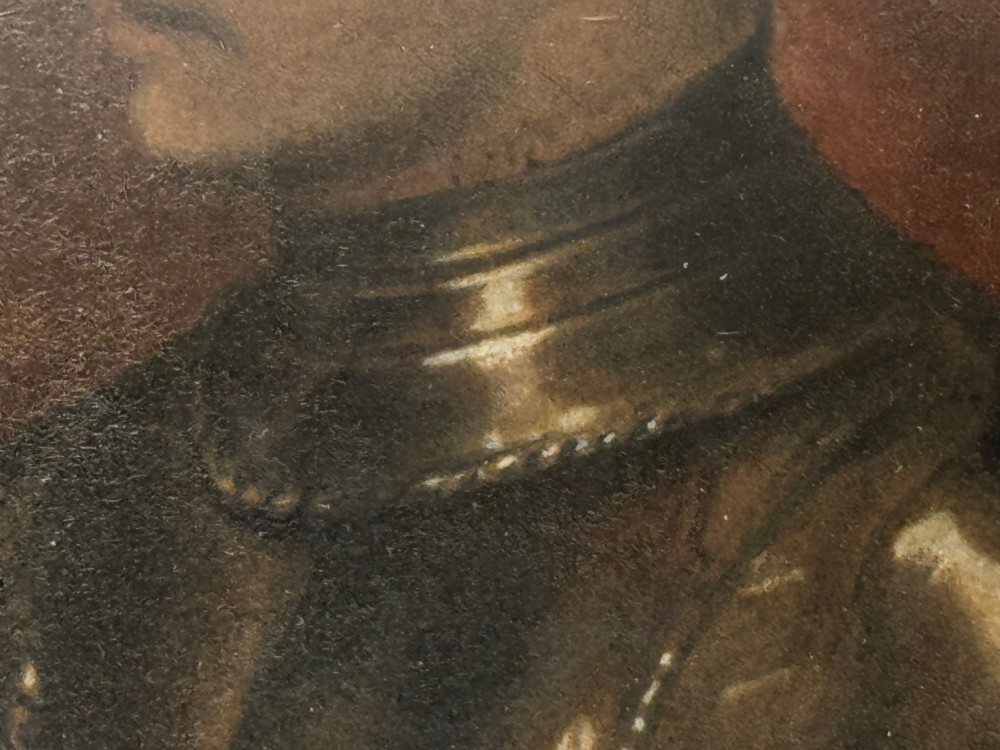
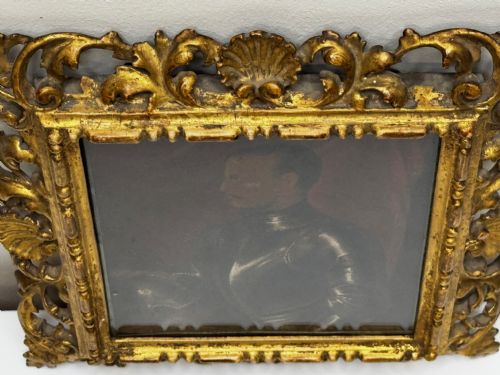
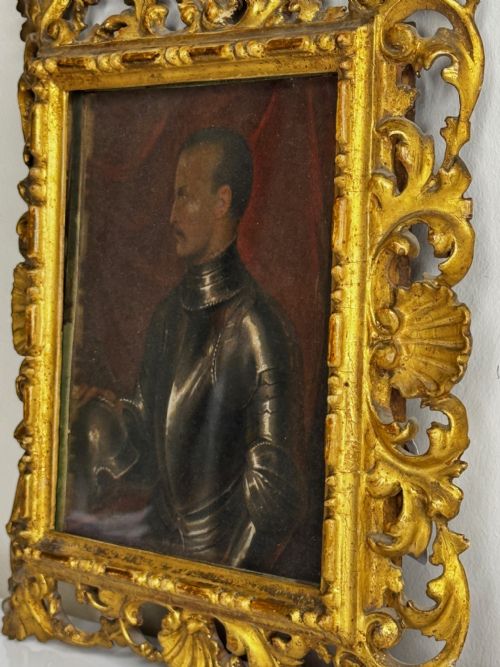
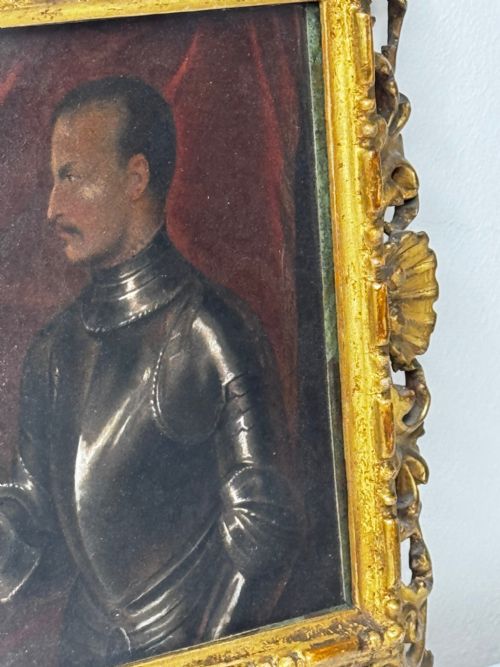
Subject portrait of Ludovico de' Medici also known as Giovanni delle Bande Nere in half length side view looking towards the left. He is depicted wearing his fine military battle shiny armour. He is holding his helmet in his hand, has such a strong visual presence with his gaze, having such meticulous brushwork.
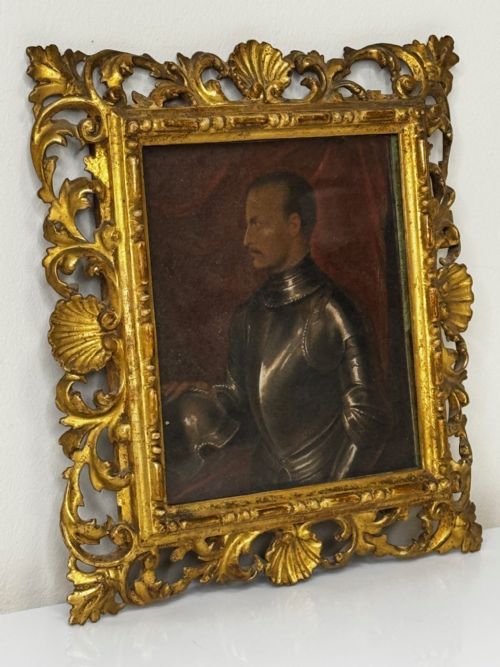
Inscribed verso.
Painted in the style of the old masters Rennaissance portraiture, follower of Carlo Portelli.
Unsigned, Italian school artist.
Circa 19th century.
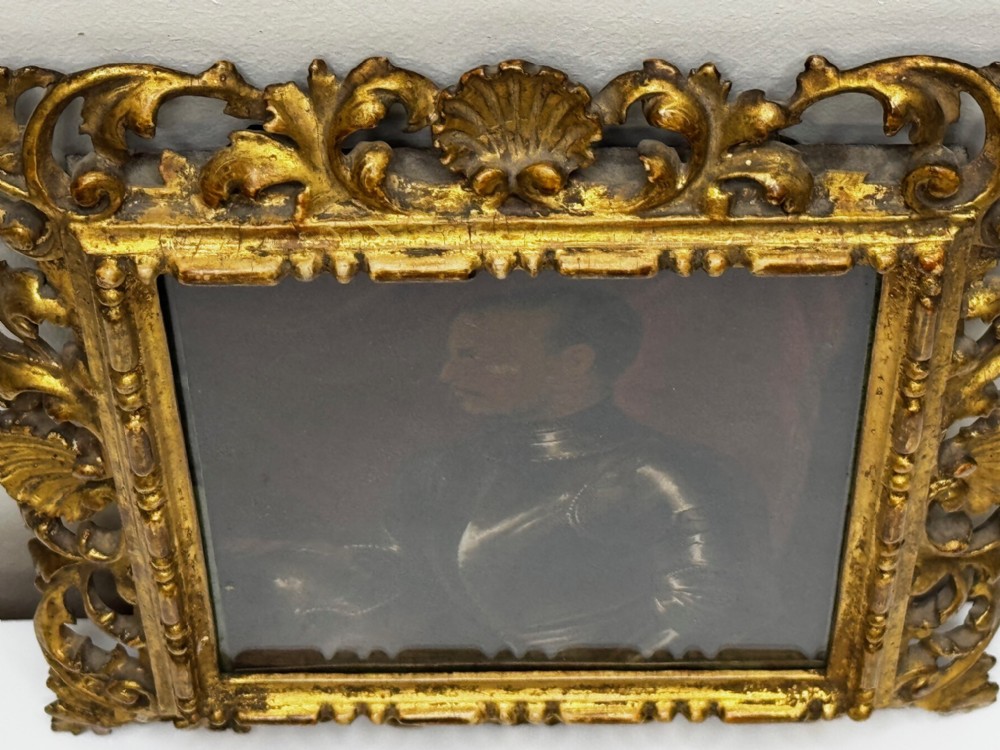
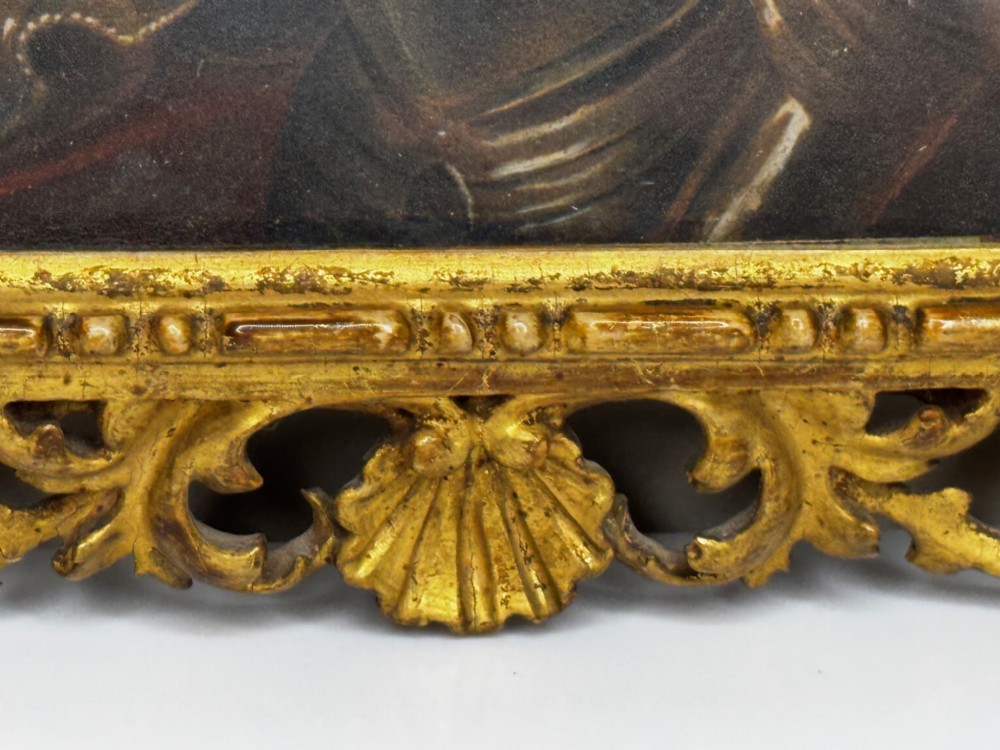
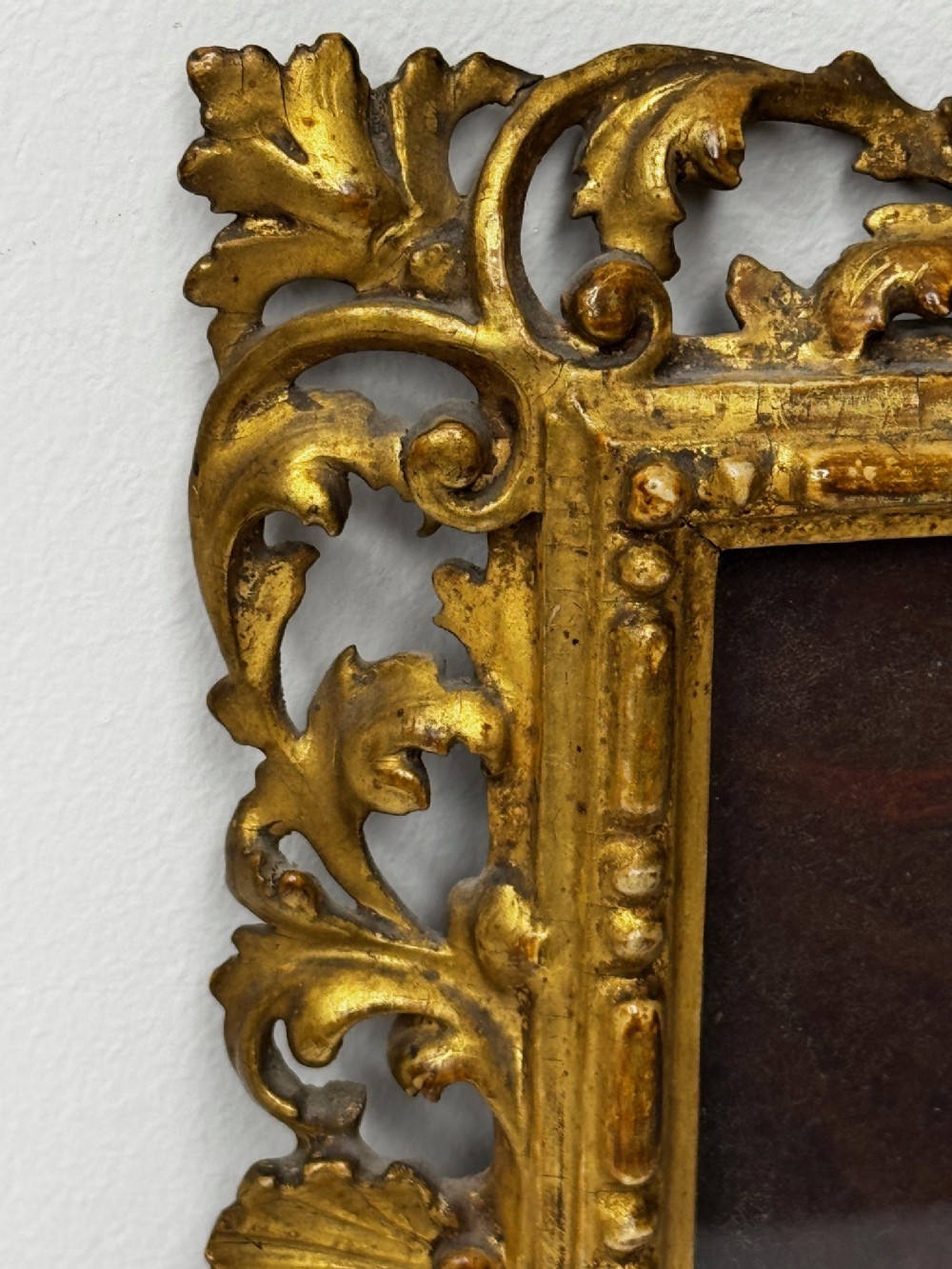
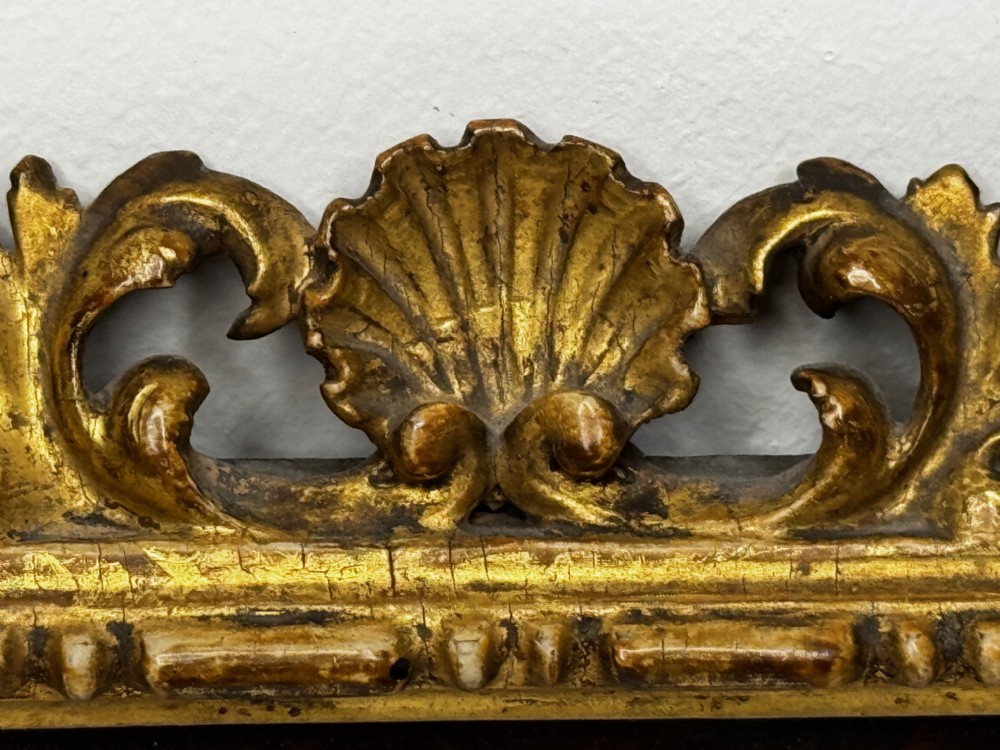
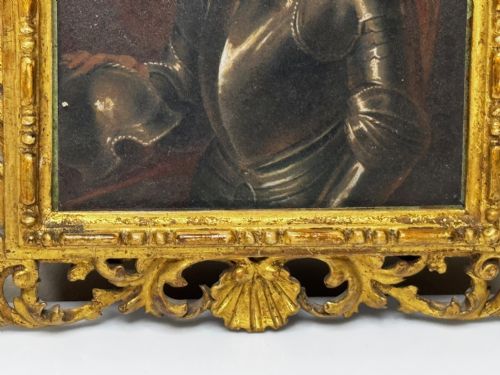
Medium watercolour & set in an original fine Fiorentine carved giltwood frame, with a front protective glass cove, which enhances this painting even further.
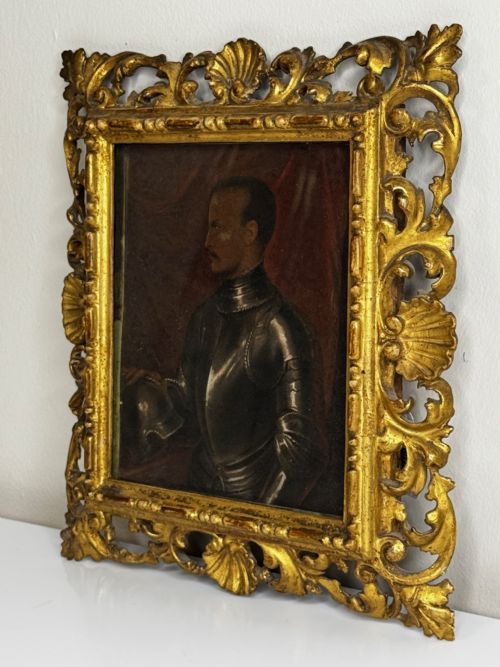
Frame display size is 23 cm wide and 24.5 cm high.
With hanging thread on the back ready for immediate home display.
Biography of Ludovico de' Medici, also known as Giovanni delle Bande Nere (6 April 1498 – 30 November 1526) was an Italian condottiero. He is known for leading the Black Bands and serving valiantly in military combat under his third cousins, Pope Leo X and Pope Clement VII, in the War of Urbino and the War of the League of Cognac, respectively. Giovanni was born in the Northern Italian town of Forlì to Giovanni de' Medici il Popolano and Caterina Sforza, one of the most famous women of the Italian Renaissance.
From an early age, he demonstrated great interest and ability in physical activity, especially the martial arts of the age, such as horse riding and sword fighting. He committed his first murder at the age of 12 and was twice banished from the city of Florence for his unruly behaviour. He had a son, Cosimo (1519–1574), who went on to become the Grand Duke of Tuscany.
Giovanni became a condottiero, or mercenary military captain, in the employ of Pope Leo X (Giovanni di Lorenzo de' Medici) and on 5 March 1516 led the war against Francesco Maria I della Rovere, Duke of Urbino. He thenceforth formed a company of his own, mounted on light horses and specializing in fast but devastating skirmishing tactics and ambushes. In 1520 he defeated several rebel barons in the Marche. The following year Leo X allied with Emperor Charles V against King Francis I of France to regain Milan, Parma and Piacenza; Giovanni was called in under the command of Prospero Colonna, defeating the French at Vaprio d'Adda in November. His spouse was Maria Salviati
As a symbol of mourning for the death of Pope Leo X (1 December 1521), Giovanni added black stripes to his insignia, whence comes his nickname, Giovanni delle Bande Nere (or Giovanni of the Black Bands). In August 1523 he was hired by the Imperial army, and in January 1524 he defeated the French and the Swiss at Caprino Bergamasco. In the same year another Medici, Giulio di Giuliano, became Pope and took the name of Clement VII. The new Pope paid all of Giovanni's debt, but in exchange ordered him to switch to the French side of the ongoing conflict. He did not take part in the battle of Pavia, but was soon severely wounded in a skirmish and later had to move to Venice to recuperate from his wounds.
In 1526, the War of the League of Cognac broke out. The League's captain general, Francesco Maria I della Rovere, abandoned Milan in the face of the overwhelming superiority of the Imperial army led by Georg von Frundsberg. Giovanni was able to defeat the Landsknechts rearguard, at the c
Cheshire Antiques Consultant Ltd has dated this Renaissance Portrait Oil Painting to the 19th Century.
Source the historic in 17th, 18th, 19th & 20th century fine arts, painting, sculptures & collectibles
You can view the stock and full dealer information on the Cheshire Antiques Consultant Ltd Profile Page
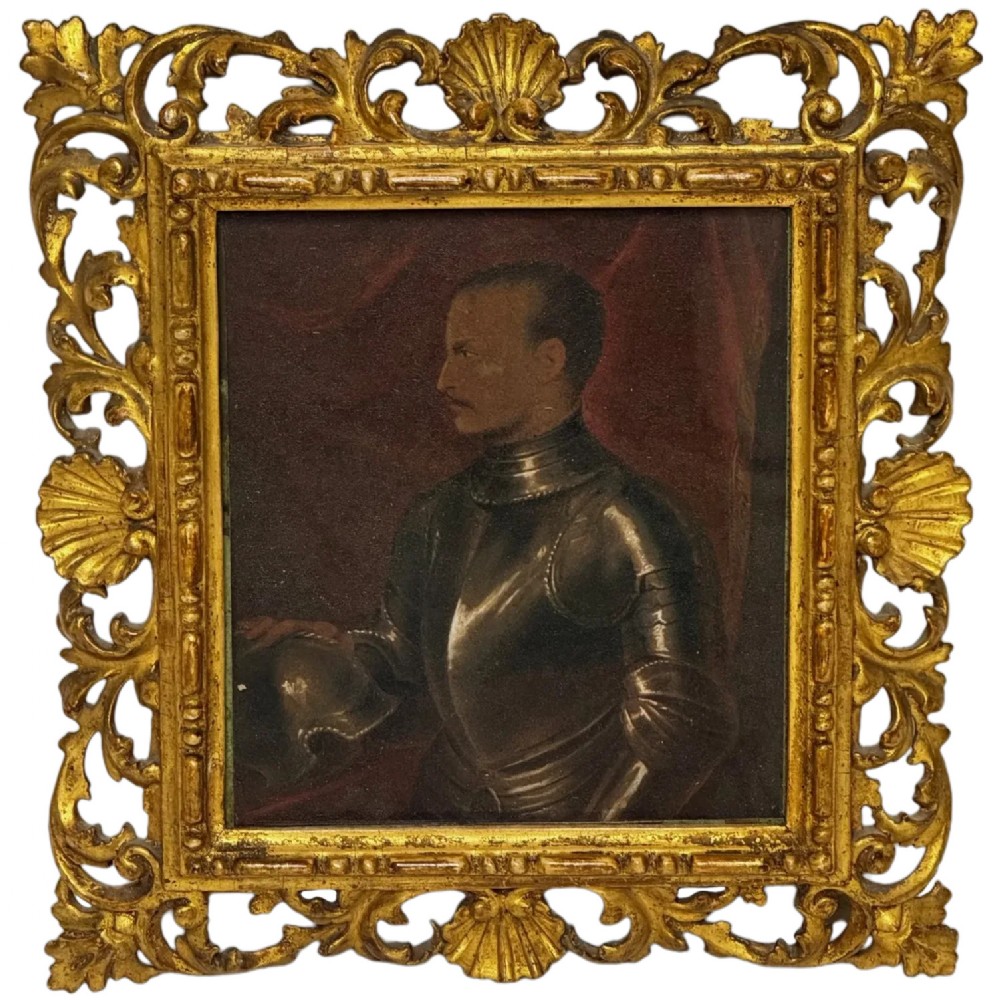
Painting Giovanni Delle Bande Nere in Armour