19,868  PAGES BROWSED TODAY PAGES TODAY 36  ANTIQUES UPLOADED TODAY NEW ARRIVALS
ID #SA136622
FOR SALE
£3,000
Email
Save
Frank Samuel Eastman 1878 - 1964
Artware Fineart
Id #SA136622
PDF SHARE
SAVE

Frank Samuel Eastman 1878 - 1964

1900 - 1920
For Sale by Artware Fineart
Description

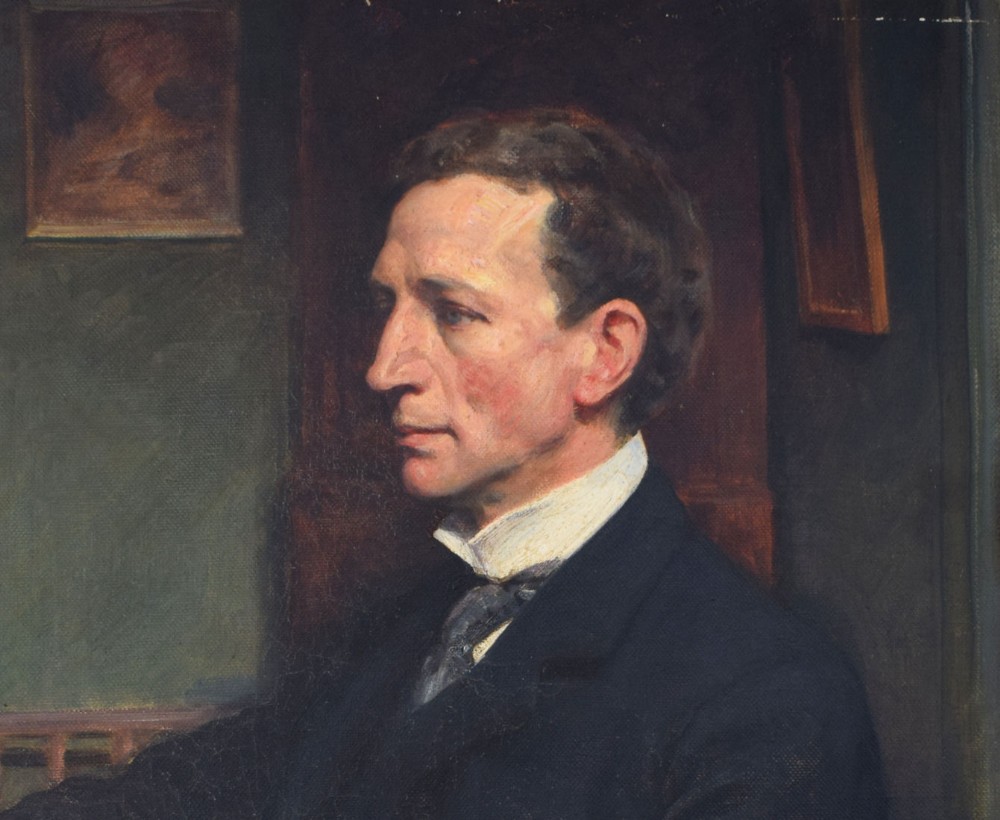
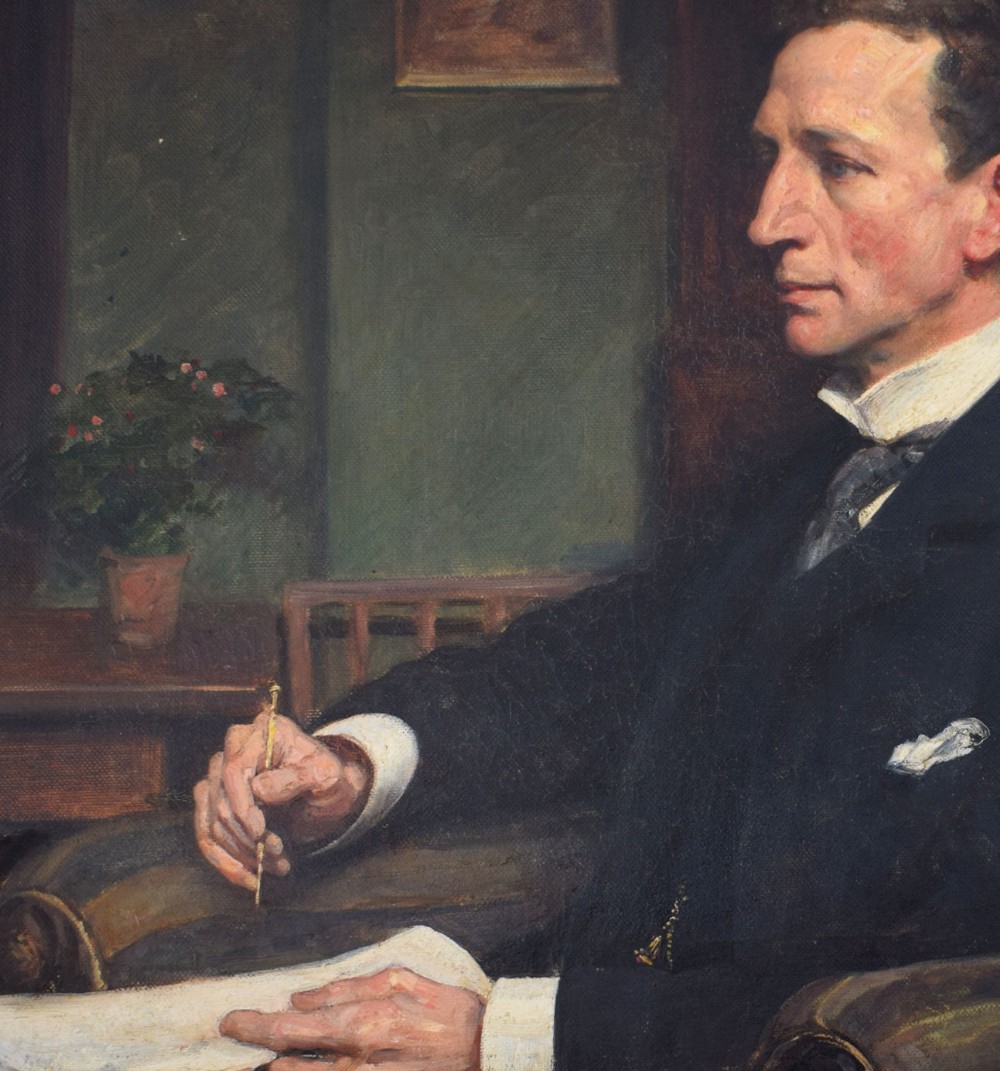
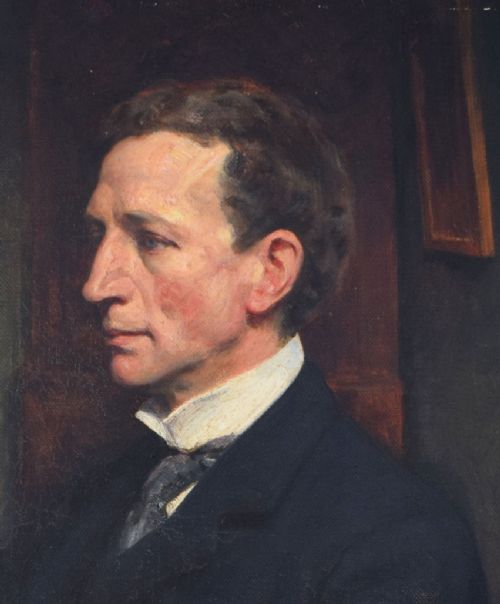
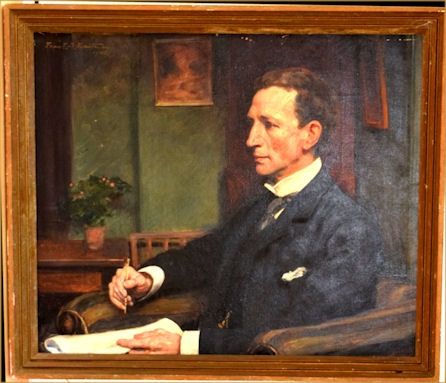
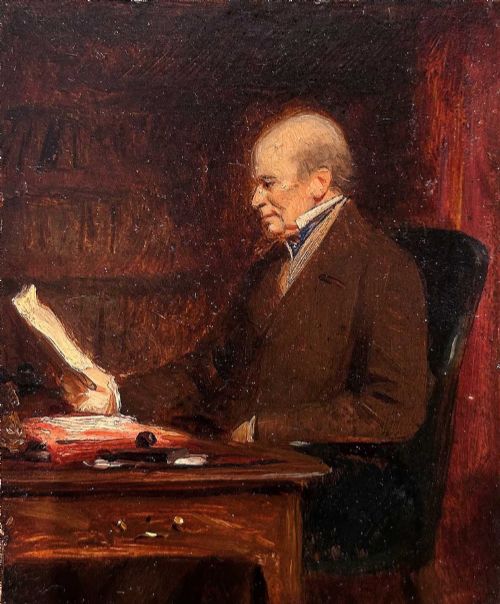
Portrait of Godfrey Rathbone, first Baron Charnwood 1864-1945

1905

UK

Oil on Canvas

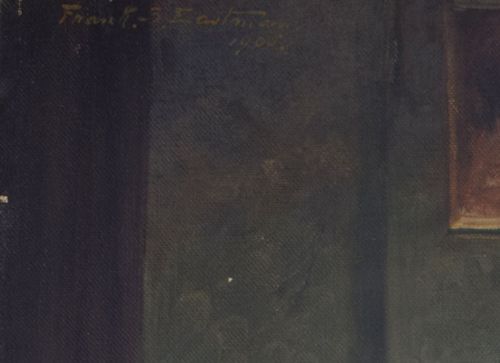
signed and dated "1905"

20 x 24in. (52 x 62 cm.)

good overall condition, oil on canvas behind glass

Benson, Godfrey Rathbone, first Baron Charnwood (1864–1945), politician and writer, was born at Langtons, Alresford, Hampshire, on 6 November 1864, the fourth son of the six children of William Benson (1816–1887), barrister, and his wife, Elizabeth Soulsby (d. 1892), daughter of Thomas Smith, of Colebrooke Park, Tonbridge. The actor–manager Sir Francis Robert (Frank) Benson and the designer William Arthur Smith Benson were his brothers. Benson was educated at Winchester College and Balliol College, Oxford. He obtained a first class in literae humaniores (1887) and was appointed lecturer in philosophy at Balliol. He worked in close association with R. L. Nettleship, the second volume of whose Philosophical Lectures and Remains (containing the well-known lectures on the Republic of Plato) he edited in 1897. In 1892 Benson was elected as the Liberal member for the Woodstock division of Oxfordshire, but held the seat only until the next election in 1895. He unsuccessfully stood for St Pancras West in 1900 and Worcestershire West in 1906. He was called to the bar by the Inner Temple in 1898. On 11 May 1897 he married Dorothea Mary Roby (1876–1942), daughter of Roby Thorpe of Nottingham, and granddaughter of A. J. Mundella. The marriage brought Benson significant wealth and political connections. They had two sons, the younger of whom died in infancy, and two daughters. As The Times noted, as a member Benson ‘never took strongly to life in the House of Commons. The House of Lords probably suited his temperament better’ (5 Feb 1945, 6) and he was elevated in June 1911 as Baron Charnwood of Castle Donington, Leicestershire. He was initially a strong supporter of home rule and later of imperial federation and national service. He ‘was happier perhaps when dealing with questions outside the range of party politics, in supporting Lord Cromer and Lord Curzon in their opposition to woman suffrage’ (ibid.). He did much social, charitable, and municipal work, serving as chairman of the council of the Charity Organization Society, president of the National Institute for the Deaf, chairman of quarter sessions, a deputy lieutenant for Staffordshire, and mayor of Lichfield. Benson's deepest interests were religious and intellectual, and, partly through his friendship with Randall Davidson and H. M. Burge, he was closely associated with various causes connected with the Church of England. In 1930 he edited a volume of Burge's Discourses and Letters. His own personal views on religion were set out in a very candid study of St John's gospel, According to St. John (1926), and, in revised form, in A Personal Conviction (1928). His biography of Abraham Lincoln (1916) was widely praised for its ‘originality … keen analysis and literary facility’ (Thomas, 209–10) and it changed the historical approach to Lincoln's life, with an emphasis on interpretation of the acts of his administration rather than idolatry. He also published Theodore Roosevelt (1923). Benson died at his home, 5 Cadogan Court, Draycott Avenue, London, on 3 February 1945, and was buried at Kingston, near Lewes, Sussex, on 7 February. He was succeeded by his son, John Roby (1901–1955), who, as an ophthalmic surgeon, did valuable research in space perception. Benson's elder daughter, Antonia, married as her second husband Sir Cyril John Radcliffe, and the other, (Eleanor) Theodora Roby Benson, became a novelist and writer of books on travel. Humphrey Sumner, rev. Marc Brodie Frank Samuel Eastman he painted mainly portraiture and landscapes. Eastman was born in London and studied in Croydon School of art and the Royal Academy Schools. His artwork has been exhibited at the Royal Academy of Arts.

by descent from the family

Physical Dimensions
Height
56cm (22.05")
Width
66cm (25.98")
Depth
3cm (1.18")
Declaration

Artware Fineart has dated this Edwardian Male Portrait Painting to the 1900s.

Reference Numbers
Sellingantiques Reference
SA136622
Dealers Internal Reference
3502
Description
Portrait of Godfrey Rathbone, first Baron Charnwood 1864-1945

1905

UK

Oil on Canvas

signed and dated "1905"

20 x 24in. (52 x 62 cm.)

good overall condition, oil on canvas behind glass

Benson, Godfrey Rathbone, first Baron Charnwood (1864–1945), politician and writer, was born at Langtons, Alresford, Hampshire, on 6 November 1864, the fourth son of the six children of William Benson (1816–1887), barrister, and his wife, Elizabeth Soulsby (d. 1892), daughter of Thomas Smith, of Colebrooke Park, Tonbridge.

The actor–manager Sir Francis Robert (Frank) Benson and the designer William Arthur Smith Benson were his brothers.
Artware Fineart

Benson was educated at Winchester College and Balliol College, Oxford. He obtained a first class in literae humaniores (1887) and was appointed lecturer in philosophy at Balliol. He worked in close association with R. L. Nettleship, the second volume of whose Philosophical Lectures and Remains (containing the well-known lectures on the Republic of Plato) he edited in 1897. In 1892 Benson was elected as the Liberal member for the Woodstock division of Oxfordshire, but held the seat only until the next election in 1895. He unsuccessfully stood for St Pancras West in 1900 and Worcestershire West in 1906. He was called to the bar by the Inner Temple in 1898. On 11 May 1897 he married Dorothea Mary Roby (1876–1942), daughter of Roby Thorpe of Nottingham, and granddaughter of A. J. Mundella. The marriage brought Benson significant wealth and political connections. They had two sons, the younger of whom died in infancy, and two daughters. As The Times noted, as a member Benson ‘never took strongly to life in the House of Commons. The House of Lords probably suited his temperament better’ (5 Feb 1945, 6) and he was elevated in June 1911 as Baron Charnwood of Castle Donington, Leicestershire. He was initially a strong supporter of home rule and later of imperial federation and national service. He ‘was happier perhaps when dealing with questions outside the range of party politics, in supporting Lord Cromer and Lord Curzon in their opposition to woman suffrage’ (ibid.). He did much social, charitable, and municipal work, serving as chairman of the council of the Charity Organization Society, president of the National Institute for the Deaf, chairman of quarter sessions, a deputy lieutenant for Staffordshire, and mayor of Lichfield. Benson's deepest interests were religious and intellectual, and, partly through his friendship with Randall Davidson and H. M. Burge, he was closely associated with various causes connected with the Church of England. In 1930 he edited a volume of Burge's Discourses and Letters. His own personal views on religion were set out in a very candid study of St John's gospel, According to St. John (1926), and, in revised form, in A Personal Conviction (1928). His biography of Abraham Lincoln (1916) was widely praised for its ‘originality … keen analysis and literary facility’ (Thomas, 209–10) and it changed the historical approach to Lincoln's life, with an emphasis on interpretation of the acts of his administration rather than idolatry. He also published Theodore Roosevelt (1923). Benson died at his home, 5 Cadogan Court, Draycott Avenue, London, on 3 February 1945, and was buried at Kingston, near Lewes, Sussex, on 7 February. He was succeeded by his son, John Roby (1901–1955), who, as an ophthalmic surgeon, did valuable research in space perception. Benson's elder daughter, Antonia, married as her second husband Sir Cyril John Radcliffe, and the other, (Eleanor) Theodora Roby Benson, became a novelist and writer of books on travel. Humphrey Sumner, rev. Marc Brodie Frank Samuel Eastman he painted mainly portraiture and landscapes. Eastman was born in London and studied in Croydon School of art and the Royal Academy Schools. His artwork has been exhibited at the Royal Academy of Arts.

by descent from the family

Height
56cm (22.05")
Width
66cm (25.98")
Depth
3cm (1.18")
Date of Manufacture

Artware Fineart has dated this Edwardian Male Portrait Painting to the 1900s.

Reference Numbers
Sellingantiques Ref
SA136622
Dealers Internal Ref
3502
Artware Fineart
Sellingantiques verified Since Sep 2008
Dealer Profile

You can view the stock and full dealer information on the Artware Fineart Profile Page

PDF SHARE
SAVE
An early twentieth-century oil painting depicting a seated man in a dark suit holding a writing instrument over paper.
1 / 6
Archive I An early twentieth-century oil painting depicting a seated man in a dark suit holding a writing instrument over paper.

Frank Samuel Eastman 1878 - 1964

Archive II An early twentieth-century oil painting depicting a seated man in a dark suit holding a writing instrument over paper. View II
Archive III An early twentieth-century oil painting depicting a seated man in a dark suit holding a writing instrument over paper. View III
Archive IV An early twentieth-century oil painting depicting a seated man in a dark suit holding a writing instrument over paper. View IV
Archive V An early twentieth-century oil painting depicting a seated man in a dark suit holding a writing instrument over paper. View V
Archive VI An early twentieth-century oil painting depicting a seated man in a dark suit holding a writing instrument over paper. View VI
FURTHER BROWSING

Visitors also looked at these ⇣

Enlarged Archival View
Telephone 07958 699 645
Location
18 La Gare
51 Surrey Row
London
SE1 0BZ
United Kingdom
Verified Since Sep 2008
Items For Sale 243
Items Sold 223
Artware Fineart
Verified Since Sep 2008
View Dealer Info
Location: 18 La Gare , 51 Surrey Row , London , SE1 0BZ , United Kingdom
Verified
Sep 2008
For Sale
243
Sold
223
An early twentieth-century oil painting depicting a seated man in a dark suit holding a writing instrument over paper.
Frank Samuel Eastman 1878 - 1964
Ref: SA136622
An early twentieth-century oil painting depicting a seated man in a dark suit holding a writing instrument over paper.
Detail View 1
Detail View 2
Detail View 3
Detail View 4
Detail View 5
Archival Detail
Every single antique dealer on our platform is individually approved by our internal team. We verify their professional trade history, ethical standards, and photographic quality to ensure a secure, high-standard buying environment. Upon joining, every dealer agrees to a strict 9-point code of conduct. While issues can occasionally arise, our dealers typically resolve them swiftly and directly with the buyer. In fact, since our founding in 2002, Sellingantiques has only had to step in to help resolve an issue on roughly five occasions—a true testament to the quality of our dealers and their dedication to your happiness.
Our dealers are highly experienced in packing and shipping fragile, high-value antiques. Because you are in direct contact with the dealer, you will be able to easily go through all available shipping and insurance options together to ensure your item arrives safely.
Antiques are the ultimate green purchase. By choosing historical pieces over newly manufactured goods, you completely eliminate the carbon footprint of modern mass production while preserving exceptional, timeless craftsmanship.

Portraits from this era typically feature realistic figurative depiction, controlled brushwork, and structured compositions. Artists influenced by academic traditions focused on formal posture, detailed attire, and sombre background palettes to emphasize the sitter.

Artists executed works using oil-based pigments applied to stretched linen or cotton canvas. Frames were constructed from carved timber or gesso-moulded wood, often gilded or stained to match period interiors.

Authentication involves examining artist signatures, period-appropriate craquelure patterns across the varnish layers, and the age and wear of the canvas stretchers and tacking margins.

Formal portraiture is suited to placement above sideboards, mantelpieces, or as part of a curated gallery wall. Pairing traditional oil canvases with muted modern paint schemes creates visual interest without overpowering contemporary spaces.

Keep oil paintings away from direct sunlight, excessive humidity, and direct heat sources to prevent cracking and canvas distortion. Dust gently using a dry, soft-haired brush and consult a professional conservator for surface cleaning.
items
Add keywords to the filter
Price
£100
£250000
Era
Movements
Material
Origin
Stock Location
Freshness
Online Payments
Categories