72,588  PAGES BROWSED TODAY PAGES TODAY 0  ANTIQUES UPLOADED TODAY NEW ARRIVALS
Sort Order
Items Per Page
ID #SA1231023
FOR SALE
£1,250
Email Buy
Save
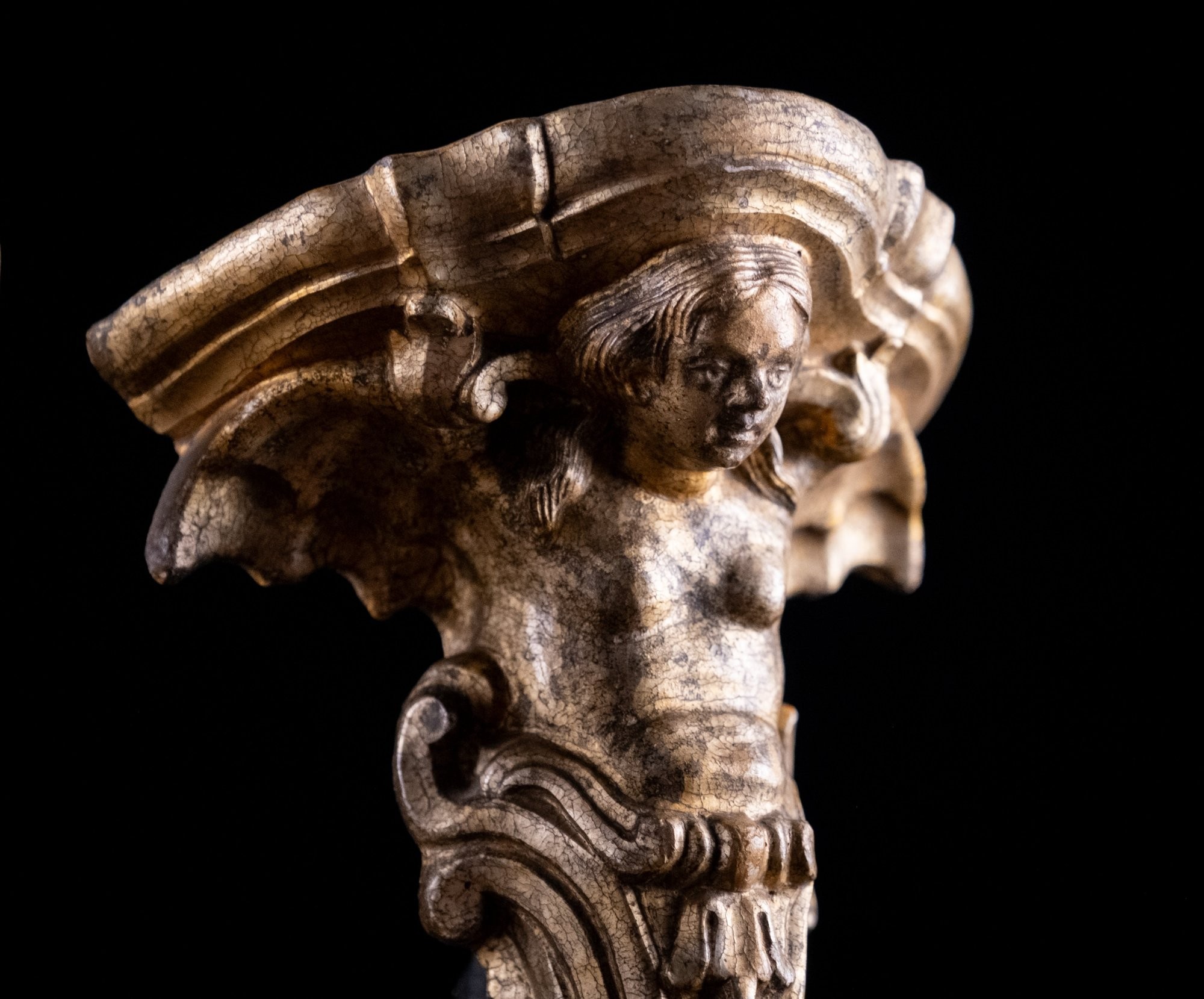
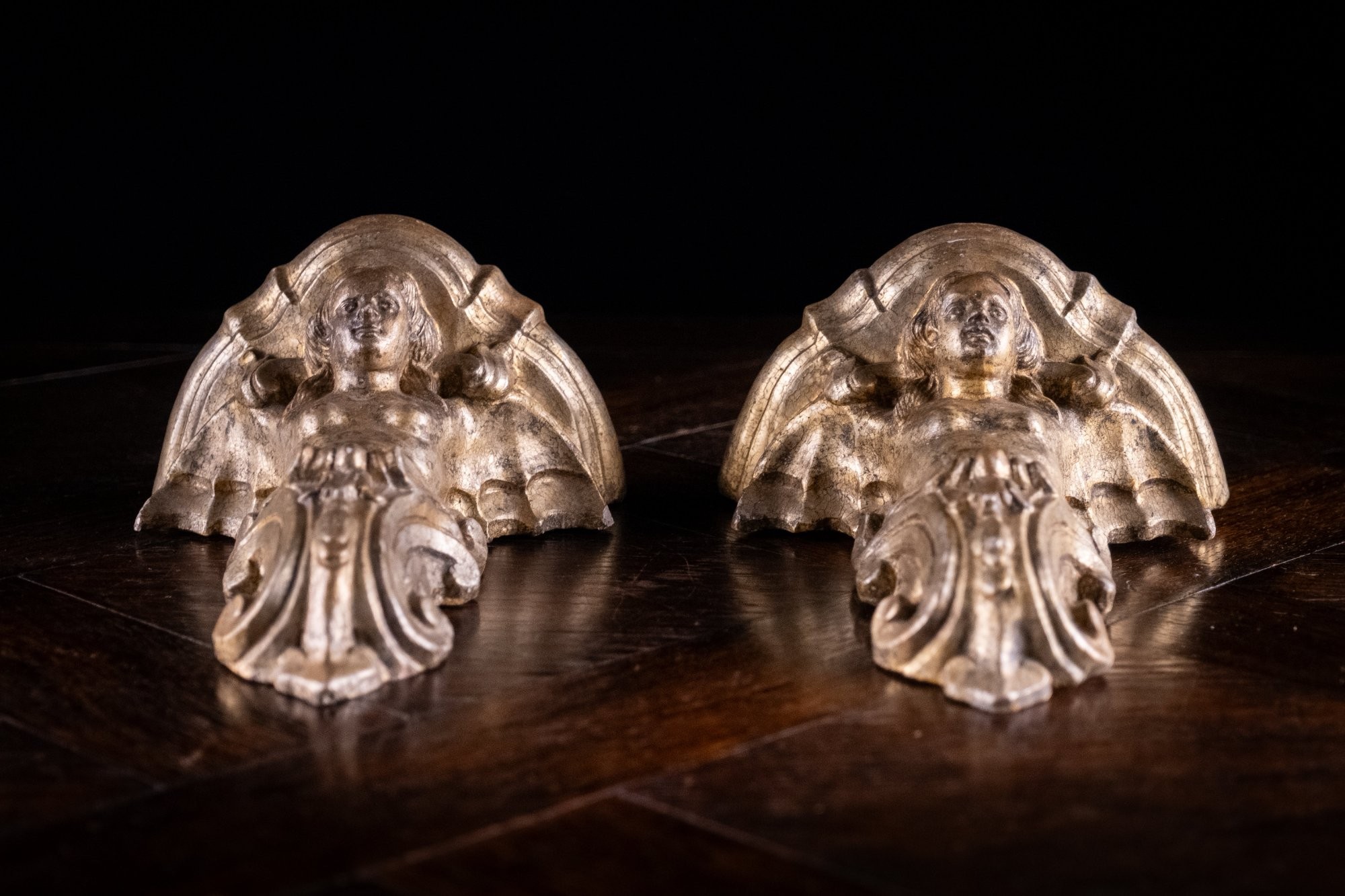
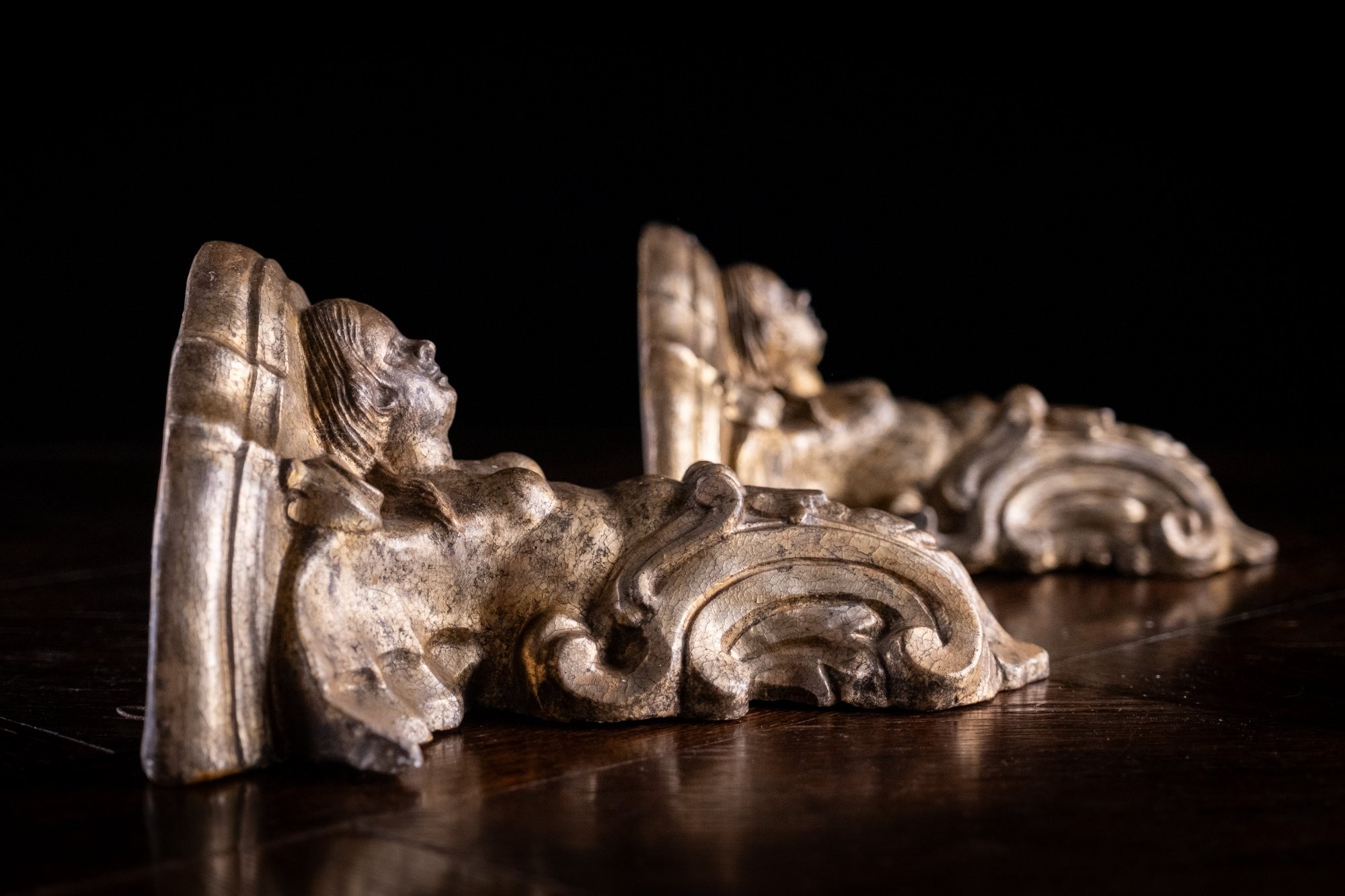
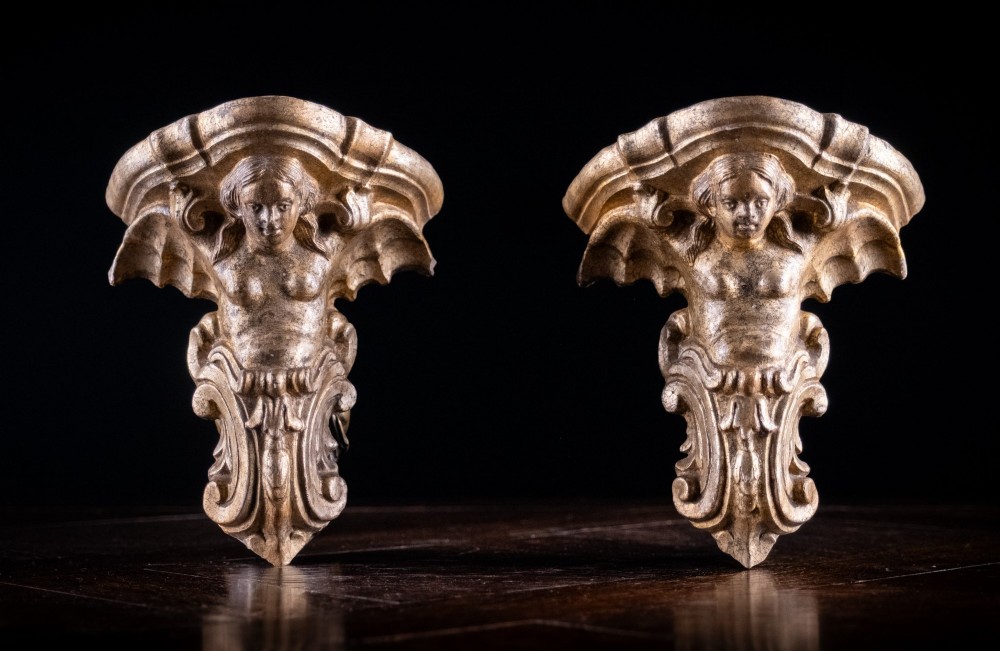
Gilt Terracotta Winged Siren Wall Brackets (With Provenance), C.1890
Harrington Antiques
for sale €1,463     $1,588
£1,250
Harrington Antiques

Harrington Antiques

Sellingantiques Verified Since Mar 2021
View Dealers Stock Page
  • About Us
    Antiques & decorative interior pieces.
Id #SA1231023
PDF SHARE
SAVE

Gilt Terracotta Winged Siren Wall Brackets (With Provenance), C.1890

19th century
Description

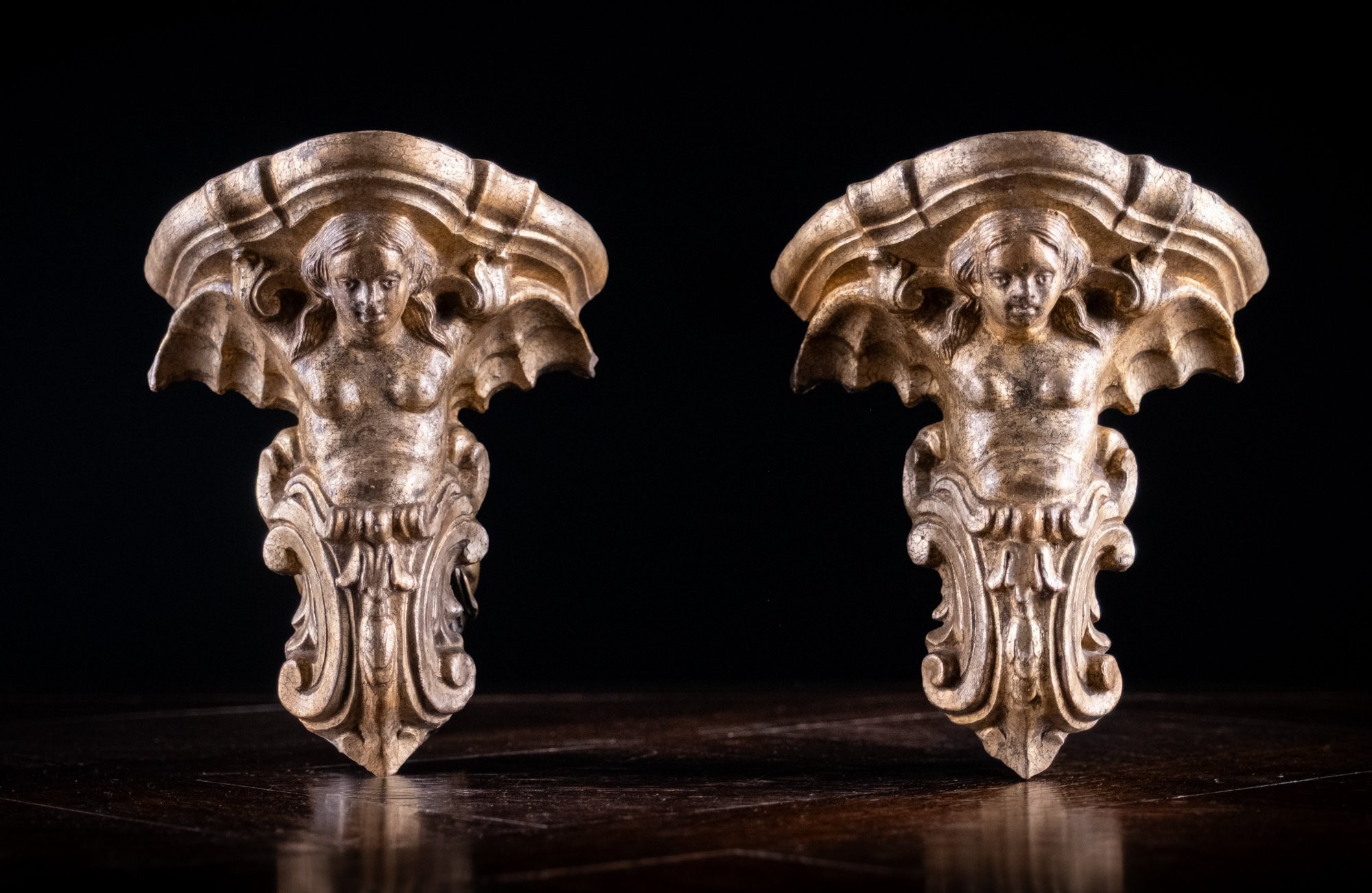
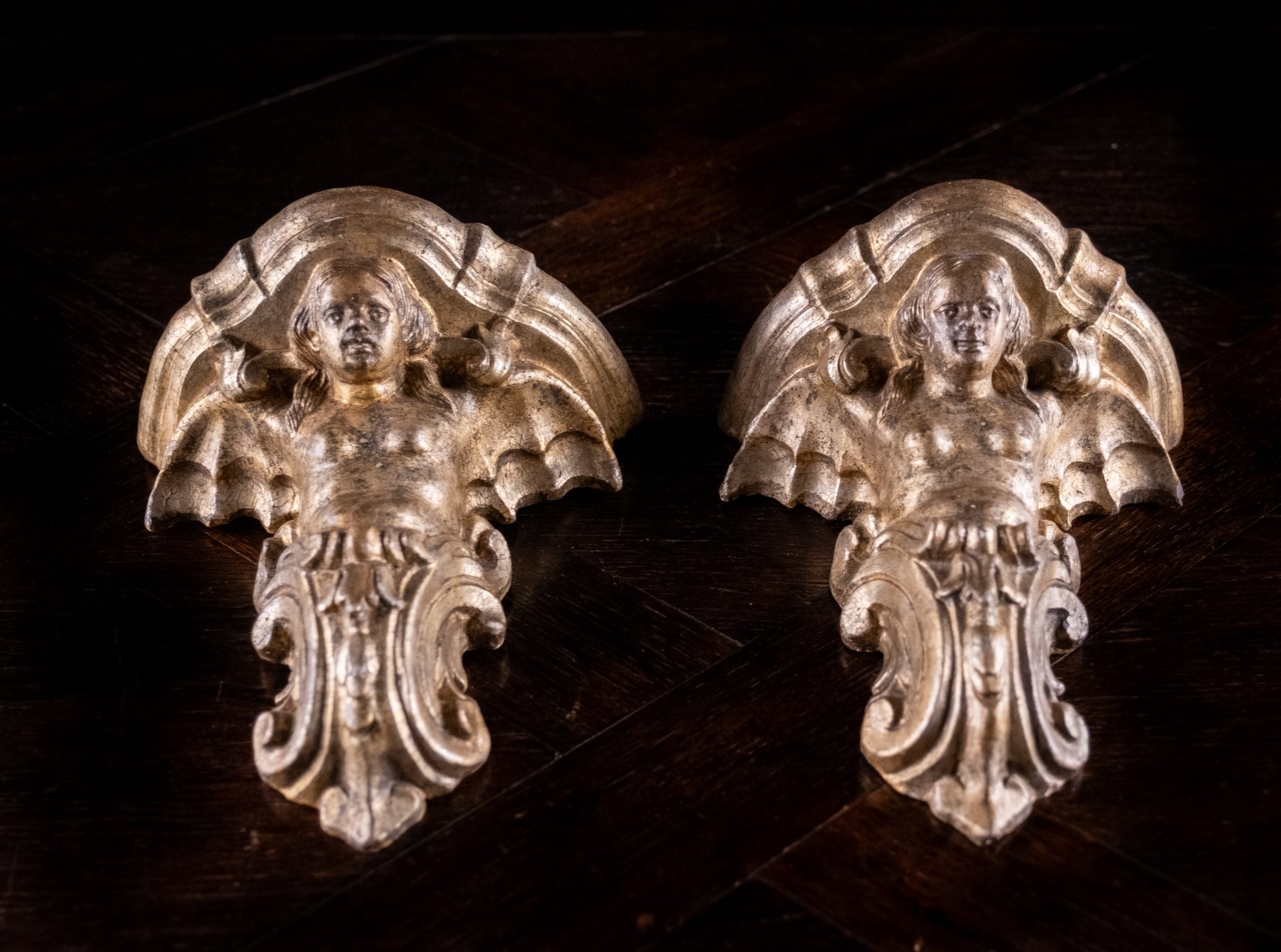
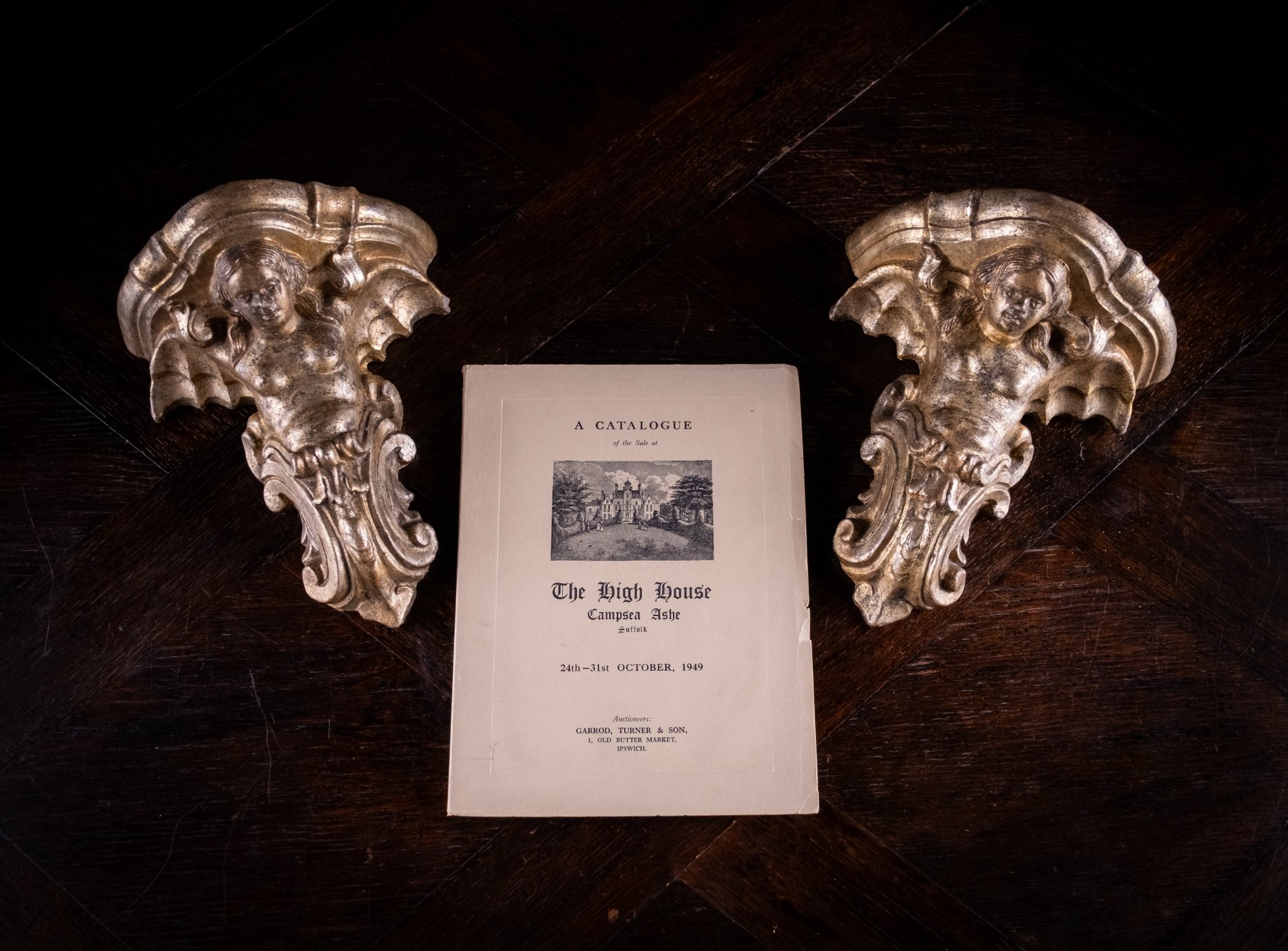
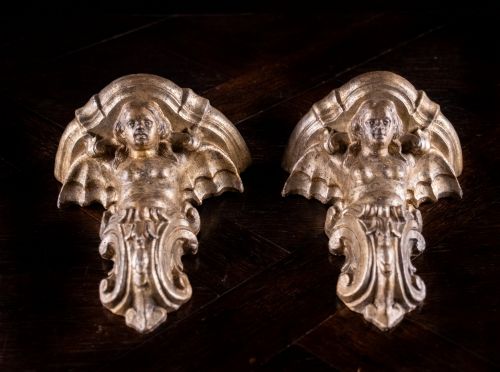
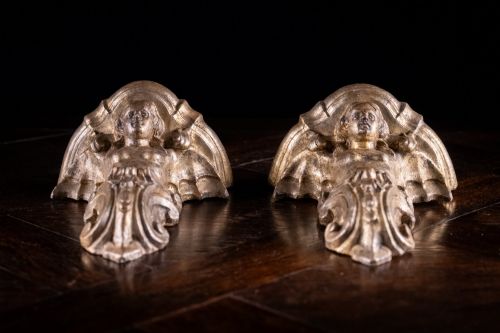
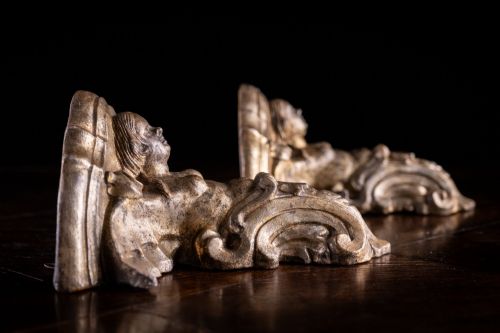
An exceptional pair of late 19th century gilt terracotta wall brackets in the form of winged sirens. Originally commissioned for the important Elizabethan 'High House' of Campsea Ashe, Suffolk.

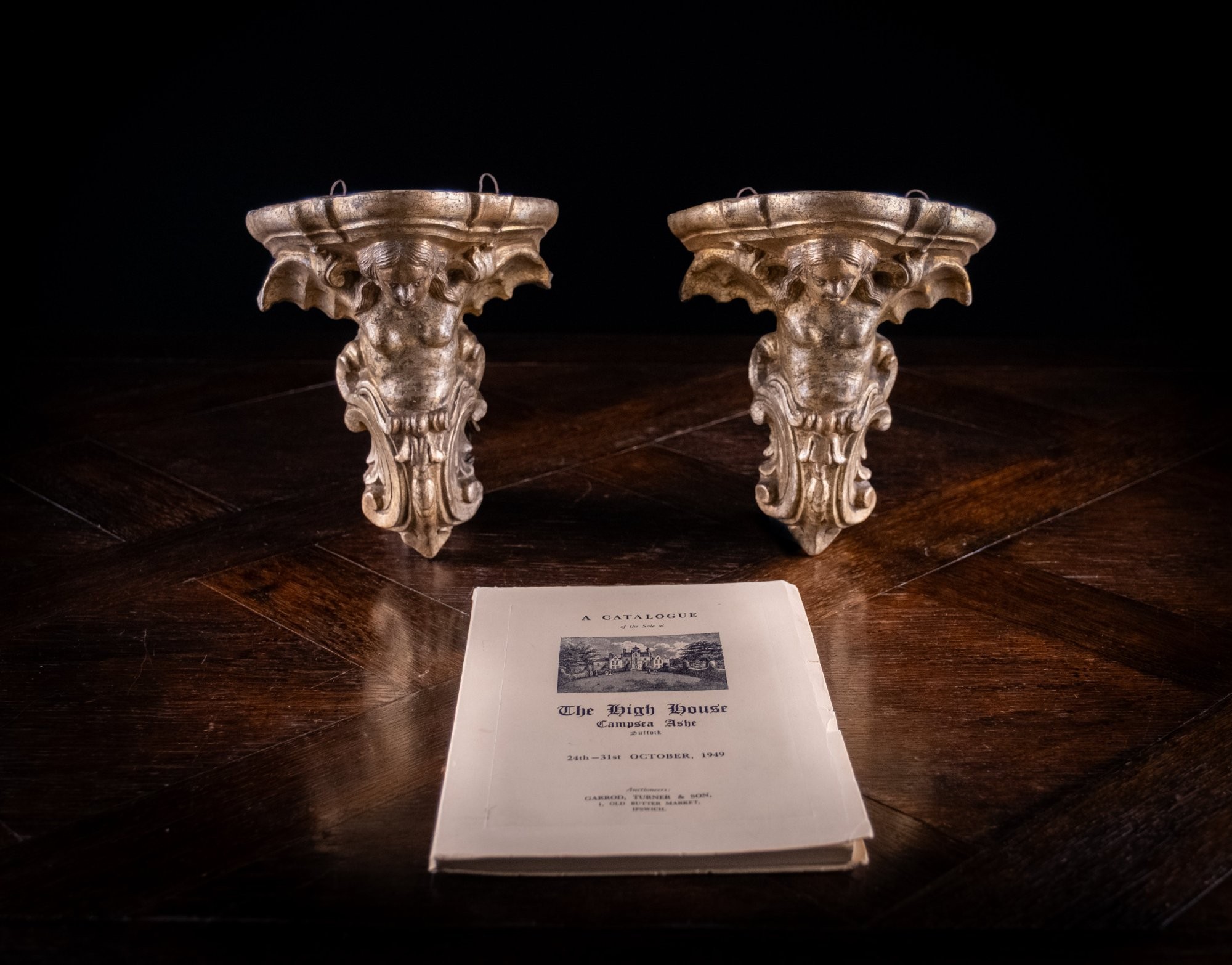
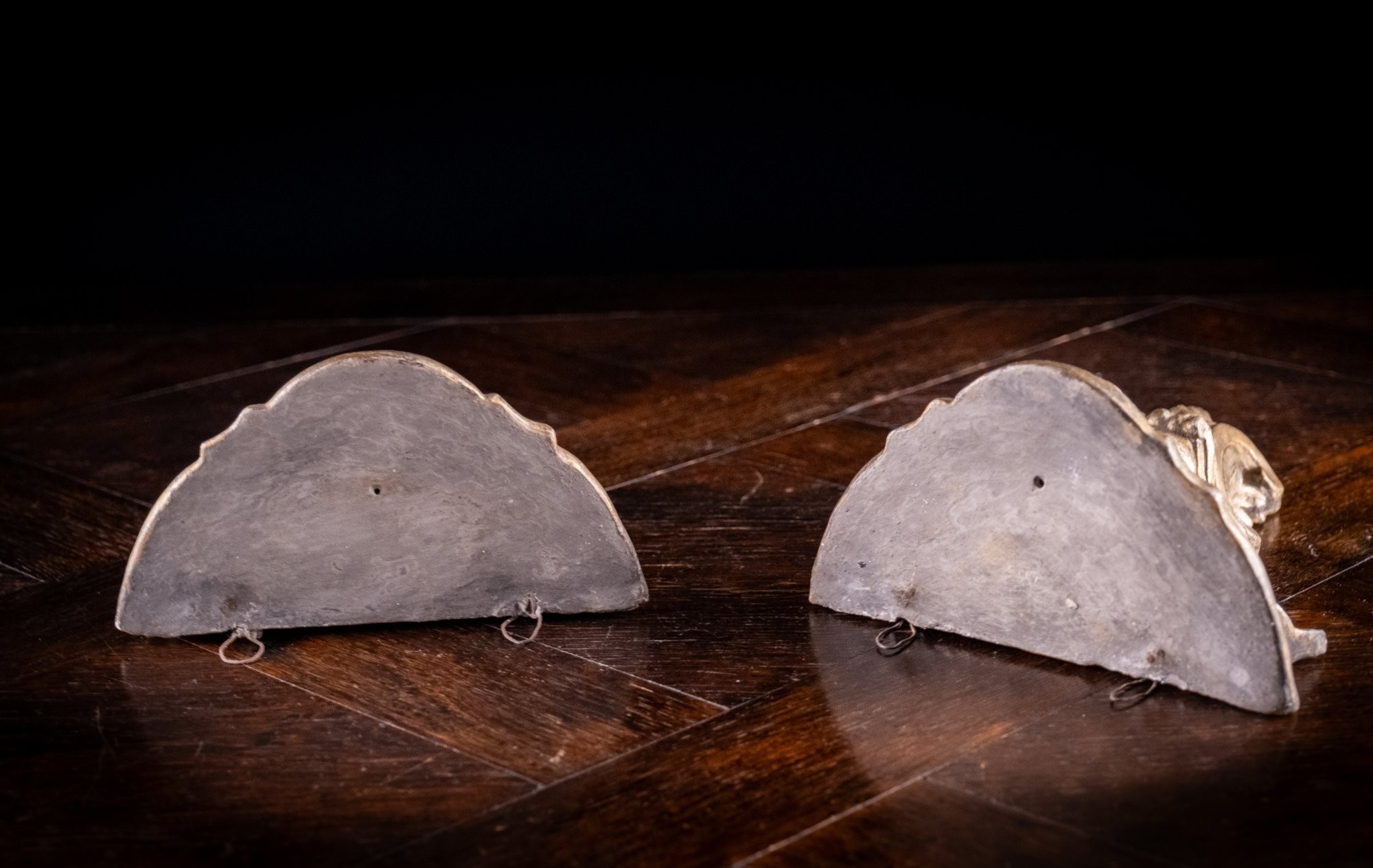
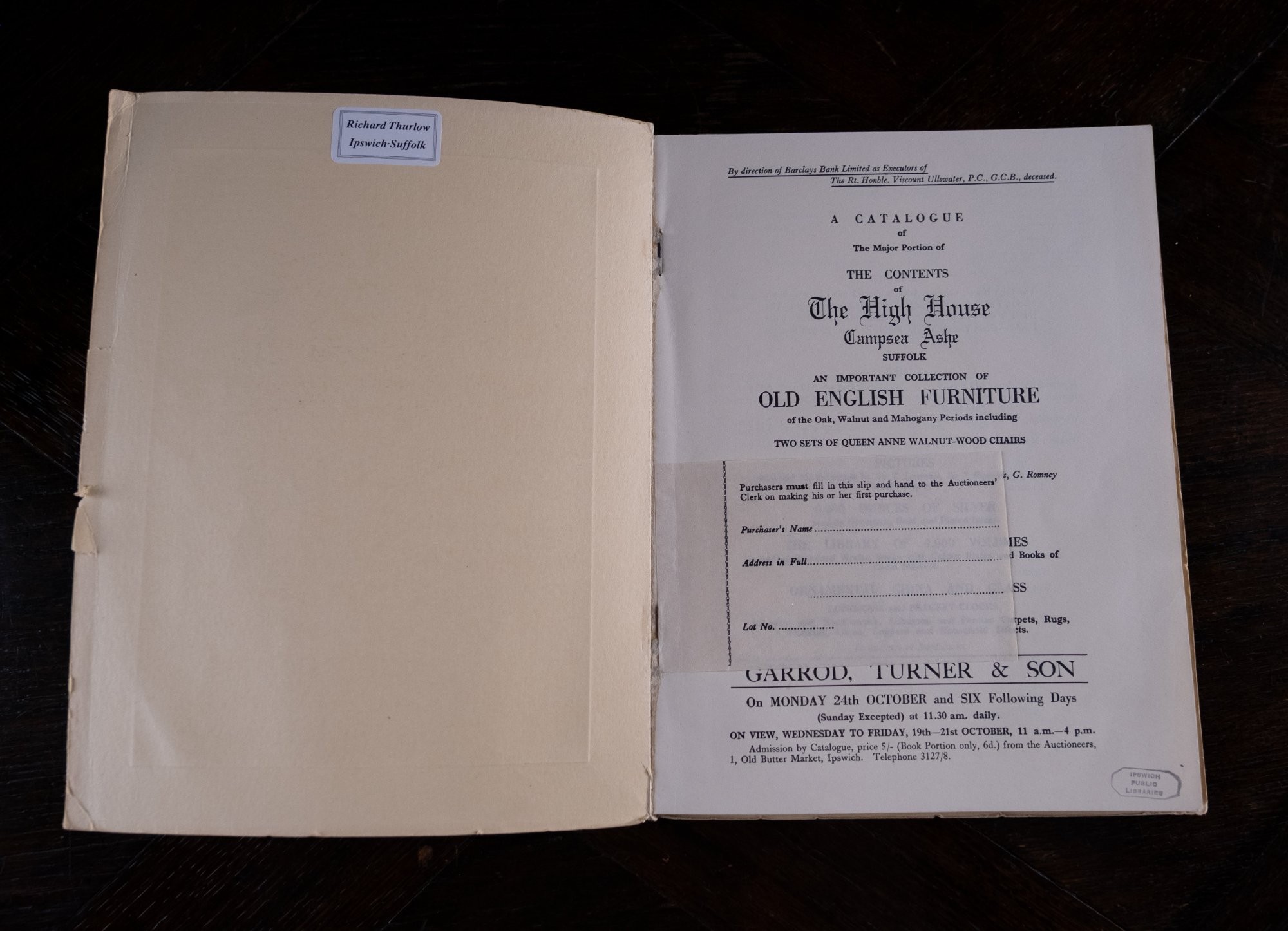
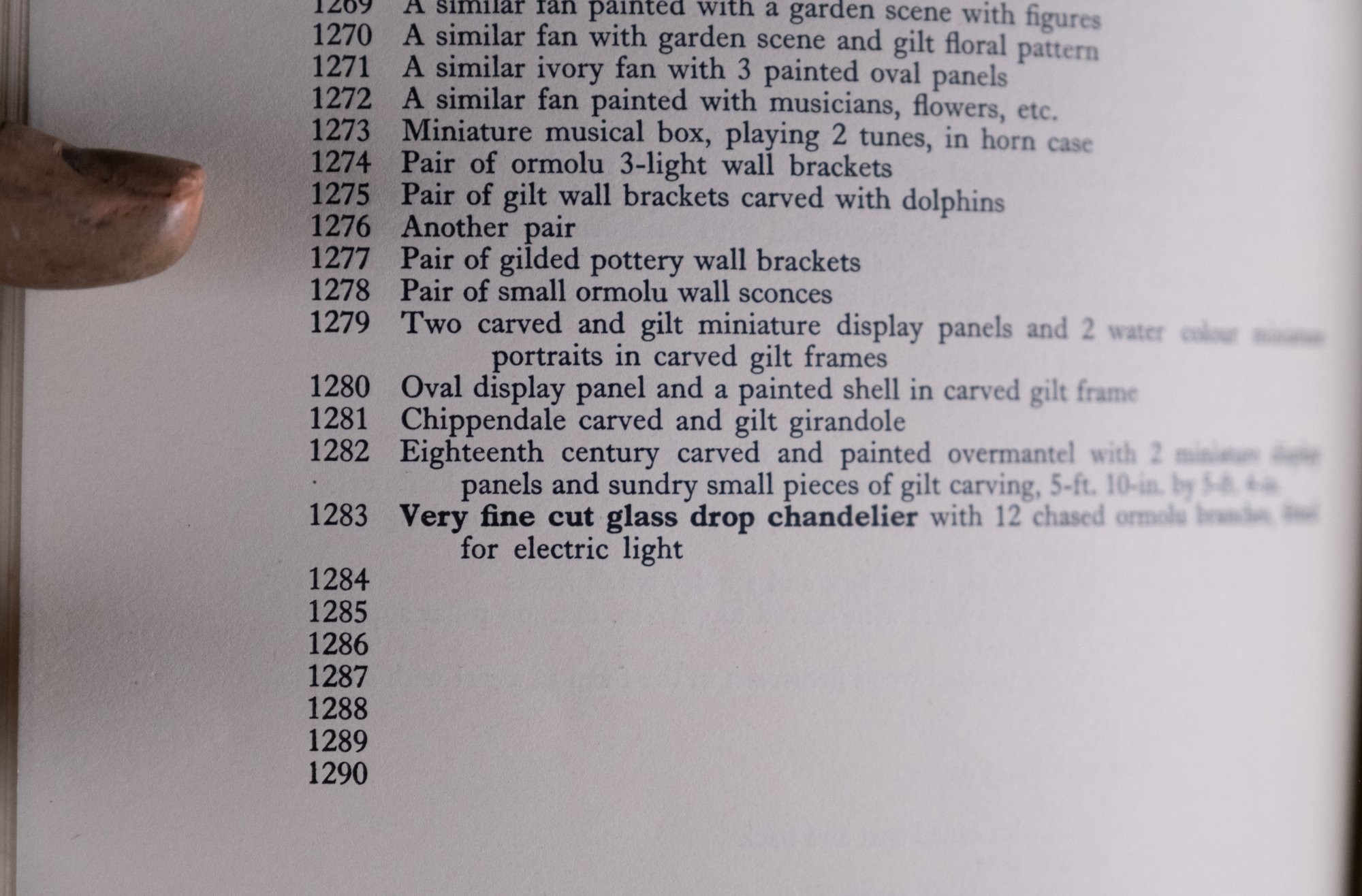
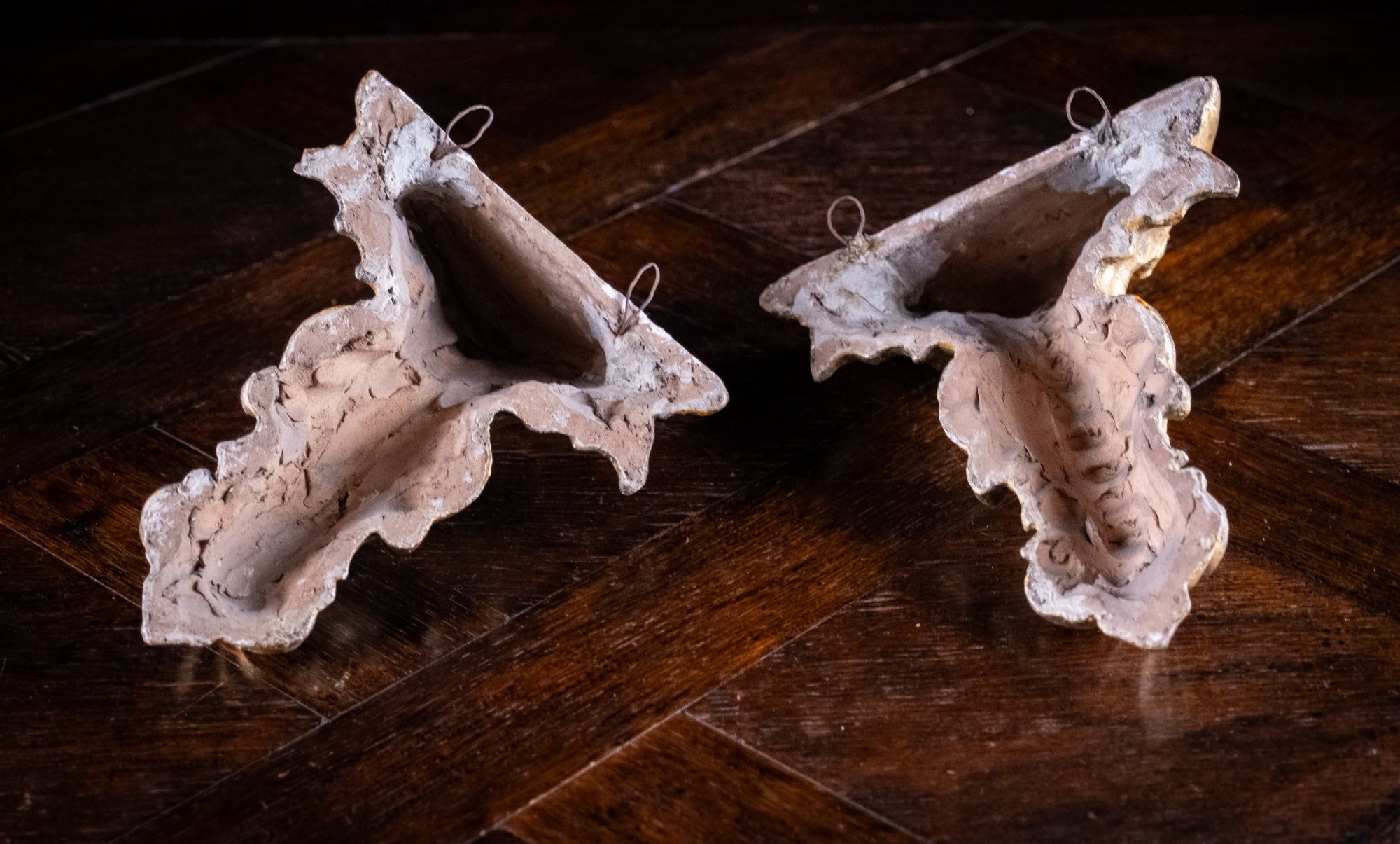
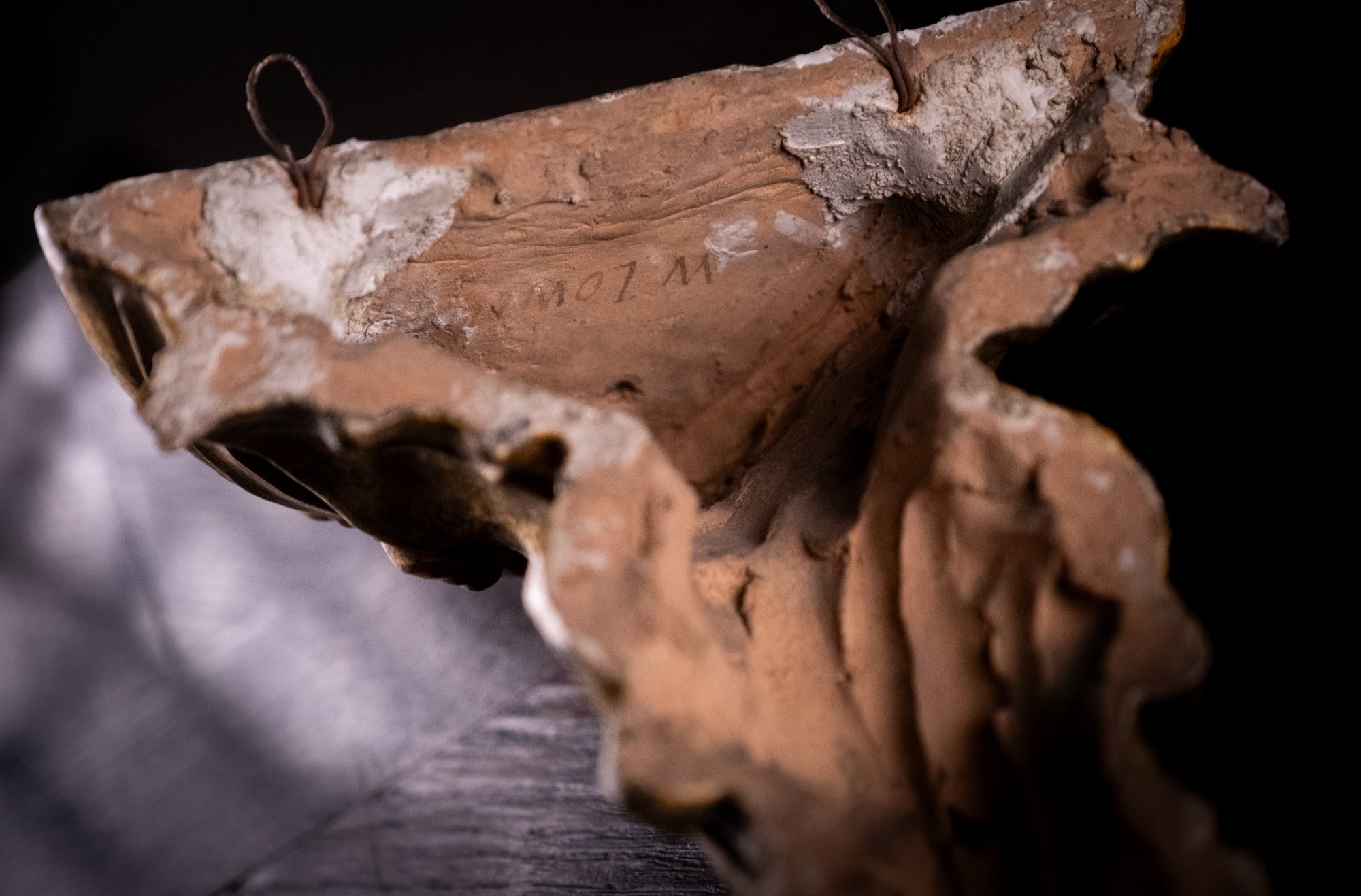
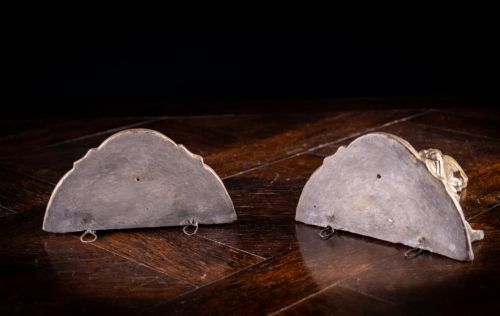
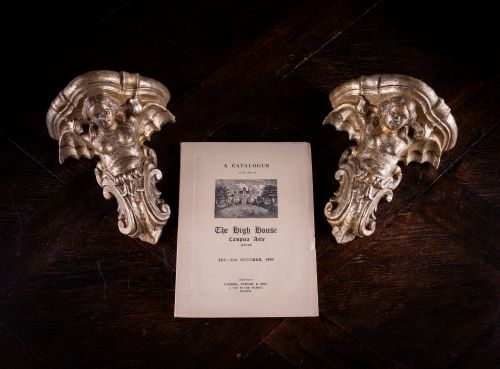
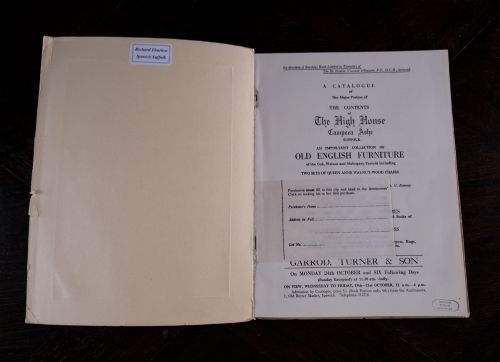
These brackets were sold from the living room of the house in the contents sale of 1949, catalogue lot number '1277'. The original auction catalogue is included. Each bracket is inscribed verso, 'W. Lowther'. William Lowther (1821-1912) purchased High House in 1883, and it remained in the Lowther family for the following 66 years (for more information on William Lowther and High House, please see below).
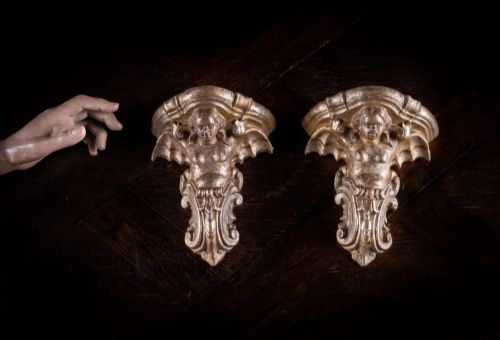
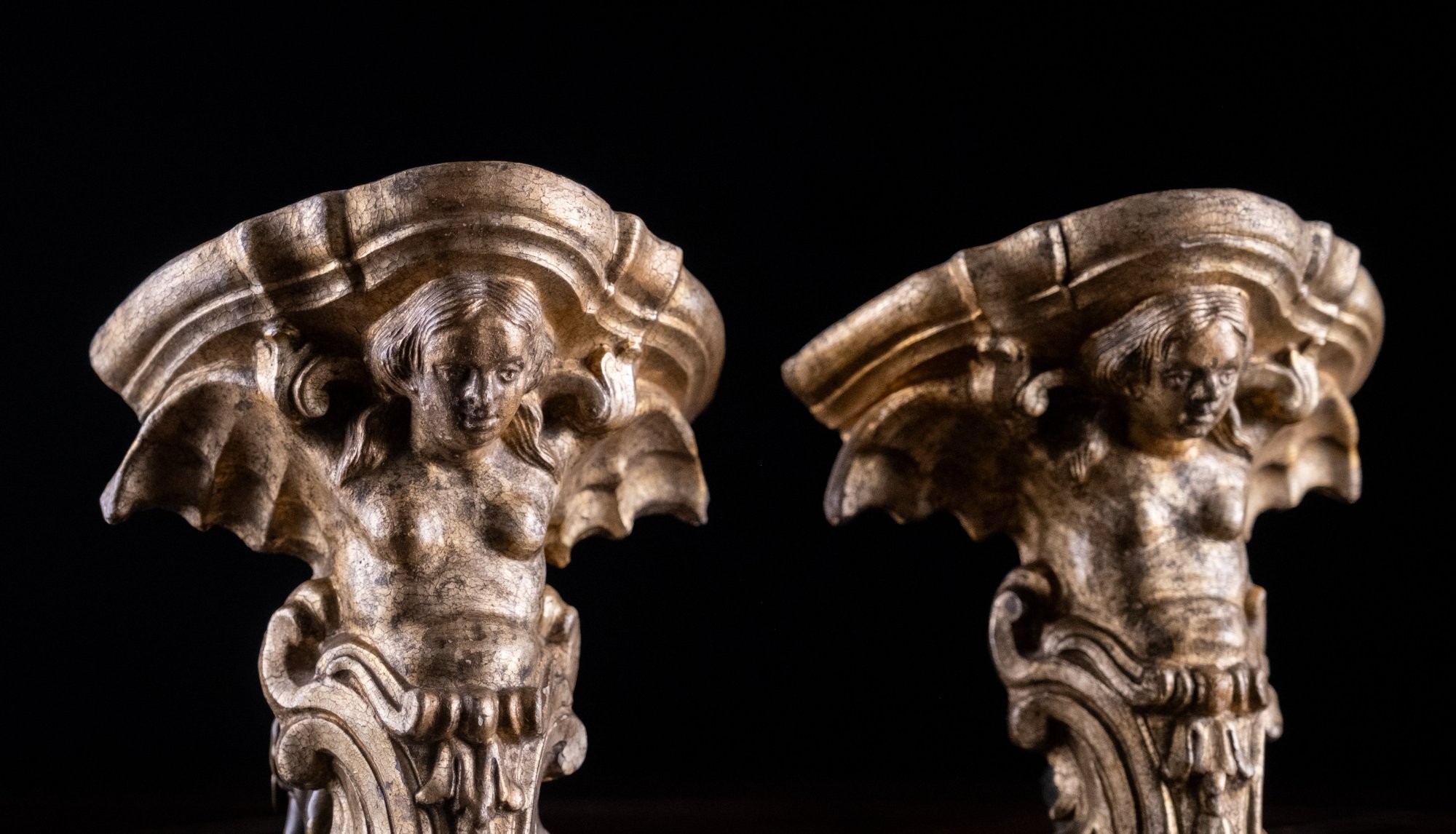
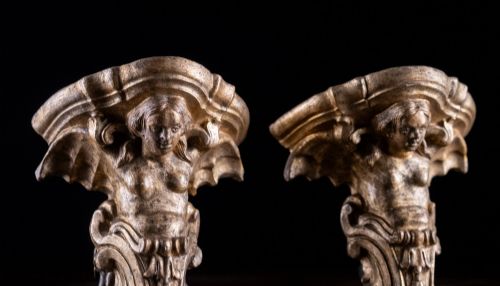
Each bracket depicts a fine Greek mythological winged siren. The use of terracotta as a material is likely little coincidence, with the application of gold leaf over fired terracotta being a known ancient Greek method in the creation of luxury reliefs and statues.
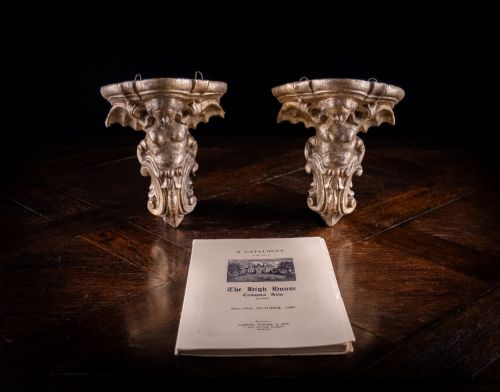
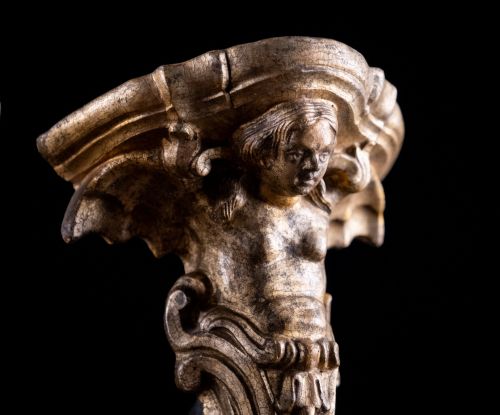
There is one very small chip to right wing tip of the smiling siren, otherwise the pair remain in a remarkably good condition throughout.

PROVENANCE:

- Commissioned by William Lowther for High House, circa.1890 (please see below history for more information)
- Purchased in house contents sale of 1949 and

- Acquired from direct descendant of original 1949 purchaser.

Dimensions:-

Height: 24cm

Width: 19cm

Depth: 11.5cm

HISTORY OF WILLIAM LOWTHER (1821-1912) AND HIGH HOUSE, CAMPSEA ASHE, SUFFOLK
William Lowther (1821-1912) bought High House from the Sheppard family in about 1883 and his family became residents of Campsea Ashe for the next 66 years.

Little is known about his early life, except that he was privately educated and then went to Magdalen College, Cambridge. He then entered the Diplomatic Service, as follows:
1841 – 1852 - Attaché to British Embassy in Berlin

1852 – 1858 - Secretary to the Legation at Naples

1858 – 1859 - Secretary to the Legation at St Petersburg

1859 – 1861 - Secretary to the Legation at Berlin
1861 – 1867 - Secretary to the Embassy at Berlin

1857 – 1868 - Minister to Argentina.

He married Charlotte Alice Park whilst working at Naples on 17th December 1853.

On settling back in England, the Lowthers lived in Mount Street, Mayfair, London, but upon receiving a bequest from his uncle, William built Lowther Lodge in Kensington and moved in there in 1875. It was a magnificent house which on his death was sold to the Royal Geographical Society who still own it today.
William was certainly not idle upon his return to England. As well as building Lowther Lodge, he was a JP and Deputy Lieutenant for Westmoreland and Cumberland as well as JP for Bedfordshire and Suffolk. He was also a Director of the London and N W Railway. In 1868, he was elected MP for Westmoreland and in 1885 he became MP for Appleby, a seat he held until 1892.
William's connection to Campsea Ashe in Suffolk was through his purchase of High House. On the death of its previous owner, John George Sheppard (the Sheppard family having owned it since 1652, John sadly dying without heir), High House was put up for sale in 1883 and it is believed there was much interest in the property, William being the successful purchaser. The Lowther family became residents for the next 66 years. Upon his death in 1912, William left the princely sum of £447,395 to his descendants, around £66 million in current terms.
There are numerous memorials to the Lowthers in the local Campsea Ashe church and churchyard which can still be found today. Most notable perhaps, is the beautiful east window within Campsea Ashe church which was erected by William and Alice’s children in their memory.
The house and its contents were sold in 1949. High House subsequently fell into significant disrepair following the stripping of its lead roof, and the house was sadly demolished in 1953.

DELIVERY

UK Mainland: FREE

International Delivery: Please contact us for a shipping quote.

Physical Dimensions
Height
24cm (9.45")
Width
19cm (7.48")
Depth
11.5cm (4.53")
Declaration

Harrington Antiques has dated these Gilt Terracotta Wall Brackets to the 1890s.

Reference Numbers
Sellingantiques Reference
SA1231023
Dealers Internal Reference
8045
Dealers Notes

PAYMENT

We accept payment via debit card, credit card, Paypal, bank transfer or cheque. We also offer a 'Pay In 3' payment service through our website.

RETURNS

We are sure that you will be delighted with your purchase. Nonetheless, to ensure you have complete peace of mind, we offer a 14 day money back guarantee.

The purchased item may be returned, in its original condition, within 14 days from receipt. Return carriage costs are the responsibility of the buyer. For larger pieces requiring a specialist courier service, we will arrange your return for you with the cost being deducted from the refund (this cost will never exceed the original charge paid).

We ask that a trackable signature method of shipping is used for the return of smaller items as we cannot be held responsible for items lost in transit.

Should you have any queries at all, please do not hesitate to contact us.

Description
An exceptional pair of late 19th century gilt terracotta wall brackets in the form of winged sirens. Originally commissioned for the important Elizabethan 'High House' of Campsea Ashe, Suffolk.
These brackets were sold from the living room of the house in the contents sale of 1949, catalogue lot number '1277'.
Harrington Antiques

The original auction catalogue is included. Each bracket is inscribed verso, 'W. Lowther'. William Lowther (1821-1912) purchased High House in 1883, and it remained in the Lowther family for the following 66 years (for more information on William Lowther and High House, please see below).

fig 1. A pair of late Victorian gilt terracotta wall brackets shaped as winged sirens with decorative acanthus scrollwork bases.
fig 1. Gilt Terracotta Winged Siren Wall Brackets (With Provenance), C.1890

Each bracket depicts a fine Greek mythological winged siren. The use of terracotta as a material is likely little coincidence, with the application of gold leaf over fired terracotta being a known ancient Greek method in the creation of luxury reliefs and statues.

fig 2. A pair of late Victorian gilt terracotta wall brackets shaped as winged sirens with decorative acanthus scrollwork bases.
fig 2. Gilt Terracotta Winged Siren Wall Brackets (With Provenance), C.1890

There is one very small chip to right wing tip of the smiling siren, otherwise the pair remain in a remarkably good condition throughout.

PROVENANCE:

Commissioned by William Lowther for High House, circa.1890 (please see below history for more information)

fig 3. A pair of late Victorian gilt terracotta wall brackets shaped as winged sirens with decorative acanthus scrollwork bases.
fig 3. Gilt Terracotta Winged Siren Wall Brackets (With Provenance), C.1890

Purchased in house contents sale of 1949 and

Acquired from direct descendant of original 1949 purchaser.

Dimensions:-

Height: 24cm

Width: 19cm

Depth: 11.5cm

HISTORY OF WILLIAM LOWTHER (1821-1912) AND HIGH HOUSE, CAMPSEA ASHE, SUFFOLK

fig 4. A pair of late Victorian gilt terracotta wall brackets shaped as winged sirens with decorative acanthus scrollwork bases.
fig 4. Gilt Terracotta Winged Siren Wall Brackets (With Provenance), C.1890

William Lowther (1821-1912) bought High House from the Sheppard family in about 1883 and his family became residents of Campsea Ashe for the next 66 years.

Little is known about his early life, except that he was privately educated and then went to Magdalen College, Cambridge. He then entered the Diplomatic Service, as follows:

fig 5. A pair of late Victorian gilt terracotta wall brackets shaped as winged sirens with decorative acanthus scrollwork bases.
fig 5. Gilt Terracotta Winged Siren Wall Brackets (With Provenance), C.1890

1841 – 1852 - Attaché to British Embassy in Berlin

1852 – 1858 - Secretary to the Legation at Naples

1858 – 1859 - Secretary to the Legation at St Petersburg

1859 – 1861 - Secretary to the Legation at Berlin

fig 6. A pair of late Victorian gilt terracotta wall brackets shaped as winged sirens with decorative acanthus scrollwork bases.
fig 6. Gilt Terracotta Winged Siren Wall Brackets (With Provenance), C.1890

1861 – 1867 - Secretary to the Embassy at Berlin

1857 – 1868 - Minister to Argentina.

He married Charlotte Alice Park whilst working at Naples on 17th December 1853.

On settling back in England, the Lowthers lived in Mount Street, Mayfair, London, but upon receiving a bequest from his uncle, William built Lowther Lodge in Kensington and moved in there in 1875. It was a magnificent house which on his death was sold to the Royal Geographical Society who still own it today.

fig 7. A pair of late Victorian gilt terracotta wall brackets shaped as winged sirens with decorative acanthus scrollwork bases.
fig 7. Gilt Terracotta Winged Siren Wall Brackets (With Provenance), C.1890

William was certainly not idle upon his return to England. As well as building Lowther Lodge, he was a JP and Deputy Lieutenant for Westmoreland and Cumberland as well as JP for Bedfordshire and Suffolk. He was also a Director of the London and N W Railway. In 1868, he was elected MP for Westmoreland and in 1885 he became MP for Appleby, a seat he held until 1892.

fig 8. A pair of late Victorian gilt terracotta wall brackets shaped as winged sirens with decorative acanthus scrollwork bases.
fig 8. Gilt Terracotta Winged Siren Wall Brackets (With Provenance), C.1890

William's connection to Campsea Ashe in Suffolk was through his purchase of High House. On the death of its previous owner, John George Sheppard (the Sheppard family having owned it since 1652, John sadly dying without heir), High House was put up for sale in 1883 and it is believed there was much interest in the property, William being the successful purchaser. The Lowther family became residents for the next 66 years. Upon his death in 1912, William left the princely sum of £447,395 to his descendants, around £66 million in current terms.

fig 9. A pair of late Victorian gilt terracotta wall brackets shaped as winged sirens with decorative acanthus scrollwork bases.
fig 9. Gilt Terracotta Winged Siren Wall Brackets (With Provenance), C.1890

There are numerous memorials to the Lowthers in the local Campsea Ashe church and churchyard which can still be found today. Most notable perhaps, is the beautiful east window within Campsea Ashe church which was erected by William and Alice’s children in their memory.

fig 10. A pair of late Victorian gilt terracotta wall brackets shaped as winged sirens with decorative acanthus scrollwork bases.
fig 10. Gilt Terracotta Winged Siren Wall Brackets (With Provenance), C.1890

The house and its contents were sold in 1949. High House subsequently fell into significant disrepair following the stripping of its lead roof, and the house was sadly demolished in 1953.

DELIVERY

UK Mainland: FREE

International Delivery: Please contact us for a shipping quote.

Height
24cm (9.45")
Width
19cm (7.48")
Depth
11.5cm (4.53")
Date of Manufacture

Harrington Antiques has dated these Gilt Terracotta Wall Brackets to the 1890s.

Reference Numbers
Sellingantiques Ref
SA1231023
Dealers Internal Ref
8045
Harrington Antiques
Harrington Antiques
Sellingantiques verified Since Mar 2021

Antiques & decorative interior pieces.

Dealer Profile

You can view the stock and full dealer information on the Harrington Antiques Profile Page
PDF SHARE
SAVE
A pair of late Victorian gilt terracotta wall brackets shaped as winged sirens with decorative acanthus scrollwork bases.
1 / 14
Archive I A pair of late Victorian gilt terracotta wall brackets shaped as winged sirens with decorative acanthus scrollwork bases.

Gilt Terracotta Winged Siren Wall Brackets (With Provenance), C.1890
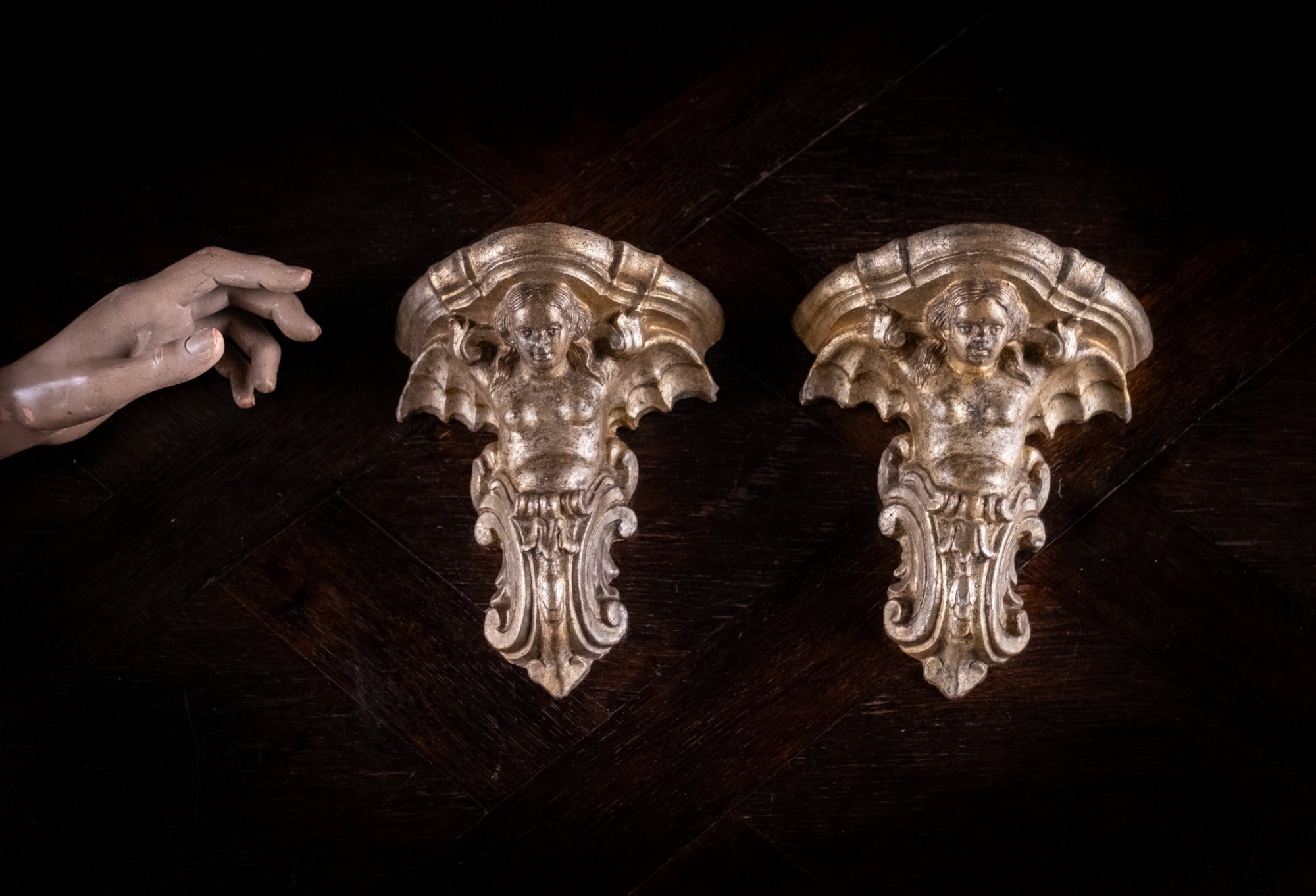
Archive II A pair of late Victorian gilt terracotta wall brackets shaped as winged sirens with decorative acanthus scrollwork bases. View II
Archive III A pair of late Victorian gilt terracotta wall brackets shaped as winged sirens with decorative acanthus scrollwork bases. View III
Archive IV A pair of late Victorian gilt terracotta wall brackets shaped as winged sirens with decorative acanthus scrollwork bases. View IV
Archive V A pair of late Victorian gilt terracotta wall brackets shaped as winged sirens with decorative acanthus scrollwork bases. View V
Archive VI A pair of late Victorian gilt terracotta wall brackets shaped as winged sirens with decorative acanthus scrollwork bases. View VI
Archive VII A pair of late Victorian gilt terracotta wall brackets shaped as winged sirens with decorative acanthus scrollwork bases. View VII
Archive VIII A pair of late Victorian gilt terracotta wall brackets shaped as winged sirens with decorative acanthus scrollwork bases. View VIII
Archive IX A pair of late Victorian gilt terracotta wall brackets shaped as winged sirens with decorative acanthus scrollwork bases. View IX
Archive X A pair of late Victorian gilt terracotta wall brackets shaped as winged sirens with decorative acanthus scrollwork bases. View X
Archive XI A pair of late Victorian gilt terracotta wall brackets shaped as winged sirens with decorative acanthus scrollwork bases. View XI
Archive XII A pair of late Victorian gilt terracotta wall brackets shaped as winged sirens with decorative acanthus scrollwork bases. View XII
Archive XIII A pair of late Victorian gilt terracotta wall brackets shaped as winged sirens with decorative acanthus scrollwork bases. View XIII
Archive XIV A pair of late Victorian gilt terracotta wall brackets shaped as winged sirens with decorative acanthus scrollwork bases. View XIV
Enlarged Archival View
Telephone 07552 767190
Location
Devon
United Kingdom
Verified Since Mar 2021
Items For Sale 74
Items Sold 827
Harrington Antiques
Harrington Antiques
Verified Since Mar 2021
View Dealer Info
Location: Devon, United Kingdom
Verified
Mar 2021
For Sale
74
Sold
827
A pair of late Victorian gilt terracotta wall brackets shaped as winged sirens with decorative acanthus scrollwork bases.
Gilt Terracotta Winged Siren Wall Brackets (With Provenance), c.1890
Ref: SA1231023
A pair of late Victorian gilt terracotta wall brackets shaped as winged sirens with decorative acanthus scrollwork bases.
Detail View 1
Detail View 2
Detail View 3
Detail View 4
Detail View 5
Detail View 6
Detail View 7
Detail View 8
Detail View 9
Detail View 10
Detail View 11
Detail View 12
Detail View 13
Archival Detail
Every single antique dealer on our platform is individually approved by our internal team. We verify their professional trade history, ethical standards, and photographic quality to ensure a secure, high-standard buying environment. Upon joining, every dealer agrees to a strict 9-point code of conduct. While issues can occasionally arise, our dealers typically resolve them swiftly and directly with the buyer. In fact, since our founding in 2002, Sellingantiques has only had to step in to help resolve an issue on roughly five occasions—a true testament to the quality of our dealers and their dedication to your happiness.
Our dealers are highly experienced in packing and shipping fragile, high-value antiques. Because you are in direct contact with the dealer, you will be able to easily go through all available shipping and insurance options together to ensure your item arrives safely.
Antiques are the ultimate green purchase. By choosing historical pieces over newly manufactured goods, you completely eliminate the carbon footprint of modern mass production while preserving exceptional, timeless craftsmanship.

Sculptural corbels featuring winged sirens or mythological figures gained popularity during the Renaissance and saw widespread revival during the 19th century in Victorian and Gothic Revival design. These figures were drawn from classical mythology to add drama and symbolic decoration to interior and exterior architecture.

Victorian decorative brackets were commonly formed from moulded terracotta, plaster, or carved timber, after which gilding was applied over a prepared gesso layer. Terracotta provided a durable substrate capable of retaining crisp, intricate detail.

Authentic period corbels display characteristic signs of age, such as natural oxidisation, slight surface distressing to the gilding, and wear around fixing points. Mouldings from this era exhibit sharp definition alongside evidence of hand-finishing.

Wall brackets are positioned on narrow wall sections, within alcoves, or flanking doorways to display small sculptures, busts, or decorative ceramics. They add vertical structure and architectural character to contemporary wall spaces.

Dust gilt surfaces gently using a soft, dry camel-hair brush to avoid flaking the gold leaf. Water and chemical solvents must be avoided, as moisture can compromise the underlying gesso and gilt finishes.
items
Add keywords to the filter
Price
£100
£250000
Era
Movements
Material
Origin
Stock Location
Freshness
Online Payments
Categories