31,481  PAGES BROWSED TODAY PAGES TODAY 90  ANTIQUES UPLOADED TODAY NEW ARRIVALS
ID #SA1227194
FOR SALE
£12,000
Email Buy
Save
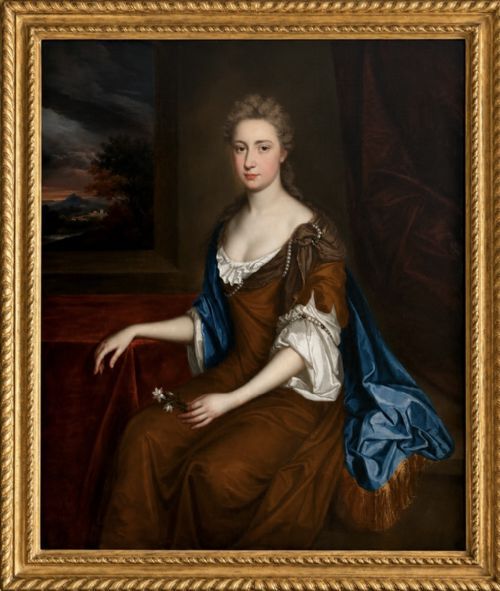
Gerard Lanscroon (1655-1737) - 17th Century British Portrait of a Lady of the Markham Family.
Period Portraits
for sale €14,040     $15,240
£12,000
Period Portraits

Period Portraits

Sellingantiques Verified Since Jan 2017
View Dealers Stock Page
  • About Us
    Specialist dealer in portraits from the 17th century to the 20th century. Our stock includes quality oil paintings, drawings, and mezzotints
Id #SA1227194
PDF SHARE
SAVE

Gerard Lanscroon (1655-1737) - 17th Century British Portrait of a Lady of the Markham Family.

17th century
For Sale by Period Portraits
Description

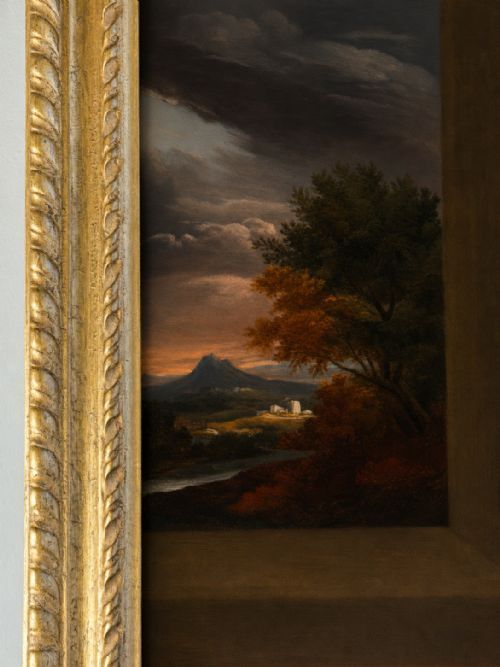
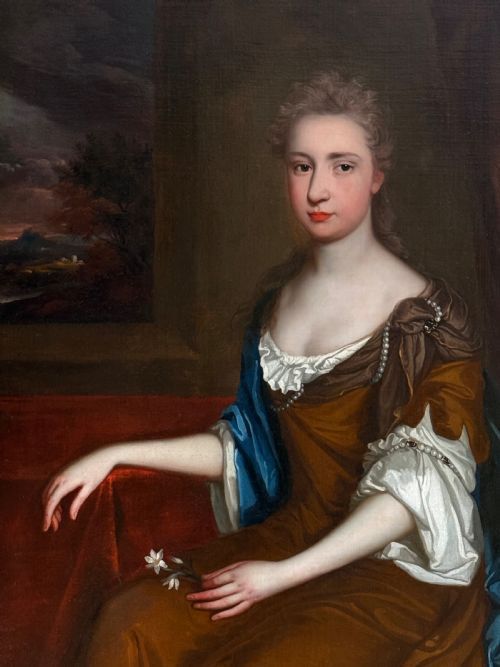
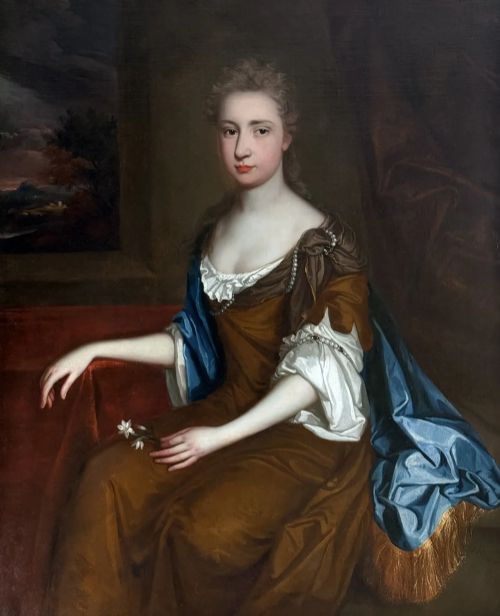
A fine and sensitively rendered 17th century portrait of a lady by Gerard Lanscroon, signed bottom right. The noble sitter depicted three-quarter length seated leaning upon a cloth covered table in front of drapery. Through an open window an extensive landscape can be glimpsed.
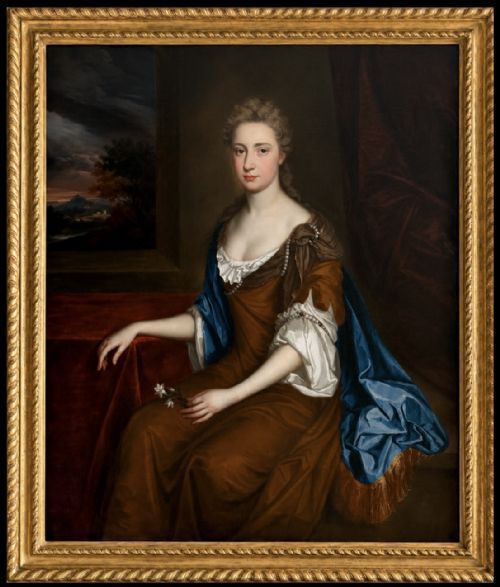
The sitter (a member of the Markham family) is expensively dressed in the idealized state of casual undress which was pioneered by court painter Sir Peter Lely and followed by Mary Beale. Instead of stiff, heavily structured court gowns with strict boning, garments were pinned loosely to look effortless, sensual, and timeless.
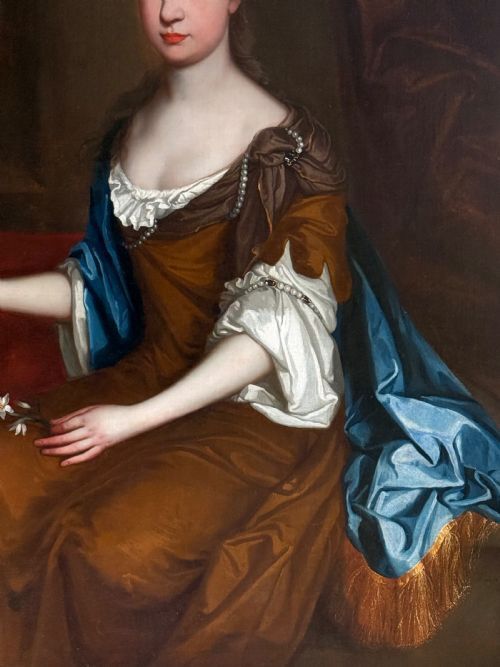
Our sitters low-cut, fitted bodice features a deep, rounded neckline that accentuates the decolletage. Under this is a white linen or silk chemise (shift) visible at the neckline, which is gathered into crisp, delicate ruffles.
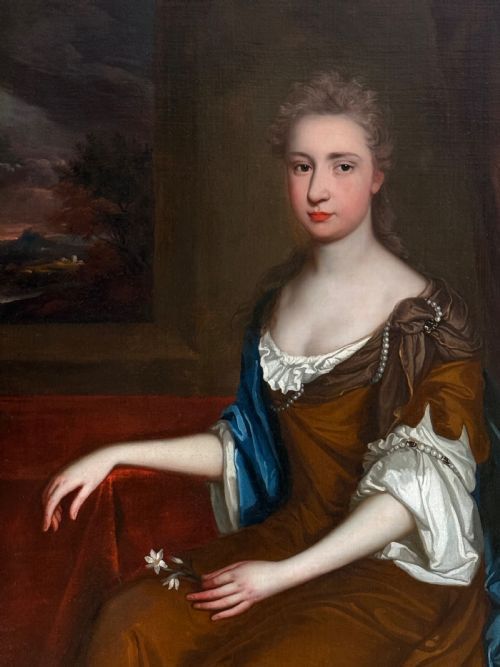
The deep, saturated coloured fabrics in this portrait would have required expensive, natural organic matter and complex chemical fixatives (mordants).

The rich bronze hue of the sitters dress was typically achieved using a base of madder root (for the warm reddish undertone) combined with walnut hulls or oak galls. To get the deep, dark metallic depth, dyers used iron sulfate as a mordant, which "saddened" or darkened the vegetable dyes into a regal bronze.
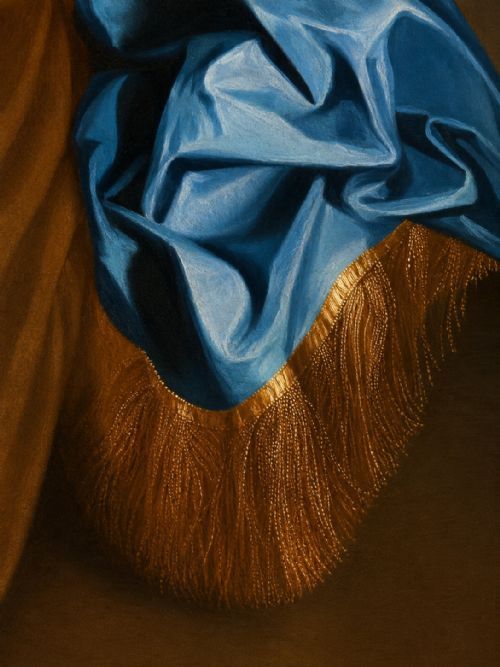
A brilliant blue shade such as the one seen on the sitters gold fringed wrap was a major status symbol. It was derived from imported indigo or high-grade woad and to achieve such a bright, reflective shade on silk, the fabric had to be dipped multiple times in a specialized fermenting vat. This was a labour-intensive process that heavily inflated the price of the textile.
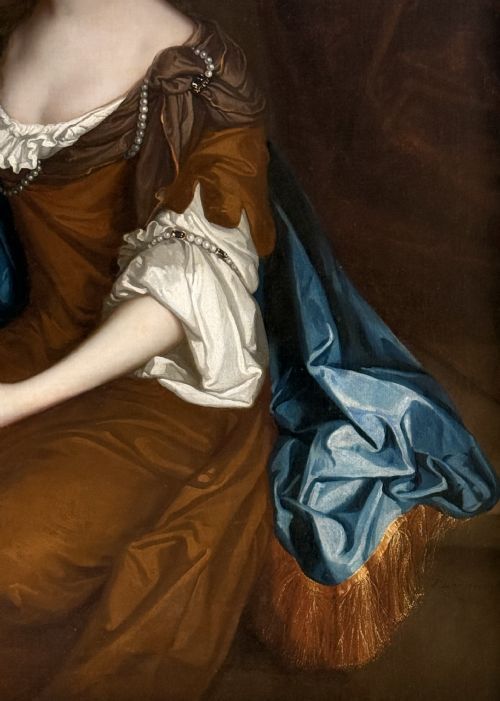
Our sitter also holds a spray of white jasmine flowers. In 17th-century portraits, this flower was a potent botanical symbol representing purity, divine love, and spiritual grace. Because of its star-like white blossoms and sweet fragrance, artists frequently used it to denote the sitter’s virtue, nobility, and modesty.
Gerard Lanscroon (1655-1737)

Lanscroon was a Flemish baroque artist who worked in England who is recorded as assistant to Verrio in 1678 at Windsor, and later at Hampton Court and who specialised in history paintings and portraits.
His father was the sculptor Valentin Lanscroon, who worked as a carver at Chatsworth House in 1695–96. Gerard completed work at Drayton House in Northamptonshire, and murals at Arnos Grove house, Southgate, London and on the staircase at Broomfield House in Palmers Green, London.

Physical Dimensions
Height
148cm (58.27")
Width
122cm (48.03")
Depth
6cm (2.36")
Declaration

Period Portraits has dated this 17th Century Oil Portrait to the 17th Century.

Reference Numbers
Sellingantiques Reference
SA1227194
Description
A fine and sensitively rendered 17th century portrait of a lady by Gerard Lanscroon, signed bottom right.
The noble sitter depicted three-quarter length seated leaning upon a cloth covered table in front of drapery.
Period Portraits

Through an open window an extensive landscape can be glimpsed.

fig 1. A seventeenth-century Baroque oil portrait of a lady in a brown dress and blue drapery, set within a carved giltwood frame.
fig 1. Gerard Lanscroon (1655-1737) - 17th Century British Portrait of a Lady of the Markham Family.

The sitter (a member of the Markham family) is expensively dressed in the idealized state of casual undress which was pioneered by court painter Sir Peter Lely and followed by Mary Beale. Instead of stiff, heavily structured court gowns with strict boning, garments were pinned loosely to look effortless, sensual, and timeless.

fig 2. A seventeenth-century Baroque oil portrait of a lady in a brown dress and blue drapery, set within a carved giltwood frame.
fig 2. Gerard Lanscroon (1655-1737) - 17th Century British Portrait of a Lady of the Markham Family.

Our sitters low-cut, fitted bodice features a deep, rounded neckline that accentuates the decolletage. Under this is a white linen or silk chemise (shift) visible at the neckline, which is gathered into crisp, delicate ruffles.

fig 3. A seventeenth-century Baroque oil portrait of a lady in a brown dress and blue drapery, set within a carved giltwood frame.
fig 3. Gerard Lanscroon (1655-1737) - 17th Century British Portrait of a Lady of the Markham Family.

The deep, saturated coloured fabrics in this portrait would have required expensive, natural organic matter and complex chemical fixatives (mordants).

The rich bronze hue of the sitters dress was typically achieved using a base of madder root (for the warm reddish undertone) combined with walnut hulls or oak galls. To get the deep, dark metallic depth, dyers used iron sulfate as a mordant, which "saddened" or darkened the vegetable dyes into a regal bronze.

fig 4. A seventeenth-century Baroque oil portrait of a lady in a brown dress and blue drapery, set within a carved giltwood frame.
fig 4. Gerard Lanscroon (1655-1737) - 17th Century British Portrait of a Lady of the Markham Family.

A brilliant blue shade such as the one seen on the sitters gold fringed wrap was a major status symbol. It was derived from imported indigo or high-grade woad and to achieve such a bright, reflective shade on silk, the fabric had to be dipped multiple times in a specialized fermenting vat. This was a labour-intensive process that heavily inflated the price of the textile.

fig 5. A seventeenth-century Baroque oil portrait of a lady in a brown dress and blue drapery, set within a carved giltwood frame.
fig 5. Gerard Lanscroon (1655-1737) - 17th Century British Portrait of a Lady of the Markham Family.

Our sitter also holds a spray of white jasmine flowers. In 17th-century portraits, this flower was a potent botanical symbol representing purity, divine love, and spiritual grace. Because of its star-like white blossoms and sweet fragrance, artists frequently used it to denote the sitter’s virtue, nobility, and modesty.

fig 6. A seventeenth-century Baroque oil portrait of a lady in a brown dress and blue drapery, set within a carved giltwood frame.
fig 6. Gerard Lanscroon (1655-1737) - 17th Century British Portrait of a Lady of the Markham Family.

Gerard Lanscroon (1655-1737)

Lanscroon was a Flemish baroque artist who worked in England who is recorded as assistant to Verrio in 1678 at Windsor, and later at Hampton Court and who specialised in history paintings and portraits.

fig 7. A seventeenth-century Baroque oil portrait of a lady in a brown dress and blue drapery, set within a carved giltwood frame.
fig 7. Gerard Lanscroon (1655-1737) - 17th Century British Portrait of a Lady of the Markham Family.

His father was the sculptor Valentin Lanscroon, who worked as a carver at Chatsworth House in 1695–96. Gerard completed work at Drayton House in Northamptonshire, and murals at Arnos Grove house, Southgate, London and on the staircase at Broomfield House in Palmers Green, London.

Height
148cm (58.27")
Width
122cm (48.03")
Depth
6cm (2.36")
Date of Manufacture

Period Portraits has dated this 17th Century Oil Portrait to the 17th Century.

Reference Numbers
Sellingantiques Ref
SA1227194
Period Portraits
Period Portraits
Sellingantiques verified Since Jan 2017

Specialist dealer in portraits from the 17th century to the 20th century. Our stock includes quality oil paintings, drawings, and mezzotints

Dealer Profile

You can view the stock and full dealer information on the Period Portraits Profile Page
PDF SHARE
SAVE
A seventeenth-century Baroque oil portrait of a lady in a brown dress and blue drapery, set within a carved giltwood frame.
1 / 9
Archive I A seventeenth-century Baroque oil portrait of a lady in a brown dress and blue drapery, set within a carved giltwood frame.

Gerard Lanscroon (1655-1737) - 17th Century British Portrait of a Lady of the Markham Family.
Archive II A seventeenth-century Baroque oil portrait of a lady in a brown dress and blue drapery, set within a carved giltwood frame. View II
Archive III A seventeenth-century Baroque oil portrait of a lady in a brown dress and blue drapery, set within a carved giltwood frame. View III
Archive IV A seventeenth-century Baroque oil portrait of a lady in a brown dress and blue drapery, set within a carved giltwood frame. View IV
Archive V A seventeenth-century Baroque oil portrait of a lady in a brown dress and blue drapery, set within a carved giltwood frame. View V
Archive VI A seventeenth-century Baroque oil portrait of a lady in a brown dress and blue drapery, set within a carved giltwood frame. View VI
Archive VII A seventeenth-century Baroque oil portrait of a lady in a brown dress and blue drapery, set within a carved giltwood frame. View VII
Archive VIII A seventeenth-century Baroque oil portrait of a lady in a brown dress and blue drapery, set within a carved giltwood frame. View VIII
Archive IX A seventeenth-century Baroque oil portrait of a lady in a brown dress and blue drapery, set within a carved giltwood frame. View IX
FURTHER BROWSING

Visitors also looked at these ⇣

Enlarged Archival View
Telephone 07889 859729
Location
North Yorkshire
United Kingdom
Verified Since Jan 2017
Items For Sale 47
Items Sold 61
Period Portraits
Period Portraits
Verified Since Jan 2017
View Dealer Info
Location: North Yorkshire, United Kingdom
Verified
Jan 2017
For Sale
47
Sold
61
A seventeenth-century Baroque oil portrait of a lady in a brown dress and blue drapery, set within a carved giltwood frame.
GERARD LANSCROON (1655-1737) - 17TH CENTURY BRITISH PORTRAIT OF A LADY OF THE MARKHAM FAMILY.
Ref: SA1227194
A seventeenth-century Baroque oil portrait of a lady in a brown dress and blue drapery, set within a carved giltwood frame.
Detail View 1
Detail View 2
Detail View 3
Detail View 4
Detail View 5
Detail View 6
Detail View 7
Detail View 8
Archival Detail
Every single antique dealer on our platform is individually approved by our internal team. We verify their professional trade history, ethical standards, and photographic quality to ensure a secure, high-standard buying environment. Upon joining, every dealer agrees to a strict 9-point code of conduct. While issues can occasionally arise, our dealers typically resolve them swiftly and directly with the buyer. In fact, since our founding in 2002, Sellingantiques has only had to step in to help resolve an issue on roughly five occasions—a true testament to the quality of our dealers and their dedication to your happiness.
Our dealers are highly experienced in packing and shipping fragile, high-value antiques. Because you are in direct contact with the dealer, you will be able to easily go through all available shipping and insurance options together to ensure your item arrives safely.
Antiques are the ultimate green purchase. By choosing historical pieces over newly manufactured goods, you completely eliminate the carbon footprint of modern mass production while preserving exceptional, timeless craftsmanship.

During the 17th century, British portraiture was heavily influenced by continental European masters, featuring formal three-quarter poses, dramatic chiaroscuro lighting, rich silk drapery, and symbolic landscape vistas.

Portraits from this era were typically executed using ground oil paints mixed with natural pigments on hand-stretched linen canvas, housed in carved timber frames finished with gold leaf gilding.

Authentic period works display natural craquelure patterns across the paint film, historic wooden stretcher key construction, and natural oxidisation or darkening on the reverse of the canvas.

A large Baroque portrait creates a focal point when positioned above a fireplace mantelpiece, sideboard, or within a contemporary gallery wall to provide historical contrast against modern furnishings.

Keep the artwork away from direct sunlight, radiator heat, and fluctuating humidity, and dust the gilded frame lightly using a dry, soft brush without liquid polish.
items
Add keywords to the filter
Price
£100
£250000
Era
Movements
Material
Origin
Stock Location
Freshness
Online Payments
Categories