8,328  PAGES BROWSED TODAY PAGES TODAY 36  ANTIQUES UPLOADED TODAY NEW ARRIVALS
ID #SA1220923
FOR SALE
£3,400
Email
Save
Horse Portrait Oil Painting of a Bay Horse in a Stable by Albert Clark
Benton Fine Art
for sale €3,978     $4,318
£3,400
Benton Fine Art

Benton Fine Art

Sellingantiques Verified Since Sep 2012
View Dealers Stock Page
  • About Us
    Specialists in 19th & early 20th century original oil paintings by listed artists
  • Trade Associations
    Benton Fine Art is a registered member of LAPADA  BADA  CINOA
Id #SA1220923
PDF SHARE
SAVE

Horse Portrait Oil Painting of a Bay Horse in a Stable by Albert Clark

1900 - 1920
For Sale by Benton Fine Art
Description

Albert Clark

British, (1843-1928)

Bay Horse in a Stable

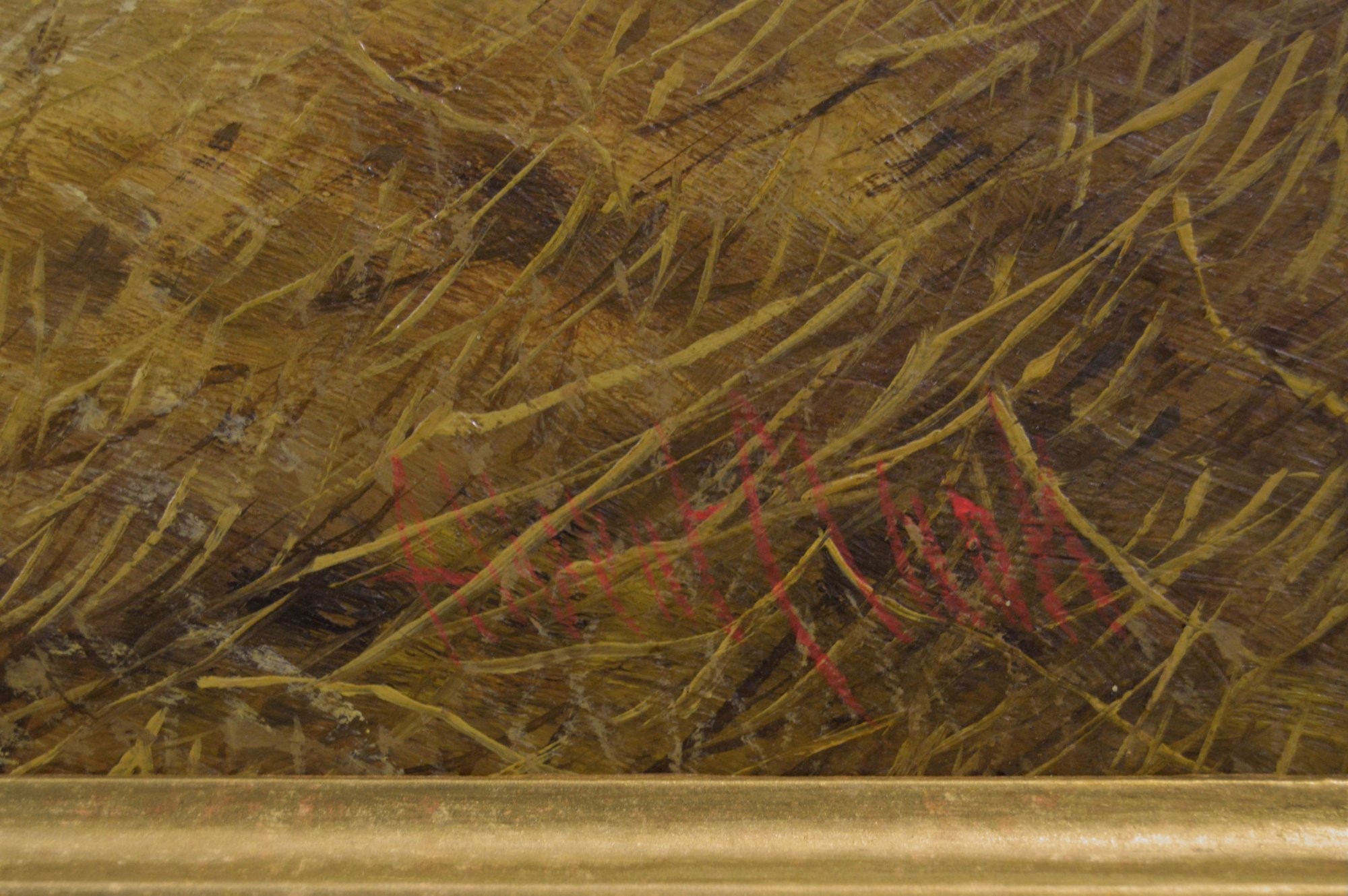
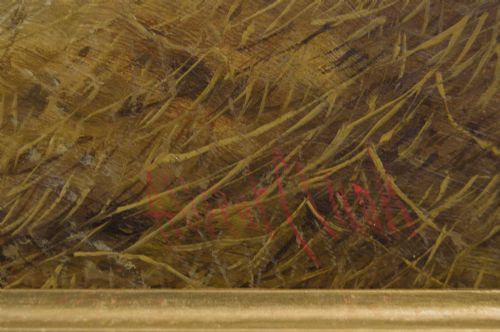
Oil on canvas, signed

Image size: 19.25 inches x 23.25 inches

Size including frame: 25.75 inches x 29.75 inches

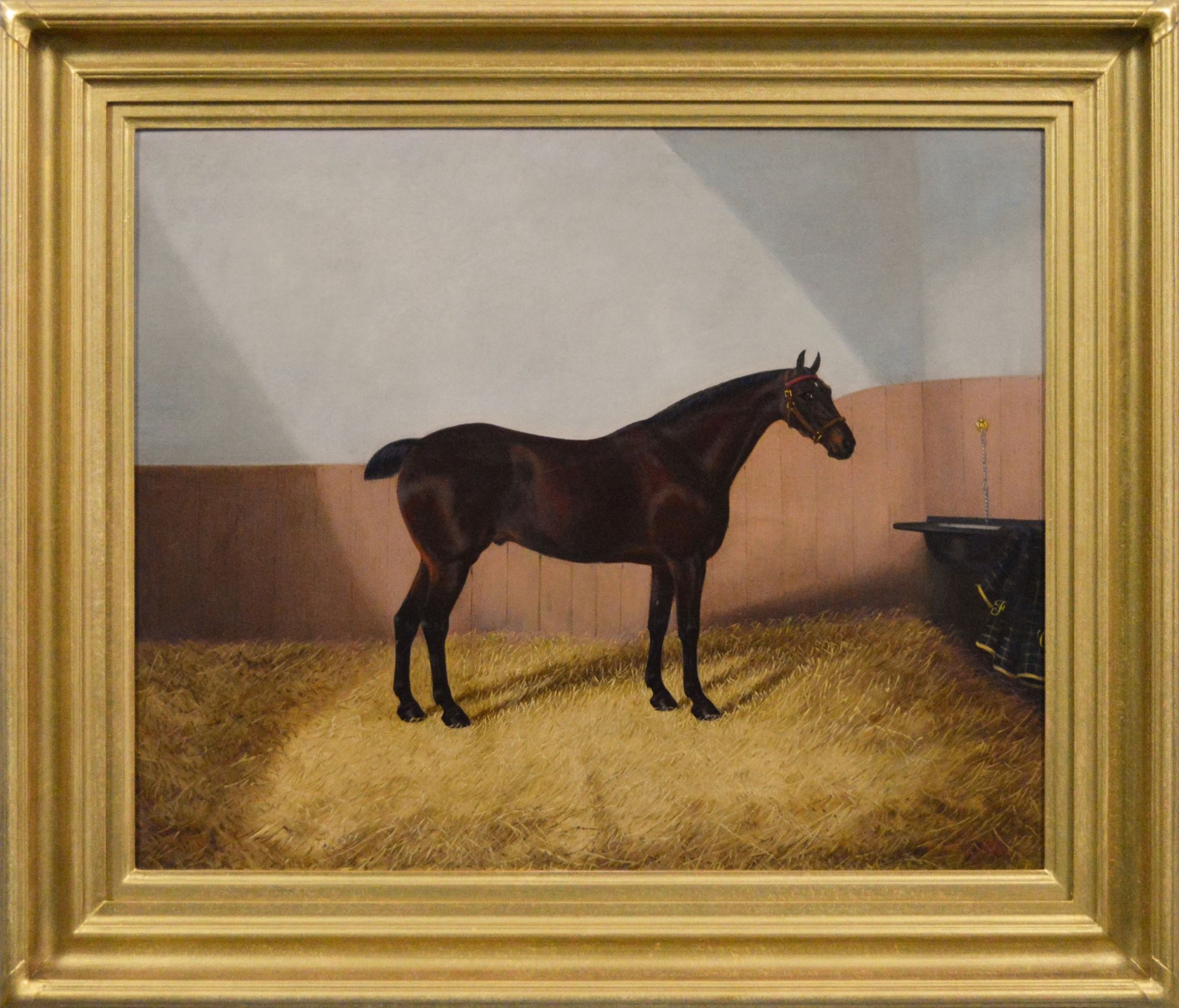
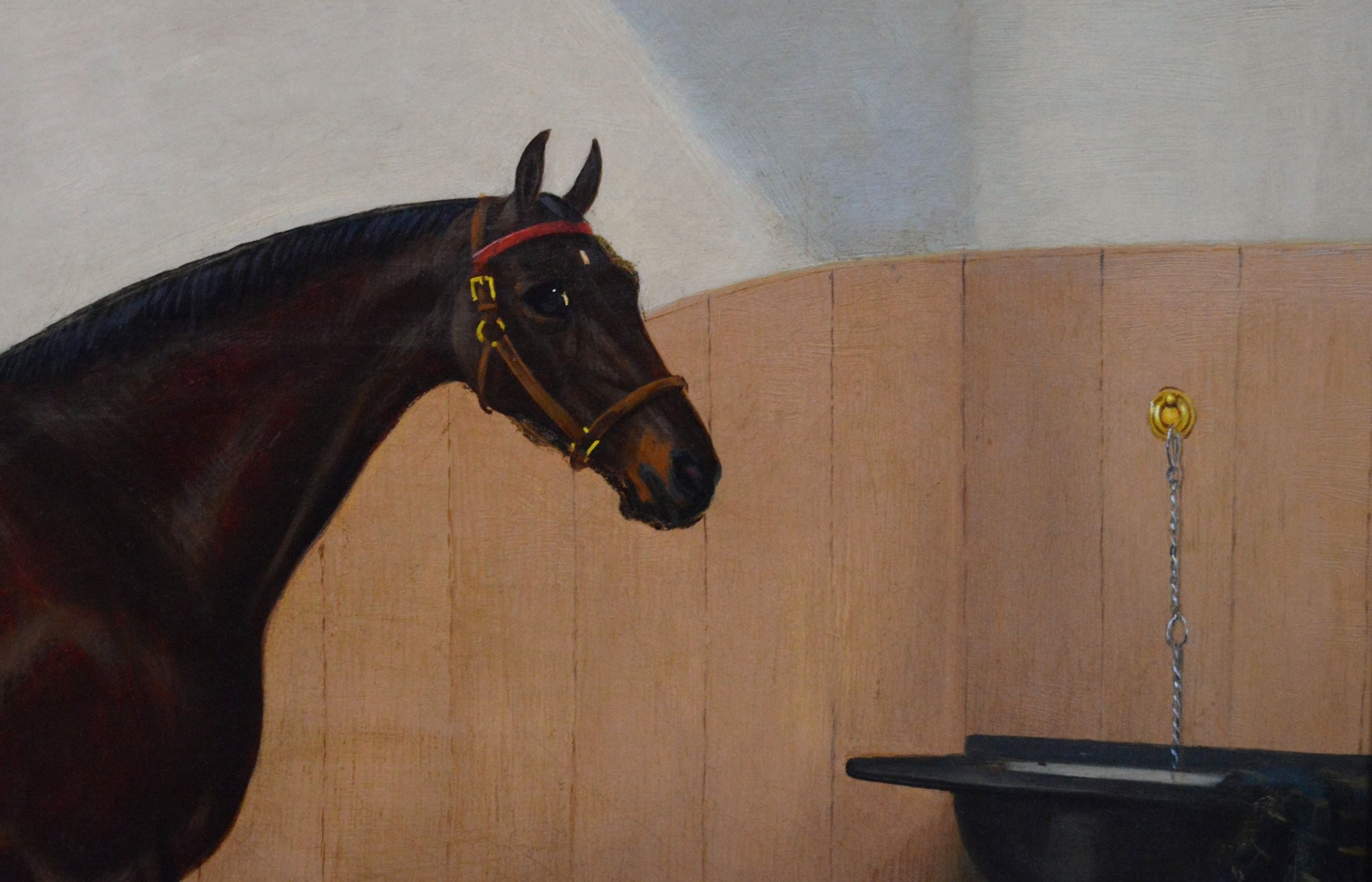
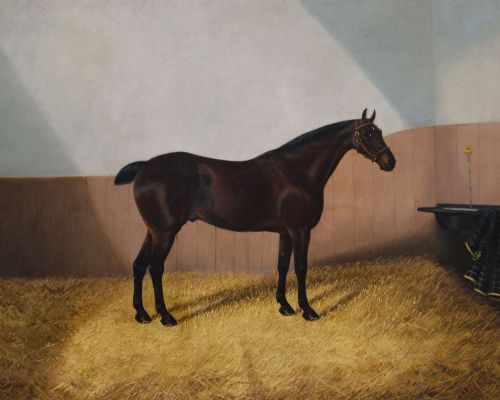
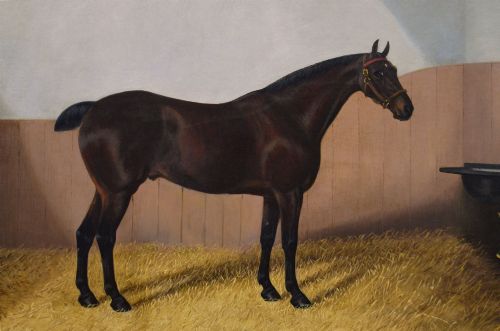
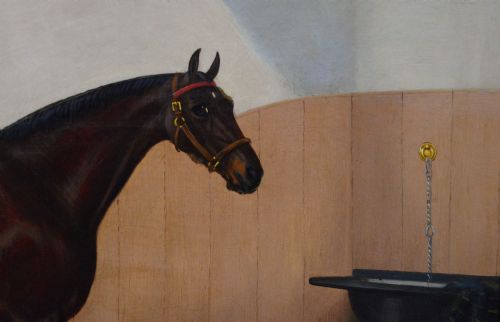
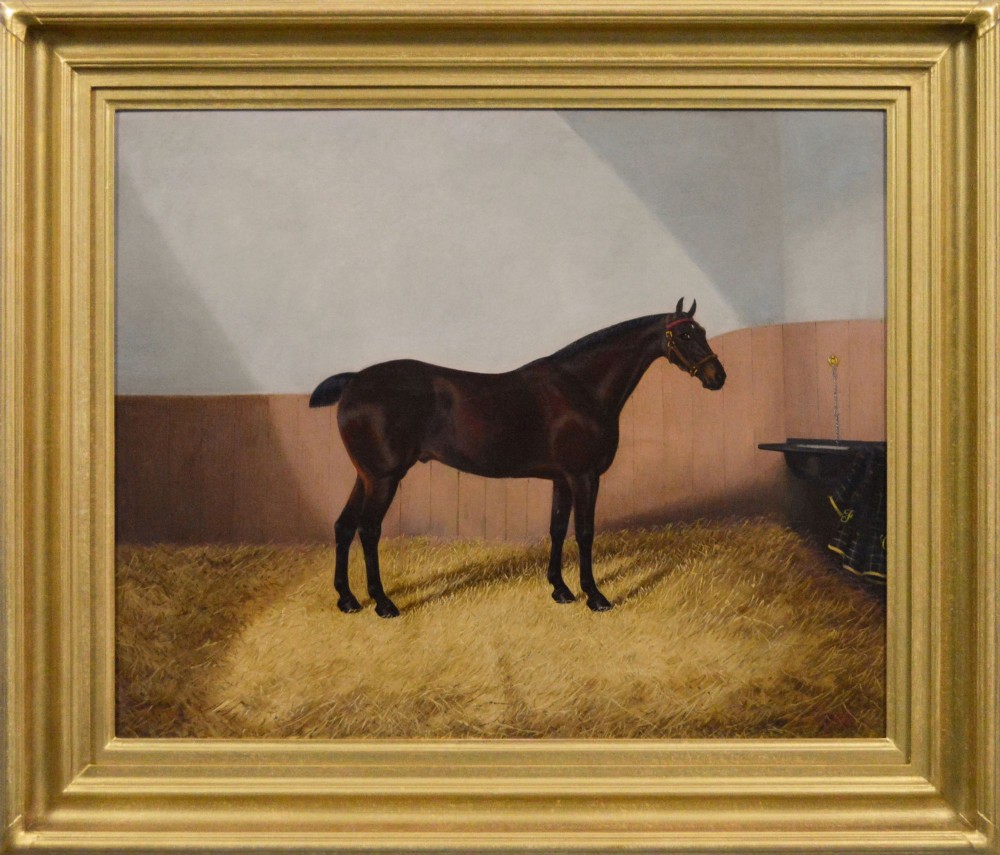
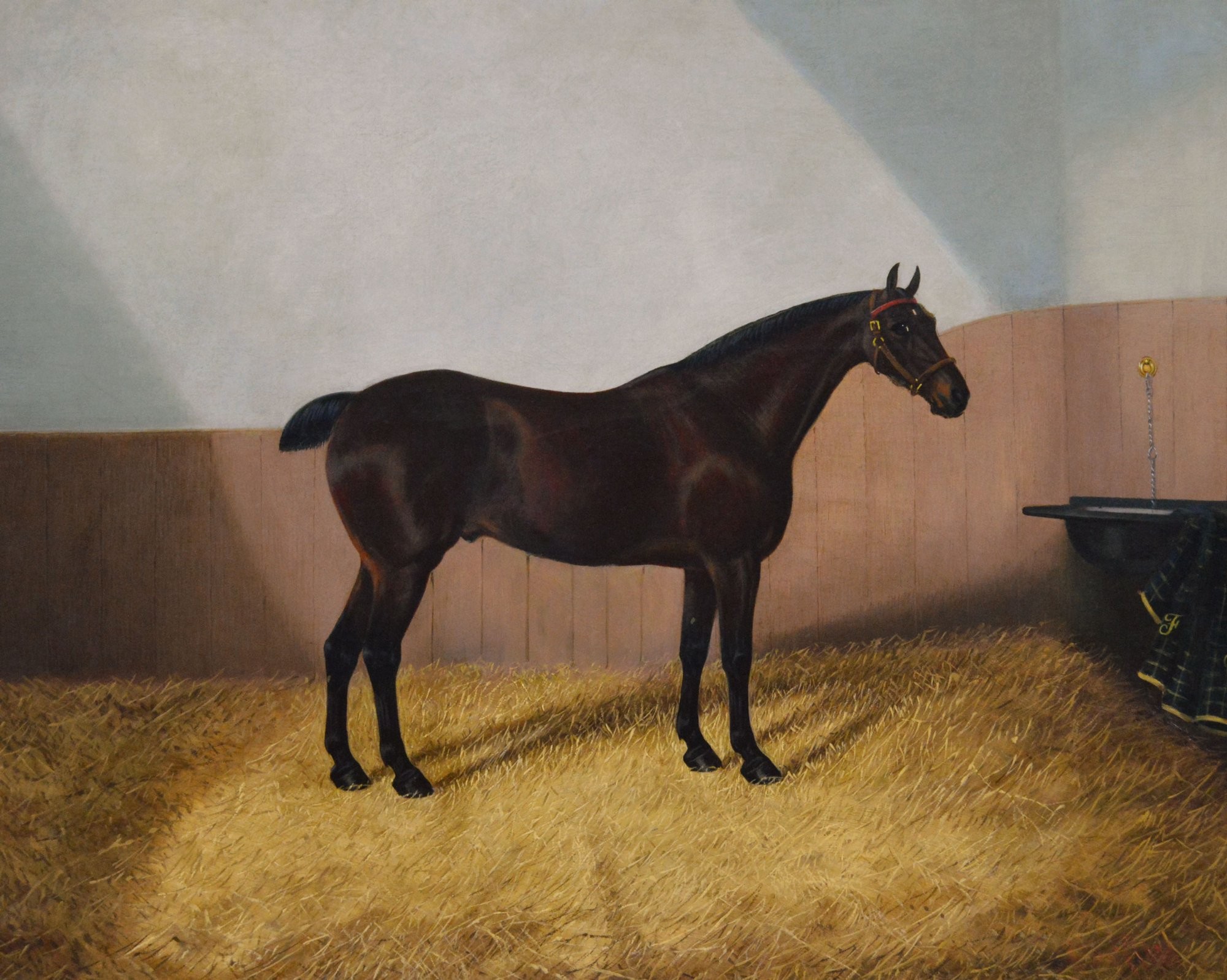
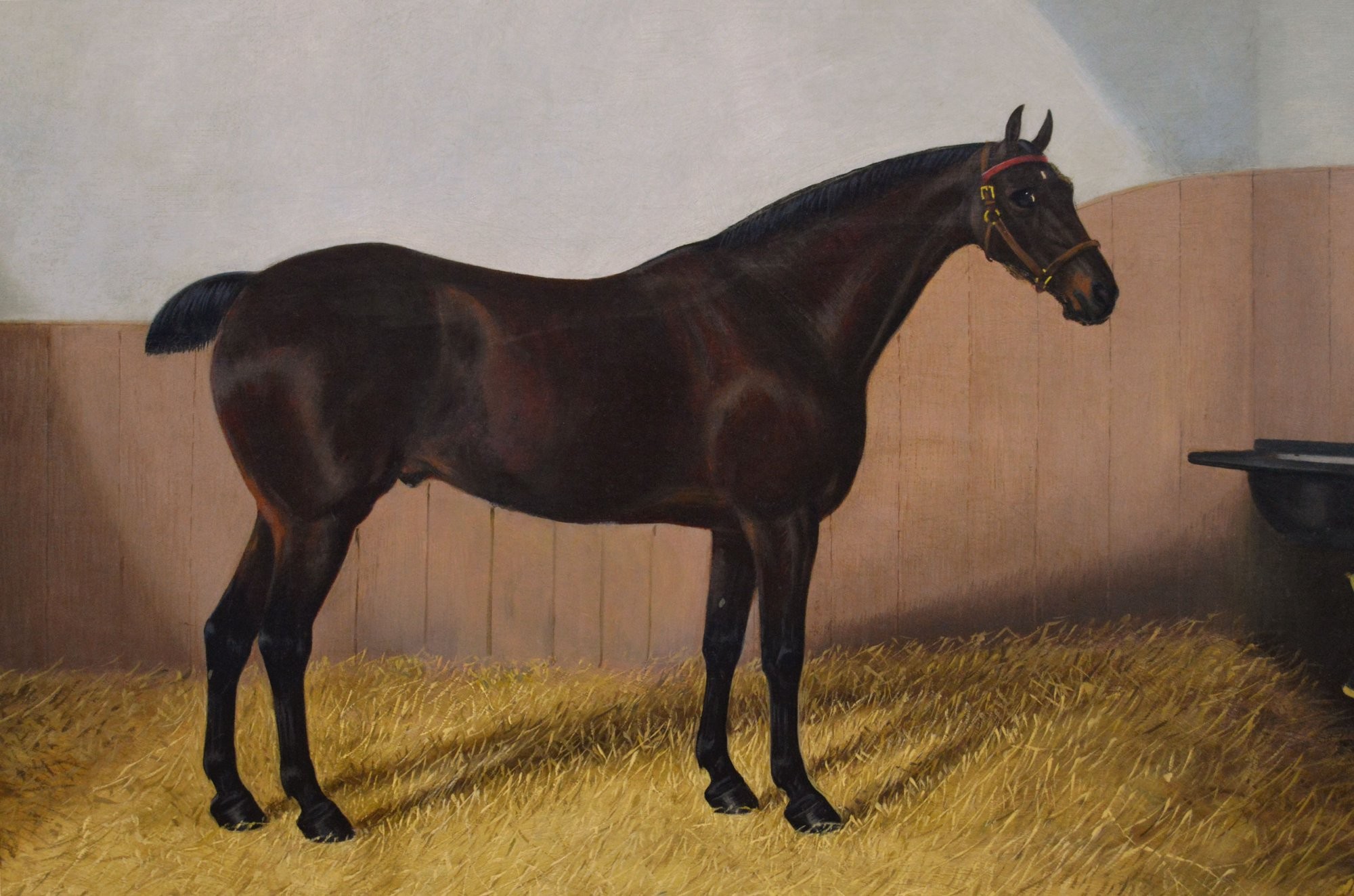
A well-executed sporting horse portrait by Albert Clark of a bay horse in a stable. The horse is shown standing side-on, facing right with his head slightly turned towards the viewer to reveal a small mark on his forehead. The horse also bears a docked tail, a common practice for hunter and hackney horses of the period. To the far right, a blue and yellow check blanket with the monogram ‘FC’ can be seen draped over a horse trough. Although the names of the horse and its owner have been lost over time, it is highly likely the portrait would most likely have been commissioned to celebrate the horse’s sporting achievements.
Albert Clark was born on 29 October 1843 in Hoxton London into the Clark family of artists. His father was the animal painter James Lawrence Clark (1812-1909) and his mother was Elizabeth London. His brothers Samuel James Clark (1841-1928), Octavius Thomas Clark (1850-1921) and half-brother James Albert Clark (1863-1955) all became artists. Two of his children Frederick Albert Clark (1869-1954) and William Albert Clark (1880-1963) also inherited the Clark talent for painting.
Given the similarity in style and subject matter, it is highly likely he was taught by his father alongside his brothers. He made his debut at an early age, being recorded as an artist at the age of just 17. His subjects initially followed that of his father and included horses, cattle and dogs. However, Albert soon began to specialise in horse portraits and received many commissions to paint race horses and show winners.
He married Ellen Parsons on 2 April, 1868 and together they had 4 children (Frederick Albert Clark being the youngest) and lived at 64 Shepperton Cottages, Islington. After the death of his first wife, he married Harriet Jane Ireland on 19 June, 1875. Together they had 3 more children, one of whom was William Albert Clark.
By 1881, he had moved to 81 Riversdale Road, Islington living on the same road as his father until his death in 1884. After this time, he set up a studio at his home with his son Frederick Albert who lived close by. Although they spent time working on their own paintings, they also collaborated on a number works which were signed Albert Clark and Son. It is possible that his youngest son William Albert may also have helped with these paintings.
This period seems to have coincided with him becoming deaf which could be one of the reasons he took up the partnership with his son for a time. Despite his hearing loss, Clark continued to travel around gaining commissions to paint prize winning horses. His second wife died in 1896 and sometime after 1901, he moved to the Seven Sisters Road in Tottenham where he spent the rest of his life. He died at Middlesex Hospital on 18 December, 1928.
Examples of his works can be found at the Totnes Elizabethan House Museum and Doncaster Museum.

Presentation: The work is housed in a new, English made gilt frame which is in excellent condition.

Condition: As with all of our original antique oil paintings, this work is offered in ready to hang gallery condition, having been professionally cleaned, restored and revarnished.

© Benton Fine Art

Physical Dimensions
Height
65.5cm (25.79")
Width
75.5cm (29.72")
Depth
6.5cm (2.56")
Declaration

Benton Fine Art has dated this Antique Horse Oil Painting to the 1900s.

Reference Numbers
Sellingantiques Reference
SA1220923
Dealers Notes

Members of the British Antique Dealers Association (BADA) the London and Provincial Antique Dealers Association (LAPADA).

We use a professional, fully insured and tracked door to door service for our UK and international deliveries. Please contact us for further information and shipping quotes.

Viewing is by APPOINTMENT ONLY. However, we can also arrange for you to view the item in your home, depending on the location.

For a wider range of stock please visit www.bentonfineart.com.

If you would like to purchase this item or have any questions, please email us at pictures@bentonfineart.com or call 07710 540549.

© Benton Fine Art

Description
Albert Clark

British, (1843-1928)

Bay Horse in a Stable

Oil on canvas, signed

Image size: 19.25 inches x 23.25 inches

Size including frame: 25.75 inches x 29.75 inches

A well-executed sporting horse portrait by Albert Clark of a bay horse in a stable.

The horse is shown standing side-on, facing right with his head slightly turned towards the viewer to reveal a small mark on his forehead.
Benton Fine Art

The horse also bears a docked tail, a common practice for hunter and hackney horses of the period. To the far right, a blue and yellow check blanket with the monogram ‘FC’ can be seen draped over a horse trough. Although the names of the horse and its owner have been lost over time, it is highly likely the portrait would most likely have been commissioned to celebrate the horse’s sporting achievements.

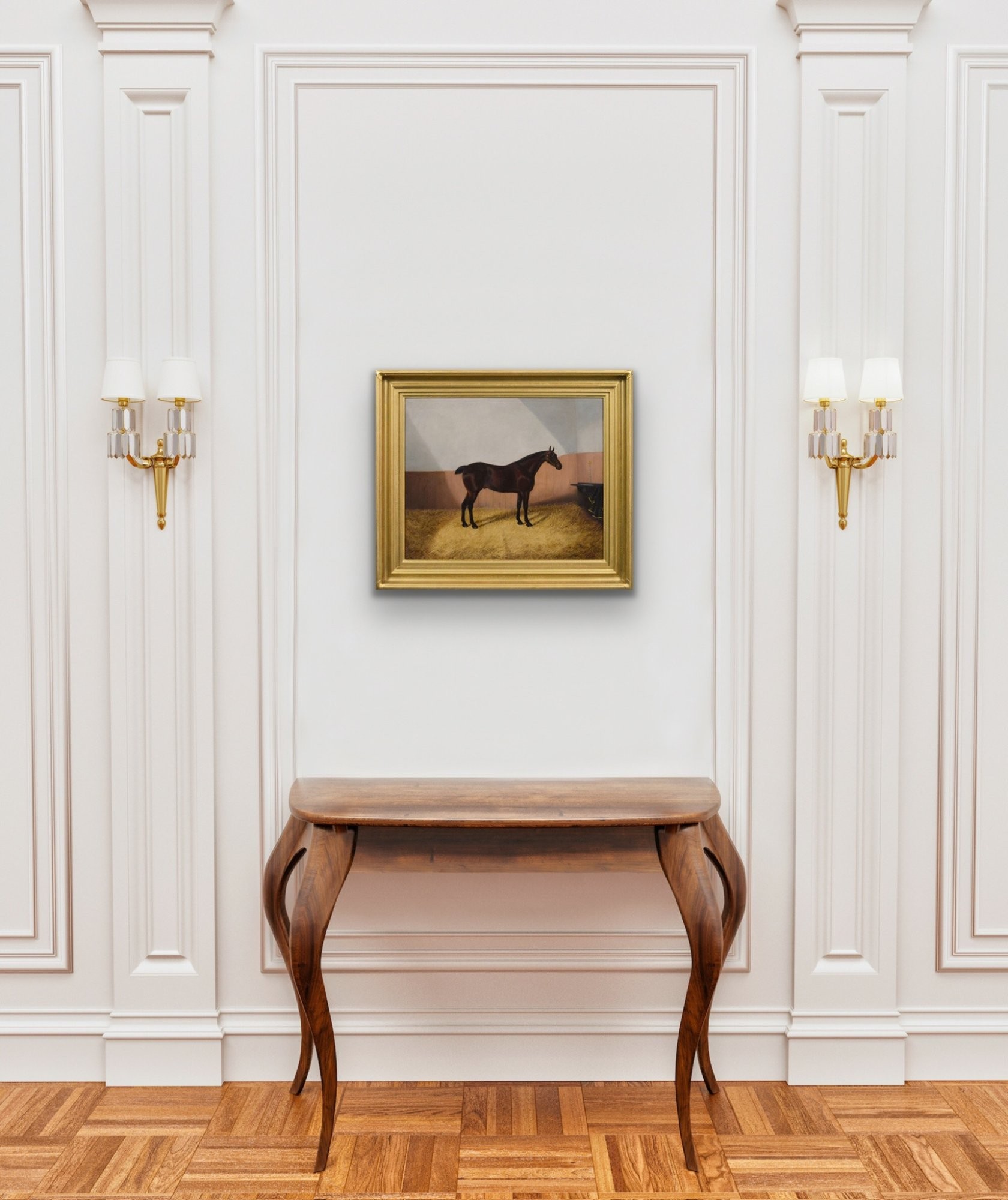
fig 1. An oil painting depicting a dark bay horse standing in a straw-filled stable stall, encased within a heavy gold gilt frame.
fig 1. Horse Portrait Oil Painting of a Bay Horse in a Stable by Albert Clark

Albert Clark was born on 29 October 1843 in Hoxton London into the Clark family of artists. His father was the animal painter James Lawrence Clark (1812-1909) and his mother was Elizabeth London. His brothers Samuel James Clark (1841-1928), Octavius Thomas Clark (1850-1921) and half-brother James Albert Clark (1863-1955) all became artists. Two of his children Frederick Albert Clark (1869-1954) and William Albert Clark (1880-1963) also inherited the Clark talent for painting.

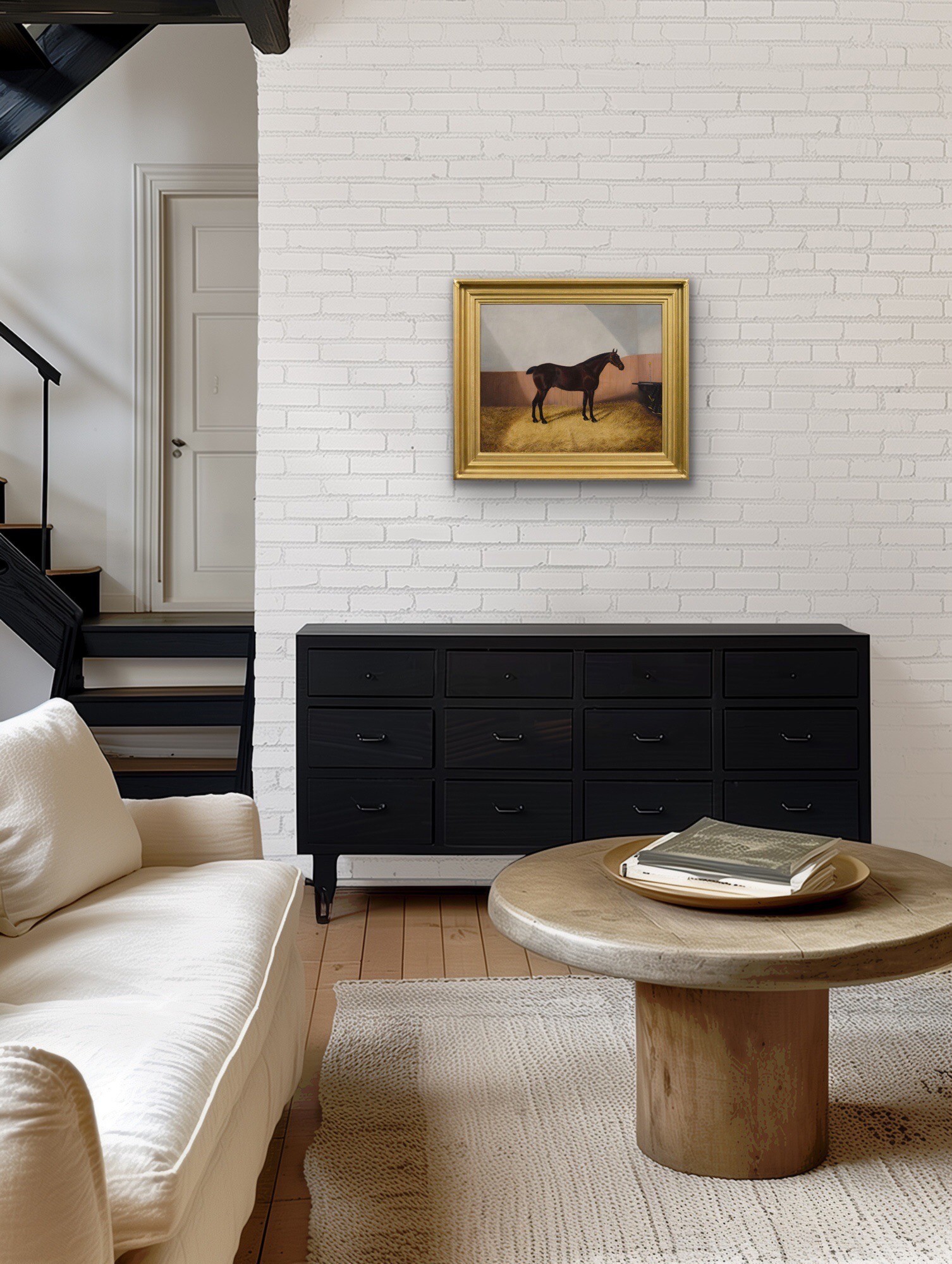
fig 2. An oil painting depicting a dark bay horse standing in a straw-filled stable stall, encased within a heavy gold gilt frame.
fig 2. Horse Portrait Oil Painting of a Bay Horse in a Stable by Albert Clark

Given the similarity in style and subject matter, it is highly likely he was taught by his father alongside his brothers. He made his debut at an early age, being recorded as an artist at the age of just 17. His subjects initially followed that of his father and included horses, cattle and dogs. However, Albert soon began to specialise in horse portraits and received many commissions to paint race horses and show winners.

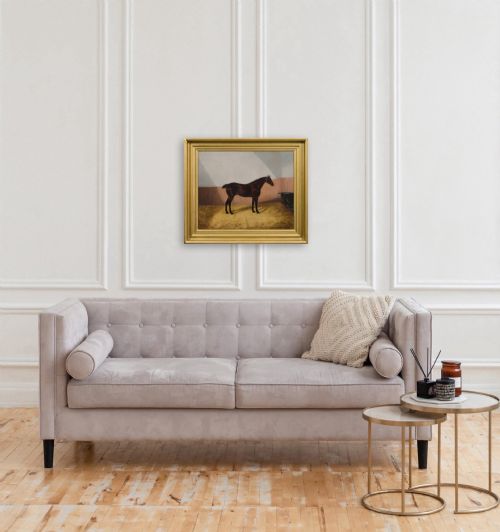
fig 3. An oil painting depicting a dark bay horse standing in a straw-filled stable stall, encased within a heavy gold gilt frame.
fig 3. Horse Portrait Oil Painting of a Bay Horse in a Stable by Albert Clark

He married Ellen Parsons on 2 April, 1868 and together they had 4 children (Frederick Albert Clark being the youngest) and lived at 64 Shepperton Cottages, Islington. After the death of his first wife, he married Harriet Jane Ireland on 19 June, 1875. Together they had 3 more children, one of whom was William Albert Clark.

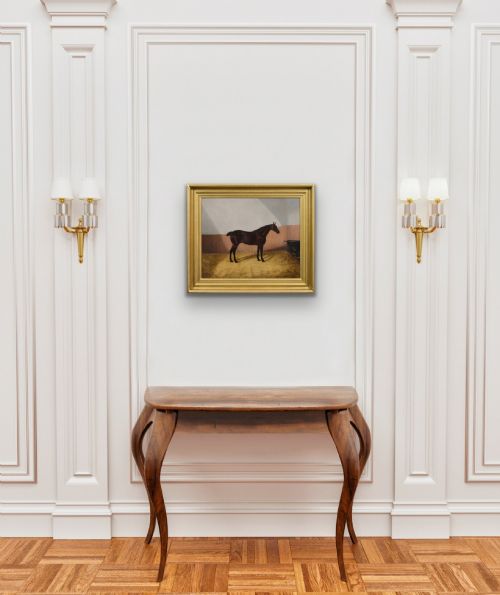
fig 4. An oil painting depicting a dark bay horse standing in a straw-filled stable stall, encased within a heavy gold gilt frame.
fig 4. Horse Portrait Oil Painting of a Bay Horse in a Stable by Albert Clark

By 1881, he had moved to 81 Riversdale Road, Islington living on the same road as his father until his death in 1884. After this time, he set up a studio at his home with his son Frederick Albert who lived close by. Although they spent time working on their own paintings, they also collaborated on a number works which were signed Albert Clark and Son. It is possible that his youngest son William Albert may also have helped with these paintings.

fig 5. An oil painting depicting a dark bay horse standing in a straw-filled stable stall, encased within a heavy gold gilt frame.
fig 5. Horse Portrait Oil Painting of a Bay Horse in a Stable by Albert Clark

This period seems to have coincided with him becoming deaf which could be one of the reasons he took up the partnership with his son for a time. Despite his hearing loss, Clark continued to travel around gaining commissions to paint prize winning horses. His second wife died in 1896 and sometime after 1901, he moved to the Seven Sisters Road in Tottenham where he spent the rest of his life. He died at Middlesex Hospital on 18 December, 1928.

fig 6. An oil painting depicting a dark bay horse standing in a straw-filled stable stall, encased within a heavy gold gilt frame.
fig 6. Horse Portrait Oil Painting of a Bay Horse in a Stable by Albert Clark

Examples of his works can be found at the Totnes Elizabethan House Museum and Doncaster Museum.

Presentation: The work is housed in a new, English made gilt frame which is in excellent condition.

Condition: As with all of our original antique oil paintings, this work is offered in ready to hang gallery condition, having been professionally cleaned, restored and revarnished.

© Benton Fine Art

Height
65.5cm (25.79")
Width
75.5cm (29.72")
Depth
6.5cm (2.56")
Date of Manufacture

Benton Fine Art has dated this Antique Horse Oil Painting to the 1900s.

Reference Numbers
Sellingantiques Ref
SA1220923
Benton Fine Art
Benton Fine Art
Sellingantiques verified Since Sep 2012

Specialists in 19th & early 20th century original oil paintings by listed artists

Dealer Profile

You can view the stock and full dealer information on the Benton Fine Art Profile Page

Trade Associations

Benton Fine Art is a registered member of LAPADA  BADA  CINOA
PDF SHARE
SAVE
An oil painting depicting a dark bay horse standing in a straw-filled stable stall, encased within a heavy gold gilt frame.
1 / 8
Archive I An oil painting depicting a dark bay horse standing in a straw-filled stable stall, encased within a heavy gold gilt frame.

Horse portrait oil painting of a bay horse in a stable by Albert Clark
Archive II An oil painting depicting a dark bay horse standing in a straw-filled stable stall, encased within a heavy gold gilt frame. View II
Archive III An oil painting depicting a dark bay horse standing in a straw-filled stable stall, encased within a heavy gold gilt frame. View III
Archive IV An oil painting depicting a dark bay horse standing in a straw-filled stable stall, encased within a heavy gold gilt frame. View IV
Archive V An oil painting depicting a dark bay horse standing in a straw-filled stable stall, encased within a heavy gold gilt frame. View V
Archive VI An oil painting depicting a dark bay horse standing in a straw-filled stable stall, encased within a heavy gold gilt frame. View VI
Archive VII An oil painting depicting a dark bay horse standing in a straw-filled stable stall, encased within a heavy gold gilt frame. View VII
Archive VIII An oil painting depicting a dark bay horse standing in a straw-filled stable stall, encased within a heavy gold gilt frame. View VIII
FURTHER BROWSING

Visitors also looked at these ⇣

Enlarged Archival View
Telephone 07710 540 549
Location
Near Broadway
Worcestershire
United Kingdom

By appointment only.
Verified Since Sep 2012
Items For Sale 210
Benton Fine Art
Benton Fine Art
Verified Since Sep 2012
View Dealer Info
Location: Near Broadway, Worcestershire, United Kingdom, , By appointment only.
Verified
Sep 2012
For Sale
210
An oil painting depicting a dark bay horse standing in a straw-filled stable stall, encased within a heavy gold gilt frame.
Horse portrait oil painting of a bay horse in a stable by Albert Clark
Ref: SA1220923
An oil painting depicting a dark bay horse standing in a straw-filled stable stall, encased within a heavy gold gilt frame.
Detail View 1
Detail View 2
Detail View 3
Detail View 4
Detail View 5
Detail View 6
Detail View 7
Archival Detail
Every single antique dealer on our platform is individually approved by our internal team. We verify their professional trade history, ethical standards, and photographic quality to ensure a secure, high-standard buying environment. Upon joining, every dealer agrees to a strict 9-point code of conduct. While issues can occasionally arise, our dealers typically resolve them swiftly and directly with the buyer. In fact, since our founding in 2002, Sellingantiques has only had to step in to help resolve an issue on roughly five occasions—a true testament to the quality of our dealers and their dedication to your happiness.
Our dealers are highly experienced in packing and shipping fragile, high-value antiques. Because you are in direct contact with the dealer, you will be able to easily go through all available shipping and insurance options together to ensure your item arrives safely.
Antiques are the ultimate green purchase. By choosing historical pieces over newly manufactured goods, you completely eliminate the carbon footprint of modern mass production while preserving exceptional, timeless craftsmanship.

Victorian equestrian portraiture refers to paintings executed during the nineteenth century that focus on horses, commissioned by owners to document prized racehorses, hunters, or working animals. These works often depict animals in profile within stable interiors or outdoor landscapes, rendered with anatomical attention to detail.

Paintings from this period were typically executed using oil paints on stretched cotton or linen canvas. Frames were constructed from carved timber or composite mouldings finished with gold leaf or metallic gilding.

Authentic period paintings show age-consistent canvas oxidation, natural paint cracking known as craquelure, and period-appropriate stretcher bars with wooden keys. Inspecting the reverse for maker stamps or inscriptions also helps verify origin.

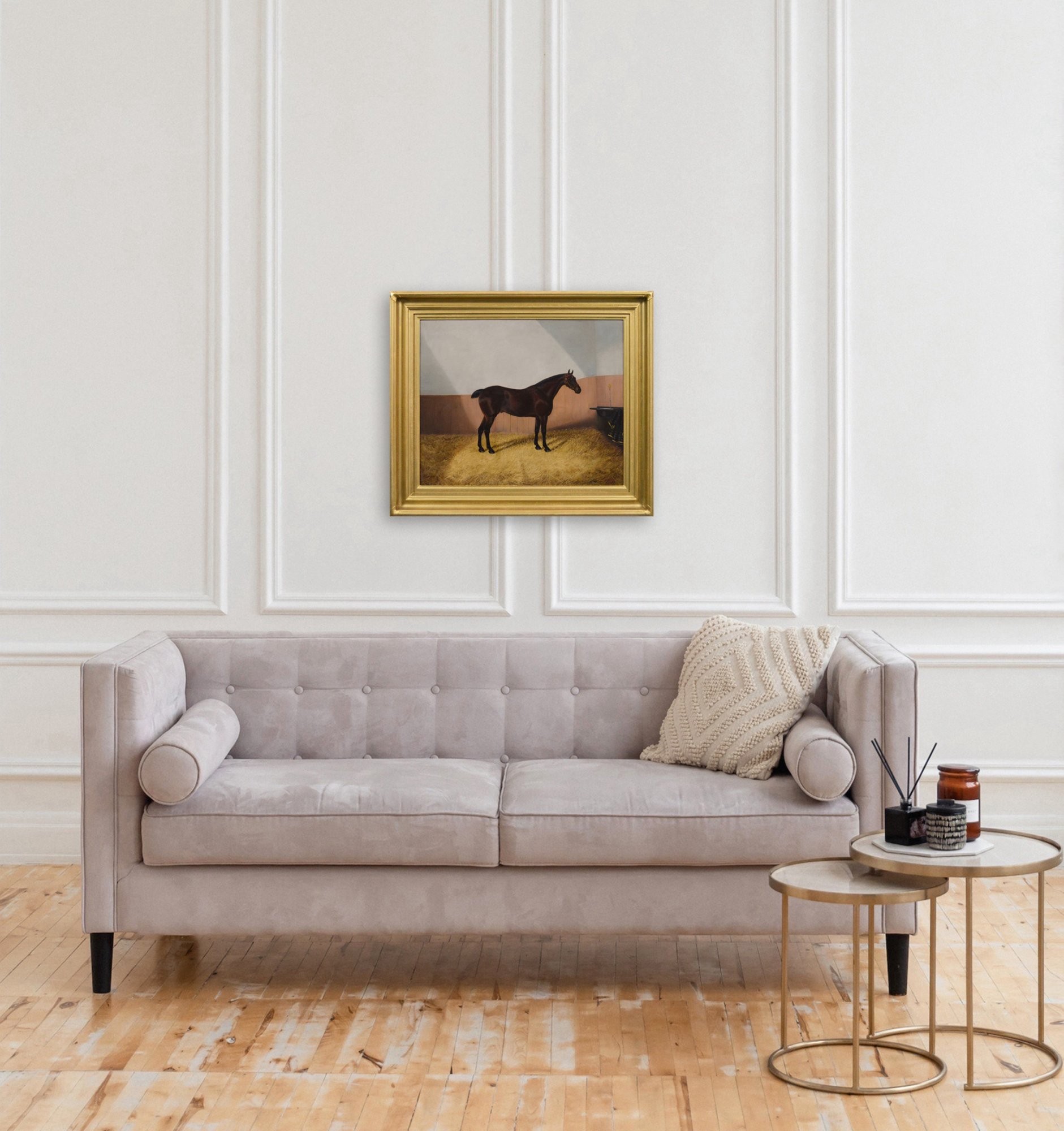
A framed equestrian painting serves as a focal point when positioned above a sideboard, fireplace mantel, or console table. It pairs effectively with dark wood furniture, leather upholstery, and traditional metal accents.

Keep the artwork away from direct sunlight, excess moisture, and direct heat sources to prevent cracking or warping. Dust the surface lightly with a dry, soft-bristled brush, and avoid applying water or chemical cleaners directly to the varnish.
items
Add keywords to the filter
Price
£100
£250000
Era
Movements
Material
Origin
Stock Location
Freshness
Online Payments
Categories