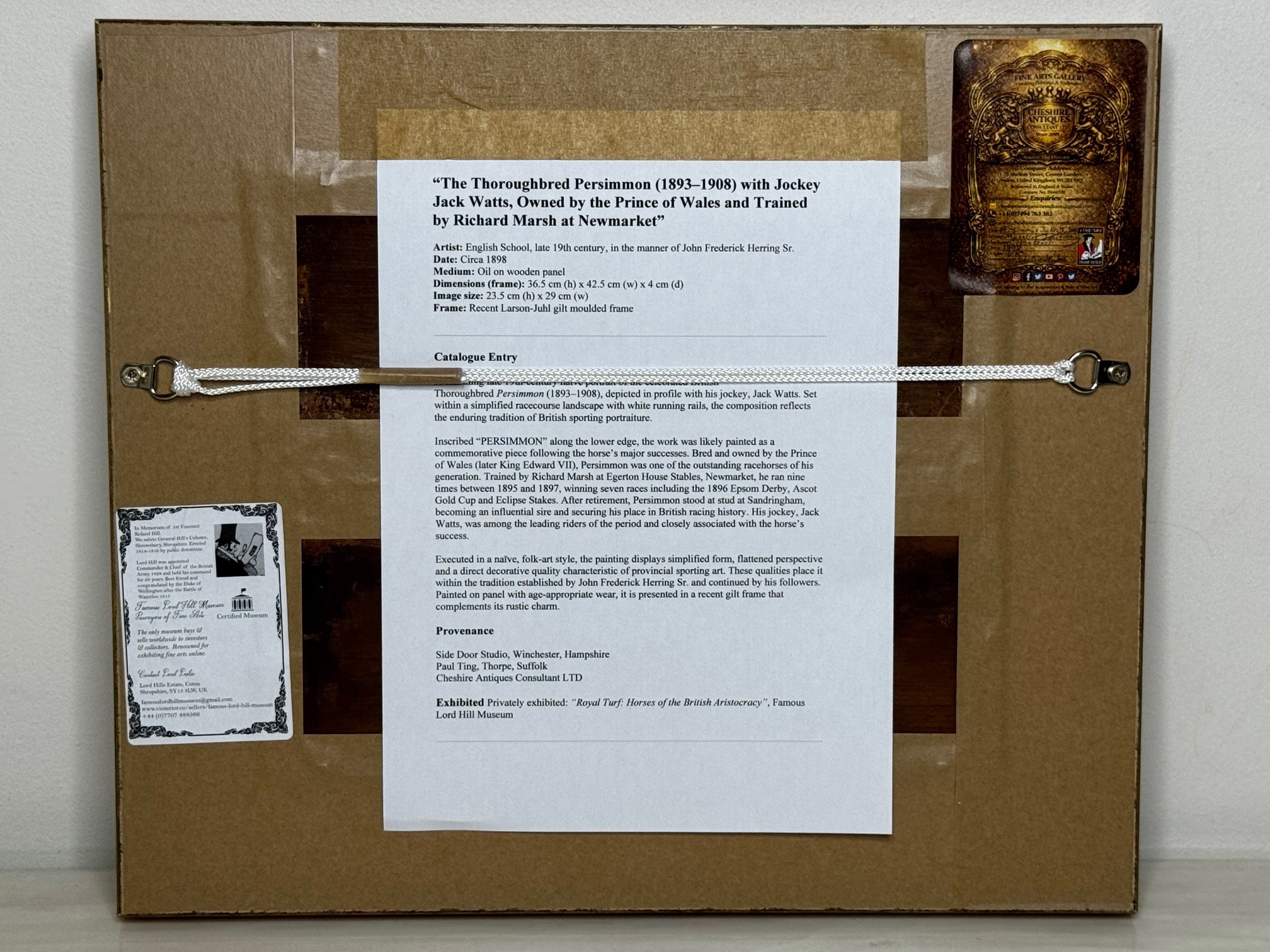
Cheshire Antiques Consultant Ltd has dated this Equestrian Oil Painting to the 19th Century.
Description
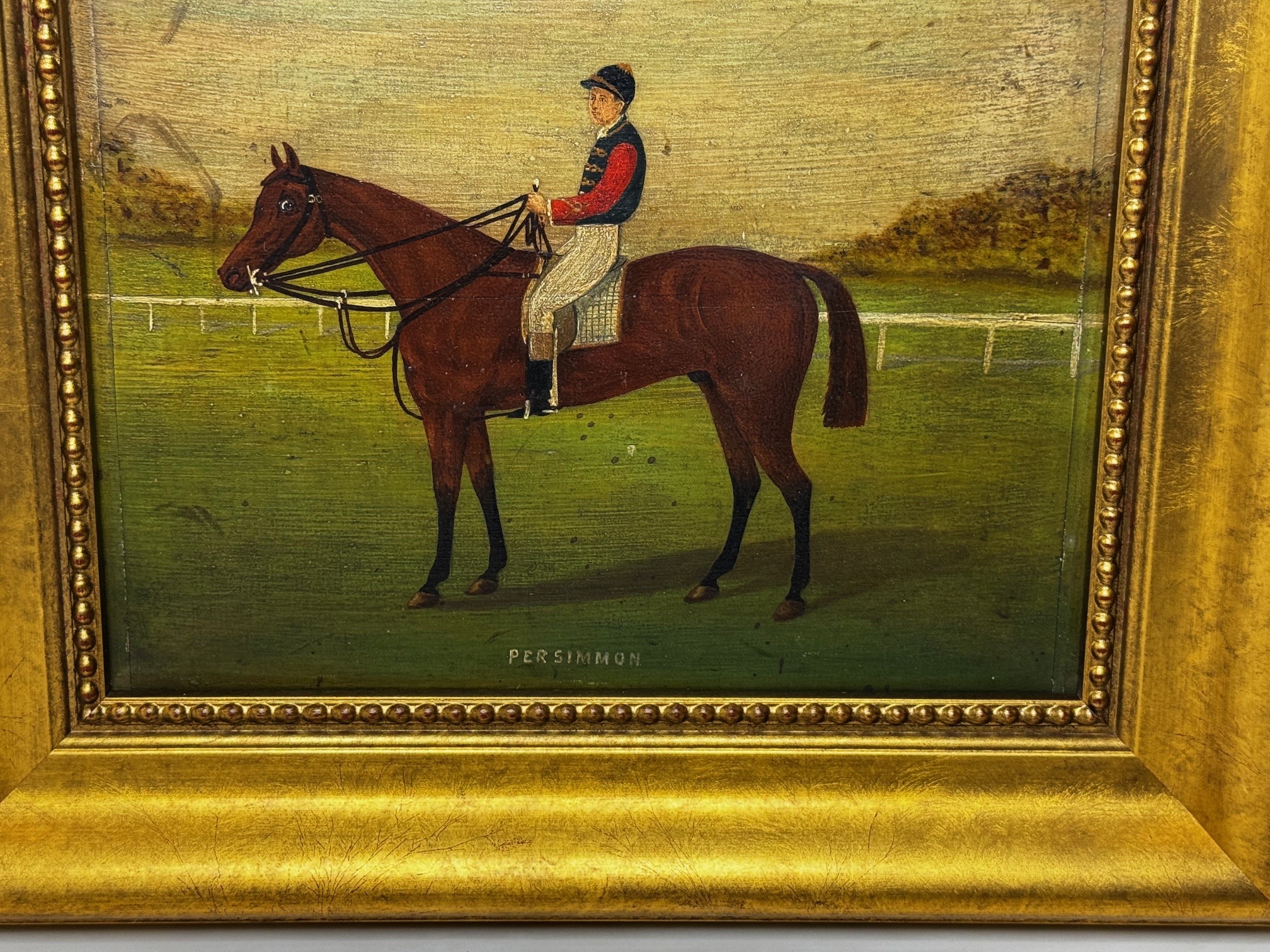
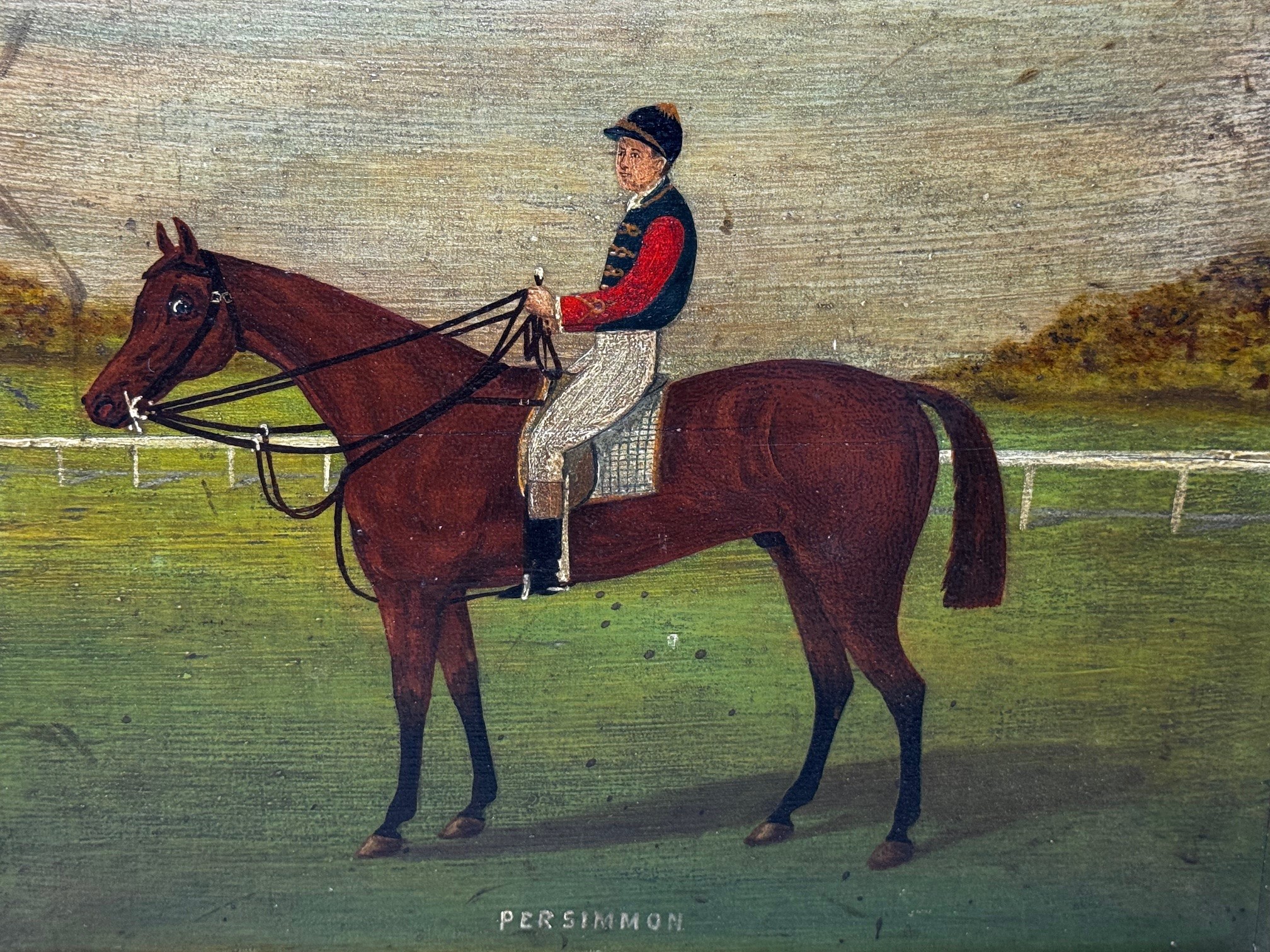
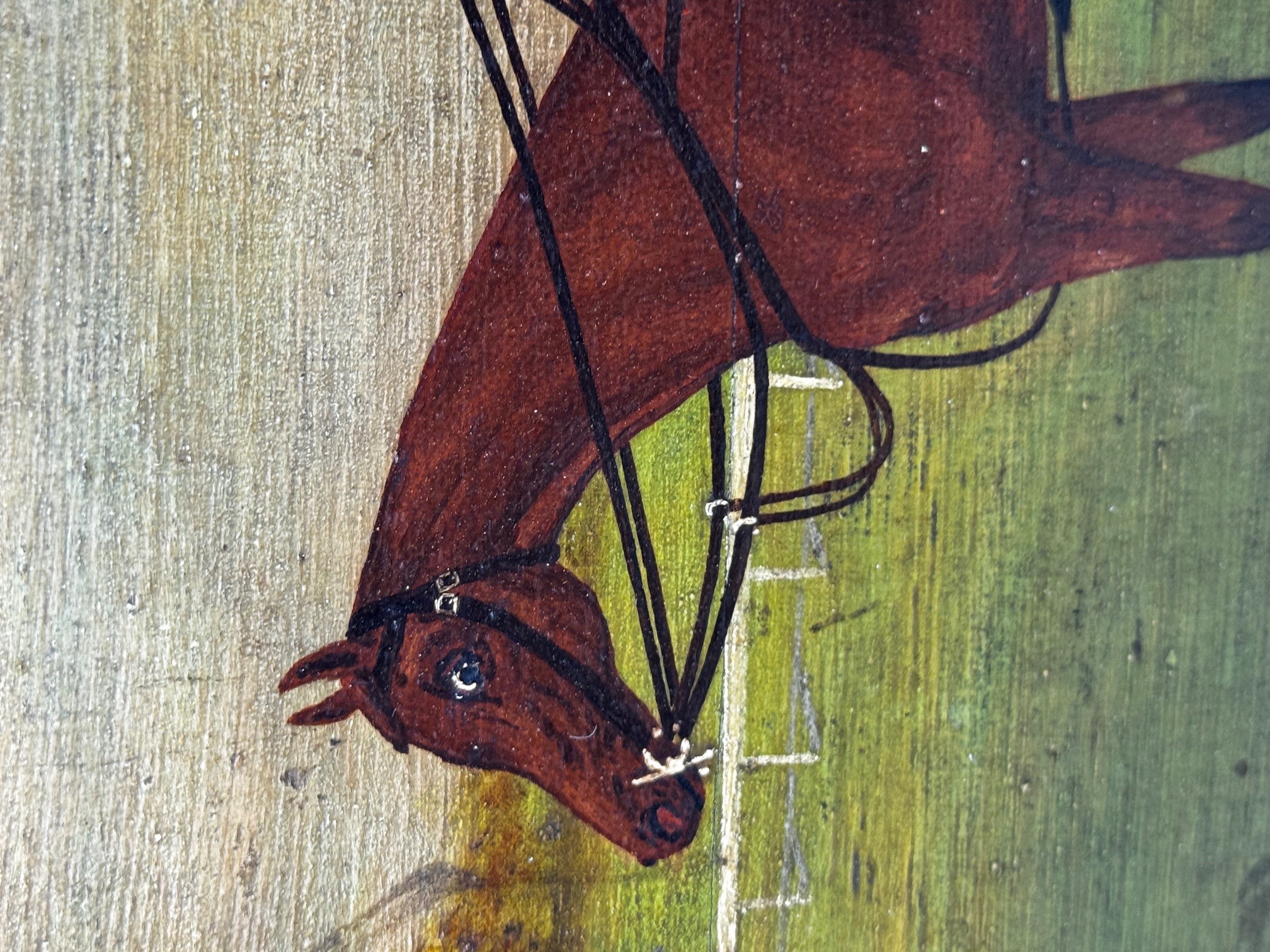
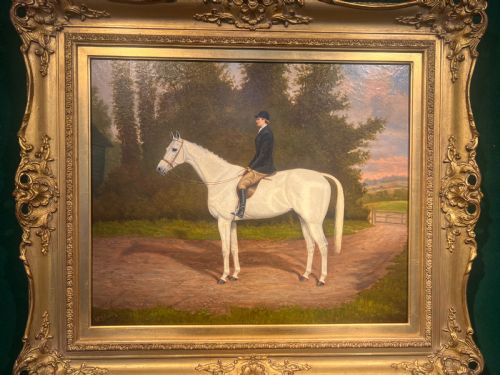
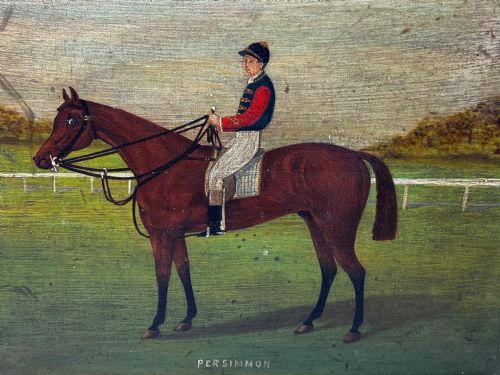
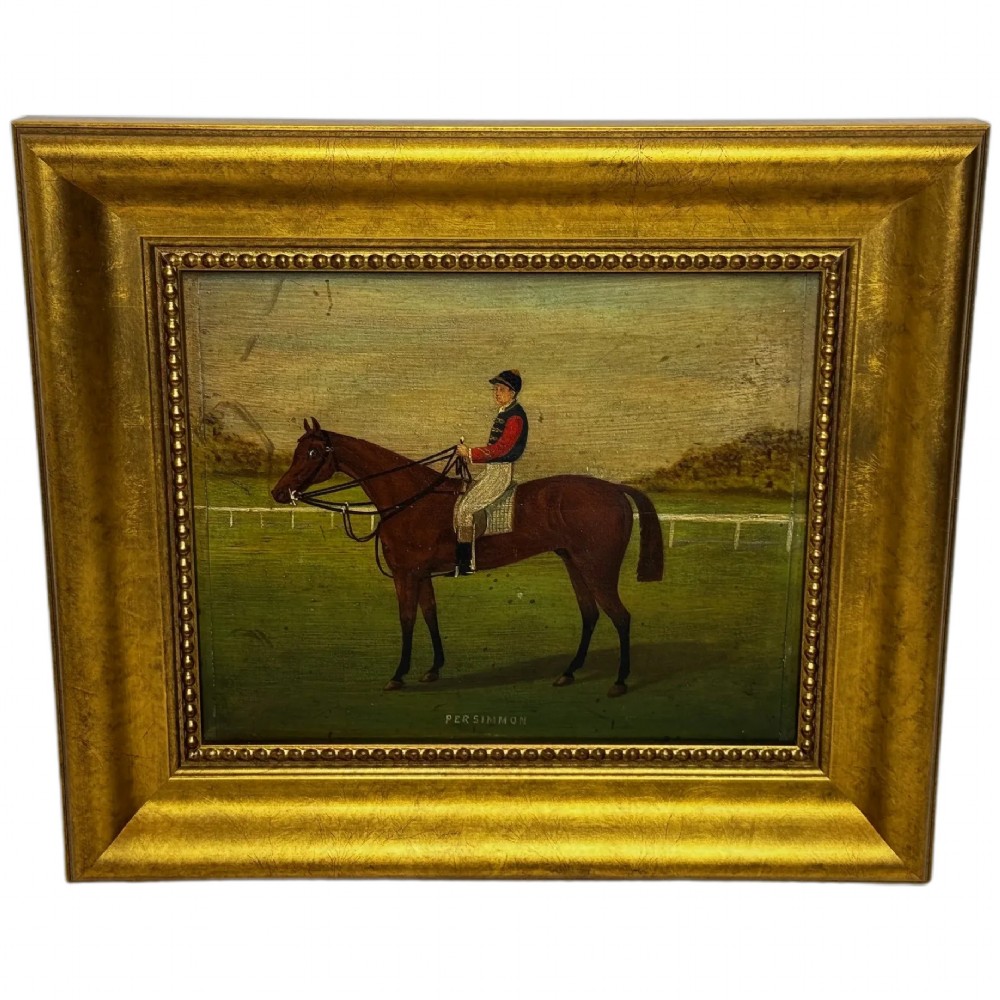
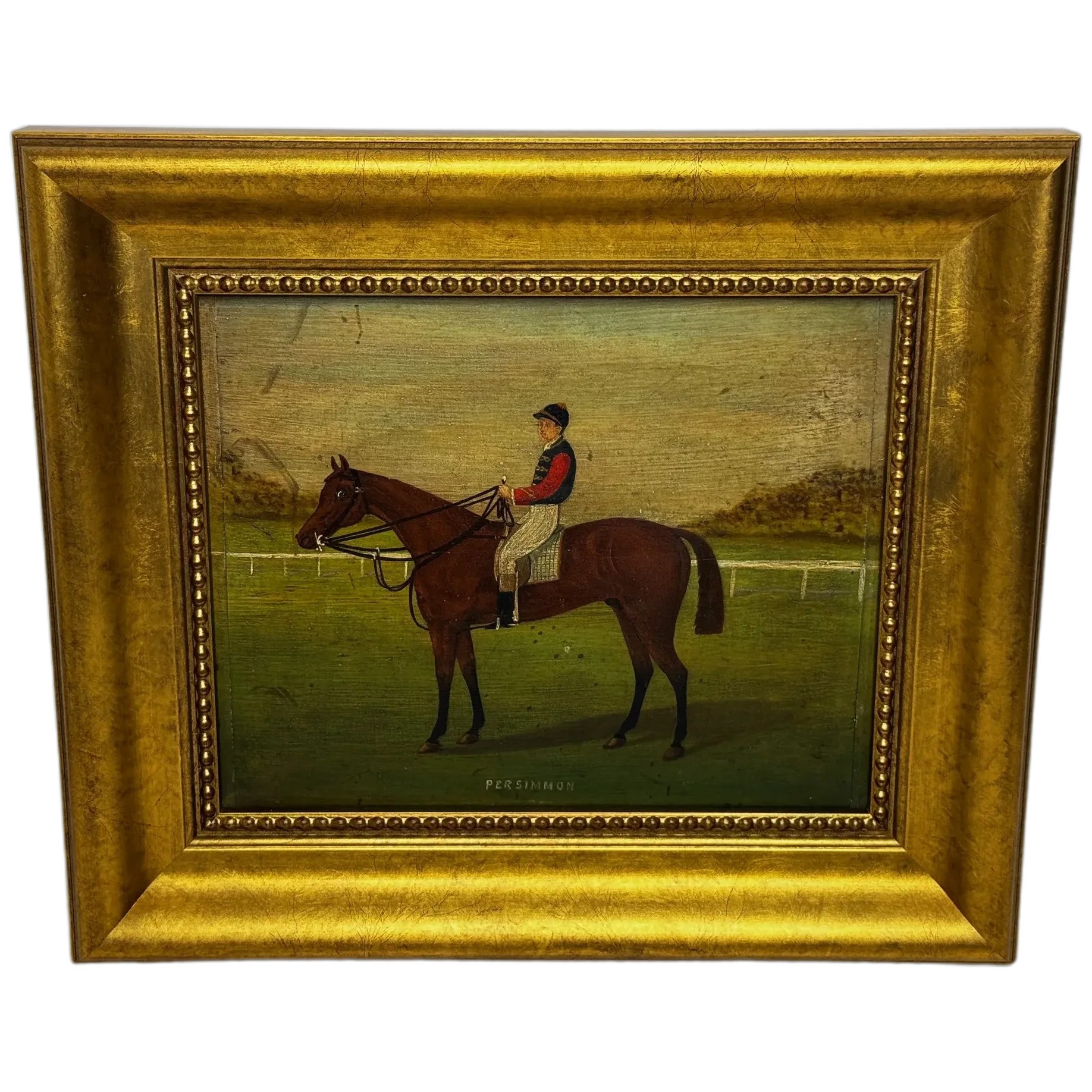
Executed in the manner of John Frederick Herring Sr., this work follows the established tradition of British sporting art, with the horse shown in clear profile against a simplified racecourse setting.
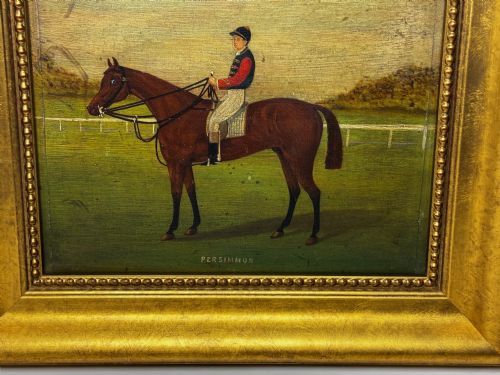
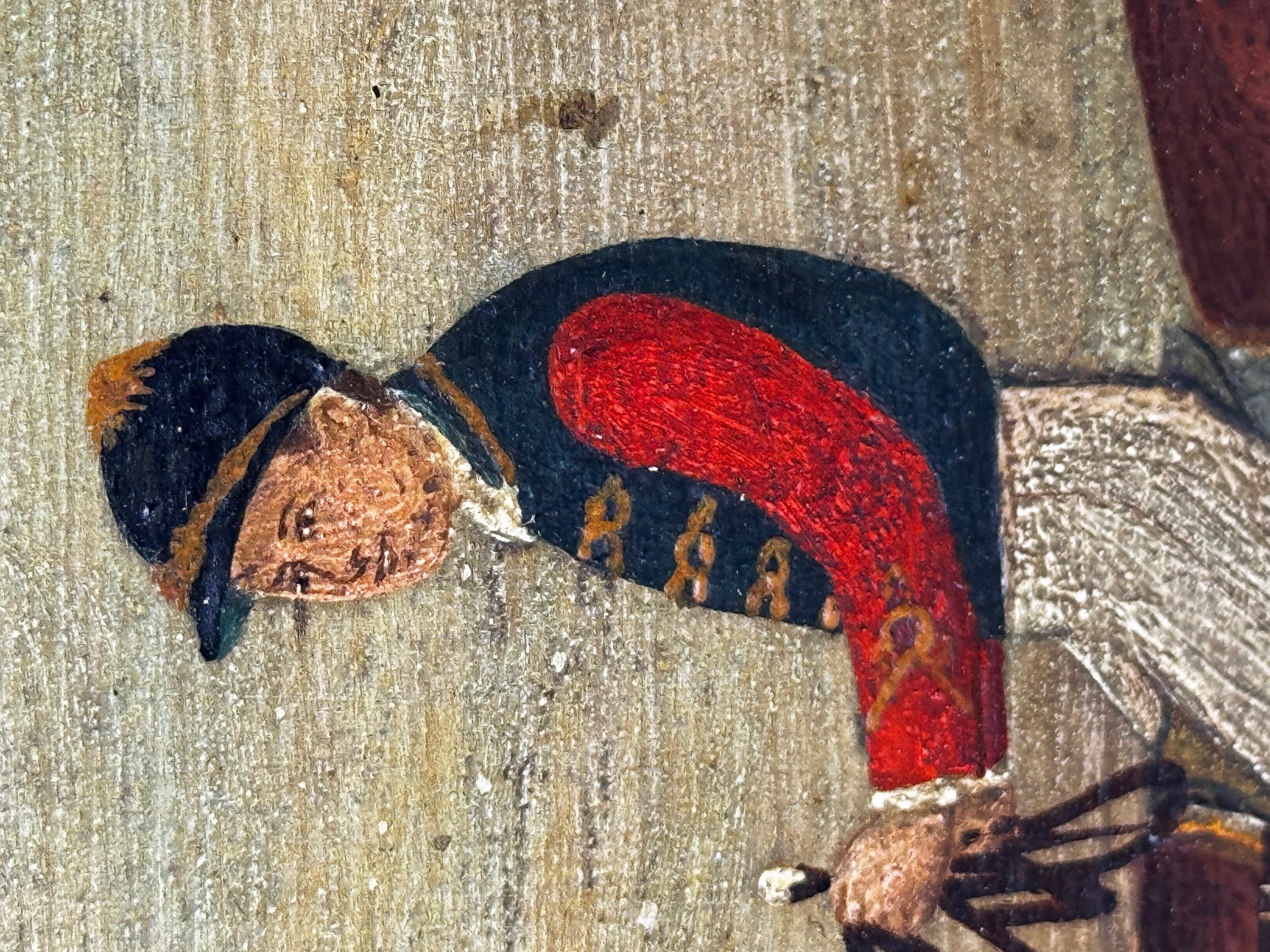
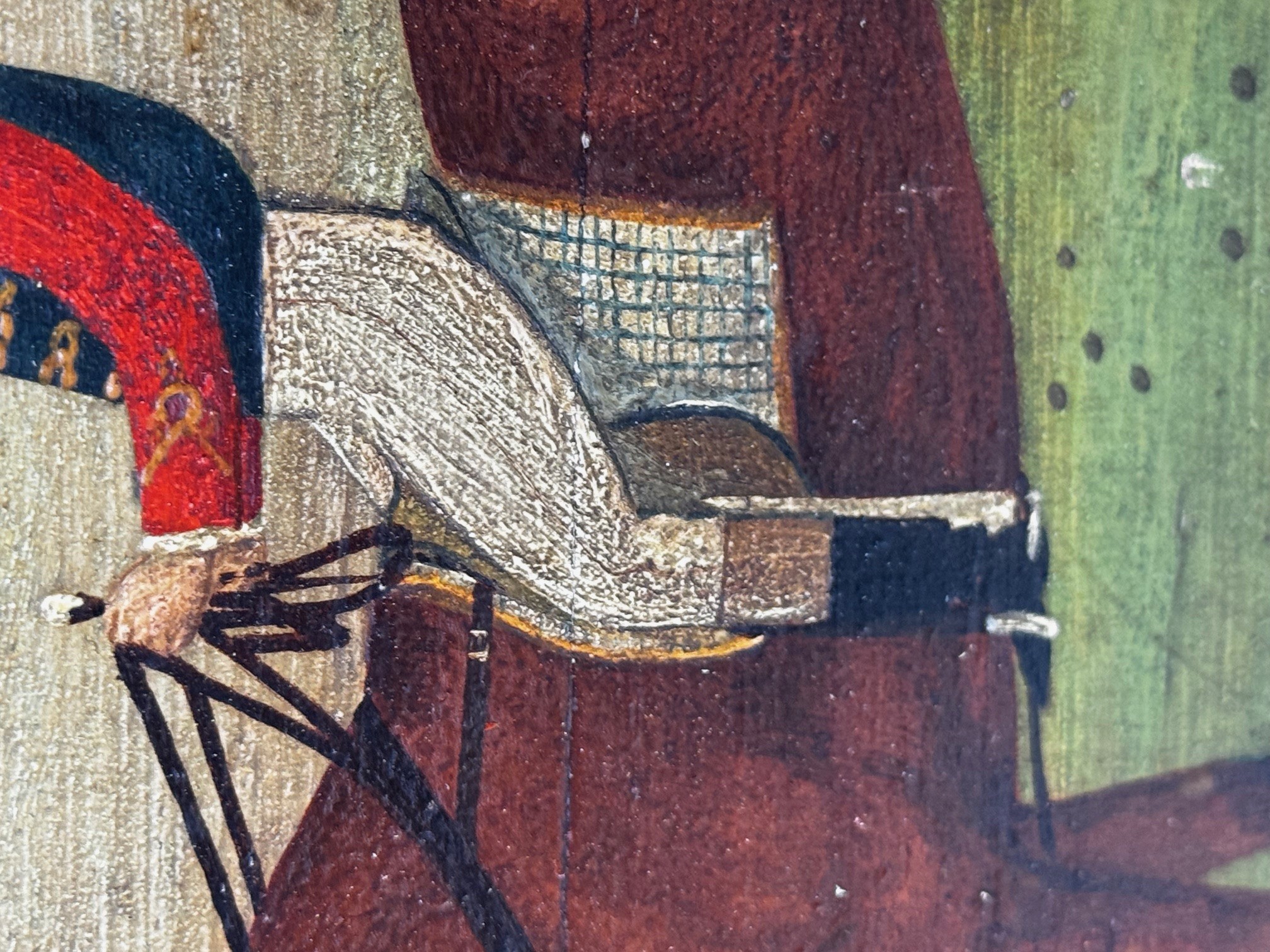
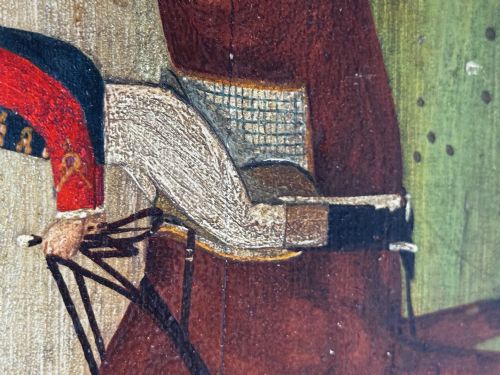
The composition presents Persimmon with quiet authority, centrally positioned and carefully detailed. The naïve handling, with slightly elongated proportions and restrained modelling, suggests a provincial artist working outside the academic tradition, while still demonstrating close observation in the tack and figure.
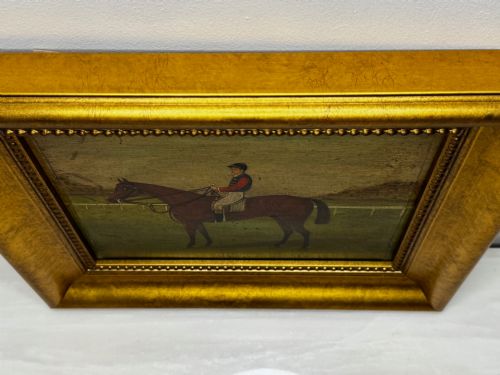
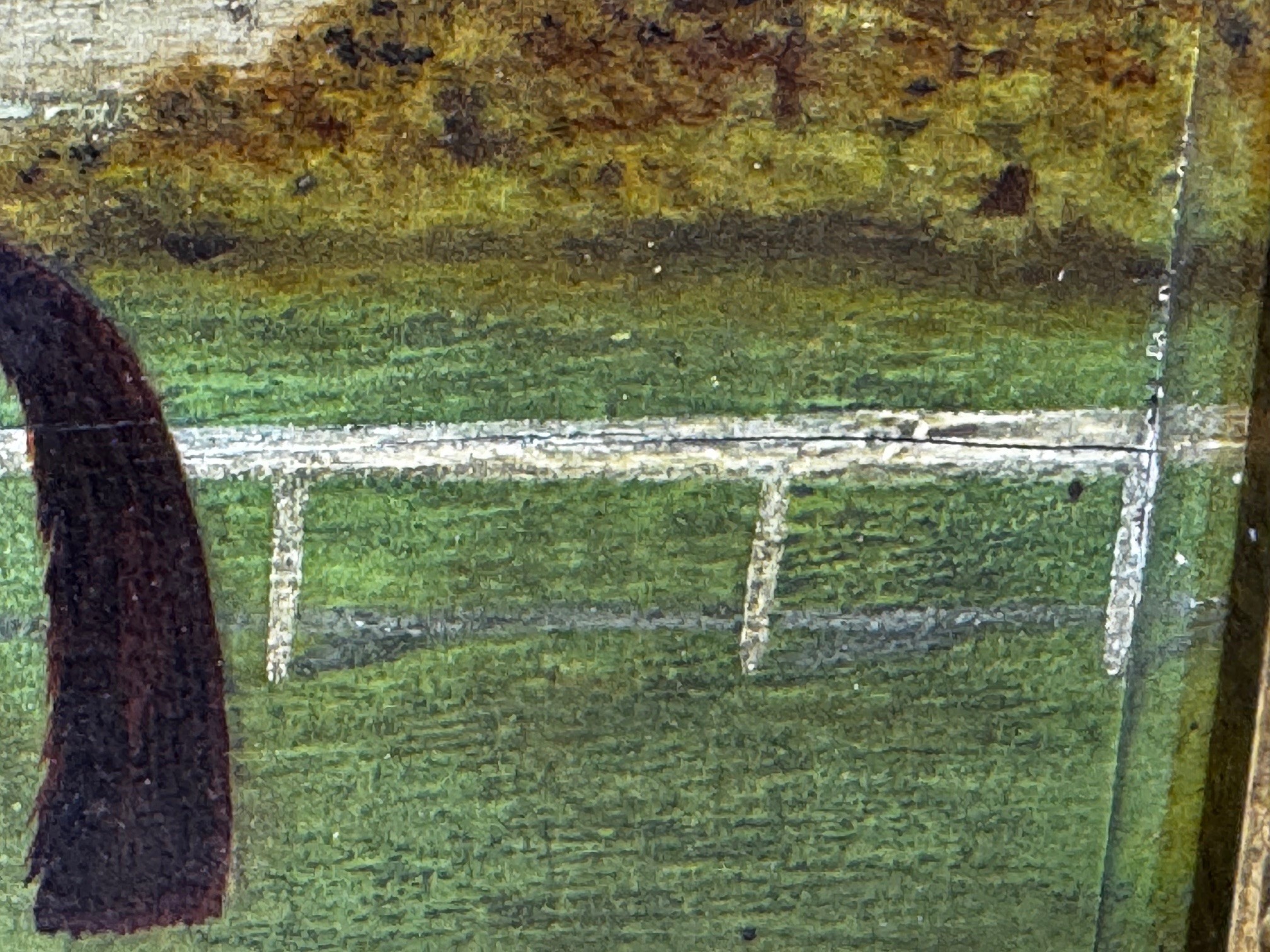
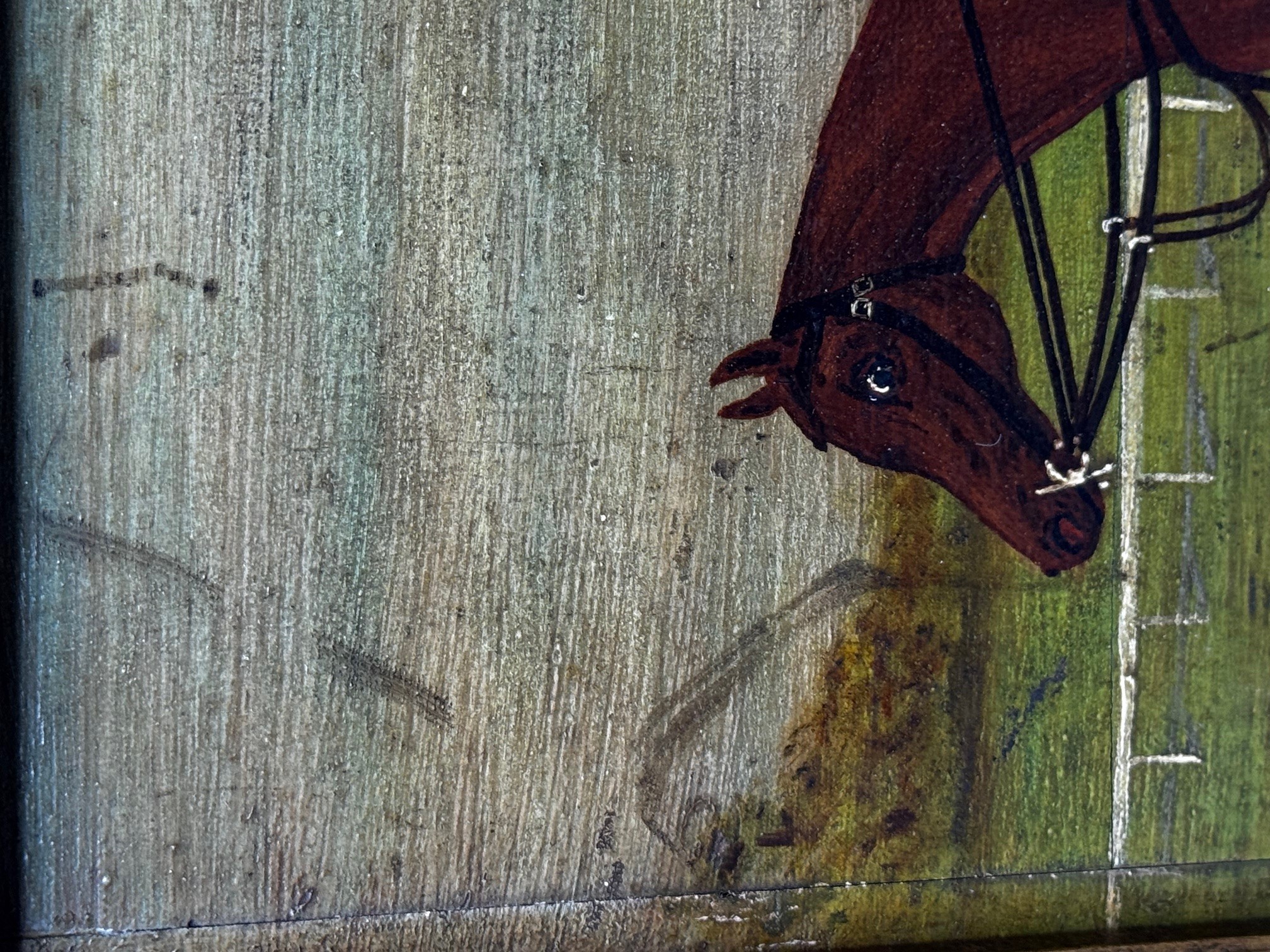
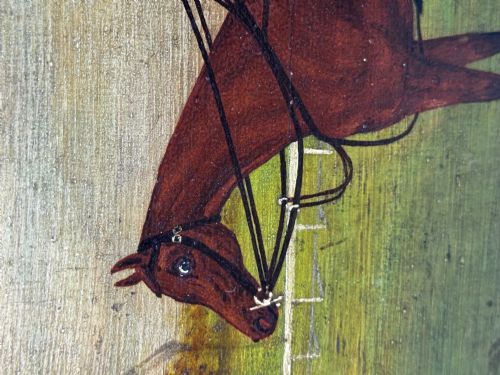
Particularly notable is the expressive treatment of the horse’s head, where a small, sharply defined eye gives a sense of alertness and individuality. The limited palette of greens and ochres enhances its decorative appeal while remaining true to its late Victorian character.
The Horse
Persimmon (1893–1908) was one of the most important Thoroughbreds of the Victorian period. Bred at the Royal Stud, he was by St Simon and out of Perdita II, combining exceptional pedigree with distinguished performance.
From nine starts he won seven races, including the Derby (1896), the Ascot Gold Cup, and the Eclipse Stakes. His Derby victory, achieved under royal ownership, was widely celebrated and secured his place among the leading racehorses of his era.
Following retirement, he stood at stud at Sandringham and became a highly influential sire.
Jockey, Owner & Trainer
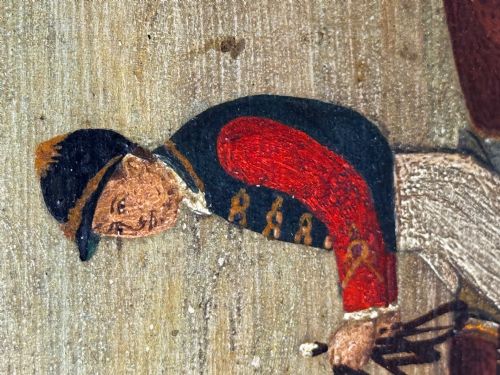
Jack Watts, one of the leading jockeys of his day, rode Persimmon in his principal victories, including the Derby of 1896. His measured and controlled riding style is reflected in the formal, composed depiction seen here.
The horse was owned by the Prince of Wales, later King Edward VII, whose patronage played a significant role in the development of British horse racing during the late 19th century.
Training was entrusted to Richard Marsh of Egerton House Stables, Newmarket, one of the foremost trainers of the period.
Artistic Context
The painting is attributed to an unknown English provincial artist working in the late 19th century, within the tradition established by John Frederick Herring Sr.
By this period, Herring’s compositional approach—profiled horses, minimal landscape, and emphasis on recognisability—had been widely adopted by regional painters producing works for owners, trainers, and patrons connected with the turf.
The present work is a good example of this vernacular sporting tradition, combining decorative appeal with historical interest.
Medium
Oil on wooden panel
Date
Circa 1898
Signature
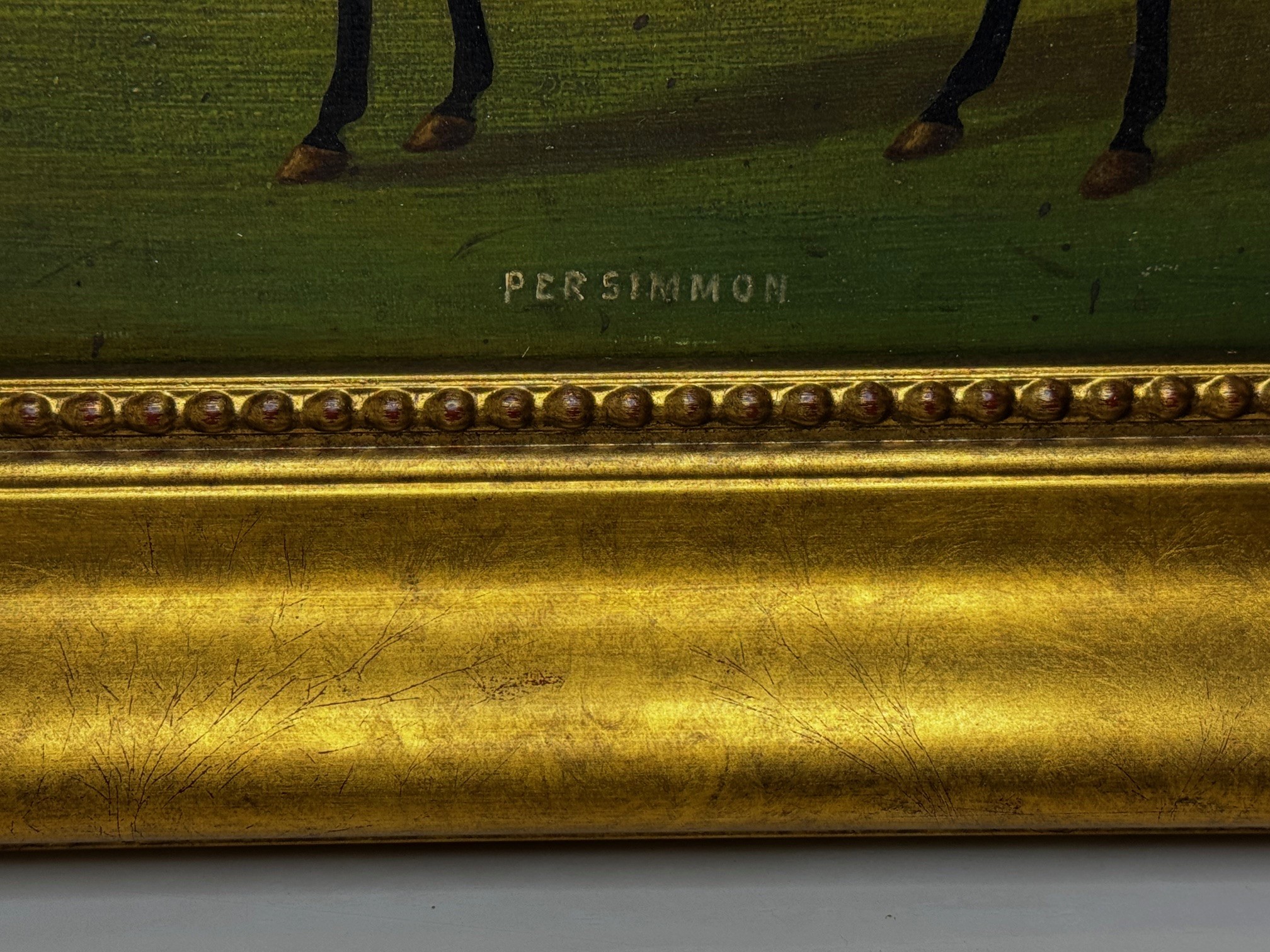
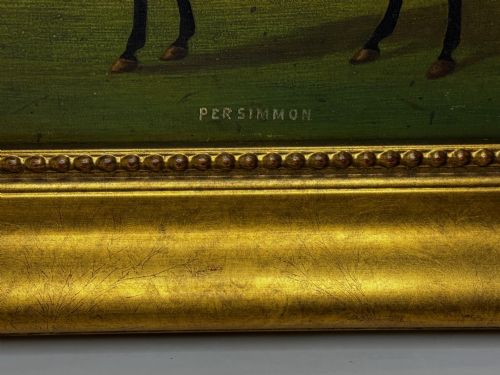
Unsigned; inscribed “PERSIMMON” lower centre
Condition
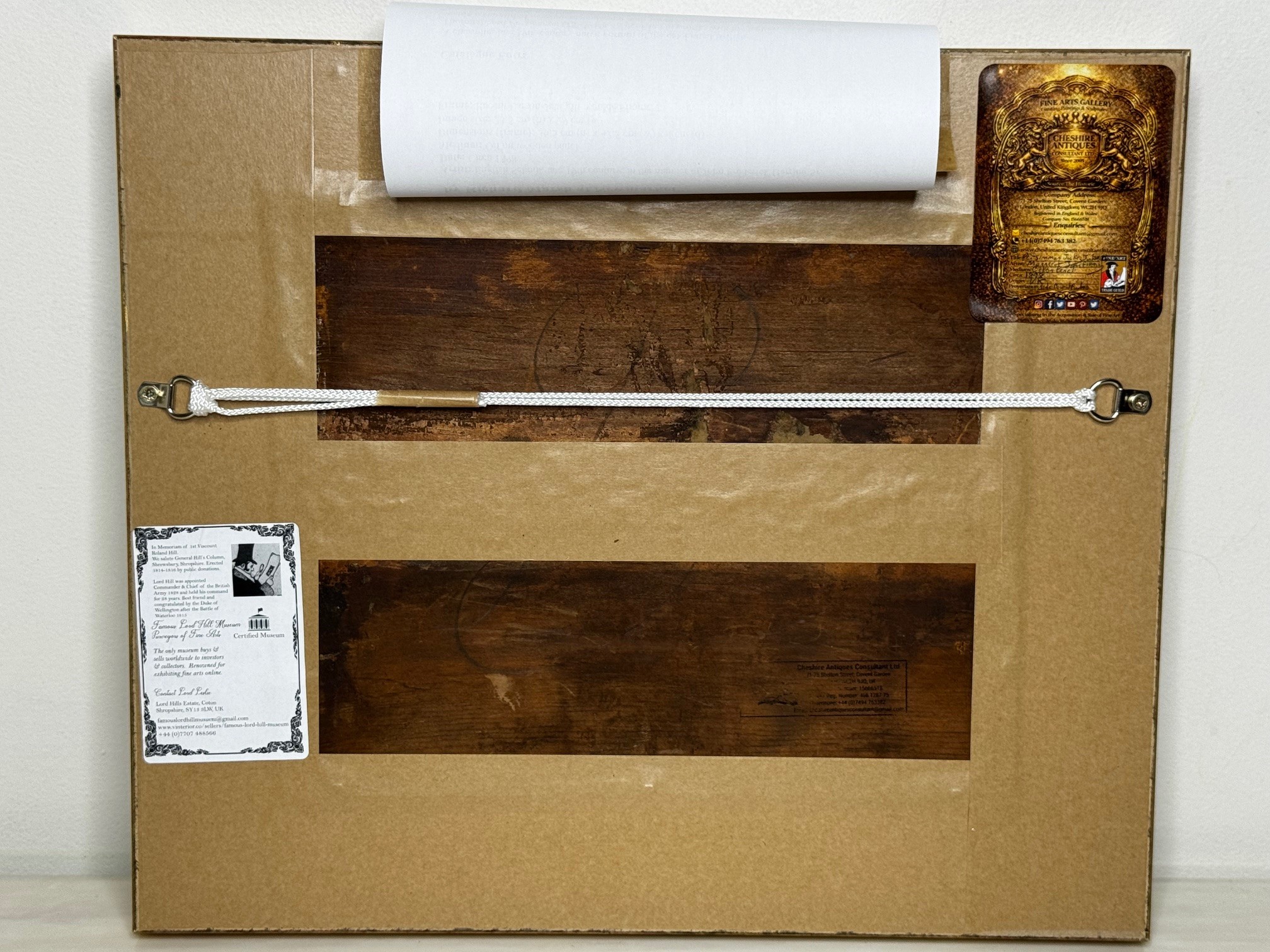
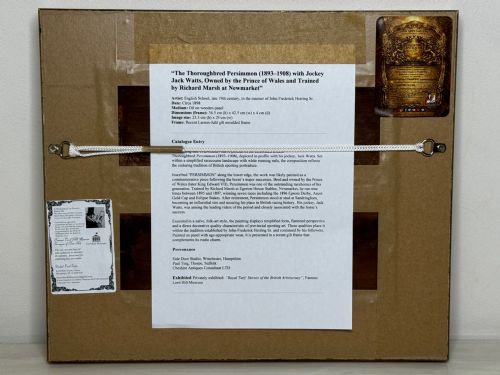
The panel is structurally sound. The surface shows age-related wear including areas of foxing, minor abrasions, scattered paint loss, and some softening to the varnish.
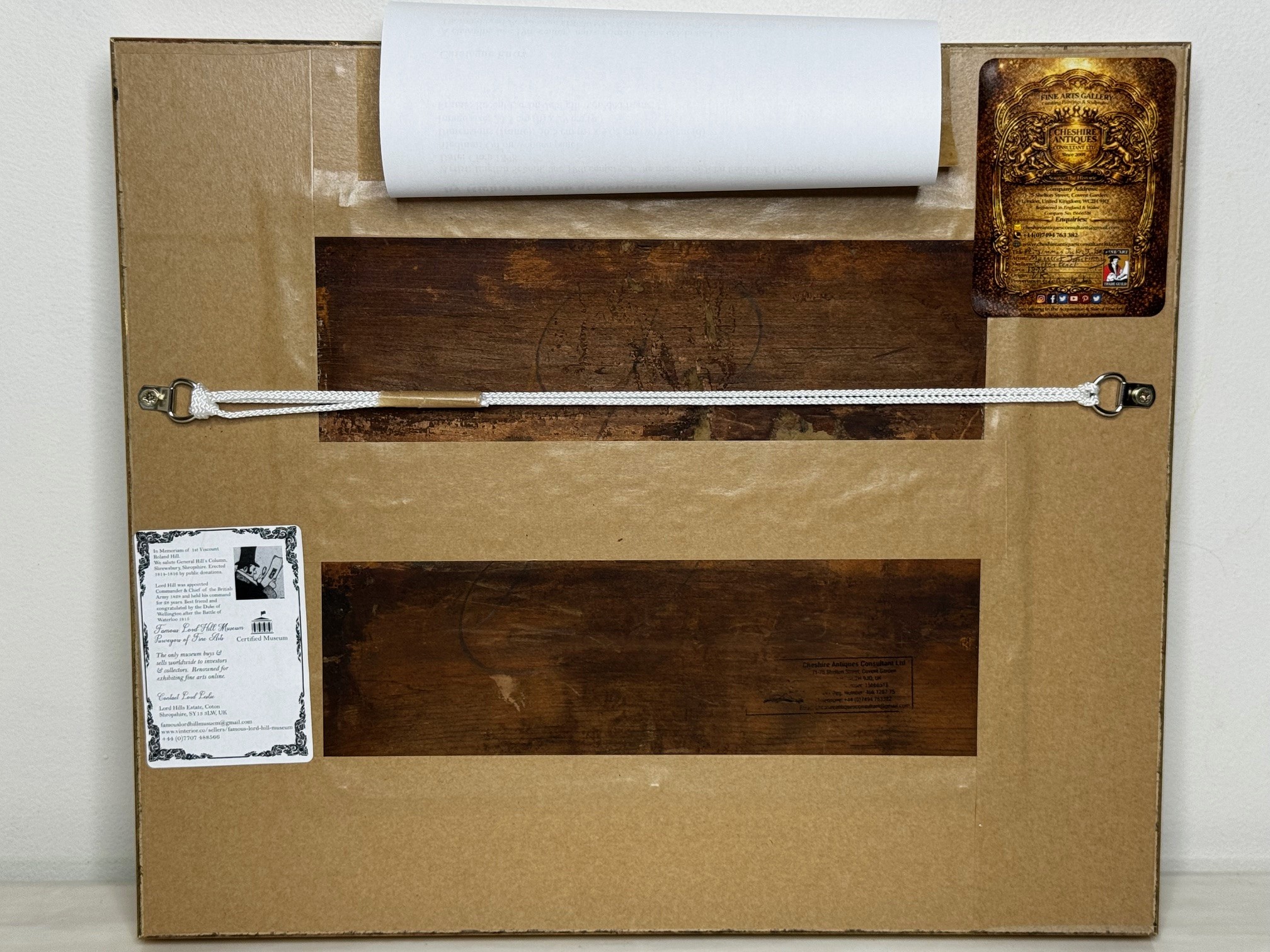
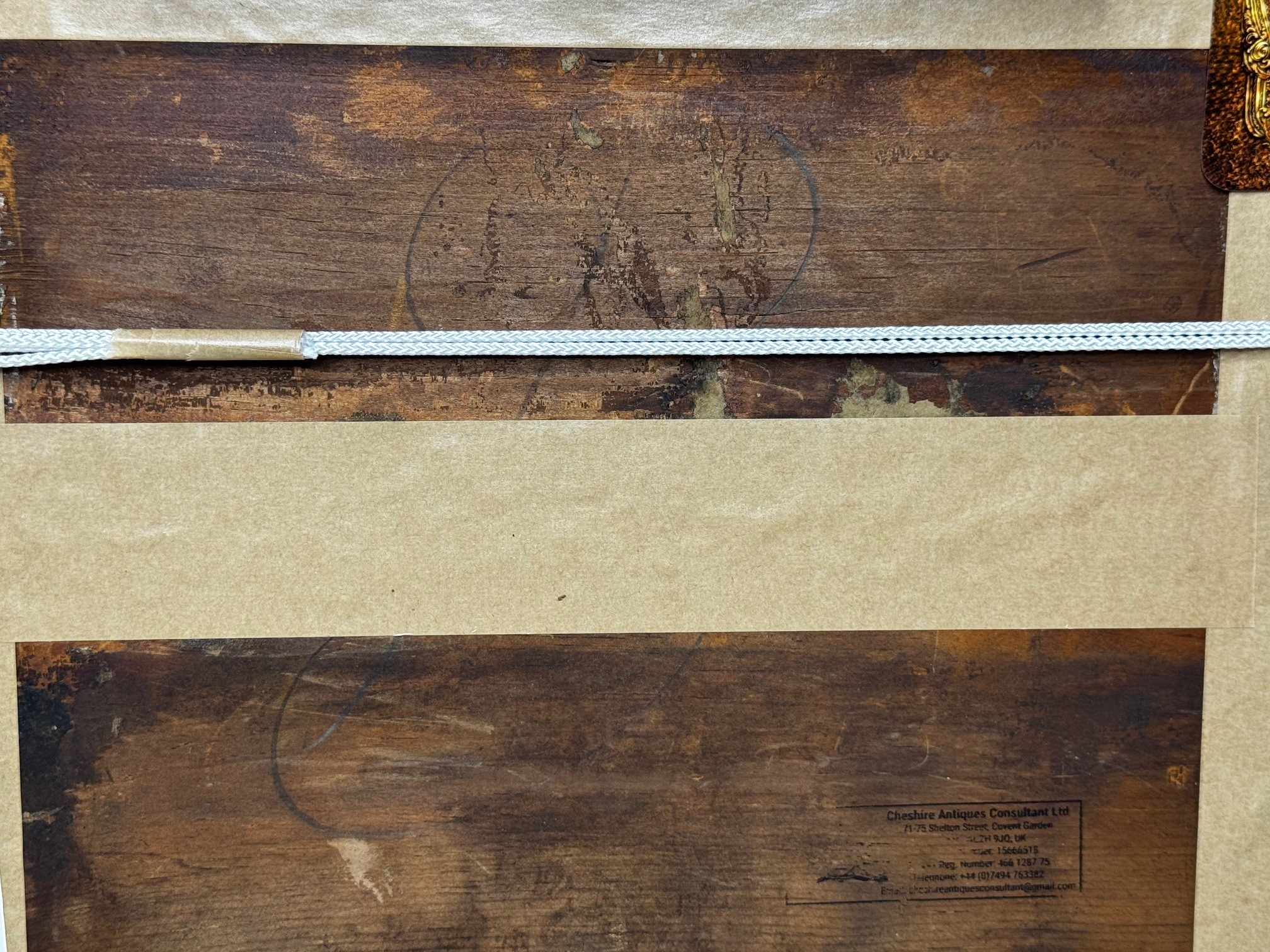
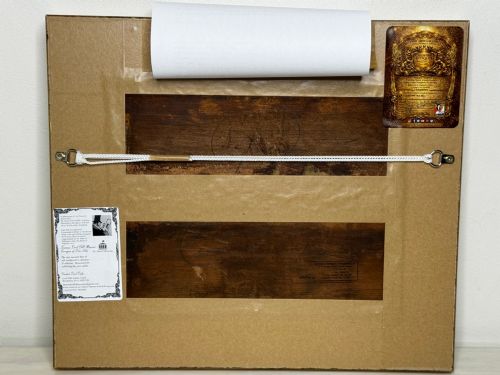
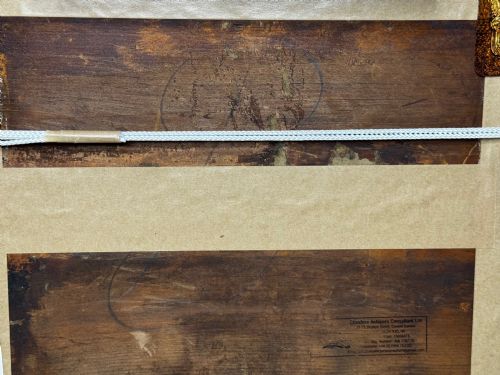
There is a visible vertical panel join which remains stable. Fine craquelure is present throughout, consistent with age. The reverse shows typical handling marks.
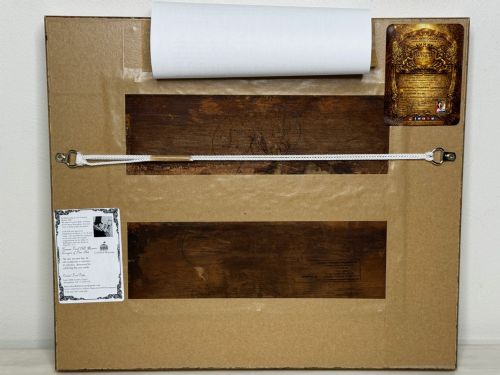
Overall, the painting presents well with good colour and clarity.
Frame
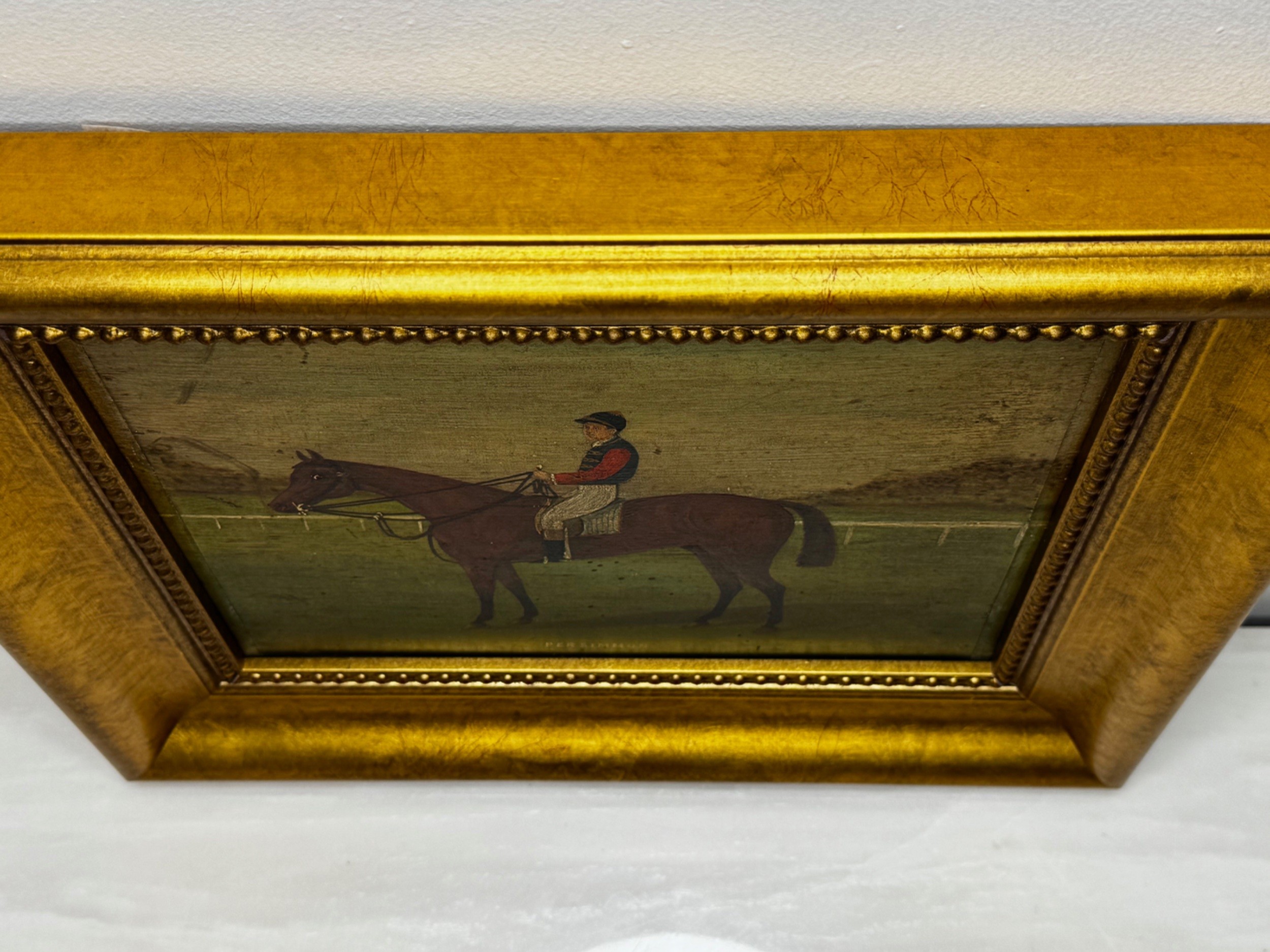
Presented in a later Larson-Juhl gilt moulded frame
Dimensions
Frame: 36.5 cm (height) × 42.5 cm (width) × 4 cm (depth)
Image: 23.5 cm × 29 cm
Provenance
Side Door Studio, Winchester, Hampshire
Paul Ting, Thorpe, Suffolk
Cheshire Antiques Consultant LTD
Summary
A decorative and historically interesting example of late Victorian British sporting art, depicting one of the most celebrated racehorses of the period under royal ownership.
Cheshire Antiques Consultant Ltd has dated this Equestrian Oil Painting to the 19th Century.
Source the historic in 17th, 18th, 19th & 20th century fine arts, painting, sculptures & collectibles
You can view the stock and full dealer information on the Cheshire Antiques Consultant Ltd Profile Page
Oil Painting of Persimmon with Jockey Jack Watts – Royal Thoroughbred Owned by King Edward VII