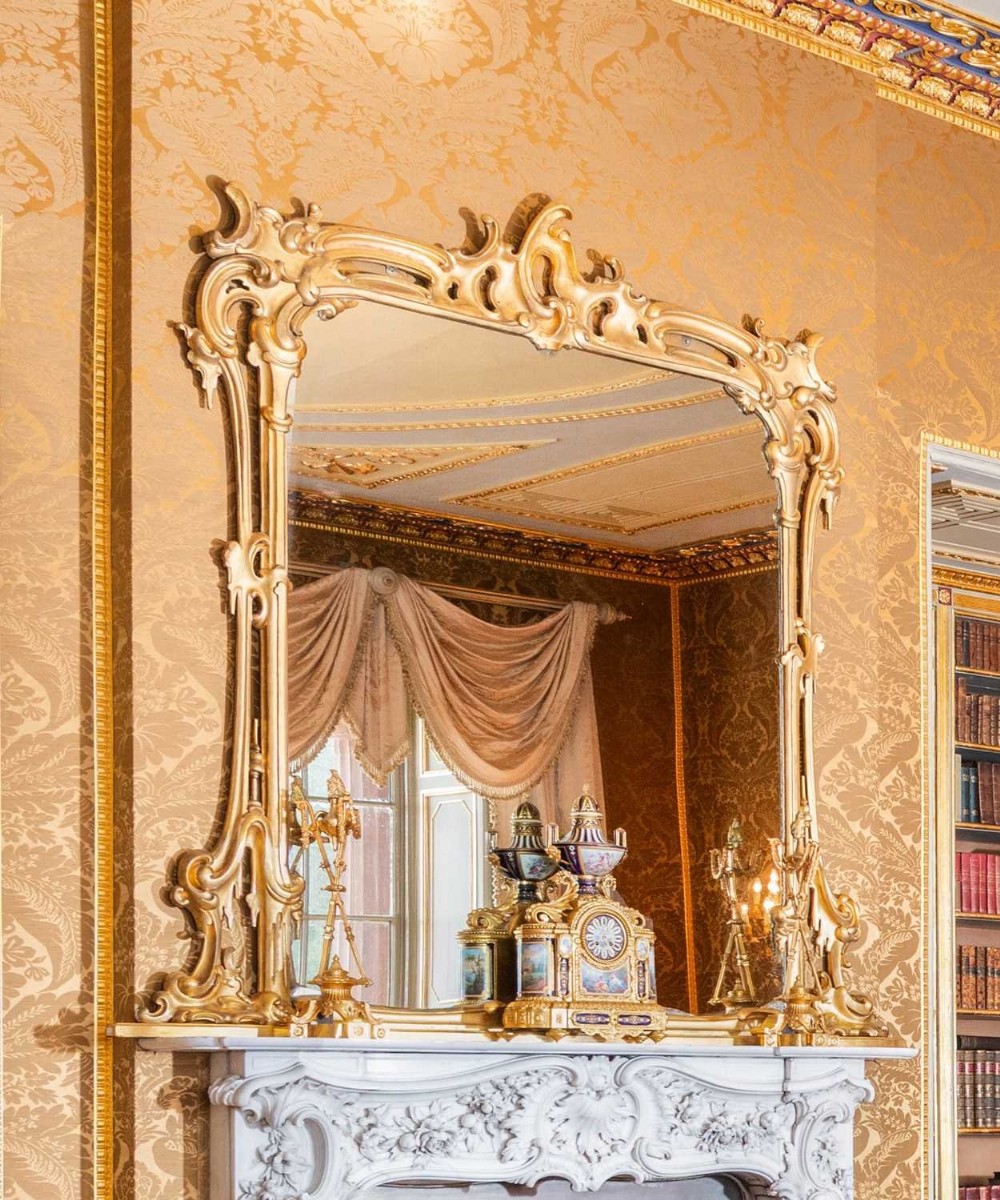
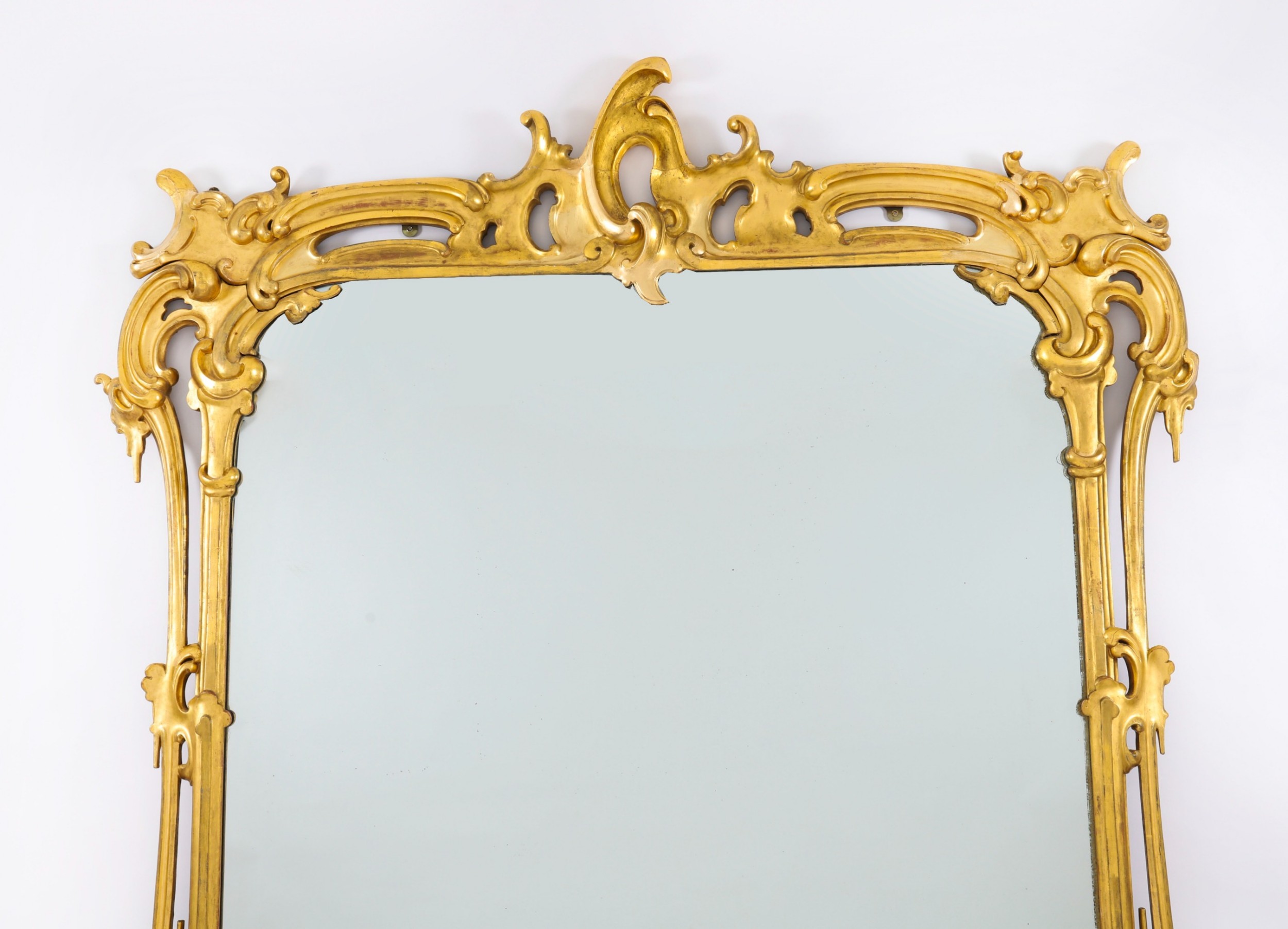
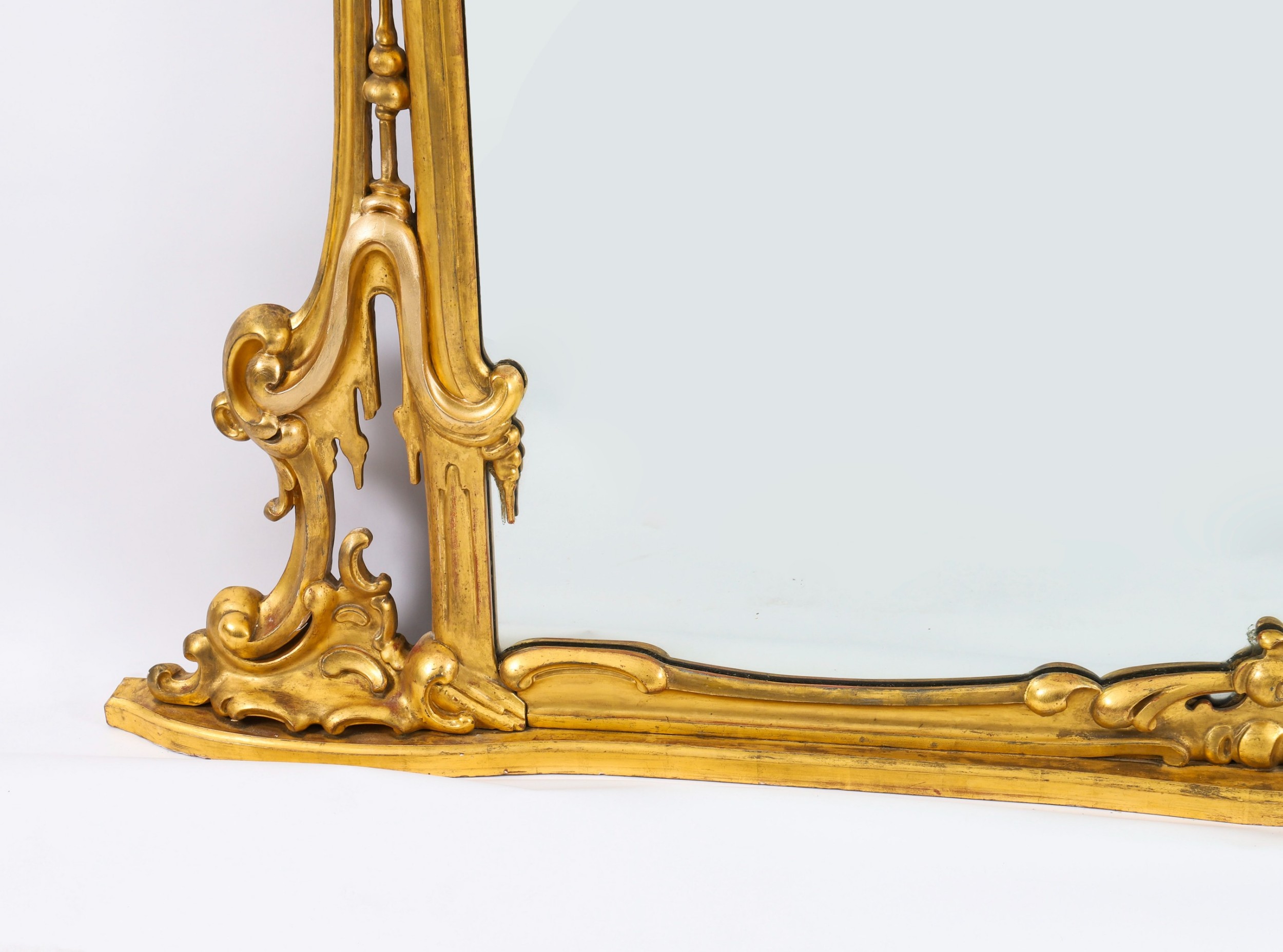
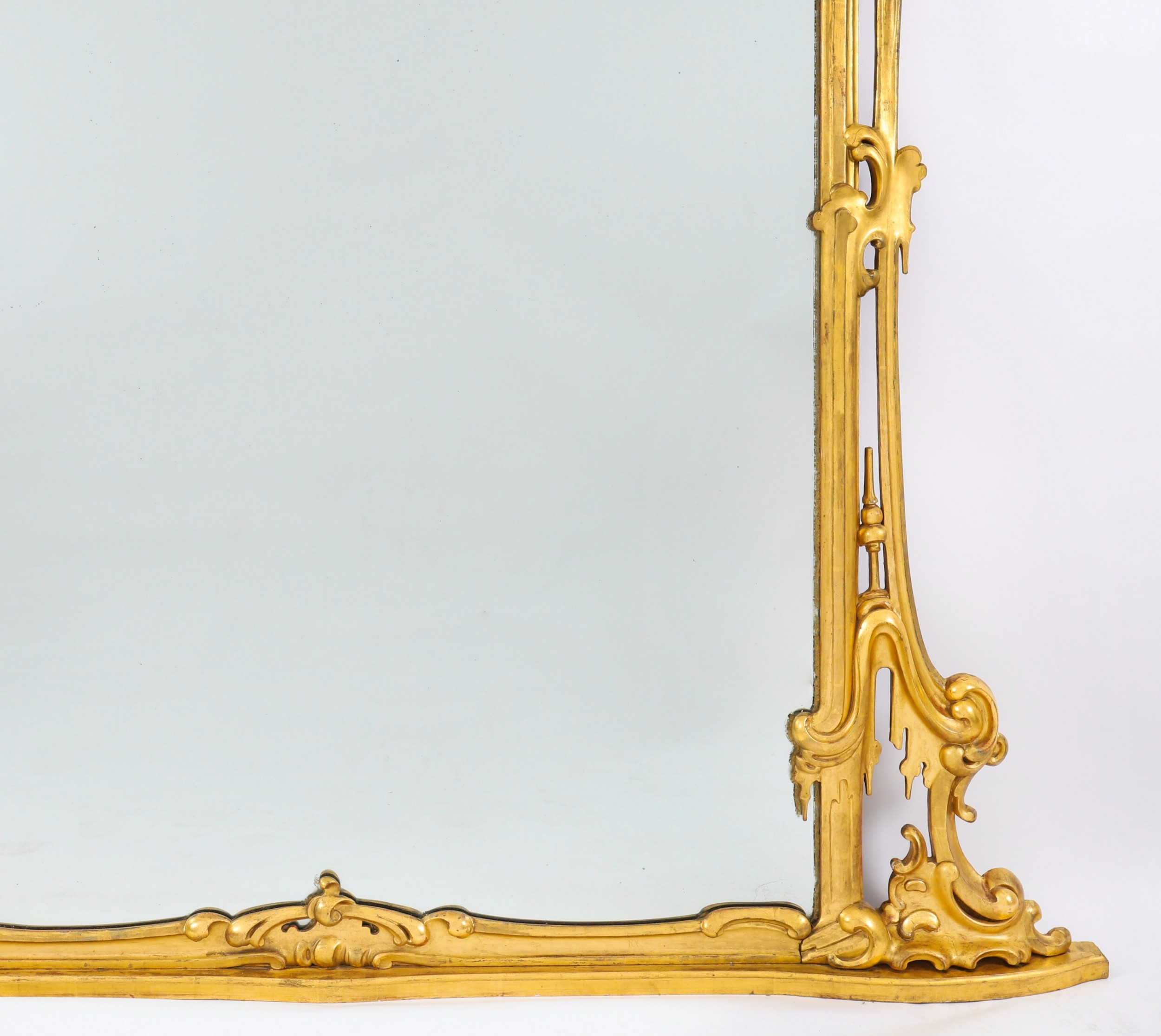
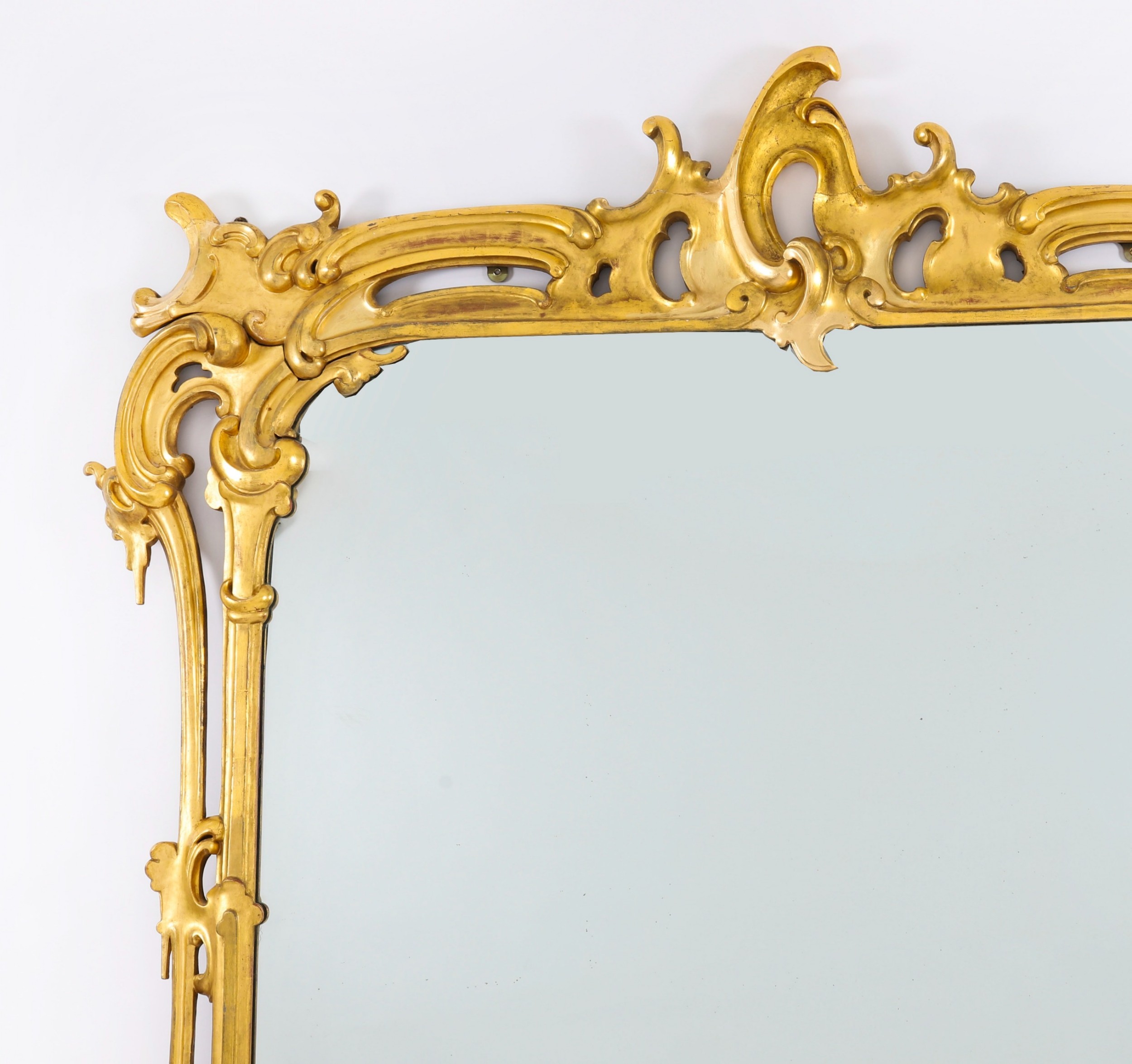
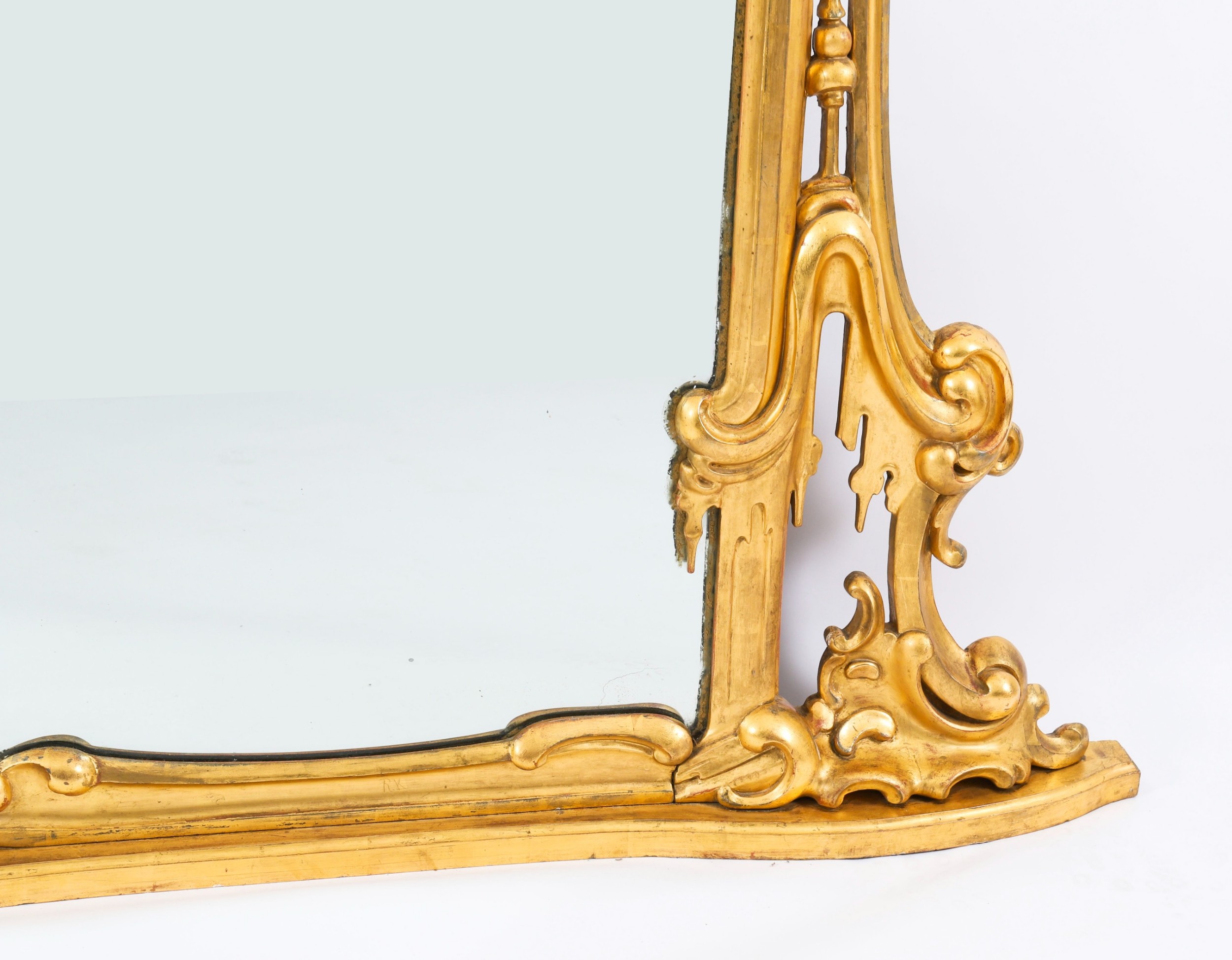
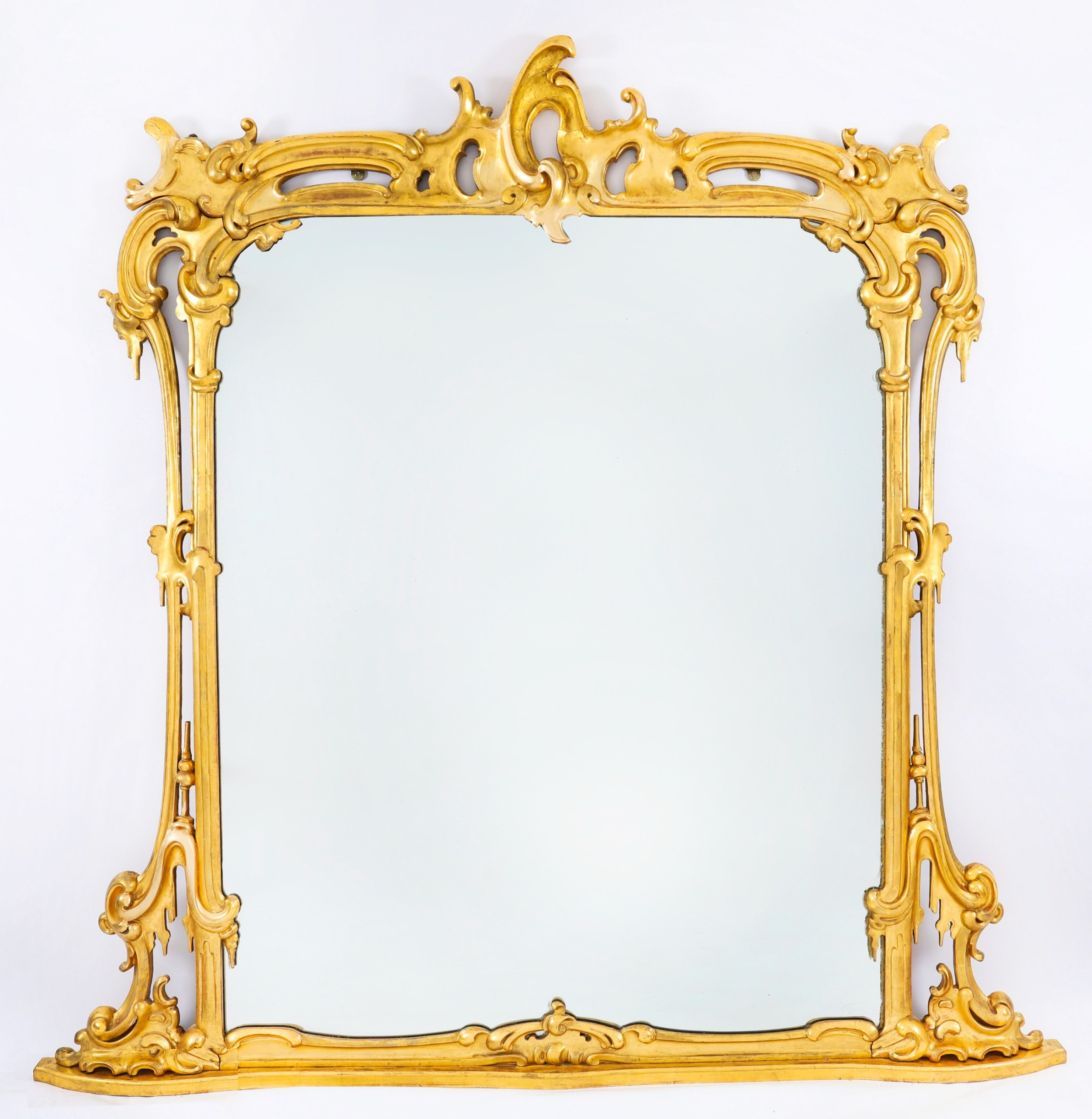
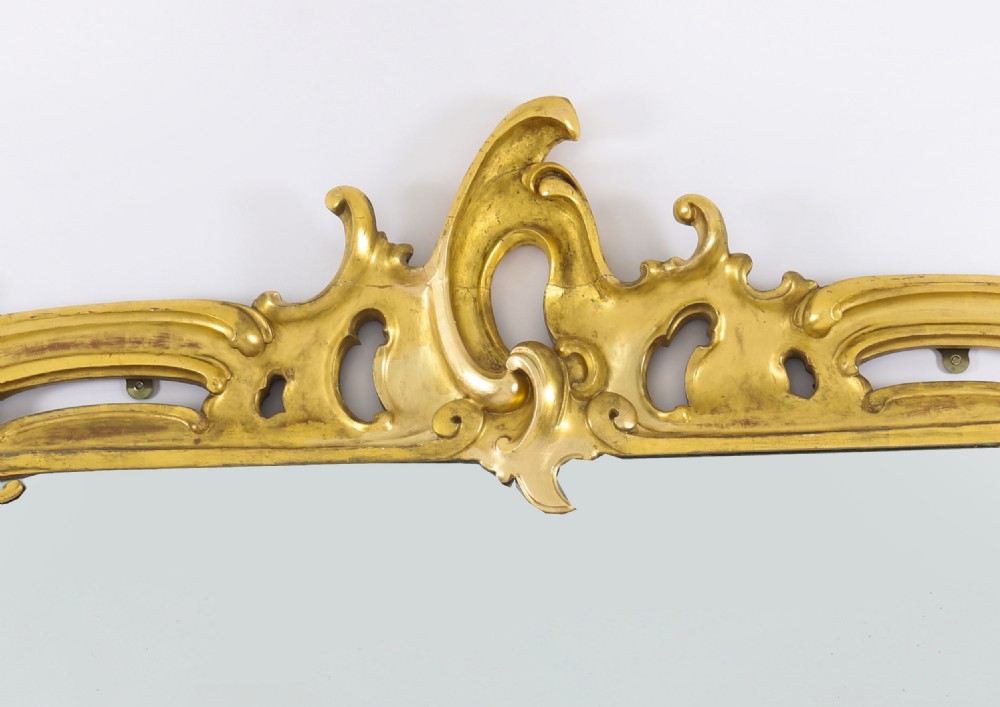
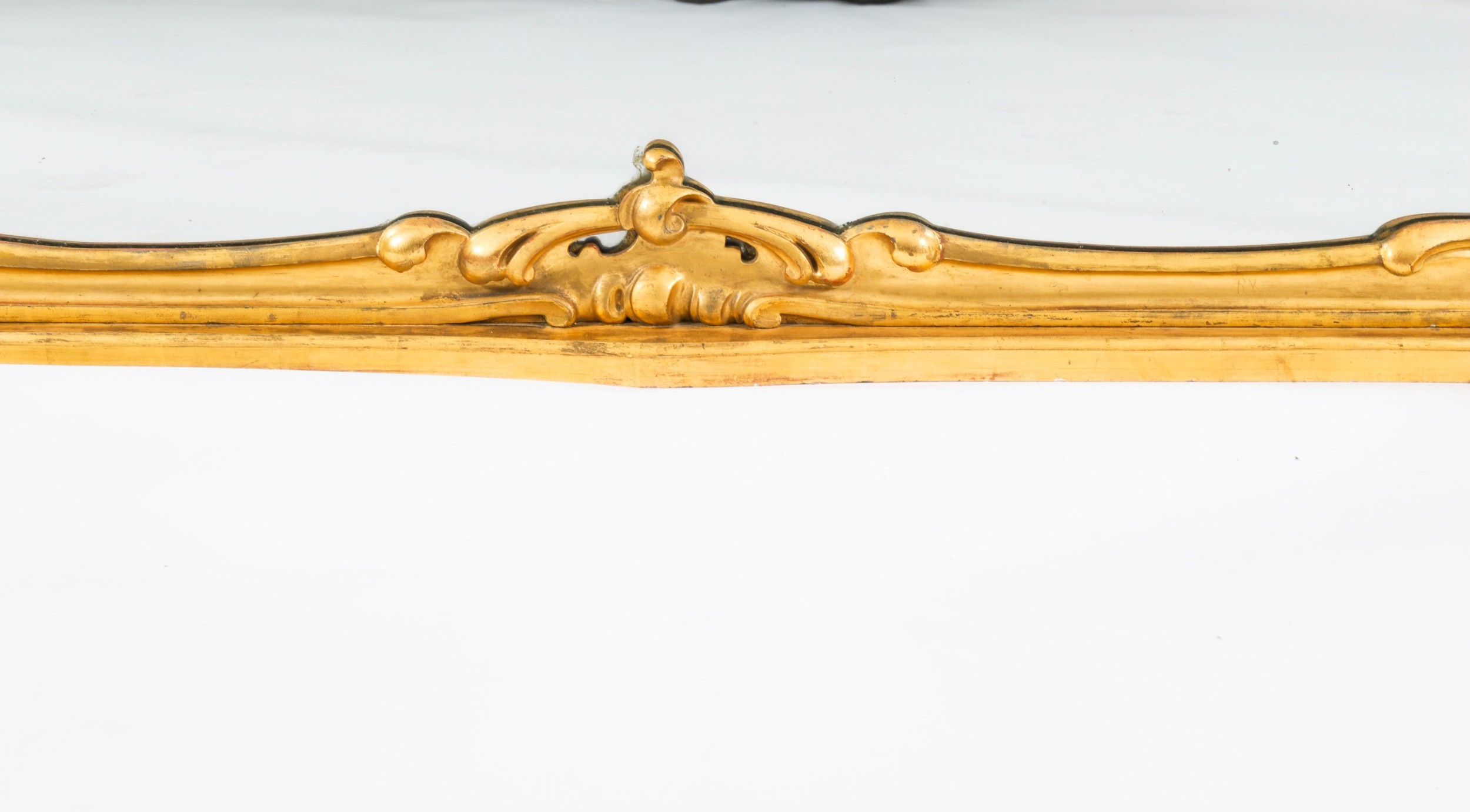
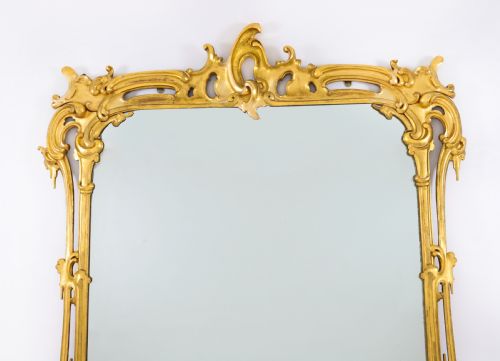
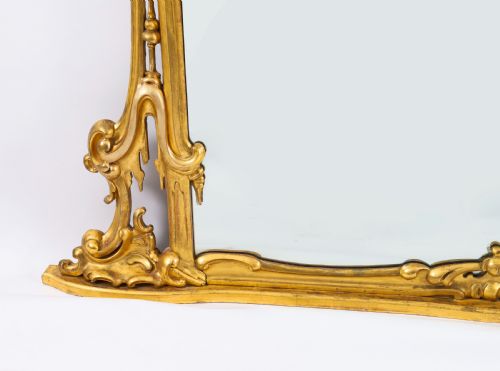
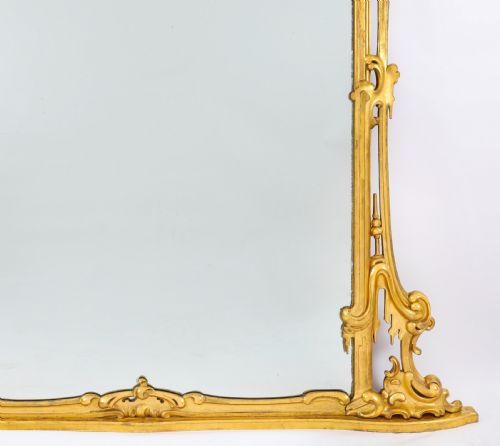
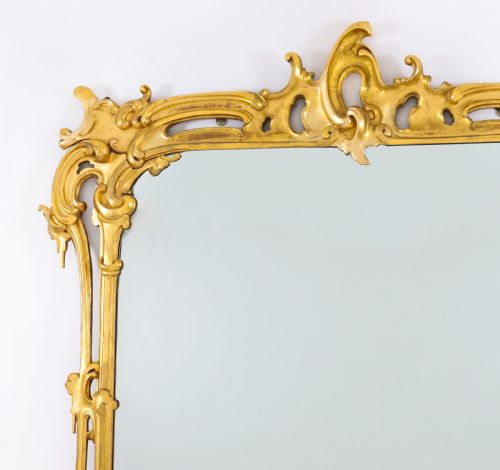
Regent Antiques has dated this Rococo Revival Giltwood Mirror to the 1850s.
The carved frame has elaborate pierced strapwork crestings surmounted by a shell-shaped corona above a rectangular mirror plate within a carved giltwood and gilt-gesso embossed frame boarded by conforming rocaillie ornament.
The quality and craftsmanship of this stunning piece are absolutely superb.
Add an elegant touch to a special wall in your home with this fantastic mirror.
Provenance:
Lord and Lady Ballyedmond
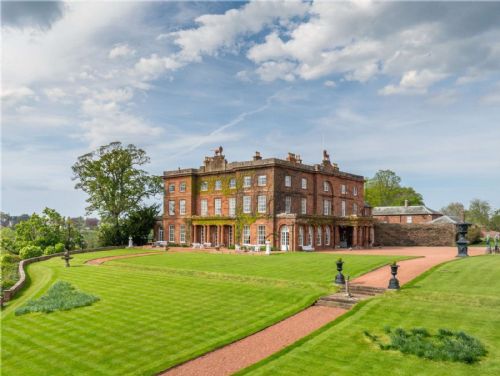
Corby Castle, Carlisle, England
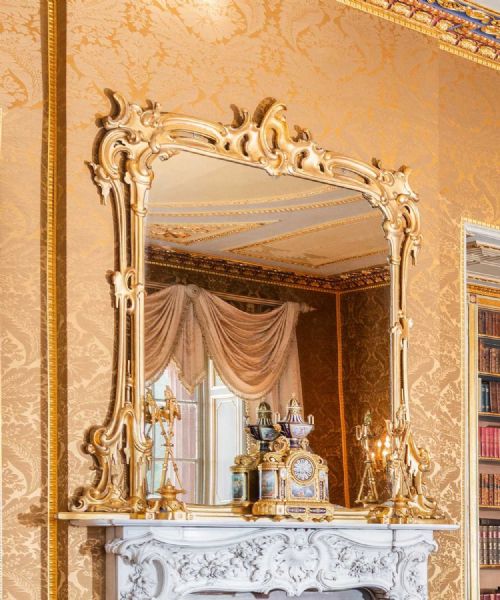
See photos
Condition:
Dimensions in cm:
Height 205 cm x Width 206 cm x Depth 11 cm - FrameHeight 159 cm x Width 129.5 cm - Mirror
Dimensions in inches:
Height 6 foot, 9 inches x Width 6 foot, 9 inches x Depth 4 inches - FrameHeight 5 foot, 3 inches x Width 4 foot, 3 inches - Mirror
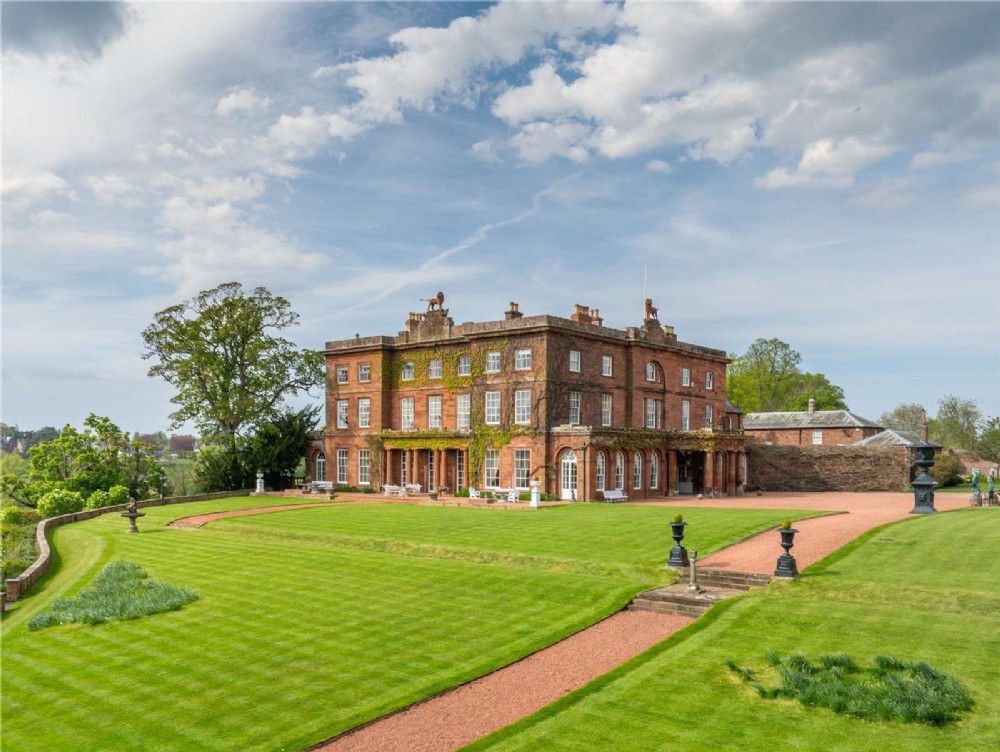
Corby Castle
One of Cumbria’s most historically important mansion houses, grade I-listed Corby Castle sits on a plateau, rising above the picturesque River Eden to the east of Carlisle. The Manor of Corby was granted to Hubert de Vallibus by Henry II and passed to Andrew de Harcia, Earl of Carlisle before being given to Richard Salkeld in 1336. The estate remained in the hands of the Salkeld family until it was sold in 1611 to Lord William Howard, the third son of Thomas Howard, 4th Duke of Norfolk. The house is built around a red sandstone peel tower, or fortified tower house, built in the 13th century; William Howard added a two-storied L-shaped house to the peel tower, and the house was once again modified in the early 19th century by descendant Henry Howard. Between 1812 and 1814, Scottish architect Peter Nicholson gave the castle a new rectangular plan and the harmonious neo-classical façade in the distinctive local red sandstone that graces the building today. Corby Castle remained in the Howard family until 1994, when Lord and Lady Ballyedmond, as new owners, began an inspired revival of Corby, giving new life to one of the great Cumbrian mansions.
Gilding
The purpose of gilding is to give the appearance of solid gold, a practice that began over 4,000 years ago in Egypt. Paintings from Egyptian tombs from around 2000 B.C. show workers pounding gold into thin sheets to apply to pieces of furniture and coffins. The Greeks applied gilding to statues in around 400 B.C.E., and gilding techniques have continued to be used in Europe, South America, Spain, Britain and the United States.
During the 18th century, Louis XIV of France flaunted his wealth with gilded furnishings, framed artwork and architectural detailing, marking France as a leader in the decorative arts.
There are two methods of true gilding: oil gilding and water gilding.
Oil gilding uses an oil-based product on a prepared surface, and the leaf is gently pressed onto the surface.
Water gilding uses a water-based adhesive that causes the gold leaf to adhere to the surface.
Our reference: A5064
Regent Antiques has dated this Rococo Revival Giltwood Mirror to the 1850s.
We specialise in english and continental furniture, silver, porcelain and decorative items.
You can view the stock and full dealer information on the Regent Antiques Profile Page
Regent Antiques is a registered member of LAPADA CINOA
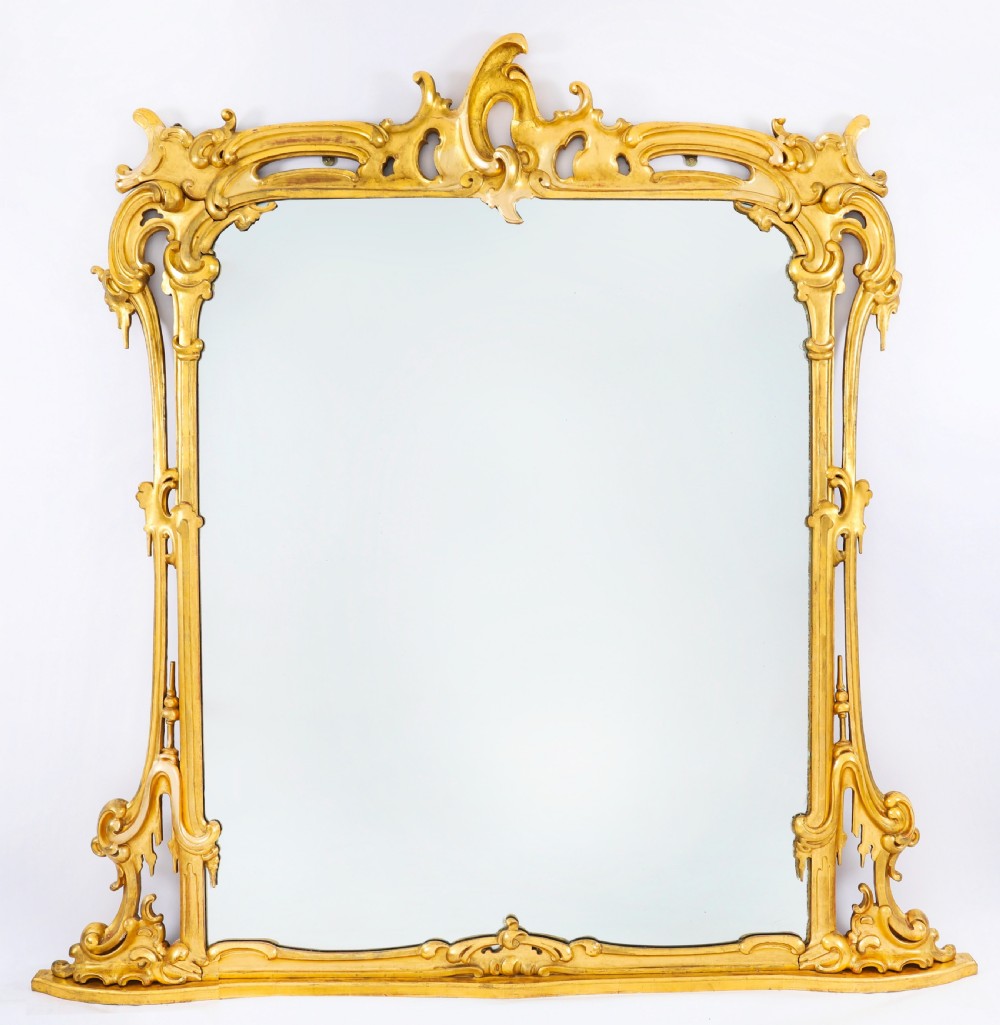
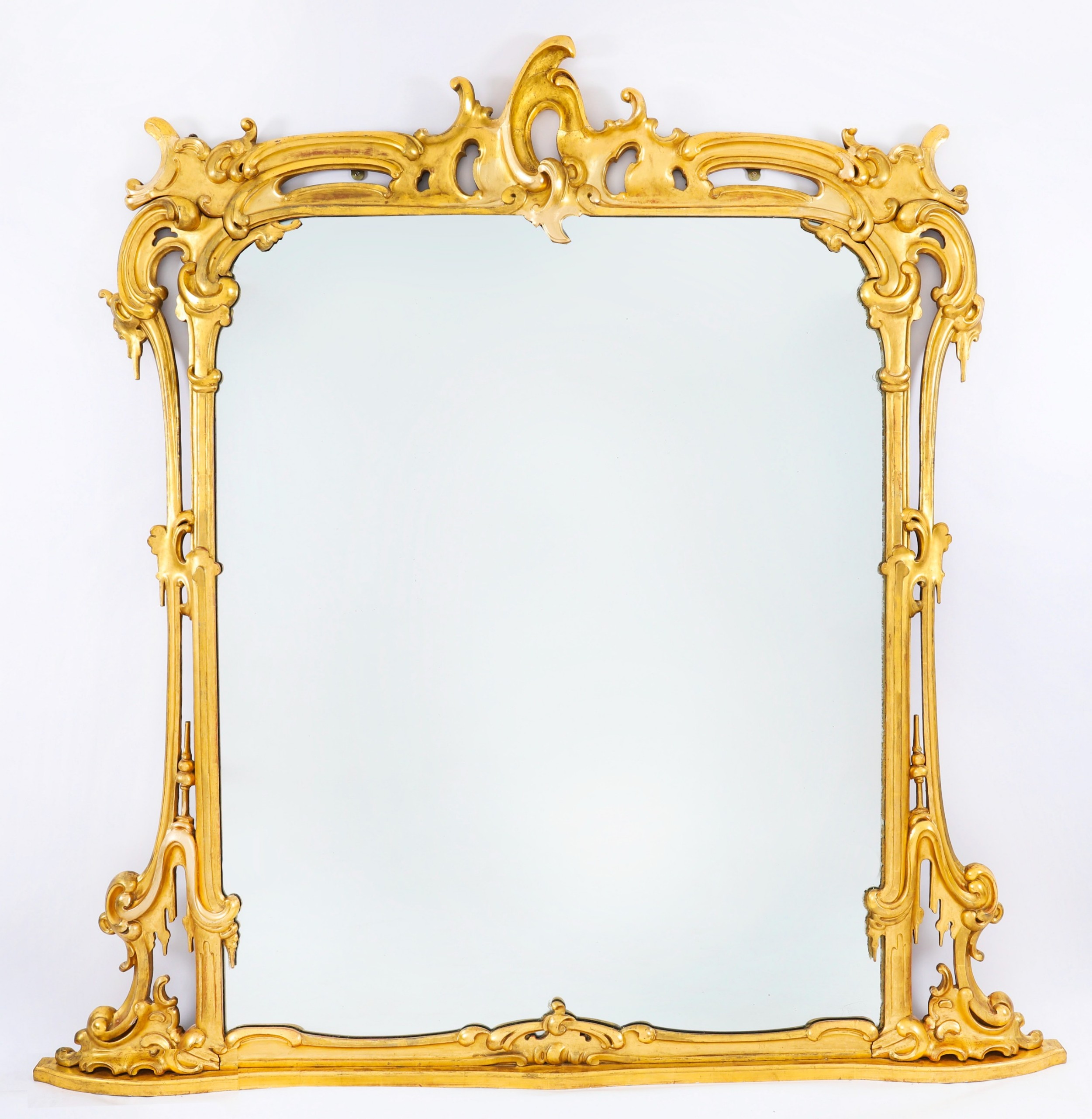
Antique Large Rococo Revival Giltwood Wall Mirror c.1850 205x206cm 19th C