The Antiques Hound has dated this Antique Equestrian Oil Painting to the 18th Century.
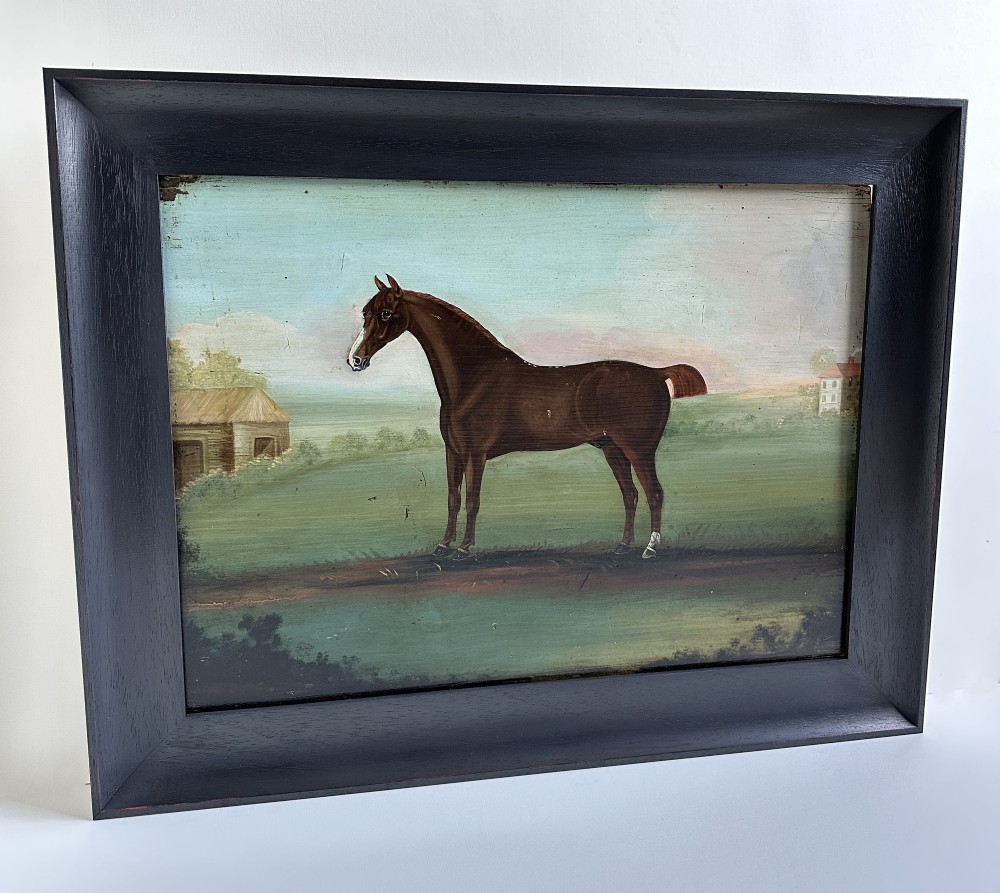
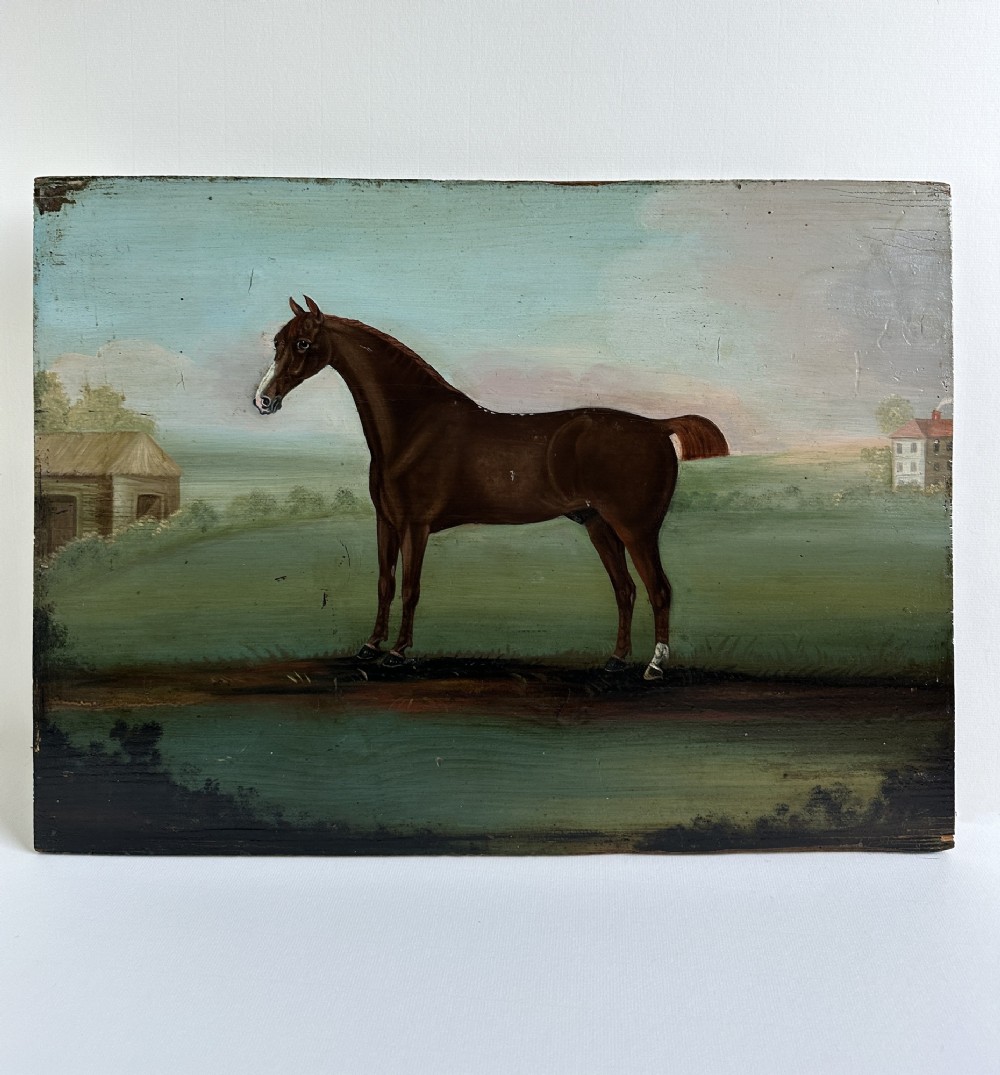
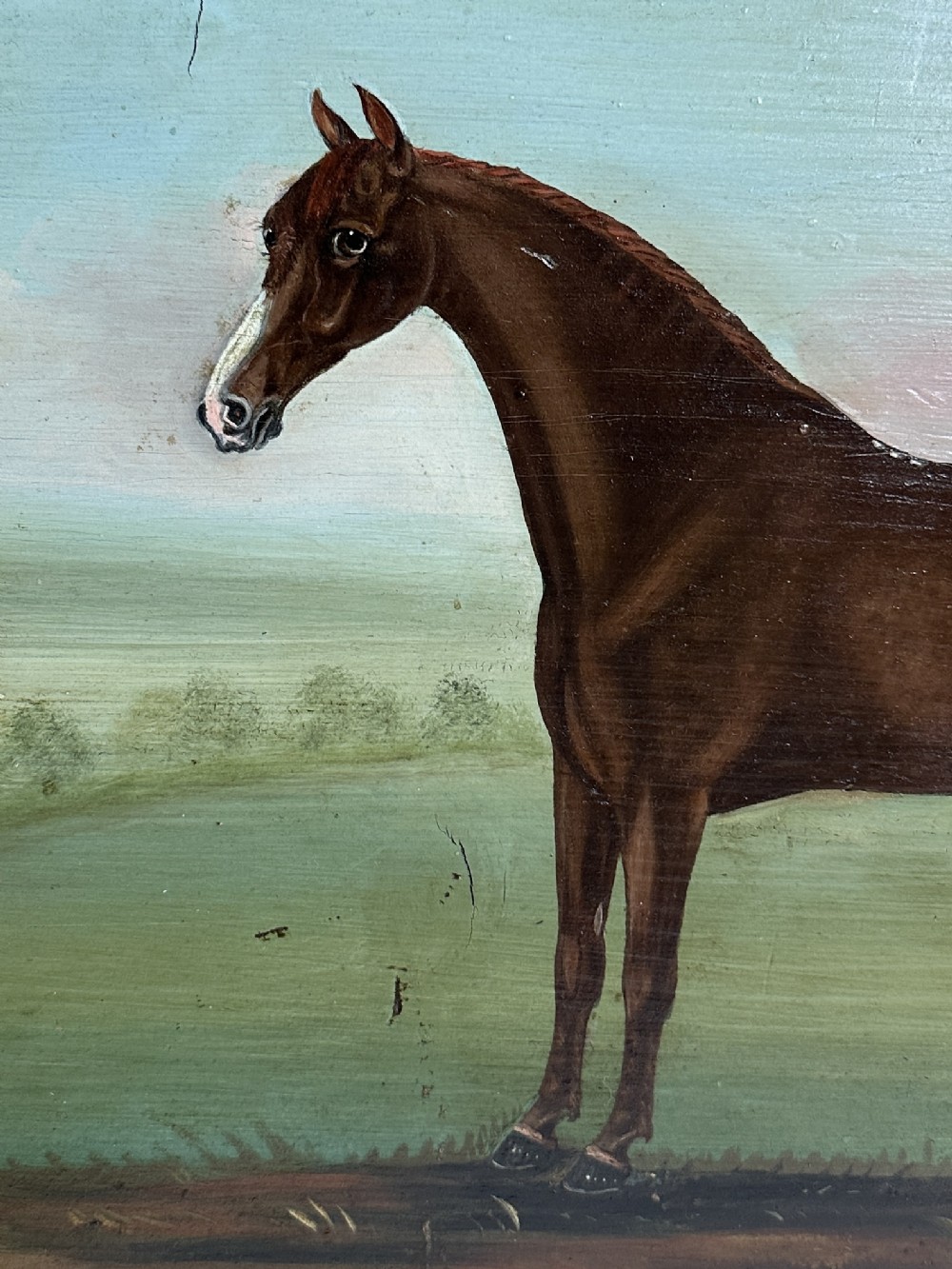
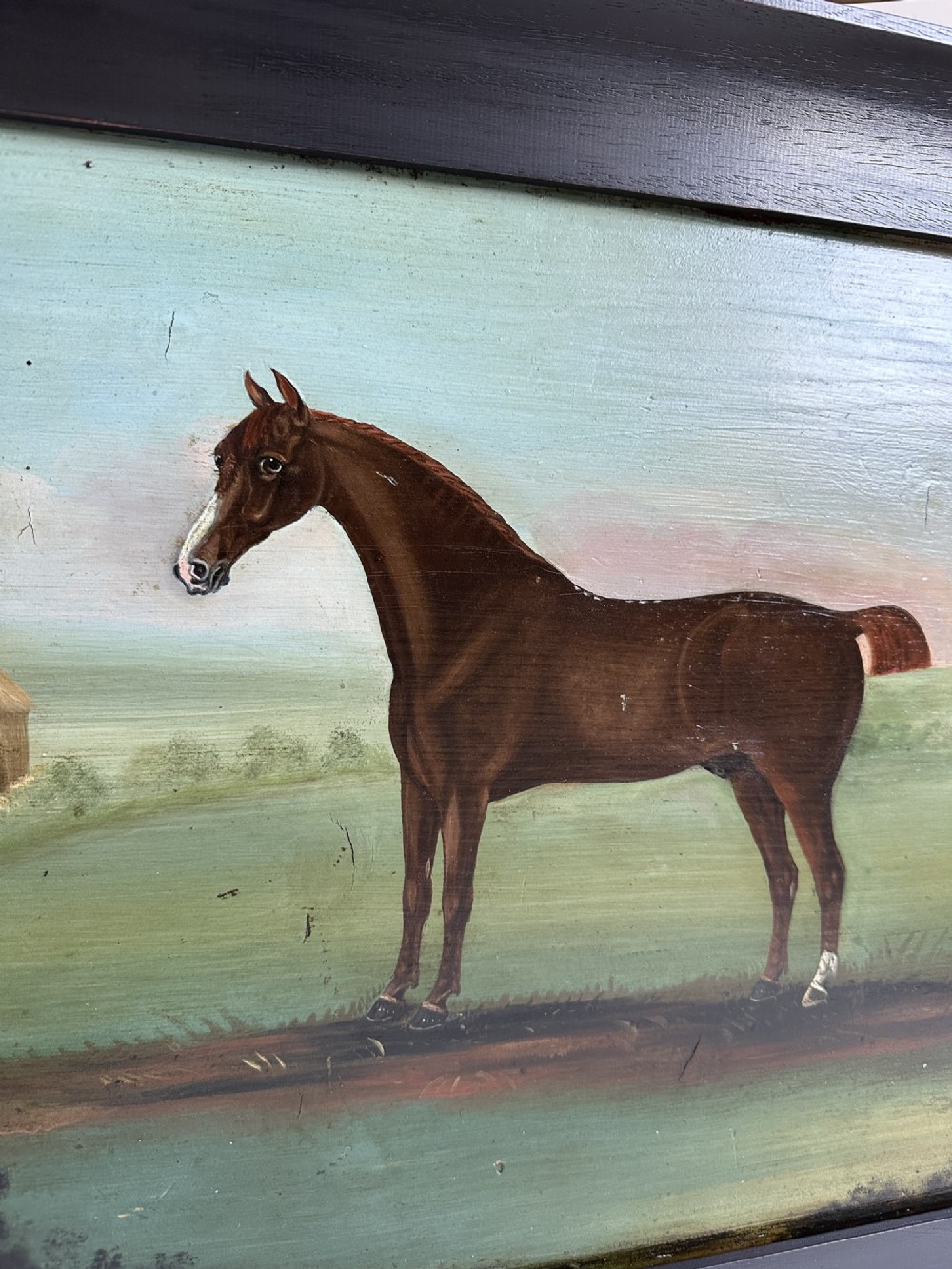
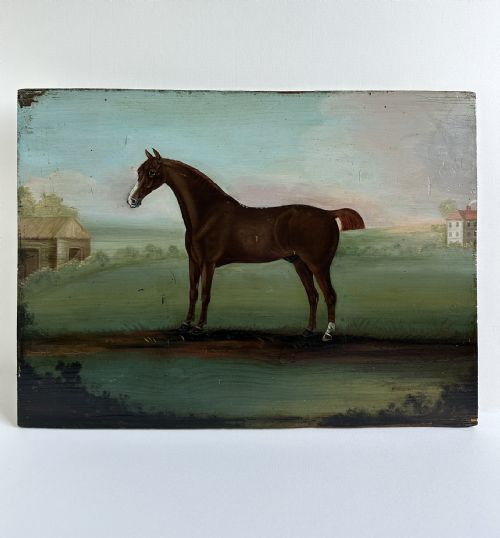
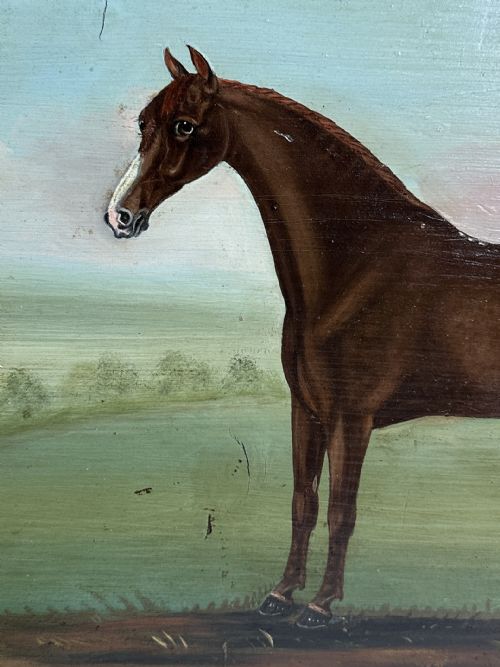
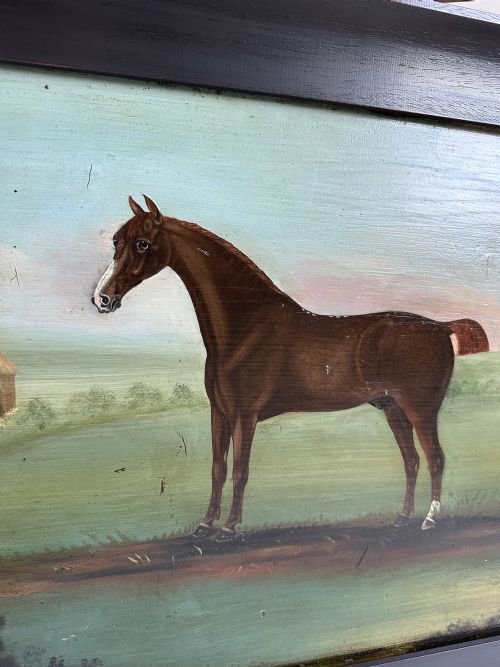
The horse is sensitively rendered with a white blaze and white fetlock markings, emphasizing its individuality. In the background are distant buildings, suggesting the animal may have been a valued horse of a particular estate - typical of commissioned 18th-century racehorse portraits.
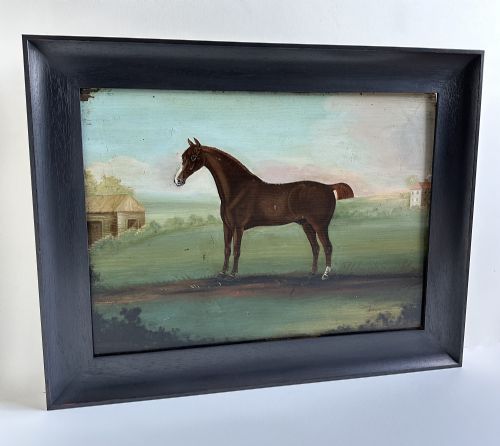
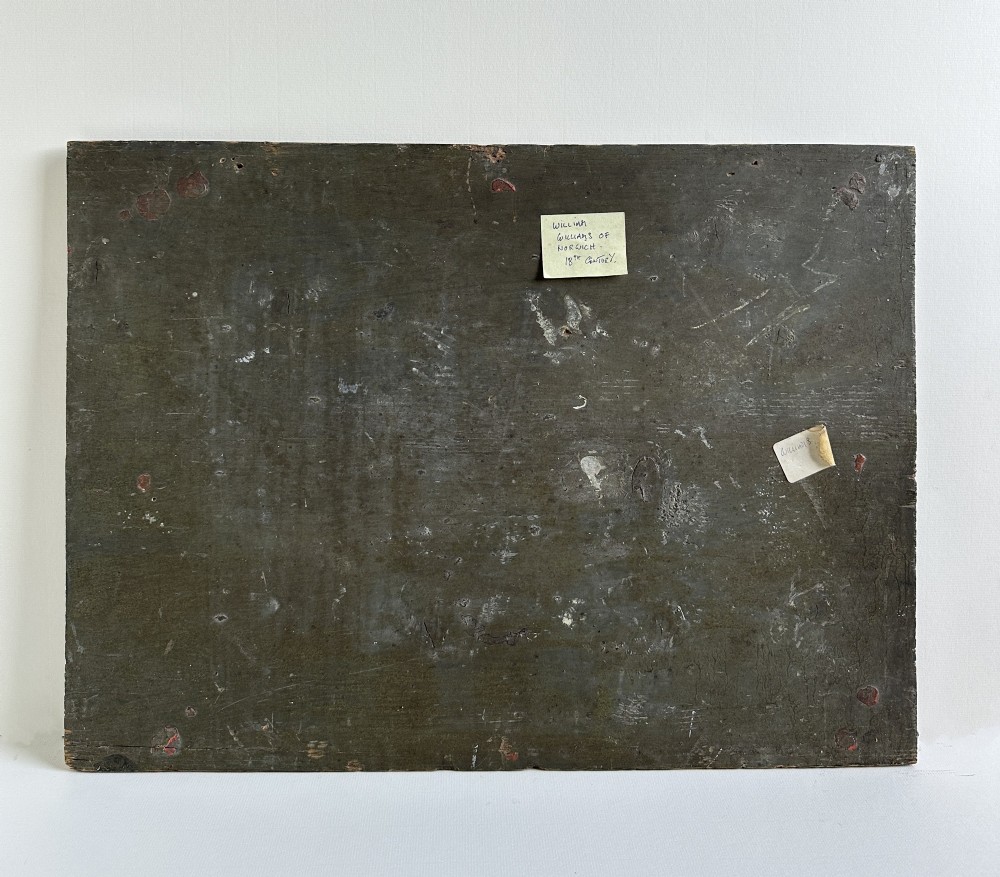
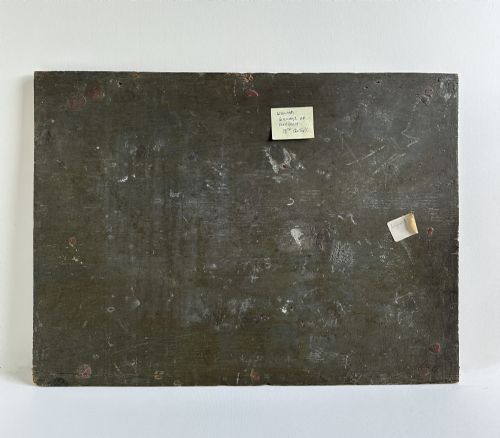
The panel is painted on a single pine board with the grain clearly visible. It has been professionally cleaned and revarnished, removing much surface dirt and old yellowed varnish to reveal the original colours and detail. The aged surface displays subtle craquelure and minor wear consistent with a work of over 230 years, enhancing its antique character.
The painting was acquired without a frame and has been newly framed in a simple hand-finished ebonised wooden frame, complimenting the period character of the work while presenting it elegantly for display.
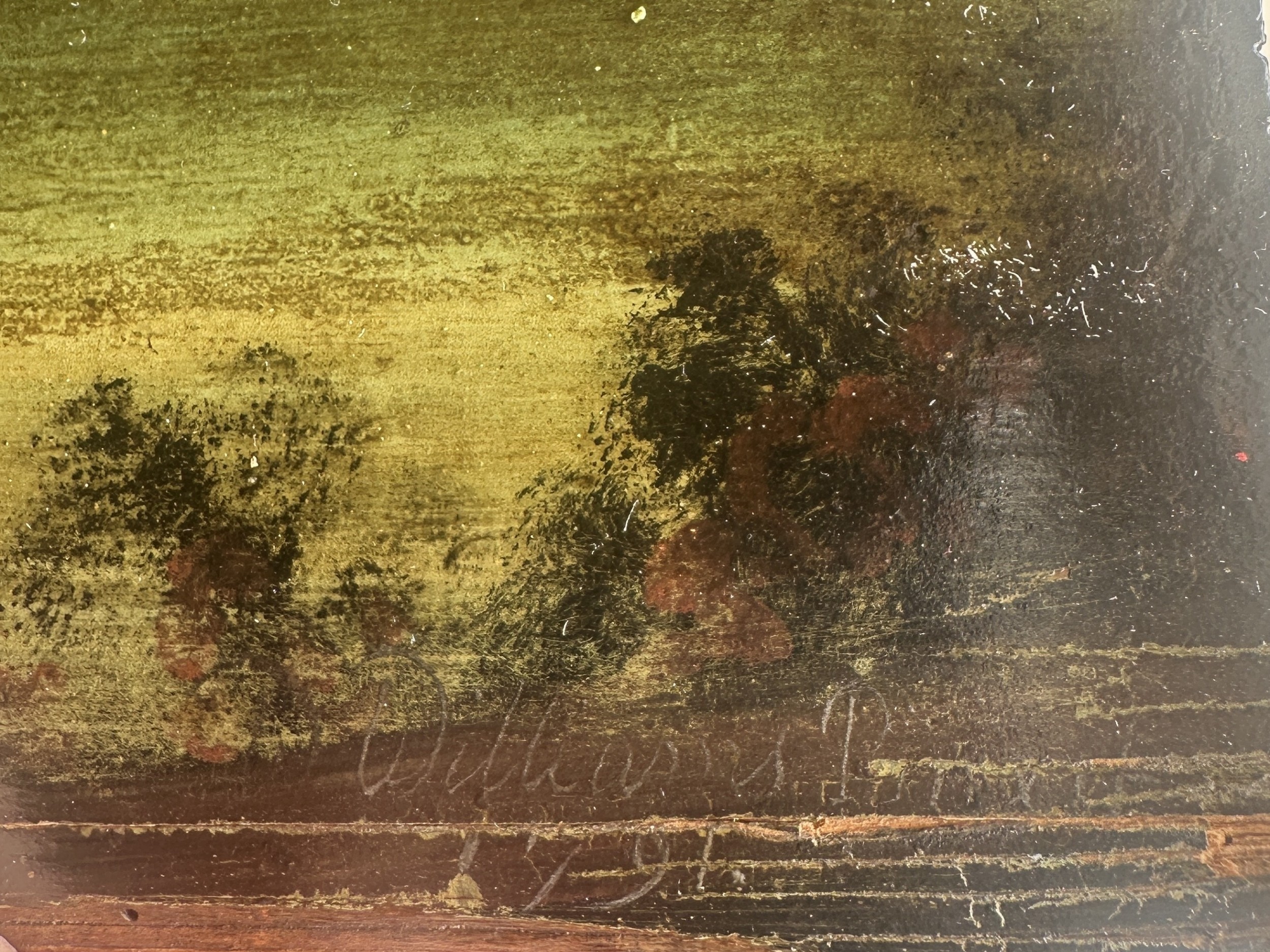
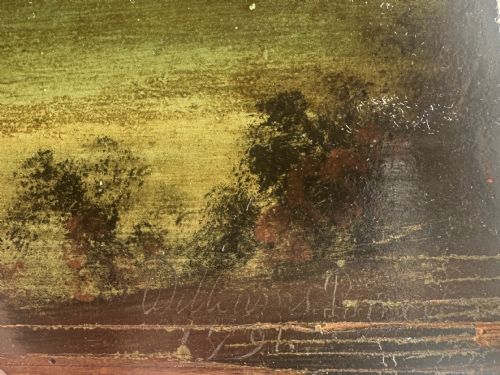
The use of the Latin inscription “pinxit” and the date 1791 correspond with the final year of William Williams’ life, supporting the tentative attribution.
The side-profile pose, identifiable markings, and estate-related background all align with the tradition of provincial Georgian sporting and stable portraits, making this both a decorative and historically interesting work.
Details
• Medium: Oil on pine panel
• Artist: Signed W Williams Pinxit
• Date: 1791
• Attributed to: William Williams (1727–1791)
• Subject: Chestnut horse in landscape
• Origin: England / Anglo-American school
• Frame: Wooden frame in antique ebonised finish
• Condition: Professionally cleaned and revarnished; minor age-related surface wear; excellent overall
Dimensions
• Painting: 51.5cm x 37cm x 0.7cm /
• Framed: 61.5cm x 48.5cm x 2cm
A distinctive Georgian equestrian portrait with strong folk and provincial art appeal, ideal for collectors of early equestrian and sporting art, 18th-century British and Anglo-American painting, and historical horse portraiture.
About William Williams (1727-1791)
Born in Bristol, England; self-taught; noteworthy as being the first teacher of Benjamin West. Williams lived and worked in Philadelphia from1747 (with a short period in Jamaica 1760-63) before returning to England in 1776. He then worked between Bath and Bristol.
Because relatively few of his works survive, he’s not as widely known as many of his contemporaries, but historians consider him an important early figure in colonial American art.
The Antiques Hound has dated this Antique Equestrian Oil Painting to the 18th Century.
Dealing in compact georgian and later furniture and original paintings
You can view the stock and full dealer information on the The Antiques Hound Profile Page
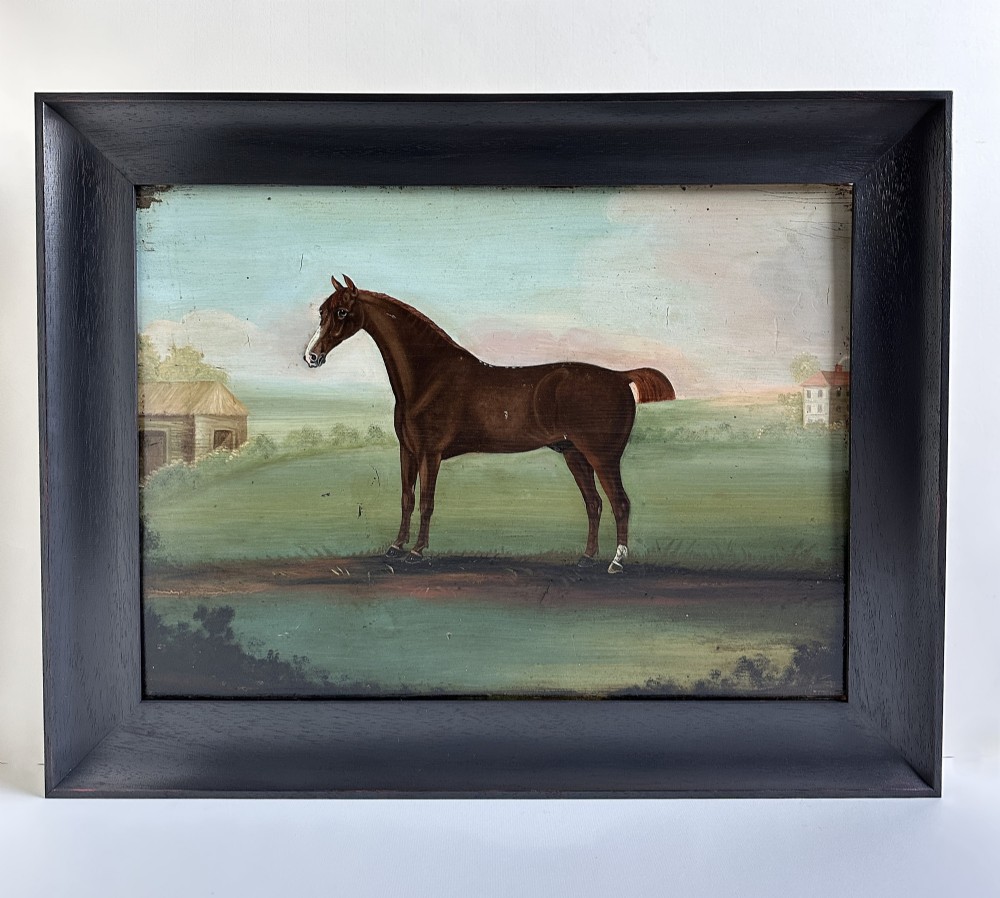
18th Century Horse Painting Oil on Pine Panel Signed W Williams Pinxit 1791 Attributed William Williams (1727–1791)