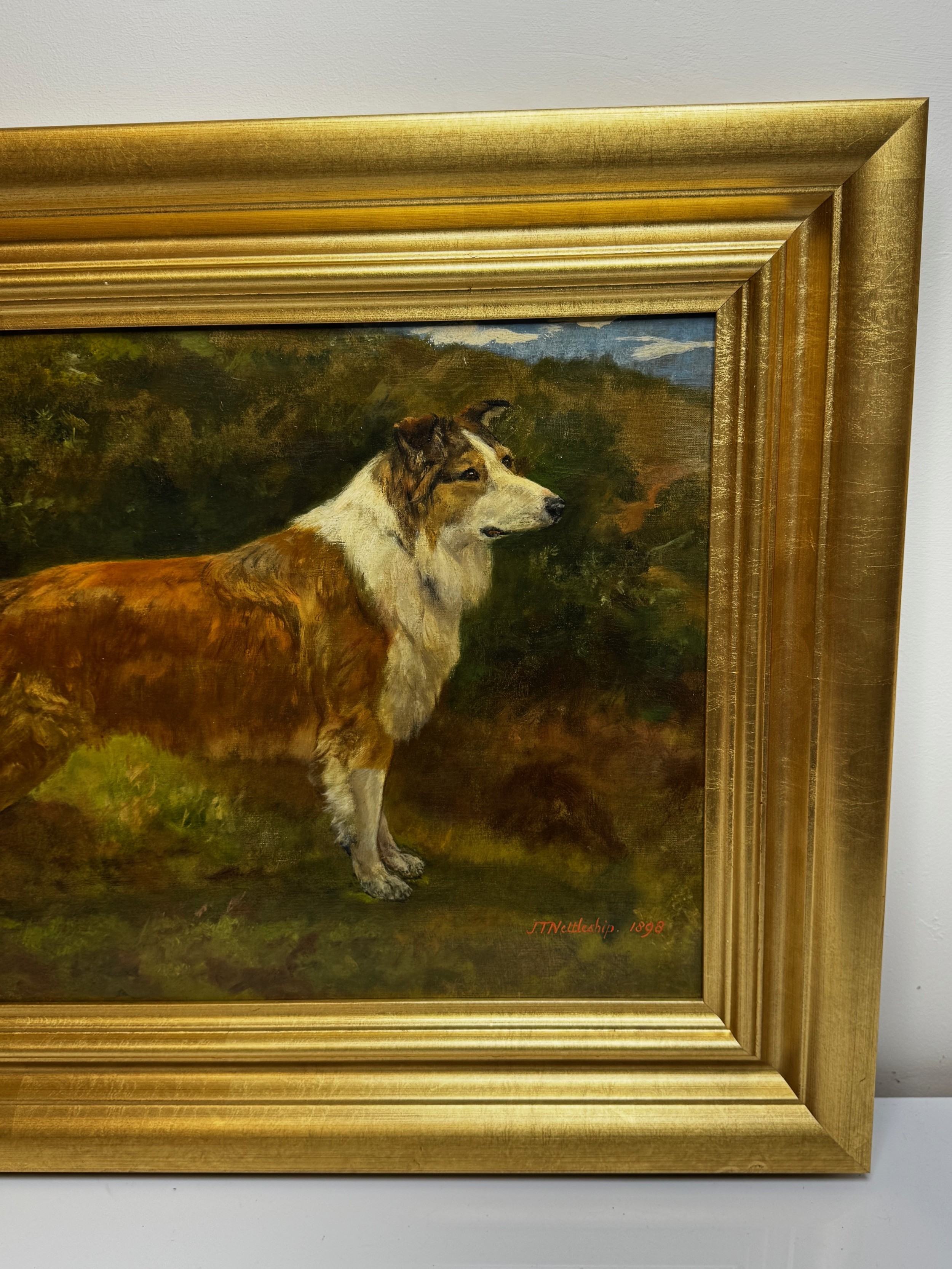
Cheshire Antiques Consultant Ltd has dated this Victorian Dog Oil Portrait to the Victorian era.
Subject and medium
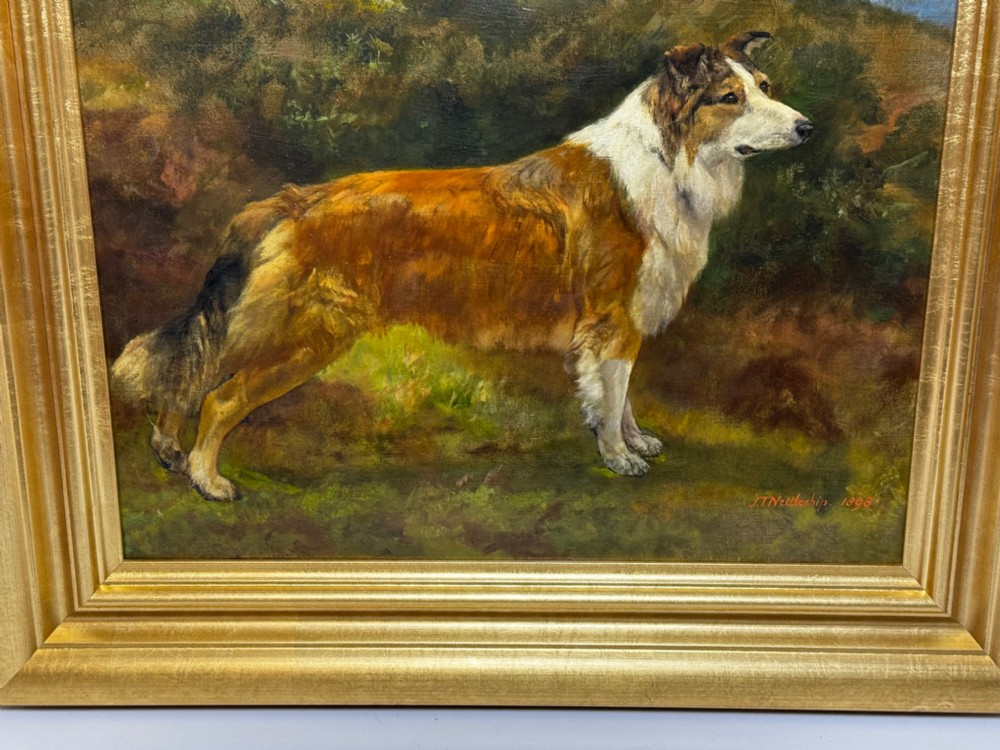
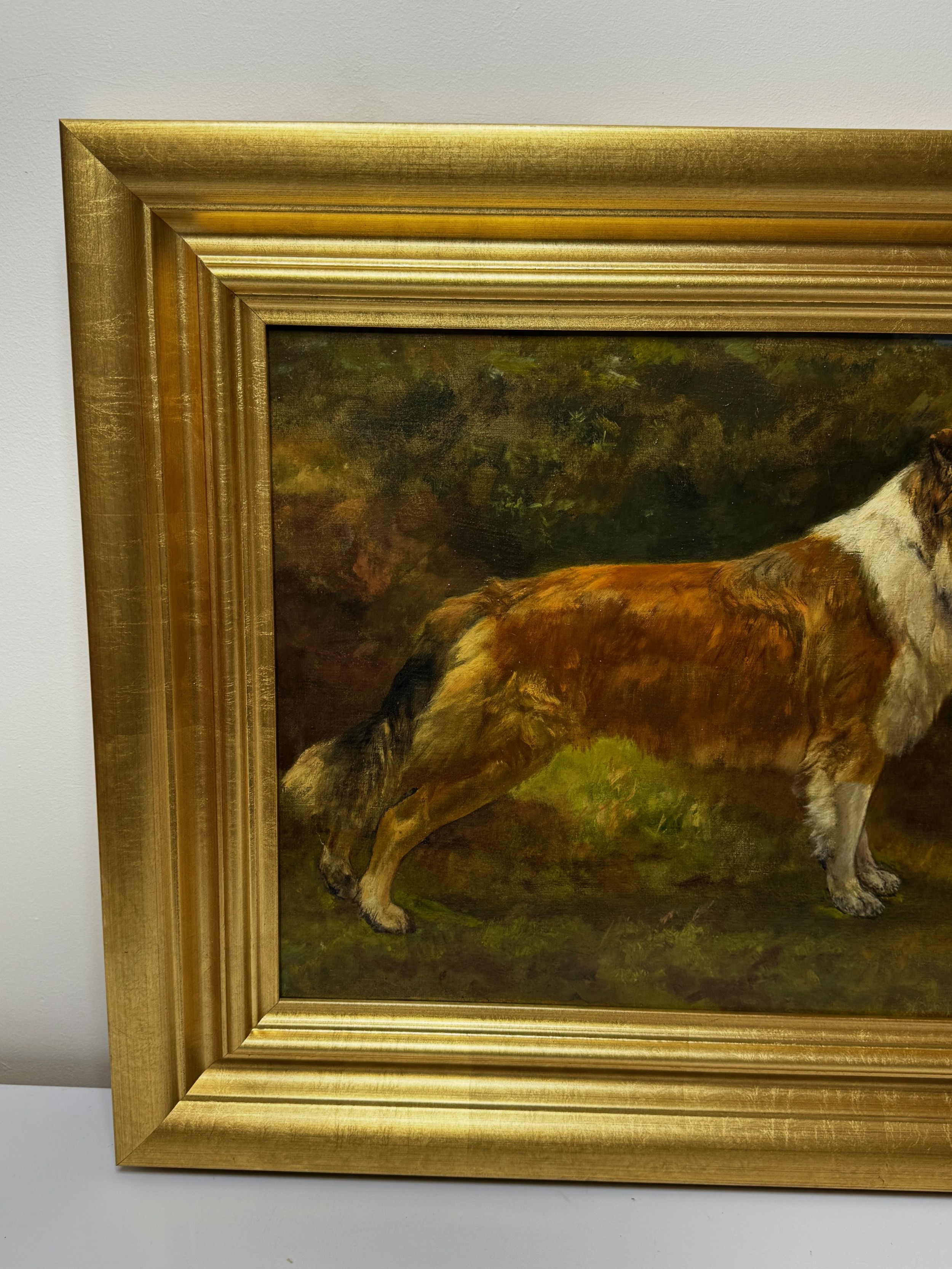
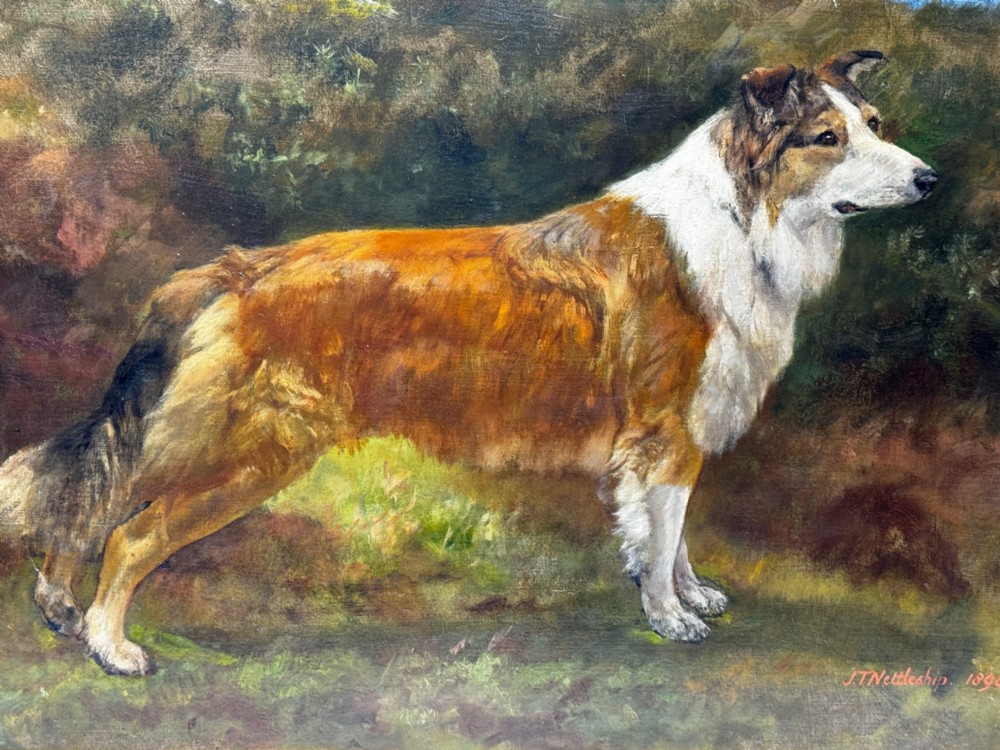
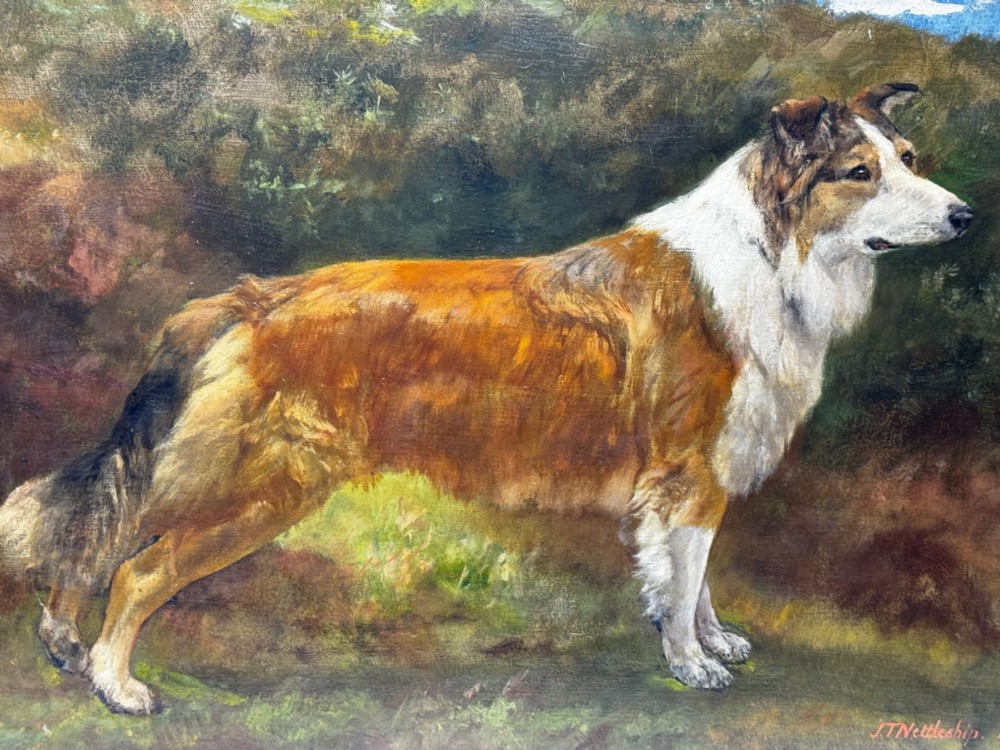
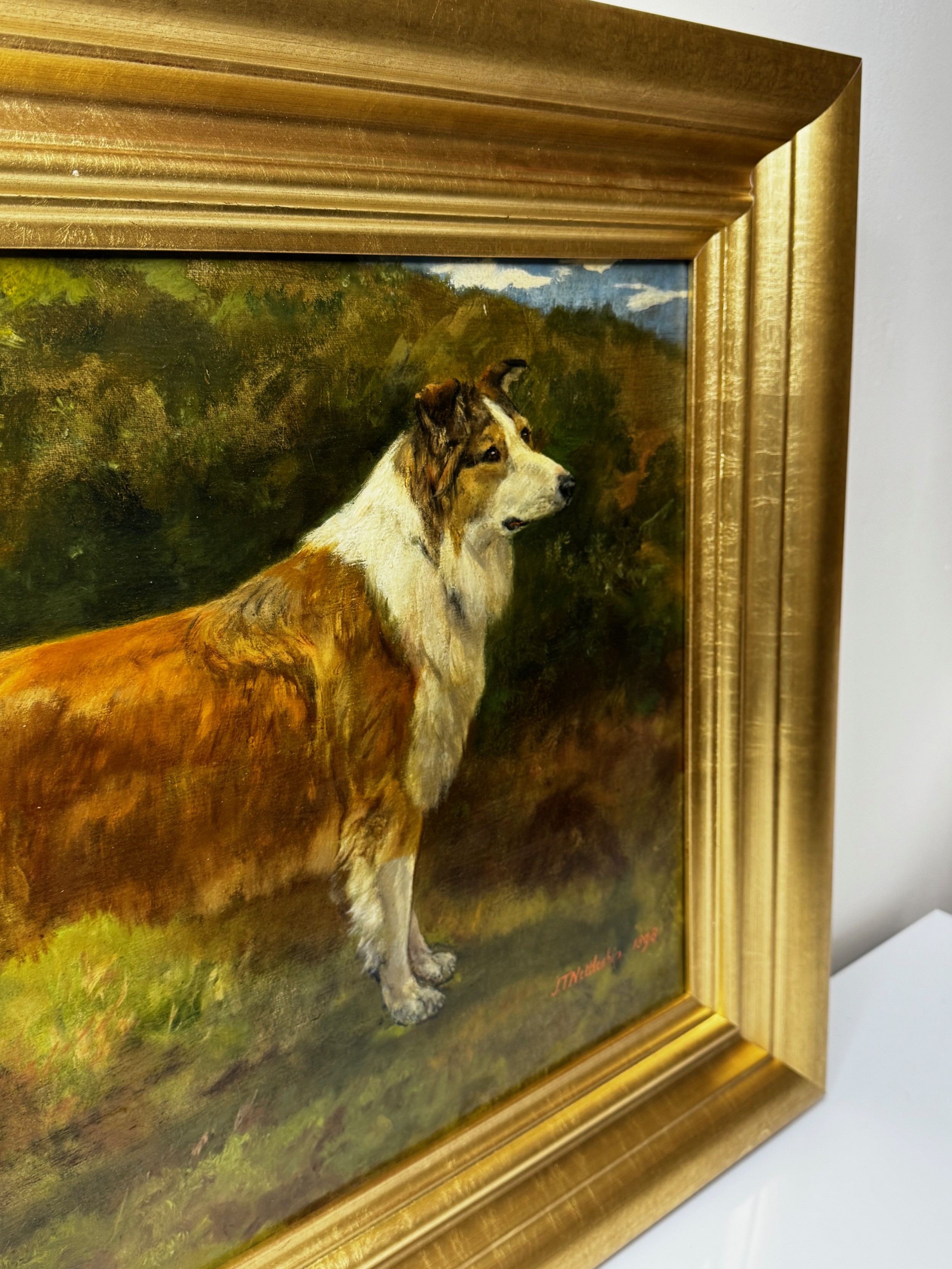
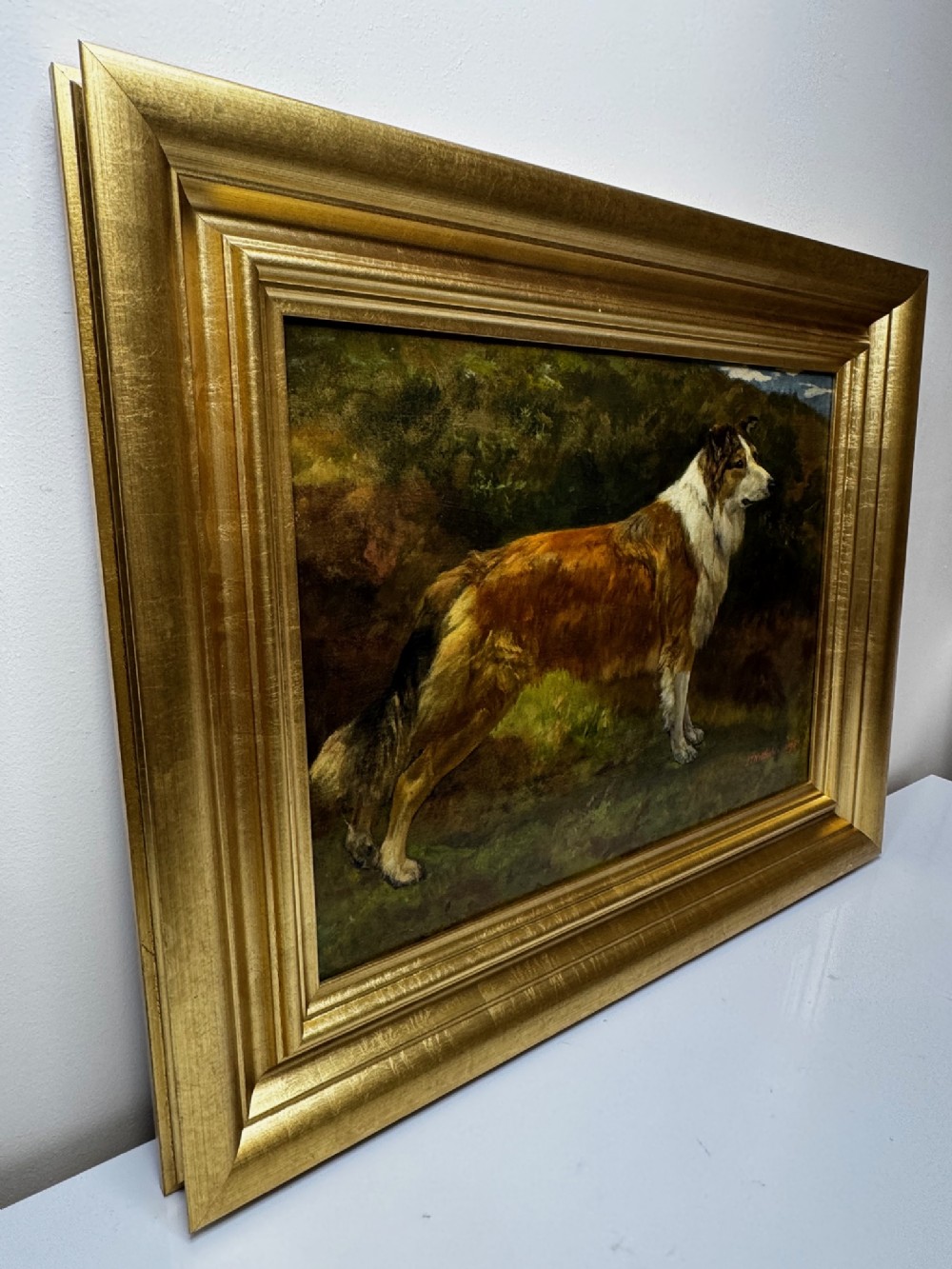
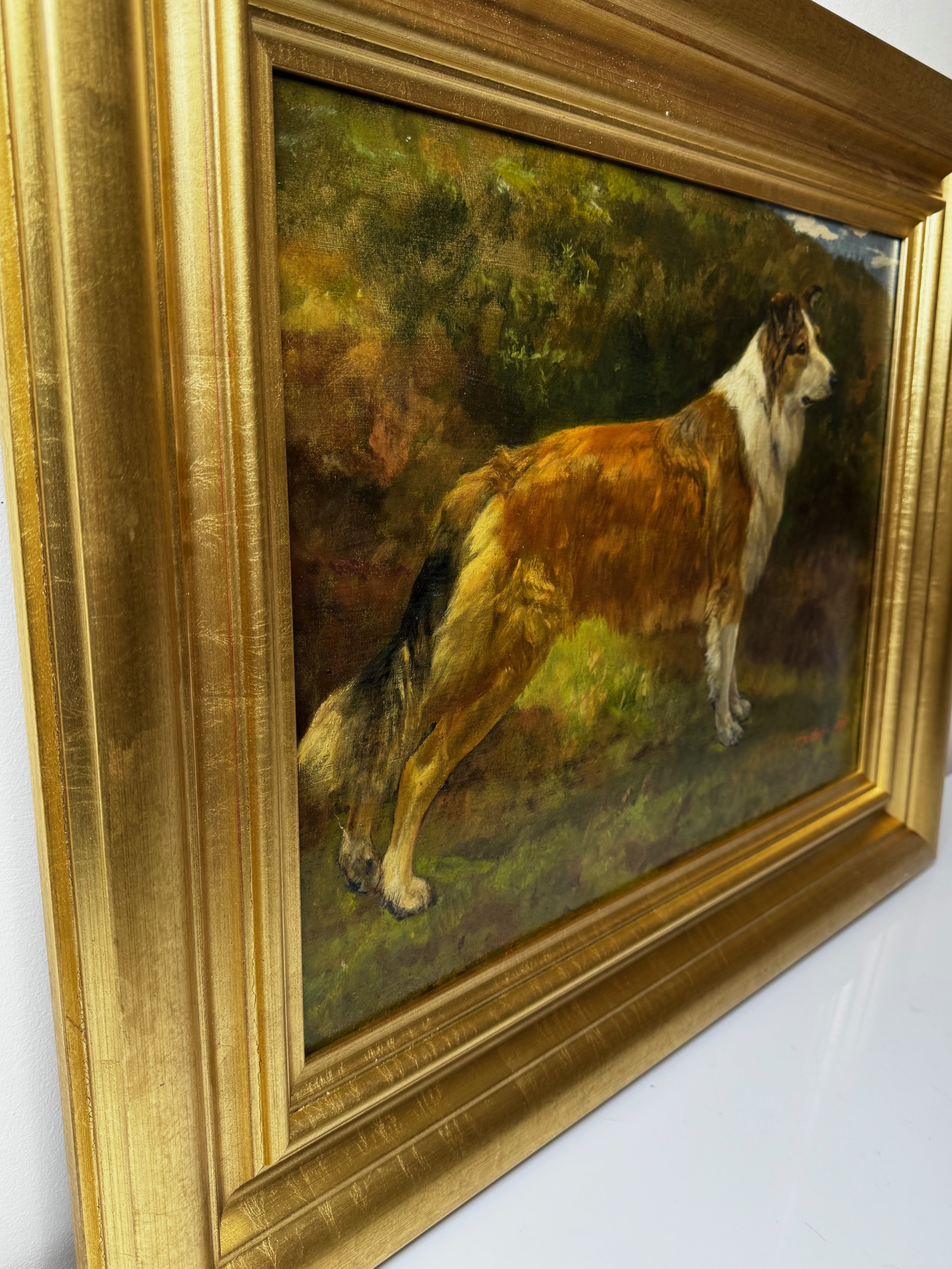
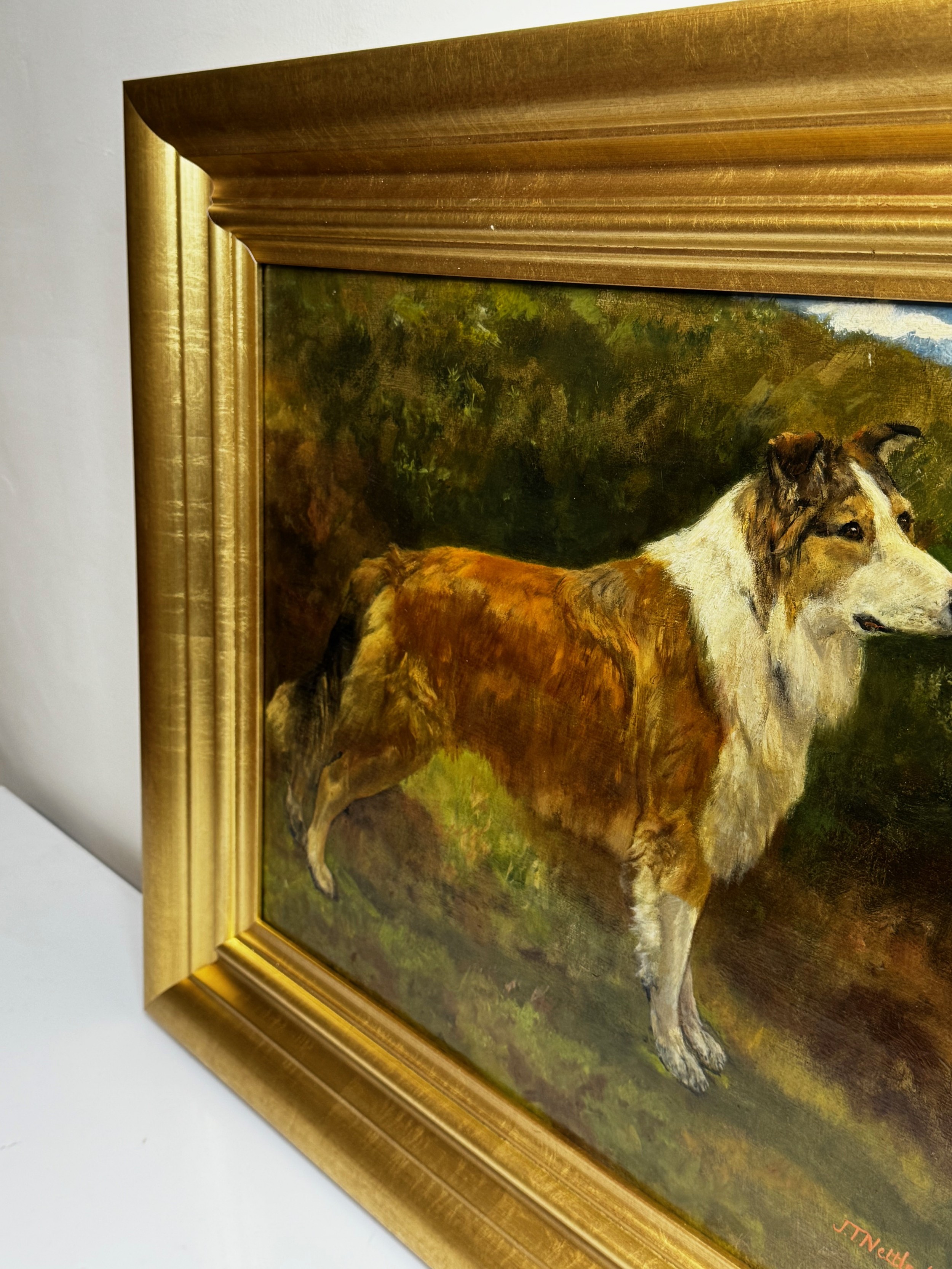
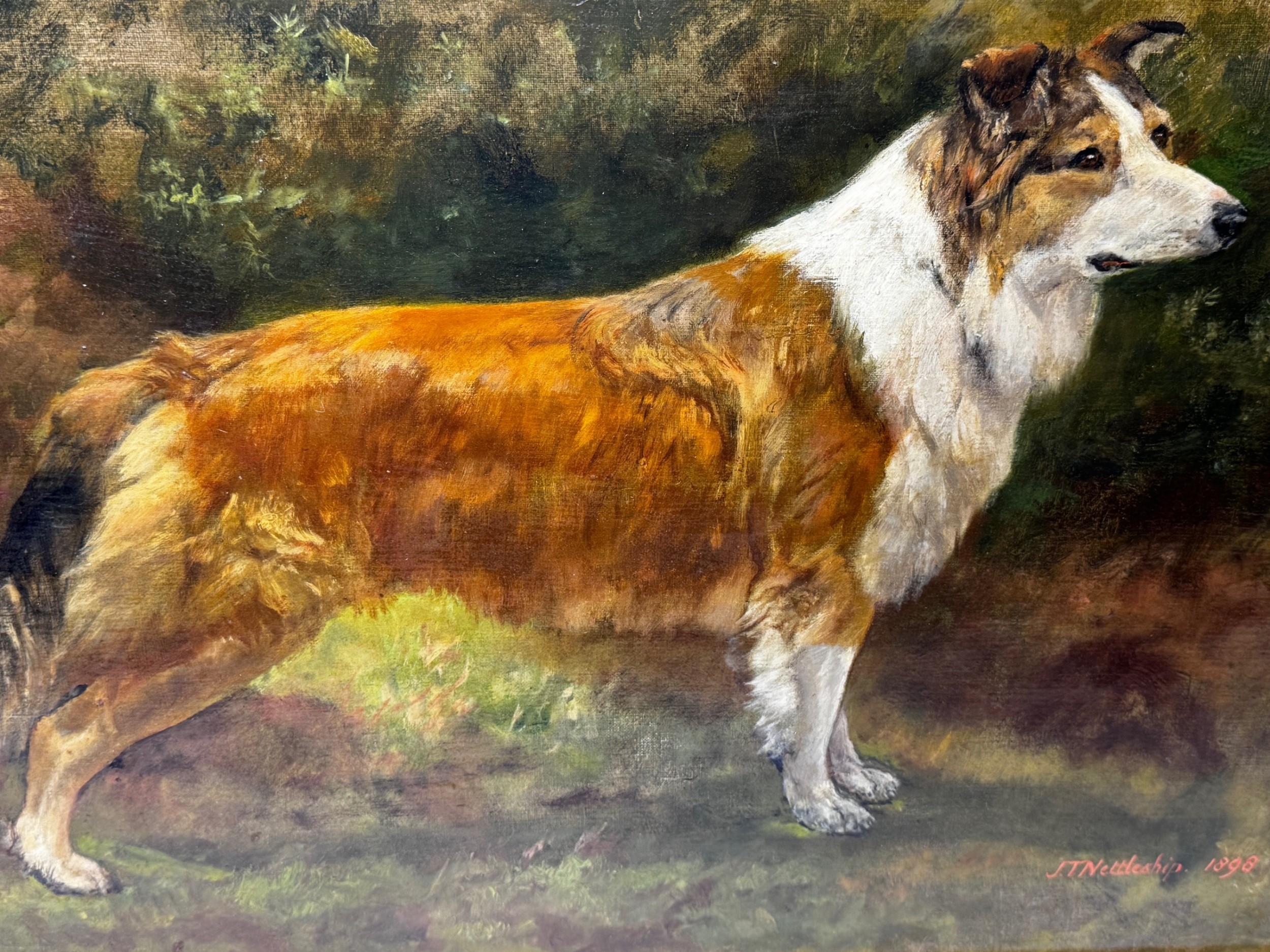
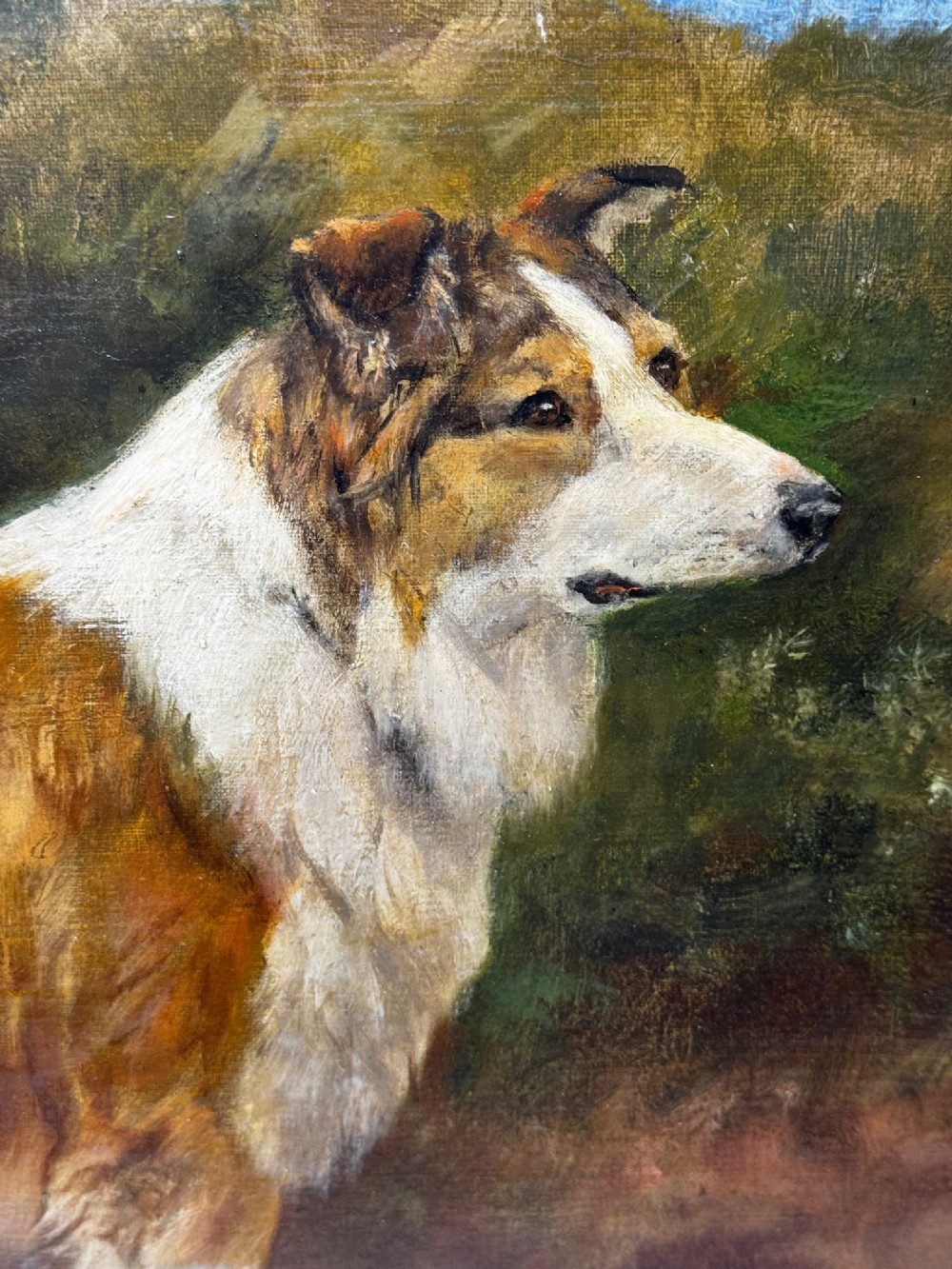
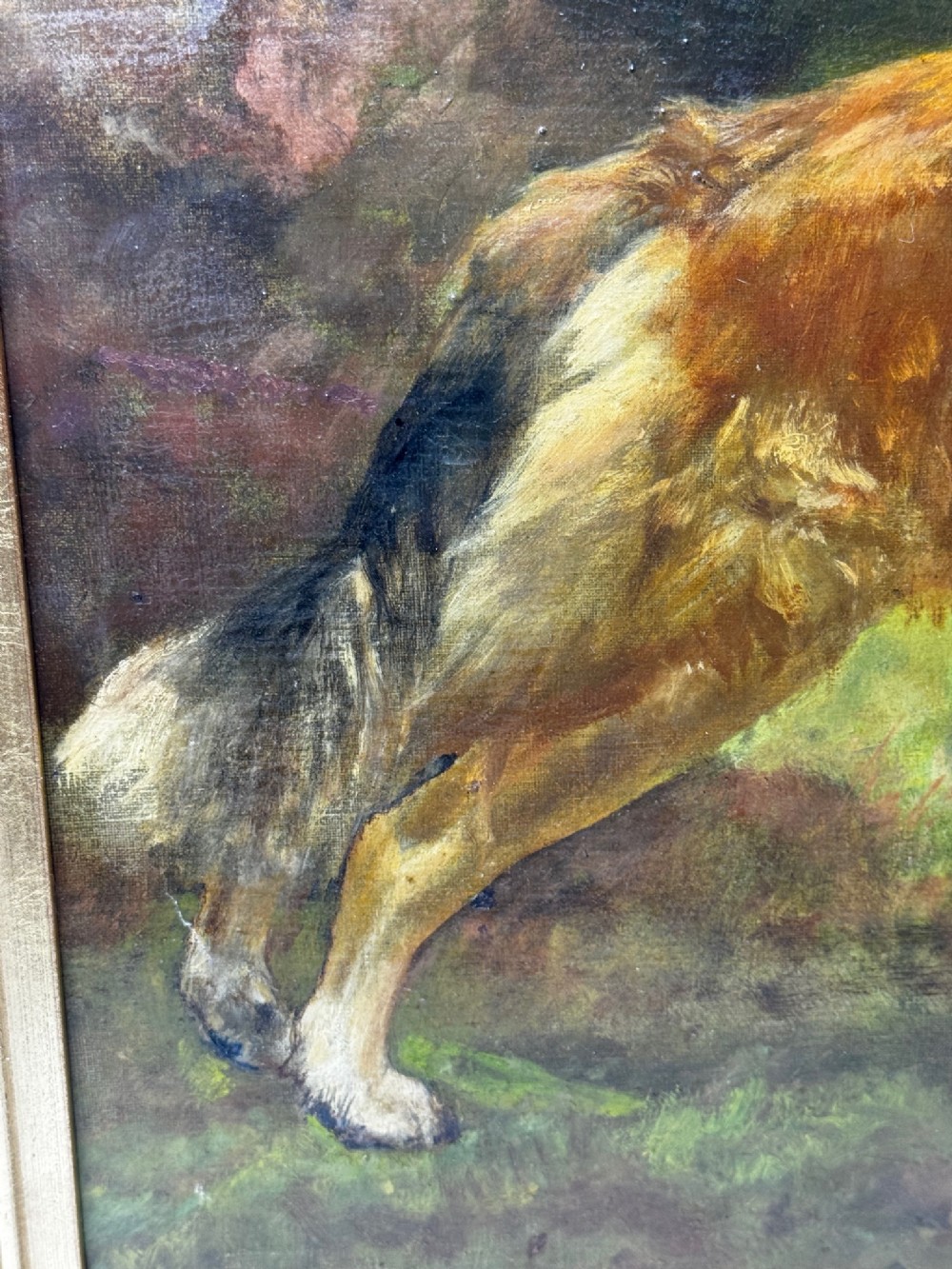
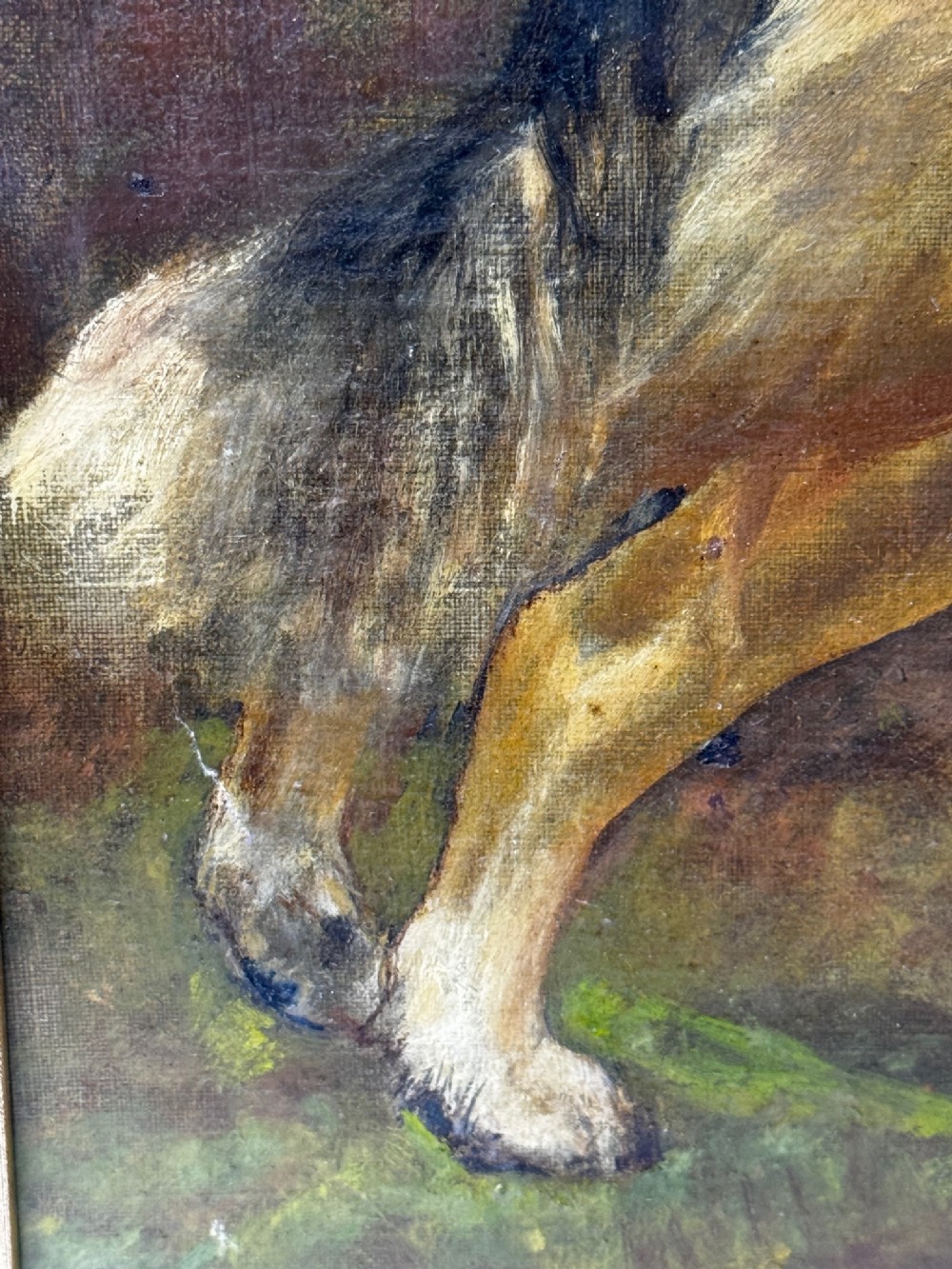
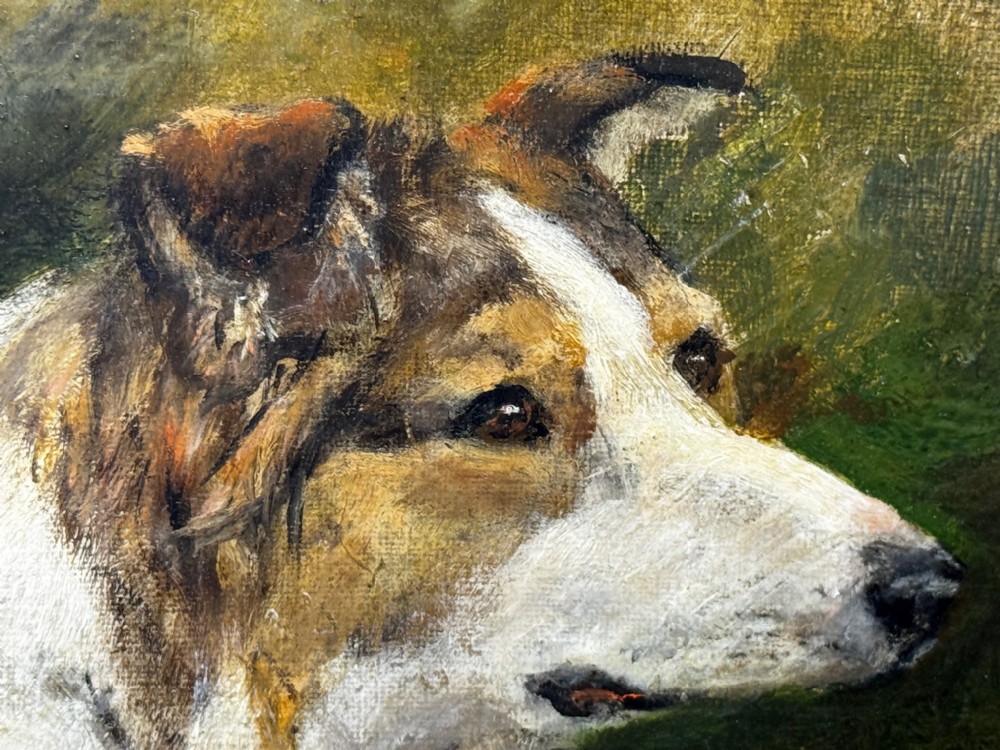
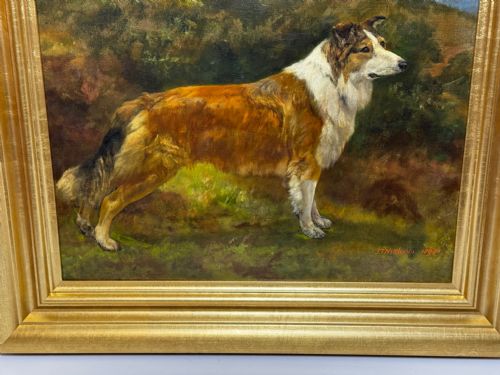
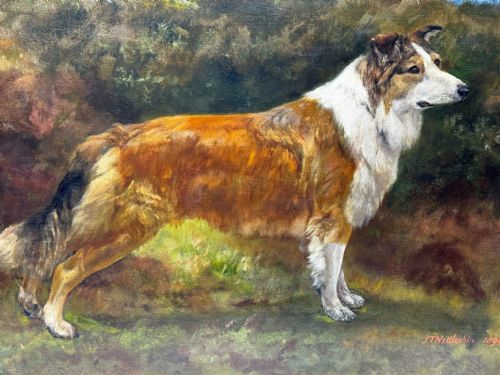
The dog’s rich sable-and-white coat, long refined head, and alert yet gentle expression are keenly observed, conveying both a well-loved companion and a fine pedigree animal.
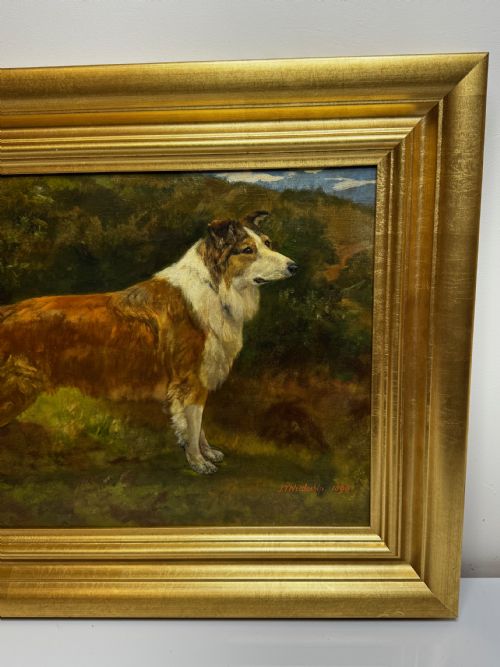
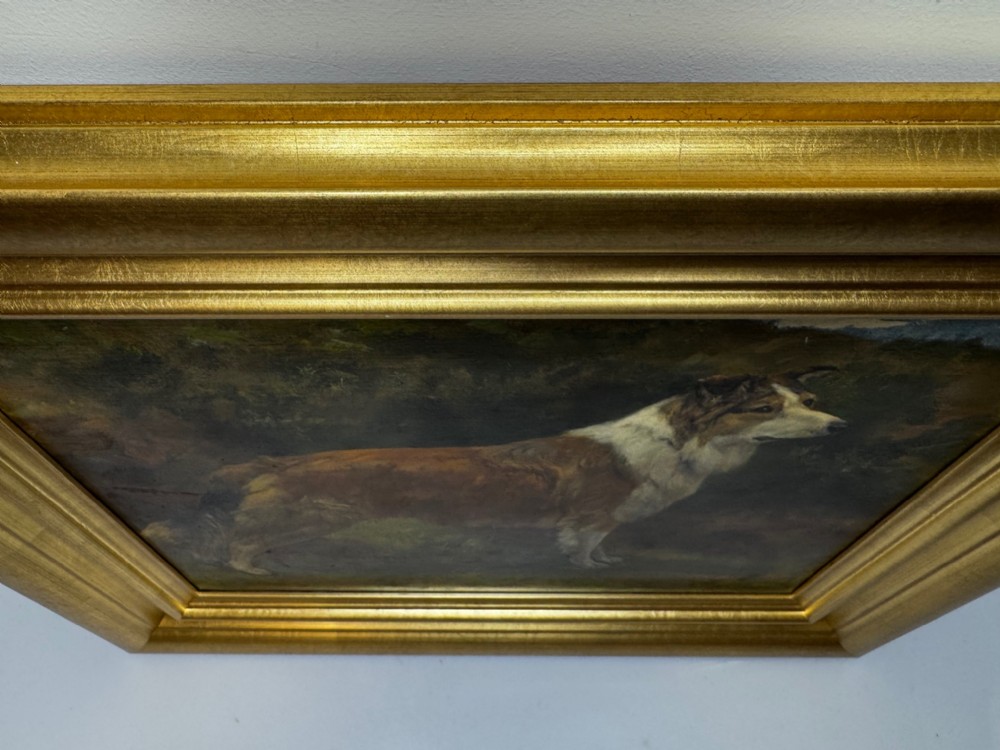
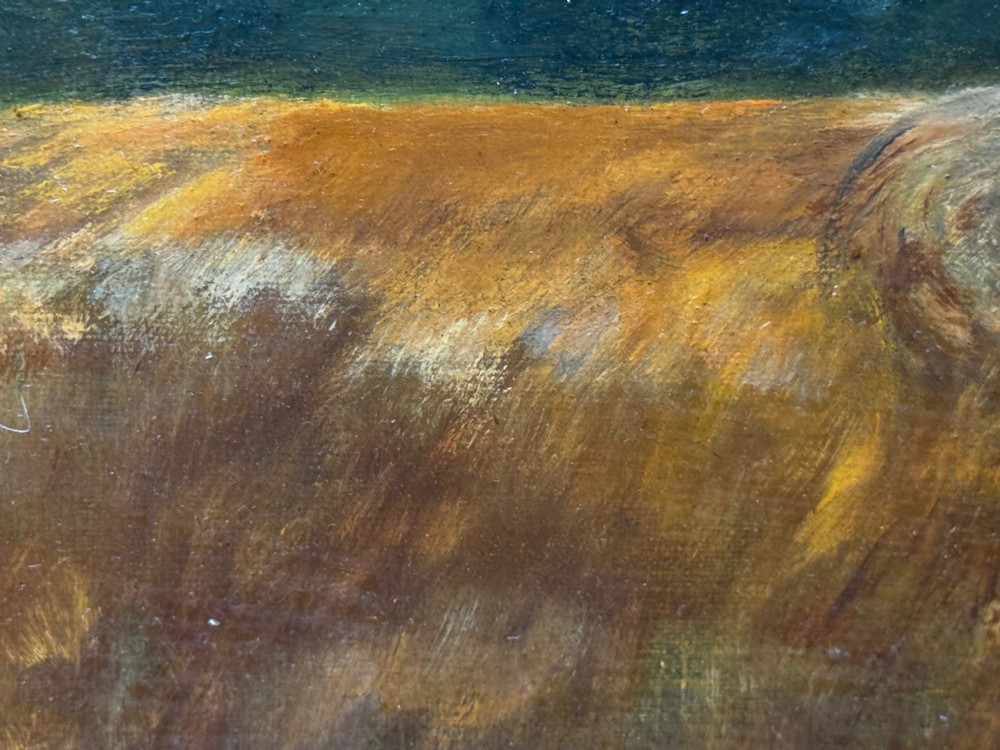
Medium: Traditional oil on canvas, the classic medium of serious Victorian animal portraiture, allowing Nettleship to build depth in the coat and atmosphere in the setting.
Composition and technique
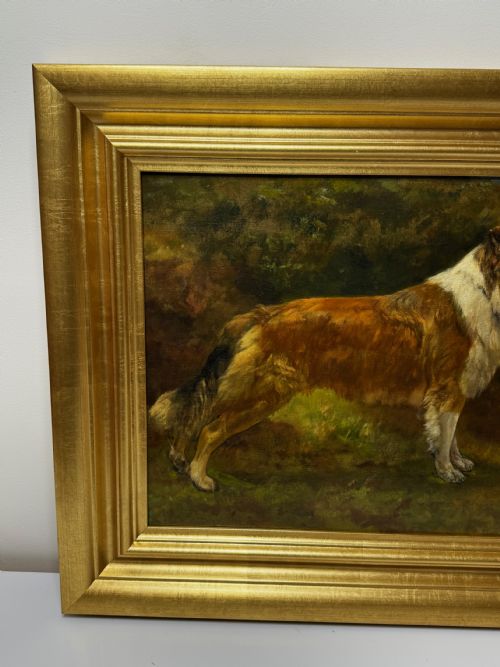
Nettleship composes the scene so the collie dominates the foreground, placed slightly forward and off-centre, with the landscape falling away behind. The result is a strong sense of presence—almost like a three-quarter human portrait—while still acknowledging the dog’s outdoor, working origins.
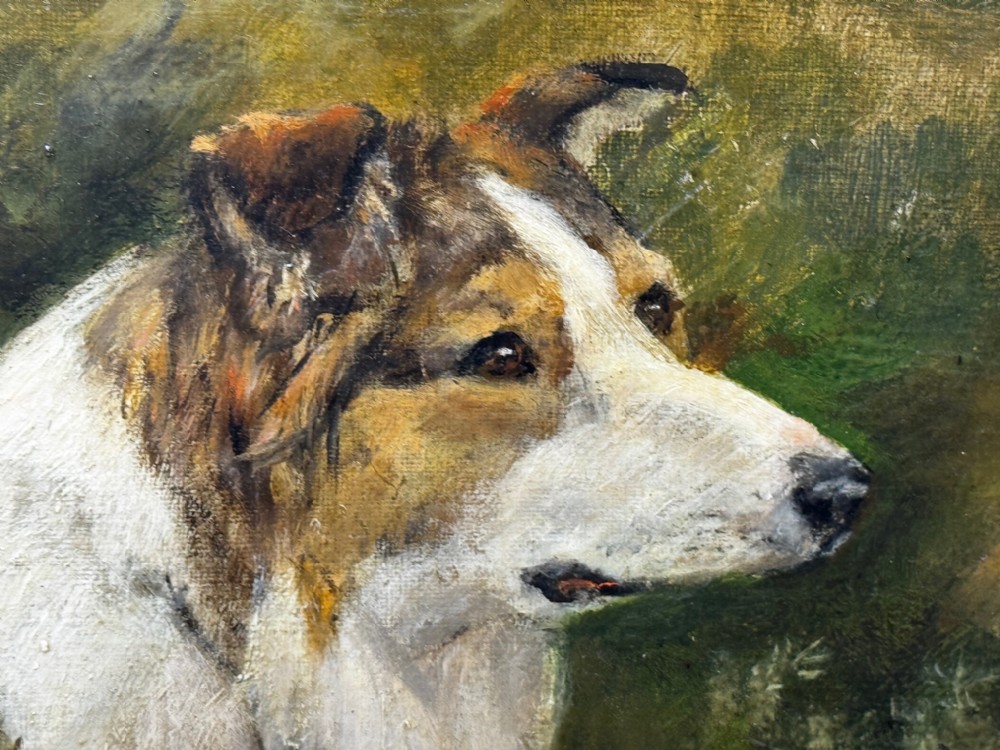
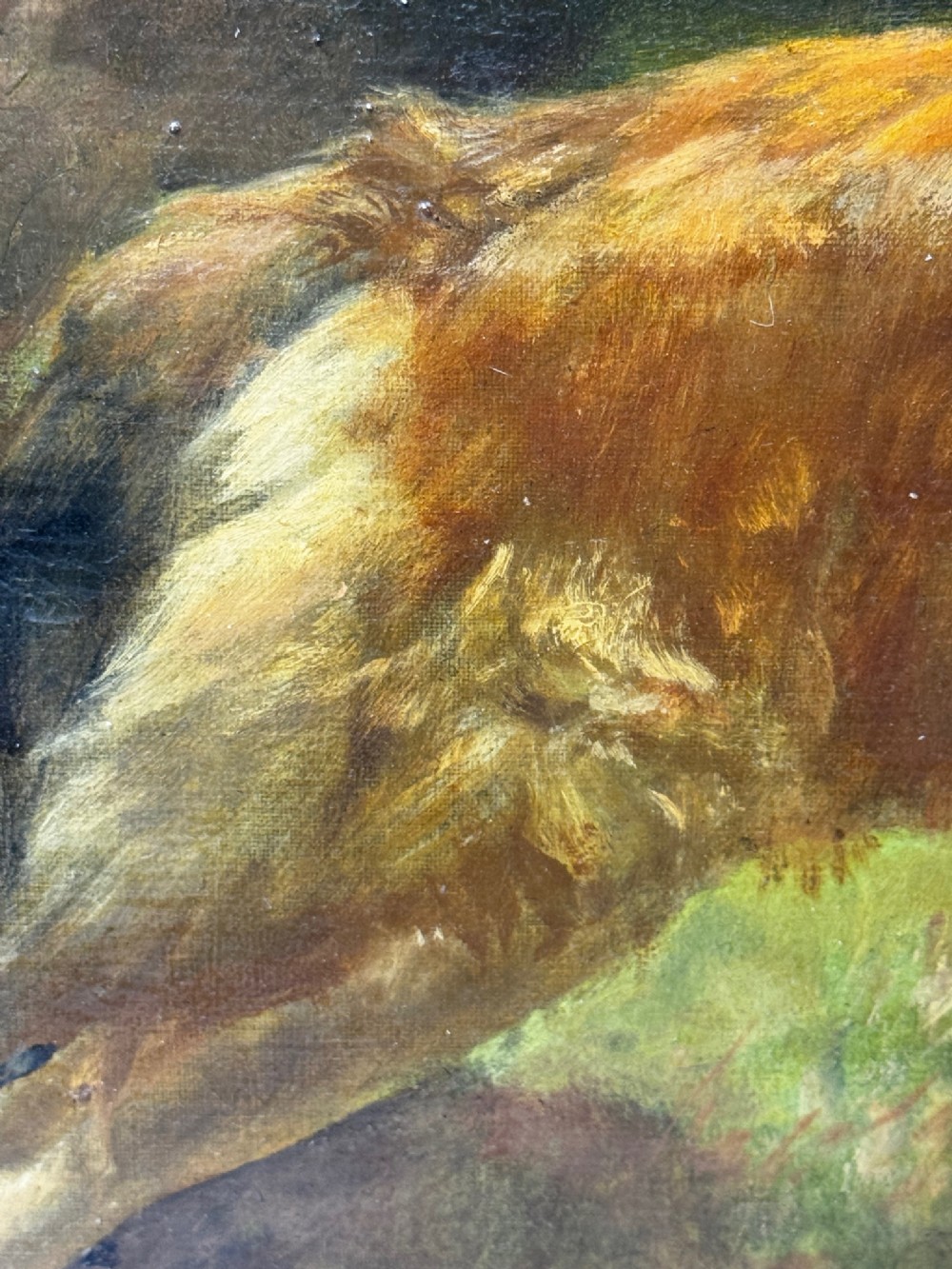
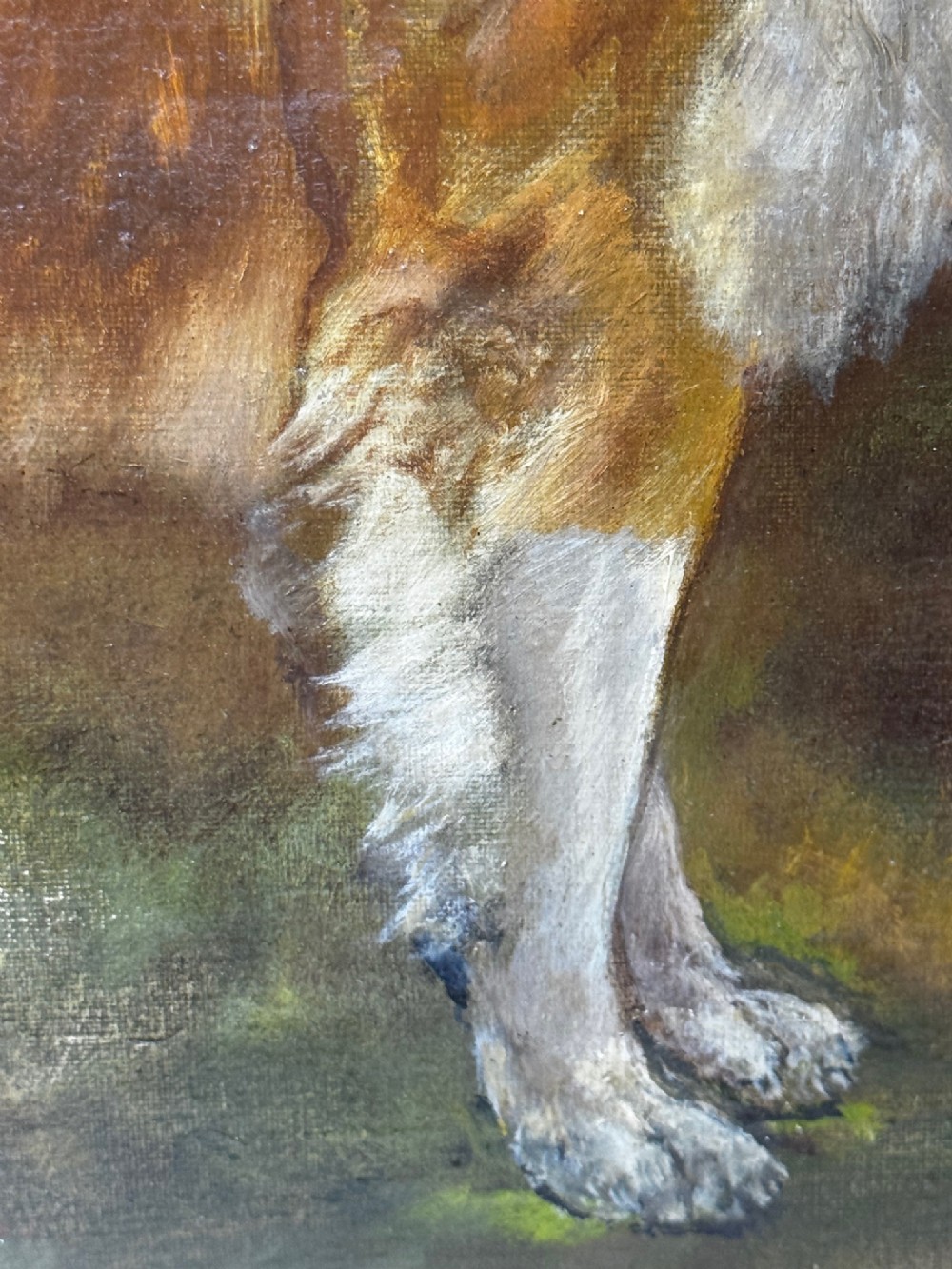
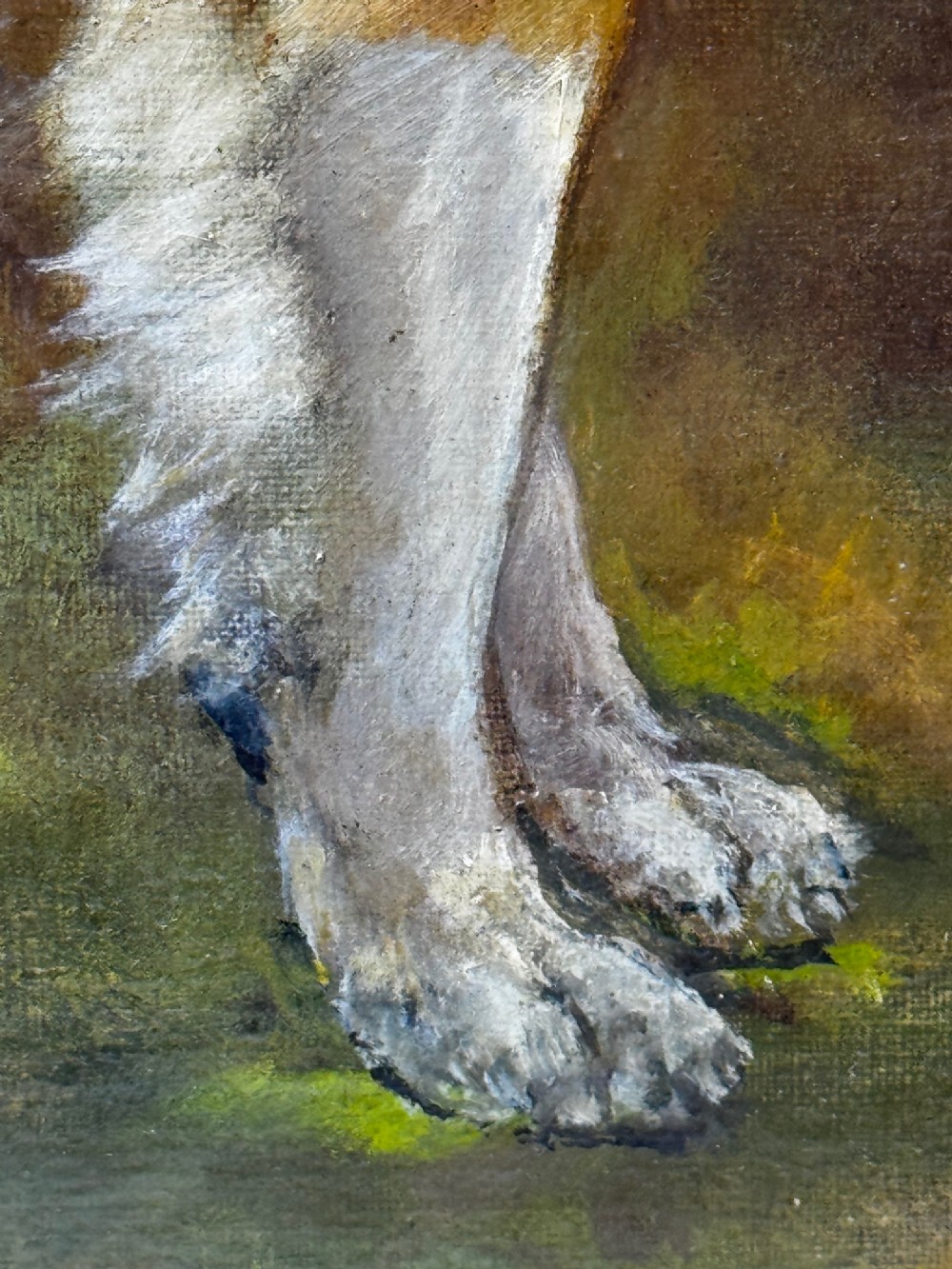
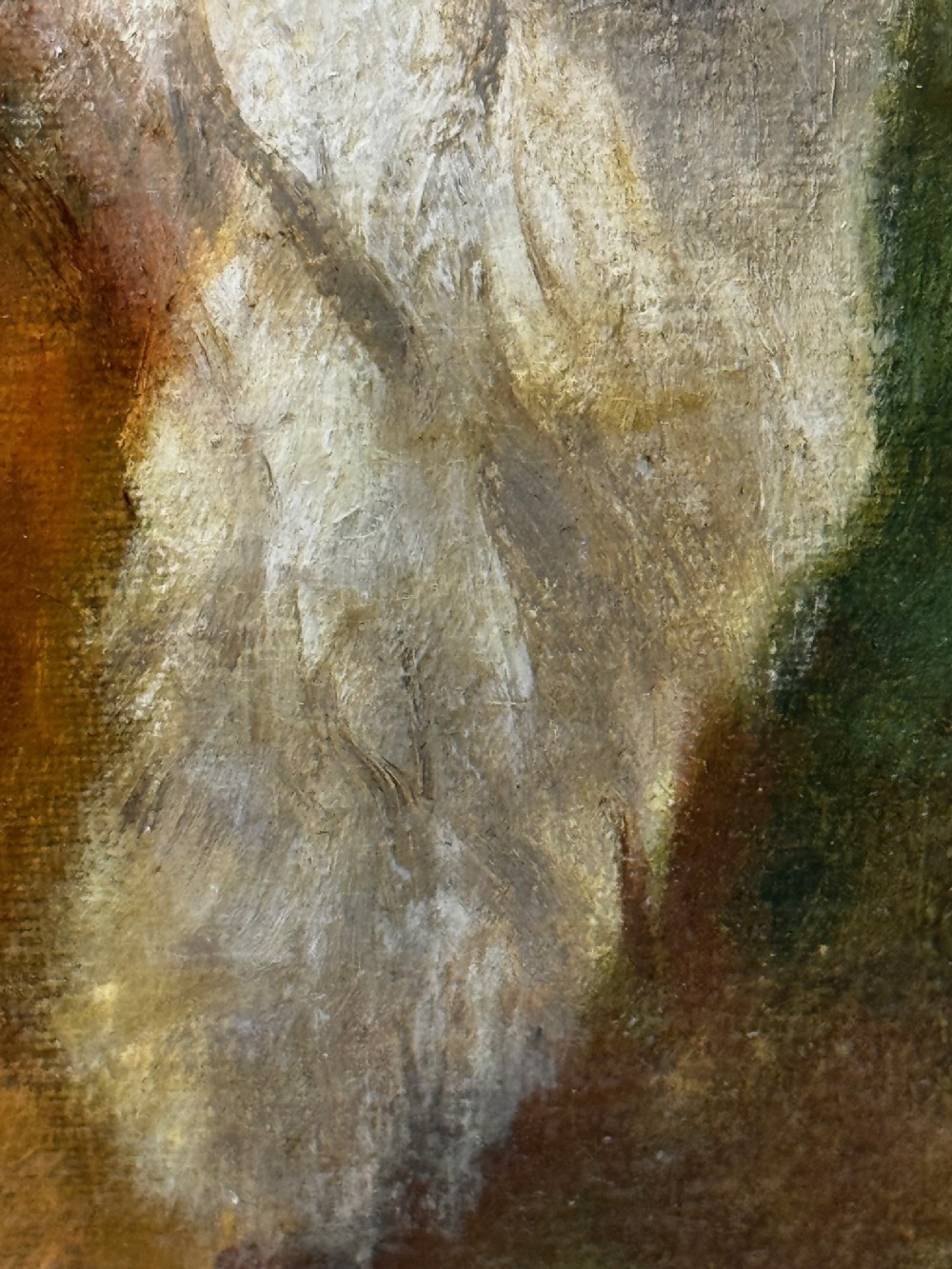
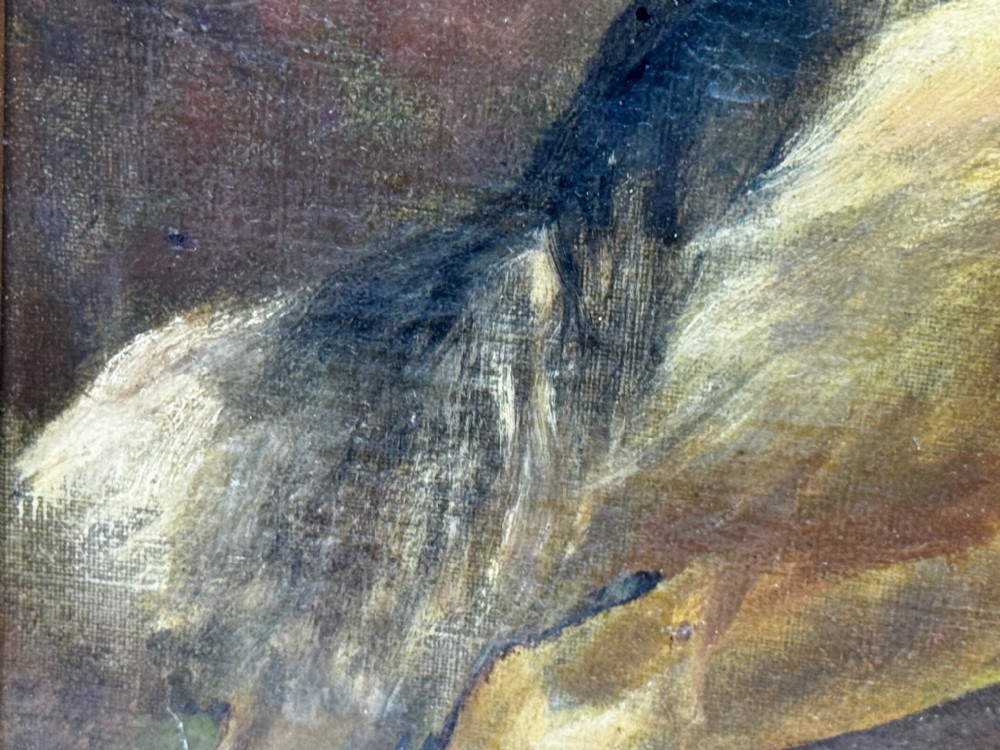
The head and neck are rendered with particular care: the line of the muzzle is clean and elegant, the almond-shaped eye finely defined, and the characteristic tipped ears set at precisely the right angle to suggest attentive alertness. Around the ruff and mane, the brushwork becomes more animated, describing the thickness and direction of the coat, while softer strokes model the longer hair down the body and legs.
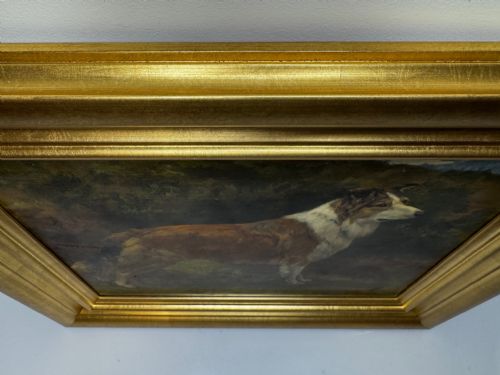
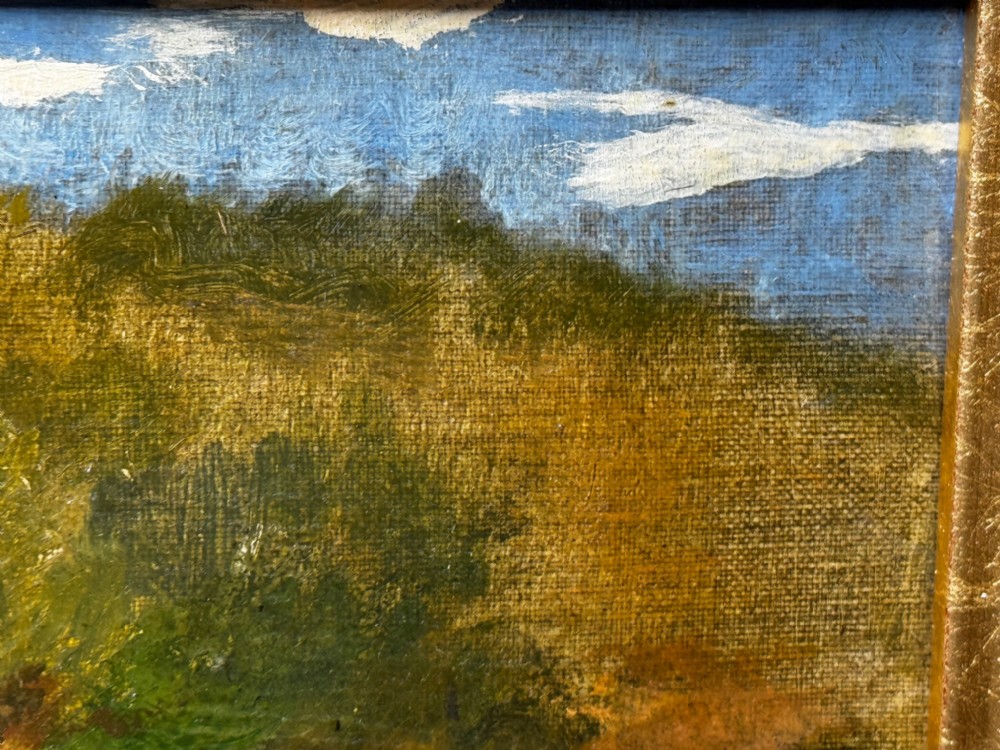
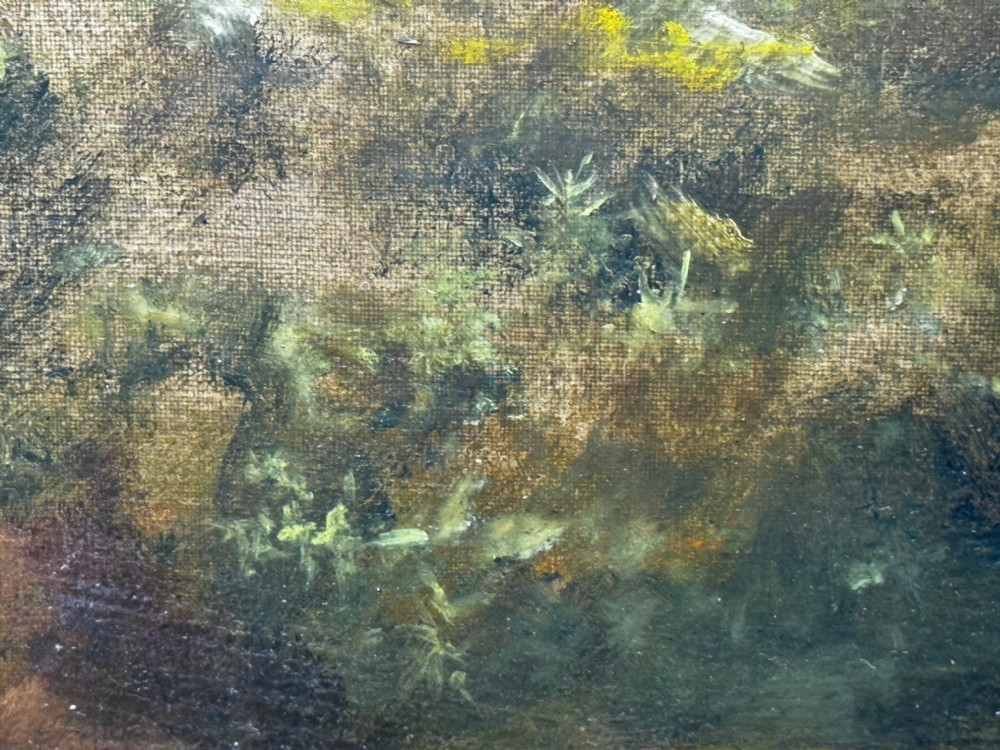
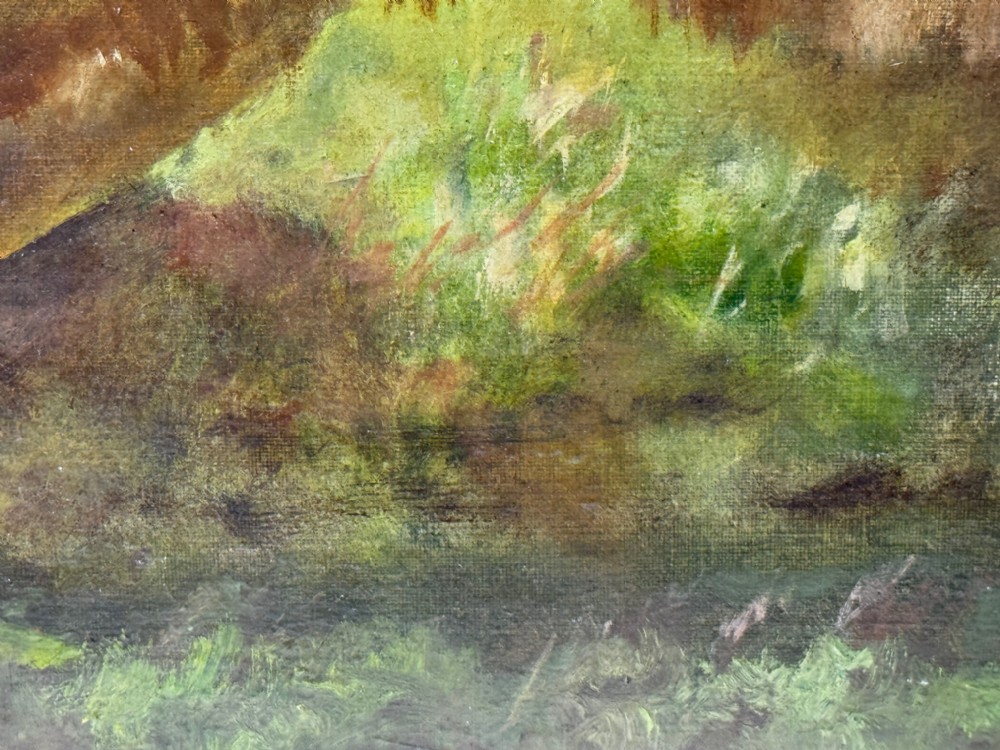
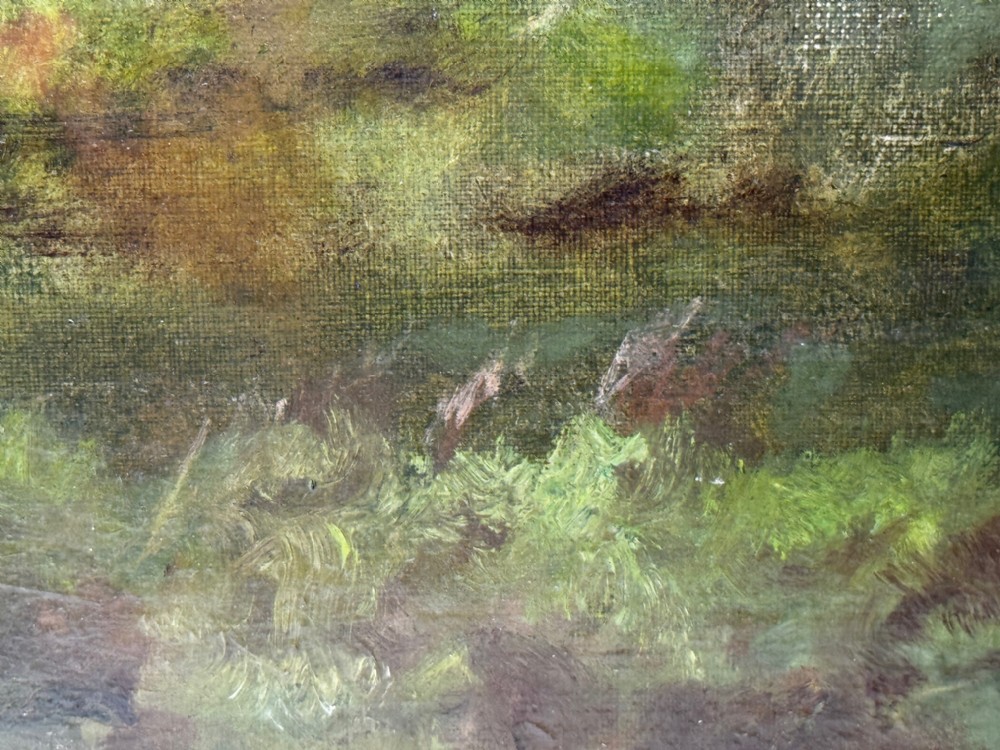
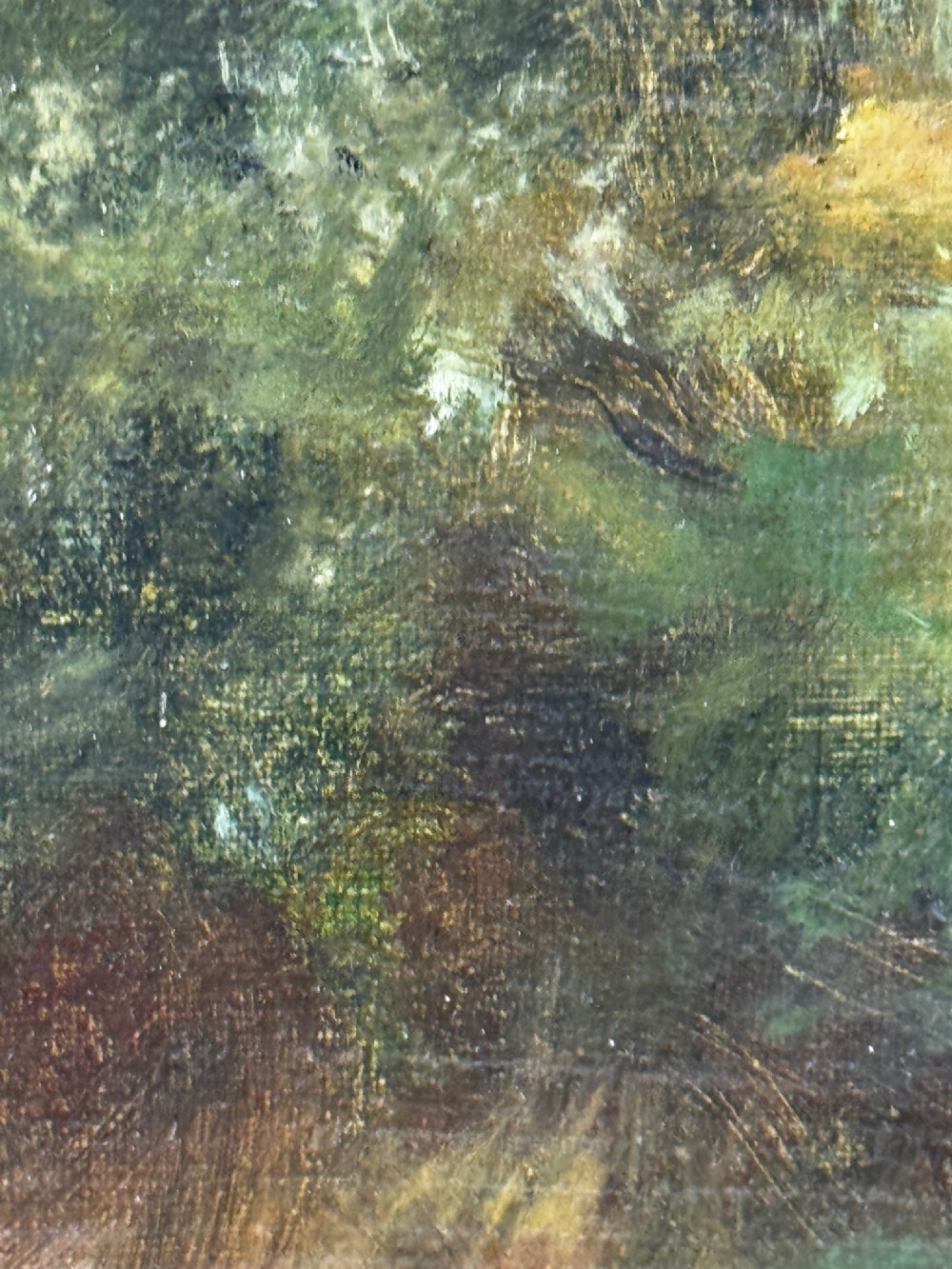
Colour is handled with a sensitive eye. Deep sable browns merge into warmer golden notes, offset by crisp passages of white at the collar and chest. These warm tones are balanced against a more subdued landscape of greens, ochres, and blue-greys, painted broadly with softened edges so nothing competes with the sitter. A gentle frontal light catches the ridge of the muzzle, chest, and upper back, bringing the collie forward and giving it a natural, three-dimensional presence.
Overall, the composition combines formal portrait dignity with an unforced sense of life—exactly what late Victorian owners sought when commissioning portraits of their favourite dogs.
About the artist: John Trivett Nettleship
John Trivett Nettleship was a noted British 19th-century animal painter, celebrated in his day for powerful depictions of lions, tigers, and other wild creatures. For nearly three decades he exhibited substantial canvases at the Royal Academy and the Grosvenor Gallery, establishing himself as a key exponent of serious animal painting in Victorian Britain.
Born in Kettering, Northamptonshire, Nettleship initially trained in law before devoting himself to art, studying at Heatherley’s and the Slade, and refining his mature style through independent work. He moved in intellectually engaged circles, publishing essays on the poet Robert Browning, writing a study of George Morland, and associating with admirers of William Blake and the broader Pre-Raphaelite milieu.
Because he is best known for dramatic wild-animal subjects and large exhibition works, finished portraits of domesticated dogs are comparatively scarce in his oeuvre. A signed and dated Rough Collie of this quality therefore represents an unusually intimate and personal side of the artist’s production, appealing to collectors of animal painting and Victorian artistic-literary circles alike.
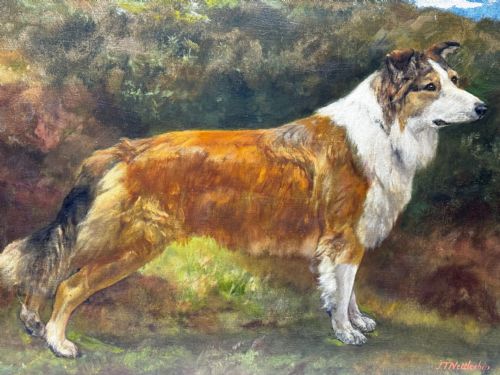
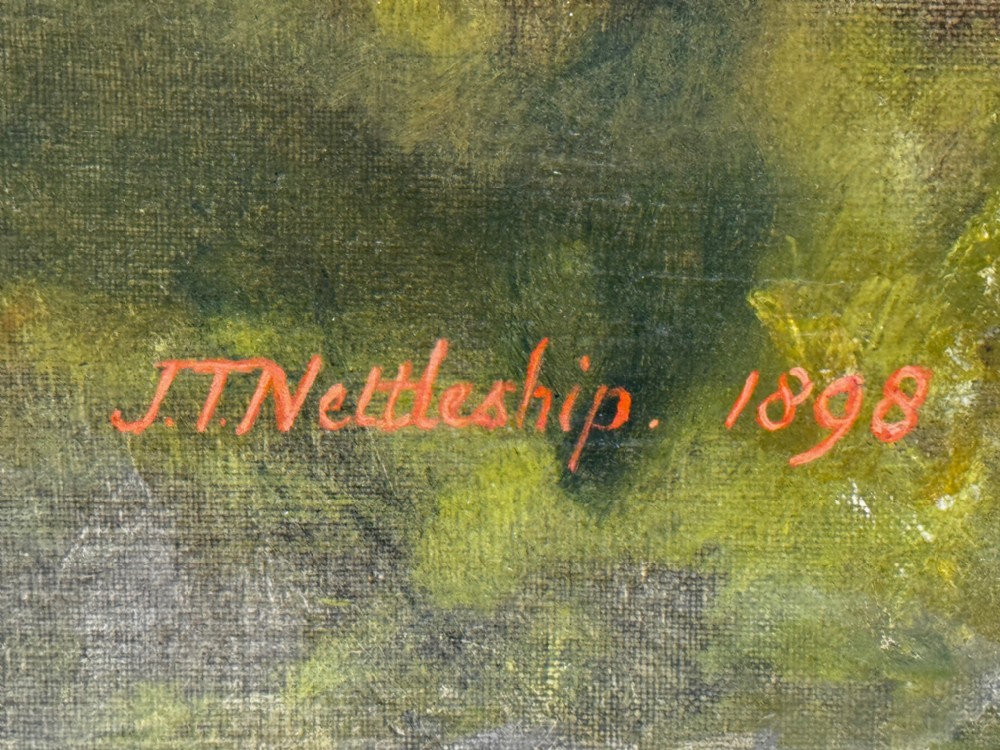
Signed
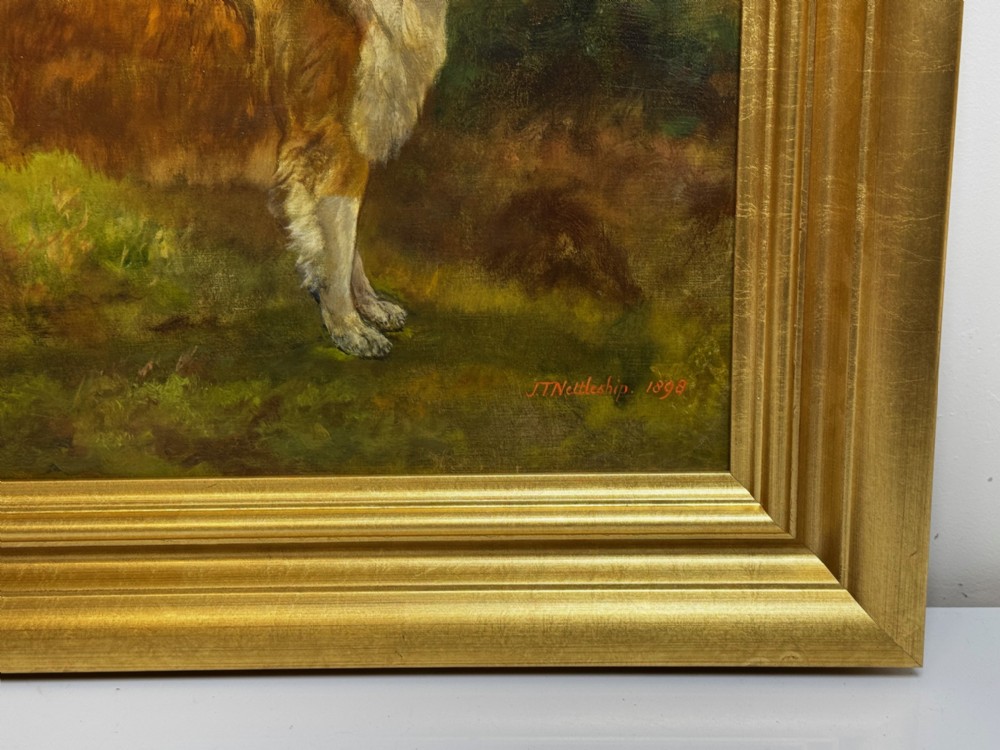
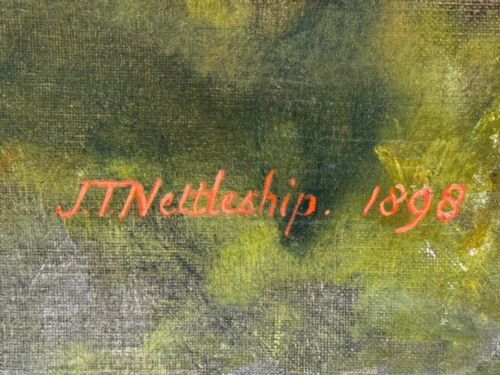
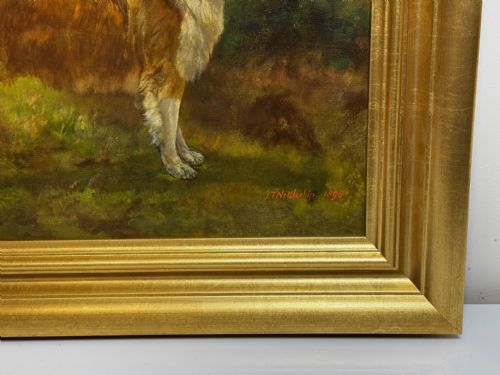
Signed and dated lower corner: J. T. Nettleship 1898
The clear signature and date place the work securely within Nettleship’s mature period at the end of the Victorian era.
Historic importance
This portrait carries historical interest beyond its decorative appeal. It is a rare domestic dog commission by an artist whose reputation largely rested on wild beasts and grand exhibition pictures, demonstrating that Nettleship was also trusted by private patrons to portray beloved animals with equal seriousness.
It also captures the Rough (Scottish) Collie at a key moment in the breed’s story. By the 1890s, collies had shifted from purely practical hil
Cheshire Antiques Consultant Ltd has dated this Victorian Dog Oil Portrait to the Victorian era.
Source the historic in 17th, 18th, 19th & 20th century fine arts, painting, sculptures & collectibles
You can view the stock and full dealer information on the Cheshire Antiques Consultant Ltd Profile Page
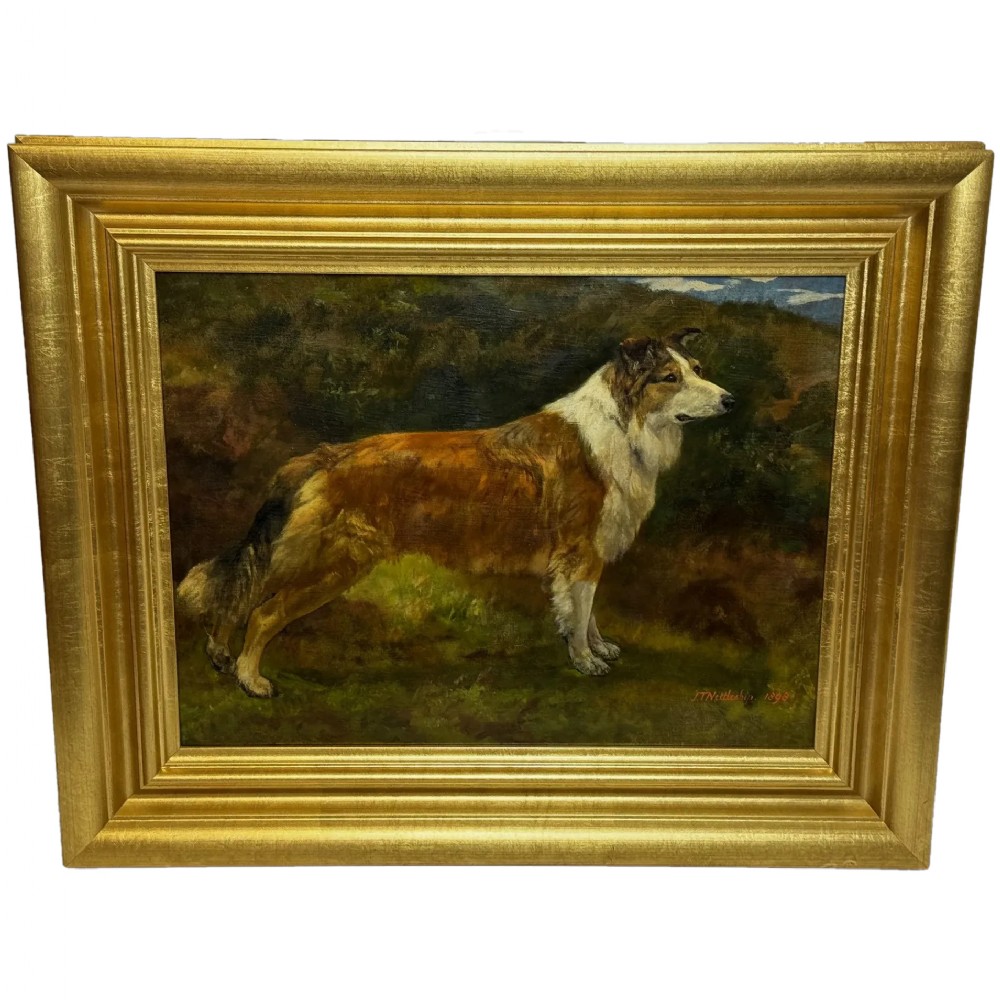
Victorian Oil Portrait of a Rough Collie by John Trivett Nettleship