16,347  PAGES BROWSED TODAY PAGES TODAY 36  ANTIQUES UPLOADED TODAY NEW ARRIVALS
ID #SA1102583
FOR SALE
£2,850
Email
Save
Antique Victorian Marquetry Demi Lune Cabinet 19th Century
Regent Antiques
for sale €3,335     $3,620
£2,850
Regent Antiques

Regent Antiques

Sellingantiques Verified Since Sep 2016
View Dealers Stock Page
  • About Us
    We specialise in english and continental furniture, silver, porcelain and decorative items.
  • Trade Associations
    Regent Antiques is a registered member of LAPADA  CINOA
Id #SA1102583
PDF SHARE
SAVE

Antique Victorian Marquetry Demi Lune Cabinet 19th Century

19th century
For Sale by Regent Antiques
Description

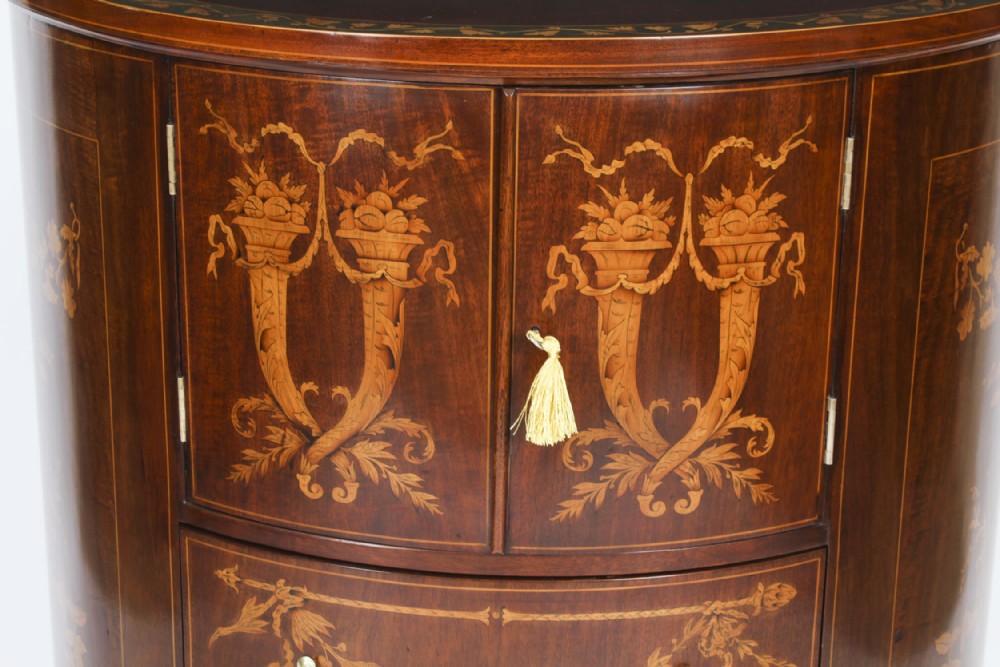
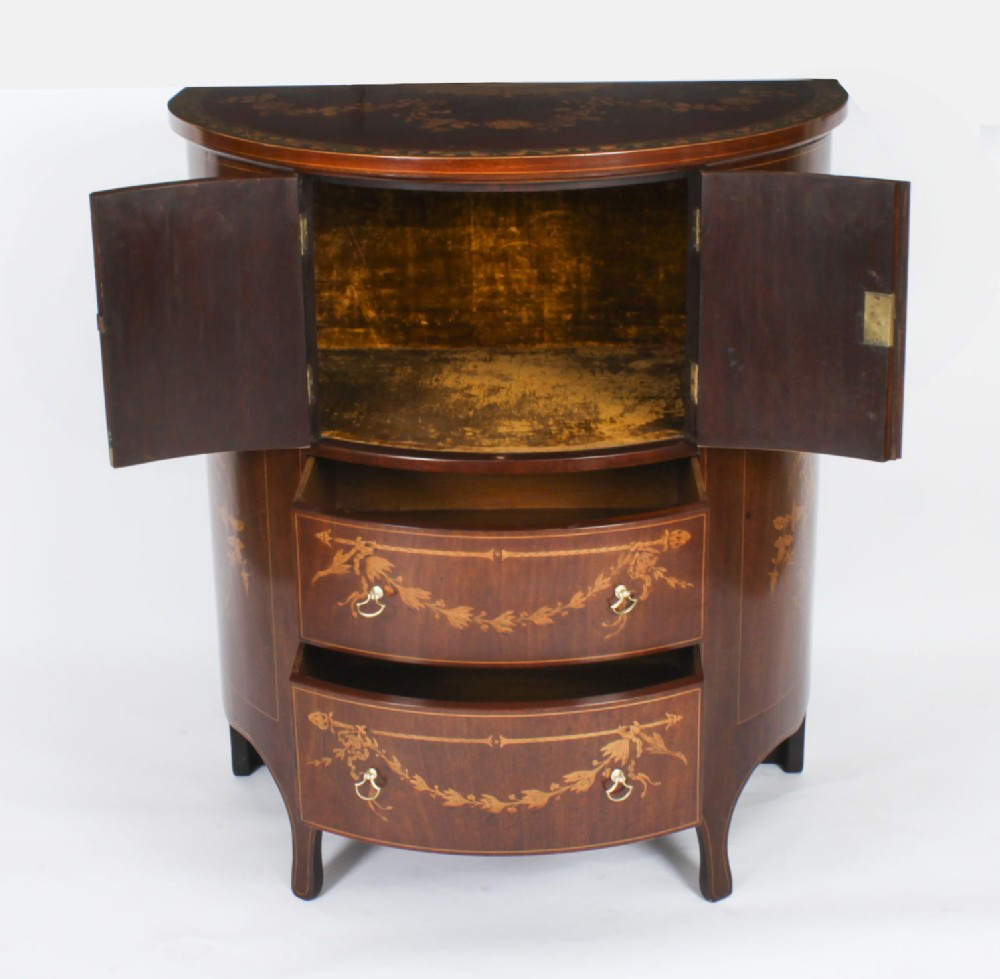
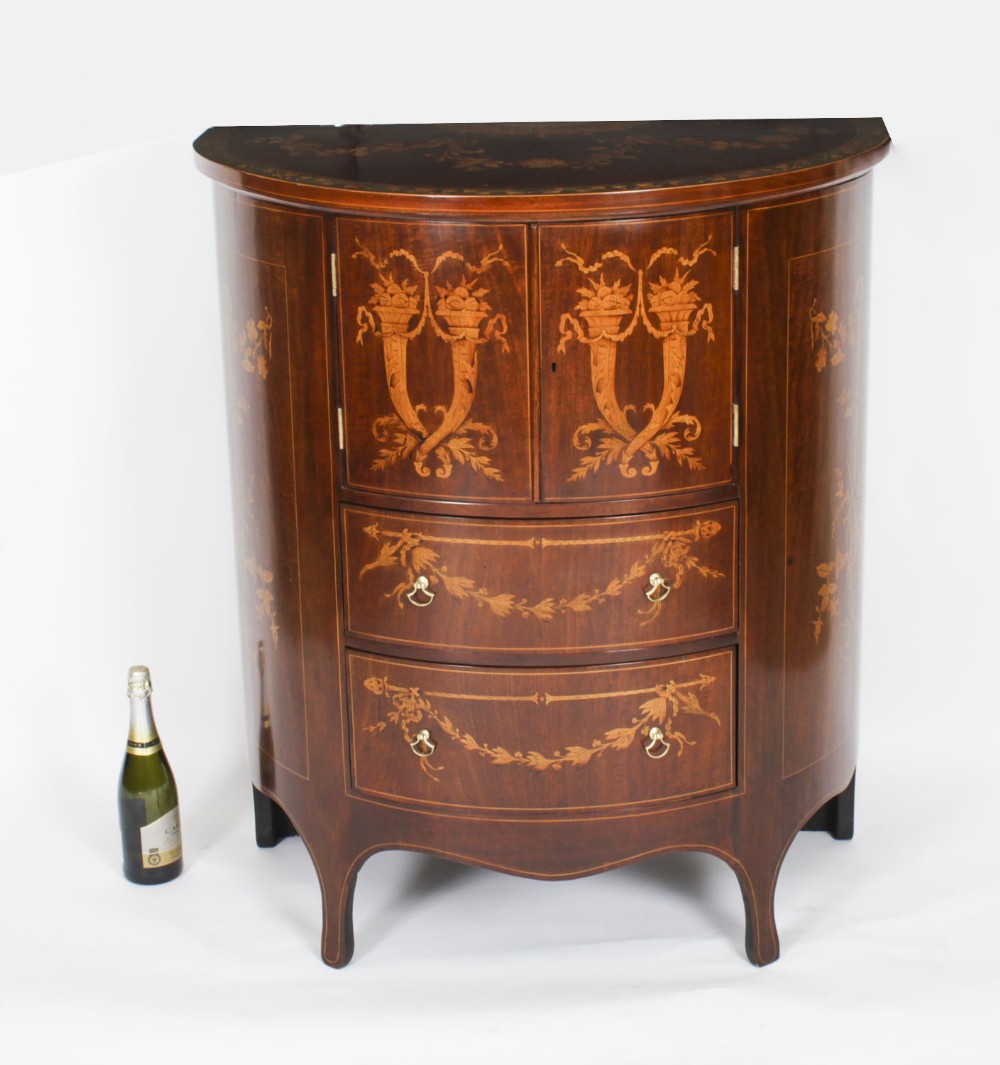
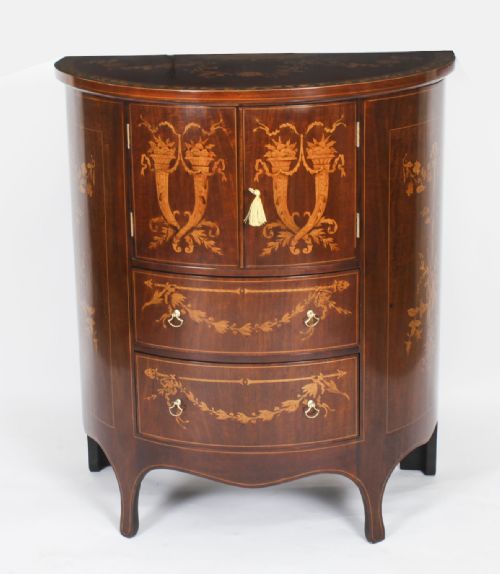
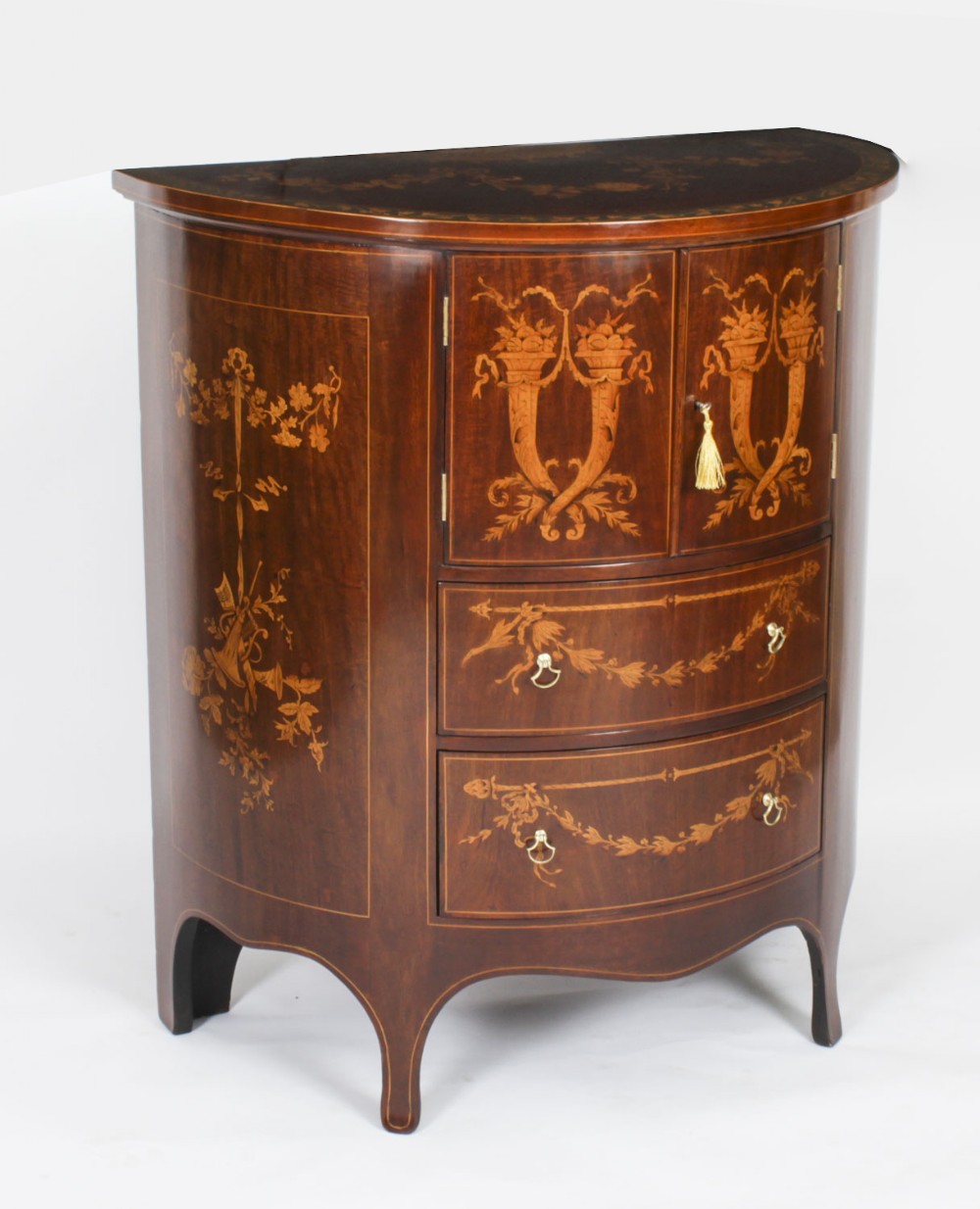
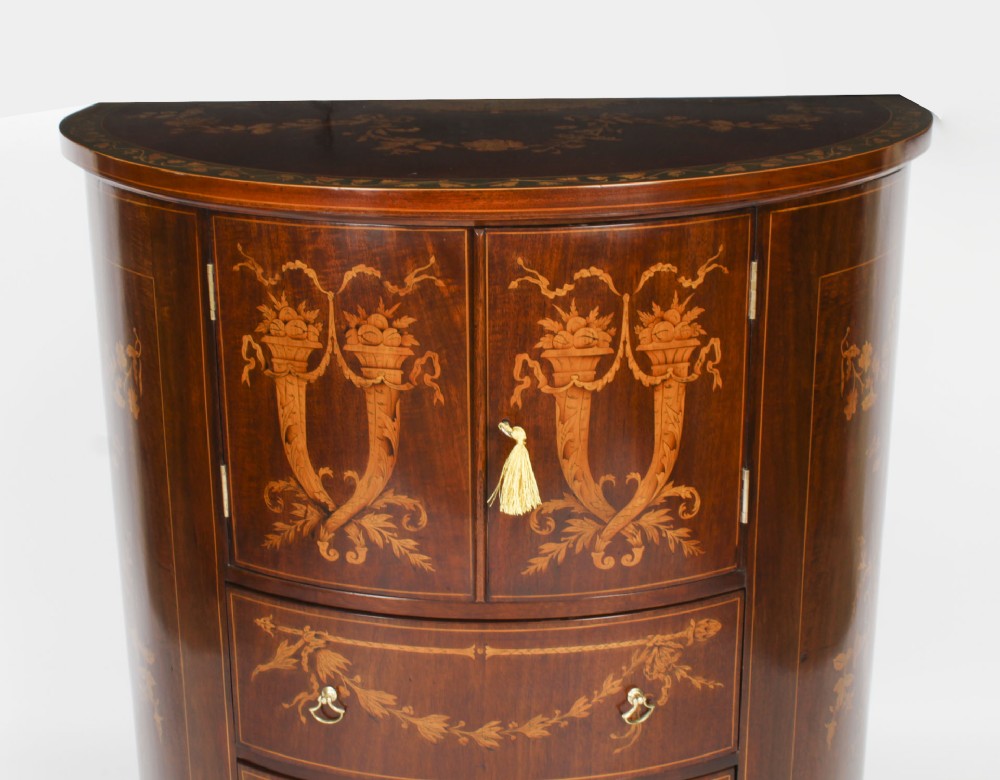
This is an elegant antique English Victorian marquetry inlaid demi-lune cabinet, circa 1880 in date.

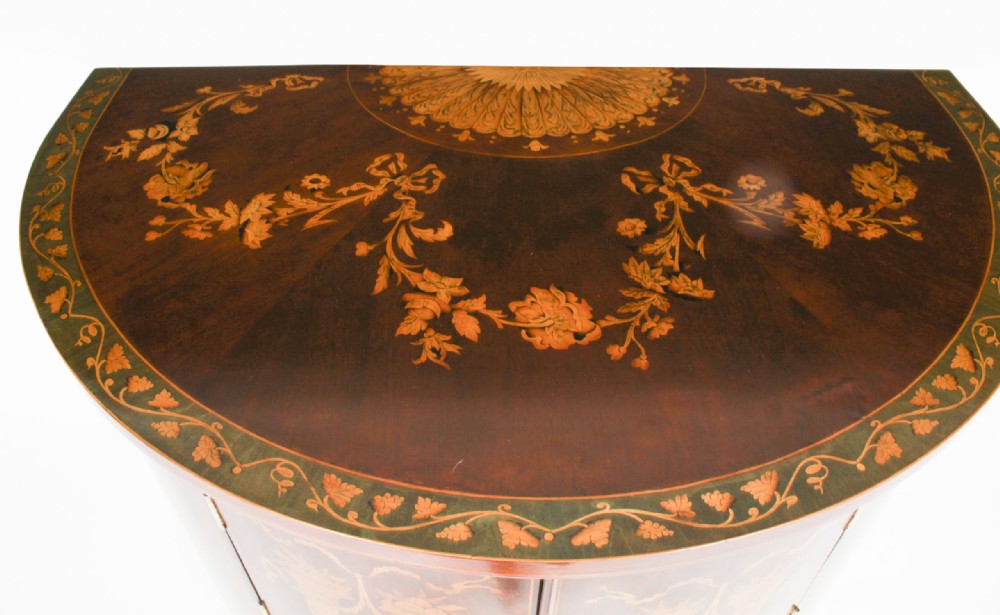
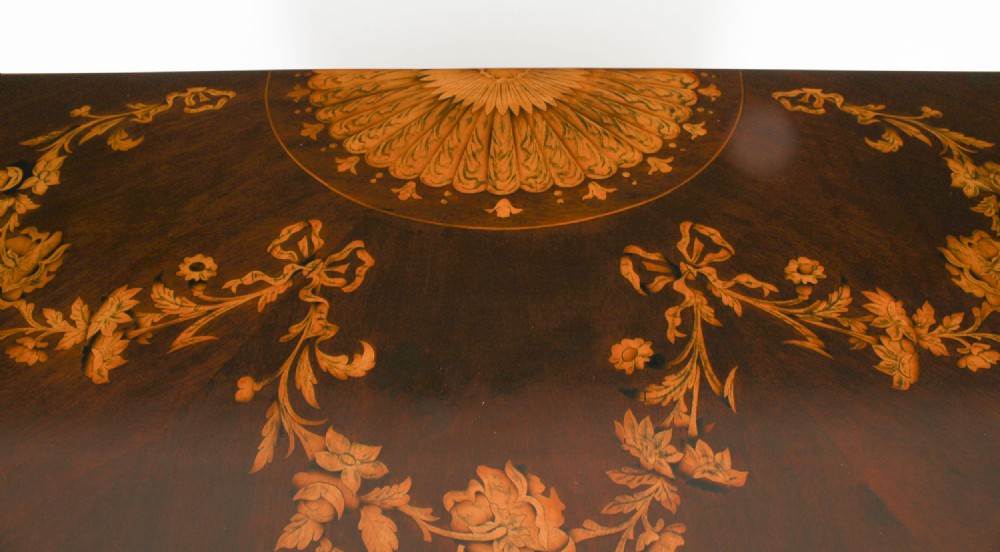
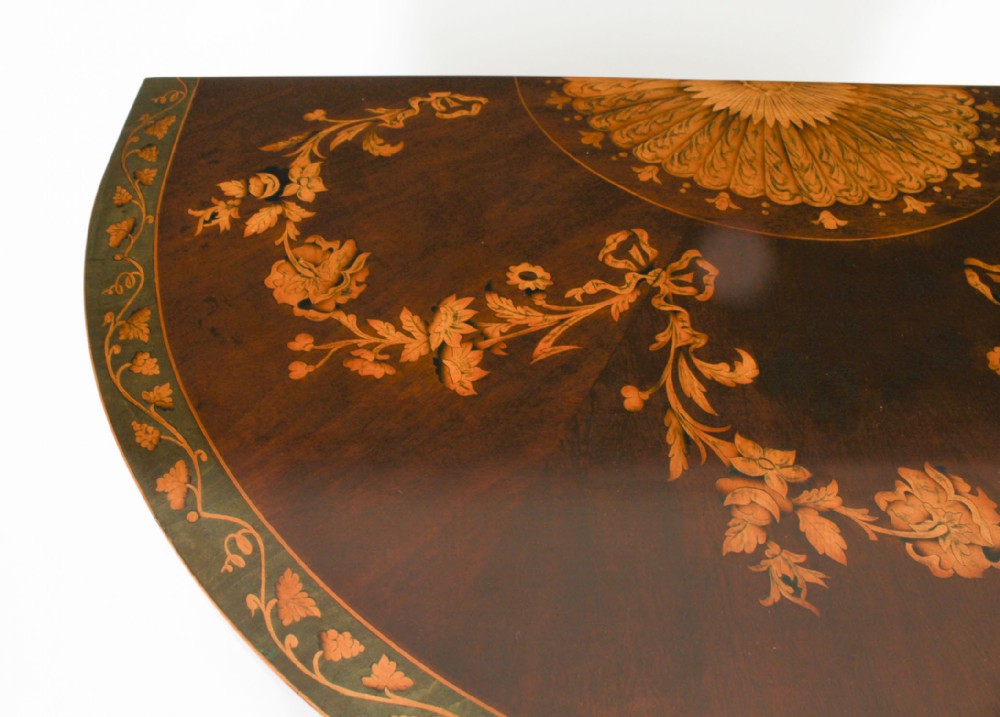
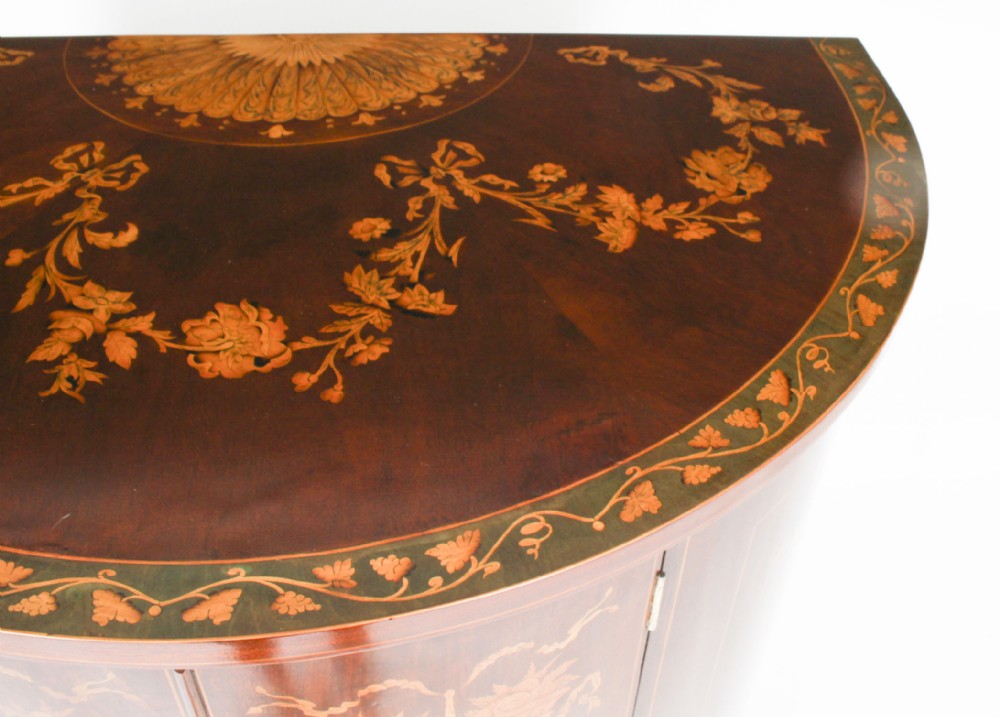
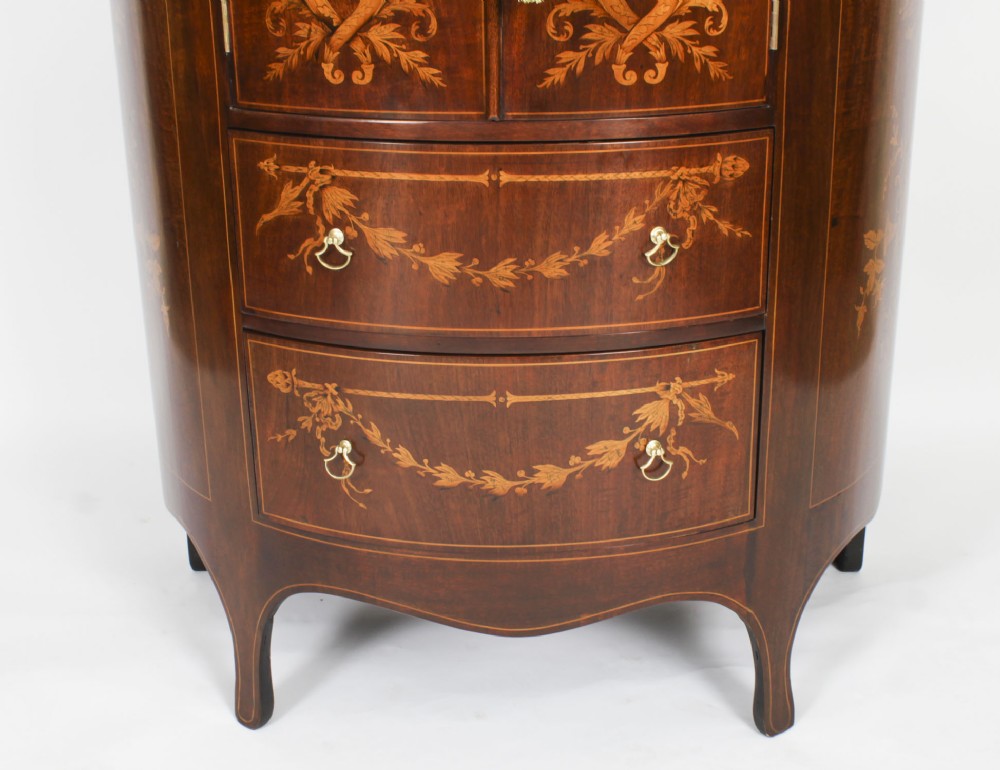
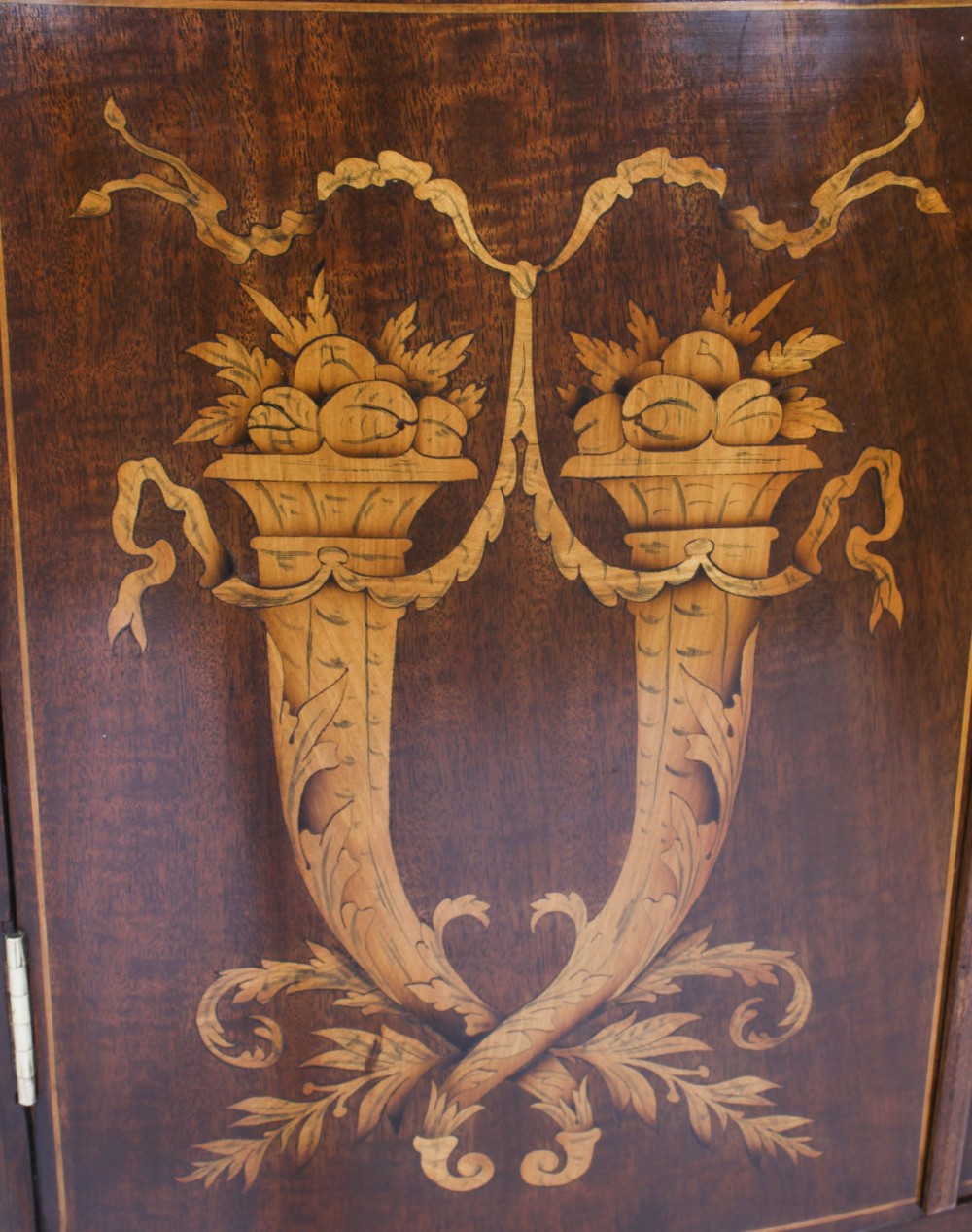
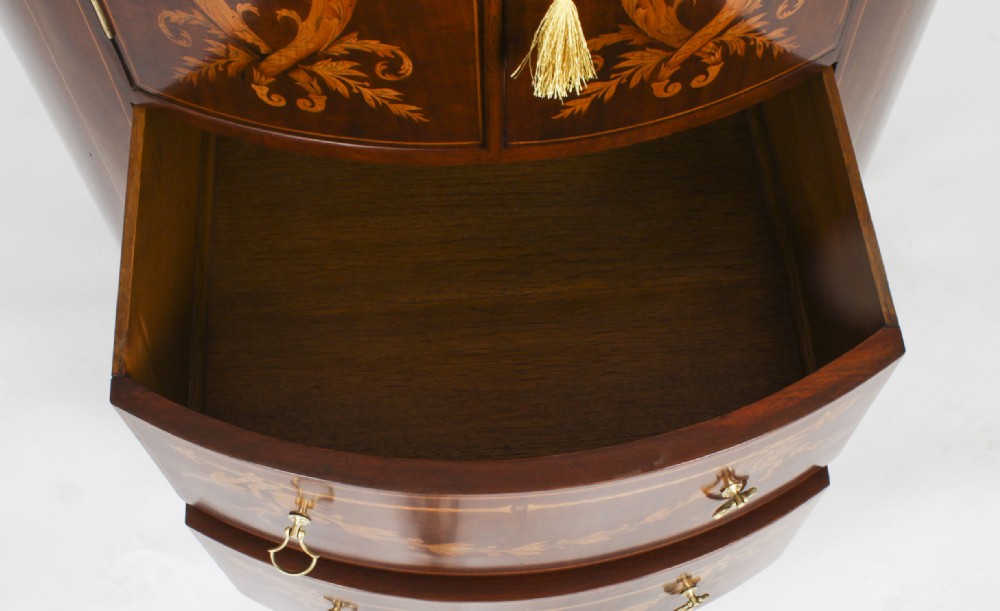
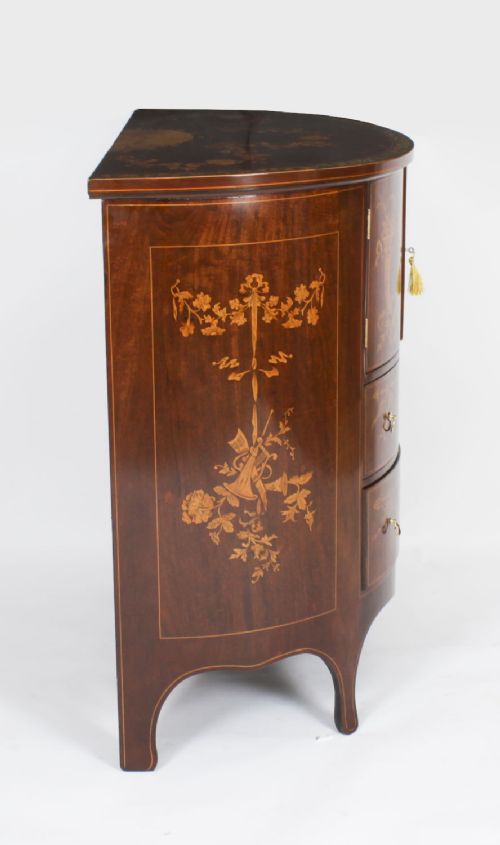
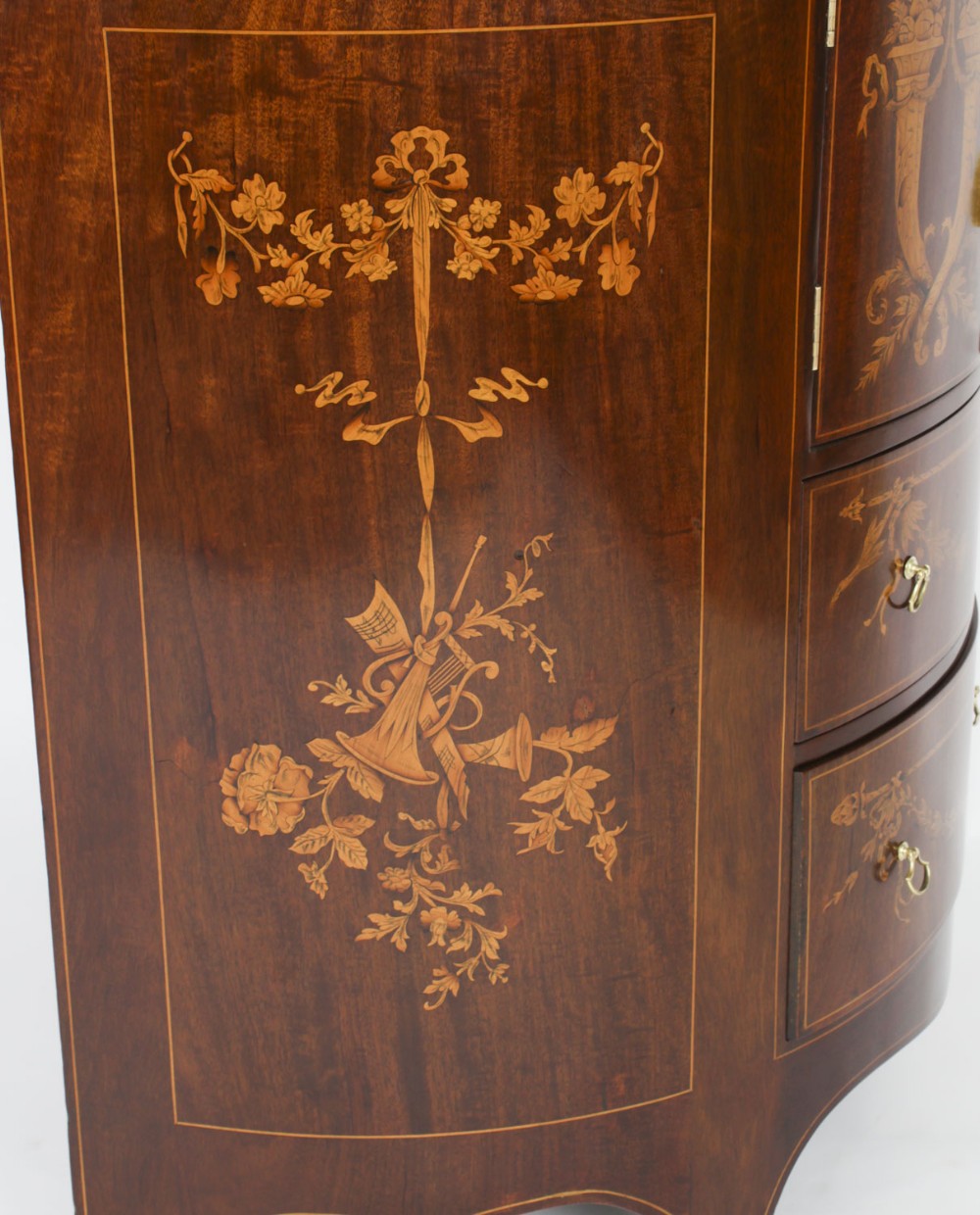
This splendid cabinet is made of flame mahogany and features beautiful satin wood line inlay with marquetry decoration featuring Cornucopia, floral garlands and foliate scrolls.

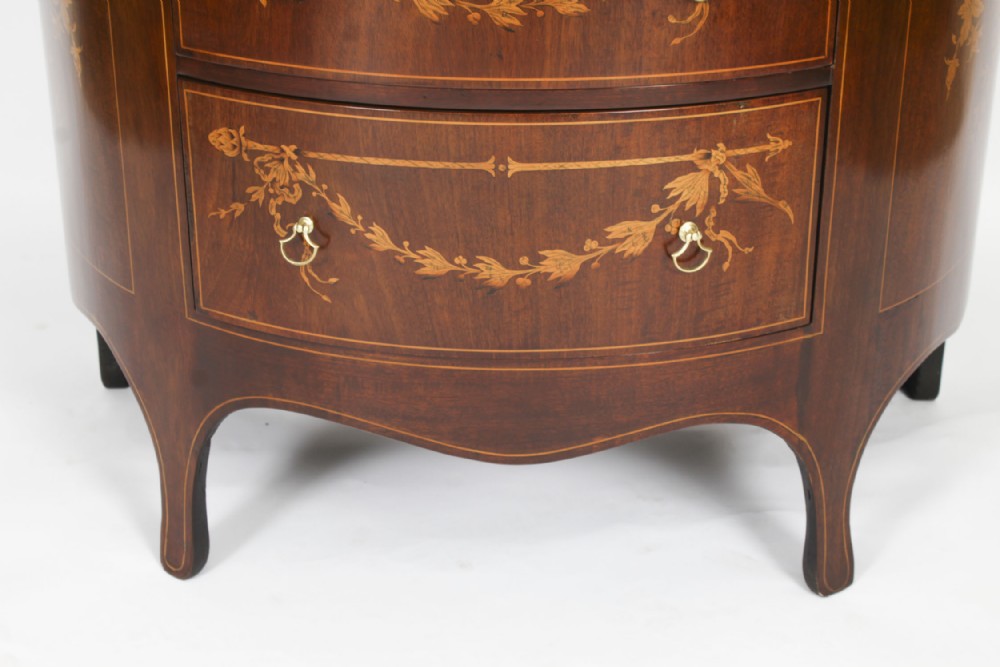
The cabinet has two doors above a pair of drawers, and is raised on decorative shaped legs.

Add a touch of unparalleled elegance to your home.

Condition:

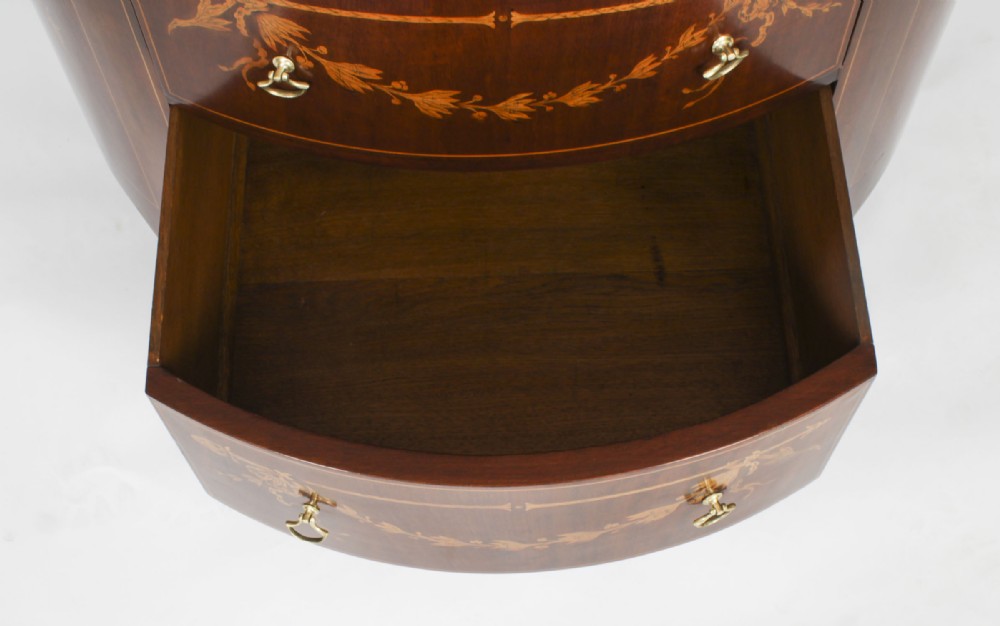
In excellent condition having been beautifully cleaned, polished and waxed in our workshops, please see photos for confirmation.

Dimensions in cm:

Height 104 cm x Width 92 cm x Depth 55 cm

Dimensions in inches:

Height 3 foot, 5 inches x Width 3 foot x Depth 1 foot, 10 inches

Cornucopia Has Latin Origins and Greek History

Cornucopia comes from the Latin cornu copiae, which translates literally as “horn of plenty.” A traditional staple of feasts, the cornucopia is believed to represent the horn of a goat from Greek mythology. According to legend, it was from this horn, which could be filled with whatever the owner wished, that the god Zeus was fed as an infant by his nurse, the nymph Amalthaea. Later, the horn was filled with flowers and fruits, and given as a present to Zeus. The filled horn (or a receptacle resembling it) has long served as a traditional symbol in art and decoration to suggest a store of abundance. The word first appeared in English in the early 16th century; a century later, it developed the figurative sense of “an overflowing supply.”

Flame Mahogany

Thomas Sheraton - 18th century furniture designer, once characterized mahogany as "best suited to furniture where strength is demanded as well as a wood that works up easily, has a beautiful figure and polishes so well that it is an ornament to any room in which it may be placed." Matching his words to his work, Sheraton designed much mahogany furniture. The qualities that impressed Sheraton are particularly evident in a distinctive pattern of wood called "flame mahogany."

The flame figure in the wood is revealed by slicing through the face of the branch at the point where it joins another element of the tree.

Marquetry

is decorative artistry where pieces of material of different colours are inserted into surface wood veneer to form intricate patterns such as scrolls or flowers.

The technique of veneered marquetry had its inspiration in 16th century Florence. Marquetry elaborated upon Florentine techniques of inlaying solid marble slabs with designs formed of fitted marbles, jaspers and semi-precious stones. This work, called opere di commessi, has medieval parallels in Central Italian "Cosmati"-work of inlaid marble floors, altars and columns. The technique is known in English as pietra dura, for the "hardstones" used: onyx, jasper, cornelian, lapis lazuli and colored marbles. In Florence, the Chapel of the Medici at San Lorenzo is completely covered in a colored marble facing using this demanding jig-sawn technique.

Techniques of wood marquetry were developed in Antwerp and other Flemish centers of luxury cabinet-making during the early 16th century. The craft was imported full-blown to France after the mid-seventeenth century, to create furniture of unprecedented luxury being made at the royal manufactory of the Gobelins, charged with providing furnishings to decorate Versailles and the other royal residences of Louis XIV. Early masters of French marquetry were the Fleming Pierre Golle and his son-in-law, André-Charles Boulle, who founded a dynasty of royal and Parisian cabinet-makers (ébénistes) and gave his name to a technique of marquetry employing brass with pewter in arabesque or intricately foliate designs.

Our reference: A4055

Physical Dimensions
Height
104cm (40.94")
Width
92cm (36.22")
Depth
55cm (21.65")
Declaration

Regent Antiques has dated this Victorian Marquetry Demi Lune Cabinet to the 1880s.
Reference Numbers
Sellingantiques Reference
SA1102583
Dealers Internal Reference
A4055
Description
This is an elegant antique English Victorian marquetry inlaid demi-lune cabinet, circa 1880 in date.
This splendid cabinet is made of flame mahogany and features beautiful satin wood line inlay with marquetry decoration featuring Cornucopia, floral garlands and foliate scrolls.
Regent Antiques
fig 1. A Victorian mahogany demi lune cabinet featuring classical urn and floral marquetry inlay with cupboard doors, two drawers, and curved legs.
fig 1. Antique Victorian Marquetry Demi Lune Cabinet 19th Century

The cabinet has two doors above a pair of drawers, and is raised on decorative shaped legs.

Add a touch of unparalleled elegance to your home.

Condition:

In excellent condition having been beautifully cleaned, polished and waxed in our workshops, please see photos for confirmation.
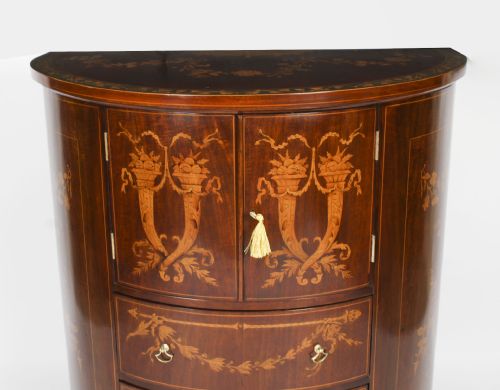
fig 2. A Victorian mahogany demi lune cabinet featuring classical urn and floral marquetry inlay with cupboard doors, two drawers, and curved legs.
fig 2. Antique Victorian Marquetry Demi Lune Cabinet 19th Century

Dimensions in cm:

Height 104 cm x Width 92 cm x Depth 55 cm

Dimensions in inches:

Height 3 foot, 5 inches x Width 3 foot x Depth 1 foot, 10 inches

Cornucopia Has Latin Origins and Greek History

Cornucopia comes from the Latin cornu copiae, which translates literally as “horn of plenty.” A traditional staple of feasts, the cornucopia is believed to represent the horn of a goat from Greek mythology. According to legend, it was from this horn, which could be filled with whatever the owner wished, that the god Zeus was fed as an infant by his nurse, the nymph Amalthaea. Later, the horn was filled with flowers and fruits, and given as a present to Zeus. The filled horn (or a receptacle resembling it) has long served as a traditional symbol in art and decoration to suggest a store of abundance. The word first appeared in English in the early 16th century; a century later, it developed the figurative sense of “an overflowing supply.”
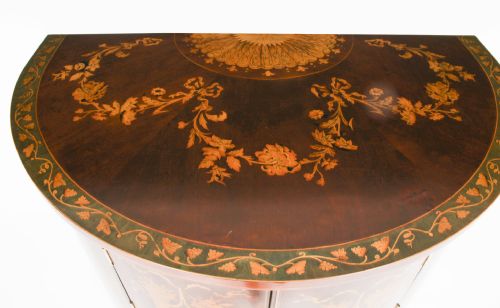
fig 3. A Victorian mahogany demi lune cabinet featuring classical urn and floral marquetry inlay with cupboard doors, two drawers, and curved legs.
fig 3. Antique Victorian Marquetry Demi Lune Cabinet 19th Century

Flame Mahogany

Thomas Sheraton - 18th century furniture designer, once characterized mahogany as "best suited to furniture where strength is demanded as well as a wood that works up easily, has a beautiful figure and polishes so well that it is an ornament to any room in which it may be placed." Matching his words to his work, Sheraton designed much mahogany furniture. The qualities that impressed Sheraton are particularly evident in a distinctive pattern of wood called "flame mahogany."
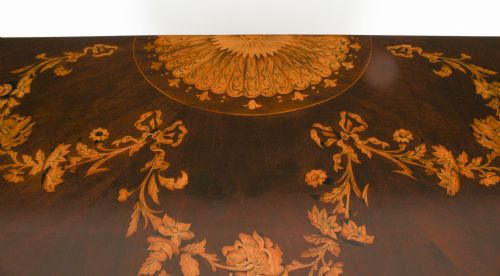
fig 4. A Victorian mahogany demi lune cabinet featuring classical urn and floral marquetry inlay with cupboard doors, two drawers, and curved legs.
fig 4. Antique Victorian Marquetry Demi Lune Cabinet 19th Century

The flame figure in the wood is revealed by slicing through the face of the branch at the point where it joins another element of the tree.

Marquetry

is decorative artistry where pieces of material of different colours are inserted into surface wood veneer to form intricate patterns such as scrolls or flowers.
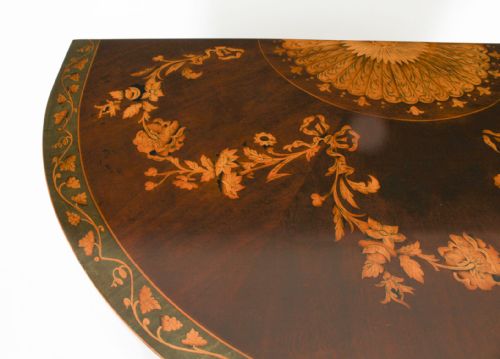
fig 5. A Victorian mahogany demi lune cabinet featuring classical urn and floral marquetry inlay with cupboard doors, two drawers, and curved legs.
fig 5. Antique Victorian Marquetry Demi Lune Cabinet 19th Century

The technique of veneered marquetry had its inspiration in 16th century Florence. Marquetry elaborated upon Florentine techniques of inlaying solid marble slabs with designs formed of fitted marbles, jaspers and semi-precious stones. This work, called opere di commessi, has medieval parallels in Central Italian "Cosmati"-work of inlaid marble floors, altars and columns. The technique is known in English as pietra dura, for the "hardstones" used: onyx, jasper, cornelian, lapis lazuli and colored marbles. In Florence, the Chapel of the Medici at San Lorenzo is completely covered in a colored marble facing using this demanding jig-sawn technique.
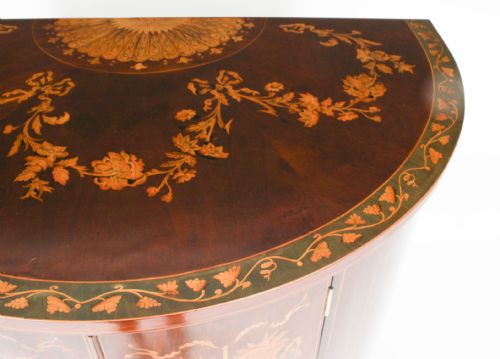
fig 6. A Victorian mahogany demi lune cabinet featuring classical urn and floral marquetry inlay with cupboard doors, two drawers, and curved legs.
fig 6. Antique Victorian Marquetry Demi Lune Cabinet 19th Century

Techniques of wood marquetry were developed in Antwerp and other Flemish centers of luxury cabinet-making during the early 16th century. The craft was imported full-blown to France after the mid-seventeenth century, to create furniture of unprecedented luxury being made at the royal manufactory of the Gobelins, charged with providing furnishings to decorate Versailles and the other royal residences of Louis XIV. Early masters of French marquetry were the Fleming Pierre Golle and his son-in-law, André-Charles Boulle, who founded a dynasty of royal and Parisian cabinet-makers (ébénistes) and gave his name to a technique of marquetry employing brass with pewter in arabesque or intricately foliate designs.

Our reference: A4055

Height
104cm (40.94")
Width
92cm (36.22")
Depth
55cm (21.65")
Date of Manufacture

Regent Antiques has dated this Victorian Marquetry Demi Lune Cabinet to the 1880s.

Reference Numbers
Sellingantiques Ref
SA1102583
Dealers Internal Ref
A4055
Regent Antiques
Regent Antiques
Sellingantiques verified Since Sep 2016

We specialise in english and continental furniture, silver, porcelain and decorative items.

Dealer Profile

You can view the stock and full dealer information on the Regent Antiques Profile Page

Trade Associations

Regent Antiques is a registered member of LAPADA  CINOA
PDF SHARE
SAVE
A Victorian mahogany demi lune cabinet featuring classical urn and floral marquetry inlay with cupboard doors, two drawers, and curved legs.
1 / 17
Archive I A Victorian mahogany demi lune cabinet featuring classical urn and floral marquetry inlay with cupboard doors, two drawers, and curved legs.

Antique Victorian Marquetry Demi Lune Cabinet 19th Century
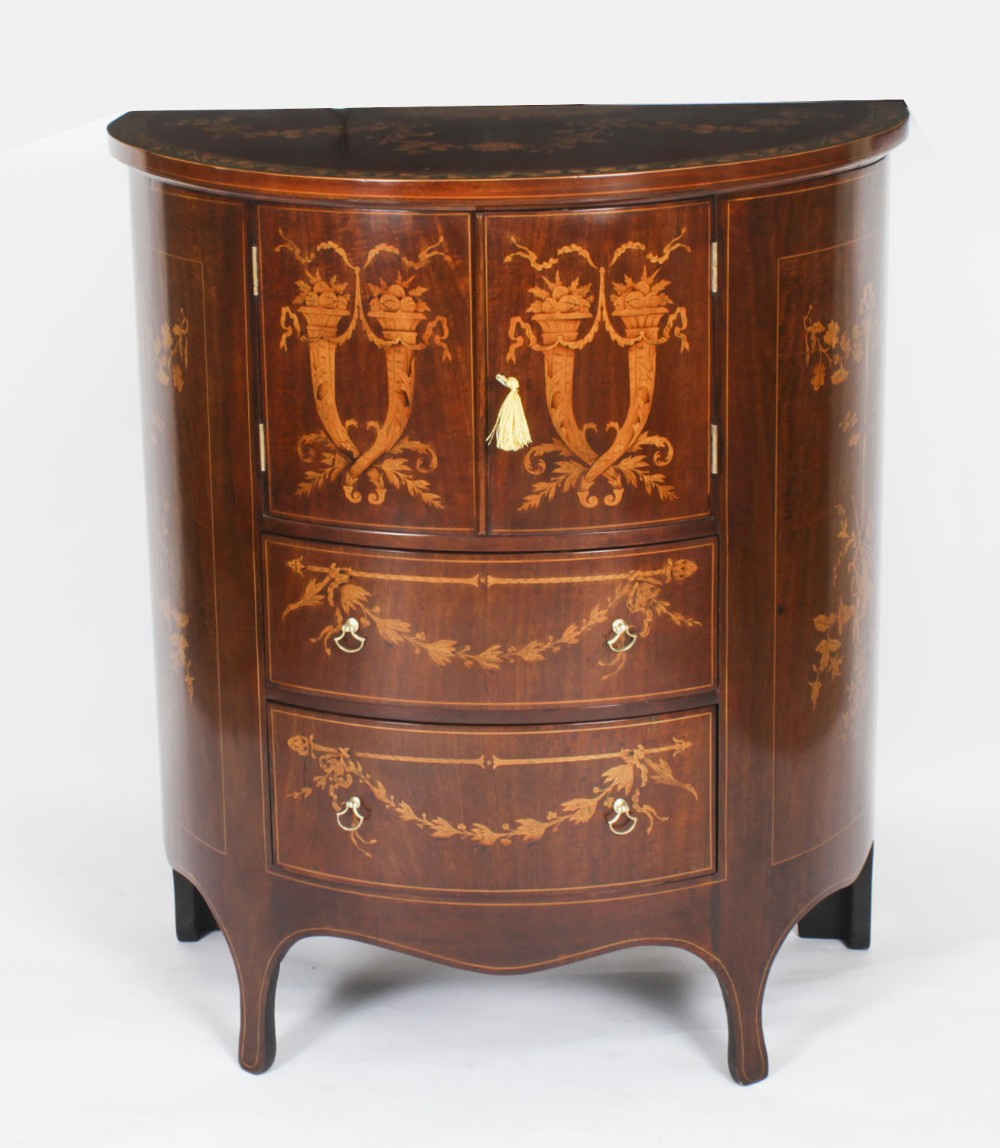
Archive II A Victorian mahogany demi lune cabinet featuring classical urn and floral marquetry inlay with cupboard doors, two drawers, and curved legs. View II
Archive III A Victorian mahogany demi lune cabinet featuring classical urn and floral marquetry inlay with cupboard doors, two drawers, and curved legs. View III
Archive IV A Victorian mahogany demi lune cabinet featuring classical urn and floral marquetry inlay with cupboard doors, two drawers, and curved legs. View IV
Archive V A Victorian mahogany demi lune cabinet featuring classical urn and floral marquetry inlay with cupboard doors, two drawers, and curved legs. View V
Archive VI A Victorian mahogany demi lune cabinet featuring classical urn and floral marquetry inlay with cupboard doors, two drawers, and curved legs. View VI
Archive VII A Victorian mahogany demi lune cabinet featuring classical urn and floral marquetry inlay with cupboard doors, two drawers, and curved legs. View VII
Archive VIII A Victorian mahogany demi lune cabinet featuring classical urn and floral marquetry inlay with cupboard doors, two drawers, and curved legs. View VIII
Archive IX A Victorian mahogany demi lune cabinet featuring classical urn and floral marquetry inlay with cupboard doors, two drawers, and curved legs. View IX
Archive X A Victorian mahogany demi lune cabinet featuring classical urn and floral marquetry inlay with cupboard doors, two drawers, and curved legs. View X
Archive XI A Victorian mahogany demi lune cabinet featuring classical urn and floral marquetry inlay with cupboard doors, two drawers, and curved legs. View XI
Archive XII A Victorian mahogany demi lune cabinet featuring classical urn and floral marquetry inlay with cupboard doors, two drawers, and curved legs. View XII
Archive XIII A Victorian mahogany demi lune cabinet featuring classical urn and floral marquetry inlay with cupboard doors, two drawers, and curved legs. View XIII
Archive XIV A Victorian mahogany demi lune cabinet featuring classical urn and floral marquetry inlay with cupboard doors, two drawers, and curved legs. View XIV
Archive XV A Victorian mahogany demi lune cabinet featuring classical urn and floral marquetry inlay with cupboard doors, two drawers, and curved legs. View XV
Archive XVI A Victorian mahogany demi lune cabinet featuring classical urn and floral marquetry inlay with cupboard doors, two drawers, and curved legs. View XVI
Archive XVII A Victorian mahogany demi lune cabinet featuring classical urn and floral marquetry inlay with cupboard doors, two drawers, and curved legs. View XVII
FURTHER BROWSING

Visitors also looked at these ⇣

Enlarged Archival View
Location
Manor Warehouse
318 Green Lanes
London
N4 1BX
United Kingdom
Verified Since Sep 2016
Items For Sale 659
Items Sold 2,608
Regent Antiques
Regent Antiques
Verified Since Sep 2016
View Dealer Info
Location: Manor Warehouse, 318 Green Lanes, London, N4 1BX, United Kingdom
Verified
Sep 2016
For Sale
659
Sold
2,608
A Victorian mahogany demi lune cabinet featuring classical urn and floral marquetry inlay with cupboard doors, two drawers, and curved legs.
Antique Victorian Marquetry Demi Lune Cabinet 19th Century
Ref: SA1102583
A Victorian mahogany demi lune cabinet featuring classical urn and floral marquetry inlay with cupboard doors, two drawers, and curved legs.
Detail View 1
Detail View 2
Detail View 3
Detail View 4
Detail View 5
Detail View 6
Detail View 7
Detail View 8
Detail View 9
Detail View 10
Detail View 11
Detail View 12
Detail View 13
Detail View 14
Detail View 15
Detail View 16
Archival Detail
Every single antique dealer on our platform is individually approved by our internal team. We verify their professional trade history, ethical standards, and photographic quality to ensure a secure, high-standard buying environment. Upon joining, every dealer agrees to a strict 9-point code of conduct. While issues can occasionally arise, our dealers typically resolve them swiftly and directly with the buyer. In fact, since our founding in 2002, Sellingantiques has only had to step in to help resolve an issue on roughly five occasions—a true testament to the quality of our dealers and their dedication to your happiness.
Our dealers are highly experienced in packing and shipping fragile, high-value antiques. Because you are in direct contact with the dealer, you will be able to easily go through all available shipping and insurance options together to ensure your item arrives safely.
Antiques are the ultimate green purchase. By choosing historical pieces over newly manufactured goods, you completely eliminate the carbon footprint of modern mass production while preserving exceptional, timeless craftsmanship.

A demi lune cabinet is a semi-circular piece of storage furniture, popularised during the 18th and 19th centuries, designed to sit flush against a wall while providing a curved front profile.

These cabinets typically feature a primary timber frame such as mahogany or walnut, adorned with detailed inlays of contrasting woods like satinwood, boxwood, or tulipwood to form decorative motifs.

Authentic pieces feature hand-cut dovetail drawer joints, natural timber shrinkage across construction seams, original brass drawer pulls, and age-related oxidisation on unpolished surfaces.

Position the cabinet against a neutral wall in a hallway or living space to highlight the timber inlay, pairing it with contemporary lamps or modern wall art to create contrast.

Dust the surface regularly with a dry microfibre cloth and apply beeswax sparingly once a year, keeping the item away from direct heat sources and fluctuating humidity to prevent veneer lifting.
items
Add keywords to the filter
Price
£100
£250000
Era
Movements
Material
Origin
Stock Location
Freshness
Online Payments
Categories