
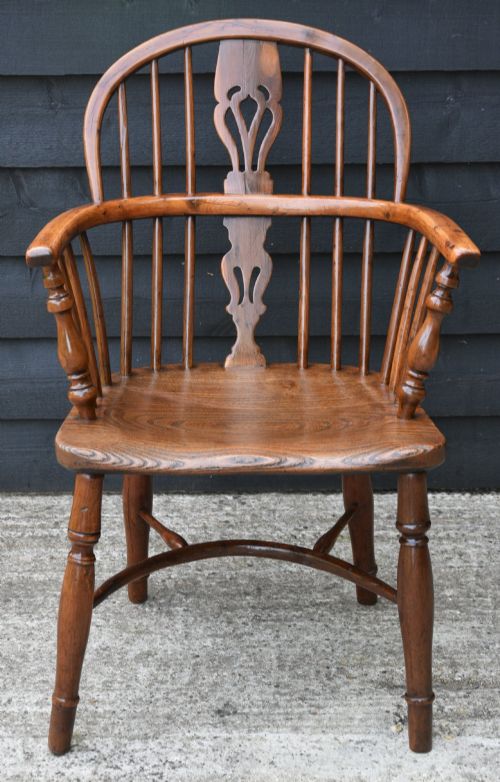
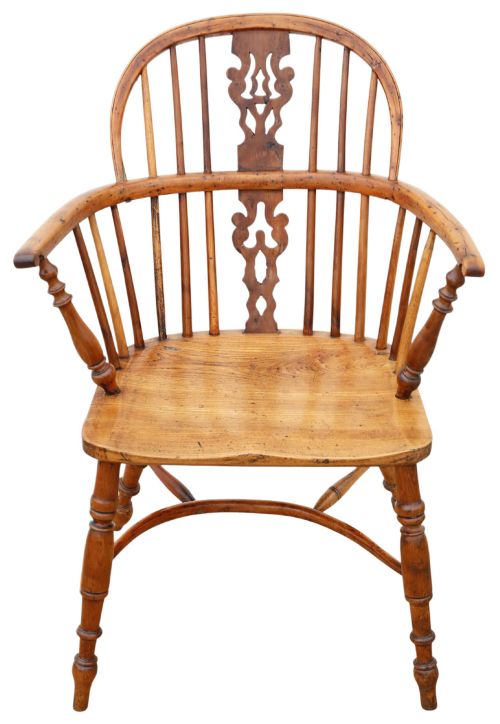
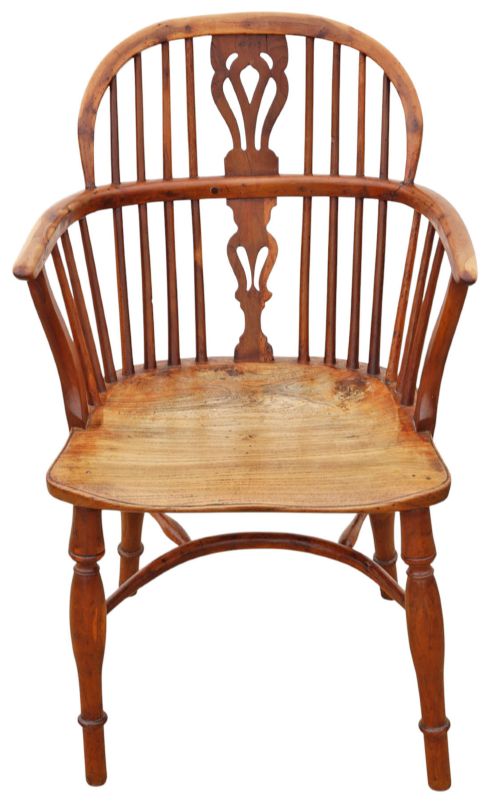
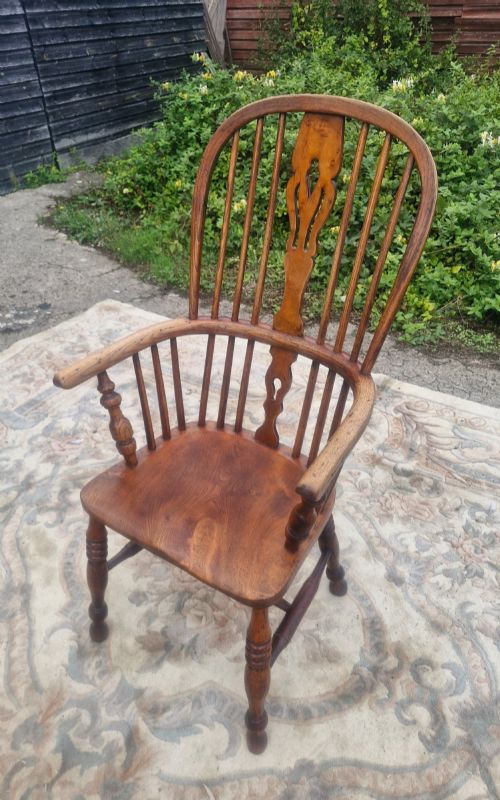

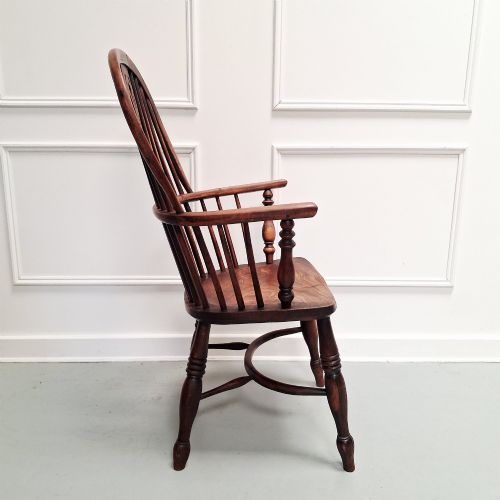
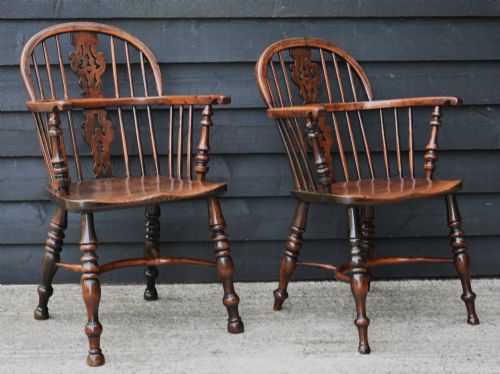
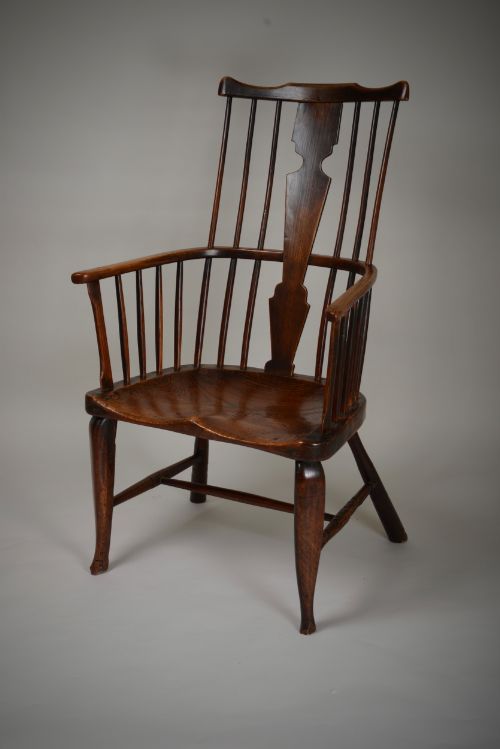
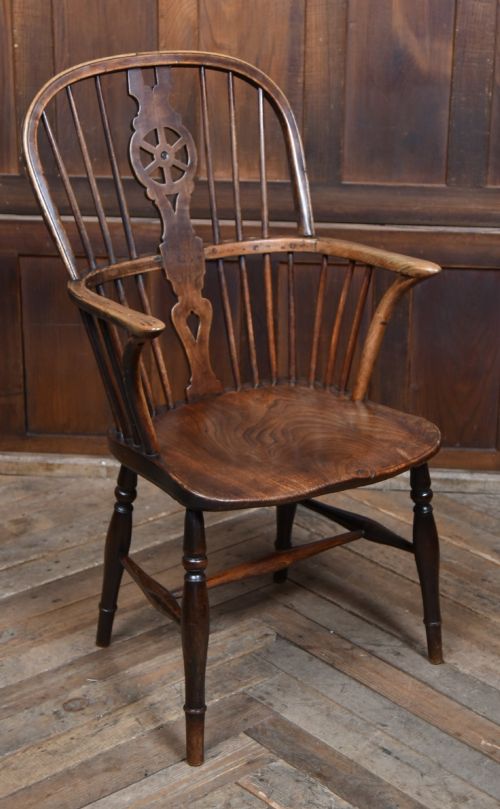
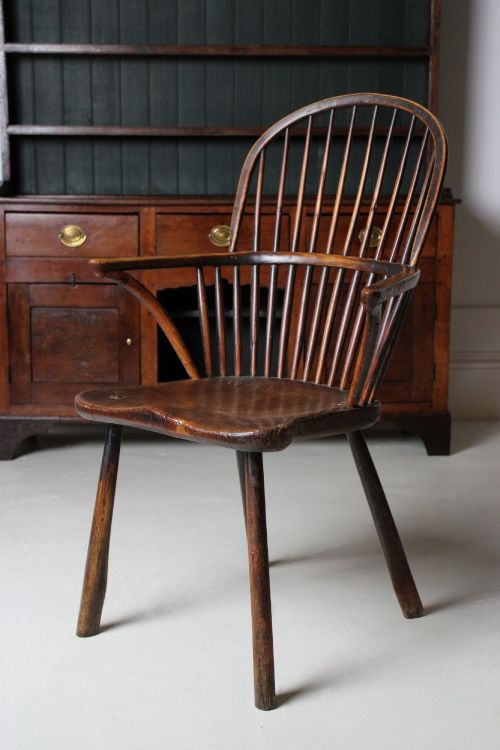
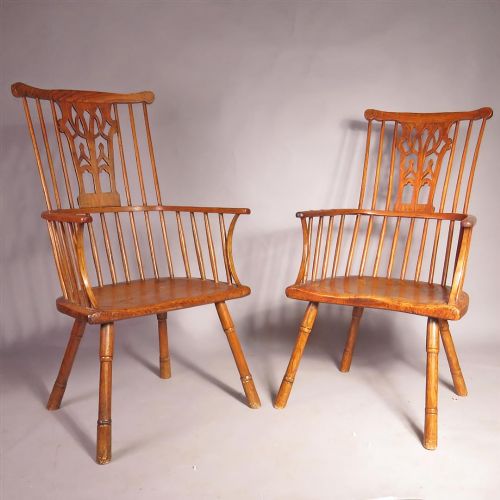
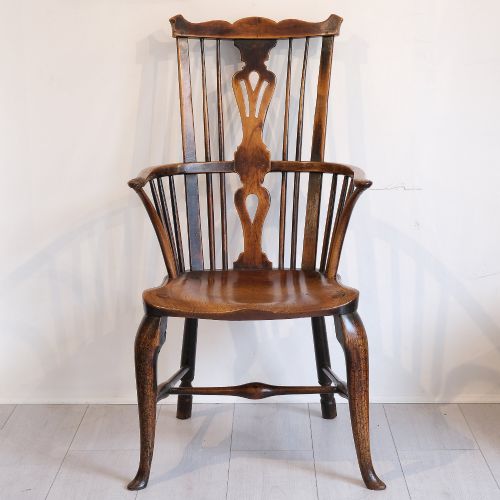
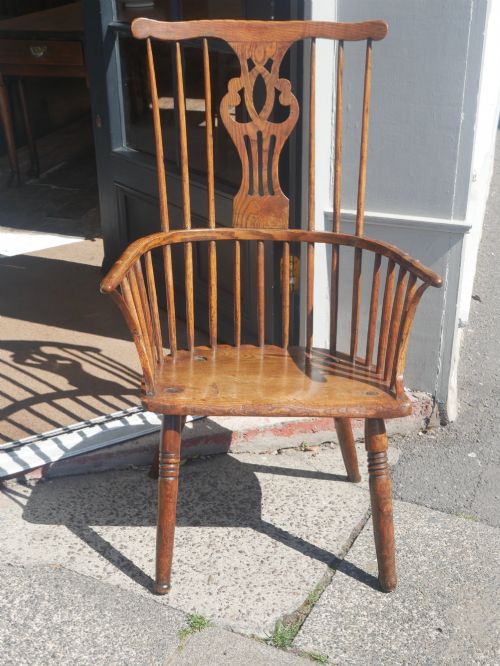
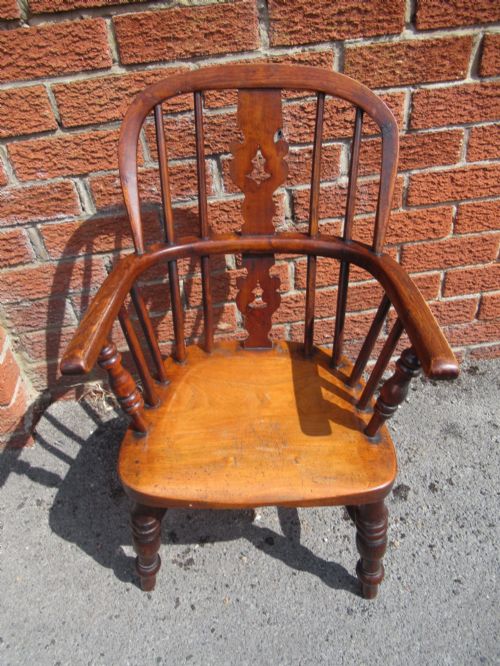
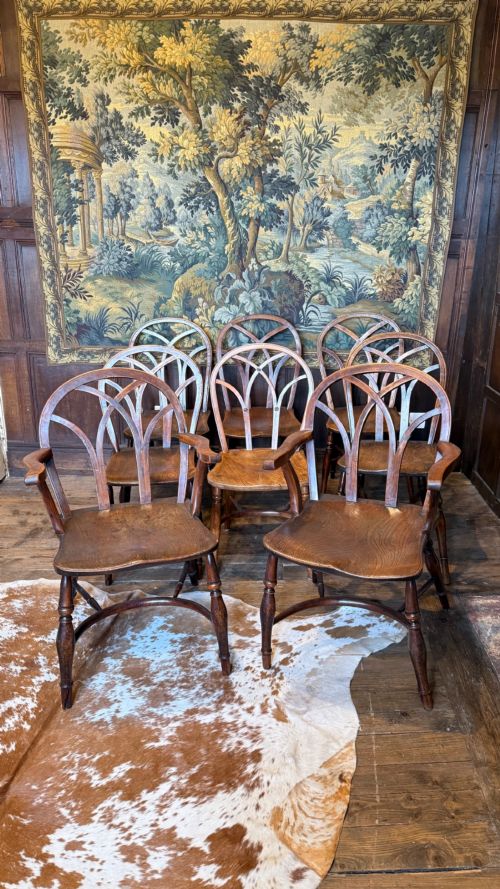
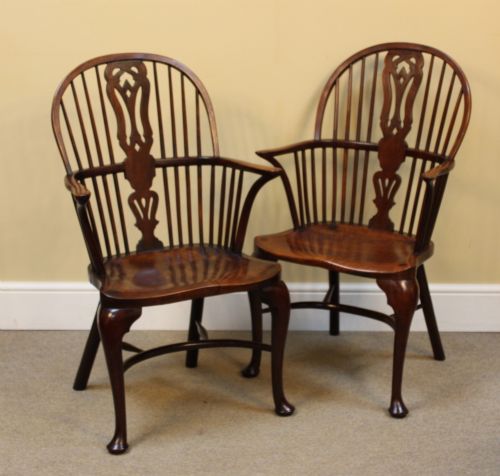
Yew and Elm Chair
When you search for a yew and elm chair, you are seeking the vernacular seating tradition of English country makers.
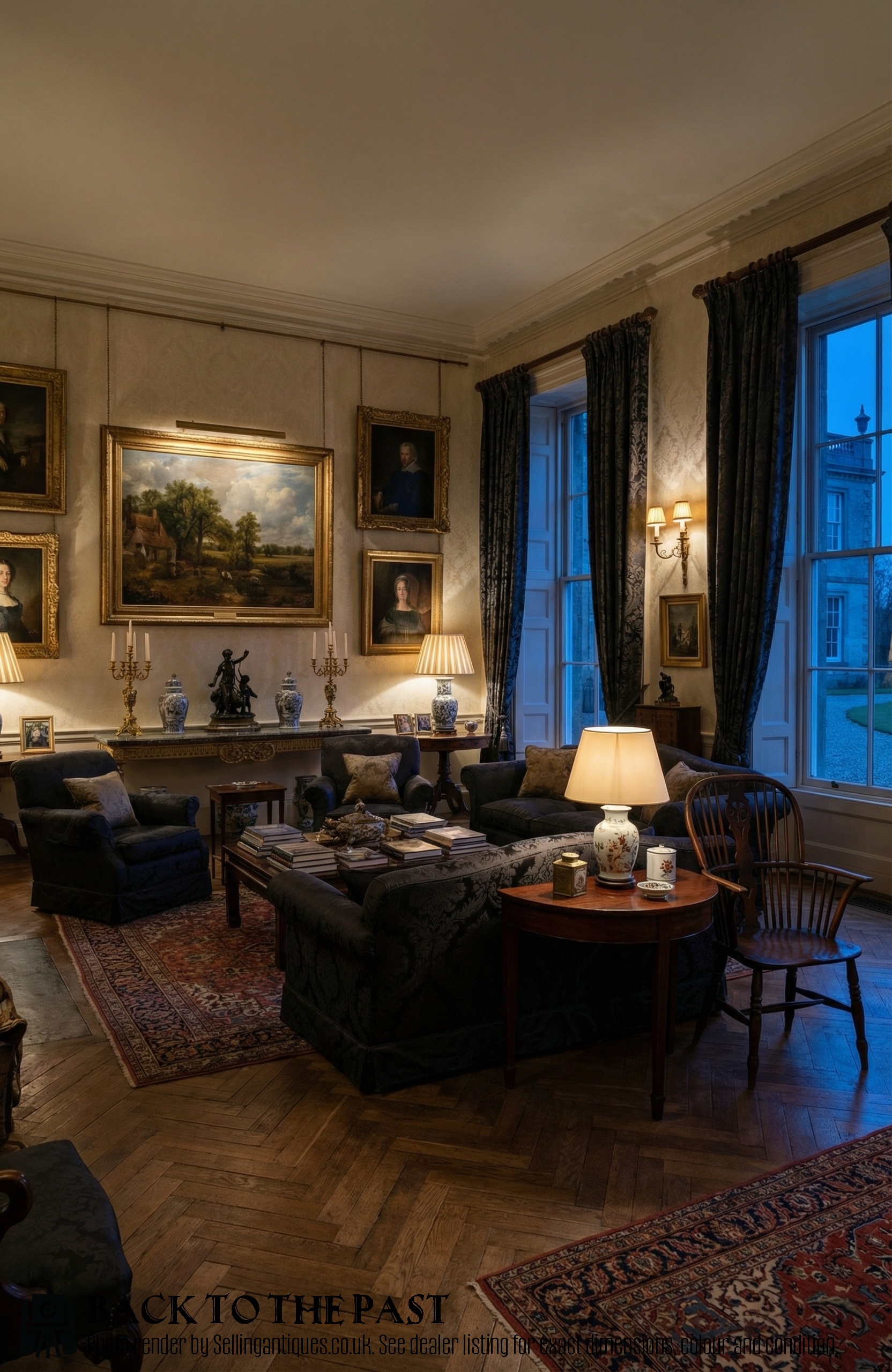
Yew and Elm Chair
A yew and elm chair typically takes the form of a Windsor armchair, originating from regional workshops during the eighteenth and nineteenth centuries.
The selections span Georgian and Victorian periods, including high-back, comb-back, wheel-back, and low-back variants alongside matched sets.
Regional hubs such as the Thames Valley and Nottinghamshire produced distinctive vernacular types defined by their timber combinations and structural stretchers.
Materials and Construction
Makers paired sturdy elm for comfortable, resilient slab seats with flexible yew wood for bent bow backs and spindles.
Additional timbers such as ash, beech, fruitwood, and laburnum appear in legs and underframing, often secured with crinoline stretchers.
The construction relies on traditional bodging techniques, turning green wood on pole lathes and assembling components with pegged tenon joints.
Listings span the Georgian and Victorian eras, recording regional outputs primarily from the Thames Valley and Nottinghamshire.
Design and Proportion
Quality rests in the balance of the proportions, from the sweep of the arm bow to the carving of the saddle seat.
The figuring of the yew wood and the retention of an original timeworn surface distinguish finer regional examples from simpler utility seating.
J Spencer·Robert Prior
The Yew and Elm Chair Glossary
- Windsor chair
- A wooden chair built with a heavy solid timber seat into which the legs and back spindles are separately tenoned.
- Comb back
- A Windsor chair back design featuring an upper headrest rail supported by vertical spindles, resembling an eighteenth-century hair comb.
- Crinoline stretcher
- A curved under-stretcher joining the legs of a Windsor chair, often doubled or interlaced to provide rigidity.
- Wheel back
- A Windsor chair back incorporating a pierced central splat carved in the shape of a spoked carriage wheel.
- Broad arm
- An armchair featuring widened, paddle-shaped armrests designed for writing or comfort.
Yew and Elm Chair: Frequently Asked Questions
What is a yew and elm chair?
A yew and elm chair is a traditional wooden seating piece, most commonly a Windsor chair, featuring a solid elm seat and yew wood components.
These pieces were constructed by regional English vernacular makers during the eighteenth and nineteenth centuries using mixed timbers.
How were Windsor chairs made?
Makers turned green timber on pole lathes to create spindles and legs, pairing them with steam-bent yew bows.
The components were fitted directly into holes bored through a thick carved elm seat slab using traditional joinery methods.
How do I date a Windsor chair?
Dating relies on stylistic shifts in the back design, such as early comb backs versus later wheel backs or Victorian high backs.
Construction details, timber selection, and regional framing characteristics also help indicate whether a piece originates from the Georgian or Victorian era.
How do I care for antique wood?
Keep wooden seating away from direct heat sources and dramatic humidity fluctuations to prevent timber movement and cracking.
Apply traditional wax polish occasionally to nourish the surface and maintain the natural patina built up over generations.