





Yellow Gold Peridot Jewellery
Yellow gold peridot jewellery captures the vibrant olive brilliance of early twentieth-century design.
Yellow Gold Peridot Jewellery
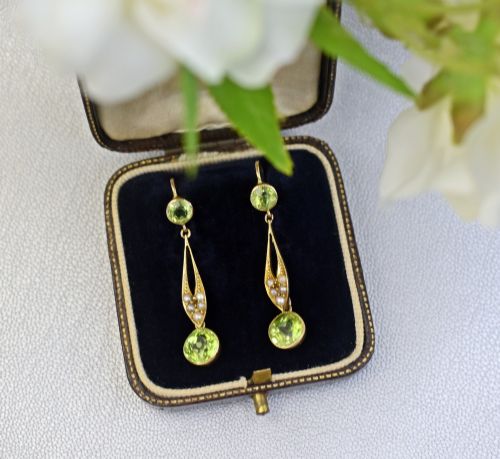
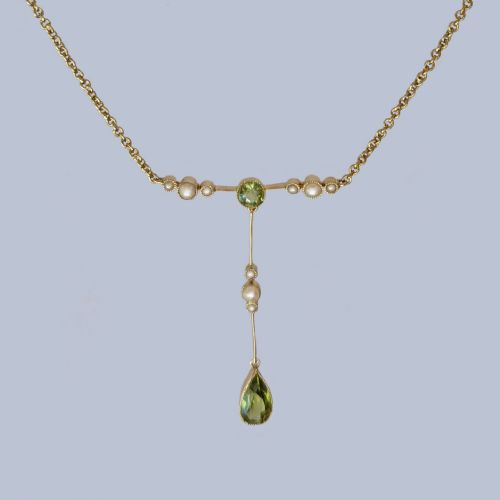
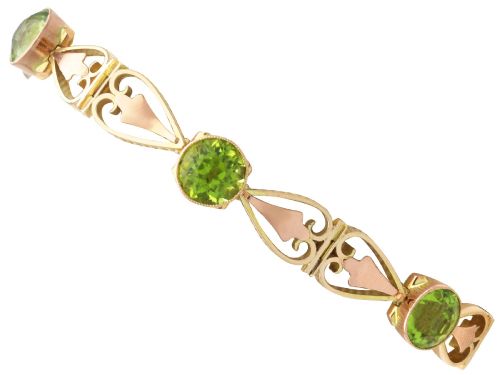
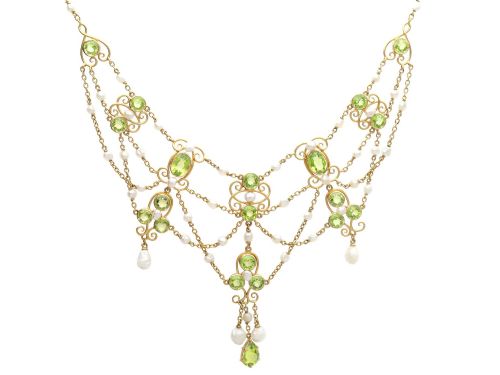
Yellow gold peridot jewellery brings together bright olive-green gemstones and warm precious metal, spanning Victorian, Edwardian, and Arts and Crafts periods. The pieces most commonly found include pendants, necklaces, and cluster brooches, often enhanced with delicate seed pearls.
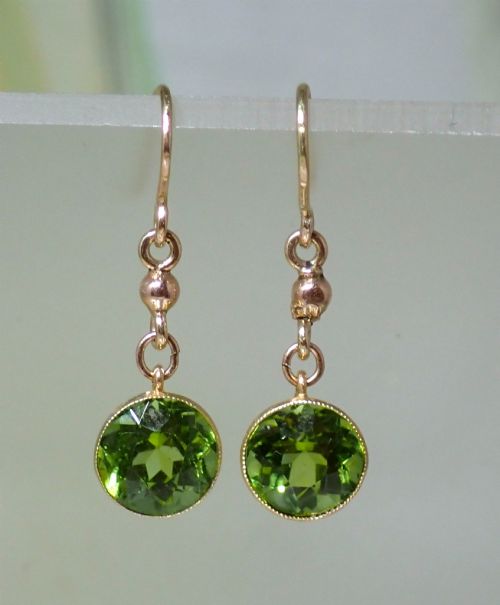
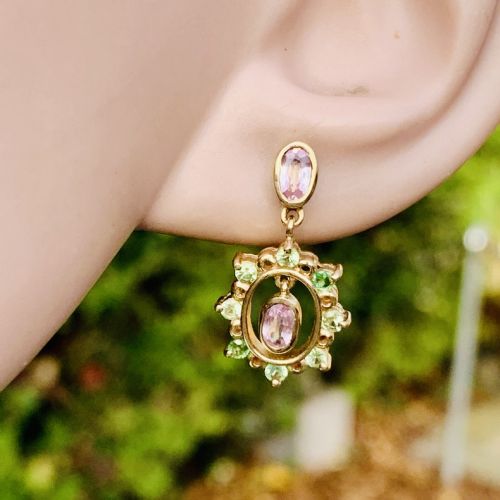
Makers of these items utilised styles such as Art Nouveau and traditional cluster work, creating wearable ornaments that range from necklaces to drop earrings and rings. The selection relies heavily on pieces originating around nineteen hundred, showcasing the distinct aesthetic of that era.
Making yellow gold peridot jewellery
The construction of these items relies primarily on nine-carat and fifteen-carat yellow gold, providing a warm metallic setting for the vibrant green stones. Goldsmiths integrated natural pearls and seed pearls as secondary elements, often forming delicate clusters or garlands around the central peridot.
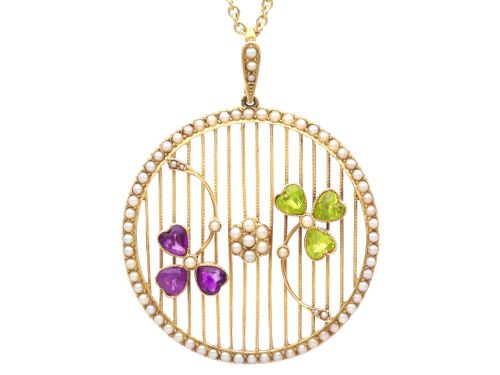
Techniques from the period include plique-à-jour enamelling and intricate wirework, visible in pendant brooches and lavalier necklaces. These methods required precise hand assembly to secure fragile peridot stones alongside pearls within intricate gold mounts.
Yellow Gold Peridot Jewellery Retail Price Guide 2026
Typical asking prices for yellow gold peridot jewellery among the pieces listed under this phrase on Sellingantiques today, from the lower quarter to the upper quarter. They describe what is for sale here now, not the wider market.
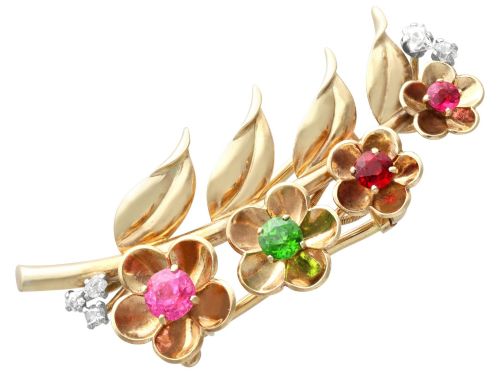
Several items double as lucky charms and brooches, ensuring your lapel can also keep fortune close at hand.
Judging quality in yellow gold peridot jewellery
Quality rests on the depth of colour within the peridot and the integrity of the gold setting, whether nine-carat or fifteen-carat. Superior examples demonstrate careful balancing of seed pearls and clean metalwork without modern repair intrusions.
The finesse of the style, particularly in Art Nouveau or Arts and Crafts interpretations, dictates the distinction between standard production and exceptional goldsmithing. Original settings that retain their structural balance and delicate chains elevate the overall merit of the piece.
Murrle Bennett
The Yellow Gold Peridot Jewellery Glossary
- Peridot
- A transparent green gemstone of the olivine group, known for its distinctive yellow-green olive hue. It serves as the primary focal stone in Edwardian and Victorian cluster designs.
- Seed pearl
- A very small natural or cultured pearl, often undrilled or half-drilled, used to accent gemstone clusters. These tiny pearls appear frequently in garland necklaces and brooches.
- Plique-à-jour
- An enamelling technique where enamel is applied to open cells without a backing, resembling miniature stained glass. This method allows light to pass through the translucent coloured glass alongside the gold.
- Lavalier
- A pendant necklace featuring a suspended gemstone or drop hanging from a smaller centrepiece. This style gained immense popularity during the Edwardian and Art Nouveau periods.
Yellow Gold Peridot Jewellery: Frequently Asked Questions
How do I clean my peridot jewellery?
Peridot is a softer gemstone compared to diamond or sapphire, requiring gentle care to maintain its lustre over time.
Warm soapy water and a soft brush work best, avoiding harsh chemical dips or ultrasonic cleaners that can damage the seed pearls and gold settings.
Are these pieces made of solid gold?
The items listed utilise solid nine-carat, fifteen-carat, or eighteen-carat yellow gold rather than plated base metals.
This composition ensures durability and historical accuracy for pieces originating from the Victorian and Edwardian eras.
What is the difference between an Edwardian and Victorian piece?
Victorian pieces often lean towards heavy cluster brooches and traditional settings, while Edwardian items embrace lighter garland motifs and Art Nouveau curves.
The use of peridot remains a constant bridge between the late nineteenth century and the early nineteen hundreds.
Can I wear a pendant brooch as both a necklace and a brooch?
Many Edwardian designs incorporate a hidden loop alongside a pin mechanism, allowing the owner to switch between wearing the piece on a lapel or suspended from a chain.
This dual functionality reflects the versatile craftsmanship typical of jewellery from that period.