

Yellow Gold Link Chain
When you search for a yellow gold link chain, you are looking at substantial pieces of neck and wrist wear shaped by Victorian, Edwardian, and mid-century hands.
Yellow Gold Link Chain
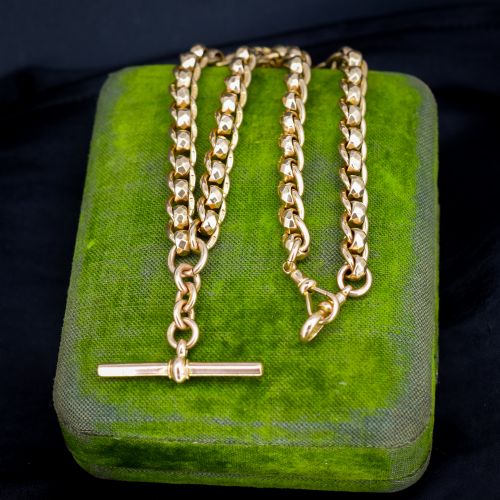
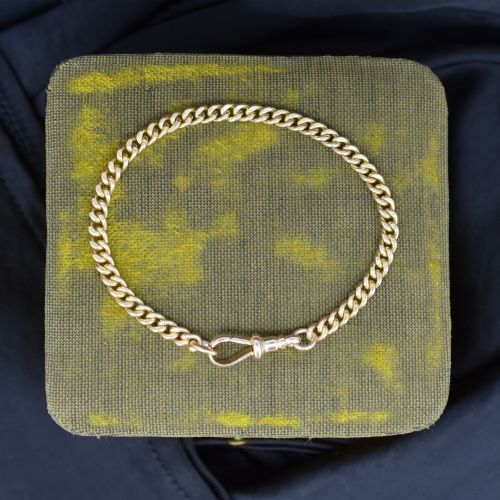
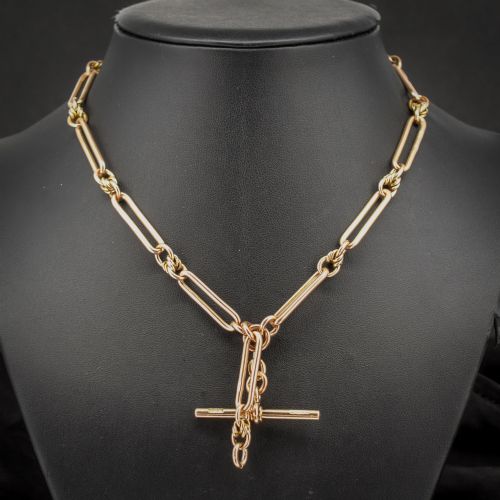
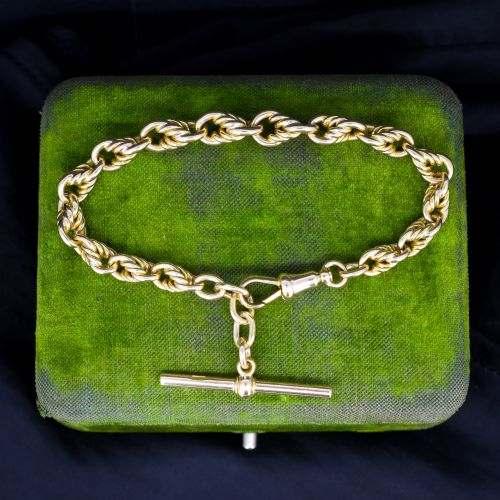
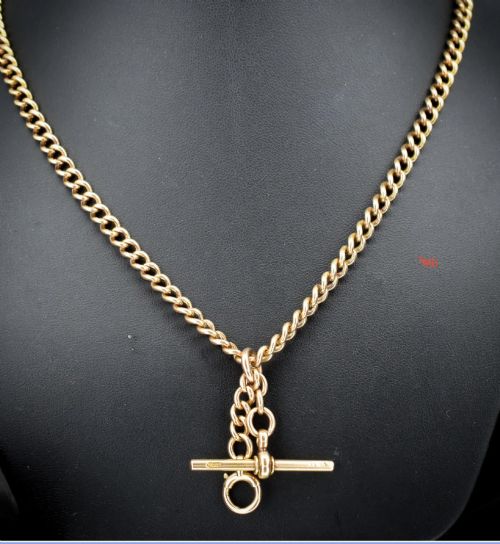
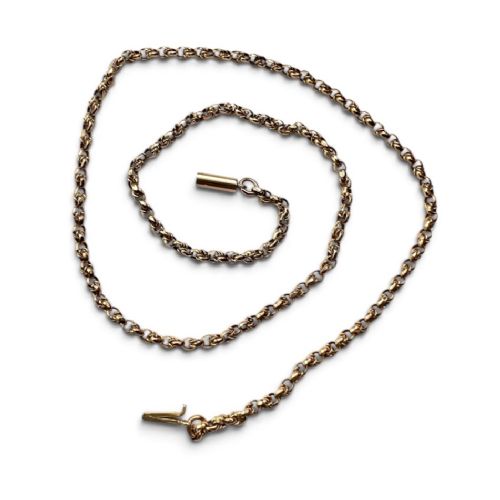
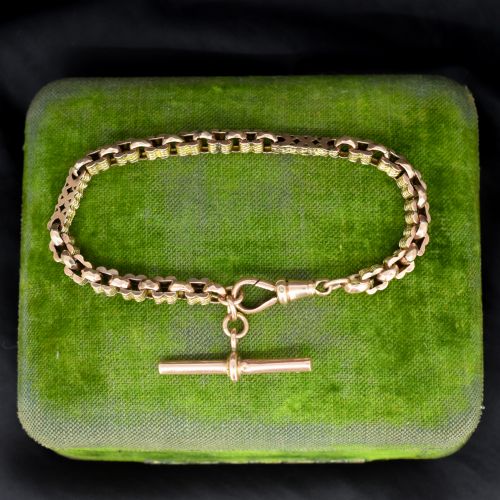
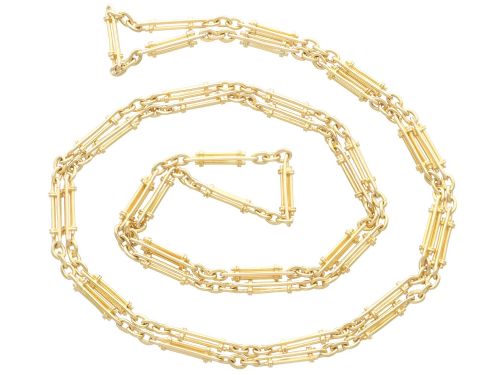
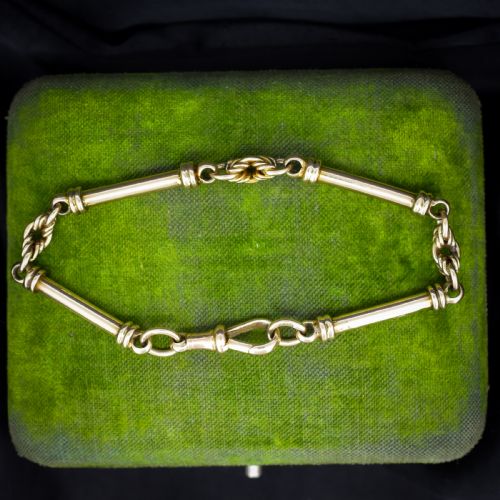
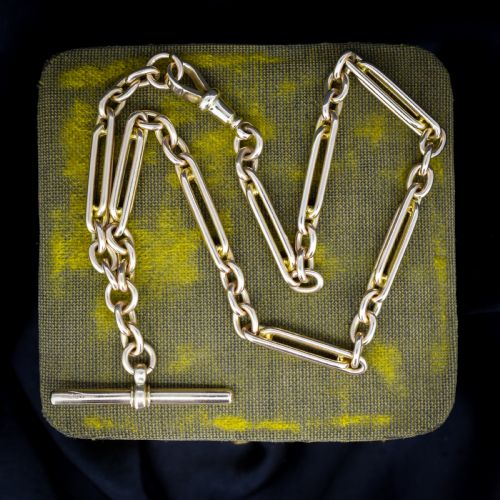
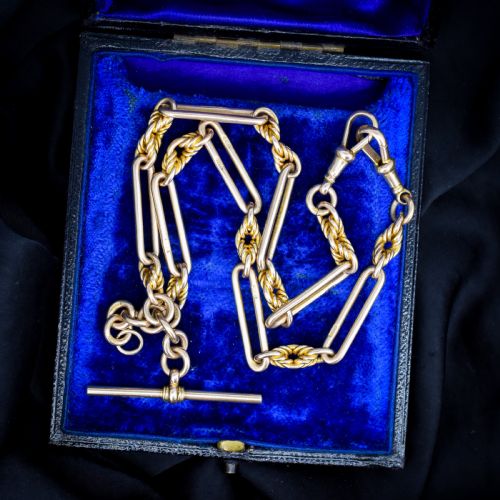
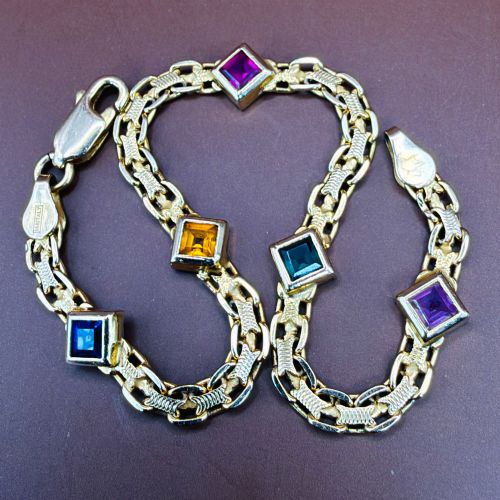
A yellow gold link chain encompasses a wide array of historical neckwear and bracelets, ranging from substantial Victorian longuards to Edwardian watch chains and mid-century Italian designs. The pieces on this page appear most frequently as Albert chains, curb links, and trombone patterns originally designed to secure pocket watches or hang pendants.
Makers fashioned these links in varying lengths, with many shorter necklaces measuring around fifteen inches alongside much longer guard chains stretching past thirty inches. Buyers encounter solid and rolled gold variants spanning the nineteenth century through the 1960s, reflecting changing stylistic preferences from heavy gate links to delicate paperclip designs.
How they were made
Goldsmiths worked primarily in 9ct, 15ct, and 18ct yellow gold, as well as rolled gold for more accessible pieces, shaping wire and sheet metal into distinct link profiles. Standard construction techniques included forming hollow or solid curb, trombone, belcher, and fancy patterned links, often connecting them by hand before attaching swivel dog clips, t-bars, or bolt rings.
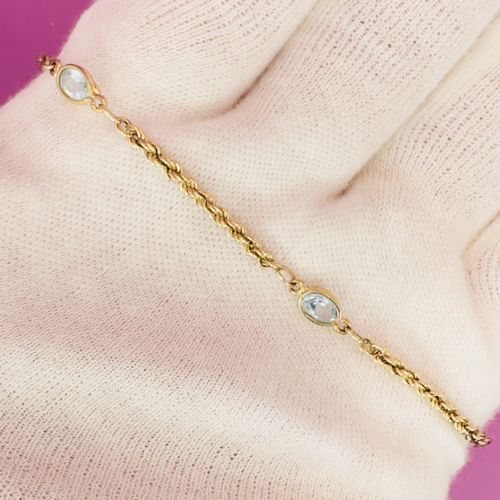
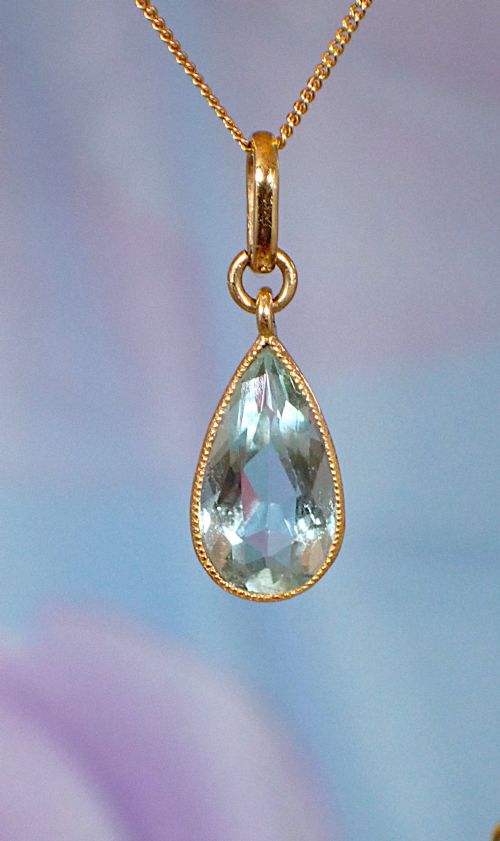
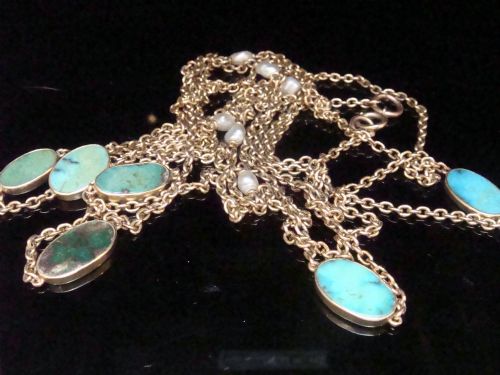
Many Edwardian and Victorian examples incorporate structural elements such as Chester or Birmingham hallmarking struck directly onto individual links. Gemstones like turquoise, pearls, aquamarines, and moonstones occasionally punctuate the gold work, set into pendants or integrated directly into the chain design.
Yellow Gold Link Chain Retail Price Guide 2026
Typical asking prices for yellow gold link chain among the pieces listed under this phrase on Sellingantiques today, from the lower quarter to the upper quarter. They describe what is for sale here now, not the wider market.
Listings feature 9ct, 15ct, and 18ct yellow gold alongside rolled gold, spanning Victorian, Edwardian, Art Deco, and mid-century periods.
What varies in quality
The distinction between tiers of quality rests heavily on the purity of the metal and whether the links are solid gold or rolled gold over a base metal core. Heavier gram weights, solid construction throughout every link, and clear hallmarks stamped on each individual component indicate superior manufacturing standards.
Design complexity also defines the upper range, where hand-engraved detailing, fancy link geometries like love knots and stars and bars, and original functional clasps remain intact. Condition of the links, absence of thinning from wear, and originality of the dog clips or safety mechanisms separate everyday pieces from exceptional examples.
The Yellow Gold Link Chain Glossary
- Albert chain
- A short watch chain designed to be attached to a waistcoat buttonhole, featuring a swivel dog clip at one end and a t-bar at the other. These pieces are frequently converted into necklaces today.
- Dog clip
- A spring-loaded swivelling clasp used on watch chains and bracelets to secure pendants or fasten the ends together. This mechanism allows the chain to be worn in multiple configurations.
- Trombone link
- An elongated rectangular metal link with folded ends, resembling the shape of a musical instrument's slide. It often alternates with smaller round or love knot links.
- Longuard chain
- An exceptionally long necklace designed to be worn doubled or looped around the neck, originating in the nineteenth century. They often terminate in a secure swivel clip.
- Rolled gold
- A manufacturing method where a thin layer of gold is mechanically bonded to a base metal core, offering the appearance of solid gold. It provides durability at a different price point.
Yellow Gold Link Chain: Frequently Asked Questions
How do I wear an antique chain today?
Shorter chains measuring around fifteen to sixteen inches sit comfortably around the neck as standard necklaces, often styled with or without a pendant. Longer guard chains can be doubled over or wrapped to create layered looks.
Many pieces retain their original dog clips, making it simple to attach lockets, charms, or pocket watches depending on the desired length and weight.
What is the difference between an Albert chain and a standard necklace?
Albert chains were originally engineered to secure pocket watches for gentlemen in the Victorian and Edwardian eras, incorporating a t-bar for buttonholes and a swivel dog clip. Standard necklaces were manufactured purely as decorative neckwear without these specific watch-securing components.
Collectors frequently repurpose antique Albert chains to be worn as necklaces because of their robust link construction and historic fastenings.
How can I tell the gold purity of these chains?
British pieces from the nineteenth and early twentieth centuries often feature hallmarks stamped directly onto the links or dog clips, indicating the exact gold karat such as 9ct, 15ct, or 18ct. Town marks and date letters can also appear alongside the purity stamp.
Rolled gold items use alternative terminology and lack these traditional gold standard hallmarks, indicating a base metal interior beneath a gold outer layer.
Are these chains solid gold?
The listings include both solid gold pieces - rendered in 9ct, 10ct, 14ct, 15ct, and 18ct yellow gold - and rolled gold alternatives. Solid gold chains maintain their metal value and structural integrity throughout every individual link.
Checking the item description and hallmark details clarifies whether a specific piece is solid gold or rolled gold.